Archive | Spirituality RSS feed for this section

The True meaning of “Gotra” in Hindu Tradition and how it got mixed up

19 Sep

You can understand when the village Khap Panchayat invokes the concept of Gotra during marriage. But when highly educated, modern, urban relatives start talking of how they will not have their children married to prospective grooms or brides from the same Gotra it gets me angry and worried.  This Blog is dedicated to all these people.

Firstly lets understand whats the meaning of the word “Gotra”

The word Gotra is formed from the two Sanskrit words Gau (meaning Cow) and Trahi (meaning Shed). Note that the English word Cow is a derived word of the Sanskrit word Gau with the same meaning Gau. So Gotra means Cowshed. In Atharva Ved, it is referred to a clan

 The traditionalists and the Khap interpret this as family lineage.

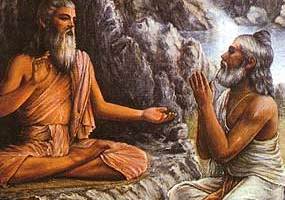
They claim that according to the brahminical theory, the Brahmins are the direct descendants of seven or eight sages who are believed to be the mind-born sons of Brahma. They are Gautama, Bharadvaja, Vishvamitra, Jamadagni, Vashista, Kashyapa and Atri. To this list, Agasthya is also sometimes added. These eight sages are called gotrakarins from whom all the 49 gotras (especially of the Brahmins) have evolved. For instance, from Atri sprang the Atreya and Gavisthiras gotras

I dont agree – let me disprove this with simple Mathematics

  • Total Population of India  = 1.2 B
  • Total Population of Brahmins in India = 120 M ( assuming 10% – the actual figure is lesser)
  • On an average if we distribute this across the 6 Main Gotra thats 20M Brahmins / Gotra.
  • So Bhardwaj Gotra should have 20 M people – 10 M men and 10 M women.
  • If Sage Bhardwaj is our patrimonial starting point in the lineage lets do a backward calculation using the an annual population growth rate of 1 % , the formulae is simple , 10 M = 1 ( 1 + 1/100)^ n. That would solve for n = 1620.
  • In other words if Sage Bhardwaj lived 1620 years back i.e. in 394 AD then at a 1.2% annual population growth the size of the Bhardwaj male clan would be 10M today.

But hindu Mythology says that Sage Bhardwaja one of the 7 original Rishis who lived many 1000 years back. If we date the Mahabharata to 2000 BC ( as many historians do ) , then Sage Bhardwaj would have lived around 1900 BC since he was the father of Dronacharya. Some say that the Mahabarata and the origin of the sages date back to the time of Adi Yogi which could even be 10,000  BC.

So clearly Sage Bhardwaja did not live in 394 AD, because if history documents Buddha and Mahavira from 500 BC then Sage Bhardwaja would have found reference in our History books. Like always the dots in hindu mythology never add up.

Let me share a possible view of what could have been a strong case for the creation of Gotra’s and this logic comes from the meaning of the word ” Cowshed”

Lets assume the year was 2500 BC. Man was a nomad. He had just learnt to domesticate animals. The Cow was the source of livelihood & food it was central to the economy of India in 2500 BC. Like normal tribes these wandering nomads used to cover vast distances with their families and cows always on the lookout for greener pastures.

Man being man there would invariably be a fight amongst the group wrt ownership of their cows. In a storm or a melee the cows would get mixed and cause tremendous anxiety and ill will.

The possible solution for this was to identify 7 wise men and distribute the total population – men and cows amongst these 7 wise men. Tired of travelling they would have decided to settle down. Each Wise man set up his farm / village / cowshed in an area and that group / Clan came to be known by the Rishis name. Since they lived in a cowshed – they were called Gotra. Each clan probably followed a concept of collective responsibility and  shared the resources they had in their clan. The Cows were now common property and the Wise man / Rishi was the head of this Clan.

Since each Clan shared and lived together they became an extended family and marriage was probably not advised within the clan as the population of Cows could not go up. I am sure dowry existed in those days. So marriage always happened between two clans living maybe a few 100 Km away from each other.

Does that sound logical ? If so then the issue of each person being a descendant of the great Rishi does not arise. Clearly this concept has been advanced at a much later date – maybe by the likes of Max Mueller and Western Historians who were always on the lookout to create concepts that could divide and fraction the society.

And I just hope that the educated  people of today stop thinking like the Khap and take a more balanced view to getting their children married.

My Vipassana Experience – Interesting insights

6 Dec

I have wanted to attend a Vipassana program for ages. There are friends who have attended multiple sessions who vouch by its benefits and others who say they had no/limited impact.  I decided to experience it.

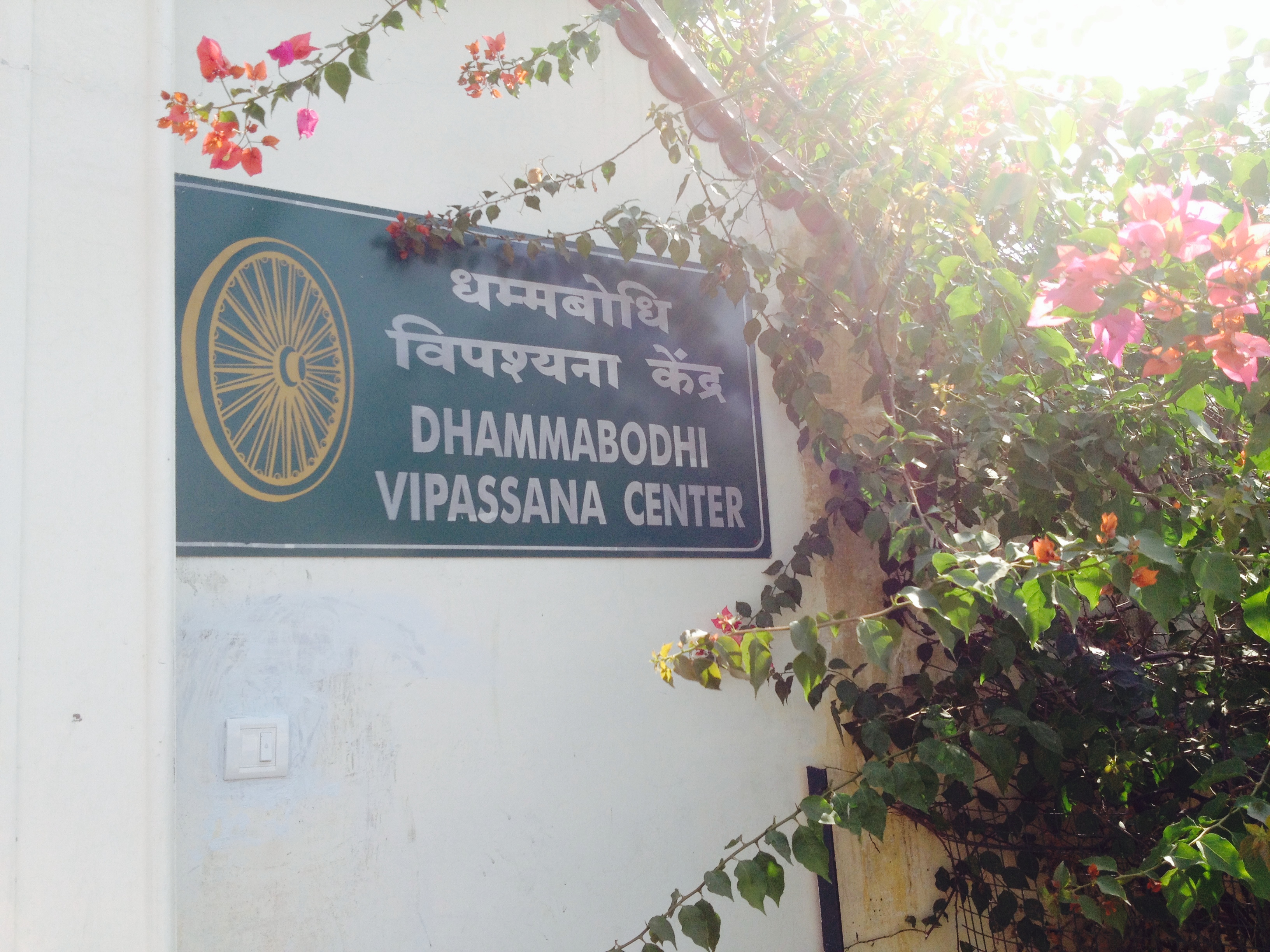
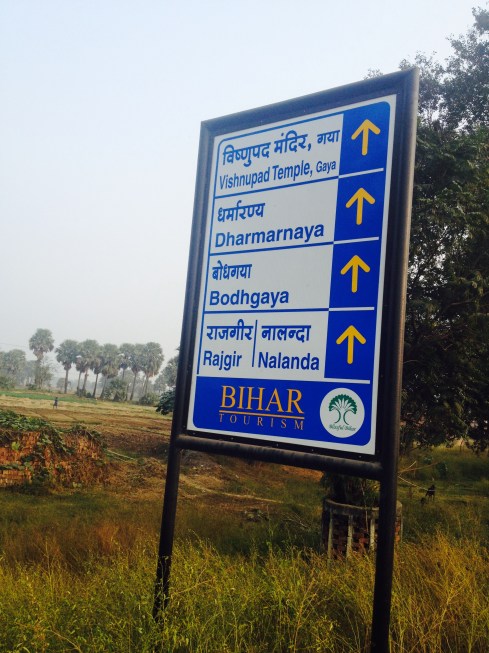
There are over 40 centres in India (and many more globally) and most get booked months in advance. A little research helped me make my shortlist of 3, Igatpuri – Near Nasik, Bodh Gaya & Dharamshala.  I was lucky to find that Bodh Gaya had a course at the time in which I could take a 10-day leave. What better place to start your meditation that the town where Siddhartha got his enlightenment! Its an interesting location – with Nalanda and Rajgir at a 3 hr drive from Bodh Gaya.
IMG_2014

I made my bookings in August for the Dec 1 Program, Bangalore – Delhi – Patna by flight and then a 3 hr. drive to Bodh Gaya and finally reached my destination. Coming so far I made time to visit the Bodh Gaya Temple and the famous Pipal tree spot where Siddhartha got his enlightenment. The temple is a world heritage site and very well maintained. Lots of positive energy and sitting below the massive tree at 5 AM even a layman can start his meditation journey.
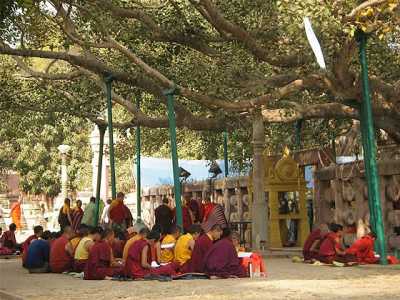
Bodhgaya-3985_1

I planned to be amongst the first so that I would get a single room – which I did. The camp is spread over 18 acres, lot of trees, about 25 – 30 cottages and buildings that can house about 100 inmates. Calm, peaceful, rustic, clean and Spartan.
IMG_2023

My room was similar to my college single room with its own attached bathroom. Functional – meets the need very well. The place is rustic and beautiful – but has seen better days.
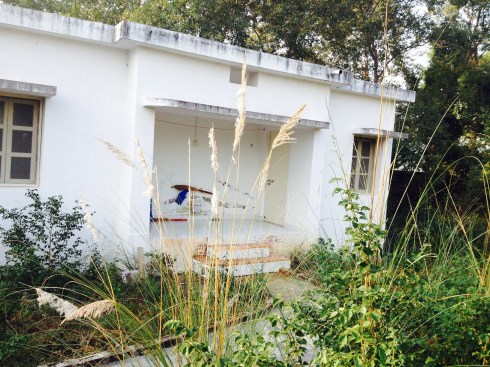
 IMG_2017

Day 0: Registrations happen in the morning and you handover all your gadgets / pen / paper everything except your clothes and toiletries. At 6.30 PM the participants are briefed on the rules. You need to take a vow and follow the foundation of the practice  sīla — moral conduct. Sīla provides a basis for the development of samādhi — concentration of mind; and purification of the mind is achieved through paññā — the wisdom of insight.

The key percepts are – Maintain Noble Silence (Silence of body , speech & mind  – even eye contact is not allowed). Other rules –  No Stealing, No Lies , No Killing ( I struggled to live with 5 large spiders in my room) , Maintain Celibacy , No Liquor /Intoxicants / Non Veg food and total segregation of male and female meditators. Others are no Yoga , no exercise , no chanting of mantras , removal of sacred thread etc.
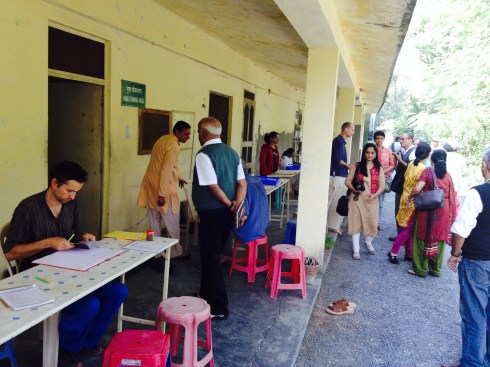
IMG_2019

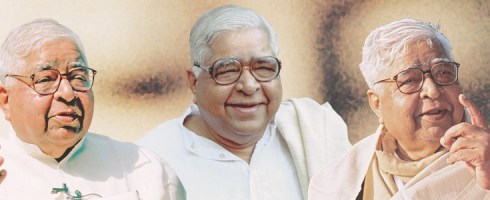
Day 1 : The session starts at 4.30 AM – so you need to be up at 3.45 AM take a bath (not compulsory but I did) and report at the meditation center at 4.25.  All the instructions are taped / videotaped conversations from Guruji (R.P.Goenka  – The passionate founder who brought this movement to India in 1969 after learning it in Burma. He is not related to the Goenka business from Calcutta). There is a very Sr Acharya who program manages the whole event and a few Jr Acharya’s assist him.
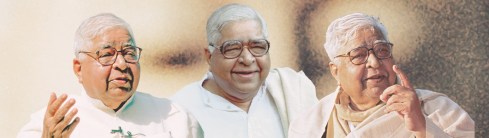
 center-mr-s-n-goenka

The routine is rigorous and spans almost 18 hrs/ day. You get about 6 hours of sleep.

A day in the camp

 4.30 – 6.30 AM Meditation, 6.30 – 8.00 AM Breakfast & rest, 8.00 – 11.00 AM Meditation , 11.00 – 11.45 AM Lunch followed by rest till 1PM , 1 – 5PM Meditation , 5 – 6PM Tea , 6 – 7 PM Meditation , 7 – 8.30 PM Dhamma Talks by Goenka Ji  and instructions for the next day , 8.30 – 9.00 PM Meditation , 9.00 – 9.30 PM  1 : 1 Q&A sessions with the Acharya, Retire to bed at 9.30 PM

The Dhamma Talks are interesting. The content is simple & good, but Goenka Ji is a moderate orator. The teachings are a reiteration of how Vipassana is simple, practical and the essence of how Siddhartha got his enlightenment.And how with practise and commitment everyone can learn it.

Breakfast is simple and healthy – Poha Or Upma Or Sabudana Khichdi with some fruit and Tea/ Milk. Lunch is grand – Rice / Dal / Roti / 2 Sabji’s / Curd / Pickle. Tea break is just Tea and some puffed rice. Between evening tea and breakfast is a 13.5 hr break  . Food is tasty, piping hot, homely and very healthy and nutritious. I loved it.  And you don’t feel hungry given that there is hardly any energy spent in physical action
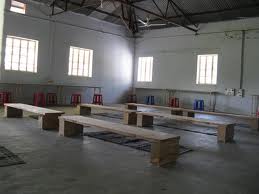
images

Day 1 to 3 is spent only in practicing and perfecting a breathing technique called “Anapana Sati”. Before I explain what this technique is lets step back a little and understand what Vipassana is all about.

Vipassana is a 2500-year-old technique that Gautama practiced to achieve nirvana. It’s all about observing and getting deeper and deeper into your body. The most important thing here is to OBSERVE, not have feelings of like or dislike. By this process your mind slowly moves from the gross to the subtle.  You sharpen the mind to cut thru the body and look deeper and deeper. “Anapana Sati” is a breathing technique that helps you sharpen the mind. The mind then acts as the tool.

Gautama found thru this process as he went deeper and deeper that at the final innermost layer the body is nothing but wavelets. The smallest subatomic particles that are in constant transition – replacing itself almost a trillion times every second. When you reach enlightenment you are able to see your body as a light wave and the energy balance becomes perfect.

In the process of going deeper and deeper using your mind like a knife you also eliminate from the root all the layers of impressions, dogma’s, filth, emotions, desires that choke you and cause unhappiness and suffering.

 Here is a quick look at how the course evolved over the first 5 days. The end objective being to teach you the technique practised by Buddha.

Day – 1 : You just observe your natural breath going in and out. This technique is used to eliminate thoughts. The mind constantly wanders and you focus the mind on the breath. It helps you increase your concentration and control the meandering mind. It’s frustrating initially but by the end of the day one does get the hang of it . At the end of day – 1 I was still a sceptic – I had spent 10 hrs. just observing my breath and it did seem like a waste of time.

Day – 2 : You observe the breath hitting the inner walls of your nostrils. It’s like watching the path of the breath as it bounces along the inner nostrils. You observe the temperature of the breath – cold going in warm coming out. At times it goes thru both nostrils, at times only thru one. 10 hrs. of this – By end of Day – 2 I started seeing some excitement – but still a skeptic.

Day – 3 : You observe all the sensations in the triangle that borders the upper lips as base extending along your nose.  This is tough. Initially you feel no sensations but after a few hrs you start felling the first small tickle. Then slowly with time you experience other sensations – a small throbbing, at times warmth, sudden burst of cold draft , some pin pricks , at time pulsing, sometime an indescribable sensation – a variety of sensations which you thought never existed.

As the mind has become sharper it is able to start identifying these sensations. They always existed – the gross mind does not see or experience them, the subtle perceptive mind does.  This was a very interesting experience and a great discovery. Something that can be used on a ongoing basis.

Day – 4: In the first half we start getting more precise. We now observe the sensations in the small area above your upper lip and below the nose. Now you are focused on a much smaller area, this is like sharpening the pencil even more and making it ready for Vipassana. The mind is concentrated to the point and at the end of 1 hr your forehead begins to heart with the intense concentration. You do this practice for about 4 hrs.

With this you have now prepared your mind to be able to concentrate on a small area of your body,

Now that you are ready Goenka Ji introduces you to Vipassana. The technique is to run your mind from top of the head to toes covering each part of your body in a certain flow and observing the sensations. Each journey of the mind takes about 10 – 15 minutes and whenever you don’t observe any sensations you stop for a minute at the spot. You suddenly realize that the full body is actually throbbing with sensations.

I found this to be similar to “Yoga Nidra”. Yes the Anapana Sati has helped you to assess and observe the sensations in your body a lot better. But conceptually it is similar. You do “Yoga Nidra” for 10 – 15 minutes after Yoga to relax your body , while this is a lot deeper and you spend days focusing on the sensations across your body.

I was a trite disappointed. I was expecting more. Post our learning we practiced for some more time. By day 3 you could see some change in the room. People were beginning to cough, burp, sneeze, and fart –  by day 4 night this was increasing a very rapid pace.

This just psyched me out. In a dark, dimly lit room with about a 100 people creating funny noises was not a pleasant experience. It affected my concentration and I was struggling to focus from Day 4. Add to this the level of energy is very low. People lost in their own world walking like zombies with slow steady steps starting into space made me feel that this was somewhere a mix between an asylum and a government hospital.

Day 5 you continue with the practise of Vipassana but now start spending 1 hr sessions ( 3 times ) sitting absolutely motionless like a statue. Mind becomes calmer when the body is still. This is not easy

I exited on Day 5. Most people exit on day 2 or Day 6 – I am told that 25 – 30 % of attendees exit. The reason most leave is because of the frugal food, Spartan facilities, the inability to communicate, or a struggle to sit cross-legged for 10 hrs. None of this affected me. I loved the simple food, enjoyed the peace and quiet of noble silence and my living quarters reminded me of college. I was beginning to enjoy this like a resort and hoping I could make it a yearly trip.

But two things that did not work – One the negative energy. You come to a program to get the adrenalin pumping – to get motivated & charged. Even the Acharya and successful returning meditators look like people from another planet. Weak & frail. That’s not something I want to be. Maybe they have tremendous internal bliss. But I guess I am not ready for that – YET.

And secondly the effect of meditation and the cleansing process was releasing all the impressions from the mind. The only way it can get released is thru yawning / burping / coughing.. . I somewhere saw this as a cloud of negative emotions hovering around the dimply lit room like a shadow of negativity – and that freaked me out.

Am I disappointed – Yes & No. Yes because I did not complete a project I wanted to do for long. No – because I learnt the tool of Anapana Sati which I can put to use effectively on a day-to-day basis. I have learnt the right way to meditate – rather than focus on Om, a lamp, a mantra – its better to focus on sensations on your body. Also I got an opportunity to visit the world famous Bodh Gaya Temple and to understand Buddhism a little better. It’s interesting to speculate why Buddhism lost out around 500 AD and Hinduism revived (That’s a separate blog – Coming soon). I also missed out visiting Nalanda that was just 60 Km away ( 3 hrs on Bihar Roads) . This whole stretch is worthy of a holiday Varanasi – Khajuraho – Bodh Gaya is a interesting 1 week circuit.

I am sure millions have benefited from this program. It surely delivers value. The organization is committed and the band of volunteers (Dhamma Sevak’s) is amazing. Most Sevaks in our program were from abroad – France, Kosovo, Prague. More than 30 % of the participants were foreigners. They don’t charge a pie for the 10-day program and exist purely on the charity of people who complete the course.

In todays world who would invest in your well being for 10 days with food and lodging free of cost with so much committment ? As I left I requested them to accept a donation – they were categoic that they take donations only from people who complete the course. This did upset me a little – but I hope I can contribute in some manner or come back later when I am more prepared.

Vipassana is a great example of how good things don’t need marketing. Every year 1300 teachers train over 120,000 people globally. Compare this to Baba Ramdev, Sri Sri and many of our current age spiritual gurus who run marketing campaigns to fill up their paid classes.

What Goenka Ji has started and built is indeed very impressive. Sadly the media (paid media) hardly gave Vipassana any visibility. Even the recent death of Goenka Ji in Sep 2013 a Padma Bhushan winner was poorly reported.

So what next – Isha Inner Engineering was high energy & fun and Vipassana was different & interesting. I have Osho in my mind. But as of now – I am going to let deep spirituality and inner well being take a bit of a back seat – its back to family, work, gym, yoga and my weekly Vodka!

Other Useful Information

1.     Visit www.dhamma.org for more details on program & Registration

2.     Carry your own bed sheets / blankets / toiletries / Alarm clock  / Torch / Odomos / Skin Lotion / Water Bottle

3.     Don’t go with a friend / family – one may connect the other may not, exit then becomes a challenge for both

4.     Once you have completed the initial 10-day program you can attend others – there are 10, 20, 30 & 45-day programs. There are also 2-day refresher sessions on Anapana Sati sessions dedicated only for Sr students who have attended 1 course – many keep coming back for repeat sessions.

5.     A 10 day program gets you started – but to constantly be on the journey you need to keep coming back (This is what some of the Sr meditators who have attended 5 + sessions told me on the day of registration)


ॐ = mc²

11 Jul

Quantum Physics and Einstein explain the relation between Matter & Energy. The ancient seers & rishis claimed that the universe is nothing but energy in different forms. WE have ourselves experienced how the energy in our body transforms at different times. The topic is attracting  a lot of attention. There is an interesting forum called SAND – that holds a conference on Science & Non Duality. It attracts the best of scientists and thinkers from across the globe to discuss on this topic. For those interested here is the URL – http://www.scienceandnonduality.com).

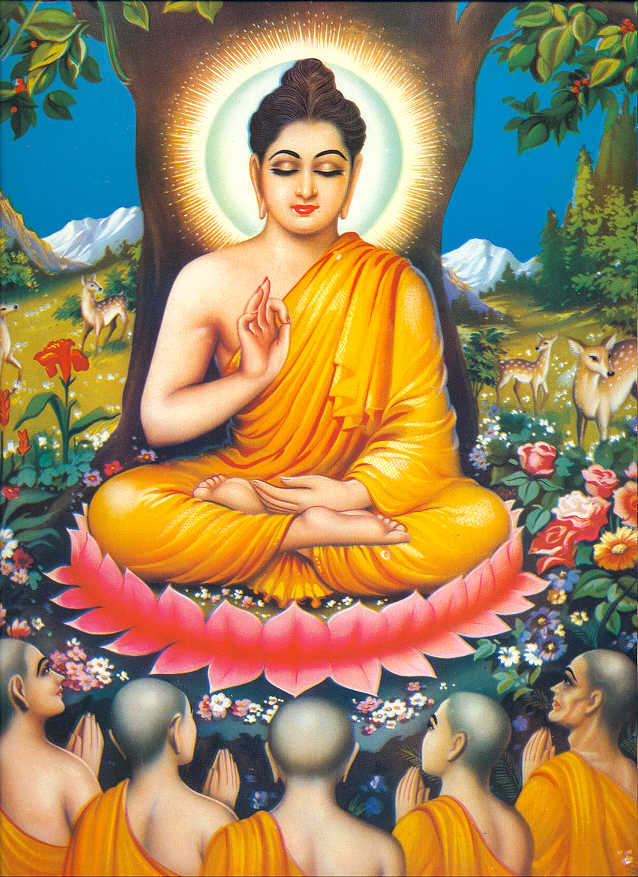
Since ages all the enlightened beings – Buddha, Shankara, Osho, Vivekananda, Ramana Maharishi – have all demonstrated that there is infinite energy inside in the human body. And True Knowledge & Bliss can only be obtained when this energy is activated and it merges with the cosmos. Call it nirvana, awakening of the Kunadlini, Enlightenment – its all one & the same.

buddha

Reading multiple books on the topic I have managed to pick up information in bits & pieces but have struggled to connect the dots – it all started coming together  last weekend at an excellent program called Inner Engineering conducted by Sadhguru Jaggi Vasudev (Isha Foundation)

jaggi-vasudev-image-74

The first thought that comes to my mind is the sheer mastery of Sadhguru’s facilitation skills and witty oratory that holds the attention of nearly 300 people for 30 hrs across 2 ½ days on varied topics of spirituality. His topics are diverse , communication is flawless and he holds the audience rapt in attention. Good content , well packaged , delivered perfectly – its an excellent product. A good mix of discourse, interactions, activities and fun makes the program indeed a memorable one.

The execution of the event is perfection epitomized. Managed by volunteers who have experienced the benefit of the program – it runs in a meticulous manner with a supreme eye for detail for the smallest of things. A live instrumental team with guitars , drums , flute veena and some lovely singing keeps the energy level in the hall very high. Overall a wonderful event – clearly  the best training in self development that I would have attended.

Its been just a few days and I already see the benefits of the program . You feel lighter, clearer , energized and more at peace with yourself. If this can happen in 3 days I wonder how far we can go after a year of regular sadhna. I want to capture the essence of the program in this blog and I would strongly encourage all of you to attend this program. (There are multiple versions happening across the country including an online version – http://www.ishafoundation.org)

The core of the program is to initiate participants into a ancient and powerful Kriya called the  “Shambhavi Maha Mudra” that helps ignite the hidden energy inside an individual. Its simple, takes 30 min to practice every day and you can see a visible difference in a few days. ( http://blog.ishafoundation.org/yoga-meditation/demystifying-yoga/why-shambhavi/)

Let me now try and summarize the core philosophy explained by Sadguru in the program. This is just a tip of the iceberg and the true depth & breadth of the session can only be experienced once you attend it.

  1. We are all different forms of energy that is the universe. So when we say God is inside everything or Lord Krishna opened his mouth to show the entire universe inside it – it just means that we are all part and parcel of the same energy that is all pervasive.
  2. Our body is nothing but food, our features are inherited from our DNA. Our mind is nothing but impressions – we keep on adding impressions but have no delete button to remove them
  3. Every emotion is a chemical reaction. Imbalance creates disease. A pill is nothing but a chemical that solves this disease temporarily. You need to be at ease and create the right balance inside you. Our misbalance causes 70% of our illness.
  4. Anger is nothing but a surge of chemicals. It hardly lasts for more than 30 seconds. The angry man is unhappier than the man who he has been angry at.
  5. Our intellect is nothing but a knife that dissects. We need to experience and feel life from within.
  6. The biggest miracle in life is life itself – rather than look at the miracle that is us we look for miracles and joy outside.
  7. As kids we were always happy – as adults we are unhappy most of the time. This is because we have created boundaries for ourselves. A boundary of our family, our building, our community, our religion, our country. Anything outside the boundary seems a threat.
  8. Since we are all part of the same cosmos we need to take responsibility for everything. Our resources may limit our actions for solving everything but this will help us identify the infinite potential in us.
  9. All problems and all solutions exist within you. You need to accept what you know and what you don’t know.
  10. We are technologically the most advanced generation but physically the weakest. Our food & lifestyle habits is threatening our very existence and acting as an impediment to natural evolution. We have destroyed in the last 50 years what has flourished for millions of years. We are threatening the existence of the planet.

He also touches upon a variety of other interesting topic that includes Right Food to eat ( Pranic Vs Non Pranic) , how many was designed to be a vegetarian , how you can enjoy old age by nurturing your body early , Stories on Adi Yogi and how spirituality in India thrived as early as 15,000 years back. How astrology , numerology and the concept of Hell & Heaven are all misconceptions.

Like I mentioned in one my earlier blogs – we have been brainwashed since our childhood days. God does not exist in a temple but inside you. This program helps validate that. It’s encouraging to see that the vast majority of people who attended the program were in the late 20’s and 30’s. It augurs well for humanity if the wave of spirituality can once again revive the country and the world from its woes. It gives me hope.

God – Fearing, Heaven & Hell : Brainwashed – 2

5 Jun

Adj : god-fearing – deeply religious; “a god-fearing and law-abiding people”

Its interesting to see the meaning of the word  “God – fearing” . A simple word – we have used so many times. But lets spend time analyzing this word.

I start with the premise – Why not “God – Loving” ? After all God is infinite compassion , always forgives you &  your mistakes – so why should we be afraid of God. This brings me to an interesting comment made in the movie “Oh  My God ” by the nakli baba ( Mithun Chakraborty) who says that people come to a temple out of fear. You are afraid of losing money , wealth , happiness – hence you come and take an insurance in the temple in front of God. 99% of the people who go to a Temple go to ASK for something – The student asks for Pass Marks or admission to a college , the young girl asks for a nice groom , the 30 year old for a fast track promotion, the 40 yr old for a VP / CEO posting. Rich industrialists cover temples with gold & platinum to ensure that IT raids do not happen , and Politicians offer money & grants to ensure that they do not lose their position & status.Come Diwali & Lakshmi Puja the stock Broker and Baniyas pray for more wealth & success.  The sad reality is that Few, very few go to a Temple with folded hands for peace & quiet – just to say Thank You. The priests & baba’s like Mithun know this and play on the fear – hence the word God Fearing. God did not create it , the institutions that control religion  under the name of great spiritual beings created them.

Linked to this is the concept of Heaven & Hell. We have all grown up fearing Hell and wishing we could at all times be in Heaven. the sole purpose of life is to be in Heaven !

What is HELL ? A place of  endless torture & pain. Where they throw you in boiling oil & fry you alive. Think of the worst set of cruelties that come to your mind – and they practice all of that and more in HELL. Its so easy to brainwash you from childhood with the concept of HELL.

Detail of Hell from  Fresco Cycle by Frederico Zuccaro and Giorgio Vasari

I would like to know who conceptualized HELL ? Only a crazy sadist can think of such a ghoulish place that even with its mere mention can terrify mankind. If God created everything – would God create a place like HELL ? If GOD is infinite compassion would he have the heart to punish someone so heartlessly. Jesus when crucified – in extreme pain & agony said ” Father, forgive them, for they know not what they do” – that sounds like God.

And what is Heaven ? A place of infinite joy , apsaras & nymphs dancing , unlimited liquor – some religions even promise their practitioners that on accomplishing their mission ( Jihad) on earth  virgins will be waiting for them in heaven.  I wonder how all that is banned on earth is your reward in Heaven – in  unlimited quantities ?

images

In Conclusion – Whats the Point I am trying to make.  I am just trying to make you think . Its time for each person to introspect. To reflect on what we have learnt , how we have been brainwashed. Read what the greatest spiritual thinkers of the last 2500 years have preached  – they don’t talk about Heaven & Hell and being God Fearing. They talk about reflecting inside yourself by asking – Who am I ? What is my purpose in Life ? What is the Material & Spiritual World ? Interesting Questions leading to an interesting journey.  Questions for which you need to find  answers by yourself.

Few other related reading sections 

http://atomic-temporary-14030268.wpcomstaging.com/2013/05/20/am-i-a-hindu-religion-spirituality/

http://atomic-temporary-14030268.wpcomstaging.com/2013/04/27/brainwashed/

Am I a Hindu ? Religion & Spirituality

20 May

What makes you a Hindu ?  Praying to God , visiting a temple , performing rites & poojas, chanting mantras , maybe wearing a  Sacred Thread if you are a Brahmin, celebrating festivals , eating sweets & savories, knowing your mythologies & maybe an attempt at reading the Bhagwad Gita ! Is that it or is there more to being a Hindu ?

Most religions have one holy book The Holy Bible , The Holy Quaran , The Guru Granth Sahib to name a few . Hinduism has thousands – 4 Vedas , 108 Upanishads, Holy Gita , Vedangas, Darsanas , Itihasas Puranas , Upavedas, Agamas , Upangas, Tantras , Charvakas, Manusmriti Puranas and many many more. You can spend a lifetime doing a Phd in Indology trying to figure out the meaning of all that is written in these ancient scriptures

Most Religions are based on the teachings of 1 Spiritual Leader – a person who had visions from God , the Holy Son , a Messiah, Buddha , Mahavira  – a person who was spiritually awakened. Hinduism has hundreds of Rishis who after intense meditation heard the voice of God and were able to narrate their learnings for all and transferred them to ancient scriptures.

What is Religion ?  The teachings of the Holy Prophet that has now been institutionalised. Is it original , is it diluted , is the essence lost ? The goal of every Religion is to awaken you and take you on the path of self realization – has religion succeeded in that mission. To me it looks like Religion is the cause of most of the wars we have seen in our lifetime and before. Its also the basis for caste systems and to demean women.

What is Spirituality ? This leads us a question of Who is God & Who Am I ? How did Life begin ? Why is Man so evolved a animal ? Is God the statue in a temple ?  How come the Holy Vedas never talked about Temples & Deities ?

One of the greatest spiritual thinkers of our time has been Swami Vivekananda – he made an interesting observation ” If you have faith in all the three hundred and thirty millions of your mythological gods, … and still have no faith in yourselves, there is no salvation for you. Have faith in yourselves, and stand up on that faith and be strong; that is what we need

Swami-Vivekananda

Shiva may live in Mansarovar & Vishnu may be in the ocean of Milk – and thats a big MAYBE , but history has recorded that Buddha, Mahavira , Christ , Shankara, Vivekananda , Ramkrishna , Ramana Maharishi lived on earth. Its interesting to read about them and understand how they reached Spiritual Bliss and what is their interpretation of “Who is God” ? You will see a common thread. The exercise of connecting their spiritual learnings is a complex exercise but I will at least try and connect a few dots.

The common theme that emerges from all of them and all the ancient scriptures of every Religion is that God is everywehere. There is immense potential in every individual. We are able to utilize only a fraction of our potential. We spend too much time on the materialistic body and hardly any time to know what is that power which gives us life & intellect. The mere act of spending 30 min to focus on your breath gives you so much peace every day. Think of what you can achieve if you are able to meditate for years and get to know your inner self .

Here is an attempt to try and simplify the meaning of how there is a bit of God in every human being – Let us assume that God is the massive infinite Power Grid and this grid is connected to every living being. Each living being is like a bulb with different capacity. Someone glows at 10W while someone glows at 100W. But suppose you had the power in you to increase your capacity from 10W to 100W . another way of looking at it is that we are all a node of a massive cluster of computers connected to a supercomputer , each node has a different power but can communicate with the mainframe , some have a 256 KB link while others have a 4 MB pipe  – then all of life is a connected world. Just like Sun Micrcosystem said ” we are the dot in the dotcom ” – maybe  there is a  dot of God in all of us. And thats exactly what Shankara talks about in his concept of Advaita. And what every Religion spells out  in their holy books

And spiritual awakening is nothing but magnifying this dot till it merges with the mainframe which is infinite God. Vipassna , 8 fold path , Chakra awakening, every religion has a route  to elevate yourself to spiritual bliss. To meditate and focus on this you need to cut out the material world. So when the Taliban says – No music , dance , entertainment – they are not wrong – because these are distractions to the cause of  spiritual awakening , just that the journey is an individual one and cannot be forced on anyone by a bunch of  religious fanatics.

Just spend a few days at an ashram with simple Sattvic food ,  no TV , no music , no Internet , no phone , no talking to anyone and see the calming effect it will have in you. The stress, noise , transactions around us makes it very difficult for us to be in touch with our inner self.

Which brings me back to the main theme of  Religion Vs Spirituality. And Osho explains this beautifully in his book – “Belief , Doubt & Fanaticism“. He says don’t be a Christian, Buddhist , Hindu or Jain   – Try being Christ, Buddha, Shankara or  Mahavira. Follow the journey they took and then you will experience the joy  and eternal bliss they were able to achieve – what  Religion preaches today is no way close to what they practiced in their lives – a little bit of deviation by each set of followers has created a huge divide from the original thoughts of our great spiritual leaders.

images

And to be a Christ , Buddha or Shankara you have to ask the question that Ramana Maharishi asked ” Who am I ” – the answer to this can come only from introspection & meditation. Meditation is not easy. The toughest job is to control the mind. Try doing it for a few minutes in a peaceful and quiet surrounding and then slowly you will be able to master the art.

Doubtless, oh great warrior, the mind is difficult to subdue. It is restless all the time. But oh! Son of Kunti, the mind can be conquered by repeated exercises and dispassion to sensual objects.” — Krishna to Arjuna, Bhagavad Gita 6:34

krishna_arjuna_Mahabharata-Kurukshetra1
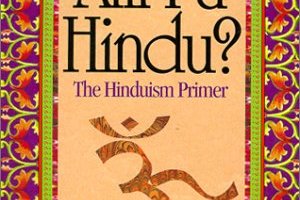
As I slowly start questioning and reading the feeling I get is that the core of Hinduism is not about praying to millions of Gods and doing mundane rituals & poojas – it is about finding the road to Spiritual Salvation. A wonderful read that explains the essence of Hinduism is “ Am I a Hindu ” by Ed Vishwanathan. This is a must read for every Hindu –  a well written simple book,  a quick 4  hr read that explains in simple Questions and Answers everything you will want to know about Hinduism. Its an excellent primer for every Hindu to know about his religion.
653592

Brainwashed

27 Apr

During WW II London was bombed , almost all of Europe was demolished, Japan was nuked – yet in  a short span they rebuilt their cities and went to on to become great countries. All this thanks to the leadership of some great people and the hard work of  the common man. Europe has a history that can be traced back 2000+ years to the time of the Romans, Greek’s , Spartans , Vikings , Gauls…. the US has literally no history and is a country of immigrants. The point that needs to be made is whether its a company or a country good capable people  make all the difference. Lets keep this point in mind as we move on.

London Bombed

Whats the history of our country in a few lines. A great civilization , probably the oldest , home to some of the oldest scriptures and holy writings which supposedly have a wealth of information written in such a cryptic manner that only a blessed few can understand them ,  a Religion which is more a way of life , great stories like the Ramayana & The Mahabharata which every kid knows from his childhood. A clear demarcation of what is good (Gods & Deva’s) and what is bad (Asura’s) , Millions of God’s, a strong caste system that is accepted and rarely contested – and then the external invasions and how all the greatness was stomped out and we were relegated to poverty and strife.

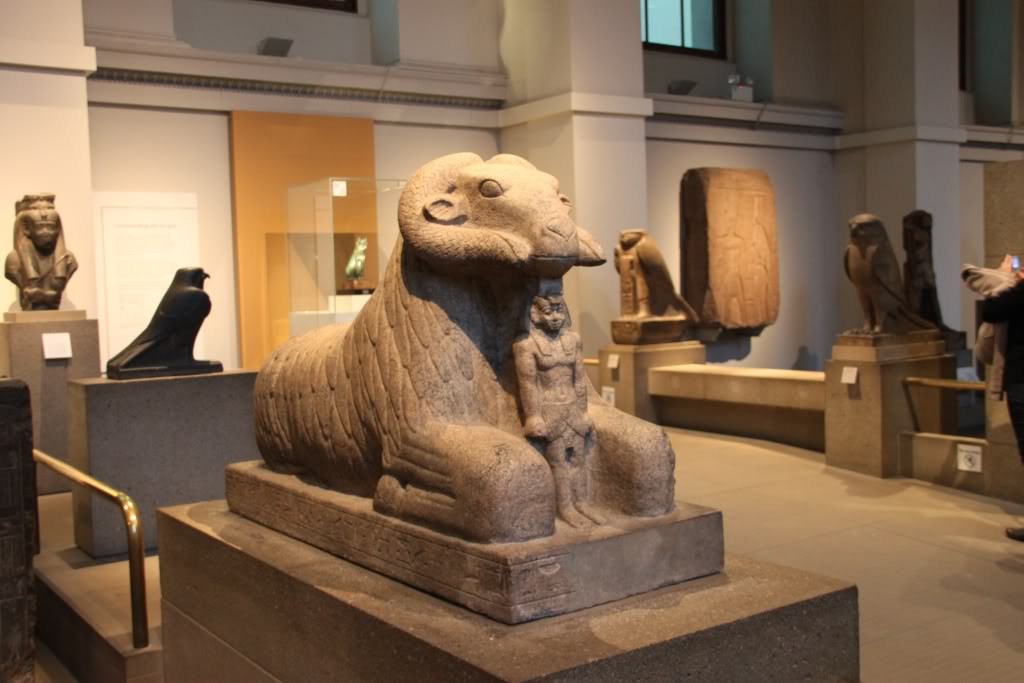
I dont know if the above is true or if its a holy brainwash – like every kid in India I have heard the same stories , read the same Amar Chitra Katha’s and as a parent propagated the same information to my children. But I now have a few questions. Every story has two sides to it – the version of the winner that projects him to be the greatest and everything else as evil. Have we tried to find out the other side of the story ? There are hardly any facts and historic data to prove the veracity of the stories we have heard – but there are many questions in my mind.  In the last few months I have visited the Louvre & the British Museum – right when you enter both is the entrance to the Egyptian Section – you will see hall after hall , row after row of artifacts that date back 2000 – 3000 years old.

Egyptian Section

Surprisingly none of the worlds greatest museums have any section of ancient India. What you will get to see of India is mainly the Chola Bronzes that date around 800 – 1200 AD and then the Mughal Miniature paintings. The oldest structure we see in India are probably 500 BC and they represent some ancient Buddhist Temples , Fresco Cave paintings , Stone Edicts . From Egypt we have proof that stone statues can survive over 3000 years , so what happened – did we lose all the ancient palaces, building , structures of the great old days ? Many of them would have got submerged – but excavations could have revealed them like they revealed the Indus Valley Civilization.

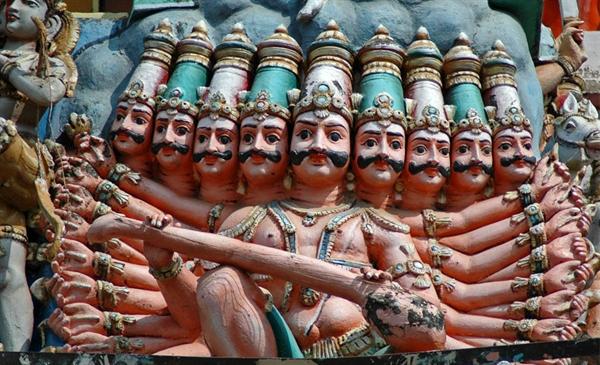
Lets step back and look at the story of Ramayana. Yes Rama vanquished Ravana – and since then poor Ravana has been the symbol of a perfect Villain. But was Ravana indeed a villain as he is portrayed. Is there a second perspective to this. Were the Asuras really demons and the “Bad people” and the devas the greatest. The word Asura has a close resemblance to ” Ahura” which comes from the Persian Language and means great warriors. Ravana , Bahubali were all Asura kings who were known for being great administrators and valiant warriors. Ravana is portayed as an egoist with 10 heads  – but maybe he had the valor & the intelligence of 10 people , you just need to step into Sri Lanka and the stores of Ravana there are very different from what you hear this side of the border.

4040-Ravana-Ten-headed-King

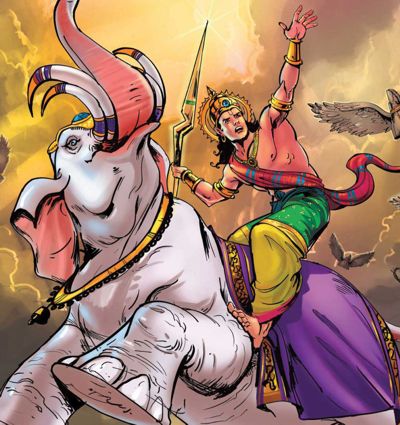
Was Indra a great king of the Deva’s ?  or was he in charge of a brigand that used to attack the existing rulers (Asura Kings) and the innocent citizens – If he was indeed a great king of the Deva’s how come there are no temples or hymns in his praise that we chant every day.

indra

Was Kubera the king of wealth or just a shrewd Shylock ? who made money out of others not always with principles.

Was Kumbakarna addicted to drugs which caused him to be drowsy all the time ?  and maybe the poppy plant  grew for only 6 months – hence he was awake the rest of the 6 months

Was Varuna the king of the Seas or just a pirate who controlled the seas thru his power ?

Were the great Asuras slowly but surely pushed back by the terrorists and their women & children slaughtered & raped ?

The Samnudra Manthan could well have been a period when mankind learnt to domesticate cows , horses, elephants – learnt the usage of medicines to prolong life (Nectar of life) and all this could have happened when the three races that existed Asura , Deva’s and Nagas lived peacefully for a few hundred years without any in fighting .

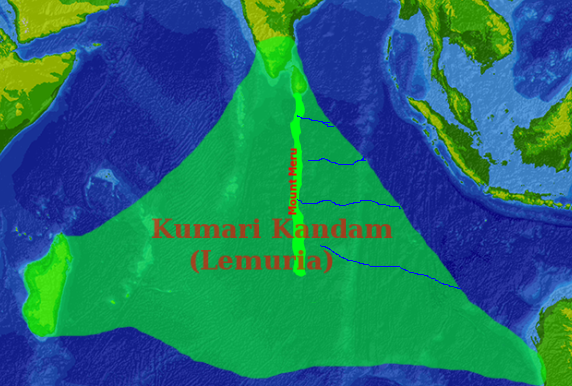
Is there Heaven , Earth & Patala or were they three regions on adjacent to the other starting from deep S to the North towards the Himalayas. And if the Deva’s ruled the Norther most area did that automatically qualify as Heaven and Naga’s of extreme S become “patala”. Was there a land mass where the current Indian Ocean exists that extended almost all the way to the Antarctica ?

Geologists say that the Anadaman & Nicobar islands are actually peaks of mountain ranges which was submerged in the ocean thousands of years back. Was there a land mass there that existed – which sometimes finds mention in old Tamil Sangam Literature ? If Tamil is indeed a language as old as Sanskrit how come the history books at school don’t even talk about it ?  Is the history we know the real History or is the history that was crafted by the British along with the Aryan Invasion Theory

3f9e1963cf41

Nobody knows the answers but we believe what we have been told over the years, they make great stories and there is no need to question them – so we continue to be brainwashed.

If we were a great civilization and world beaters 5000 years back then a short period of domination by invaders would not have changed our DNA – if Europe and Japan could rise from the ashes so could we  – but we haven’t and we still cling to the past as the present is mired in scams & controversies resulting in abysmal poverty and lack of infrastructure.

Last few years there have been many books and discussions on this topic and its good to see questions being asked. Lets hope we see more research on these topics and hopefully get to see light at the end of the tunnel , which will eventually ensure that we are not brainwashed.

Introduction to “Rudram”

1 Feb
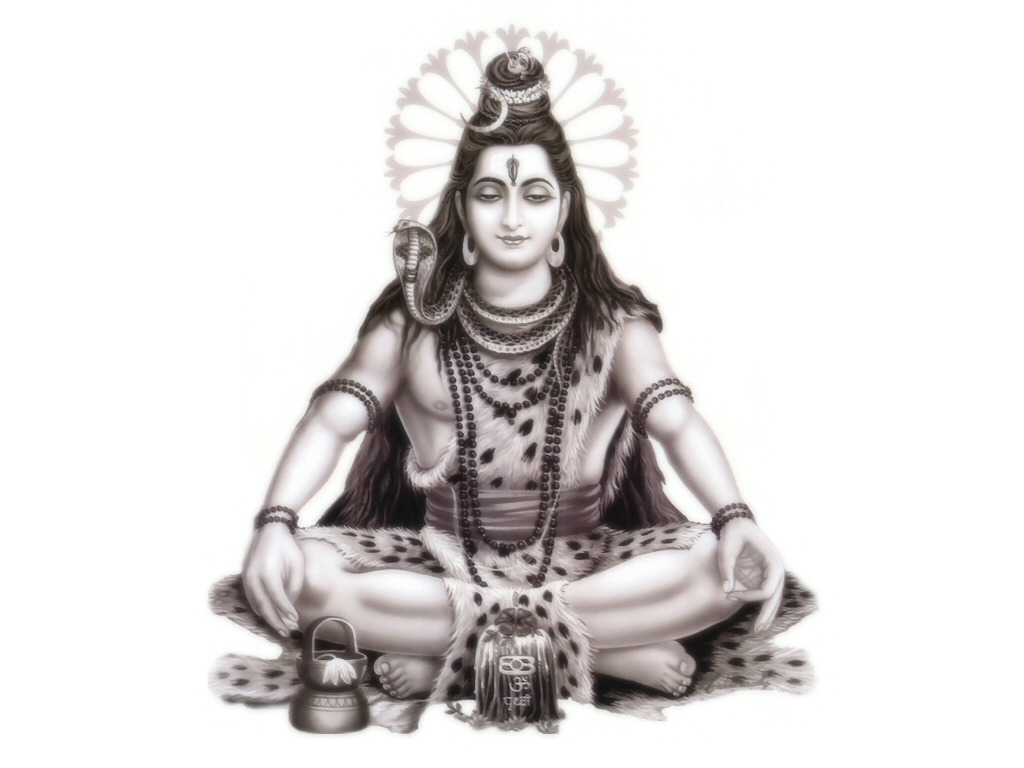
This is a quick & simple FAQ in layman terms on “Rudram” – a special prayer that is chanted to Lord Rudra (Shiva) – a Vedic God. I hunted in many places for this info and finally stitched up this FAQ from multiple sources and some help from a friend
1. What is Rudram ? 
 
 Śrī Rudram, also known as Śrī Rudrapraśnaḥ, is a hymn offered to the all pervading Brahman, designated as Rudra-Śiva, present in auspicious, benign forms as well as terrible forms which He assumes at the time of the dissolution and the destruction of the cosmos. It occurs in the Taittirīya Saṁhitā of the Kṛṣṇa Yajurveda in the 4th kāṇda (chapter), 5th praśna (topic) and it is considered as one of 108 Upaniṣads. It is also known as Namakam because of the repeated word namaḥ in it. 
 
Śrī Rudram is divided into 11 anuvākas (passages) and consists of 37 ṛks (verses) in various Vedic chandas (meters) in anuvāka 1, 10 and 11. Anuvākas 2 to 9 and the last line of anuvāka 11 consist of 130 yajus (sacrificial formulas). 
  
2. Who is Rudra ? 
 
Rudra is a mythological  god of the Vedic Aryans. He finds mention in the Rig Veda but there is a detailed section in praise of Rudra in the Yajur Veda. 
Rudra has two forms, ghora or terrible form and śiva or auspicious form. Hence Rudra is one side and Śiva the other side of the same coin. They are not two, but one. The Brāhmaṇa text which interprets the Rudram states: “Rudra is verily this fire. He has two forms; one terrible, the other auspicious. If a man does sacrifice to Him by chanting the Rudram, that man pacifies the terrible form”.
 
The word Rudra has 4 root meanings: (a) dreadful, terrific, angry; (b) great or large; (c) driving away evil; (d) fit to be praised. Another explanation derived from the meaning of its roots is also; “ru”, to cry or to teach, “rud”, to make a person weep, and “dra” to flow. HenceRudra is considered as a deity who teaches the supreme knowledge to all and whose energy flows in everything
 
Rudra
 
3. What is the significance of Sri Rudram ? 
 
The purpose of this magnificent hymn is to set aside once and for all, the extra-cosmic notion of God that people sometimes entertain in their religious fervour, and to instil into the minds of people the greater, profounder knowledge of the fact that God is not merely the creative extra-cosmic Parent of the Universe, but He is also immanent in every particle, in every speck of space, in every unit of time, in every nook and corner, in every particle of creation. 
 
A very intriguing aspect of God present in this wondrous hymn is that God is existing in both the aspects; the good and the bad, the beautiful and the ugly, the right and the wrong, the positive and the negative, the high and the low, the conceivable and the inconceivable, mortality and immortality, existence and non-existence. 
 
It is considered as the only hymn of its kind in the religious literature of the entire world which focuses on the idea of God, not only associated with the ideas of pleasant and good, but also with the idea of dreadful and destructive; that the God permeates everything in manifestation, including aspects deemed not ethical by the purists and fault-finders. 
 
4. Why Chant Rudram ? 
 
It is said: “By reciting Veda once, he becomes pure on that day, but by reciting Rudram the very next moment he gets purified.” Yet another verse declares: “Where a devout reciter of the Rudram lives, be it in a village or town, that place will be free from disease, drought, thefts, and other ills.” 
 
Śiva Purāṇa further explains: “By chanting Rudram, one gains both worldly pleasures and liberation.” The Jābāla Upaniṣadstates: “Once the students of sacred knowledge asked sage Yājñavalkya: Can we gain eternal life by repetition of mantras? Yājñavalkya said: By the repetition of śatarudrīyaa man becomes immortal, for the names of God therein are nectarine.” Kaivalya Upaniṣadalso declares: “Whoever reads śatarudrīya becomes pure as fire, becomes pure as air”. 
 
5. What is Chamakam ? 
 
Chamakam, occurs in the Taittirīya Saṁhitā of the Kṛṣṇa Yajurveda in the 4th kāṇda, 7th praśna. It is so called on account of the recurrence of the word ca me directly translated as “and me”. After praying and identifying Rudra with everything in the NamakamCamakam is usually recited immediately after, in which the devotee asks Him to give him everything, 347 things to be precise, coupled with the article ca (and) and the verb me kalpatām (be granted unto me). Camakam furnishes completely the idea of human happiness and defines in the highest degree the desires to be asked or to be granted. Camakam roots are firmly implanted in the worldly desires ultimately leading to the divine fulfilment 
  
6. How much time does it take to Chant the Rudram ? And why are there 11 priests involved in the chanting ?
 
The typical time to chant the Sri Rudram (both Namakam and Chamakam) is about 40 mins. 
 
Rudram is the most sacred means of worshipping Lord Siva. Sage Satapatha in his treatise “Maharnava Karma Vipaka” listed 4 types of procedures to propitiate Lord Siva, Ekadasa Rudram, Maha Rudram and Athi Rudram; each has greater significance than its preceding one. ‘Athi’ means “ultimate”. Therefore, Athirudram is the highest form of worship of Lord Shiva. Athirudram is a destroyer of all sorrows and the provider of ‘Kshema’.
 
The Sri Rudram has 11 anuvakas of Namakam and 11 anuvakas of Chamakam. After Each chanting of One round of Rudram one Anuvaka Each of Chamakam is chanted. Eleven recitations of Rudram followed by one recitation of Chamakam is called Ekadasa Rudram. This constitutes one unit of Rudra Homam. Eleven rounds of Ekadasa Rudram makes one Laghu Rudram. Eleven Laghu Rudra chartings make one Maharudram and eleven Maharudram recitations is the Athirudram. In a “AtiRudram yagna” Everyday One Maharudram is completed and in eleven days an Athirudra Mahayagnam is completed. Thus in the Athirudra Mahayagnam, the Srirudram hymn is chanted in all 14,641 times by 121 Ritwiks in 11 days with the performance of 1331 rudra Homams simultaneously.
 
The number 11 has a big significance in propitiating Lord Siva. The 11 priests are involved/required in the chanting to meet the  specific number of recitations prescribed by the procedures.
 
 
7. Why is Rudram Chanted at Sathabhishekam functions ? 
 
Man, according to Vedaantha and Yoga philosophies, is charged with a spark of the universal soul. Therefore, such functions are conducted to worship the atman residing in him so that he can unite with it ultimately. This uniting with the “Atman” is the sole purpose of human life and confers on the devotee  the highest boon of immortality, i.e. liberation from the cycle of birth and death. Lord Shiva who is easy to please is also the embodiment of time and Rudram is chanted as an expression of gratitude for the long life granted and also to seek the ultimate boon of immortality.
 
 
8. What is the benefit of listening to Rudram Chamakam ? 
 
A devout listener and seeker of Rudram Chamakam is blessed with both worldly and spiritual benefits such as good health, peace of mind and pure joy.  Slowly and steadily it draws the listener to spirituality in the quest of the truth behind human existence.
 
For a simple explanation on the Gayatri Mantra check out
 https://vak1969.com/2015/02/06/the-gayatri-mantra-a-simple-explanation/
 

Introduction to “Rudram”

1 Feb
This is a quick & simple FAQ in layman terms on “Rudram” – a special prayer that is chanted to Lord Rudra (Shiva) – a Vedic God. 
1. What is Rudram ? 
 
 Śrī Rudram, also known as Śrī Rudrapraśnaḥ, is a hymn offered to the all pervading Brahman, designated as Rudra-Śiva, present in auspicious, benign forms as well as terrible forms which He assumes at the time of the dissolution and the destruction of the cosmos. It occurs in the Taittirīya Saṁhitā of the Kṛṣṇa Yajurveda in the 4th kāṇda (chapter), 5th praśna (topic) and it is considered as one of 108 Upaniṣads. It is also known as Namakam because of the repeated word namaḥ in it. 
 
Śrī Rudram is divided into 11 anuvākas (passages) and consists of 37 ṛks (verses) in various Vedic chandas (meters) in anuvāka 1, 10 and 11. Anuvākas 2 to 9 and the last line of anuvāka 11 consist of 130 yajus (sacrificial formulas). 
2. Who is Rudra ? 
 
Rudra is a God of the Vedic period.  He finds mention in the Rig Veda but there is a detailed section in praise of Rudra in the Yajur Veda. 
Rudra has two forms, ghora or terrible form and śiva or auspicious form. Hence Rudra is one side and Śiva the other side of the same coin. They are not two, but one. The Brāhmaṇa text which interprets the Rudram states: “Rudra is verily this fire. He has two forms; one terrible, the other auspicious. If a man does sacrifice to Him by chanting the Rudram, that man pacifies the terrible form”.
 
The word Rudra has 4 root meanings: (a) dreadful, terrific, angry; (b) great or large; (c) driving away evil; (d) fit to be praised. Another explanation derived from the meaning of its roots is also; “ru”, to cry or to teach, “rud”, to make a person weep, and “dra” to flow. Hence Rudra is considered as a deity who teaches the supreme knowledge to all and whose energy flows in everything
 
Rudra
 
3. What is the significance of Sri Rudram ? 
 
The purpose of this magnificent hymn is to set aside once and for all, the extra-cosmic notion of God that people sometimes entertain in their religious fervour, and to instil into the minds of people the greater, profounder knowledge of the fact that God is not merely the creative extra-cosmic Parent of the Universe, but He is also immanent in every particle, in every speck of space, in every unit of time, in every nook and corner, in every particle of creation. 
 
A very intriguing aspect of God present in this wondrous hymn is that God is existing in both the aspects; the good and the bad, the beautiful and the ugly, the right and the wrong, the positive and the negative, the high and the low, the conceivable and the inconceivable, mortality and immortality, existence and non-existence. 
 
It is considered as the only hymn of its kind in the religious literature of the entire world which focuses on the idea of God, not only associated with the ideas of pleasant and good, but also with the idea of dreadful and destructive; that the God permeates everything in manifestation, including aspects deemed not ethical by the purists and fault-finders. 
 
4. Why Chant Rudram? 
 
It is said: “By reciting Veda once, he becomes pure on that day, but by reciting Rudram the very next moment he gets purified.” Yet another verse declares: “Where a devout reciter of the Rudram lives, be it in a village or town, that place will be free from disease, drought, thefts, and other ills.” 
 
Śiva Purāṇa further explains: “By chanting Rudram, one gains both worldly pleasures and liberation.” The Jābāla Upaniṣadstates: “Once the students of sacred knowledge asked sage Yājñavalkya: Can we gain eternal life by repetition of mantras? Yājñavalkya said: By the repetition of śatarudrīyaa man becomes immortal, for the names of God therein are nectarine.” Kaivalya Upaniṣadalso declares: “Whoever reads śatarudrīya becomes pure as fire, becomes pure as air”. 
 
5. What is Chamakam? 
 
Chamakam, occurs in the Taittirīya Saṁhitā of the Kṛṣṇa Yajurveda in the 4th kāṇda, 7th praśna. It is so called on account of the recurrence of the word ca me directly translated as “and me”. After praying and identifying Rudra with everything in the NamakamCamakam is usually recited immediately after, in which the devotee asks Him to give him everything, 347 things to be precise, coupled with the article ca (and) and the verb me kalpatām (be granted unto me). Camakam furnishes completely the idea of human happiness and defines in the highest degree the desires to be asked or to be granted. Camakam roots are firmly implanted in the worldly desires ultimately leading to the divine fulfilment 
  
6. How much time does it take to Chant the Rudram ? And why are there 11 priests involved in the chanting?
 
The typical time to chant the Sri Rudram (both Namakam and Chamakam) is about 40 mins. 
 
Rudram is the most sacred means of worshipping Lord Siva. Sage Satapatha in his treatise “Maharnava Karma Vipaka” listed 4 types of procedures to propitiate Lord Siva. Ekadasa Rudram, Maha Rudram and Athi Rudram; each has greater significance than its preceding one. ‘Athi’ means “ultimate”. Therefore, Athirudram is the highest form of worship of Lord Shiva. Athirudram is a destroyer of all sorrows and the provider of ‘Kshema’.
 
The Sri Rudram has 11 anuvakas of Namakam and 11 anuvakas of Chamakam. After Each chanting of One round of Rudram one Anuvaka Each of Chamakam is chanted. Eleven recitations of Rudram followed by one recitation of Chamakam is called Ekadasa Rudram. This constitutes one unit of Rudra Homam. Eleven rounds of Ekadasa Rudram makes one Laghu Rudram. Eleven Laghu Rudra chartings make one Maharudram and eleven Maharudram recitations is the Athirudram. In a “AtiRudram yagna” Everyday One Maharudram is completed and in eleven days an Athirudra Mahayagnam is completed. Thus in the Athirudra Mahayagnam, the Srirudram hymn is chanted in all 14,641 times by 121 Ritwiks in 11 days with the performance of 1331 rudra Homams simultaneously.
 
The number 11 has a big significance in propitiating Lord Siva. The 11 priests are involved/required in the chanting to meet the  specific number of recitations prescribed by the procedures.
 
 7. Why is Rudram Chanted at Sathabhishekam functions? ( 80th Birthday after 1000 moons have been signed) 
 
Man, according to Vedantha and Yoga philosophies, is charged with a spark of the universal soul. Therefore, such functions are conducted to worship the atman residing in him so that he can unite with it ultimately. This uniting with the “Atman” is the sole purpose of human life and confers on the devotee  the highest boon of immortality, i.e. liberation from the cycle of birth and death. Lord Shiva who is easy to please is also the embodiment of time and Rudram is chanted as an expression of gratitude for the long life granted and also to seek the ultimate boon of immortality.
 
8. What is the benefit of listening to Rudram Chamakam? 
 
A devout listener and seeker of Rudram Chamakam is blessed with both worldly and spiritual benefits such as good health, peace of mind and pure joy.  Slowly and steadily it draws the listener to spirituality in the quest of the truth behind human existence.
 

Please follow my Facebook page for regular updates on A Few Good Things 

https://facebook.com/afewgoodthingsvak1969/

Origin & Evolution of Hinduism – In simple layman terms

1 Nov

It all started a few months back. As we were studying History my daughter wanted to know who was the founder of Hinduism? My initial response was the common answer – Hinduism is a way of life.  But I realized there is more to it.

I consider myself quite religious – What is the concept of Hindu Religion to me ? –  Visiting a temple once a week  (and visiting old ancient temples both for history and grace regularly) , doing a small puja at home on every traditional occasion and chanting the slokas I learnt from my mother when I was 6 ,  calling a Vadyar  for any function – Griha Pravesh, Upanayanam etc , lots of rituals , lots of superstition, listening to Vishnu Sahasranam on the way to office – in short my concept of Religion is what I have learnt from Amar Chitra Katha , TV Serials, Stories told to us as kids. And thats exactly the manner in which I am propagating religion to my kids.

I have not read the Vedas, The Upanishads, The Bhagvad Gita, The Puranas ( But I plan to do so) – and I am not sure how many of my 600+ friends & relatives in FB & Linked In  would have read them. Fortunately the religion does not mandate that I read them – but I ask myself am I true Hindu without understanding what is written in these books ?

Basis a bunch of books I read ( thanks to Flipkart and its excellent collection) , a visit to the Ramana Maharishi & Aurobindo Ashram recently and finally a sitting with a wonderful couple in our complex I slowly started connecting the dots. This journey can be very very exciting and it can take years to get deeper & deeper. Most people start this exercise when they are 60+, but that is futile as you cannot practise the learnings when 80% of life is over. So this blog is an attempt to share some simple information and hopefully some may get interested to dwell deeper.

The first step in starting this exercise is to try  map and the different stages of evolution – a sort of an index that can help one in getting started. Here is my attempt at drawing up a time map. What is interesting to see how the journey moves with time  from Priests – Rishis  – Cult Leaders and finally to Scholars. Along the journey you will see that History , Religion & Spirituality are entwined together.

Phases of Evolution 

1. The Indus Valley Civilization ends around 1800 – 1900 BC. They were highly evolved builders and excavations show large man made structures, figurines of what could be deities, Lingams etc. Nobody know what caused their disintegration – but their decline mirrors the decline of other civilizations like Sumerian & Mesopotamian.

2. Distance from Iran (Persia) to Indus Valley is as close as Mumbai is to Bangalore – so migration to fertile pastures could have easily happened as the nomadic Aryans moved around. In the Rig veda we see many similiarities with Persia & the area around it – Fire God, Sacred Thread , use of Horses , Hymns praising Nature, Ahura the God ( who later probably became Asura)

3. The Vedic Aryans believed in Nature Gods. Fire (Agni) , Wind (Vayu) , Dawn (Usha) , Thunder (Rudra) , Lightning (Indra)  etc – very similar to what we see in Greek Mythology. The mode of prayer was the Yagna – hymns being chanted in praise of Gods and a lot of  animal sacrifice. The Hymns that we see in the initial part of the Rig Veda were mainly in praise of Nature Gods – they were like songs ( Easy to remember Vs prose) – the sanskrit used is very archaic. The Initial part of the Rigveda or the Samhita almost entirely comprises  of these hymns. There is no spiritual meaning here

2. As the travelers started settling down in Tribes they created their own “Gothrams” or Clans and the most knowledgeable person of the Clan was made the Chief. (The word Gorthram is linked to Cows and it could well have been the the Chief – the most intelligent of the clan had the task of sorting out infiights amongst the tribe when the cattle got mixed up)

3. These Chiefs then became the Priests to the Tribal Kings. In addition to the Samhitas now came the Brahmanas around 1000 BC. These talked of different rituals and how they were to be conducted. It talks about how the Altar for the Yagnas has to be set up. The Samhita & The Brahmanas together called the Karmakanda may rightly be called the Phase – 1 of  Rig Veda and the Vedic Religion or the Origin of Hinduism. They were merely chantings with no spiritual meaning as yet.

Unlike the Harappan culture – hardly any construction activity was unearthed from the ancient Aryans. So the fancy Palaces and Towns we read about in Mahabharata & Ramayana may just be imagination. Bull & Horse Sacrifice was common – and meat eating across all was prevalent. (There is more to the Aswamedha Yagna – than just a lovely white horse roaming around !!)

4. The next phase is that of the Aranyakas – or Forest Literature. This is the phase when the Rishis went to the forests & mountains and meditated. Many of them attained self actualization and developed Siddhis or supernatural powers. The knowledge they gained were considered as inputs  directly from God.  This repository of knowledge evolved over nearly 1000 years and was completed around 200 BC. This is called Vedanta or the Spiritual Literature and is a fountainhead of knowledge. 

5. Mahabharata , Ramayana & Gita.  There is reference in the Vedas to a major war that was fought around 900 BC. There is also mention to the Kuru Clan of Tribes. So it is indeed true that a big war was fought and it does find mention in many texts – but a lot of the wonderful stories woven around this war may well be the work of an excellent imaginative writer. Even the Gita may have been written over a 500 year period and reached its final shape around 200 – 300 AD.  The Ramayana is probably dated around 3rd Century BC.

6. Around 500 BC the Buddhist & Jain eras begin. ( Not many know that there was a 3rd religion called Ajinkayas – whose founder broke away from Mahavira).  Contrary to most beliefs Buddha and the Buddhists were meat eaters while the Jains were pure vegetarians. .This continued for nearly a 1000 years and by 500 AD a large part of India was under the sway of these religions, there was a need to Re establish Hinduism.

It was under the Gupta era that the concept of large temples started to develop. These become community centers for social & religious events. Some say that some of the Temples were actually built on top of Buddhist temples.  The concept of deities & temples was unknown to the Vedic Aryans. The original inhabitants of the country (Dasyus – the word Das or servant probably originates from here) had a practise of  praying to Rocks , Figurines , Devis , Shiva Lingams etc. Gods like Mariamman , Ayyappa and Muruga were prevalent in S India as early as 500 BC or earlier.

The oldest Hindu temple functioning today, and  not  in ruins, would be the Ma Mundeshwari  Temple in Kaimur District of Bihar. It has been  restored by Archaeological Survey of India (ASI) and its construction date is ascribed to . 108 A D. Since then rituals and worship have been taking place at this temple without a break. Thus making it the oldest functional Hindu  temple. So the history of temples in India is just about 2000 years old. 

By 500 BC  the 4 vedas were established – the original Rig Veda , The Sama Veda containing songs in praise of the gods & the Yajur Veda with ritual practise and finally the Atharva  Veda & The Tantras wilth magic spells.   Tantric cult spread to the east and is prevalent in some cults to this day. The Vedas were never written till about 100 AD, it was always passed on from generation to generation by memorizing . When it was recorded it was observed that there was no difference between what was produced in Kashmir or S india. This is indeed fascinating. Caste system which has been prevalent since the ancient Vedic Era became more stronger and sub castes started to develop.

This was also the time when the other Shastras namely Manusmriti, Arthashastra, Kamasutra ,  Brahmashastra & Grihashastra were written. The writing of Megasthenes also helped us to get an insight into life in those days.

7. The Puranas were started around 4th & 5th century AD. They continued to evolve till the 13th century.  The Concept of Bhakti Yoga started evolving from T Nadu after 300 AD. Two sects Vaishnavites & Shaivities slowly emerged – the Vishnu Purana & The Shiva Purana was written. All the existing Gods were bracketed under the two sects. The concept of the Avatars of Vishnu emerged and in some cases even Buddha was incorporated as an avatar of Vishnu. This was in a way a merger of the Aryan Vedic Religion and the Old Religion of the existing inhabitants. An attempt to make Religion easy to understand to the masses.

Between the  7th Century & 10th Century AD the 63 Nayannars wrote passionately in praise about Shiva.

And then there were the 33 Alvars from the Vaishnavite  sect. The alvars came from a variety of social strata; their ranks include shudras and one woman. The intense devotionalism of their poetry and insistence that caste and sex are no barrier to a relationship with the Divine is uncharacteristic of classical Vedic thought, which laid a strong emphasis on the performance of the social and religious duties proper to one’s place in the social structure. Some of these were collected into a definitive canon known as the Nālāyira Divya Prabandha (“divine composition of 4000 verses”), by Nathamuni in the 10th century, and came to be seen as a source of revelation equal in authority to the Vedas in the Śrīvaiṣṇava community.

Around 800 AD Shankara played a crucial role of rejuvenating Hinduism and setting up centres across the country – following in a way the monastic traditions of Buddhism. he played a crucial role in linking the 6 Major Indian Philosophies. he summarized the ten main Upanishads explained the concept of Advaitham & Hinduism.

By 1100 AD  Ramanujam gave a fillip to Vaishnavism & Hindu revival – in the midst of muslim domination. Many gods were merged to be called forms of Vishnu, this  includes Venkata – of the famous Tirupathi hills at his time. A temple that came to prominence during the reign of Krishnadeva Raya.

There have been other famous seers and philosophers who have heard the voice of the inner self & God and reached self actualisation – Raghavendra Swamy , Madhavacharya,  Ramana Maharishi , Ramakrishna , Swami Vivekananda, Aurobindo and many spiritual leaders of today. Each one has evolved their own road to self actualisation. There are but 4 paths to choose from  Gyana Yoga , Bhakti Yoga, Karma Yoga (As explained in the Gita)  & Raja Yoga. A common link across  all these is the Pathanjali Yoga – Yoga as a form of mediation is said to be as ancient as the origin of the Vedic Religion.

Each area mentioned above is a wealth of information in itself and as I mentioned in the beginning the true meaning of Hindu Religion and its interpretation can be unique to every individual. There is a wealth of knowledge sitting there – and fortunately many Indians & Europeans have done extensive research in this area and created abridged versions – so it is possible to get all the insight you need without knowing Sanskrit.

As I continue to read some of these books will try and share the insights as best as I can. But I hope this relatively long blog has helped answer some questions and create a base foundation for each one of you  to start their own journey in search of  Truth.