Archive | Spirituality RSS feed for this section

Explore Rudraprayag from Ukhimath

6 Apr

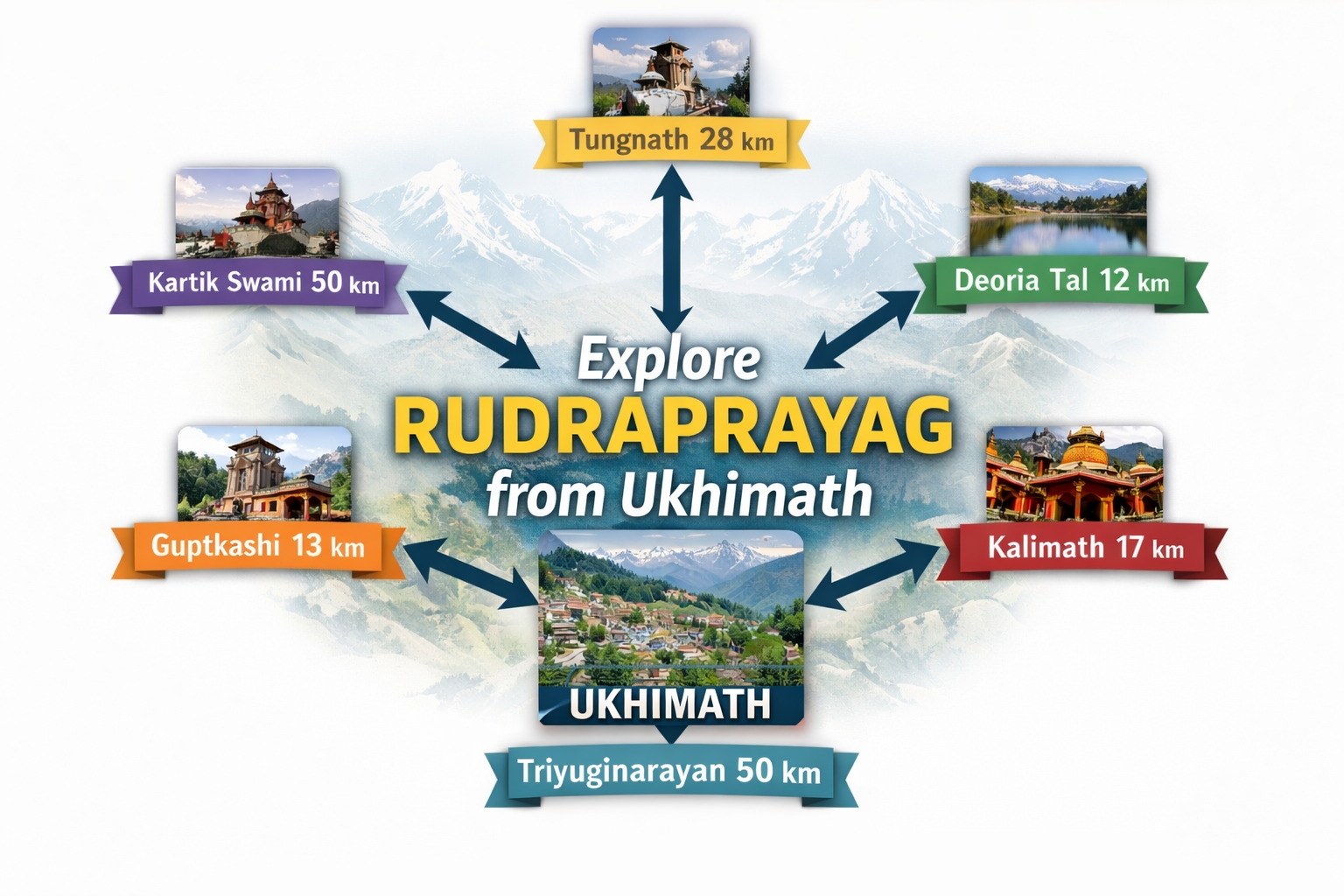
The Himalayas are always inviting. Increasingly peak crowds and dense traffic is spoiling the sanctity of this divine haven. While most make a mad rush during the 4 Dham season, I wanted to explore an offbeat trail that included energised temples and nature at its best – during the empty season. This is a unique trip that I have curated – so read on and plan for it soon.

What is the Best Time to Travel

All hell breaks loose in Garhwal when the 4 Dham Yatra starts. This year its starting around April 20th. (Opens at Akshay Trithiya and closes on Bhai Duj, a few days after Diwali). I would recommend April 1st week, basically March 25th – April 10th. Its not cold, a pleasant 12 – 25 Degrees, the rains / snow are over. Spring is in the air. Most schools in the country are having their exams – the hills are empty and freshly open. Oct 15 – Nov 15 is another option but its very cold.

Why choose Ukhimath as a base

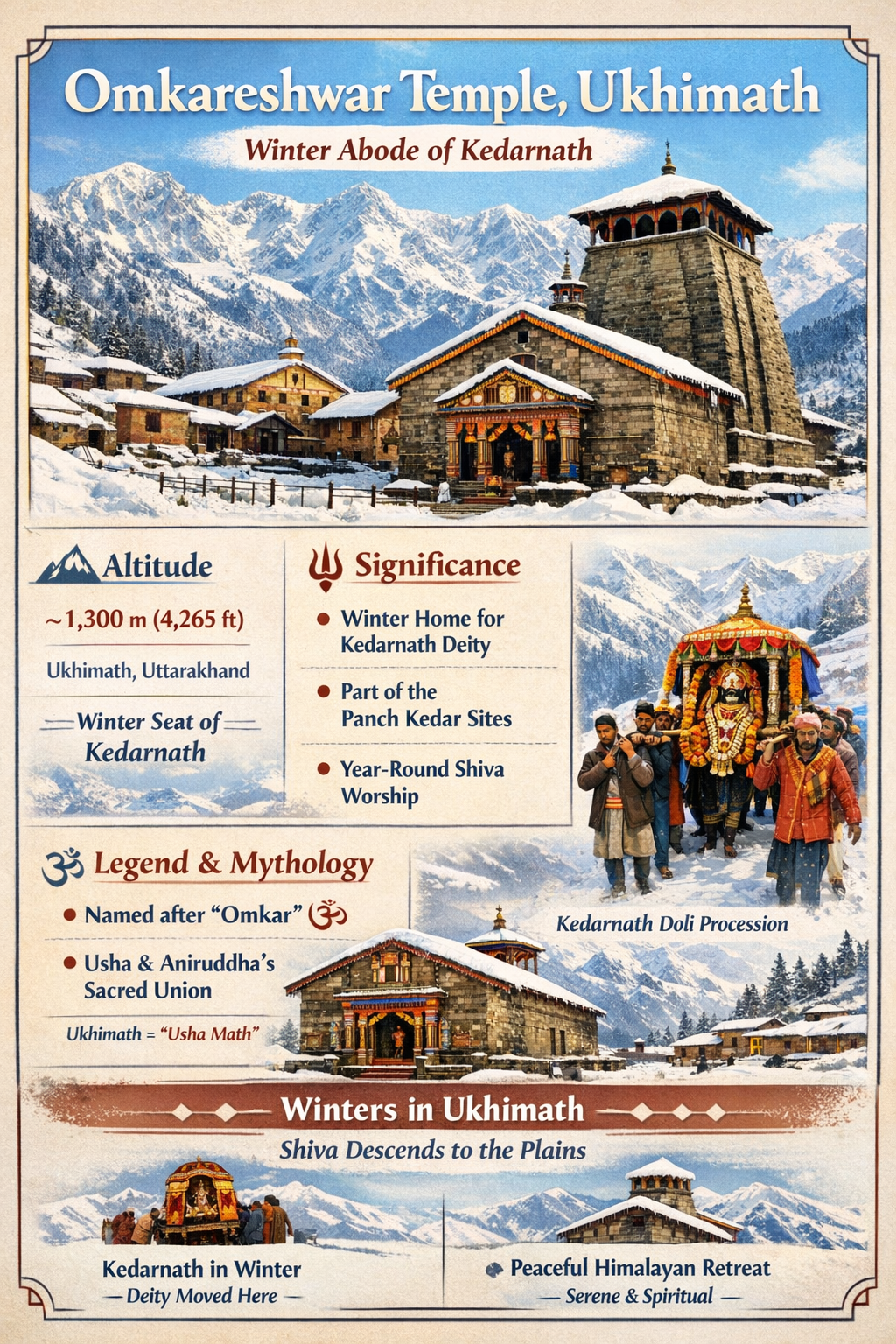
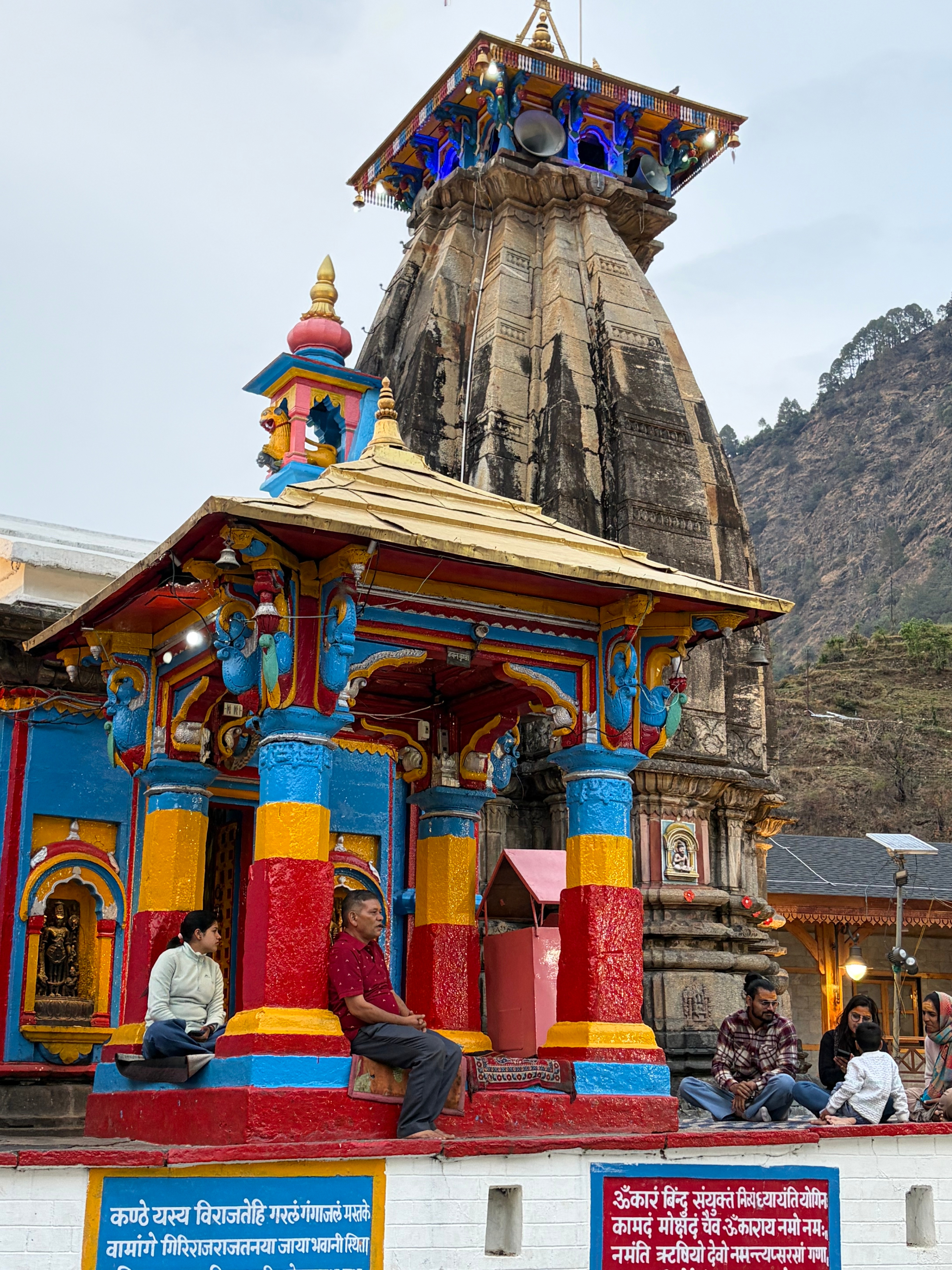
Rather than change locations every few days, I suggest make a base. I made Ukhimath my base. This is a nice town in Rudraparayag district at a distance of 175 Km from Rishikesh, about 5 – 6 hrs drive (Leave at 8.30 reach by 2.30 – including a lunch stopover) Ukhimath (4250 feet) is located on the Kedar Badri route and there are many interesting places you can access easily as day trips from here. Ukhimath is also home to an ancient Temple – the Omkareshwar temple.

Does Ukhimath have a good place to stay

Yes – probably the best hotel in the hills. The Regenta Madhuganga is an excellent property. It has 76 rooms in different combinations (Double, Family, Suite). Great location with balcony views of the Kedar mountain range (Ask for Superior Rooms with Mountain view). Excellent Pure Veg food (No Eggs / No Liquor), and great service. When your book a room choose the Breakfast & Dinner included option (Mobile – 9068688875, email – reservations.rruk@royalorchidhotels.com)

Help me plan my trip from here

This plan is based on my recent visit to Ukhimath (March 29th – April 4th : 2026) from Bangalore.

Day 0, Sunday : Bangalore to Dehradun – Night stay at Rishikesh

Day 1, Monday : After Breakfast – head to Ukhimath. Enroute cross Devprayag, Rudraprayag and reach Ukhimath by 2 PM after lunch on the way and Check in.

Day 1, Monday Evening – Visit the Omkareshwar Temple at Ukhimath (3 Km from the hotel – 5 min drive, 15 min walk)

King Mandhata, an Ikshvaku dynasty ancestor of Lord Ram, is said to have performed penance here for 12 years standing on one leg to appease Lord Shiva. Pleased, Shiva appeared as ‘Omkar’ (sound), leading to the founding of the holy Omkareshwar Temple.

Ukhimath is the winter seat of Kedarnath: When Kedarnath Temple closes (Nov–Apr), the deity is brought here in a ceremonial procession and worshipped. Also associated with Madhyamaheshwar Temple (another Panch Kedar shrine), whose idol is also worshipped here in winter. Please note this is not one of the Panch Kedar temples. (Time to spend 1 Hr)

When I visited this ancient temple was empty. Try to attend the evening aarti around 6.30 PM and spend time in the highly energised space.

Day 2, Tuesday – Visit Gupt Kashi & Kalimath (14 Km from the hotel – 40 Min drive)

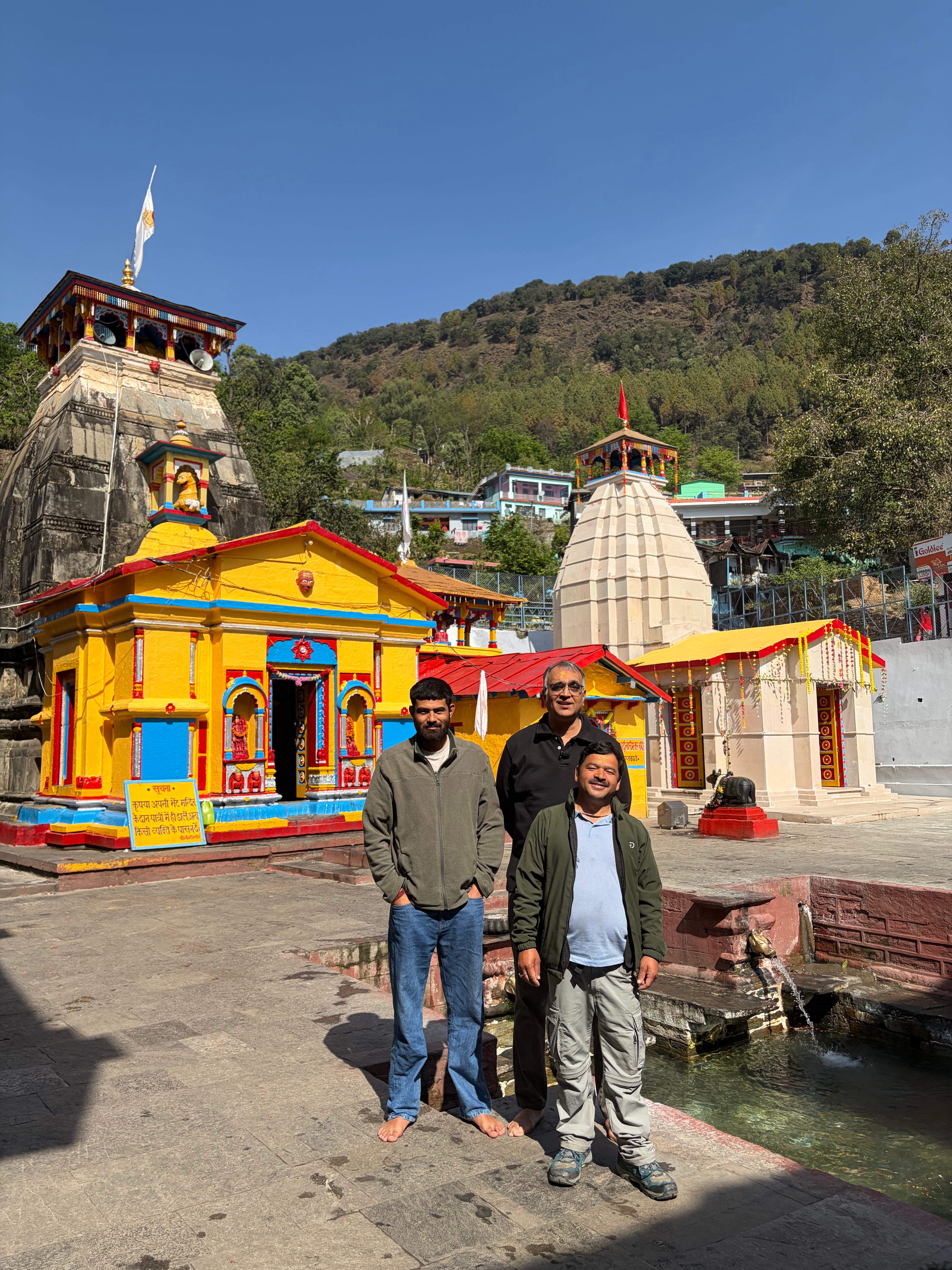
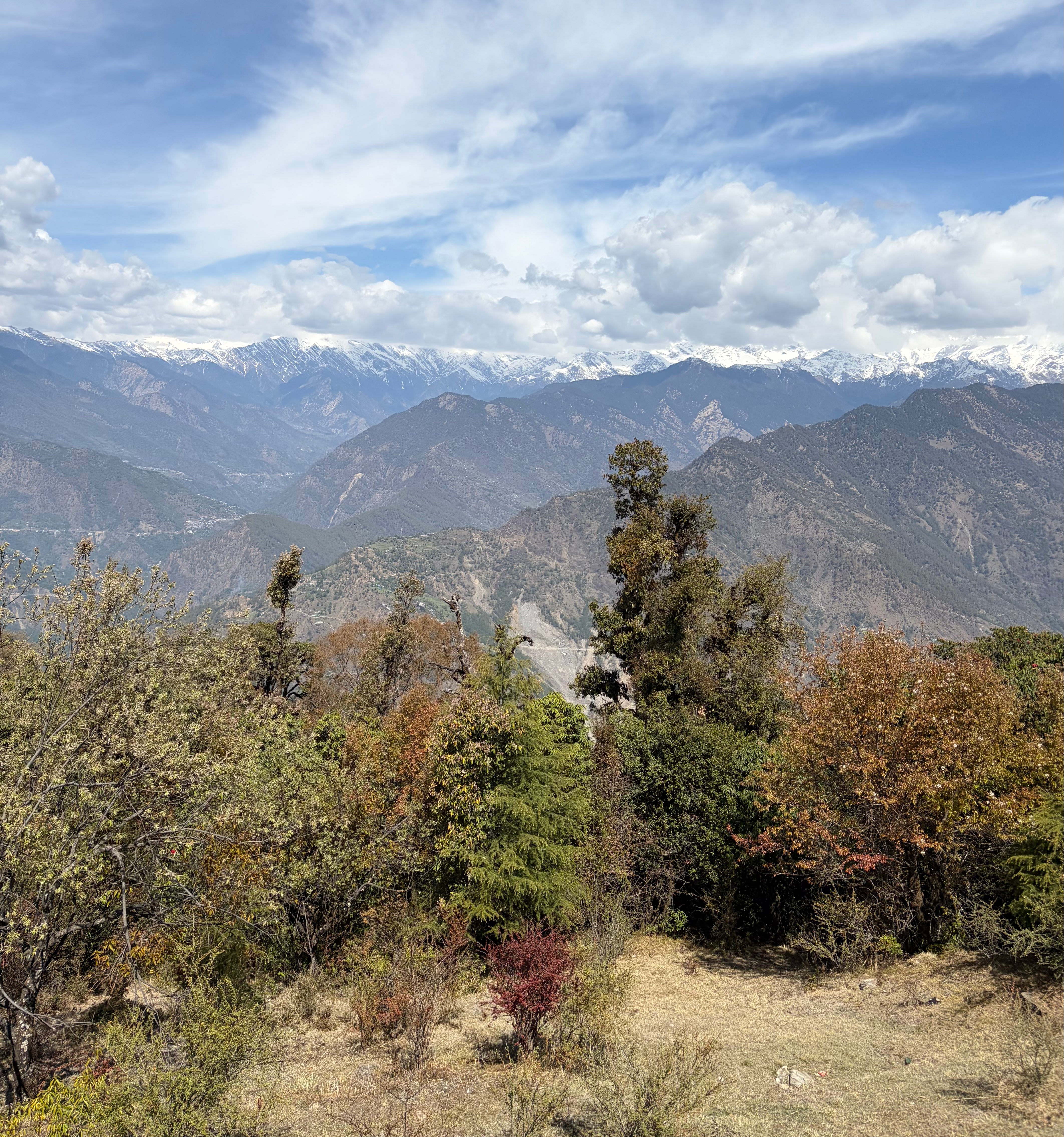
The Hotel serves breakfast at 7.30 AM so we were ready to leave at 8 AM. it was a bright day with blue skies and clear views of the Kedar Range. A short drive of less than 40 min and you cover the 14km distance to the ancient temple of Gupt Kashi. From the car park it is a 5 min walk .

As per legend this is where Lord Shiva hid from the Pandavas. The temple was empty and we could see the Shiva Lingam – it is shaped a little differently. There is also a shrine for Ardhanareshwar. Two underground streams with sweet clean water called Ganga Yamuna flow in front of the temple. carry empty bottles and fill it up. the Himalayan fresh water has magical properties. (Time to spend 45 Min – 1 Hr)

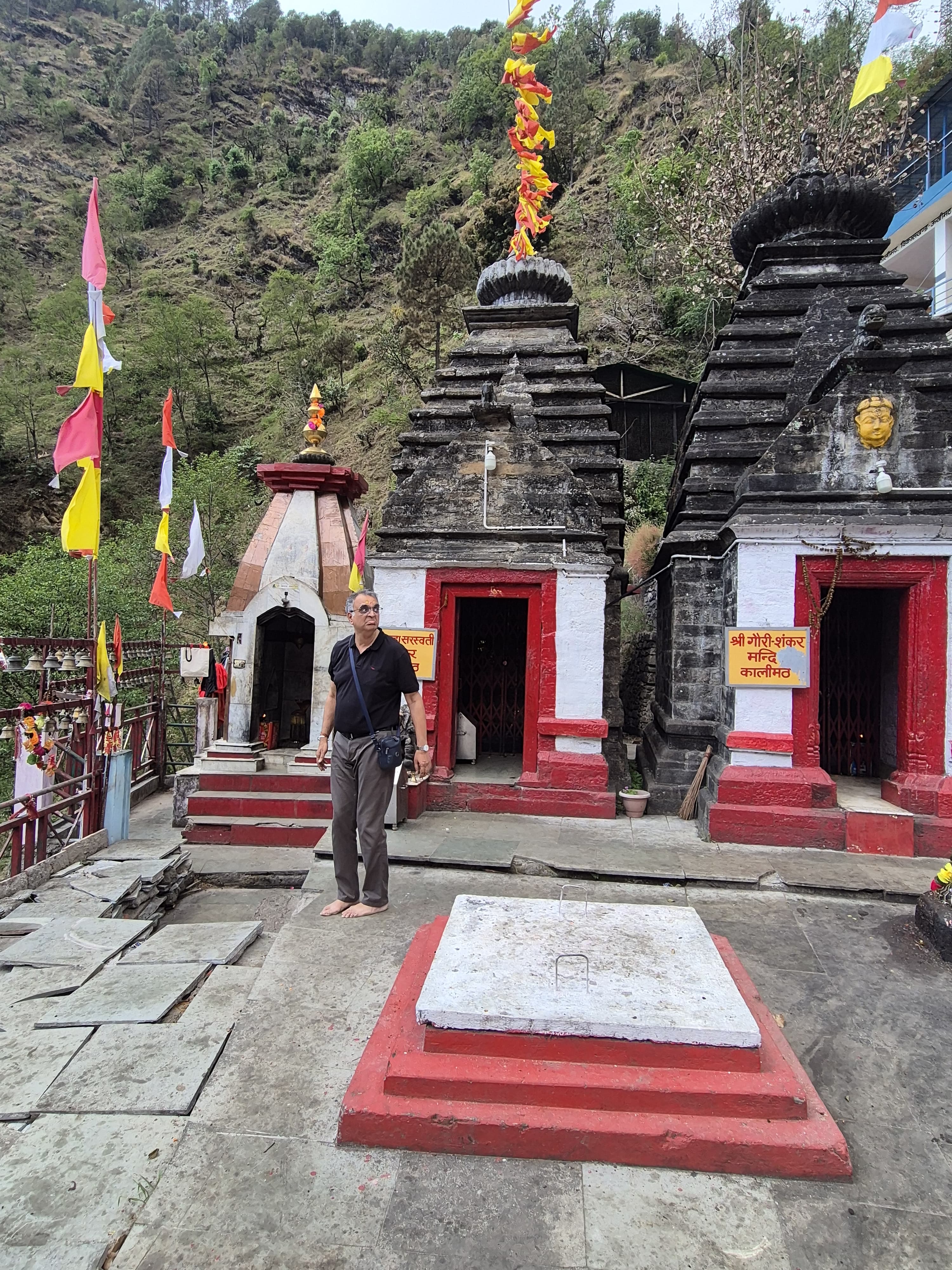
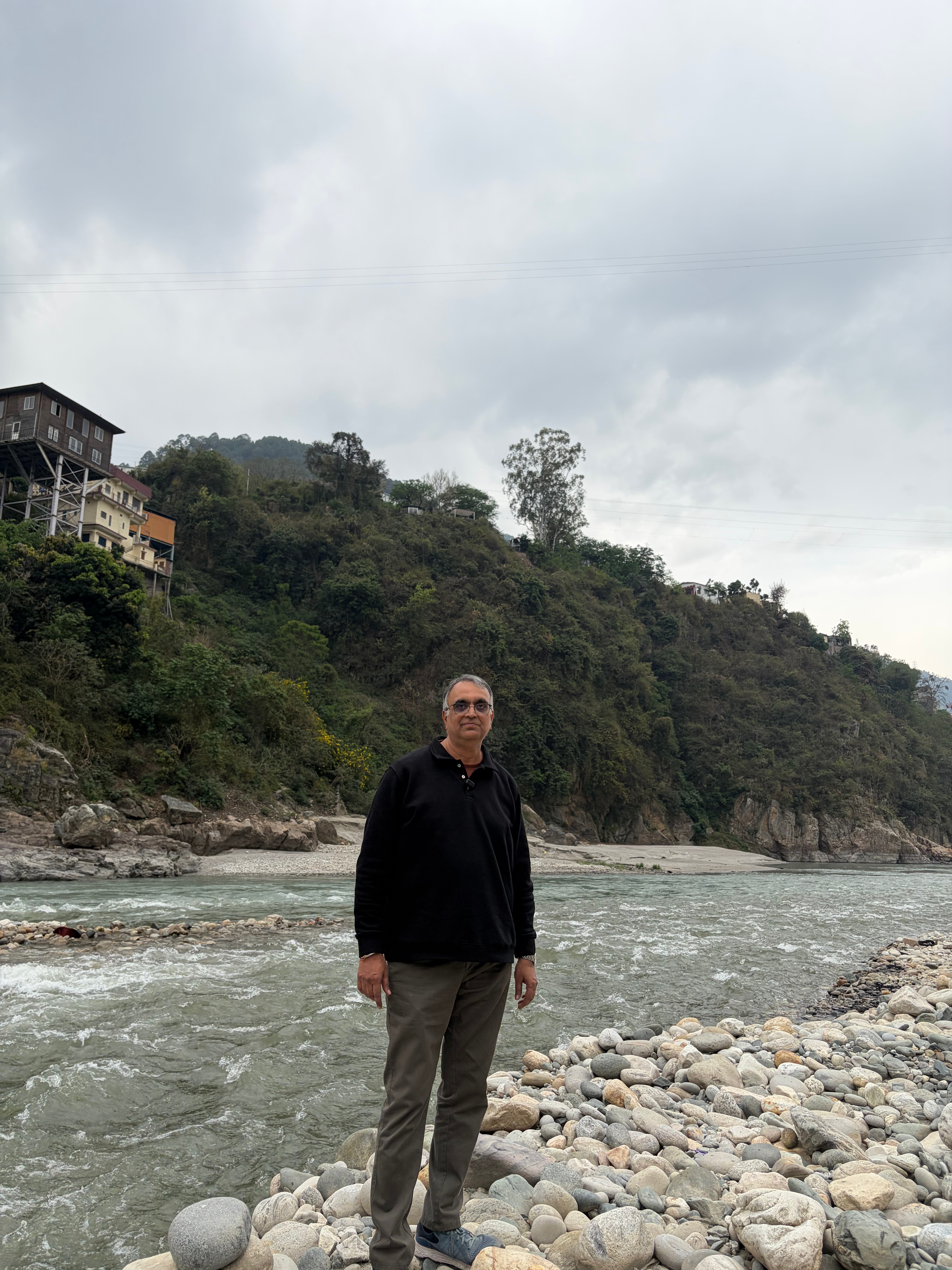
A short drive from Gupt Kashi along the gurgling Mandakini you will reach Kalimath. (13 Km – 35 Min) I stopped on the way and spent some time in the river sitting on the rocks. It was empty and nice. Sitting by a Himalayan river has a calming effect and is a great energiser. (Time to spend 30 Min). Video at end of the Blog

Kalimath is a Devi temple along the Mandakini – there is no statue. Devi is worshipped in an underground pit covered by a silver plate. Represents the formless energy (Similar to Kamakhya). Ma Kali is said to have defeated the asura Rakta Beeja and disappeared into the earth. The priest says this is one of the 108 Siddha Peethas. The temple has a connect with the Dhara Devi temple – Locals state that Devi’s body is worshipped and the head is worshipped at Dhara Devi. (Time to spend 30 Min)

We had completed all this by afternoon 1 and headed back to our hotel, reaching by 2.30. On the way back we had a simple lunch at a roadside eatery at Chunni village. You also have the option to visit the Ruch Mahadev temple – 6 Km from Kalimath + 1/2 Km trek.

That day evening – you can revisit Ukhimath temple or go for a scenic 1 hr drive towards Chopta.

Day 3, Wednesday – Trek to Deoria Taal (14 Km from the hotel – 40 Min drive)

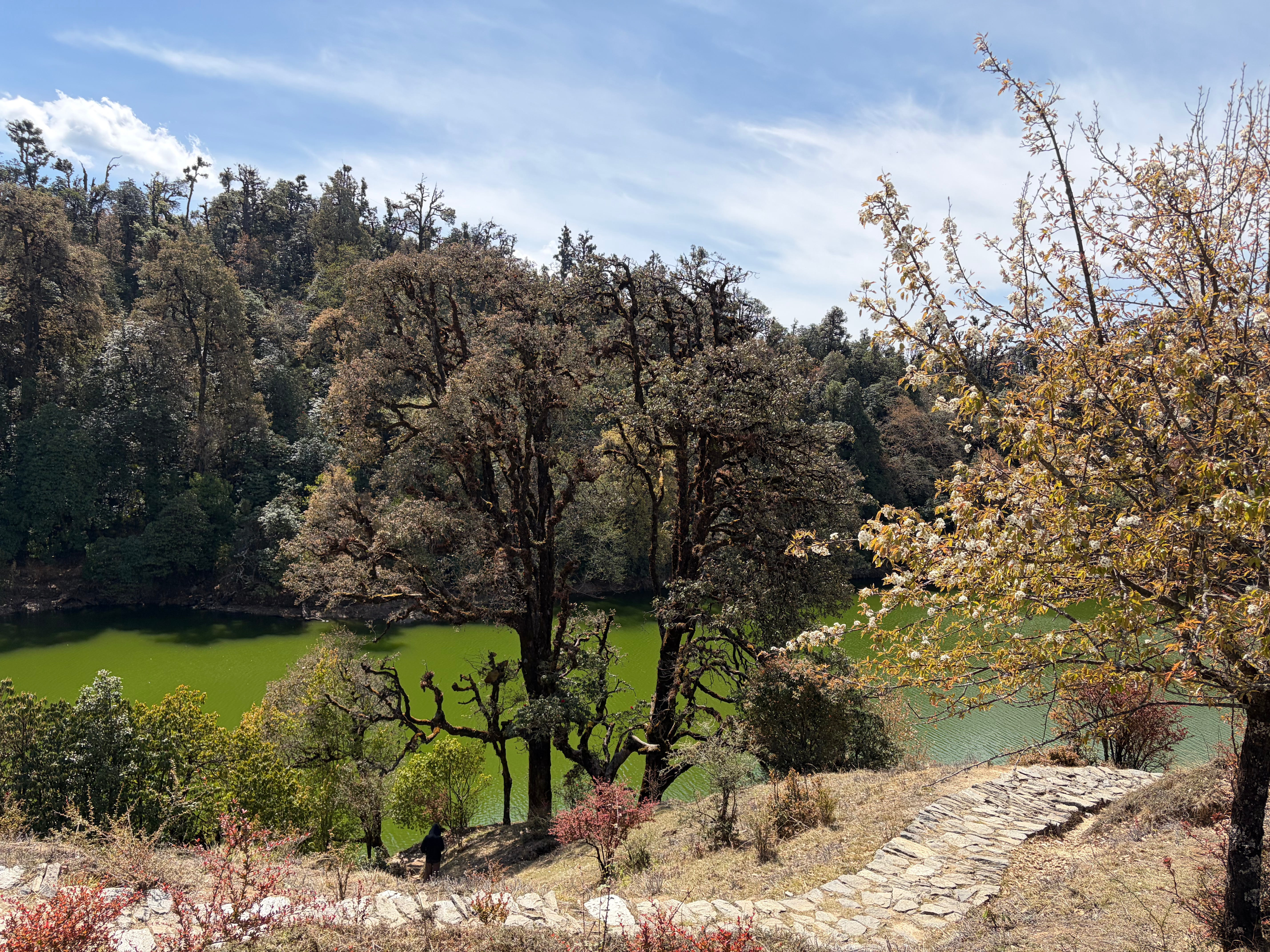
Deoria Tal is a serene high-altitude lake (~2,438 m / ~8,000 ft) located near Ukhimath in the Garhwal Himalayas, accessible via a short and scenic 2.5 km trek from Sari Village (about 14 km by road from Ukhimath). It is renowned for its crystal-clear waters that perfectly reflect the majestic Chaukhamba Peaks, making it one of the most visually rewarding yet easy treks in Uttarakhand. Beyond its natural beauty, the lake holds mythological significance as the site associated with the Yaksha–Yudhishthira episode from the Mahabharata, giving it a spiritual dimension alongside its popularity for camping, photography, and peaceful Himalayan immersion.

I found the trek a bit steep. Its a continous climb – no level areas. We left our hotel at 8 AM – reached by 9 AM , started the trek at 9.10 and reached the summit by 10.20. Spent an hr there and were down by 12.15. Reached the hotel by 1.30 and had lunch at hotel. There is a 200 Rs per person ticket.

Evening – We headed back to the Ukhimath temple

Day 4, Thursday – Triyugi Narayan Temple (50 Km from the hotel – 3 Hr drive)

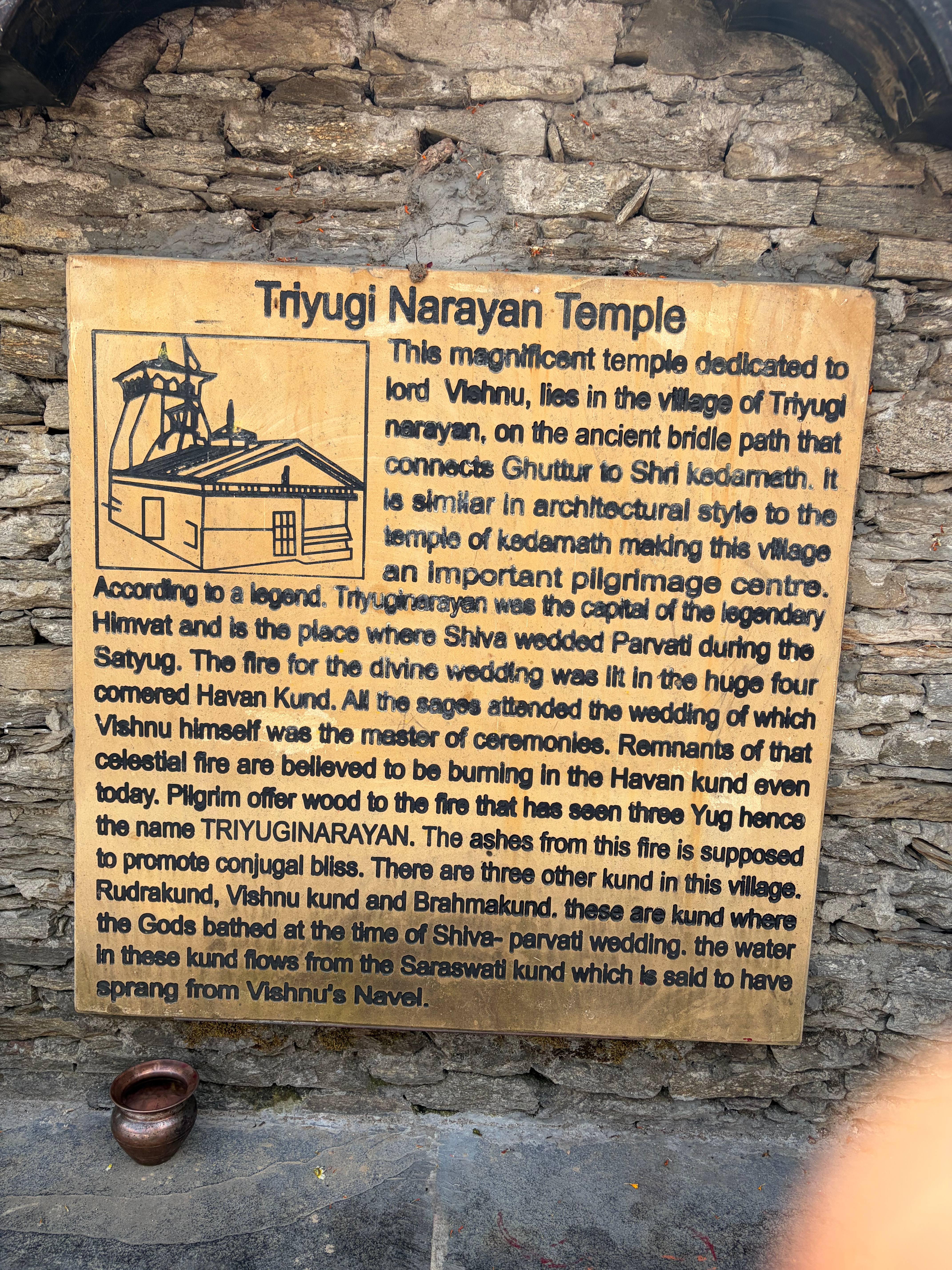
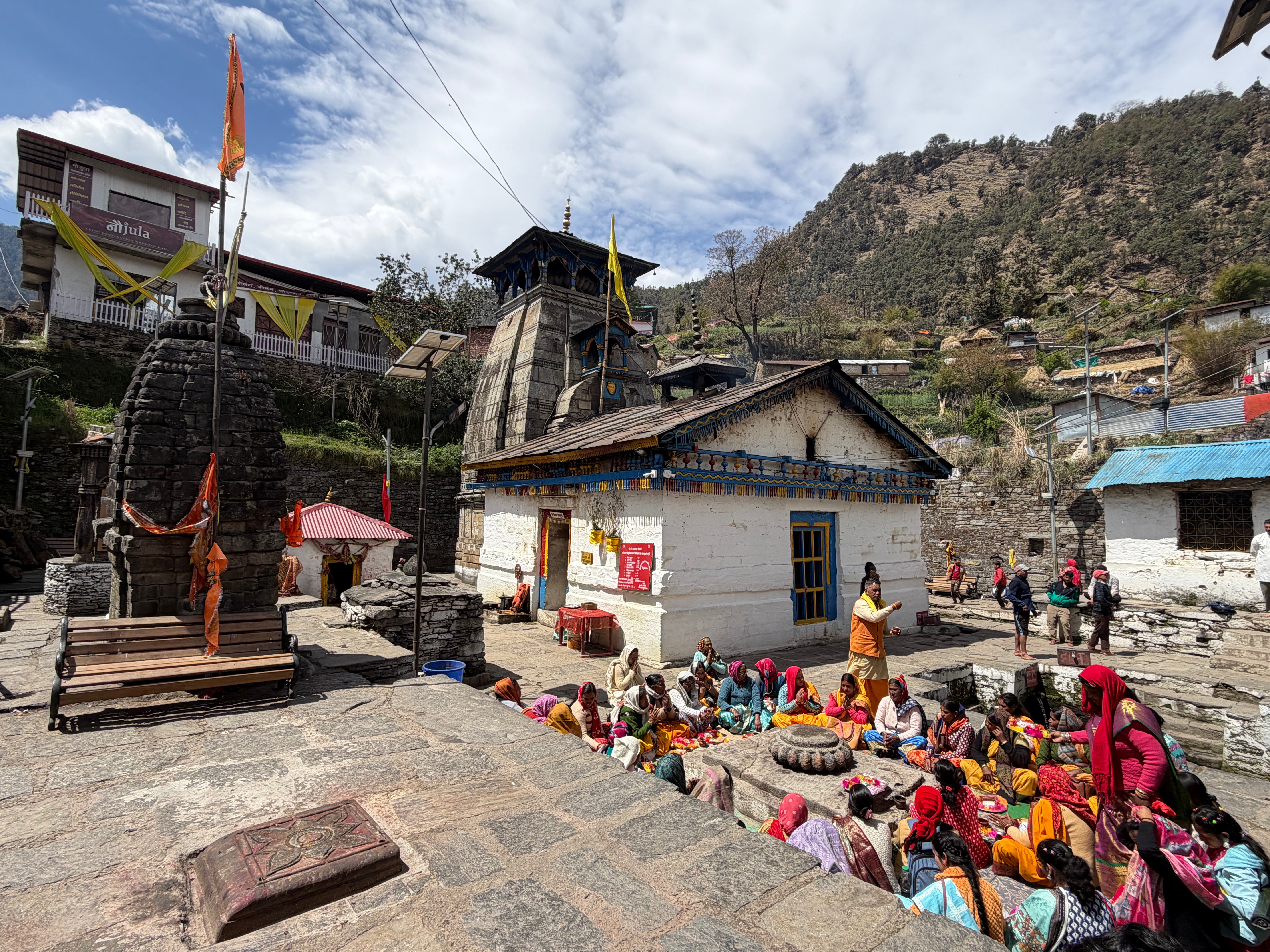
This took us 3 hrs (should be 2 hrs) since there was road work. Triyugi Narayan temple is close to Gauri Kund the starting point of the Kedarnath trek. Its also close to Sonprayag. From parking it is a short 5 min walk to the temple.

The temple is considered the site where Lord Shiva married Parvati. Vishnu acting as Parvati’s brother did the Kanyadaan and Brahma officiated as the priest. The holy fire is still kept alive across the three Yugas – hence the name Triyugi. The temple also has a few underground water Kunds. Lot of people come here to renew their marriage vows and even get married.

After spending 1 Hr at the temple we left at 12.15 and reached our hotel at 4 PM. Enroute we had lunch at a roadside eatery at Sumeru Village.

Day 5, Friday – Karthik Swami Temple (50 Km from the hotel – 2 Hr drive)

This was the most scenic drive. Small villages, nice mountain views, hardly any traffic enroute. We left at 8 AM and reached by 10.15 – started the trek and reached the temple at 10,000 feet at 11.15. Its an easy trek. Very scenic. This is the time of the year when these treks are supposed to be heavenly with the Rhododendron in full bloom – but this year the blooms are limited. Weather in the hills are changing and so is the flora and fauna.

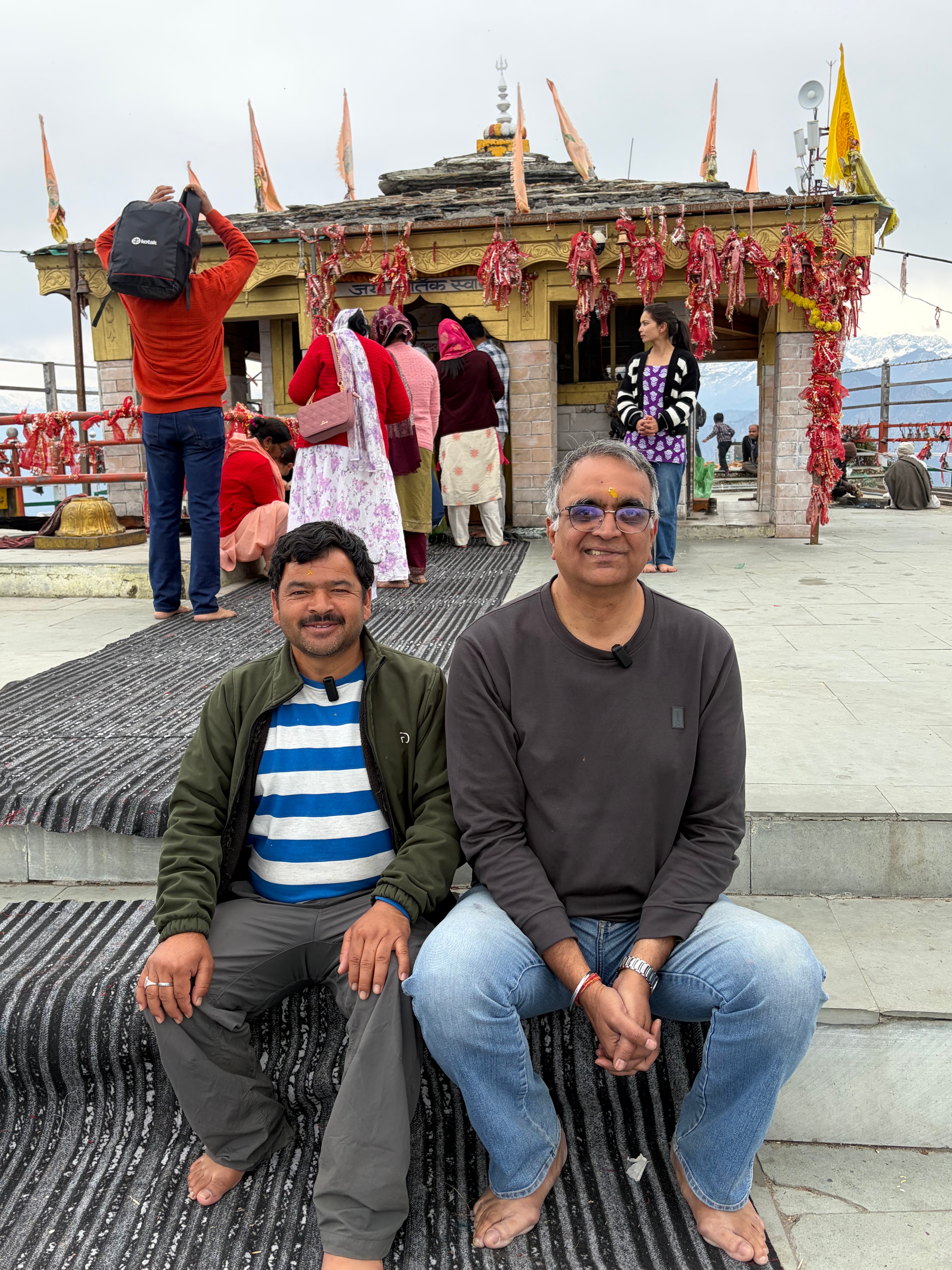
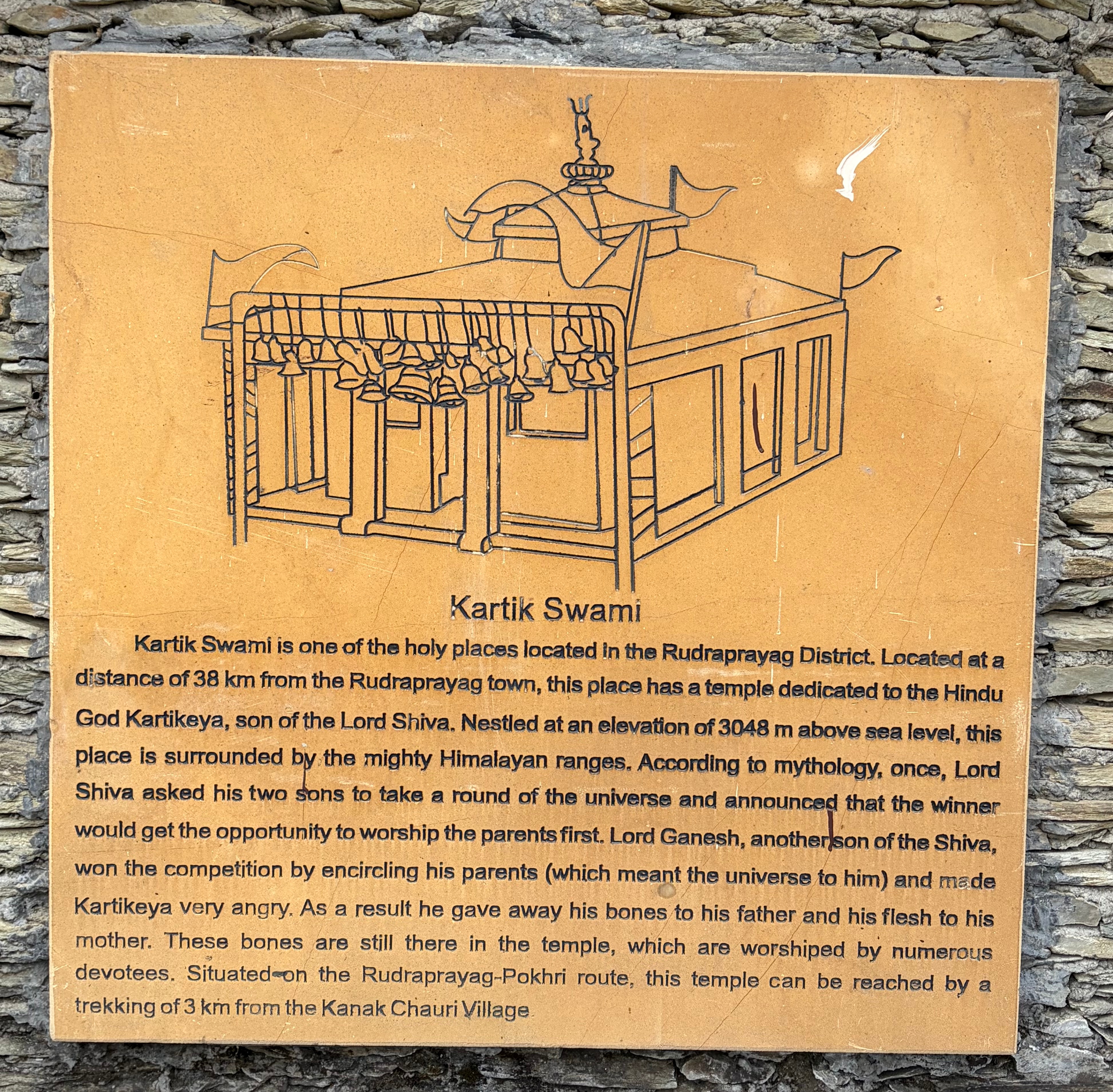
Karthik Swamy temple is one of the rare temples dedicated to Lord Muruga in N India. After losing the race with Ganesha, Karthik is upset and offers his flesh to Parvati and comes here to offer his bones to Shiva. He then gets into a reflective mood in his subtle body and heads out to Palani to make that his final base. The statue here is made of marble / crystal – looks like bones. The temple is at 10,000 feet on a ledge and has a beautiful view of the surrounding mountains. We spent 45 min here and on the way back had lunch at a local shop, close to the temple peak. A relaxed journey back with some delay for road construction – we were back in the hotel by 5 PM.

Day 6, Saturday – Head back to Rishikesh

We check out and leave the hotel at 8 AM . On the way we stop by the ancient Auugstya Muni temple in the village called August Muni – 30 Min. We then stopped at Rudraprayag and walked down to the Sangam – it was quiet and nice. You can also visit the Umra Narayan and Koteshwar temple in Rudraprayag.

Lunch on the way, a stop at the Bengali sweet shop at Srinagar (Chauhan Bengali sweet shop in Srinagar, Pauri). It is located on the main Badrinath road. Pick up a few Uttarakhand delicacies to carry home. I suggest trying the Bal Mithai without the sugar balls on the top. Also, try the Singori (सिङ्गौड़ी) which is a delicacy from Uttarakhand made with Khoya. It is wrapped in a maalu leaf. It is akin to Kalakhand. We reached Rishikesh at 4 PM.

Few More Points

I had covered Tungnath in 2024 – so did not visit this time. But that is another nice trek – Tungnath is one of the Panch Kedar’s and at 14,200 feet the highest Shiva temple. It is a moderate trek – takes 2 hrs, but a very busy route. Its on the trek circuit and lot of trekkers go beyond Tungnath to Chandrashila for the views. So you could plan an extra day to cover Tungnath. This time of the year there will be snow in Tungnath. (Check my earlier blog on this https://vak1969.com/2024/10/06/essential-guide-to-your-himalayan-trip-badrinath-beyond/).

There is a place called Kali Shila close to Ukhimath , it is a short drive then a trek (Guide was saying maybe now car is allowed all the way) supposed to be an energised Devi Shrine – which has Her footprints. Few people visit – I missed this.

Madhmaheshwar (One of the Panch Kedars) is not far ~ 25 Km to the Ransi village from Ukhimath. But it involves an overnight trek from Ransi.

Anusiya Devi & Atri Ashram Temple is also a possible trek through thick jungles – but this would be a long 10 – 12 Hr day trip.

If you want to save time on the last day – from Karthik Swamy head to Rudraprayag and spend the night there. Karthik Swami is very close to Rudraprayag so you save almost 100 Km of driving if you head out from there Vs returning to Ukhimath.

I always have a guide. I travel solo – so the guide and driver are my companions. Hukum Singh is outstanding – contact him at 9690464301, 7579481621. he knows the hills like the back of his hand.

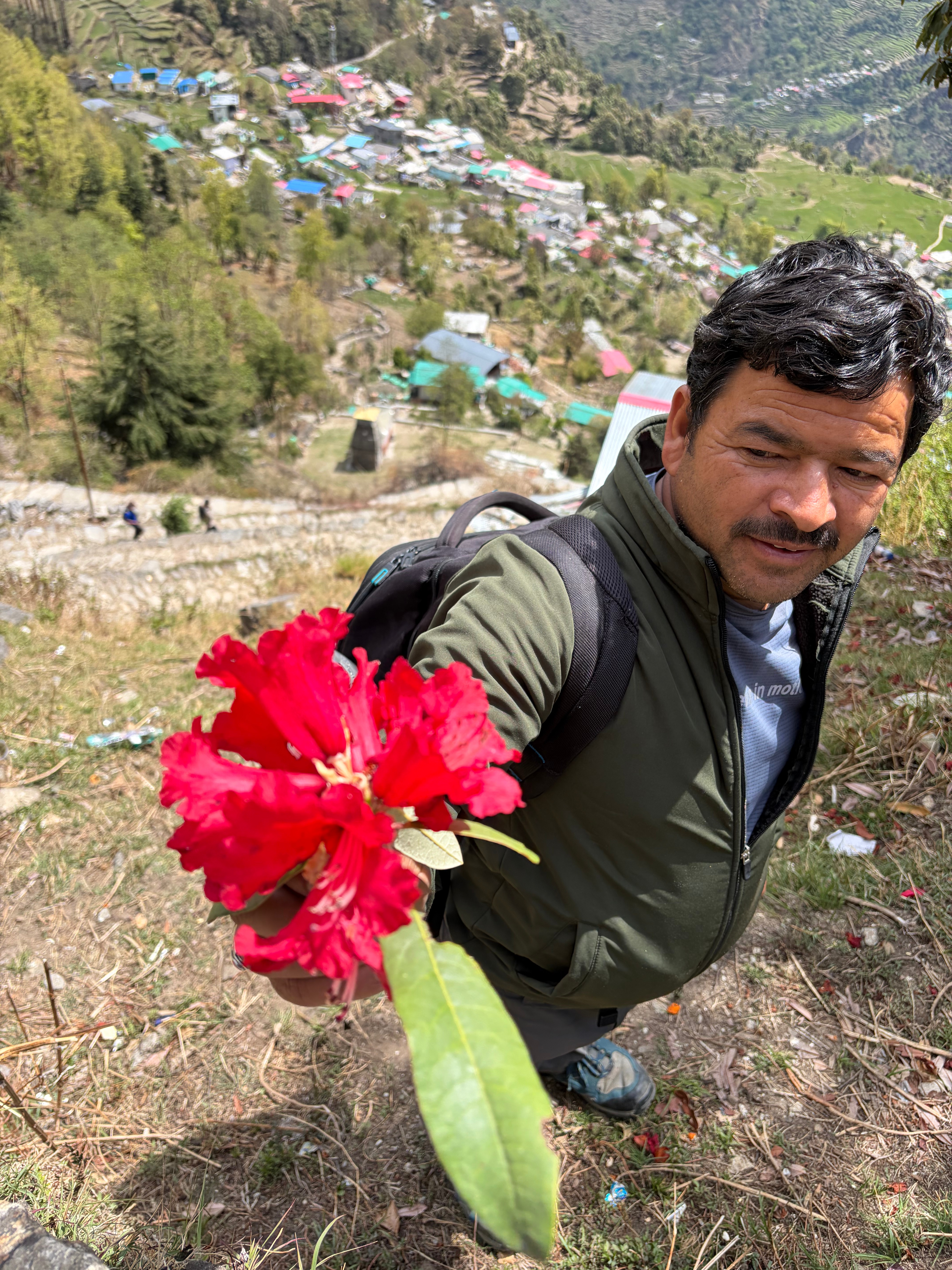
This is Hukum Singh holding a Rododendron flower.

Raghu Bisht was my driver. Nice person. You will see him in our Gupt Kashi photo. My trip was organised by Lakshman Ji a tour operator from Rishikesh. – 95960871691. He did a wonderful job. he was able to get my room at Regenta Madhuganga at a cheaper rate than the online rate + inclusive of dinner.

All along the route Network is excellent – restrooms are a challenge. Road quality since 2010 has not changed much. Food you get is simple Roti / Sabji / Dal in the roadside eateries. Regenta Inn has excellent food.

Rishikesh is a mess. Rafting crowd has created chaos – roads are jammed all the way from Shivpuri. Tapovan is the hub of youngsters – like Goa. My hotel was at Tapovan and it was a bit of panic to get to the airport.

When travelling to the hills always budget a day extra – and do not schedule your flight on the day you are driving back.

Weather was pleasant – full sleeve sweat shirts were sufficient. No heavy jackets, sweaters etc. (You may need for Tungnath)

Some of the videos of the Trip are getting uploaded in my YouTube channel (ohmanreadthegita) – here is one of them, please subscribe to the channel – there is a lot of interesting short videos and podcasts.

By the grace of God, this trip went smoothly. Having covered the sights around Alaknanda in 2024 and now the Mandakini belt in Rudraprayag, let me start exploring the Bhageerathi trail for 2027 from Harsil to Uttarkashi.

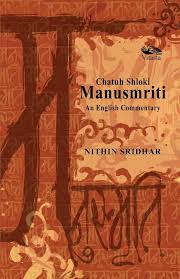
My Review of Nithin Sridhars book on Manusmriti

24 Mar

I have always wanted to get to understand firsthand what’s in the Manusmriti. It’s a text that is rarely read but frequently maligned. A topic that raises red flags and earns more brickbats than bouquets. So, when Nithin Sridhar informed me of his new book Chatuh Shloki – Manusmriti, I immediately got my copy.

Nithin is  a Director at the INDICA centre for Moksha studies. He has authored six books and is a frequent speaker on Vedanta and Hindu philosophy. Now Nithin is a  learned man. He goes deep into a topic – like a scientist he cross references and backs his statement with proof. This book is not a light read – and requires you sit with pen, pencil and highlighter to understand. For a common man this is a heavy read.

The book has received rare reviews from many scholars and seems to be an authoritative work on this subject. You can’t find many books on this topic.

The Manusmriti contains 12 chapters and 2685 verses. Nithin has focused on the first 4 verses and explained it in detail. One of the controversial parts of the Manusmriti is the section on the Varnas and Nithin has spent a lot of time explaining this lucidly. He references sections from the Gita and Rigveda to clarify that modern commentators have misinterpreted the meaning of the Varnas. The other controversy is around the role of women – the book does touch upon that also but in lesser detail.

I learnt a lot from the book, however I intend to get Nithin on my podcast to spell out clearly answers to a few more questions.

Who is Manu – why is he called Swayambhu Manu? Is he God or Man …. Is he the Adam of Hinduism. He got his knowledge from Brahma … so why are the great sages Marichi, Angirasa, Pulastaya, Vashishta, Bhrigu, Narada, Prachetas, Kratu …, great Brahmins coming to a Kshatriya King for knowledge on how to conduct life. Were they listening or was this a discussion where they formed a committee to debate and arrive at a set of guidelines. A modern women would ask – why was there no female representation in this committee.

Manusmriti – is not a constitution, it’s not a rule book – it is laying down conventions for society. Can Version 1 of Manusmriti written in the past be relevant today?   Somewhere in the book Nithin mentions that Dharma is sacred and we cannot question it – I want to dig deeper on this.

I am sharing some interesting points from the book.

Page 120

Adi Shankara while commenting on the Bhagavad Gita Verse 4.13 says that a Brahmana is a designation given to one who has a predominance of Sattva Guna. Kshatriya has both Sattva and Rajas – Rajas dominates. In Vaishya Rajas and Tamas exists – but Rajas dominates, Shudra is one in who Rajas and Tamas exist – but Tamas dominates. Thus, with the different combinations of the 3 Gunas the different Varnas with distinct qualities emerge. Manusmriti 1.87 notes that for protection of the universe each of the four Varnas have been given different dharmas to pursue.

Now comes the contentious part – Janma , Guna and Karma form the three-fold criteria for determining Varna with Janma constituting the primary criteria. And all three are dependent on a person’s Prarabdha Karma ( karma from previous life)

Page 131

Manusmriti does not posit an egalitarian socio-political order where everybody is equal, where everyone has equal rights, where there are no gaps between the haves and have nots or where everyone is happy. That is a utopian idea. Human reality is that no two persons are the same. Diversity is very core to how nature functions.

Page 132

Manusmriti is not a law book in the sense of a constitution that was despotically implemented by a ruler. It is not a biblical commandment. Nithin explains that it is a Pramana Shastra that reveals knowledge about Karma and Karma Phala. What actions lead to happiness and sorrow. What duties apply to whom. He makes a strong case these texts remain valid today as they did in the past. He adds – whether we approach these texts for knowledge or to caricature them is upto us.  

Page 147

Smritis are teachings based on Vedas and hence they are valid. Because Vedas came from God – they are the ultimate Truth.

Page 158

Manu was questioned by the great Sages. So this was not a one-way communication – it involved discussions.

Page 166

An interesting discussion on how the Varnas emerged from the sacrificial fire as explained in the Purusha Suktam (Rigveda)

Page 176

This is the debatable part in today’s era. Four conditions can be considered as necessary for classifying a person into a Varna.

  • Person must be born of marriage and not outside it
  • The marriage must be dharmically legitimate
  • Both parents must belong to the same varna
  • Mother at the time of marriage must be a virgin, excluding cases such as remarriage

So that explains why Karna was not a Kshatriya. But by this logic even the Pandavas were fathered by Yama, Vayu, Indra and the Ashwini Brothers – So how is it they continue to be regarded as Kshatriyas.

Page 185

Bhishma in response to a question tells Yudhishtra

For a Kshatriya and the others becoming a Brahmana is extremely difficult . That is the best state. If one is repeatedly and progressively cooked in the cycle of life one can be born as a Brahmana. Then Bhishma narrates the story of Matanga who was born a Chandala ( Shudra Father and Brahmana Mother) and wanted to attain through austerity the Brahmana status. Indira tells him that it is almost impossible inspite of all the austerities he may undertake.  Matanga realizing that it was well-nigh impossible requests a different boon to be celebrated as a deity of metre.

Page 196 – 198

How did Vishwamitra achieve the state of Brahmana when Matanga failed. An interesting story is narrated on how this was achieved

Page 204

Manusmriti 2.103 talks of varna as a ritual state and if the Brahmana does not perform the mandatory Japa of Savitri mantra, then he loses the ritual state. He is only a Brahmana by name.  This raises a lot of questions in today’s world.

Overall its an interesting topic to get educated on. And this is a well researched book. So do get your copy and read up. And very soon we will have Nithin on my Podcast to elaborate more on this topic

How the Lalita Sahsranamam came to us

27 Jan

This is the story of the divine origin of the Lalita Sahasranamam.

The eight Vāk Devis, embodying the eight sacred facets of Goddess Saraswati, came together to compose this powerful and timeless hymn. Through the boundless grace of Lord Hayagriva, this divine knowledge was revealed to Sage Agastya, for the spiritual upliftment and welfare of all humanity.

This video reflects on the sacred story behind the Lalita Sahasranamam—its origin, its divine transmission, and its enduring spiritual significance. A gentle reminder of how wisdom, devotion, and grace flow together through the Mother’s thousand names.

How did the Vishnu Sahasranama come to us

27 Jan

Have you ever wondered who recorded the Vishnu Sahasranama and how this sacred hymn was preserved?

In the Mahabharata, Sage Ved Vyasa composed it, and Bhishma Pitamaha recited it on the battlefield, answering Yudhishthira’s questions on Dharma. It is believed that Sahadeva carefully recorded this divine narration, which was later passed down through tradition.

This powerful story and its significance were beautifully narrated by Maha Periyava, reminding us why the Vishnu Sahasranama holds such deep spiritual importance even today.

Wings Without Roots – Leadership | Values | Women

27 Jan

In the mad rush for growth and valuations, are building blocks like Values, Culture, Managerial Mentoring, and Strategic HR disintegrating. Why are there so few women CEOs and Entrepreneurs? What are the barriers to their development?

This edition of Back to Basics with Mythily Ramesh explores these issues. Based on her experience of over 35 years she provides deep insights on what is causing disharmony at work. She beautifully blends solutions with spirituality. Mythily is an alumnus of Guindy college of Engineering and IIM Ahmedabad. She has worked in leadership roles at Wipro and is currently the Co-Founder and Managing Director at NextWealth.

Gita : The Yoga of Life

1 Dec

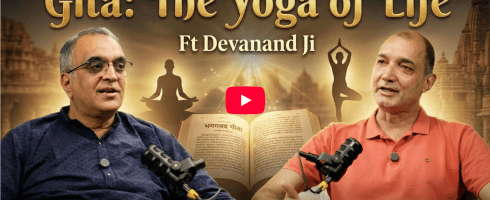
In this episode of Back to Basics, Devanand Ji explains the synergy between Yoga and Gita. A certified Yoga Teacher from Bihar School of Yoga, Devanand Ji exemplifies a life guided by the Gita’s teachings. He touches on important practical points on how to apply the profound teachings in your day to day life. Please watch and benefit from his insightful perspectives.

If you want to start your journey with the Gita – get a copy of Oh Man! Read the Gita – A simple easy to read book by Sri Krishna.

Launch of Back To Basics – Podcast

25 Nov

This Blog started in 2010 and has had a great history with many million views and a loyal follower base. Over time viewers are reading less and seem to prefer watching Videos.

Along with the Blog I am happy to launch a Podcast Series called – Back To Basics.

Here we look at issues in our daily life with a sharp lens. We interact with Passionate, Committed, Truthful individuals from diverse backgrounds. We learn from them the secret of navigating life’s volatility – and how they have knowingly or un knowingly implemented the teachings of the Gita

In the 1st episode, we discuss with Dr. Sanjay Kaul, a leading periodontist, the fundamentals of oral health, emphasising the significance of gum care. The 30-minute conversation touches on the evolution of eating habits, traditional remedies, and interesting facts.

We have other interesting topics planned for the next set of Podcasts. These topics include Gita & Yoga, Old Age – Blessing or Curse, Building Wealth over the next 25 Years .. etc. The plan is to have one episode every fortnight.

Kindly Subscribe to the channel and shared your feedback on the 1st Podcast

Gita Day – Dec 1

19 Nov

Gita Day is around the corner.

Gita Day (Gita Jayanti) is on Monday, December 1, 2025. This day marks the occasion when Lord Krishna revealed the profound knowledge of the Bhagavad Gita to Arjuna. This happened on the battlefield. This auspicious day is celebrated on the 11th day of the waxing moon in the Hindu month of Margashirsha. It is also known as Mokshada Ekadashi.

This is an opportunity to get started with the Gita. Oh Man ! Read the Gita is a simplified version of the Gita to help people get started.

A Discussion and Q&A on the Book is planned for 22nd Dec. The focus is on the application of the teachings of the Gita in daily life. This applies across all age groups.

Please join the discussion. Questions from the audience are encouraged.

22nd Nov 4 to 5 pm IST

Google meet link
https://meet.google.com/yuc-atvy-czj

Oh Man! Read the Gita – Book Launch

13 Oct

Launched on Janmashtami, Oh Man! Read the Gita has been doing well.

The Website https://ohmanreadthegita.com was launched

Talk to Vidya – an Upcoming Podcast reviewed the book – https://youtu.be/zbonkwTu28M?si=to0P3IeY7W6SrcIY

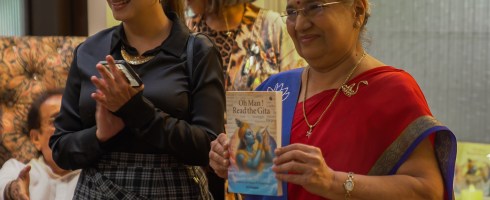
Dr Hansaji Yogendra unveiled Oh Man! Read the Gita on 16th Sep. Hansaji is a globally acclaimed Spiritual Yoga Guru and director of the renowned Yoga Institute at Santa Cruz, Mumbai. It is the oldest organised yoga Center in the world.

Hansaji loved the title and simplicity of the book Oh Man! Read The Gita. She praised the compilers. They performed a great service. They brought the message of the Gita in a simple to read manner. In her 30-minute talk, she highlighted the core aspects of the Gita. She enthralled the audience with her fluency, clarity, and powerful oratory. Her key message was that the Gita is a guide for daily life. It offers powerful teachings for everyone.

Readers are loving the book and have shared positive feedback on Amazon. Here are some sample feedback

Loved the book.. to explain the key teachings of Bhagavad Gita in such simple style/language, is not easy. The author has managed to do that. Highly recommended!

This book is not just a summary- it is an illuminating guide that captures the essence of the original text.

Every chapter is distilled to its key message allowing the readers to grasp profound knowledge without being overwhelmed by detail. Clear and accessible to modern readers.

Great book on the Gita, provides an understanding of the text in a very simple and profound manner. The book covers all 18 chapters of the Gita and provides further essays that discuss various important topics. A very comprehensive text on all chapters and especially important today as the Gita provides us with key learning’s we can incorporate in our day to day life. Highly recommended to anyone who wants to learn about the Gita.

Nicely compiled in an easier to read format and in simple language. This would be an excellent gift that parents can give to their children. They will appreciate it in years to come

Get your copy. It’s also a great idea to gift this book during Diwali to near and dear ones. Enough of Kaju Katli & Dry Fruits. Try something different. Book is available in Amazon worldwide – Physical & eBook.

Explore Key Sites of Ramkrishna & Vivekananda

9 Oct

Born as Gadadhar Chattopadhyay in the quiet village of Kamarpukur, he would be revered as Thakur Ramkrishna or Ramkrishna Paramahamsa. His simple words and humorous stories conveyed a depth that resonated even with the most skeptical minds.

This Blog will help you plan a trip. It covers the important places linked to Ramkrishna Paramahamsa, Sarada Ma, and Swami Vivekananda. With Kolkata as your base you can cover these places in a few days. Most people visit Dakshineswar, Belur Math & Kalighat – but there is lots more.

Kamarpukur & Joyrambati Birth Place

Kolkata – Kamarpukur is 100 Km. Drive time is around 3 – 4 hours. Joyrambati is a short 7 Km drive from Kamarpukur.

Kamarpukur is the birth place of Ramkrishna and Joyrambati of Sarada Ma. Both these centres are now managed by the Ramkrishna Math. They have beautifully preserved the birth place, ancestral home, family deities and associated spaces. The food they serve is a feast. But it is first come first served basis – limited coupons. Accommodation in the Ashram is difficult to get and gets sold out months in advance. The villages have basic hotels. I would recommend you plan to reach by 4 PM. Attend the evening Aarti in one of the places. The next day morning visit the other location and collect your Prasad coupon. Have a good Darshan, and leave after the Prasad lunch.

Open on all days : 4.30 AM to 11.30 AM and 4 Pm to 8.30 PM

Dakshineswar

This is where Ramkrishna spent most of his life as a priest. It is located in North Kolkata, 12 Km from Central Kolkata. Traveling by car during the day takes 60 – 90 minutes. I have always visited the temple at 6 AM in the morning when it opens. Crowds are less at that time. The drive time then is less than 30 minutes. Again there are no good hotels in the temple vicinity. Cell phones and shoes are not allowed inside the temple complex. Leave them in the car or at a kiosk near the temple entrance. Don’t miss the small bedroom where Ramkrishna spent most of his time. It is a highly energized space. It’s now not accessible to the public, but you can see from outside through glass windows. Visit the temple and the 12 Jyotirlingas. Walk along the bank of the Hooghly river. Soak in the energy of this divine place. Budget 60 – 90 minutes.

Open all days : Timing : 6 AM – 12.30 PM and 3.30 PM to 8.30 PM

Shyampukur Bati (8 Km from Central Kolkata)

This is the house where Ramkrishna stayed for 70 days in 1885 before moving to Cossipore. He was ailing and Ma Sarada with all his disciples stayed in this house. This house was acquired and renovated by the Ramkrishna Math in 2010. The house is located in the heart of N Kolkata midst narrow bye lanes. You will need to ask around to find the place.

Open all Days : 6:30 AM to 11:30 AM in the morning and 3:30 PM to 8:30 PM in the evening

Kashipur Udyanbati (Cossipore) ( 3.5 Km from Shyampukur Bati – roughly midway between Daksineshwar and Shyampukur Bati)

Sri Ramakrishna spent the last days of his mortal life here. His disciples rented a large house with a garden a short distance away from Shyampukur Bati. Between Dec 11 – 1885 and Aug 16 – 1886 he stayed here. This place was quiet, had a beautiful garden and was more spacious.

It is here that on January 1 – 1886 (Kalpataru day) He revealed Himself to be an Avatara. This is a large well maintained, serene garden house. Unlike Belur Math and Dakshineswar which see large crowds this place is relatively empty on normal days.

Open all Days : Timings: 6:00 AM – 11:30 AM & 4:00 PM – 8:30 PM

Kalighat (S Kolkata)

Ramakrishna visited the Kalighat temple – an important Shakti Peeth. He had a spiritual experience where he saw the Mother Goddess Kali as a virgin girl playing by the pond. Later at the temple he saw the Goddess dressed in the same dress. he also encountered a priest who kicked him – but out of compassion chose to protect him and asked his nephew also not to narrate the incident.

Reliance foundation has undertaken a significant renovation of the temple in 2024. It is crowded and there are many middlemen who will try to make a quick buck. Best time to visit towards the end of the day before closing.

Timings : 5:00 AM to 2:00 PM and 5:00 PM to 10:30 PM

Belur Math

Located on the other side of the Ganges exactly opposite to Dakshineswar, this is the HQ of the Ramkrishna Mission. It also houses the Samadhi Mandir of Ramkrishna, Sarada Ma, Swami Vivekananda and others. A beautiful museum in the complex highlights the life of Ramkrishna and is a must visit. A well maintained, well laid out complex you can easily spend a few hours at Belur Math. For the Bhog Prasad, first collect a lunch coupon. Do this at the designated office before lunch. Lunch typically starts around 11:30 AM. The coupon itself is free. Visitors are welcome to donate any amount they wish at the office when they collect it. The meal is a delicious offering served to many devotees in a community setting.

  • Morning: 6:30 AM – 11:30 AM
  • Evening: 3:30 PM – 8:30 PM (October – March) or 4:00 PM – 9:00 PM (April – September)
  • Sandhya Arati (Evening Aarti): Usually begins around 5:10 PM–5:35 PM depending on the season
  • The museum at Belur Math is closed on Mondays

To finish your circuit there are 2 more places that you must visit and these are linked with Swami Vivekananda.

Birthplace of Swami Vivekananda

105 Vivekananda Road / 3 Gourmohan Mukherjee Street in Kolkata is the historic ancestral home of Swami Vivekananda. It is now a museum and cultural center. This center is operated by the Ramakrishna Mission. This site served as the birthplace of Swami Vivekananda (born Narendranath Datta) on January 12, 1863, and his life and teachings are celebrated and preserved within this location

Timing : 10 – 12.30 & 2 – 5. Closed on Monday

1st Monastery of the Ramkrishna order – Baranagar

After the Samadhi of Ramakrishna in 1886, his young disciples were led by Swami Vivekananda. They assembled for the first time in a dilapidated house in Baranagar, North Kolkata. Their purpose was to form their monastic brotherhood. This was the first Ramakrishna Math. The disciples had cared for their ailing Master at a garden house in Cossipore during his final months. They came together to lead a life of renunciation. They did this as a unified monastic order. It was here that they formally took their monastic vows in January 1887.

  • Morning: 6:30 AM – 11:30 AM
  • Afternoon/Evening: 3:30 PM – 8:30 PM

If time permits, visit Balaram Mandir. An ashram named ‘Balaram Mandir’ began in 1922. It was established in the house of Sri Balaram Basu. He was a chief disciple of Sri Ramakrishna. The place has been sanctified by numerous visits of Sri Ramakrishna, his disciples, and Holy Mother Sri Sarada Devi. It was here that Swami Vivekananda inaugurated the Ramakrishna Mission Association on May 1, 1897.

You can also visit Kathamrita Bhawan. This is the house of Mahendra Nath Gupta, also known as M, who chronicled the Gospel of Sri Ramkrishna. Additionally, explore Baghbazar Maayer Badi. This center is also known as Mother’s House. It served as the residence of the Holy Mother Sri Sarada Devi whenever she visited Kolkata.

Maayer Badi Timings : 6:00 AM to 11:00 AM in the morning and 4:00 PM to 8:00 PM in the afternoon/evening

Travel TIP

Try to travel during week days. Summers in this part of the country can be hot and humid – Dec to Feb is a good time. Avoid Birth days, Kalpataru day, Samadhi days. (Jan 1 , Jan 12 , Feb 18, July 4, July 21, Aug 16, Dec 22)

Additional Points

Stay in a central area close to Park Street – I normally stay at New Kenilworth or Peerless inn.

Kolkata is a relatively small city when compared to Mumbai / Delhi / Bangalore – in 30 – 40 min you can cover the main atreas