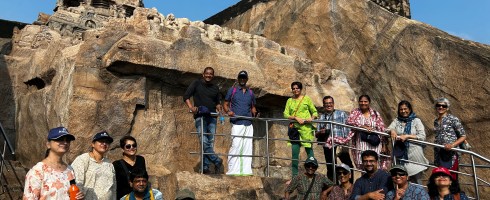
Pandya’s – A great empire spanning ~ 2500 years
Indian history has been unfair to the South. The great empires of Cholas, Pallavas, Pandyas, Cheras & Chalukyas are more of a footnote in a Delhi dominated narration. Tamil is one of the worlds oldest languages. Shaiva Siddhanta considers Tamil & Sanskrit the two eyes of Lord Shiva. Tamil history and culture is as ancient as Sage Agastya. This is the land of great saints like Thirumoolar, Sambandar, Appar, Sundarar, Manikkavacakar, Bhoganathar & Sadashiv Brahmendra. It is also the land of great musicians Thyagaraja, Muthuswamy Deekshitar, and Shyama Shastri. Bharatanatyam, the oldest Indian classical dance form originated in the Tanjore district of Tamil Nadu and is regarded as the mother of many other classical dance forms of India.
The Pandya dynasty also referred to as the Pandyas of Madurai, was an ancient Tamil dynasty, and among the four great kingdoms of Tamilakam, the other three being the Pallavas, Cholas & the Cheras.
This Blog is based on a 3 day trip called the Pearls of Pandya’s organised by Heritage Inspired. A unique company which presents history, art & culture of the ancient empires of S India in a very innovative manner. Supported by highly competent people they provide in-depth knowledge across very well organised trips. Do check them out and plan your next travel with them. (www.heritageinspired.in)
Pandyas – a brief introduction
- The Pandyas are the oldest among the Tamil kingdoms with a long history spanning over 2500 years. They belong to the Lunar race (Chandra Vamsha) and their symbol is the double fish.
- Their era can be broken into these divisions
- Sangam Pandyas – 300 BC to 300 CE – Korkai Port
- Early Pandyas – 600 to 1000 CE – Madurai
- Later Pandyas – 1100 to 1200 CE – Subdued under the Cholas – Madurai
- Later Pandyas – 1200 to 1400 CE – Madurai
- Tenkasi Pandyas – 1500 – 1700 CE – Tenkasi
Pandyas were famous for three things – Literature, Trade & Water Management.
Sangam the great cultural events of poetry and music were orchestrated under their era. A repository of over 2000 poems in Tamil. composed by 470+ poets have been preserved. The poetry of the Sangam era is largely about love (akam) and war (puram). The Sangam literature also includes Buddhist and Jain epics.
Trade – They had extensive trade in India & across the world – strategically placed along the key trade routes both land & sea – they did business with the ancient Romans, Greeks, Arabs, Chinese, Africans, Egyptians & SE Asians. The trade of horses was very common during this period. Other goods traded included spices, pearls, precious stones, elephants and birds. The busiest port town under the Pandyas was Kayalpattinam (now in Thoothukudi district)
Religion – It is believed that initially the Pandyas followed Jainism but later adopted Shaivism. Medieval Pandyas and later Pandyas repaired many temples and endowed them with gold and land. Patronage was also extended to Vedic practices. The impartiality of rulers towards both Shaivism and Vaishnavism is also made known in the invocatory portions of the Pandya inscriptions
Administration
- Kings and local chiefs created Brahmin settlements called Mangalam or Chaturvedi Mangalam with irrigation facilities. These settlements were given royal names and names of the deities
- The prime minister was called Uttaramantri. The royal secretariat was known as Eluttu Mandapam. The titles of military commanders were Palli Velan, Parantakan Pallivelan, Maran Adittan and Tennavan Tamizhavel
Madurai was their capital – around 1311 under Malik Kafur the Delhi Sultanate usurped Madurai for 50 years. This was a dark period where wealth was plundered and temples were looted and ransacked. Post this Vijayanagar rule was imposed. After 1328 the Pandyas never regain Madurai and are pushed down south to rule from a few places around the Thamirabarani river and are called the Tenkasi Pandyas. At their zenith in 1270 AD the Pandyas ruled over all of TN , a part of S Karnataka, parts of S & Coastal Andhra and parts of Sri Lanka.
Pandya empire in 1270 AD

The Pandya’s were not prolific temple builders like the Cholas, Hoysalas & Pallavas.
The Pandyas entered their golden age under Maravarman I and Sundara Pandya (13th century). The latter used the vast treasure he got out of his wars to beautify the Nataraja temple in Chidambaram and the Vishnu temple in Srirangam. For gold plating the roofs of these two temples he was given the title of “pon veindha perumal”. He acknowledged the contributors of other dynasties to Tamil Nadu by building a gate at the Sri Ranganathaswami Temple at Srirangam in which he engraved the names of all the four great empires of Tamil Nadu namely the Cholas, Pallavas, Pandyas and the Cheras. He also built the East tower of the Meenkashi temple. He gold plated and placed the gold gilded Kalasam atop the gopuram of the Vimana of Tirumala. In 1263 CE, he renovated the Gopuram of Koneswaran temple and his son Veera Pandyan implanted the Pandyan victory flag and insignia of a “Double Fish” emblem at Konamalai.
What we covered in our 3 day trip
Day – 1
- Madurai Meenakshi Temple
- Kalaingar Centenary Jallikattu Arena, Alanganallur Vadivasal
- Muniyandi temple in Alanganallur– the Gaurdian deity of the locals. Here we were entertained to folk dance by the locals.
- Kallalagar Temple – one of the 108 Divya Desams
Day – 2
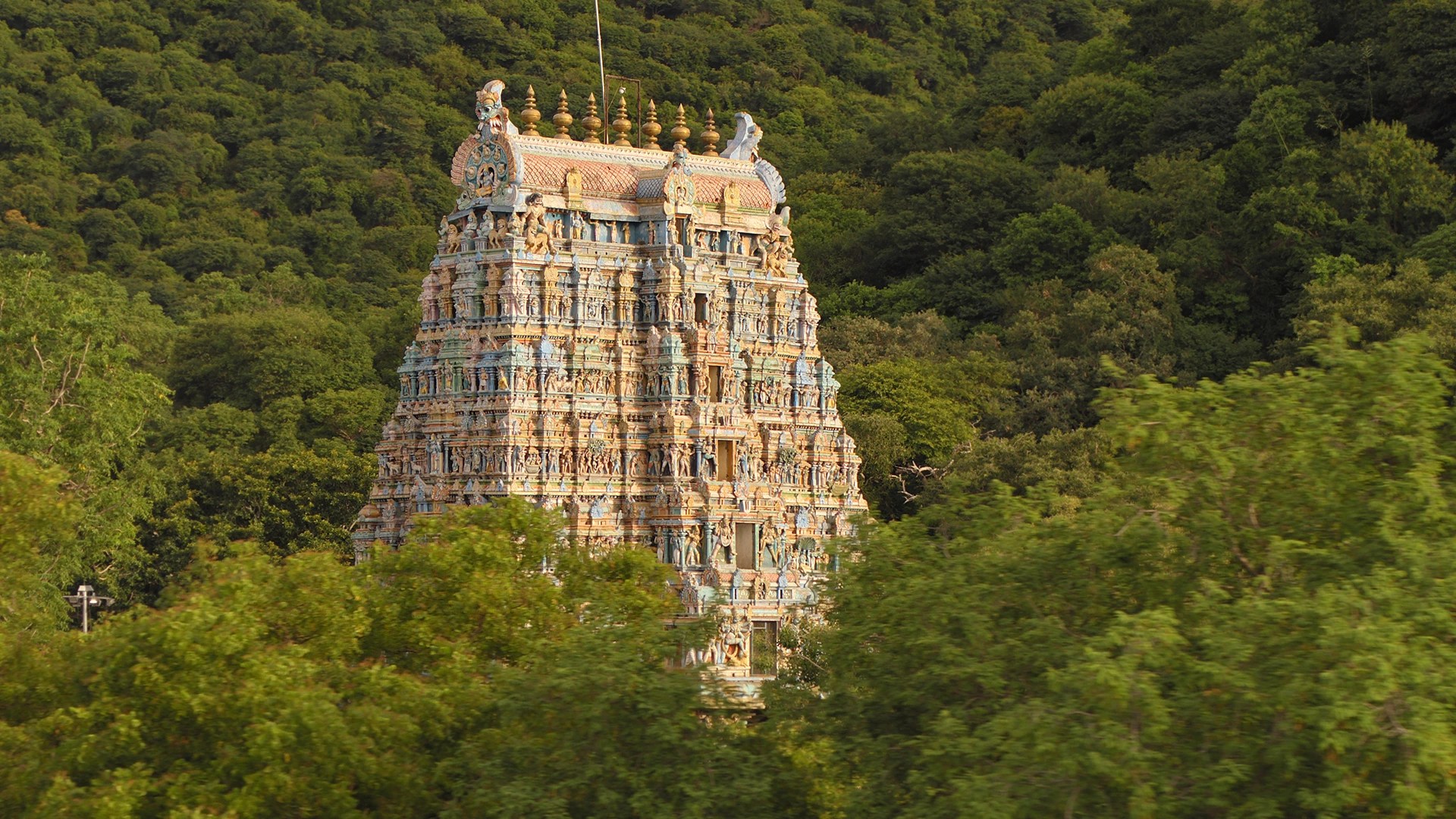
- Kazhugumalai – Unfinished Shiva temple -Vettuvan Kovil, a beautiful Monolithic temple that dates to 850 AD. Jain Monk caves & Bass relief.
- Tirumalapuram Cave Temple – Shiva
- Kashi Vishwanath temple – Tenkasi
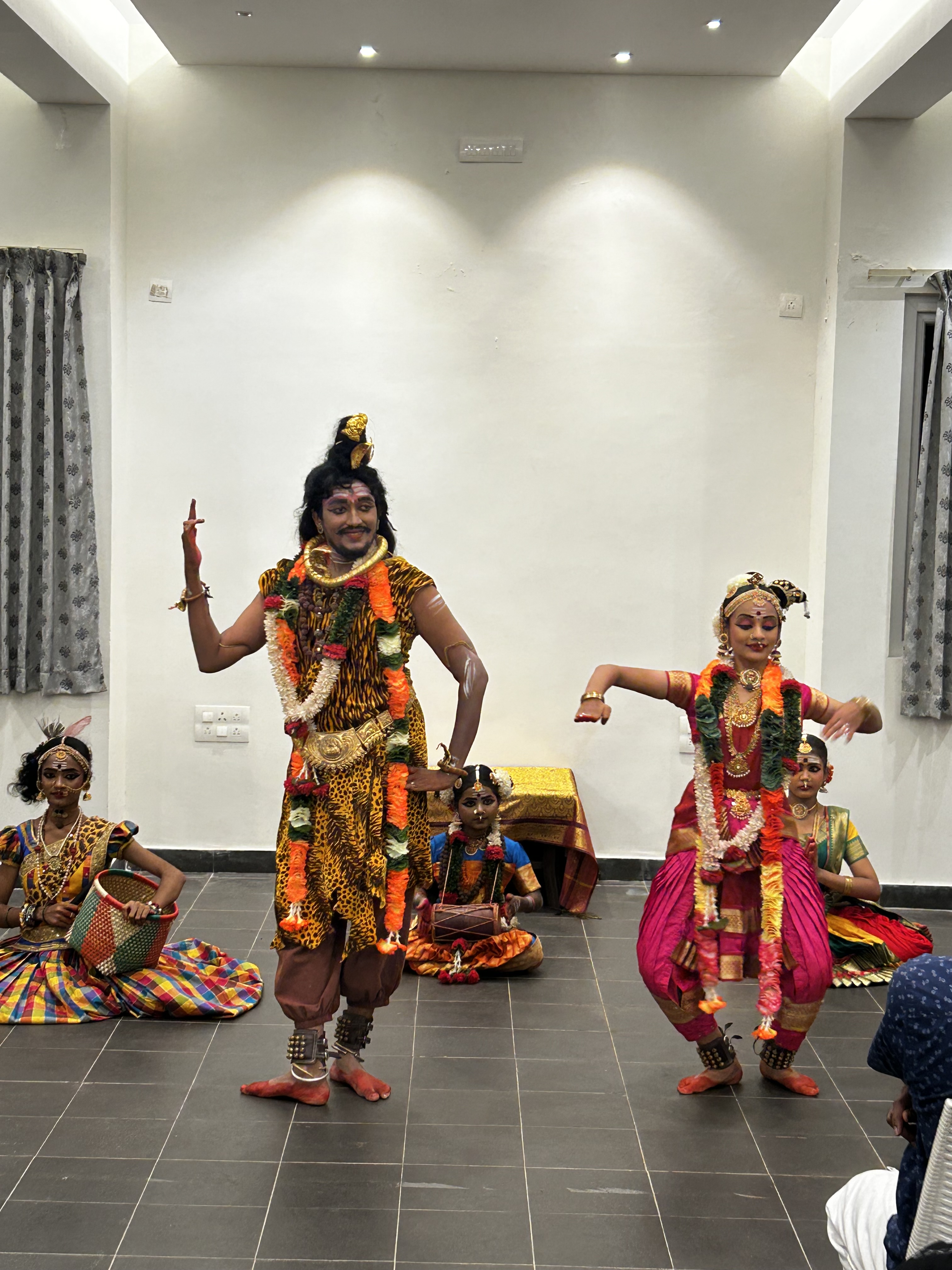
- Cultural program – Kutralam Kuravanji
- We were staying at a resort overlooking the Agastya Hills , 1 km from Kutralam falls – however heavy rains from the previous few days restricted our visit to the falls


Day – 3
- Kulashekara Perumal Kovil in Mannarkovil – a beautiful Vishnu temple with Ashtanga Vimana
- An ancient Shiva temple in Tirupudaimaradur where we walked up the narrow steps of the Gopuram and were amazed with wall painting dating back to 1500 AD
- Adichanallur an archaeological site – famous for a number of very important archaeological finds. Korkai, the capital of the early Pandyan kingdom, is located about 15 km from Adichanallur.


What makes this trip by Heritage Inspired (HI) unique
- An avid traveller and Tamilian – I had not heard of many of these places. It was great discovering them and getting educated.
- HI had special access to many places and we visited areas which are normally out of bounds
- Not only was the trip planned and executed to perfection – there was detailed commentary and insights on the places we visited. The professional inputs from Professor Kannan, Parvathi Madam & Senthil were excellent.
- We stayed in nice resorts, food was excellent , from the time the trip started till we got dropped off we did not have to spend a single rupee.
- The cultural programs / folk dances were the icing on the cake and we thoroughly enjoyed it
- The rates for this trip were very reasonable – if you had to do a trip like this solo it would have cost 3X.
- Excellent group of people

Geographically the 5 terrains of land, kurinji (hill terrain), mullai (forest land), marutham(flat open land), neithal (coastal land) and palai (arid land) broadly are the natural divisions (thinai) of land on earth with probably a few subdivisions. Pandya country was endowed with all 5.
During these 3 days we travelled ~ 325 KM and covered most of these territories. Mid Dec after the rains the land was green and fertile. Roads were excellent. Population looked sparse. Local people in general looked happy and contented. The water management system established 1000+ years ago by the Pandya, Chola kings are the foundation on which current day farming still happens. In the absence of perennial rivers the ancient systems still serve the population effectively.
Details to plan you trip with Heritage Inspired
- www.heritageinspired.in
- Radhika – +91 6381 143530
__________________________
 A Few Good Things
Recent Comments