Archive | March, 2025

Demystifying the Science of Tantra

15 Mar

Introduction 

The term Tantra has earned a bad reputation and is often looked upon with a negative connotation. This Blog will help correct the misinterpretation.  It will help a layman understand the science of Tantra. 

Setting the context 

The human body is a mystery & a miracle. Only a divine source could have created this complex being. Artificial Intelligence can never come close. 

A few questions begs for answers. How do we have child prodigies? What powered the rare intellect of Einstein & Ramanuja? How do Rishis travel in their subtle bodies? How were enlightened souls like Ramkrishna, Shirdi Sai, Neem Karoli Baba capable of reading your mind? They performed what most thought were miracles. Why is it that most humans have a limited audio frequency hearing ability? Do we have senses and perceptions which are hidden or not activated? 

Swami Satyananda Saraswati founded the Bihar School of Yoga. He believes that most humans use only a tenth of their brain faculty. The vast majority of our brain especially the frontal part is inactive.
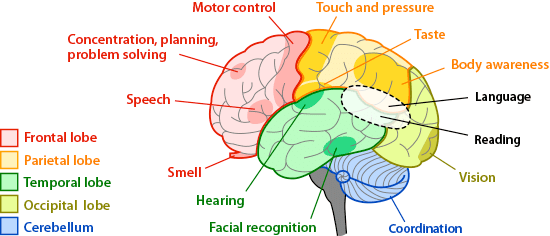
Modern science divides the dormant part of the brain into ten parts, Kundalini Yoga divides it into six. A genius is one who has awakened a few of the dormant portions of the brain. As divine energy awakens in the human body, it begins to flow upwards. It explodes in the crown of the head, the Sahasra. The dormant or inactive areas of the brain start blossoming like flowers. Man then becomes a demi God. The science of Tantra can help you achieve this. 

Divinity is present in our body

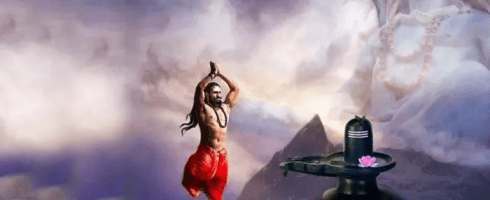
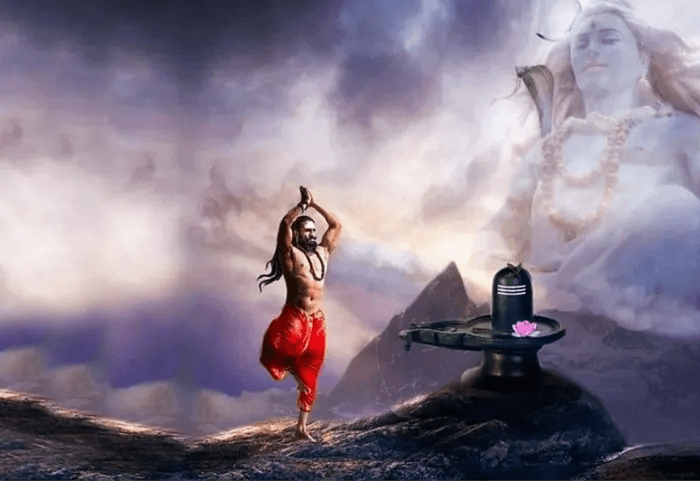
The human body is a sublime edifice that houses the spark of the divine power – Para Shakti. After creating life in the womb, She descends into a small cavity at the base of the spine. She is in a dormant state there. Tantra is a science that helps you to awaken this dormant energy. It enables you to channel the energy upwards thru the Sushumna (A psychic channel within the spine) to the Sahasra. There, She merges with Lord Shiva. This is the ultimate goal of every yogi. This should be the purpose of life of every human being.

What is Tantra   

Sanskrit literature can be classified under six orthodox heads and four secular heads. 

  • Orthodox Heads – Shruti, Smriti, Itihasa, Purana, Agama, Darshana. 
  • Secular Heads – Subhashita, Kavya, Nataka, Alankara

The Agamas are theological treatise and practical manuals of divine worship. The Agamas include Tantras, Mantras & Yantras. The Agamas are divided into three sections – Vaishnavism, Shaivism & Saktaism. Sakta Agama or Tantras glorify God as the divine Mother of the world. There are 77 Agamas and the texts are usually in the form of a dialogue between Shiva & Parvati. 

Tantra is a combination of Yantra & Mantra. Yantra is a diagram (machine or symbol), Mantra is the sound that activates the energy in the Yantra. Tantra explains in great detail the knowledge about Tattva (Ultimate Truth or Brahman) and Mantra (Mystic Syllables). 

Kundalini & Tantra Yoga 

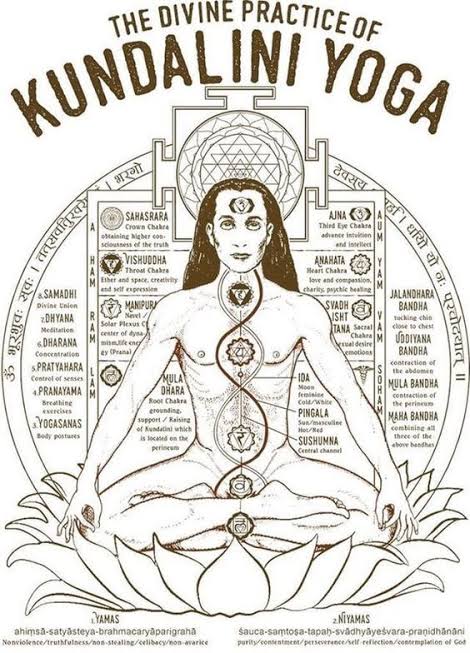
Kundalini Yoga is the great discovery of the Tantric tradition. It identified a dynamic potential force in the human body called the Kundalini. This dormant potential force is resting at the base of the spine. In men at the perineum, in women at the root of the uterus in the cervix. This center is called the Mooladhara. When you direct Prana into the seat of the Kundalini it awakens.

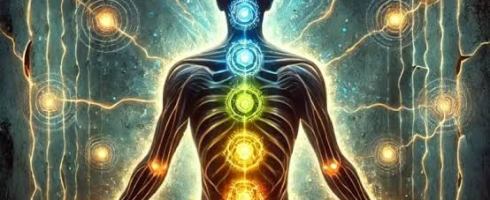
Tantra Sadhana lays emphasis on the activation of the latent power in the six Chakras. It starts from the Mooladhara and extends all the way to the Sahasra at the crown of the head. 

Chakras are vortices or whirlpools of psychic energy. There are many Chakras in the human body. For the practice of Tantra & Kundalini yoga, six Chakras are under focus.

These six Chakras are connected to the higher unilluminated centers of the brain. The Sahasra at the crown of the brain is also the location of the pituitary gland. It controls each and every gland and system in the human body.  The Agna Chakra is aligned with the centre of the eyebrows. It is also aligned with the midline of the brain along the spinal cord. This alignment is the location of the Pineal Gland. This is the centre for intuition and clairvoyance. Tantra & Yoga maintain the Agna Chakra is the command centre of life in the human body. Similiarly other Chakras control elements like digestion, speech, creative skills etc.  

Whatever happens in spiritual life is related to awakening of the Kundalini. Samadhi, Kaivalya, Nirvana, Moksha are all the outcome of igniting the spark and awakening Para Shakti

Meaning of the word Kundalini 

Kundal means coiled. Kundalini means that which is coiled. Kunda is also a ceremonial pit. The divine energy is identified as a sleeping serpent coiled 3 ½ times in the Mooladhara. Serpent power symbolises the unconsciousness in man.  The 3 coils are said to represent the three matras of Om – Past, Present, Future. Or the three Gunas, or the 3 states of consciousness – or all of these. The ½ coil represents the state of transcendence. In this state, there is neither waking, sleeping nor dreaming. It is also referred to as Turiya. 
Why Awaken the Kundalini energy through Tantra 

This is one of the paths to accelerate your spiritual evolution. Once divine Shakti awakens man is no longer a gross physical body. Every cell is charged with high voltage Prana. As the energy ascends, it pierces and activates the hidden switches in the Chakras. This activation opens up an explosion of energy in the unilluminated parts of the brain. This awakens physical, mental and spiritual development. 

To awaken the Kundalini, the practise of Yoga is required. Additionally, the entire social structure and way of life has to be reorganized. It is like opening the gates of the temple within your body. You reach the core, the divine energy – Para Shakti or Kula Kundalini. To achieve this the body & mind need to be pure. A light Sattvic diet that takes the strain off the liver is helpful. 

In the journey a practitioner will start seeing transformation. The body is charged & rejuvenated. There are changes in voice, smell, hormonal & secretions. Aging slows down. You eat less, sleep less. 

How can I learn Tantra  

Tantra is rare and secret doctrine – it’s called Gupt Vidya. It can’t be learnt from books. It is a long arduous journey and can only be achieved with the help of an accomplished teacher. If not done correctly it can have a serious impact. The energy when activated is so explosive that one needs to be prepared to get it.

The Kundalini energy can be awakened by a combination of the following means 

  • Birth – Evolved soul based on earlier life karma’s 
  • Mantra Sadhana 
  • Tapasya 
  • Herbs (Aushadhi)
  • Raja Yoga 
  • Pranayama
  • Kriya Yoga 
  • Tantric Initiation 
  • Shaktipath

Bhuta Shuddhi is an important Tantric rite. It means purification of the five elements that compose the body. 

Yoga Nidra evolved from a Tantric practice called Anga NyasaAnga means main limbs or organs of the body. These include the toes, knees, hips, the back, chest, shoulder blades, and head. Nyasa means to place. In Tantra, when you sit for puja, you focus the mind on various organs of the body. You also recite the respective mantras. 

The two paths of Tantra 

The left handed path called Vamachara or Kaula Tantra focuses on a set of structured practices and rituals. They perform their worships using the Pancha Makharas. These include meat, fish, intoxicants, mudras (certain gestures), and sexual contact. They believe that man is still an animal (Pashu) and cannot give up everything. He has to enjoy and move forward. The concept of Bhoga and Yoga illustrate the balance between enjoying worldly pleasures and seeking spiritual liberation. Bhoga represents the enjoyment or experience of life, while Yoga signifies the union with the divine. Together, Bhoga and Yoga provide a holistic approach to life, blending material and spiritual fulfilment

The right-handed Tantrics perform these rituals only symbolically. They are called Samaya Margis. Adi Shankaracharya followed this path. 

In Conclusion 

Tantric knowledge was strongly prevalent in Kashmir, East India (Bengal, Assam) & Kerala. During foreign invasion the ancient texts were hidden in the Himalayas. A lot of Buddhist & Tibetan practice also involve Tantric rites. 

It is interesting to note that if you draw a triangle with  Kerala, Kashmir & Assam as the three vertices you will cover almost all of Bharat. Which in a way reflects that this sacred land is always protected by Para Shakti.
Story of Panchamukhi Hanuman

4 Mar

Lord Hanuman is considered as the incarnation of Lord Shiva. He is known for his formidable strength. Lord Hanuman also known as Anjani Putra, Vayu Putra, Kesari Putra etc is revered for his wisdom and communication skills. Since childhood we have worshiped Hanuman as our family deity. During dark & challenging times prayers to Him have always been a source of courage. For the past 20 years, I have been visiting the Panchamukha Hanuman temple in Koramangla every Saturday. His grace has always been with the family. This Blog will try and throw light on this manifestation of divine energy.

Who is Ahiravana (Also known as Mahiravana)

When Ravana’s son (Indrajit) was killed by Lakshmana, he sought revenge. He summoned Ahiravana from Patala. Ravana convinced him to capture Rama and Lakshmana. He wanted them to be sacrificed to the goddess Mahamaya. Ravana promised Ahiravana great power in return

Despite Vibhishana & Hanuman’s efforts, Ahiravana, employing various disguises and illusions and abducted Rama and Lakshmana. In one instance, he disguised himself as Vibhishana, tricking Hanuman into allowing him entry. Once inside, Ahiravana successfully kidnapped Rama and Lakshmana and transported them to his kingdom in Patala. Upon discovering their disappearance, Hanuman vowed to rescue them and sought guidance from Vibhishana.

Overcoming Makardhwaja – the gatekeeper of Patala

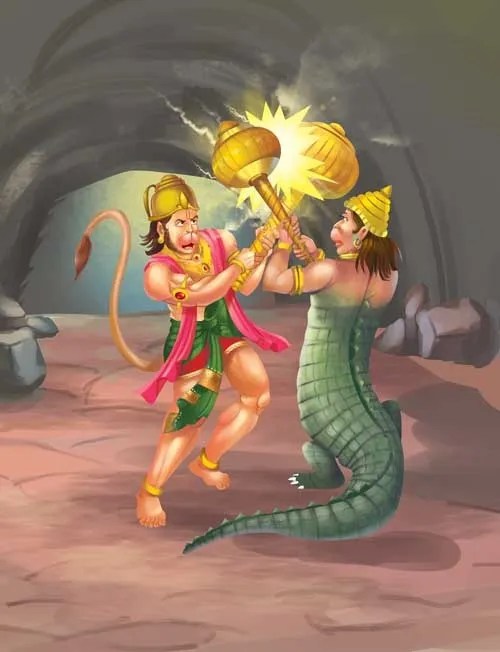
As Hanuman was returning after setting Lanka ablaze, a drop of his sweat fell in the ocean. It landed into the mouth of a massive crocodile. The inhabitants of Patal Lok captured the crocodile. They discovered a remarkable being named Makardhwaja upon dissecting the creature’s stomach. Recognizing Makardhwaja’s exceptional intelligence and strength, Ahiravan, the ruler of Patal Lok, appointed him as the guardian of his palace.

When Hanuman endeavored to enter Ahiravan’s palace, Makardhwaja intercepted him. Hanuman was intrigued and asked for an introduction. Makardhwaja declared himself the valiant guardian of Patal Lok. He also claimed to be the proud son of Hanuman. Astonished, Hanuman initially doubted Makardhwaja’s claim, for he had devoted himself to celibacy throughout his life. Then, Hanuman delved into meditation, seeking enlightenment about Makardhwaja’s origins, and uncovered the truth.

Makardhwaja revealed to Hanuman that he was prepared to confront even his father. He wanted to honor his allegiance to his mentor, Ahiravan. To uphold his master’s wishes, Makardhwaja challenged Hanuman to a duel before granting him access to the palace. Impressed by Makardhwaja’s unwavering loyalty and dedication, Hanuman bestowed his blessings upon him. The two engaged in a formidable battle, culminating in Hanuman emerging victorious

Fight with Ahiravana

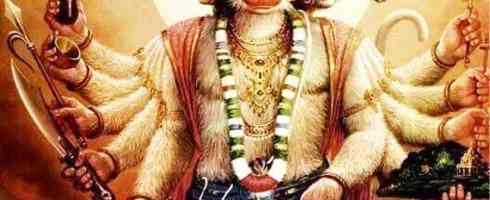
Vibhishana had informed Hanuman about Ahiravana’s strength source. It came from five lamps in Patal Lok. These lamps were facing five directions. To end his magical powers, all the five lit lamps needed to be extinguished in one breath. To achieve this seemingly impossible task Hanuman takes up the Panchamukhi form and blows out the lamps in one breath. The five faces of Panchamukhi Hanuman represent an eagle – Garuda facing the west. A boar Varaha faces the north. A horse Hyagriva faces the sky. A lion Narasimha faces the south. The fifth is the original Hanuman himself facing the east.

Panchamukhi Hanuman has ten arms holding different weapons. In the fierce battle with Ahiravana, Hanuman was victorious. He managed to free Rama & Lakshmana from his clutches in Patala.

Significance of the 5 Faces

Kapimukha – Hanuman’s original face facing the east removes blemishes of all past deeds and confers purity of mind . West facing Garudamukha drives away evil spells, black magic influence and negative spirits. It flushes away poisonous effects from the human body. North facing Varahamukha wards off the negative affects of planetary influence – especially Rahu. South facing Narasimhamukha dispels fear and ensures victory over opposition. Sky facing Hayagriva confers knowledge , victory and saves one from being childless.

Panchamukhi Hanuman near Mantralaya

Raghavendra Swami was engrossed in intense meditation for 12 years in a cave near Mantralaya. He had the vision of Panchamukha Hanuman who blessed him. Since then Panchamukha Hanuman has been his Upasana deity. The temple I visit in Koramangla is managed by Raghavendra Swami followers. The main deity is that of Panchamukha Hanuman along with shrines for Raghavendra Swami & Lord Ganesha.

This is the cave where Raghavendra Swami meditated. The Priest explained that the shrine is Swayambu – self emanated.

Panchamukhi Hanuman is popularly worshiped at a temple in Kumbakonam, Tamil Nadu as well.

Jai Hanuman Veer Hanuman, Jai Sri Ram

The Power of Gratitude: Building Stronger Connections

3 Mar

Most people struggle to sincerely say three simple words – Thank You, Please & Sorry.  

The tone and body language show your sincerity and even babies can make out when you are being superficial. These words are powerful tools when you are sincere and the intent is real. They help you to connect better. You can build stronger relationships. 

The Sanskrit word for gratitude is Kritajna (कृतज्ञा). It’s a beautiful word. It is formed from krita (कृत) meaning “cultivated.” The root jna (ज्ञा) refers to a state of consciousness. Kritajna thus means a state which is consciously created or chosen. It is the result of being fully here, the realization and acknowledgment of a particular moment in time. This is what brings the sincerity and depth in the emotion. 

Expressing gratitude is a simple way to encourage positivism. The science of TA (Transaction Analysis) highlights the power of Positive Strokes. Gratitude is a step in that direction.  

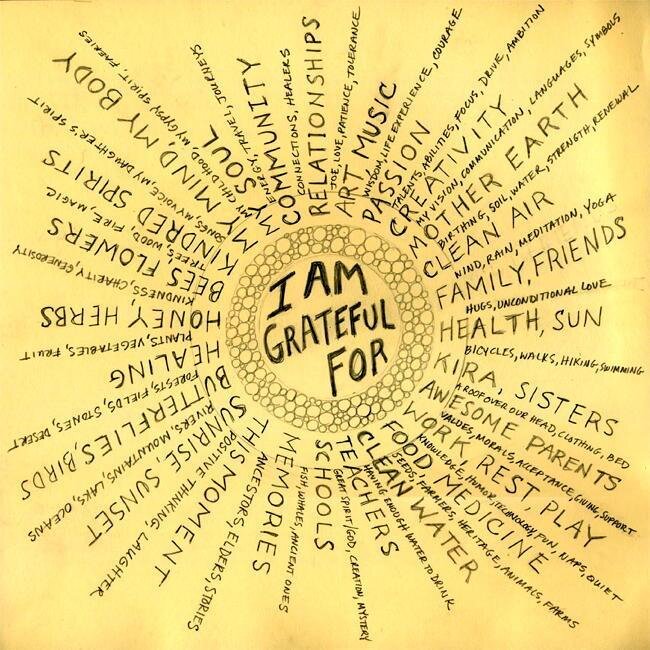
Gratitude is the ability to see value in others. When we get gratitude from someone, we feel seen, valued, and appreciated. It brings us joy and connection. We all seek gratitude and appreciate the feeling it inspires, but often we fail to express it. 

So what holds us back from expressing our gratitude ?

The biggest reason is self-absorption. It’s a reflection of times where the “I” dominates. We often fail to express our gratitude for others because we can’t clearly see it. We can’t seem to get ourselves out of the way. And we struggle to compliment and acknowledge a job well done. Even on social media criticism is spontaneous and elaborate – compliments are rare and brief. 

How to get started – Set an intention (Sankalpa)

Creating an intention of gratitude before and after your practice makes your practice powerful. It then acts as a guiding force after your yoga session. 

An effective Sankalpa is short, positive and captures your wish or goal for yourself and benefiting others. Your Sankalpa or intention can change every day or be the same for a few days – it’s your choice. Here are a few examples of gratitude statements

  • I am thankful for the abundance in my life. 
  • I am thankful for the joy and happiness I feel with each breath. 
  • I am thankful for the wonderful people in my life
  • I am thankful to Mother Earth & the Universe for the bounty it has showered on me and my family 

In Yoga the practice of Niyamas helps one develop gratitude. Santosha (Contentment) is a key step towards cultivating gratitude. Observing Ishvara Pranidhana (surrendering to God) is the most impactful step in developing gratitude. 

Lokah Samastah Sukhino Bhavantu

May all beings everywhere be happy and free. May the thoughts, words, and actions of my own life contribute in some way to that happiness. Let them also contribute to that freedom for all.

This ancient Shanti Mantra is a prayer we can practice daily. It reminds us that our relationships with all beings and things should be mutually beneficial. We must do this if we ourselves want happiness. It also helps with liberation from suffering. No true or lasting happiness can come from causing unhappiness to others. No true or lasting freedom can come from depriving others of their freedom. If we say we want every being to be happy and free, we must question everything we do. We need to examine our actions. We must reflect on how we live. We need to consider how we eat, what we buy, how we speak, and even how we think.

One of the greatest powers we wield is the words we use. Using the words Thank YouPlease, and Sorry helps to build relationships of trust and understanding. Using the power of these words helps people feel valued, respected, and convey that they matter to you. This produces a reciprocal response. It builds mutual relationships. Both people are stronger because they can communicate in a more meaningful way.

This Blog was published in the Oct 2024 edition of Yogavidya , the monthly newsletter for Bharat Yogavidya Kendra.  

3 Lessons from the Ramayana

2 Mar

Power of Education

Almost every Hindu child has heard the fascinating story of Lord Rama from their parents or grandparents. In 1987, Ramanand Sagar’s Ramayana was aired on Doordarshan. It became the most watched show in the world. City roads were empty. It felt like there was a curfew.

Set in the Treta Yuga the Ramayana is still relevant to all of us in our daily lives. Lord Rama is referred to as “Maryada Purushottam” which reflects his virtues of dignity & exemplary conduct. And Sita Ma is revered for her loyalty, devotion and sacrifice to her husband. She is considered the epitome of womanhood and is regarded as the ideal wife and mother.

In this Blog, I would like to focus beyond Rama & Sita on three key leanings from the Ramayana.

Hanuman’s Devotion (Bhakti) and Humility

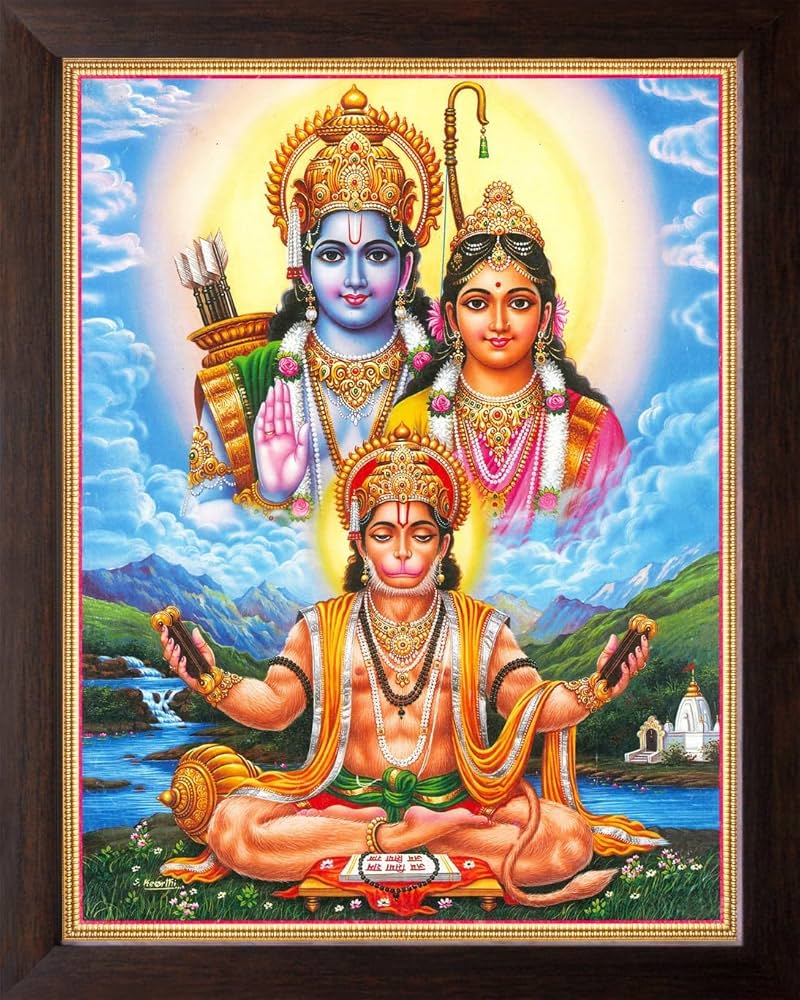
Known for his unwavering devotion, boundless strength, and selfless service, Hanuman symbolizes the epitome of loyalty and devotion. Son of Vayu and a manifestation of Lord Shiva, Hanuman is considered to be immortal. The Hanuman Chalisa describes how Lord Hanuman possesses Ashta Siddhi. He can also bestow Ashta Siddhi to his devotees. All he wanted was to be eternally at the feet of his Lord and worship them. All his strength he attributed to the Lord. Just praying to him makes the impossible possible.

Asadhya Sadhaka Swamin
Asadhyam Tawa Kim Vada
Rama Doota Krupa Sindho
Mat Karyam Sadhya Prabho

असाध्य साधक स्वामिन
असाध्य तव किंवद
राम दूत कृपा सिंधो
मत्कार्यं साध्यप्रभो ||

Lakshmana was a devoted brother. Nonetheless, when it comes to Bhakti & Humility, Hanuman Ji is the role model for humanity. 

There are many paths in the Spiritual journey but the path of Bhakti and total surrender has always worked miracles. 

This is what Lord Krishna also tells in Chapter – 12 (Bhakti Yoga) of the Bhagavad Gita

The Lord said: Those who fix their minds on Me and always engage in My devotion with steadfast faith. I consider them to be the best yogis.

Life is all about making the right Choice

Ravana was the grandson of the great sage Pulastaya. He was a respected scholar & an excellent ruler. An ardent Shiva Bhakt he was a Veena maestro. He has written books on astrology & medicine. He was loved by his subjects. Sadly all his greatness melted away because of the one wrong decision he made – to abduct Sita. His Ego stood in the way –

he was not ready to apologize and correct his wrong inspite of sane advice from many including his brother.

We see this in the Mahabharata also, how the great Karna suffered because of making the wrong choice.

Following the path of Adharma can wipe out the greatest of beings – Like it did to Ravana. This is the crucial learning for us.

The Value of Commitments

The third value that we can learn from the Ramayana is very important in the current age. The importance of honoring a commitment.

King Dasharatha honored a promise he had made to his queen many years back in the battlefield. It wreaked havoc on him and the kingdom, but the King honored his commitment. Lord Rama was an obedient son. He did not question his father. He fulfilled his commitment of 14 years in exile. Sita fulfilled her vows and marital commitment by being with Rama at his side during the exile.

It is very easy for a person in power to brush away a commitment of the past. But in the early ages the value system was so noble that commitments were etched in stone.

Being truthful and honoring your commitments is the mark of a good human being. It sets you apart, it makes you feel good from within.

Being Truthful and pursuing Dharma is the first step to peace, happiness and spiritual progress.

This Blog appeared in the Feb 2025 edition of Yogavidya , the monthly magazine of Bharat Yogavidya Kendra