Rice is the staple diet across large parts of South & East India. Traditionally, one has been educated that if you need to lose weight you need to shift from Rice to Rotis.
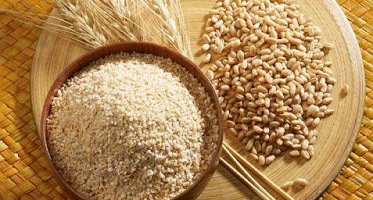
A typical South Indian housewife may struggle to make rotis every meal, but now there is a simple solution – Dalia. (Bulgur or Broken Wheat in English) Commonly known as Dalia in Hindi & Samba Rice in Tamil, Dalia is not just good for weight loss but also a great source of proteins, vitamin B1, vitamin B2 and fibre. And its easy to cook – just replace it with Rice.
Not just for breakfast : Dalia Upma is a popular and healthy breakfast option – not just for Upma but for Idli & Dosas also. You can substitute Daliya instead of Rice in all preparations. Cook it in the cooker with 2 glasses of water for 3 steams and eat it with Sambar & Rasam or use it for making Khichdi, Pulao or even Biriyani. You can even make your Kheer using Daliya.
Nutrient Content: Dalia is rich in proteins, minerals and vitamins. It provides high concentrate of Vitamin B complex, especially Riboflavin, Thiamine and Niacin. It is rich In Protein. Protein takes long to digest, suppresses hunger pangs, boosts metabolism and activates weight regulating hormones. A higher protein intake actually increases levels of the satiety (appetite-reducing hormones), while reducing your levels of the hunger hormone ghrelin.
When compared with white Rice, Dalia scores higher on the following nutritional aspects – 2X Protein, 3X Fibre, 6X Level of Potassium and lesser than half the Sodium that White Rice has.
Diabetes Control : Dalia helps in combating diabetes by controlling the blood sugar levels. People suffering from diabetes demand nutritional and healthy food dosages in small amount and regular intervals.
The Glycemic index (GI) is a measure of how quickly a food can make your blood sugar (glucose) rise. Only foods that contain carbohydrates have a GI index. Foods such as oils, fats, and meats do not have a GI index.
In general, low GI foods increase glucose slowly in your body. Foods with a high GI increase blood glucose quickly. If you have diabetes high GI foods can make it harder to control diabetes.
Daliya has very low glycemic index which make it perfect for people suffering from Diabetes.
Carbs with low GI value (55 or less) are digested, absorbed and metabolised slowly and cause a gradual rise in blood glucose. Daliya being low in GI does not get absorbed quickly and enables slow release of sugar that aid weight loss too.
Low GI foods (0 to 55)
Bulgar(Dalia), Barley
Pasta, Parboiled (converted) rice
Quinoa
High-fiber bran cereal, steel-cut or rolled oatmeal
Carrots, non-starchy vegetables, greens
Apples, oranges, grapefruit, and many other fruits
Most nuts, legumes, and beans
Milk and yogurt
Moderate GI foods (56 to 69)
Pita bread, rye bread
Couscous
Brown rice
Raisins
High GI foods (70 and higher)
White bread and bagels
Most processed cereals and instant oatmeal
Most snack foods
Potatoes
White rice
Watermelon
Fibre content: Dalia is also rich in fibre content. It has 3X the Fibre content of White Rice. This aids in digestion. So, if you are facing constipation issues then Dalia will help in smooth bowel movement.The low GI index of Dalia manages the energy level of human body through slow release of glucose after the breaking of food during digestion.
Like millets, it makes you feel energized and more full for longer intervals of time. In comparison, after a heavy meal of rice one tends to feel hungry in a few hrs. The high fibre content in Dalia delays digestion. Because the output of sugar is not in big quantum, it is not converted into fat.
Weight Loss: Regular intake of Dalia prevents unnecessary overeating and binging. Those who switched over to Dalia over an extended period have been able to witness a feeling of lightness and healthy weight loss tendencies.
In addition to all these benefits, Dalia does not contain artificial fragrances, colours or sulphates. It can also be cooked with spices and vegetables, thereby creating a healthy, nutritious and well balanced breakfast diet.
So look no further start the journey of looking at Rice substitutes – Dalia and Millets are great healthy options.
I have always wondered about the significance of Snakes and Nagas. They seem to hold a special place not just in Hinduism but across many communities and religions. As snakes grow, many of them shed their skin at various times, revealing a shiny new skin underneath. For this reason snakes have become symbols of rebirth, transformation, immortality, and healing.
Snakes invoke fear, awe and a sense of mystery. There are also many unanswered questions about them. This blog hopes to throw some light on the history of mans association with Naga’s.
A few facts
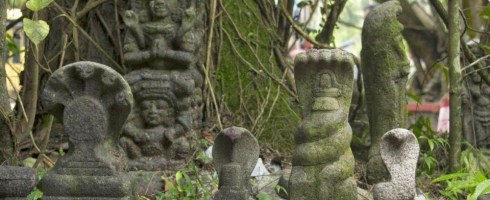
Every ancient Indian temple has a corner below a pipal tree dedicated to statues and sculptures of snake gods.
Nag Panchamiis an important day when many devout Hindus visit these temples or pour milk in snake pits
Many of our Gods from Vishnu to Shiva to Kathikeya are associated with snakes. A devout Hindu never kills a snake.
During the Samudra Manthan Vasukithe king of the Nagas became the churning rope
A State called Nagaland is named after the snake
The great Rishi Patanjali is represented as half snake – half man. He was a Naga living on earth.
The ancient Greeks considered snakes sacred to Asclepius, the god of medicine. He carried a caduceus, a staff with one or two serpents wrapped around it, which has become the symbol of modern physicians.
For both the Greeks and the Egyptians, the snake represented eternity. Ouroboros, the Greek symbol of eternity, consisted of a snake curled into a circle or hoop, biting its own tail. The Ouroboros grew out of the belief that serpents eat themselves and are reborn from themselves in an endless cycle of destruction and creation.
In the mythology of ancient Egypt, Apopis was a demon of chaos who appeared in the form of a serpent. Each night he attacked Ra, the sun god. But Mehen, another huge serpent, coiled himself around Ra’s sun boat to protect the god from Apopis—a perfect illustration of how snakes can be symbols of both good and evil in mythology.
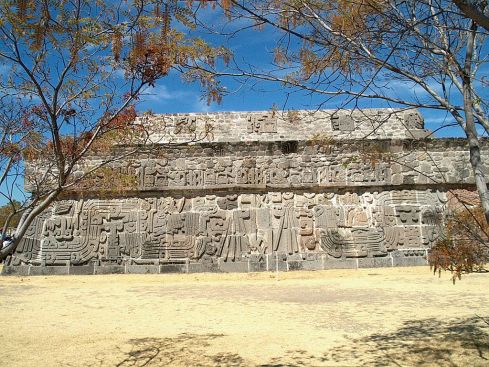
Temple of the Feathered Serpent – Aztec
Kerala is one state in India where Snakes are worshipped in almost every village. There are about 2000 Sarpa Kavu’s or sacred groves all over Kerala dedicated to snakes. There is a mythological story associated with this. Parasurama the creator of Kerala is said to have prayed to the Naga King to help remove the salinity of the land and the Snake God obliged. The ancient temple of Mannarsala (56 Km from Kollam) is dedicated to the snake God Nagaraja as this is the place where Parashurama is said to have prayed to the snake god.
The only place where I have read a detailed and fascinating account of Nagas and their association with humanity is in the lovely book “Apprenticed to a Himalayan Master” by Sri M. An enlightened soul, Sri M runs the Satsang Foundation and conducts retreats and Satsangs all over the world. I have had the privilege of meeting him and attending his Talks. I am sharing below excerpts from his book that throws light on why we worship Snakes and what their association has been with mankind.
________________________________
Apprenticed to a Himalayan Master by Sri M (Encounter with Nagraj)
On the third night at Arundhati cave, I was woken up by what I at first thought was the rumbling of thunder. I opened my eyes and saw Babaji in his usual sitting posture, back towards me, silhouetted by the light of the Dhuni. I looked beyond, and from between two parting clouds, emerged something that was roughly the size of a full moon, but could not be the moon.
Instead of the cool, silvery, white light shed by the moon, this object was a glowing ball of fire, and as it moved closer the rumbling became louder. Then it came towards the cave and landed right on the Dhuni, with the sound of a thunderclap. I was so scared that I could not even sit up, but Babaji sat upright like a statue, unaffected and unmoved.
I wanted to call out to him, but my vocal chords refused to function. Some¬ how, I pulled myself up to a sitting position. My whole body trembled with fear. A strange spectacle unfolded before my astounded eyes. The rumbling had stopped and there was utter silence.
The fireball, which was about two feet in diameter, split vertically into two, and out of it emerged something that caused goose pimples all over my body. It was a large snake, with a hood like a cobra, glowing electric blue, as if made of a transparent, violet, glass like material, with electric filaments lit inside. The snake-like creature’s eyes glowed, and it hissed softly.
My fear vanished the moment I saw the creature bend down and touch Babaji’s feet with its hood. Babaji blessed it by touch¬ ing its head with his right hand, and then did something, which for a second, made me wonder if what I was seeing was a silly dream, or reality. He hissed in reply. The blue cobra straightened up and sat facing Babaji. A hissing conversation went on for quite some time.
Then Babaji said, “Madhu, come forward and see the deputy chief of the Sarpa Loka.” I moved forward and carefully sat behind Babaji. The snake hissed. Babaji said, “Bow down to Nagaraj.” I bowed low before the snake. At close quarters, I could see that he was quite big and had intelligent sparkling eyes. The snake hissed and touched my head with his forked tongue. I found that I was not the least bit frightened, although I could feel a mild electric shock passing through my body.
Then abruptly, it slithered back into the globe, the two halves of which clicked shut, and with a rumbling sound, the globe, The Fireball from the Sky took off and soon vanished in the clouds. I could not but ask Babaji to explain. “Babaji,” I said, “I deserve an explanation. If I said this to anybody, they would think I am utterly crazy, or that I am concocting some kind of fiction, so I shall keep this to myself. But please, explain to me.”
“Yes,” Babaji said, “you are right. Not many will believe this experience of yours but you will have to share it with the public, when you write your autobiography. It does not matter who believes or does not, but I will explain to you. Truth is often stranger than fiction.
“In the Milky Way, there exists a stellar system with seven planets and eighteen moons. One of these planets is called Sarpa Loka, and is entirely inhabited by highly evolved, hooded snakes. The serpents are called the Naga devatas. The person you saw is the deputy chief of this realm and he is called Naga- raja. The supreme head of the Nagas is the five-hooded golden serpent, known in ancient Indian texts, as Anantha.
“Thousands of years ago, when humanity was still in infant stages of mental evolution, there was regular contact with Sarpa Loka. The wise and evolved Nagas frequented the earth, and spent long periods here, teaching and educating human beings. The snake worship you come across in all ancient civilizations is a tribute to the advanced Nagas of yore.
Their images were venerated for the deep wisdom that they possessed. They also taught the secret of the kundalini energy initially, again symbolised by a serpent. Patanjali who gave the world the Ashtanga Yoga Sutras , was himself a Naga, and is depicted as half man and half snake. The snake on the pharaoh’s head and the snake coiled around the yogi-god Shiva, are all symbolic representations of wisdom and power, imparted to certain human beings by the Naga teachers.
“But then, as always seems to happen, human beings, as they became more powerful, began to also become more self- centred and cunning. Humans, or at least a majority of them, were ready to even kill for personal gain. Some felt threatened by the intellectually and spiritually superior Nagas, and forgetting their indebtedness, began to use the powers that they had acquired from the Nagas against them. “At one point, there were large scale massacres of the Nagas.
The Supreme Naga Chief decided to recall the Nagas from earth, and cut all connections, except with some human beings who were highly evolved spiritually. Overnight, they were transported back to Sarpa Loka. A small number of Nagas, who were either sick or too old, or in rare cases, rebels who defied the orders of the Supreme Chief thinking that they still could do something with the human beings, got left behind. “The serpents and snakes that exist in the world today are the descendents of those who were left behind, and who, through years of in-breeding, have become retarded, and no longer possess the great qualities of their ancestors.
However, as I told you, the channels of contact were kept open with highly evolved beings of the human race. When the great Sai Nath of Shirdi left his body for three days, and returned on the fourth day, to the great astonishment of the general public who had thought that he had died, he told his close circle of associates that he had gone to settle a dispute in some other world. “The other world he spoke of, was the Sarpa Loka. The dispute, which I cannot reveal to you, was not completely settled, and has come up again. Nagaraj here went to Sri Guru for help, and on his suggestion, came to me to discuss the matter.”
“Babaji,” I said, “all this sounds so bizarre, that if I ever wrote a biography – which I might do, at some point, since you say so, the readers would either dismiss it as the ravings of an unbalanced mind, or as pure fiction. I don’t care. So let it be.” Babaji laughed. “I repeat again,” he said, “truth is stranger than fiction, and even if the story stimulates their imagination, there is hope that they might at some point realize that there are greater realms of consciousness which cannot be comprehended by dry logic, and currently available levels of intelligence.
“However, by the time you attempt your biography, even the scientific world would have expanded its knowledge of outer space and other planets. The suspicion that life exists, or ex¬ isted on other planets or stellar systems, will be strengthened by the discovery of water, and other conditions suitable for the evolution and sustenance of life forms in hitherto unsuspected parts of the cosmos. Perhaps, some unprejudiced scientist might consider it worthwhile to at least give your story the atten¬ tion it deserves. Beyond that, considering the stupid attitude of dismissing anything that does not fall under the category of ‘established norms’ as unscientific, have no hope.
You are what you eat. If you eat healthy you stay fit. But what happens if the vegetables and fruits you buy from the market are packed with deadly chemicals – many of them banned. A study by the Food Safety & Standards authority of India under the Agricultural Ministry discovered that the veggies in the market were concentrated with chemicals a thousand times more than the permissible limit.
If you chop veggies at home you will realise that you no longer need to check the Ladies Finger for the small black worm – because they don’t exist. Pesticides have helped the farmer prevent wastage and improve his productivity. Yields are better, crop grows faster, and there is better hope for making some money after all the middlemen have had their share. But they come with a cost – a steep cost to your health and the farmers health.
The solution to this is Organic Farms – a phenomena that has started recently. The educated Indian is concerned and A Few Good People are investing their time and money to educate farmers and grow food that is healthy and nutritious.
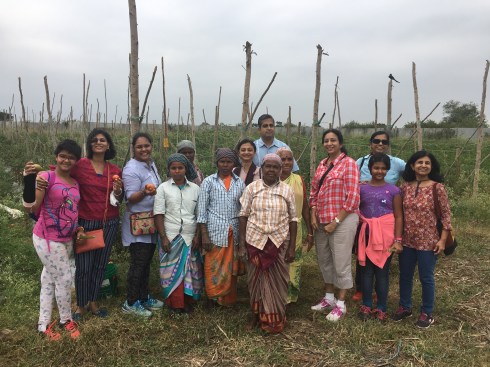
Farming is hard work – which is what we discovered when we made a day trip to Mapletree farms atThalli, a scenic village in Hosur, Tamil Nadu located about 50 Km from Bangalore. Mapletree farm is a joint effort by Ex Infosys Founder Shibulal, Ex OnMobile Founder and CEO Mouli Raman and Ex Founder of Hillview Organics, California and Organic Farming Teacher Shankar Venkataraman.
We visited the farm and were impressed with the passion and dedication of Shankar who runs the show. A BITS Pilani Graduate who was working in Texas Instruments and later relocated to US, Shankar has found his purpose in life. He lives in the farm and visits his family in US once in 3 months. Over the last 3 years he has helped build the farm engine with a deep sense of love and compassion for the team. Having set the foundation the business is now scaling rapidly.
Shankar explained to us the challenges of farming in India. Rapid exodus of next generation from farming is a concern and unless a farmer makes a steady income of Rs 25,000 a month the future is doomed. Farming needs to be seen as a sustainable, profitable business that is respected by the community. A Farmer needs to learn to respect Mother Earth and ensure that she sustains us for the future. Educating the local farmer of the negatives of short term benefits from the usage of chemicals is an important part of his mission. Mapletree is not just an Organic farm but also a place where the youth and the Local farmers can learn the best practises for producing healthy food.
He explains that excessive use of pesticides and chemicals has made almost 25% of farm land in China non cultivatable. We see the same trend in Punjab and Haryana where excessive usage of Urea has made the fields devoid of nutrition. At Mapletree the only fertiliser used is Cow-dung. There is a reasonable gap between two cycles of crops and leguminous plants that make the soil rich in nitrogen are planted during the gaps. This helps the soil to gain its nutrition. Yes the lack of pesticides does result in crops getting wasted and there is a 30% loss of produce. Level of handholding is higher – all of this adds to higher costs. The Veggies from an Organic farm are more expensive than what you get in the shop next-door. But this is the price you have to pay for healthy food. Mapletree is one of the few Organic Farms where most of the produce comes straight from the farm (Almost 60%), while other Organic Brands are just traders procuring material from farmers. Shankar is working towards increasing this ratio in the coming years.
The farm also has a 100 + cows, many are non milch cows but are still useful for the manure. They sell milk, butter & paneer. This 45 Acre farm is rustic, calm and serene – its not a manicured pedicured farm that you may see in pictures, but its a happy place with a lot of positive energy.
Mapletree Farm serves over 200 Apartments and Villa communities in Bangalore. Over 4000 households get their weekly supply of vegetables and fruits straight from the farm to their houses. Demand is soaring – there is no marketing but the good news is spreading word of mouth as more and more customers join the healthy food bandwagon. From a humble beginning this 45 Acre farm now notches revenue of 45 Lacs a month. Employing over 100 people who work hard almost 12 hrs a day.
A great beginning to help you eat a healthy meal. If you want to join the ” eat Healthy – Stay Fit” movement reach out to Mapletree. The information below will help you to get started.
Information from Mapletree
Call or email the founder & Lead Farmer (whatsApp preferred) : 91136 88239 shankarv.dsl@gmail.com
Call customer support to register and buy (whatsApp preferred): 97909 48235 — Vikram is our head of customer support and he will help you.
We deliver 6 days a week in different parts of Bangalore: We deliver 2 days per week to specific locations and you can receive 2 deliveries at your doorstep per week from us if you request us.
In his bestselling book “Outliers” Malcolm Gladwell came out with a convincing theory of why people born in 1954 – 55 ruled the Tech world. Bill Gates, Steve Jobs, Bill Joy, Scott McNealy, Eric Schmidt, James Goslings and many more famous astrophysicists and scientists were born in that period.
What you hear as a child sticks to your mind and I recollect my mother being disappointed that none of her children were born in November. She had the view that those born in November had an edge and would become famous. Maybe this was driven by her loyalty to the Nehru family (Both Jawaharlal & Indira Gandhi are Nov born).
Having seen many a famous personalities Birthday celebrations popping up in news and social media over the last few weeks I decided to do some research. And yes – there does some seem to be some strong connect between being born in Nov and being famous.
Here is a list I was able to collate in 15 minutes and its real impressive. I think my mothers intuition was right. What I can infer from this dipstick is a large number of Film Stars and Politicians are born in Nov while there are few Corporate Czars and world beating sports personalities.
A lot of film stars and media personalities – Bruce Lee, Demi Moore, Sharukh Khan, Meg Ryan, Kamlahasan, Juhi Chawla, Irrfan Khan, Sushmita Sen, Aishwariya Rai, Tabu, Whoopi Goldberg, Larry King, Zeenat Aman and Bryan Adams are all Nov born. So are Nobel Price winners like C.V.Raman, Marie Curie, Amartya Sen and Winston Churchill. And rulers & politicians like Jawaharlal Nehru, Abul Kalam Azad, Indira Gandhi, L.K.Advani, Mulayam Singh Yadav, Aurangazeb, Rani Lakshmibai, Tipu Sultan, Arjun Singh , Kamal Nath, Condolessa Rice and Imran Khan.The list also includes the legendary corporate leader Jack Welsh who in his undisputed role as head of GE was both a sultan and a politician. A few players Virat Kohli, Billie Jean King, V.V.S.Laxman. Famous writers like Dale Carnegie, R.L.Stevenson, Jonathan Swift and Mark Twain. Spiritual leaders Sri M & Sathya Sai Baba.
Those born in the month of November either fall under the zodiac sign of Scorpio or are born on the Scorpio-Sagittarius cusp. As per Linda Godman those under the influence of Scorpio are easily approachable and are blessed with a sharp mind. These individuals are known for their forward thinking and are always full of unique and extraordinary ideas. These people are also known for their strong sense of clairvoyance and can at times be secretive in nature. Though not known for being talkative, they are extremely affable and make a lot of friends. Often they may appear as withdrawn and solitary, but they always keep a keen eye on the happening in their surrounding and are hardly apathetic. However, on the other side they can often be extremely manipulative, obsessive and revengeful. They are very loving and caring to their partners and exhibit a great deal of passion in their relationships, but one of their negative traits is that they can be a little jealous at times.
A famous Numerologist reports that if you were born in November, the number 11, which is a higher vibration of 2, will be of great importance to you. You are psychic, empathic, and positive. However, sometimes you get overwhelmed by your own sensitivity and develop stress related health and psychological problems, such as chronic fatigue and depression. You often set an example for others and make a great teacher.
A popular joke doing the rounds on Nov 14th is that its exactly 9 months after Valentines Day. I wonder if that has any impact on the greatness of the Nov born?
Diwali is about letting go of the restraint and splurging on sweets. Yes the danger of excessive sugar is well known but there are bigger dangers lurking in the the lovely sweet box you just got as a gift from a leading sweet brand in the city.
Last year, a survey done by SPECS (Society of Pollution and Environmental Conservation Scientists) found that 90% of sweets and snacks in multiple cities of India were adulterated.
The demand for these products rises astronomically during the festive season, but of course, the production of milk cannot go up suddenly as the number of cattle remains the same. So when supply is X and Demand is 10Xwhat do you do? You Adulterate.
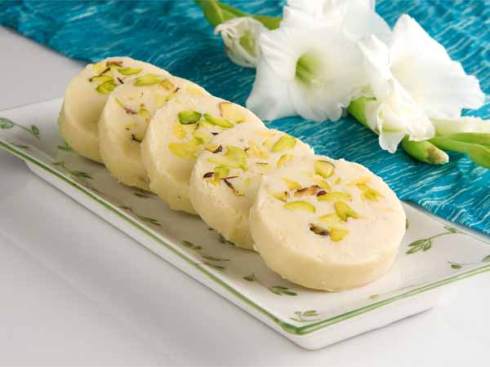
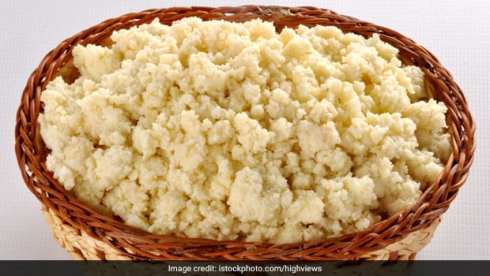
The first thing you MUST avoid is – sweets made of KHOYA. Khoya is made with milk thickened by cooking it over low heat for hours. It’s commonly used for making a wide variety of Indian sweets or mithai. However, nowadays, when the demand of khoya is on the rise, some vendors, in order to meet these demands, may indulge in adulterating the dairy product by using harmful chemicals.
Mawa or khoya used in Diwali sweets may be adulterated with a number of foreign ingredients like fine flour, starch, suji or semolina or even blotting paper. While these three are the relatively tame adulterants, there are some things added to mawa which are potentially harmful when consumed, including urea, palm oil or detergent! Some dairies also add foreign fat in mawa and milk to make these products taste ‘richer’. When people consume sweets made from these adulterated dairy products, their health may be affected.
The adulteration goes beyond milk sweets. Your favourite besan laddoos are commonly adulterated with kesari daal – no this ain’t some high-grade protein, it’s animal feed unfit for human consumption.
Rasgullas can be made with all kinds of spurious synthetic and paint milk. And the shimmering vark is often replaced with aluminium foil.
So whats the solution. The best solution is to eat home made sweets. Yes thats a lot of toil – fortunately my wife is one of the few who still follows the tradition and toils for hours every day for a week before Diwali. But thats rare – people are more interested in getting ready for their card parties than making sweets at home.
The second best solution could be to stick to sweets made of jaggery or “Gur” – but thats rare. You walk into a shop and you will hardly find any “Gur” sweets. Traditional South Indian shops may have Manoharam, Appam, Adirasam and Boli– but they are becoming rarer by the day.
There are a few simple tests that you can do at home to check the quality of your milk. If the milk at home is adulterated this season be sure that the sweets in your neighbourhood Mithai Shop are.
Test 1- Water : This one’s pretty simple. You don’t have to wait for Diwali to test the milk quality. Take a few drops of milk and place them on a slanting, smooth, polished surface. Pure milk will glide down slowly leaving a trail behind while adulterated milk will slip pretty fast leaving a clean slate.
Test 2: Urea- The most common adulterant. Take a teaspoon or two of milk in a cup and add a teaspoon of soya powder or toor dal powder. Shake it till it mixes uniformly. After a couple of minutes, dip a litmus paper. Moment of truth. If the paper turns from red to blue, it indicates the presence of urea in milk. Discard.
Test 3: Detergent – Water down milk and shake it vigorously. If it lathers, there’s detergent. Puke! Preserve the sample and wash the leftover milk down the drain and complain to the local FDA.
Enjoy your Diwali – but think twice before eating that tasty looking Milk Sweet this season.
Most Hindus would have heard of the Vedas and the Bhagavad Gita, but few would have read or deciphered them. Hinduism has a long list of scriptures evolved over thousands of years. A few Enlightened souls or Vedic students may know the entire list of our Scriptures. The vast majority of Hindus would not. This is an attempt to change this.
Every Hindu should be proud of the span and depth of knowledge in our ancient scriptures.
You don’t need to know Sanskrit or even need to read and interpret them in English as there are scholarly commentaries by knowledgeable enlightened souls that summarise the learnings for us.
This Blog is a Layman’s Guide on 3 Topics that every Hindu, young and old, should be aware of
The Essence of the Upanishads or Vedanta
An Overview of the different holy books, teachings & philosophies that constitute Hinduism and its Scriptures in all its rich glory
An introduction to some of the established paths and practises in Hinduism that a seeker can explore
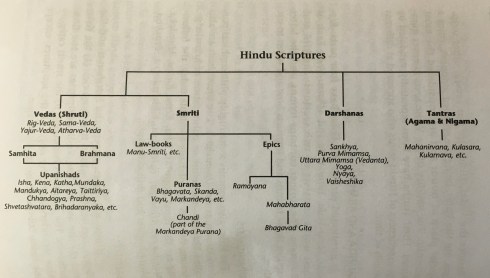
Shruti & Smriti
All Hindu Scriptures can be classified under two headings – Shruti & Smriti. Shruti means “that which is heard. It includes the four Vedas and its four embedded texts—the Samhitas, the Brahmanas, the Aranyakas and the early Upanishads. There are no authors associated with them. This knowledge was transmitted verbally across generations for thousands of years. It is still maintained in its pristine glory and is finally now documented.
Smriti (that which is remembered) are a body of Hindu texts usually attributed to an author. They were traditionally written down but are constantly revised. This includes law books like Manu’s Code – Manusmriti, The Epics, The Puranas, The Yogashatras etc.
What comprises the Vedas?
There are 4 Vedas – Rig Veda, Yajur Veda, Sama Veda and Atharva Veda. Each Veda consists of 4 sections
Samhita
Brahmanas
Aranyakas
Upanishads
The Samhita’s are hymns in praise of nature & Gods. The famous Gayatri Mantra in the Rig Veda is part of the Samhita. The Brahmanas explain the ways and means to perform rituals and sacrifices. For example, the first chapter of the Chandogya Brahmana, one of the oldest Brahmanas, includes eight suktas (hymns) for the ceremony of marriage and rituals at the birth of a child.
The Aranyakas consist of knowledge that was imparted in the forest to students in Ashrams or to people who had completed their responsibilities and left for the forest in the last phase of their lives. The solitude of nature is very conducive to understanding the subtle truths.
And finally the Upanishads, which is considered the essence of the Vedas. They are also referred to as the Jnana Kanda or the wisdom section of the Vedas. Since it is the last part of the Vedas it is also called as Vedanta. The word Veda means learning – so Vedanta can also mean the end of all learning – one who has read, understood and internalised the Vedanta has reached his goal of the ultimate Truth. That’s why its also called as Para Vidya.
What does the word “Upanishad” mean
The word Upanishad comprises of 3 syllables UPA – NI – SHAD.
Upa means close. It could mean being close to the teacher or moving closer to the Truth by paying attention to dissolve obstacles. Shad means to sit down. The Mind is settling down and becoming receptive, you are ready to listen. The great saint & scholar Shankara interpreted Shad as ” To shake yourself awake from the sleep of ignorance”. Ni means accepting the Teacher at a higher level. There is voluntary humility. The student is ready to sit down and understand.
In totality, the word Upanishad refers to the student and teacher sitting down together with the intent of moving closer to the Supreme Truth. This is done with complete humility, setting aside all the obstacles.
Are the Upanishads meant for Intellectuals only?
They are crystal clear gems of the Vedas. They are direct. The teachings of the Upanishads follows the approach of eliminating falsehood so what remains is the TRUTH.
Since its impossible to define GOD, the Upanishads follow the approach of “Neti Neti“. This is a Sanskrit expression which means “not this, not this”, or “neither this, nor that”. It constitutes an analytical meditation helping a person to understand the nature of Brahman by first understanding what is not Brahman.
The Brahman is neither this nor that. GOD has no form, no shape, no colour, its not male, not female…. etc. Some feel that reading the Upanishad makes you an atheist as the Upanishads are great in denial. They do have different interpretations, but an enlightened master can explain it in very simple terms.
Sri M talks on the Upanishads are simple, clear and illuminating. Here is a brief 14 min talk by Sri M on “An introduction to the Vedas & Upanishads”
How many Upanishads are there?
There are over a 100 Upanishads of which 11 are principal Upanishads on which most of the great Acharyas have commented. There is a lot of similarity between the Aranyakas and the Upanishads and some people treat them under the same banner. The Brihadaranyaka is considered to be the biggest Upanishad. The title Brihadaranyaka Upanishad literally means “great wilderness or forest Upaniṣhad“. It is credited to ancient sage Yajnavalkya and is part of the Yajur Veda.
Who has authored the Vedas?
The Vedas come under the classification of Shruti. In most cases there is no known author. Krishna Dvaipayana Vyasya collected and compiled Vedic Truths in one place and recorded them in the Vedas. In recognition for this work he is called Ved Vyasya and his birthday is celebrated as Guru Purnima.
There are Four Mahavakyas or great sentences in the Vedas. Three of them speak of the divinity of the soul and the fourth speaks of the nature of GOD. They are
Aham Brahma Asmi – I am Brahman
Tat Tvam Asi – You are That (Brahman)
Ayam Atma Brahma – This individual Self is Brahman
Prajnanam Brahma – Supreme Knowledge is Brahman
The Upanishads try to explain the Ultimate Subtle Truth – the Brahman, Infinite or Indescribable as experienced by the Rishis in their deep state of meditation. GOD is equally present everywhere and a drop of the Ultimate Truth is enough to get you addicted. Once you taste that nectar, you are ready to forego everything.
How many schools of Hindu Religious Philosophy exist?
Six different systems of philosophy called Darshanas were developed by Hindu sages over different periods of time. Their foundation is in the Vedas.
The Sankhya school founded by Kapila
The Purva Mimansa school founded by Jaimini
The Uttara Mimansa or Vedanta school founded by Vyasa ( Not to be confused with the Upanishads)
The Yoga school founded by Patanjali
The Nyaya school founded by Gotama
The Vaisheshika school founded by Kanada
Authors of these philosophical systems wrote the original treatise using very concise aphorisms called Sutras in Sanskrit. Sutras are known for being brief and easy to memorise. However, due to their cryptic nature, they needed explanatory notes or commentary which were written later by other scholars.
Sage Vyasa’s treatise, which forms the basis of the Uttara Mimansa system, is known as the Brahmasutra. Several commentaries have been written on this book by Shankara, Ramanujacharya and Madhavacharya.
What is Advaita Vedanta (Non Duality) ?
The term Advaita refers to its idea that the soul (True Self, Atman) is the same as the highest metaphysical reality (Brahman). The followers of this school seek spiritual liberation through acquiring knowledge of one’s true identity as Atman, and the identity of Atman and Brahman.
Advaita Vedanta traces its roots in the oldest Upanishads. It gives “a unifying interpretation of the whole body of Upanishads”, the Brahma Sutras, and the Bhagavad Gita.
Advaita Vedanta is the oldest extant sub-school of Vedanta, which is one of the six Hindu philosophies or Darshanas. Although its roots trace back to the 1st millennium BCE, the most prominent exponent of the Advaita Vedanta is considered to be the 8th century scholar Adi Shankara.
Advaita Vedanta emphasises Jivanmukti, the idea that moksha (freedom, liberation) is achievable in this life in contrast to other Indian philosophies that emphasise videhamukti, or moksha after death.
What are the Puranas ?
The deeper truths of the Hindu scriptures are at times difficult to understand without a teacher. To present the teachings in an easy-to-understand manner for the common man, the sages created a special type of literature called the Puranas. In the Puranas the scriptural teachings are presented through stories and parables.
There are 18 Puranas available today, the most popular amongst which are Bhagavata Puranas, Skanda Purana, Vayu Puranas, Padma Purana, Markandeya Purana and Agni Purana. The Chandi or Devi Mahatmyam is part of the Markandeya Puranas.
The Two Great EPICS – Ramayana & Mahabharata
The two great Epics were composed by Sage Valmiki and Vyasa respectively. Also called as Itihasa these epics contain many scriptural teachings with the story of various clans and dynasties. The depth of moral and spiritual teachings in them has elevated them to the level of a scripture. The Bhagavad Gita, perhaps the most popular scripture of Hinduism, is part of the Mahabharata.
The Bhagavad Gita contains most of the essential teachings of the Upanishad’s, giving it a status very close to that of the Upanishad’s
What is Tantra?
In parallel with the Vedic discipline, Hinduism has another set of disciplines called the Tantra’s. Here, God is looked upon as both Male & Female called Shiva & Shakti respectively. Shakti is the creative power of Shiva. In modern terms, Shiva can be compared to Potential Energy and Shakti to Kinetic Energy. When Shiva becomes active, he is called Shakti. This Shakti has created the world. The relationship between Shiva & Shakti is like the relationship between fire and its burning power. They are always inseparable and ONE. Shakti however has many names – one of them is Parvati.
In Tantra they say that “Para Shakti” is the life giving energy that creates life in the womb and then settles down coiled in the Muladhara as the dormant Kundalini energy.
The scriptural texts of the Tantras are usually in the form of dialogues between Shiva & Parvati. The dialogues where Shiva is the speaker giving spiritual learnings to Parvati are called the Agama texts. Where Parvati plays the role of the teacher and Shiva is the listener the texts are called Nigama. Of the original 28 Shaiva Agamas, only 20 are available now.
The Tantra literature is vast. Among the 64 prominent texts are the Mahanirvana, Kulasara, Prapanchasara, Kularnava, Rudra Yamala, Vishnu Yamala, Brahma Yamala and Tantraraja.
The Pancharatra Samhita’s
They are the scriptures of certain Vaishnavite sects. The number of scriptural texts pertaining to these Samhita’s is 250. Of them Brihad – Brahma, Ishvara and Jnanamritsara Samhita’s are particularly noteworthy.
What are the two Spiritual Paths in Hinduism ?
Hinduism offers two major spiritual paths or sets of religious duties. One for the householder, and the other for the monks. The established path of the householder is called “Pravritti Marga” or the path of permitted sensual desires. The path for the monks is “Nivritti Marga” or the path of renunciation of sensual desires.
What are the The Four Yogas or Paths to Salvation?
In addition to “Pravritti Marga” and “Nivritti Marga”, hinduism speaks of many methods or paths to reach God. These are 4 paths that an individual can choose based on his emotional build up.
Bhakti Yoga – The path of devotion, suitable for Emotional people
Jnana Yoga – The path of rational enquiry, ideal for rational thinkers
Raja Yoga – The path of mental concentration, best suited for a meditative person
Karma Yoga – The path of right action. Best suited for a householder or a person naturally inclined towards activity
The word Yoga means yoke – the connecting link between the spiritual aspirant and God. Yoga also means a method or technique to establish mental communion with God.
What are Siddhis or Supernatural powers ?
During the course of practising Raja Yoga, an adept seeker gains mastery of his mind. In the process he acquires eight extraordinary powers called Ashtasiddhi
Anima – To grow as small as a molecule and penetrate solid objects
Laghima – Extreme lightness of the body or the ability to levitate
Vyapti – The ability to expand
Prakamya – The acquisition of irresistible will
Mahima – The ability to make the body extremely large
Ishitva – Aquiring God like powers
Vashitva – The power to bring everything under ones control
Kamavasayita – The ability to obtain whatever one desires
Other powers may also develop in the journey of a serious seeker – the ability to fly (Khechari Vidya), the conquest of death (Mrityunjaya Vidya), the ability to acquire Hidden Treasures (Patala Siddha), the ability to enter another person’s body (Kaya Siddha), knowledge of the past, present & future (Trikala Jnana), the power to die at will (Iccha Mrityu), the power to make oneself invisible (Antardhana), going beyond hunger and thirst (Kshutpipasa Nivritti) and the power to understand all animal languages (Sarvabhutaruta Jnana)
These powers are like milestones on the path to spiritual progress but can be obstacles to reaching the ultimate goal. Students are thus advised not to use any of these powers or Siddha’s.
What is Kundalini & The 7 Chakras ?
The path of Raja Yoga also explains the process to activate the dormant Kundalini energy that lies coiled up in the base of the spine at the Mooladhara Chakra. Raja Yoga helps one to awaken the Kundalini power through meditation and other spiritual practices.
The vital energy energy or nerve current of a person works in his body by passing thru two channels called the Ida (Left Channel) and Pingala (Right Channel). There is a 3rd channel between the two called the Sushumna which normally remains closed. To raise the Kundalini, one needs to cleanse the Sushumna channel, and allow the energy to rise through this central passage piercing the Chakras on the way up. The Chakras are subtle energy or nerve centres along the spine.
Although Raja Yoga literally means the “King of all Yogas” it has its own hazards. In the words of Swami Vivekananda, a past master of Raja Yoga, there must be perfect chastity in thought, word and deed. Without it, the practise of Raja Yoga is dangerous and may lead to Insanity.
The practise of Kundalini needs to be done under the guidance of a master. The human body is not prepared for the surge of energy that is associated with the rise of the Kundalini.
What are Gunas ?
The concept of Gunas plays a very important role in Hinduism. According to the Sankhya school of philosophy the world has two parts – Spirit & Matter. The Matter part of the world has its source in Prakritior Mother Nature.
Prakriti is composed of three extremely subtle and intangible substances called Sattva, Rajas & Tamas. If Prakriti is a rope these 3 substances are the strands that make the rope. A Strand or a String is called Guna in Sanskrit. That is why these substances are called Sattva Guna, Rajo Guna and Tamo Guna.
Prior to the creation of the world the 3 Gunas were in a perfect state of equilibrium. When they start mingling and overlapping the state of harmony is lost and creation starts. There is no entity in the world or in heaven which can be free from the 3 Gunas born from Prakriti. The Gunas are finer and subtler than anything we know of in this world. Their existence cannot be perceived because of their subtlety. However, each Guna has its own distinctive quality or characteristics.
Sattva Guna is light & buoyant. It is the nature of pleasure and joy. The luminosity of light, the ability of the mind, the sense to know things, the reflecting power of the mirror and the transparency of glass and crystals are all due to the presence of Sattva Guna in them.
Rajo Guna causes activity, movement and restlessness. Avarice, hankering, anger, ego, vanity, wish to dominate others are all characteristics of Rajo Guna. It is the cause of all types of painful experiences.
The characteristics of Tamo Guna are inertia, passivity, sluggishness, heaviness and negativity. It resists activity or movement. It makes the mind sluggish incapable of knowing things clearly.
Sattvo Guna gives spiritual liberation. Rajo Guna causes bondage through attachment to action and Tamo Guna causes confused thinking. The Gunas share one common characteristic. They are always in conflict with each other. Each one trying to subdue the other and become predominant. At the same time they cooperate with each other. The world exists because of the cooperation of the Gunas. To attain spiritual liberation one has to go beyond the three Gunas. In the Bhagavad Gita, Lord Krishna tells Arjuna “Go beyond the three Gunas” go beyond matter and manifest your divine spirit.
The ultimate goal in Hinduism is to attain Moksha by embracing The Ultimate Truth or Brahman or GOD. There are many paths to get there, all of which requires effort and sustained commitment. A simple way to get started is by following 3 things in your daily life
Do superstitions have a basis; what is the reason that they have been practised for centuries?
These are questions that came to my mind after the recent Sabarimala incident. A little homework reveals that there is always some logic or scientific bias behind the actions and superstitions of the past. Yes, some of them may not be valid in today’s context and can very well be junked. So read on and decide which are the superstitions you can jettison out of the window.
1. Spilling Salt brings bad luck
As children we were always reprimanded for spilling salt – it was supposed to bring bad luck. Salt was a precious commodity for our ancestors. It was used not just for cooking but also to preserve food. The word “salary” owes its origin to the Latin word “salarium” and has the root sal which is there in “salt.” In ancient Rome, it specifically meant the amount of money allotted to a Roman soldier to buy salt, which was an expensive but essential commodity
Prior to industrialisation, it was very expensive and labor-intensive to harvest the mass quantities of salt necessary for food preservation and seasoning. This made salt an extremely valuable commodity. Entire economies were based on salt production and trade.
This was the reason for being extra careful with salt probably leading to the superstition that spilling salt brings bad luck. The superstition would have ensured that people would have been extra careful while handling salt.
2. Breaking a Mirror Brings 7 Years of Bad Luck
This was probably a belief from the past that a mirror is a projection of one’s appearance and one’s soul. Breaking a mirror reflected the soul breaking into pieces. The damaged soul is thus not able to protect its owner from bad luck. It could also mean that damaged soul seeks revenge against the one responsible for its injuries. The means of revenge varies, but often includes the loss of a close friend or the death of someone in the household.
But the truth here is similar to the case of Salt. Pure economics. A major component of mirror is glass. Because glass is a poor reflector, it must be coated in order to make a mirror. The most appropriate materials for making metallic coatings are silver, gold, and chrome. All 3 are expensive materials. During the Renaissance period in Europe, mirrors were made by coating glass with an amalgam of tin and mercury. In the sixteenth century, Venice became the centre of manufacture for such mirrors. A factory for manufacturing mirrors called Saint-Gobain was established in France, but mirrors were still expensive luxuries and only the very rich owned it. So if you owned one you were very carful and did not want to break it.
Breaking it in the evening after sunset was even more inauspicious – simple not only was it the loss of an expensive item but now you had the added challenge of cleaning the place in the dark to ensure that the family members are not cut by the broken shreds on the ground.
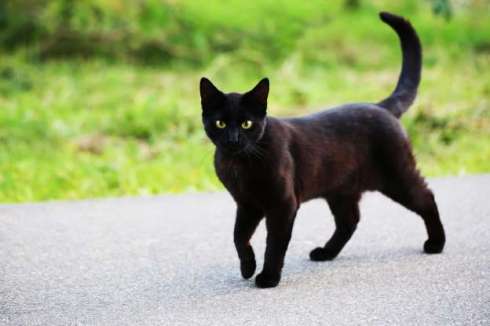
3. Black Cats Crossing Your Path is Bad Luck
This one should help my learned IIT IIM friend. Even on a highway speeding along he comes to a screeching halt when he spots a black cat crossing by. Most Indians have this superstition deeply engrained in them. But its time to shed this superstition after reading the reason behind it.
In olden days people used to travel by carts that were pulled by domesticated animals like horses and cows When passing through forests at night, the animals used to get scared and act chaotic when they sensed wild cats such as leopards, cheetahs, and tigers crossing their path. The travellers warned others not to proceed when a cat passes their path. And wait for some time before the danger passed. The wait also helped the animals to relax and get them under control before proceeding.
Today, this is of no significance and we are afraid of black cats for no reason. Groucho Marx once said “If a black cat crosses your path, it signifies that the animal is going somewhere.”
4. Avoid a Hair Cut on Tuesday
Most barber shops are closed on Tuesday and it is considered inauspicious to take have a haircut on that day. The reason behind this is simple. In olden days the villagers after a long hard week of work used to take Monday as the off day. Sunday was probably reserved for visiting the temple, friends , family etc. So Monday was the day when they visited their local barber for a haircut and shave. The Barber overloaded on Monday also needed a rest – and he probably did not get any customers on Tuesday. That tradition seems to have continued over the years. So if you find a barber salon open on Tuesday – don’t worry its perfectly safe to go and get a haircut.
5. Sweeping the house, Cutting Nails and Shaving After Sunset
The superstition is that by doing this you will lose all your wealth as Goddess Lakshmi will leave your house. Nobody dared to take a risk and lose their hard earned wealth and the superstition stayed.
But the reason is simple and logical. Electricity is a 100 year old invention and there are villages that have got electrified recently. In the dusk after the sunsets if you sweep the house in the dark there are chances that some valuables may also get swept away. As far as cutting nails and shaving – chances are in the dark you may cut yourself.
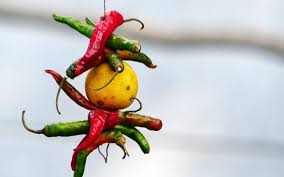
6. Hanging Lemon and 7 Green Chillies In shops and Business Places
You can see this all over India – a lemon along with chillies, seven to be precise, hanging from the doors of shops, houses or from the bumpers of cars? These days it has turned into a superstition that it keeps the god of misfortune, Alakshmi, away from the shops.
As weird as it seems, there is a logical explanation behind this one too. The cotton thread that passes through the lemon and the chillies absorbs the acids, vitamin C and the other nutrients present in it. Then, by slow vaporization, it is released into the air. The odour is also said to keep pest and insects away, making it a natural pesticide. This is said to have significant health benefits and our ancestors made it an essential part of ceremonies to increase its use.
To simplify life, some people have used a metallic version of the lemon with chillies – but sadly that doesn’t work.
7. Most people avoid Unlucky 13
The number 13 is considered an unlucky number by many people. People avoid travelling on 13th or checking into hotel rooms on the 13th floor or room no 13. I have seen 5 Star hotels that have 12th floor and then the 14th floor totally skipping unlucky 13. It is also considered unlucky to have thirteen guests at a table. Friday the 13th has been considered the unluckiest day of the month.
A possible reason driving this behaviour could be from the time of Jesus. At Christ’s last supper, there were thirteen people around the table, Christ and the twelve apostles. Some believe this unlucky because one of those thirteen, Judas Iscariot, was the betrayer of Jesus Christ. Another major reason for Friday the 13 to be considered unlucky was that on Friday 13 October 1307, King Philip IV of France ordered the arrest of the Knights Templar, and most of the knights were tortured and killed.
8. Lizard Falling On Human Is Bad Luck
It does feel creepy to have a lizard fall on top of you – after all they are cold blooded creatures. But there are lizards that could emit poisonous juices resulting in skin problems. It may not be bad luck but it could lead to bad health.
9. Fallen Hair inside house causes fights
The myth is that if you throw fallen hair inside the house instead of binning it, soon you will see a fight within your family. Well, who would like to pick up a quarrel at home?
But the real reason behind this superstition is if you leave the fallen hair inside the house it may end up falling inside the food when the wind blows. And that will definitely cause a quarrel when a hungry husband finds hair in his food.
10. Twitching of the eye is a Good or Bad Omen
This is a bit like a sixth sense, and it differs from community to community. Eye twitching or the sudden involuntary movement or spasms in the eyelids is a common condition. There is an established explanation for these constant or intermittent involuntary muscle twitches, including various medical reasons behind them – these twitches are nature’s way of warning a person about some impending problem or indicative of some good news on the way.
11. Walking under a ladder is unlucky
There are a couple of theories about this superstitious belief. Many Christians believe in the Trinity, that God is made up of three parts, – the Holy Father, the Holy Son, and the Holy Ghost (or Holy Spirit). A ladder leaning up against a building was seen as a triangle of these three. To walk through this triangle was seen as breaking the Trinity and hence considered as bad luck. Another origin of the superstition was a bit less specific, and had to do with the similarities between a ladder leaning against a wall and a gallows.
However the fact is that, it is simply unsafe to walk under the ladder and you may get hurt or might hurt someone around by knocking the ladder down. A ladder is an unstable equipment and a person on top may fall or drop something on you. So its good to stay away from a ladder.
12. Taking a bath after attending a funeral is a must
When a person dies, the body starts to decompose. This is basic biology. And when you attend a funeral, you are exposed to the germs, bacteria and the chemicals released by the body and present in the air due to decomposition. It makes a lot of sense to come back take a bath and then have your meal.
13. Stop by at a temple before starting a long tour
In olden days people travelled by foot or bullock / horse carts. Journeys were long, mostly in groups like caravans. So if you forgot something coming back was not an option. A temple in your village was a good place to sit by quietly for a few minutes and recollect if you had everything for your travel before proceeding on the long journey. It was probably for the same reason that you were advised by the elders to eat curd & sugar before heading out. The Curd kept your body cool and the digestive system efficient while the Sugar gave you the energy for the long walk.
14. Don’t go near a Peepal tree in the night
If you believed your grandmother, Peepal is one tree the ghosts like to hover around and if you sleep around a Peepal tree at night, the ghosts will kill you. Every school kid knows that trees emit CO2 at night so its best to avoid visiting a large tree like a Peepal Tree at night. But do walk by a Peepal tree during day.
You will find a Peepal tree in most temple complexes and Villages. Peepal is considered to emit disproportionate amount of Oxygen during the day along with Neem and Tulsi. It purifies the surroundings where it is planted, and kills bacteria. So worshipping it means you would be near its vicinity, and inhale healthy air.The leaf, bark and roots of this tree are of significance in Ayurveda. Its leaves help cure asthma, fever and cold. The milk derived from its leaves cures eye pain. This tree can cure as much as 50 disorders, including diarrhoea, epilepsy and gastric troubles. That’s why it’s a practise for devotees (especially women) to walk around a Peepal Tree.
15. Why people say “God Bless You” after a sneeze
Considered a polite response to a sneeze, the phrase “God bless you” is attributed to Pope Gregory the Great, who said it to people who sneezed during a bubonic plague. Aside from the idea of protecting against the spread of disease, “blessing” someone after they sneezed originated from the erroneous beliefs that the soul escapes the body during a sneeze and the heart momentarily stops as well. Therefore, saying “God bless you” was a way of welcoming the person back to life.
16. Crossing fingers is a good luck sign
Crossing your fingers for good luck (or, secretly, to get you out of keeping a promise) is common around the world — but its origins are unclear. It seems to be common in Christian countries, with the belief that it’s related to the sign of the cross. Other theories include it being an old Pagan or Norse gesture, or possibly a good luck superstition created by archers during the “Hundred Year War” between England and France (archers used their two main fingers to draw back their bow)
17. Knock on wood to avoid disappointments
The origin of this very common superstition is believed to date back to the Pagan era. It was believed that the deities lived in trees. Touching a wooden surface would acknowledge them and ensure that you get their protection during misfortunate events. It was also believed to be a thankful gesture to the deities for bringing good luck.
The Greeks used to worship the oak tree as it was considered sacred to Zeus. When Pagan beliefs were incorporated into Christian beliefs, this superstition found its way to Christianity, and knocking on wood became to be associated with the Cross.
A Jewish version of this particular superstition takes one back to the 15th-century Spanish Inquisition. During this time, the Jews used to hide in synagogues (wooden prayer buildings). They designed a specific knock code to let people in. This saved the lives of many people, and subsequently knocking on wood came to symbolize good luck. By the 1900s, the British and the Americans had also adopted this ritual.
18. Its lucky to have a bird poop on you
This superstition comes from an interesting leap in logical thinking that’s related to the reason that four-leaf clovers are considered lucky. Essentially, the belief says that the odds of a bird pooping on you or of finding a four-leaf clove, are so low that if it happens, you’d be likely to beat the odds in other fortunate ways, too. Funnily enough, this superstition can be found in cultures all over the world, so historians have a hard time pin pointing where exactly it started.
19. Being the 3rd person to light a cigarette from a match is unlucky
The historical origins of this superstition are very clearly set in World War I. It was a conventional wisdom among soldiers in the trenches that if you kept a match lit long enough for three people to light their cigarette from it, the enemy would spot the flame and deduce your location. Soldiers brought the belief back with them, but there’s evidence to suggest that after the war, match companies rather cynically helped popularise the superstition to sell more matches
In conclusion I want to add that our forefathers were not stupid. From splattering cow dung on the walls to bursting crackers most of their actions were driven by some logical reasoning. Cow Dung on the floor and walls prevents insects from entering the huts and the noise of crackers and smokes helps eradicate insects after a long rainy season.
So while some superstitions can be thrown out of the door (Like the Black cat one) many have some scientific basis.
Every story has two sides to it. The version of the winner that projects him to be the greatest and everything else as evil.
From Alexander to Churchill history has always been written by the victor. Nehru went on to add “History is always written by the victors and conquerors, or at any rate the victors version is given prominence and holds the field“. And Napoleon stated “History is a set of lies agreed upon“.
With this context lets step back and look at the story of Ramayana and question if it is fair to vilify an erudite scholar, a valiant soldier and a great king like Ravana…. just because he was a vanquished Asura.
From the current #me too debate to ancient history women have always been at the receiving end of mans lust. Every king & emperor filled his harem with women, and none of them walked in on their own free will. Men in power whether politicians or corporate leaders and spiritual masters (Baba Asaram, Nityanand ….) have been in the news for treating women as mere objects.
Thousands of years back when the rules of the world were probably very different and norms of society were just being created was Ravana’s action of carrying away Sita the greatest crime of mankind.
Yes Rama vanquished Ravana – and since then poor Ravana has been the symbol of a perfect villain. But was Ravana indeed a villain as he is portrayed? Is there a second perspective to this. Were the Asuras really demons and the “Bad people” – or was this a creation of the victor.
The word Asura has a close resemblance to “Ahura” which comes from the Persian Language and means great warriors. Ravana, Bahubali were all Asura kings who were known for being great administrators and valiant warriors. Across the border in Sri Lanka the stories of Ravana are very different from what you hear in India.
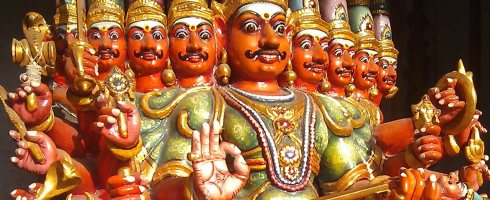
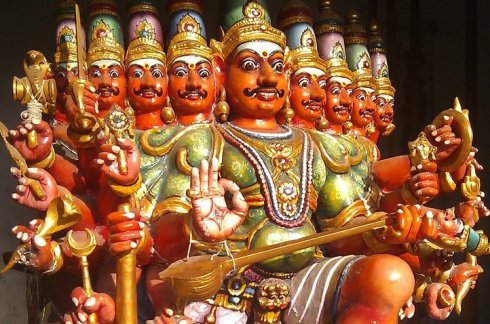
Sri Lankan lore has it that Sri Lanka under the scholarly Ravana saw great advancements in science and medicine. The Pushpaka Vimana or the aeroplane which he flew is held as an example of great scientific achievements made during his regime. Ravana also holds a high position as a physician and there exists, to this day, seven books on Ayurveda in his name. He is also believed to have authored Ravana Sanhita, an anthology of Hindu astrology and his description as a ten-headed person, Daśamukha or Daśagrīva, is believed to be a reference to his vast knowledge and intelligence.
In many depictions of Ravan, he can be seen carrying a veena. It is believed that he had a keen interest in music and was a highly accomplished veena player.
Ravana’s empire spread over Balidweepa (today’s Bali), Malayadweep (Malaysia), Angadweepa, Varahdweepa, Shankhadweepa, Yavadweepa, Andhralaya and Kushadweepa.
He was a great practitioner of statecraft. When Ravana was dying on the battlefield Rama instructed his brother Lakshmana to go to Ravana and learn the art of statecraft and diplomacy from the dying king
Ravana was not only a stupendous fighter, but also an expert of the Vedas and an expert in Astrology. It is said that when his son Meghanada was to be born from his wife Mandodari’s womb, Ravana “instructed” all the planets and the Sun to be in their proper position for the auspicious “lagna” so that his son would become immortal. But Saturn suddenly changed its position. Noticing this, a furious Ravana attacked Saturn with his mace and broke off one of its legs, maiming him for life.
Ravana was one of the greatest devotees of Lord Shiva, and composed the Shiva Tandava Stotram.
There are references which state that Ravana got this name later in life, and that too from Shiva. Ravana wanted Shiva to relocate from Kailash to Lanka, and to make this possible, he tried to lift the mountain. But Shiva, being who he is, put down his foot onto the mountain, thus crushing Ravana’s finger with his one toe. Ravana let out a huge roar of pain, but at the same time, he was so enamoured by Shiva’s power, he composed and sang the Shiva Tandav Stotram. It is believed that Ravana plucked out nerves from his own hand to provide accompanying music. Shiva, thus impressed, named him Ravana (the one who roars loud).
The essence of Indian mythology is obviously beyond the simple good vs evil story line. If you care to dig deep, there’s an interesting story at every step.
Ravana played his role as a villain, but it was that of a much-needed villain, that brought balance to the equation. No wonder there are many people in the world, who still worship him.
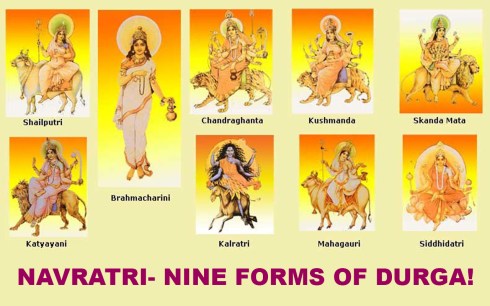
Did you know that the 9 days of Navratri are associated with 9 different colours? I am sharing not just the colours of the day but also the Flowers, Food and Raga that are considered auspicious for each of the 9 days.
A Few Good Things wishes you a very happy Navratri & Durga Puja.
Day 1: Shailaputri
Known as Pratipada, this day is associated with Shailaputri (literally “Daughter of Mountain”), an incarnation of Parvati. It is in this form that the Goddess is worshiped as the consort of Shiva. She is depicted as riding the bull – Nandi, with a trishula in her right hand and lotus in her left. Shailaputri is considered to be the direct incarnation of Mahakali. The color of the day is red, which depicts action and vigor. It is believed that Goddess slayed the demons Madhu and Kaithabha on this day. Jasmine and Vilvam are primarily used to perform the puja. Ven Pongal and Karamani Sundal are considered the perfect offerings for this day. Singing devotional numbers in Thodi raga will please the Goddess
Day 2: Brahmcharini
On Dwitiya, Goddess Brahmcharini, another incarnation of Parvati, is worshiped. In this form, Parvati became Sati, her unmarried self. Brahmcharini is worshiped for emancipation or moksha and endowment of peace and prosperity. Depicted as walking bare feet and holding a japamala and kamandalu in her hands, she symbolizes bliss and calm. The color of the day is Royal Blue which depicts calmness-cum-energy. In South India the Goddess is worshiped as Kowmari or Rajarajeswari. Jasmine and Tulsiare used for worship on the second day. Puliyodarai, Puttu and mangoes are usually offered as naivedyam. Raga Kalyani has a special significance today.
Day 3: Chandraghanta
Tritiya commemorates the worship of Chandraghanta – the name derived from the fact that after marrying Shiva, Parvati adorned her forehead with half-chandra (Lit moon). She is the embodiment of beauty and is also symbolic of bravery, and hence, the color of the day is yellow. In South India Goddess is worshiped as Varali Ambigai or Vaaraahi on this day. It’s considered auspicious to draw “Kolam” either in rice flour (rose or lotus designs are recommended) or using flowers. Shenbakam, Champangi and Marikozhunthu are ideal for performing the puja. Sakkarai Pongal and Ellu Podi are offered as naivedyam. Songs in Kaambhodhi raga can be sung today
Day 4: Kushmunda
Goddess Kushmunda is worshiped on Chaturthi. Believed to be the creative power of universe, Kushmunda is associated to the endowment of vegetation on earth and hence, the color of the day is Green. She is depicted as having eight arms and sits on a Tiger. In S India Goddess is worshiped in the form of a Lakshmi. “Padi kolam” in rice flour or rangoli in the shape of steps is drawn in the houses. The idol of the Goddess is adorned with wild turmeric (Kasthuri Manjal). It’s believed that the fragrance of Jaathi Malli and Rose please the Goddess. Offer either Kadhamba Sadam, Curd Rice, Green Peas and Groundnut Sundal or Lemon Rice as naivedyam. Sing songs in Bhairavi raga in praise of the Goddess.
Day 5: Skandmata
Skandamata, the goddess worshiped on Panchami, is the mother of Skanda (or Kartikeya). The color grey is symbolic of the transforming strength of a mother when her child is confronted with danger. She is depicted riding a ferocious lion, having four arms, and holding her baby.
In S India Goddess is worshiped in the form of Vaishnavi. You can decorate her in the form of Mohini as well.
Pavazha Malii, Paarijaatham and Mullaiare considered among the most auspicious ones for the puja today. Offer Ven Pongal, Payasam and Payir Sundal today.In praise of the Goddess, sing songs, especially the Panchamaavaranai Keerthanai, in raga Panthuvarali.
Day 6: Katyayani
Born to a sage, Katya, she is an incarnation of Durga and is shown to exhibit courage which is symbolized by the color Orange / Red. Known as the warrior goddess, she is considered one of the most violent forms of Goddess Parvati. In this avatar, the Devi rides a lion and has four hands.
In S India Goddess is worshiped in the form of Indraani. Flowers for the puja should be in red — Hibiscus and Kumkum flower are among the most preferred. You can also use Parijatham for the puja.
Offer Coconut Rice or Ellu Sadamtoday. Neeelambari raga is considered auspicious today.
Day 7: Kalratri
Considered the most ferocious form of Goddess Durga, Kalaratri is revered on Saptmi. It is believed that Parvati removed her fair skin to kill the demons Sumbh and Nisumbh. The color of the day is white. Her skin turns black.
In S India it is believed that Goddess appears as Annapoorni today. Use Thazhampoo, Thumbai and Jasmine to perform the puja. While Lemon Rice is ideal, you can also offer Vellai Sadam, Kalkandu Sadam or Sarkkarai Pongal today. Chickpeas Sundal can also be considered for naivedyam. The raga for the day is Bilahari.
Day 8: Mahagauri
Mahagauri symbolizes intelligence and peace. The color associated to this day is Pink which depicts optimism.
On this day, the Goddess is worshiped in the form of Narasimhi or Durga in S India. After slaying the demon, Rakthabeeja, she appears as karuna moorthy.
The flowers for puja today include Rose, Sambangi and Magizham. Offer Paal Saadam or Paayasaannam and Appam as naivedyam. It’s considered auspicious to sing songs in Punnagavarali today.
Day 9: Sidhidatri. Color associated for this day is also Pink or any bright colour
On this day, Goddess Durga attained all the Siddhis and also defeated the demons. In TN & Kerala this day is observed as Saraswati Puja. People break their fasts on this day
On this day performing puja using Lotus and Marikozhundu is considered auspicious. You can offer Ellu Sadam, Konda Kadalai Sundal as naivedyam. It’s considered auspicious to sing songs in Raga Vasantha today.
Vijaya Dasami
Today, Goddess takes the form of Devi Vijaya. While jasmine and rose can be used for the special puja, Sweet Pongal and other sweets can be offered as naivedyam
The other approach to colours
The second approach believes that the sequence changes every year. How to determine this is based on a simple rule
The first Monday, Tuesday, Wednesday, Thursday, Friday, Saturday and Sunday will be having White, Red, Royal blue, Yellow, Green, Grey and Orange. in whichever order they come. 7 days hence 7 colors.
The first repeating week day that is in second cycle of week the colors followed are Pink and purple and/or sky blue alternatively. + 2 remaining days +2 colors
If you apply this logic for 2018 – the colors are as below
________________________________________________
Day 1 – 10 October 2018 – Royal Blue
First day of Navratri. Goddess Durga is worshiped as Shailaputri on this day and she is dressed in Royal Blue color.
Day 2 – 11 October 2018 –Yellow
Second day of Navratri. Goddess Durga is worshiped as Brahmacharini on this day and she is dressed in Yellow color.
Day 3 – 12 October 2018 – Green
Third day of Navratri. Goddess Durga is worshiped as Chandraghanta on this day and she is dressed in Green color.
Day 4 – 13 October 2018 – Gray
Fourth day of Navratri. Goddess Durga is worshiped as Kushmanda on this day and she is dressed in Gray color.
Day 5 – 14 October 2018 – Orange
Fifth day of Navratri. Goddess Durga is worshiped as Skandamata on this day and she is dressed in Orange color.
Day 6 – 15 October 2018 – White
Sixth day of Navratri. Goddess Durga is worshiped as Katyayini on this day and she is dressed in White color.
Day 7 – 16 October 2018 – Red
Seventh day of Navratri. Goddess Durga is worshiped as Kalaratri on this day and she is dressed in Red color.
Day 8 – 17 October 2018 – Sky Blue
Eighth day of Navratri. Goddess Durga is worshiped as Mahagauri on this day and she is dressed in Sky Blue color.
Day 9 – 18 October 2018 – Pink
Ninth and last day of Navratri. Goddess Durga is worshiped as Siddhidatri on this day and she is dressed in Pink color.
A beautiful poem by Mario de Andrade (San Paolo 1893-1945) Poet, novelist, essayist and musicologist. One of the founders of Brazilian modernism. Shared by my friend – a Poet herself.
MY SOUL HAS A HAT
I counted my years
& realized that I have
Less time to live by,
Than I have lived so far.
I feel like a child who won a pack of candies: at first he ate them with pleasure
But when he realized that there was little left, he began to taste them intensely.
I have no time for endless meetings
where the statutes, rules, procedures & internal regulations are discussed,
knowing that nothing will be done.
I no longer have the patience
To stand absurd people who,
despite their chronological age,
have not grown up.
My time is too short:
I want the essence,
my spirit is in a hurry.
I do not have much candy
In the package anymore.
I want to live next to humans,
very realistic people who know
How to laugh at their mistakes,
Who are not inflated by their own triumphs
& who take responsibility for their actions.
In this way, human dignity is defended
and we live in truth and honesty.
It is the essentials that make life useful.
I want to surround myself with people
who know how to touch the hearts of those whom hard strokes of life
have learned to grow with sweet touches of the soul.
Yes, I’m in a hurry.
I’m in a hurry to live with the intensity that only maturity can give.
I do not intend to waste any of the remaining desserts.
I am sure they will be exquisite,
much more than those eaten so far.
My goal is to reach the end satisfied
and at peace with my loved ones and my conscience.
We have two lives
& the second begins when you realize you only have one.


















 A Few Good Things
Recent Comments