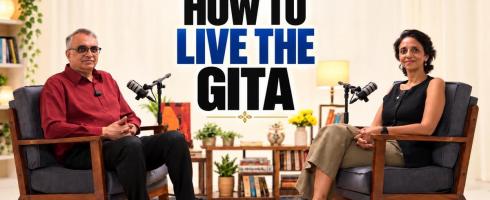
Welcome to Live the Gita, an easy-going conversation where a sincere Sadhika who has read the Gita brings her real-world doubts, daily struggles, and honest questions.
Together, they explore, how do we actually live this ancient wisdom in our busy modern lives?
It is packed with simple answers, practical tools, and clear insights into the positive changes you will see by weaving the Gita into your daily routine.
Watch this insightful conversation on “The Journey of the Soul.”
We explore one of life’s greatest mysteries and decode the journey of the Jivatma — the individual soul.
How does the Jivatma enter the physical body? How does it bring life to the body? What is its purpose and role during its journey on Earth? What determines when it leaves the body — and where does it go thereafter?
In this fascinating 35-minute session, Swami Swatmananda, Senior Acharya of Chinmaya Mission Mumbai, explains these profound concepts with remarkable clarity, simplicity and depth, making the timeless wisdom of Vedanta easy to understand and relatable.
As a student trying to understand our scriptures, I have often been confused by the many expressions used to describe the Divine — Brahman, Paramatma, Jivatma, Purusha, Hiranyagarbha, Prana, Consciousness, Ultimate Truth… . Their meanings can also vary across different philosophical schools.
God cannot truly be defined; even the greatest Rishis could only point towards That which they experienced. Yet, for a structured mind, a simple map can help. This document is an attempt to visually understand the different layers of reality — from the absolute, unmanifest source to the individualized spiritual presence within every being.
The Concept of the Spiritual Map
In Indian philosophical systems, reality is not viewed as a flat plane but as a hierarchy of states where consciousness gradually “contracts” or vibrates into denser forms. This process is represented as a spiritual map that reconciles the relationship between the all-pervading Brahman and the individual Jiva. This map is not just an abstract theory but a guide for metaphysical inquiry, weaving together profound spiritual insights and practical disciplines intended to help the seeker understand their true, limitless nature.
The Mapping of the Infinite
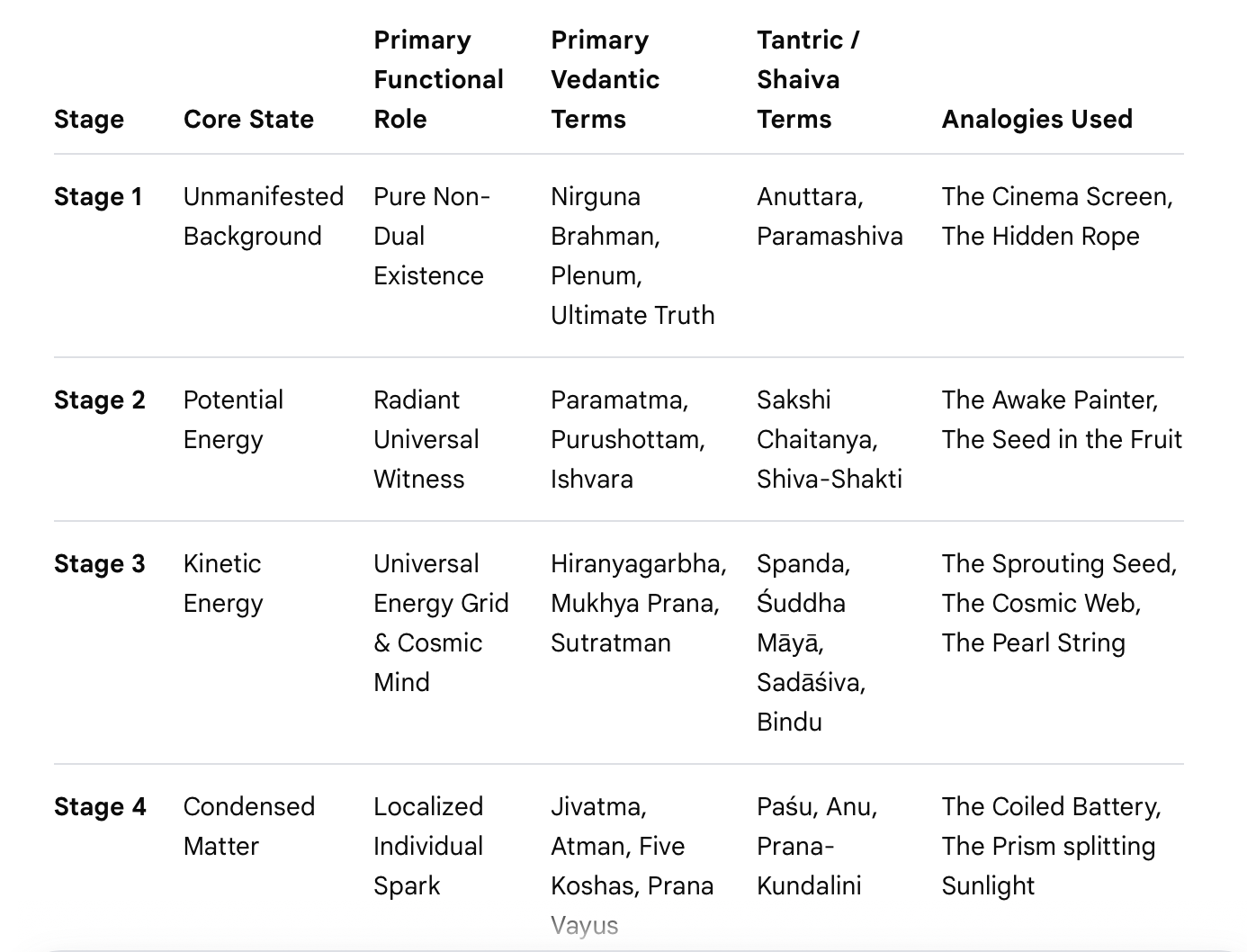
Level 1: The Undefinable Source , Unchanging Background
This topmost layer of reality represents the formless, unmanifested source of all existence. It is completely free from attributes, boundaries, and human concepts.
This represents the highest, formless reality that transcends all dualities and attributes. This level of divinity cannot be described by what it is, but only by what it is not (Neti, Neti). It is the silent, formless screen upon which the entire drama of creation is projected.
Nirguna Brahman: Reality without (nir) qualities (guna). It is pure, infinite consciousness.
Anuttara: “The Unsurpassable” in Kashmir Shaivism. It is the absolute highest reality.
Ultimate Truth / Para Brahman: The non-dual, unchanging fact of existence that serves as the foundation for the entire universe
In Advaita Vedanta, Adi Shankara defines Layer 1 (Nirguna Brahman or Para Brahman) as the sole, absolute reality (Satyam). Shankara clarifies that Layer 1 is not a void; it is the ultimate plenum defined as:
Sat (Pure Existence): It cannot be destroyed or modified; it is the fundamental fabric of “is-ness”.
Chit (Pure Consciousness): It is not conscious of things; it is consciousness itself.
Ananda (Pure Bliss): A state of absolute, limitless fulfilment free from desire.
What is Ultimate Plenum – In philosophy and physics, a plenum means a space that is completely full of matter or substance. It is the exact opposite of a vacuum or a void. When Adi Shankara or other philosophers use “plenum” to describe Layer 1 (Nirguna Brahman), they mean it is an absolute fullness (Purna).
Here is what that means conceptually:
No Empty Space: There are no gaps, missing pieces, or voids in Brahman. It completely fills reality.
Nothing Can Be Added: Because it is already totally full, you cannot add anything to it to make it greater.
Nothing Can Be Taken Away: You cannot subtract anything from it. Even if universes are born out of it, the background remains completely whole
This Shloka from the Guru Gita (Skanda Purana) explains layer 1 beautifully and shows the transition as a witness to layer 2.
Brahmanandam: The bliss of Brahman. It is not a feeling of joy; it is the absolute nature of the supreme source.
Parama Sukhadam: The giver/nature of ultimate, changeless happiness that exists entirely independent of external objects.
Kevalam: Pure oneness. Absolute, isolated singularity. Nothing else exists next to it.
Jnana Murtim: The absolute embodiment of wisdom. It is not “knowing things”—it is knowledge itself.
Dvandva Ateetam: Completely beyond dualities like pleasure/pain, hot/cold, or subject/object.
Gagana Sadrusham: Vast and formless like the sky. The sky holds the clouds but never gets stained by them. This is the exact definition of the unchanging background.
Triguna Rahitam: Free from the three cosmic qualities (Sattva, Rajas, Tamas). It is completely Nirguna
The mantra does not stop at the formless state; it explicitly names the transition point
Sarva-Dhee-Sakshi-Bhootam: This translates exactly to “The Witness (Sakshi) of all functions of the intellect/mind”
How it ties the map together
This single mantra proves the exact point I am trying to map out. When the verse describes the divine source as Kevalam (One), Dvandvateetam (Beyond Duality), and Gagana Sadrusham (Like Space), it is describing Layer 1. But the moment it says Sarvadhee Sakshi Bhootam, it explains how that very same background consciousness acts as the silent observer (Layer 2) over the mind and intellect.
Level 2: The Cosmic Seed (Universal Witness) – Potential prior to Creation
Layer 2 is the first step outward from the unmanifested source toward creation. In Layer 1 – Consciousness is just the silent, unchanging background. In Layer 2, that same consciousness becomes aware of a potential for creation. It takes on the role of the Supreme Witness (Sakshi).
The Concept: The absolute consciousness waking up and standing before a blank canvas. It holds the complete blueprint, intent, and intelligence of the universe. Physical creation has not started yet. It is a state of pure potential energy.
The Names:Paramatma, Purushottam, Ishwara, Sakshi Chaitanya (The Supreme Witness), Cosmic “I Am”.
The Nature of Joy: In this state, the infinite is actively joyful by nature (Brahmananda Parama Sukhadam). It is the radiant joy of the Divine experiencing its own creative potential before projecting it outward.
The Source of Life: It serves as the ultimate source of all living entities. Every individual soul (Jivatma) exists here as a seed within a single, unified cosmic womb, before breaking into separate egos.
The Witness State: It acts as the Sarva-Dhee-Sakshi-Bhootam (the witness of all mental functions). Like a lamp illuminating a room, it does not perform any actions, but its silent, unified presence allows everything to be seen.
If Layer 2 is a dry seed packed with potential, Layer 3 is the exact moment the seed crack opens and shoots out its first green sprout. The sprout is not yet a fully grown tree with branches and leaves (which happens in Layer 4), but the life force is now moving, dynamic, and shaping reality.
Spanda (The Cosmic Vibration): A beautiful term used by the sage Vasugupta. Spanda is the primordial, spiritual throb or pulsation of divine consciousness. It is the cosmic heartbeat that turns the stillness of Layer 2 into the dynamic energy of Layer 3. (This concept is from Kashmir Shaivism)
As per Shankara, Stage 3 is the Universal Web of Energy. It is the absolute highest point a soul can reach within the cycle of manifestation, functioning as a beautiful, glowing cosmic dream before condensing into the heavy, physical shapes of Stage
Key Conceptual Equivalents
Hiranyagarbha (The Golden Womb): This is the Cosmic Intellect or Cosmic Mind. It is the first subtle soul to emerge in creation. It holds the sum total of all subtle bodies and minds in the universe.
Cosmic Prana (The Life Force): The absolute energy that vibrates throughout the universe. It is the cosmic breath that links consciousness to matter. Without Pran, the blueprint cannot become alive
Shakti (The Dynamic Power): The feminine, active principle of the Divine. While the consciousness of Layer 2 remains a witness, Shakti is the actual power that spins, vibrates, and moulds that consciousness into shapes and forces
Prajapati (The Architect): The lord of creation who takes the raw energy of Shakti and begins structuring it into the laws of nature, time, space, and the subtle elements (Tanmatras).
Core Characteristics of Layer 3
The Universe as One Mind: At this stage, everything is connected through a single internet, so to speak. Hiranyagarbha is the Cosmic Web. Individual entities are not yet isolated; they are like different thoughts happening inside one single, giant cosmic mind.
Subtle vs. Gross: This layer is entirely subtle (Sukshma). It consists of ideas, energy, vibrations, and thoughts. It has not yet condensed into the heavy, physical “gross” matter (Sthula) like rocks, planets, and flesh.
The Great Weaver: This layer acts as the weaver that spins the threads of energy (Prana) into the fabric of time and space, setting the stage for individual souls to take birth.
The Ocean and the Wave Analogy: Linking Prana and Kundalini
To understand why these are the core elements of Stage 3, imagine a massive, electrified Ocean of Cosmic Energy.
Mukhya Prana is the Ocean itself. It is the total sum of all moving currents, winds, and tides in the universe. It is the vast, ambient life force that keeps the entire cosmos breathing, vibrating, and alive.
Kundalini is a single Wave from that ocean. To build a human being, a specific portion of that cosmic ocean is channelled, concentrated, and coiled up inside a tiny vessel (the human body).
In Stage 1, the Divine is completely still. In Stage 2, the Divine has the idea to create.
Stage 3 is the actual electricity. You cannot build a physical universe out of pure thoughts. You need raw, kinetic power.
Mukhya Prana provides the universal electric grid, and Kundalini is the specific current that plugs into the human frame. Together, they represent the subtle, vibrating powerhouse of Stage 3 that transforms the divine blueprint into physical life.
(In Tantra it is referred to as Kundalini – in Vedanta / Prashnopanishad Mukhya Prana as boss has subordinate Pranas who does this job)
Level 4: The Individual Spark
Terms:Atman, Jivatma, Jiva, The Spark Within, Prana.
This final stage represents the ultimate localization of the infinite. Here, the vast, cosmic energy of Stage 3 condenses into physical reality, appearing as an individual soul—a divine spark that dwells at the center of each being.
The infinite localizes itself by transforming its unmanifested potential into a dynamic cosmic energy grid known as Mukhya Prana (Stage 3). To animate an individual form, a concentrated wave of this universal ocean funnels downward into the physical vehicle, anchoring at the core of being as Prana-Kundalini. This individualized current then acts as a multi-stage transformer, wrapping itself in five progressively denser sheaths (koshas) of intellect, mind, and flesh.
As it descends, this single life-force divides into five specialized operational winds (Prana Vayus) to power the brain, senses, and organs, before the residual powerhouse coils and goes to sleep at the base of the spine. Through this stepping-down process, the all-pervading light of the source passes through the prism of the human frame, giving birth to the Jivatma—a bound individual personality on the surface, whose deepest innermost core remains the immortal, unchanging Atman.
The Bound Personality (The Jiva): This is your outer, embodied package—made of the physical body, the mind, the ego, and the five operational currents of Prana. Because it accumulates karma and harbours material desires, the Jiva may be caught in the material cycle of repeated births (Samsara). It moves from body to body like shedding old clothes.
The Divine Origin (The Atman): At the absolute core of the Jiva is the Atman. The Atman does not change, does not collect karma, and is never born. It remains completely identical to its divine origin (Stage 1: Nirguna Brahman). It is the piece of the unmoving, silent background screen operating inside you.
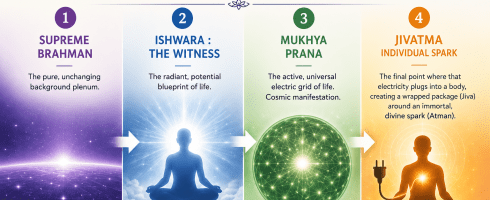
Stage1 is the pure, unchanging background plenum – Supreme Brahman
Stage 2 is the radiant, potential blueprint of life – Ishwara : The Witness
Stage 3 is the active, universal electric grid of Mukhya Prana – Cosmic Manifestation
Stage 4 is the final point where that electricity plugs into a body, creating a wrapped package (Jiva) around an immortal, divine spark (Atman) – Jivatma, Individual Spark
London has a lot to offer and it was tough to plan an optimal itinerary. My daughter did a great job and we just completed a good trip. Here are travel tips you may find useful if you are planning a trip.
Getting a Visa is tough – Every trip to UK / Schengen I curse myself for having an Indian passport. The process is laborious – multiple documents, not easy to get an appointment, expensive. After your VFS session you would expect the passport to land with a stamped Visa – but No … the journey continues. You get a confirmation email, then you have to log in to a site complete some updates, download an App, take a photo and finally you get a mail with a Code that is supposed to be your eVisa. Your passport is linked at the backend to the Visa so when travelling at the Immigration or at London they dont ask for a Visa – but you are on the edge hoping all is good. After all this effort the Visa is valid for only 6 months.
Flights are expensive – Flights to London are not cheap. Depending on the routes they vary from 75 – 95K. We took Virgin – a Direct 9 1/2 Hr flight that leaves Bangalore at 8 AM and lands at 2 in the afternoon. Virgin timings are good but food is ordinary – after the 1st meal there is a 8 hr gap and they give you a light snack – If I were to fly again I would carry some snacks. The leg space is just about OK (Flights from India are cramped – the same Virgin from London to Boston economy when I have flown the leg space is a lot better). We landed on a Sunday and immigration was a breeze – we collected our luggage and were in a black cab in less than 35 min after landing (This is an exception – in most cases the immigration Q is long and can run into hrs).
Take a Black Cab – If you are a family with lot of luggage take the Black Cab. Walk down to the Taxi stand. It has lot of storage – can easily accomodate 4 people and 4 large suitcases, 2 Strollers. Cab to our destination was 110 Pounds + 10 Pound Tip. If you are travelling solo / couple take the Tube. Very convenient.
Where to Stay – We had a booked a nice 2 bedroom apartment in a spanking new apartment complex at Nine Elms – near the US Embassy. Moda Embassy Boulevard by Perfect Stay. The company owns about 20 apartments in this complex – fully furnished with all the gadgets in the kitchen. This was a large 2 bedroom, 2 bath , hall, kitchen , balcony with washing machine / dryer. London hotels / Airbnb are are expensive – this place costs us ~ 300 Pounds / day – but we saved on breakfast and were able to cook a few homely meals. Here are some pointers while choosing a place
Be close to a Tube station (We were on the N Line – a small offset, Nine Elms and Battersea Park are about 8 Min walk)
Stay in Zone 1 or Zone 2 – Tube cost goes up when you travel from Zone 3 or beyond
Ensure there are some stores / cafes at walking distance – Sainsbury / Waitrose / M&S etc
London is hot – you need A/C – there are no fans
Tap water is drinkable
Ensure your flight arrival departure is aligned to check in / check out timing – else its a challenge with all the luggage
Many old Houses in London which are available as Airbnb – have a narrow flight of steep steps – will be a challenge to get luggage up
If you prefer Hotels – look for Premier Inn – they have multiple Locations
How to Travel
The Tube is amazing. It started in 1863, was fully electrified in 1905. It has 11 Lines and covers 402 km. It is fast and effecient. You dont need an Oyster card – you can tap your credit card. If multiple members in a family ensure each has a card to tap. Use same card to tap in and out and use same card all day – if you are in Zone 1/ Zone 2 all day your fare is capped at 8.90 Pounds. You can get an Oyster card and keep topping it – but there is a one time cost of 5 Pounds. The Tube is not cheap and you will spend 10 – 15 pounds / Day ~ 75 Pounds / Family / day ( ~ 10,000 Rs = Renting an Innova with a driver in Bangalore). Buses are cheaper – but roads are narrow and it takes a longer time – same tapping concept works on buses. Uber & taxi is very expensive.
What to See
There is too much to cover so you can get lost planning an itinerary. My daughter did a great job in finalising a plan.
Day 1 – Sunday : We land at 2.25 PM – are in the cab by 3.15 PM and reach our apartment by 4.30 PM. We check in, do some basic shopping from Sainsbury, Dinner at Battersea park station and call it a day
Day 2 – Mon : After breakfast we head out to Tottenham Court Road, walk to Outernet right next to station for an immersive video experience (Free), Visit British Museum (5 Min walk), Walk down Oxford Street , Regent Street, Carnaby Street, Soho, Lunch and then head to Leicester Square to take the Piccadilly line tube to Heathrow to pick up my daughter. (Airport Via Elizabeth Line from Tottenham Court is more expensive)
Day 3 – Tue : A nice walk to Battersea Park. We had booked a walking tour of central London from Hyde Park. We reached Hyde park by 10 AM – explored the park. The walking tour was from 11.30 – 1.30 covering the main areas from Buckingham Palace to Trafalgar Square and Westminster Abbey – we missed the Change of Guards at 11 but did see the change of horses near Trafalgar Square. Lunch and we head back to our apartment for some rest. Evening we took the tube to Novello Theatre to watch Mama Mia. When in London ensure that you book tickets for a few shows. Tickets are best booked in advance. You are in the heart of West End and Covent Garden is close by – full of restaurants. If you want an early dinner at 6 PM at Covent Garden Dishoom (A happening Fusion Indian Restaurant) – book a table well in advance. Most restaurants in this area need reservations.
Day 4 – Wed : We started the day with Tower of London – walked down to Borough Market for lunch – walked along the Thames to Tate Modern and then to London eye. At 6.30 PM we attended an open air music concert and then had dinner at Mildreds a very nice Vegan restaurant.
Day 5 – Thu : We had booked a day trip with EvanEvans to the Cotswolds – Warwick Castle, Stratford on Avon, Oxford Trip starts at 8.30 AM and ends by 7 PM. Book in advance for better rate.
Day 6 – Fri : We had booked a day trip to Harry Potter Warner Brother Studio – 7 Hr Trip. You have time in the evening to explore some London sites. In June days are long – Sun rises by 5 AM and sets at 9.30 PM
Day 7 – Sat : DIY Train trip to Bath – with family who live in London. Bath is a historic Roman town – train journey is 1 hr 15 min and round ticket ~ 50 Pounds.
Day 8 – Sun : Girls visited a do it yourself Scone workshop and we visited the UNESCO KEW Gardens. A beautiful garden spread over 250 acres. Evening we visited family and had dinner at a nice Indian restaurant
Day 9 – Mon : We head to Brighton – again a DIY trip by train. Brighton is 65 Km from London directly south on the channel. 1 hr conveinet train trip. Small pretty town with a Pier and a palace that looks like Islamic / Rajasthani architecture. ( Note that Brighton is the LGBTQ capital of UK)
Day 10 – Tue : Victoria and Albert Museum – come back for some rest and in the evening we headed out to Regent Park for an open air Shakespeare play – Midsummer Nights Dream
Day 11 – Wed : Explore neighbourhood / Madam Tussaud / Light Shopping / Lunch and get ready to depart by 4 PM. Evening traffic can be crazy – bit of a panic as it took us almost 90 min to reach the airport (Normally less than 60 min)
This is what we covered based on our interest in the time we had – but there a lot more to cover. MCC, Wimbledon , many more Westend plays, Harry Potter Walking tour , Shakespearean street Plays , Sunday Markets …… . Many more outstation trips – Windsor Castle, Stonehenge etc. Edinburg is a 4 hr train journey – Scotland is an overnight trip … so the list goes on and on .
In Summary – A few Important Points
London is safe, professional and organised – its a pleasure to be in London – Great City.
Its expensive – a 10 Day trip like this for a family of 4 is ~ 12.5L all inclusive. Eating at decent places (Breakfast and a few meals at the apartment). Each meal outside is 75 – 100 Pounds for a family of 4
The Tube is the best way to travel – very organised – no instructions needed – if you know English you can figure it out
Activate your credit / debit cards for Tap – Cash is not needed, many places do not accept cash. If you carrying FOREX dont take 50 Pound Notes they are not accepted
12.5% tip is included in all meals
At stores most of the counters are self check in
Entry tickets can be expensive – varying from 10 – 40 Pounds, Westend Shows tickets vary based on seating – again budget 60 – 100 Pounds / person / show
Activate your phone for International roaming
Restrooms are difficult to find – not there in tube stations
Weather was warm in June. Peak summer is July / Aug. May and Sep may be pleasant. Oct – April is cold and wet.
Carry a light jacket in June and an umbrella – it can rain suddenly. We were lucky – barring one day when it lightly drizzled for 5 min we were safe.
If you want to explore Indian food – many options , definitely visit Dishoom – its a chain. I visited the Arya Bhavan at Tooting Broadway (N Line) great food, many Indian stores are also on the same street – 5 min walk from Tooting Broadway station
Use booking.com for all your reservations – you get points – I was pleasantly surprised when on day 5 I got a credit worth 65,000 Rs. Its easy to have all the tickets in one places , rates are good and if you are a regular you get discounts.
Have good walking shoes – you will be walking ~ 20,000 steps every day
The Himalayas are always inviting. Increasingly peak crowds and dense traffic is spoiling the sanctity of this divine haven. While most make a mad rush during the 4 Dham season, I wanted to explore an offbeat trail that included energised temples and nature at its best – during the empty season. This is a unique trip that I have curated – so read on and plan for it soon.
What is the Best Time to Travel
All hell breaks loose in Garhwal when the 4 Dham Yatra starts. This year its starting around April 20th. (Opens at Akshay Trithiya and closes on Bhai Duj, a few days after Diwali). I would recommend April 1st week, basically March 25th – April 10th. Its not cold, a pleasant 12 – 25 Degrees, the rains / snow are over. Spring is in the air. Most schools in the country are having their exams – the hills are empty and freshly open. Oct 15 – Nov 15 is another option but its very cold.
Why choose Ukhimath as a base
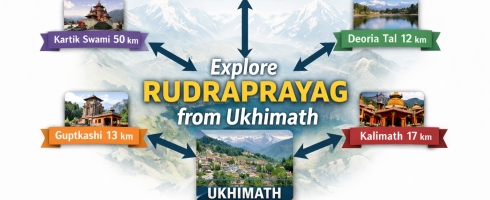
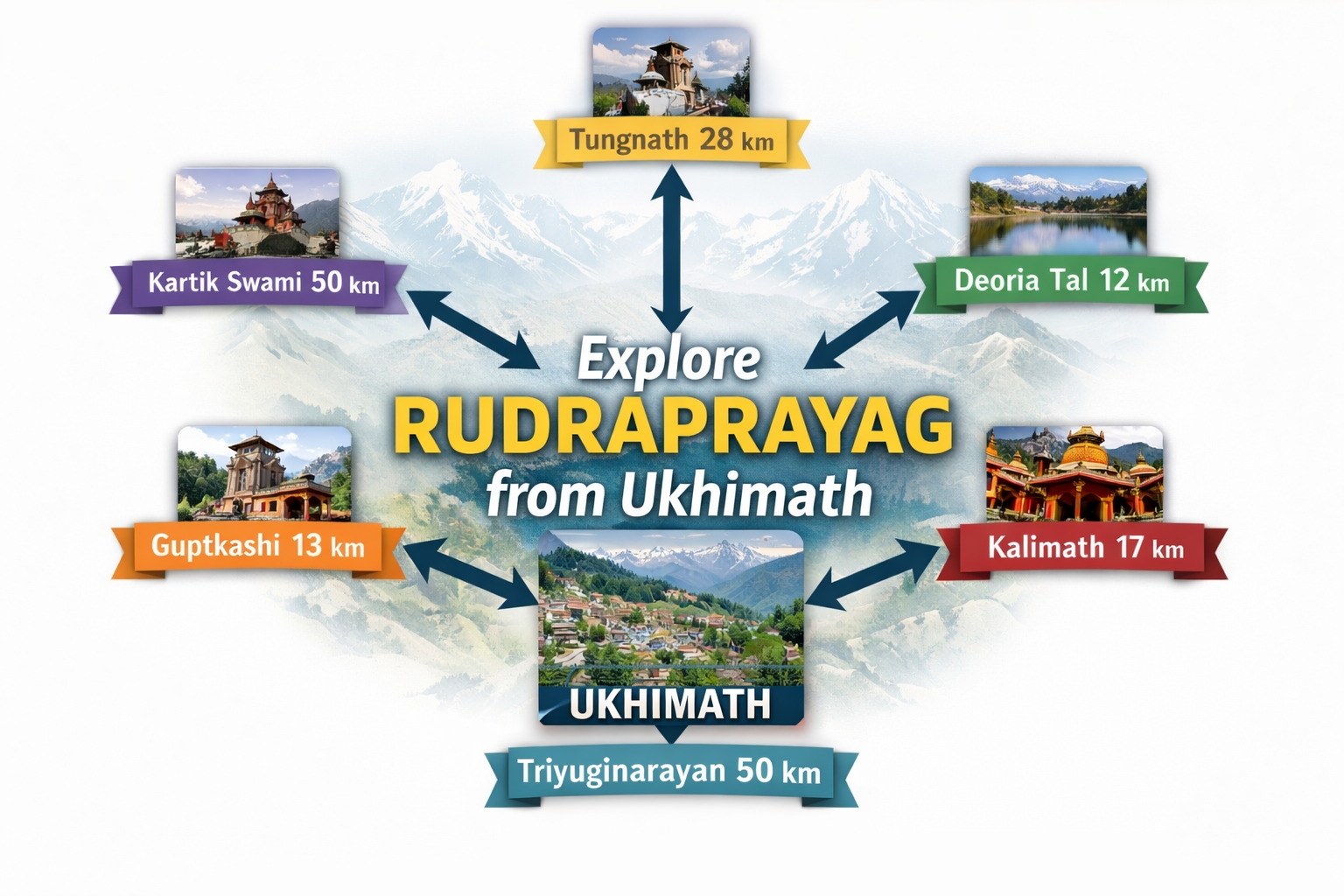
Rather than change locations every few days, I suggest make a base. I made Ukhimath my base. This is a nice town in Rudraparayag district at a distance of 175 Km from Rishikesh, about 5 – 6 hrs drive (Leave at 8.30 reach by 2.30 – including a lunch stopover) Ukhimath (4250 feet) is located on the Kedar Badri route and there are many interesting places you can access easily as day trips from here. Ukhimath is also home to an ancient Temple – the Omkareshwar temple.
Does Ukhimath have a good place to stay
Yes – probably the best hotel in the hills. The Regenta Madhuganga is an excellent property. It has 76 rooms in different combinations (Double, Family, Suite). Great location with balcony views of the Kedar mountain range (Ask for Superior Rooms with Mountain view). Excellent Pure Veg food (No Eggs / No Liquor), and great service. When your book a room choose the Breakfast & Dinner included option (Mobile – 9068688875, email – reservations.rruk@royalorchidhotels.com)
Help me plan my trip from here
This plan is based on my recent visit to Ukhimath (March 29th – April 4th : 2026) from Bangalore.
Day 0, Sunday : Bangalore to Dehradun – Night stay at Rishikesh
Day 1, Monday : After Breakfast – head to Ukhimath. Enroute cross Devprayag, Rudraprayag and reach Ukhimath by 2 PM after lunch on the way and Check in.
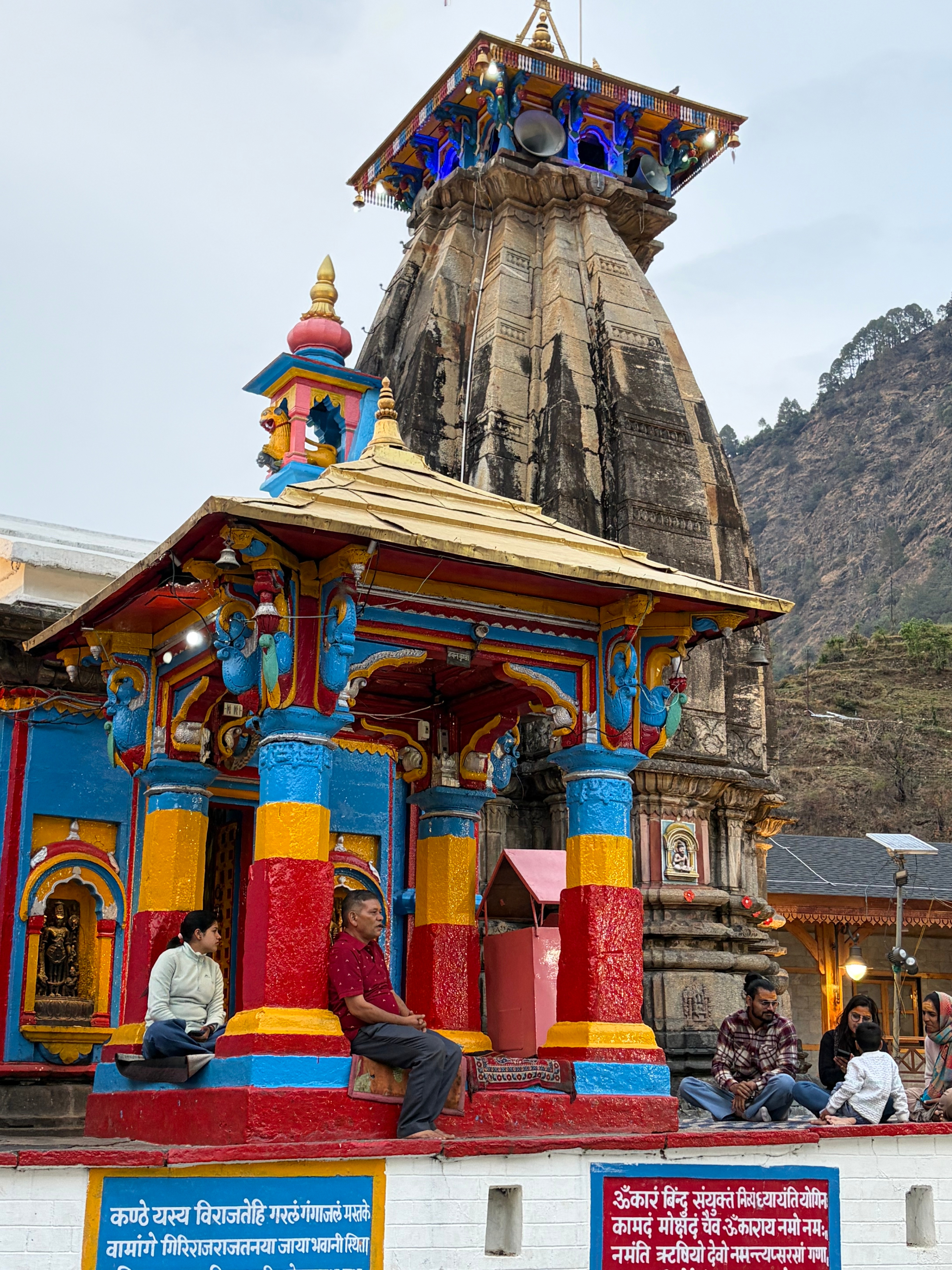
Day 1, Monday Evening – Visit the Omkareshwar Temple at Ukhimath (3 Km from the hotel – 5 min drive, 15 min walk)
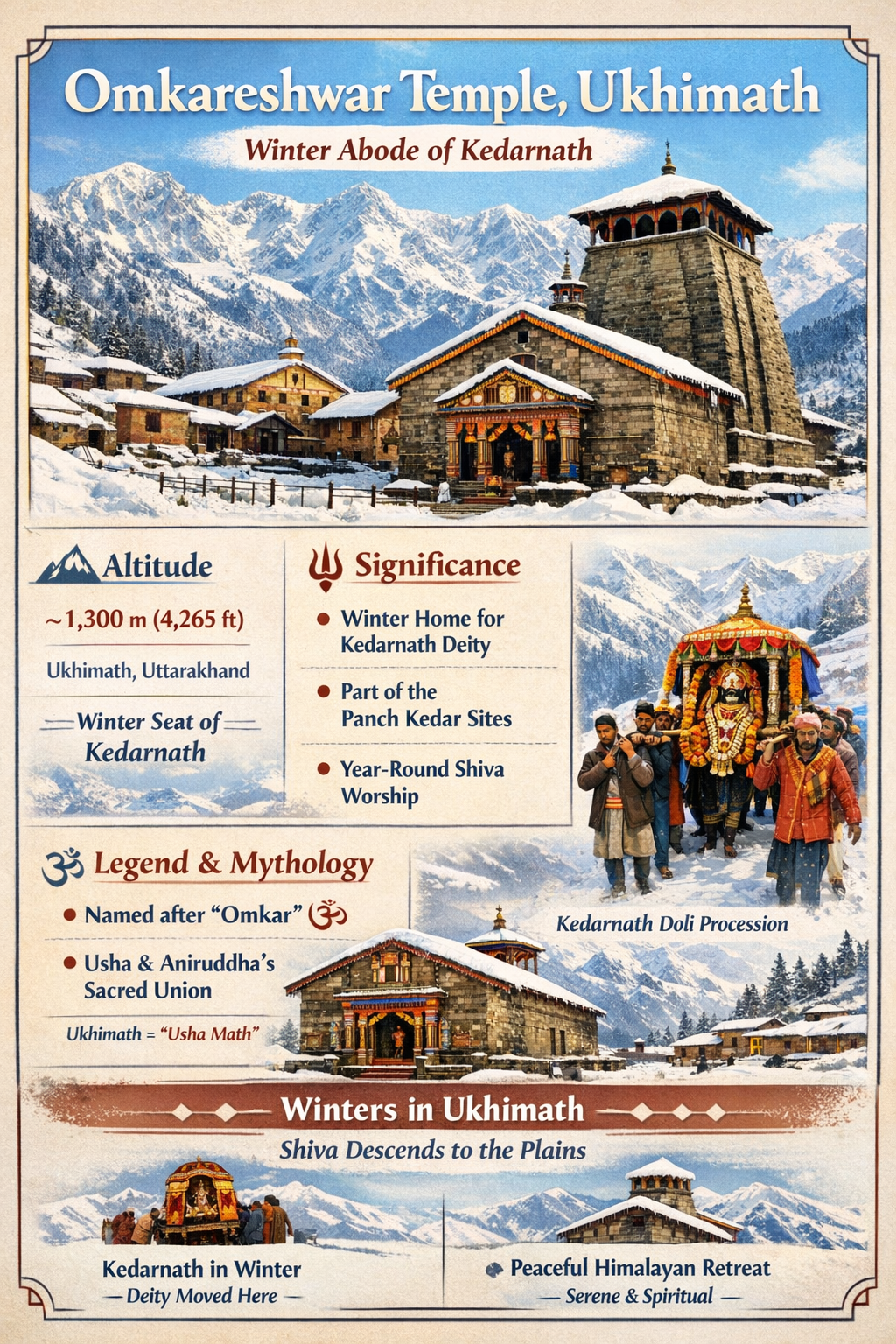
King Mandhata, an Ikshvaku dynasty ancestor of Lord Ram, is said to have performed penance here for 12 years standing on one leg to appease Lord Shiva. Pleased, Shiva appeared as ‘Omkar’ (sound), leading to the founding of the holy Omkareshwar Temple.
Ukhimath is the winter seat of Kedarnath: When Kedarnath Temple closes (Nov–Apr), the deity is brought here in a ceremonial procession and worshipped. Also associated with Madhyamaheshwar Temple (another Panch Kedar shrine), whose idol is also worshipped here in winter. Please note this is not one of the Panch Kedar temples. (Time to spend 1 Hr)
When I visited this ancient temple was empty. Try to attend the evening aarti around 6.30 PM and spend time in the highly energised space.
Day 2, Tuesday – Visit Gupt Kashi & Kalimath (14 Km from the hotel – 40 Min drive)
The Hotel serves breakfast at 7.30 AM so we were ready to leave at 8 AM. it was a bright day with blue skies and clear views of the Kedar Range. A short drive of less than 40 min and you cover the 14km distance to the ancient temple of Gupt Kashi. From the car park it is a 5 min walk .
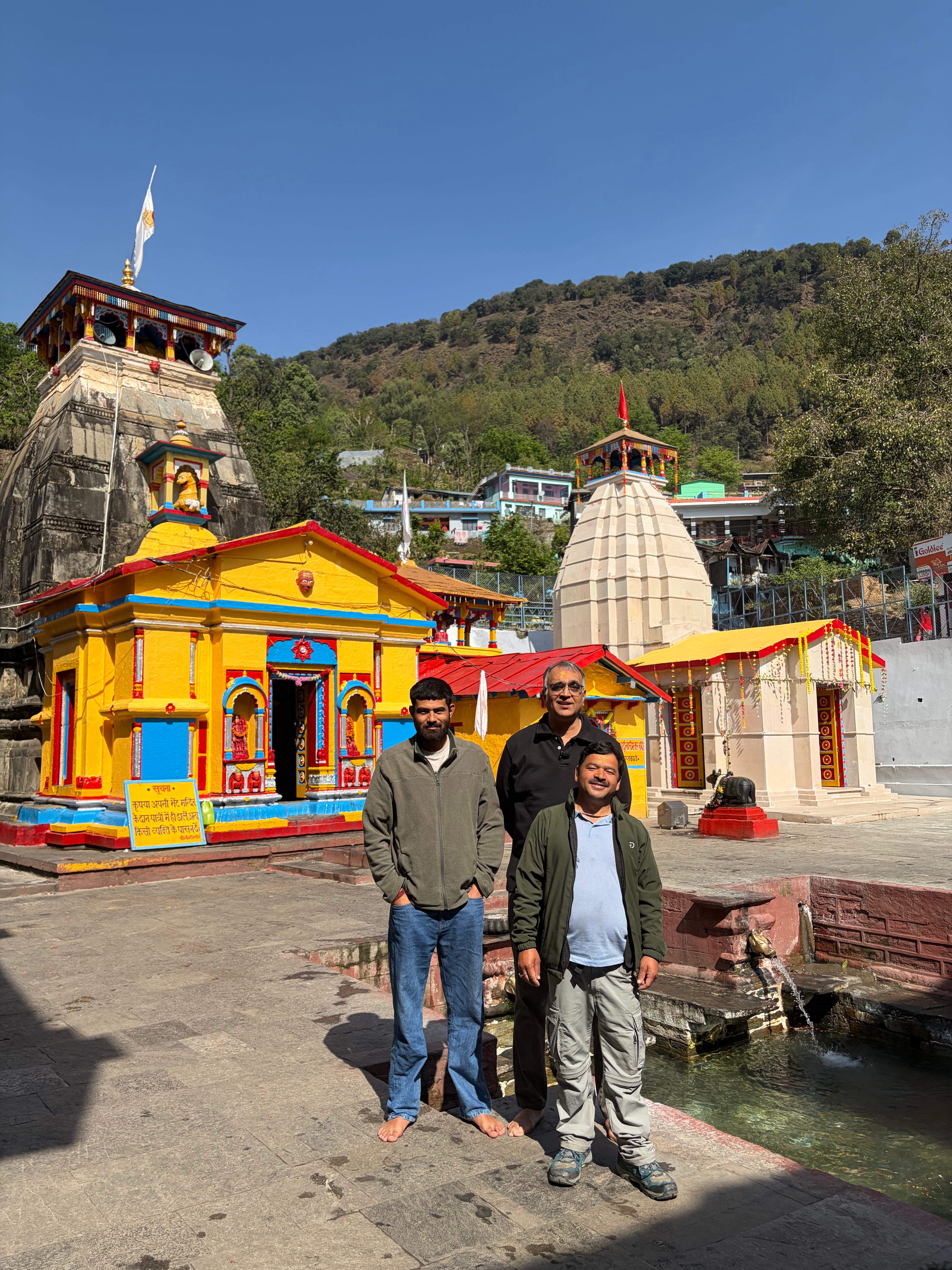
As per legend this is where Lord Shiva hid from the Pandavas. The temple was empty and we could see the Shiva Lingam – it is shaped a little differently. There is also a shrine for Ardhanareshwar. Two underground streams with sweet clean water called Ganga Yamuna flow in front of the temple. carry empty bottles and fill it up. the Himalayan fresh water has magical properties. (Time to spend 45 Min – 1 Hr)
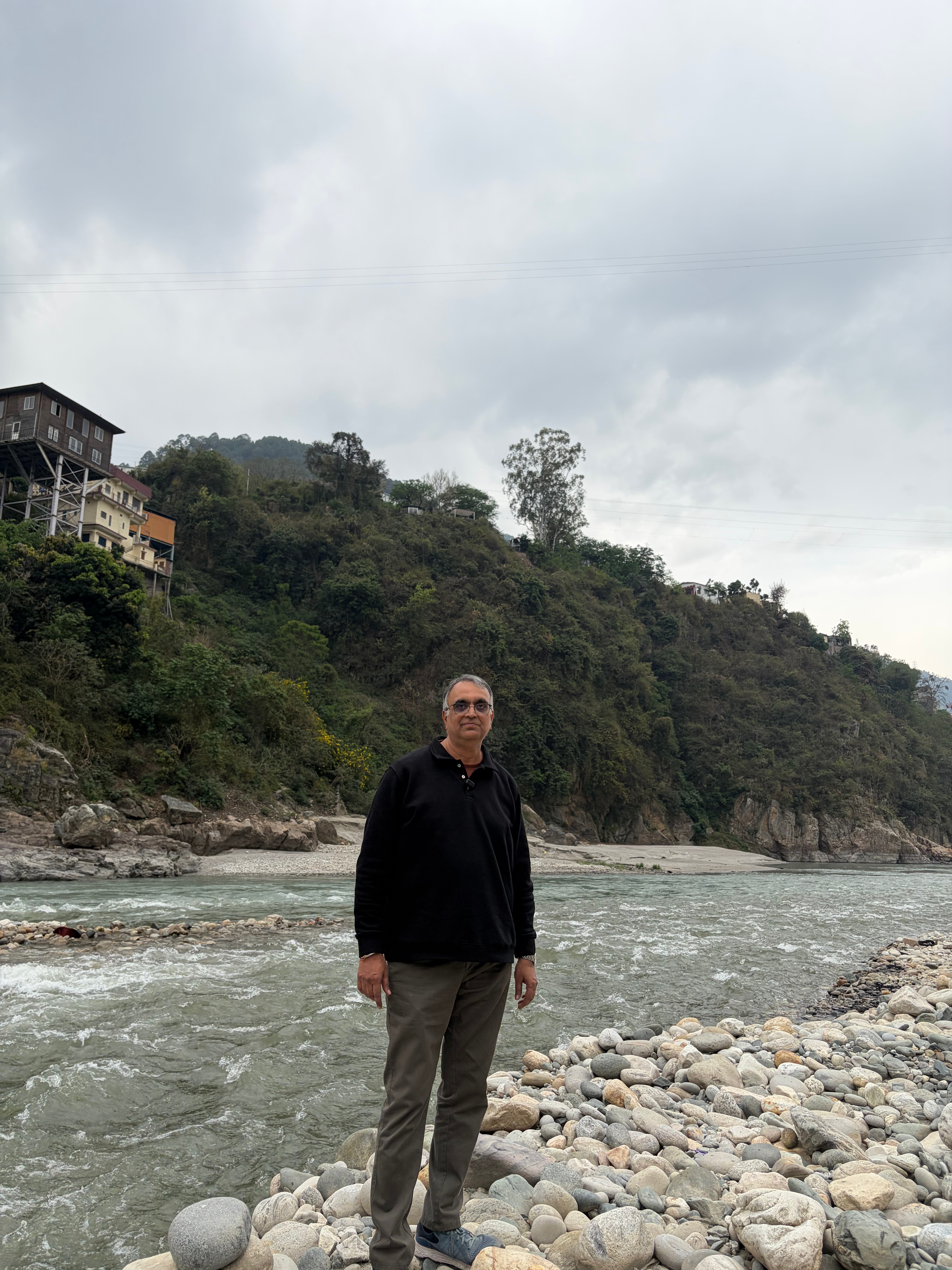
A short drive from Gupt Kashi along the gurgling Mandakini you will reach Kalimath. (13 Km – 35 Min) I stopped on the way and spent some time in the river sitting on the rocks. It was empty and nice. Sitting by a Himalayan river has a calming effect and is a great energiser. (Time to spend 30 Min). Video at end of the Blog
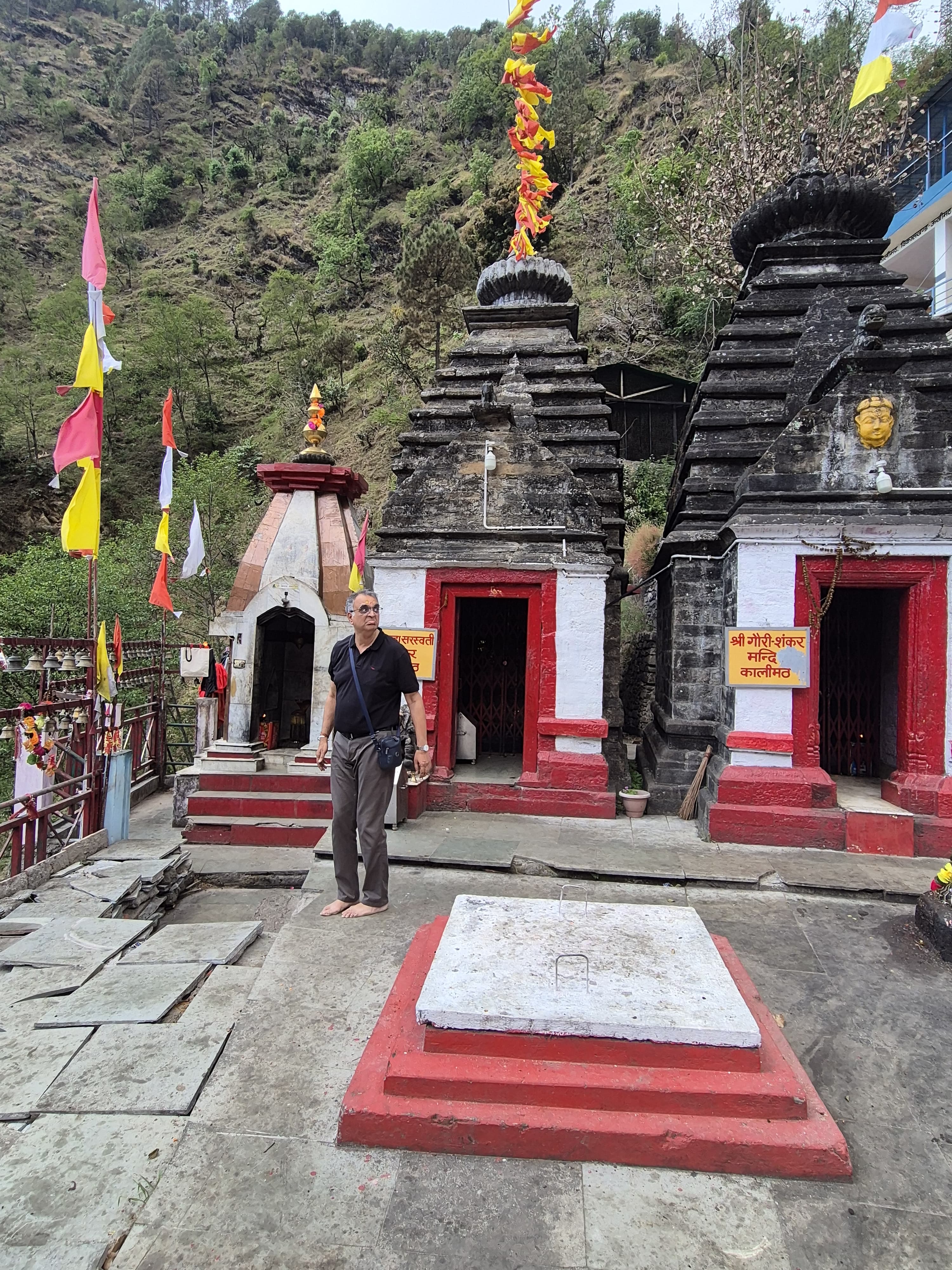
Kalimath is a Devi temple along the Mandakini – there is no statue. Devi is worshipped in an underground pit covered by a silver plate. Represents the formless energy (Similar to Kamakhya). Ma Kali is said to have defeated the asura Rakta Beeja and disappeared into the earth. The priest says this is one of the 108 Siddha Peethas. The temple has a connect with the Dhara Devi temple – Locals state that Devi’s body is worshipped and the head is worshipped at Dhara Devi. (Time to spend 30 Min)
We had completed all this by afternoon 1 and headed back to our hotel, reaching by 2.30. On the way back we had a simple lunch at a roadside eatery at Chunni village. You also have the option to visit the Ruch Mahadev temple – 6 Km from Kalimath + 1/2 Km trek.
That day evening – you can revisit Ukhimath temple or go for a scenic 1 hr drive towards Chopta.
Day 3, Wednesday – Trek to Deoria Taal (14 Km from the hotel – 40 Min drive)
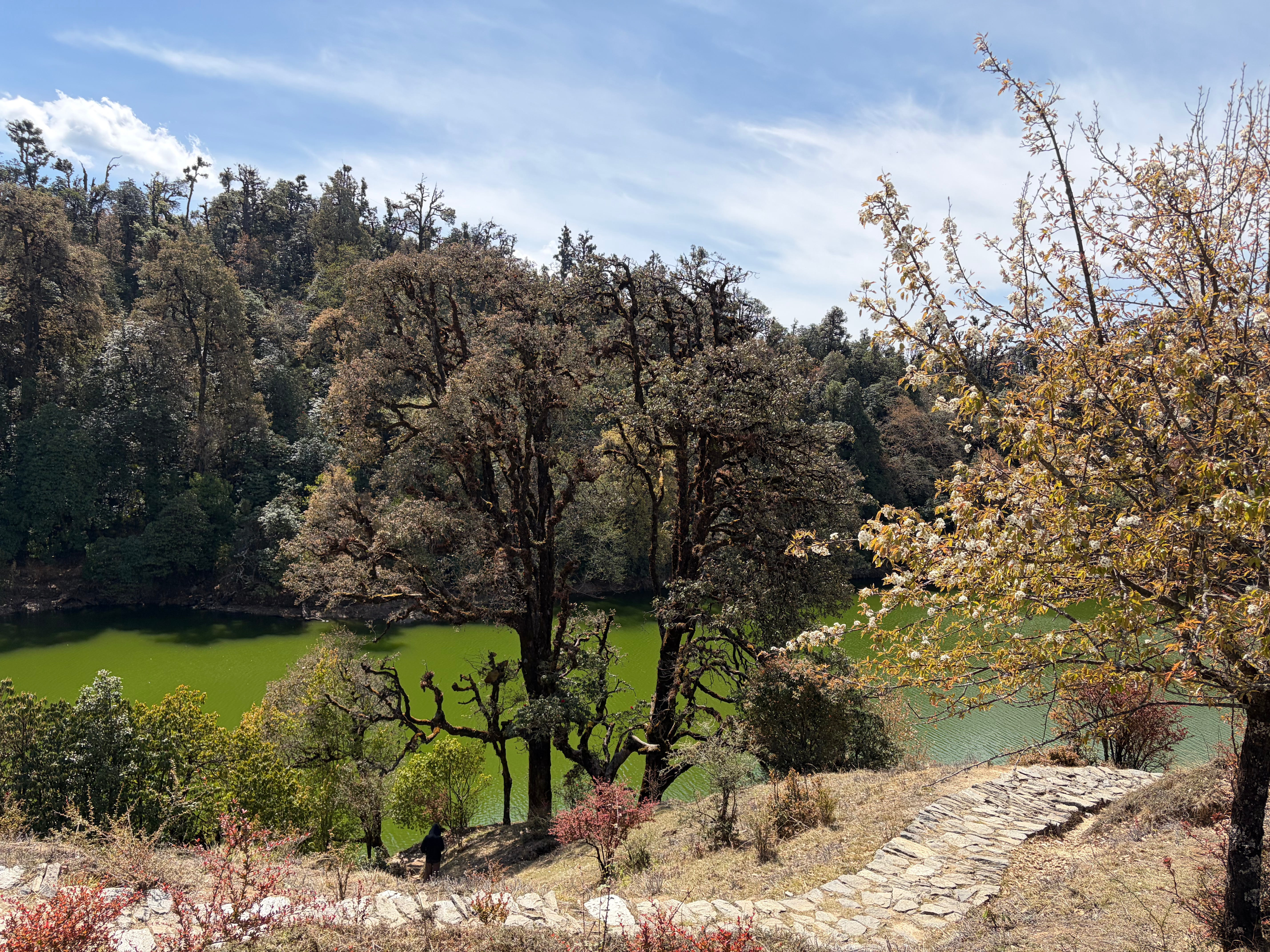
Deoria Tal is a serene high-altitude lake (~2,438 m / ~8,000 ft) located near Ukhimath in the Garhwal Himalayas, accessible via a short and scenic 2.5 km trek from Sari Village (about 14 km by road from Ukhimath). It is renowned for its crystal-clear waters that perfectly reflect the majestic Chaukhamba Peaks, making it one of the most visually rewarding yet easy treks in Uttarakhand. Beyond its natural beauty, the lake holds mythological significance as the site associated with the Yaksha–Yudhishthira episode from the Mahabharata, giving it a spiritual dimension alongside its popularity for camping, photography, and peaceful Himalayan immersion.
I found the trek a bit steep. Its a continous climb – no level areas. We left our hotel at 8 AM – reached by 9 AM , started the trek at 9.10 and reached the summit by 10.20. Spent an hr there and were down by 12.15. Reached the hotel by 1.30 and had lunch at hotel. There is a 200 Rs per person ticket.
Evening – We headed back to the Ukhimath temple
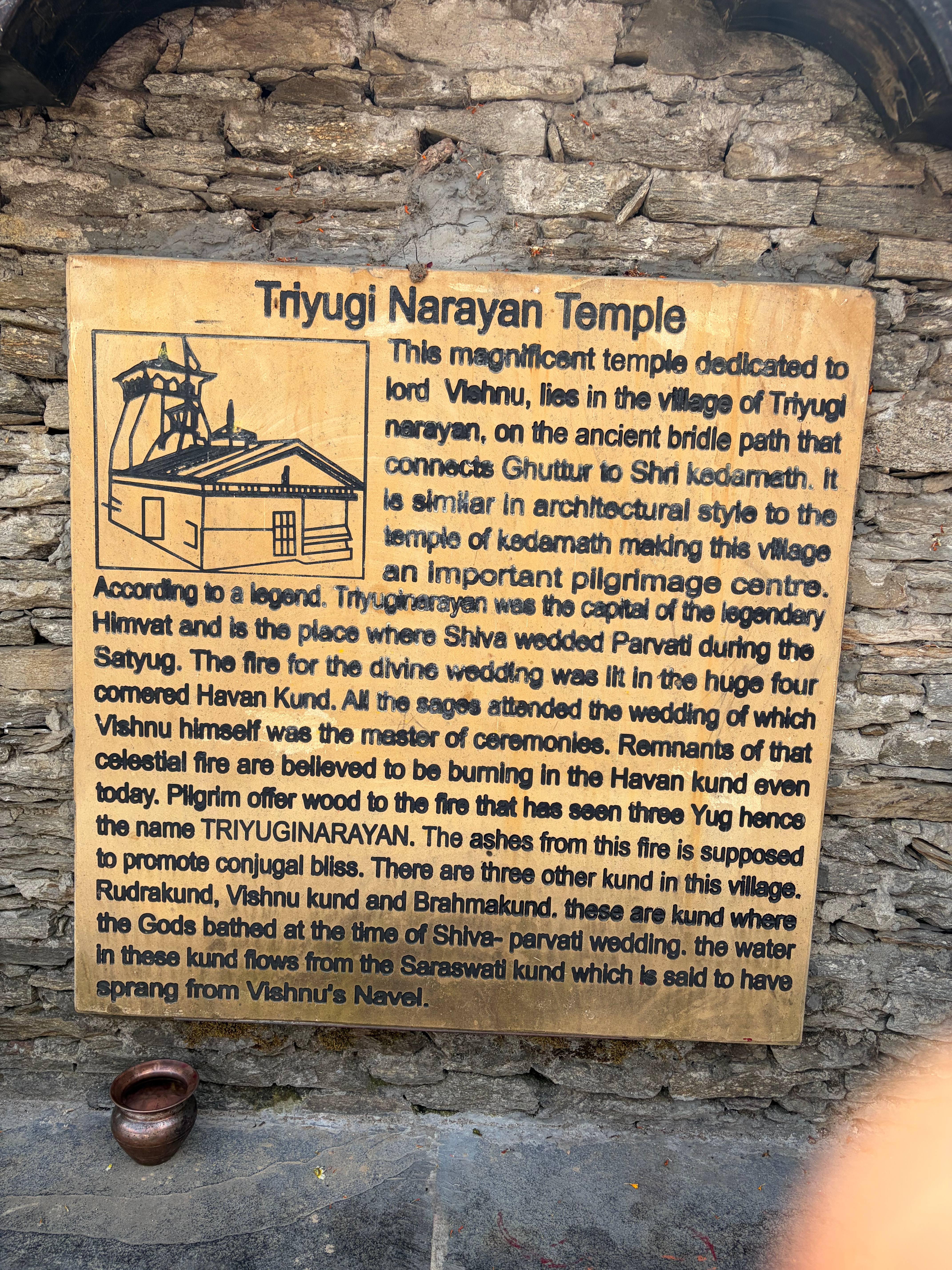
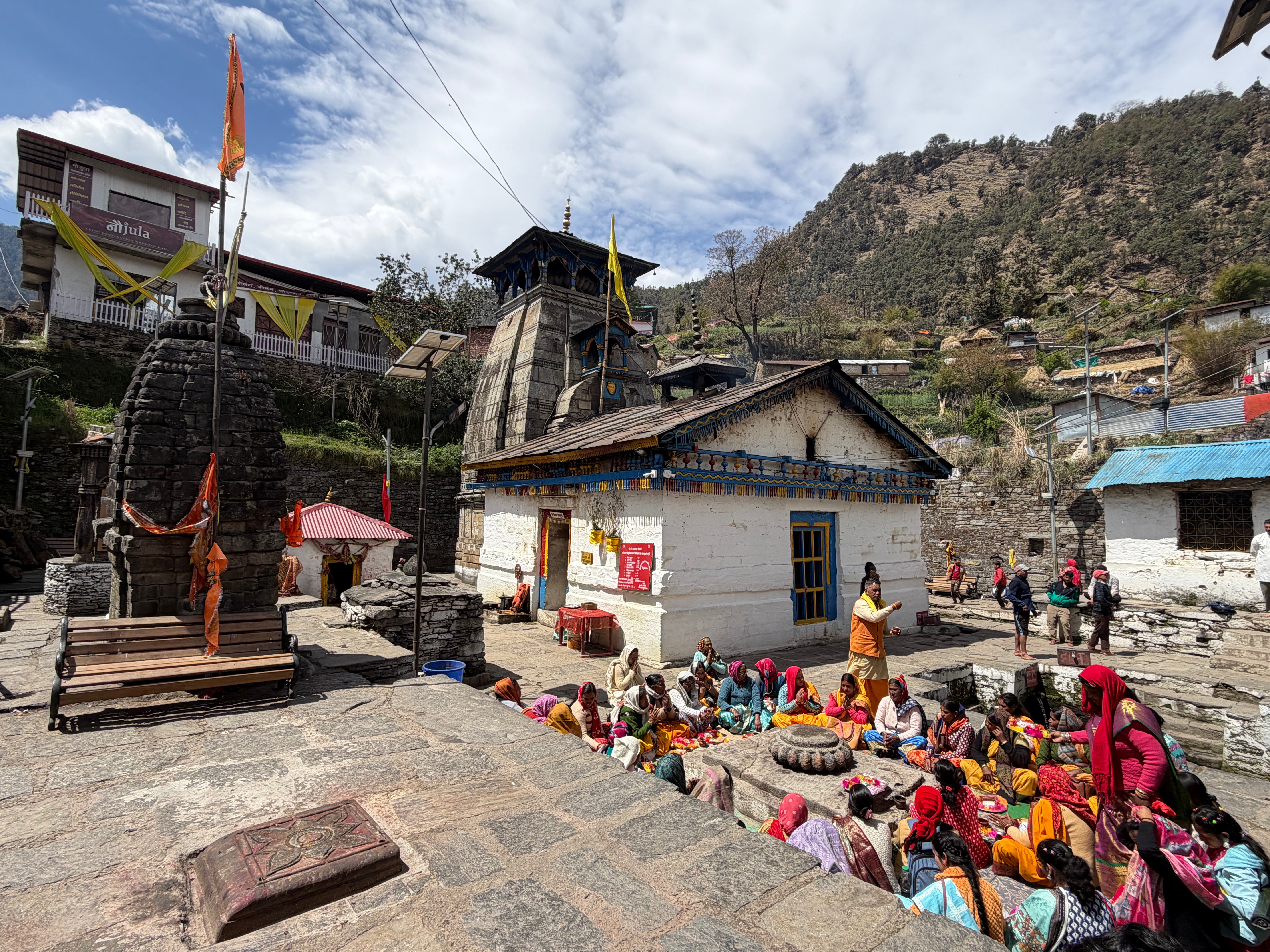
Day 4, Thursday – Triyugi Narayan Temple (50 Km from the hotel – 3 Hr drive)
This took us 3 hrs (should be 2 hrs) since there was road work. Triyugi Narayan temple is close to Gauri Kund the starting point of the Kedarnath trek. Its also close to Sonprayag. From parking it is a short 5 min walk to the temple.
The temple is considered the site where Lord Shiva married Parvati. Vishnu acting as Parvati’s brother did the Kanyadaan and Brahma officiated as the priest. The holy fire is still kept alive across the three Yugas – hence the name Triyugi. The temple also has a few underground water Kunds. Lot of people come here to renew their marriage vows and even get married.
After spending 1 Hr at the temple we left at 12.15 and reached our hotel at 4 PM. Enroute we had lunch at a roadside eatery at Sumeru Village.
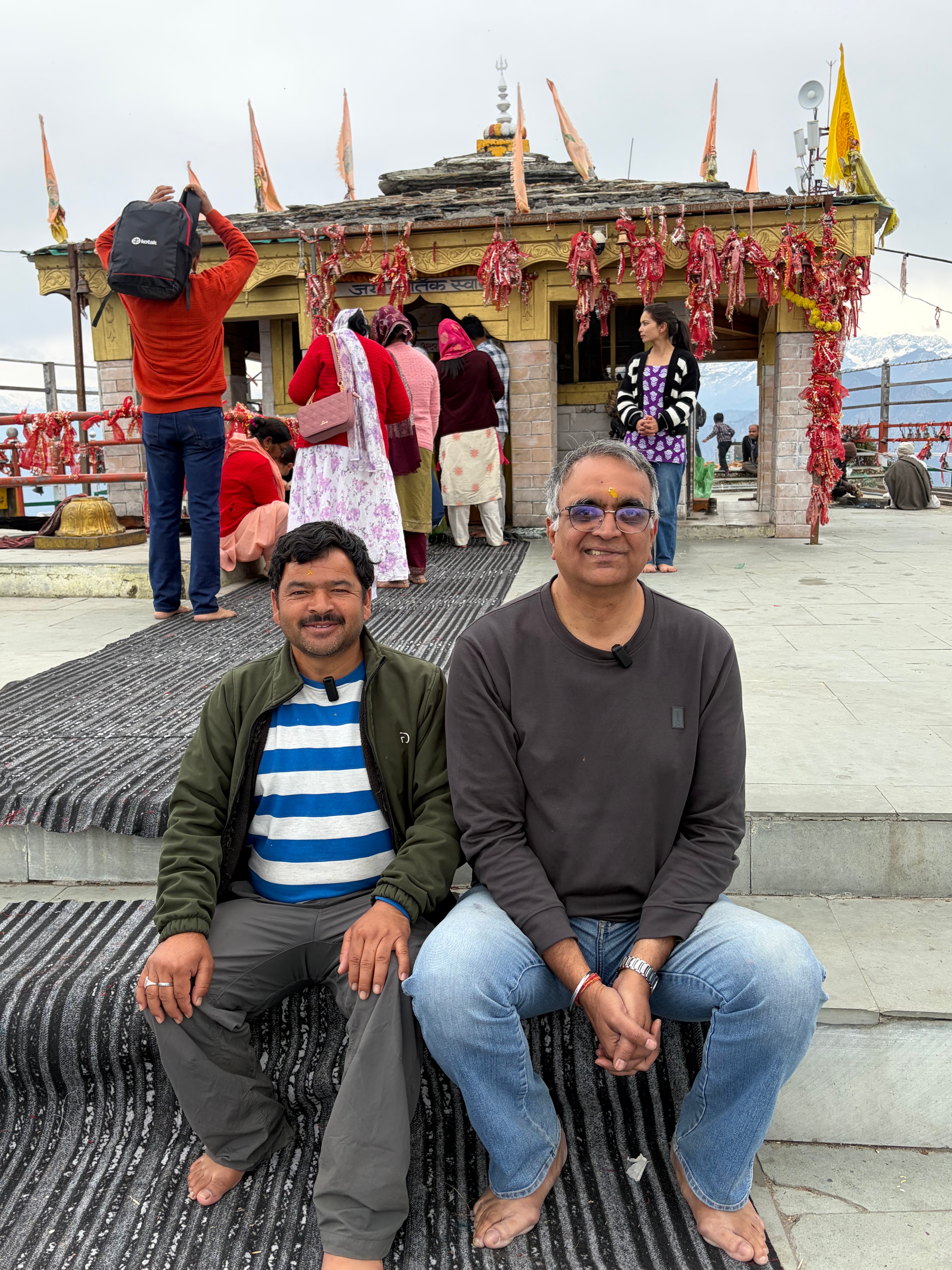
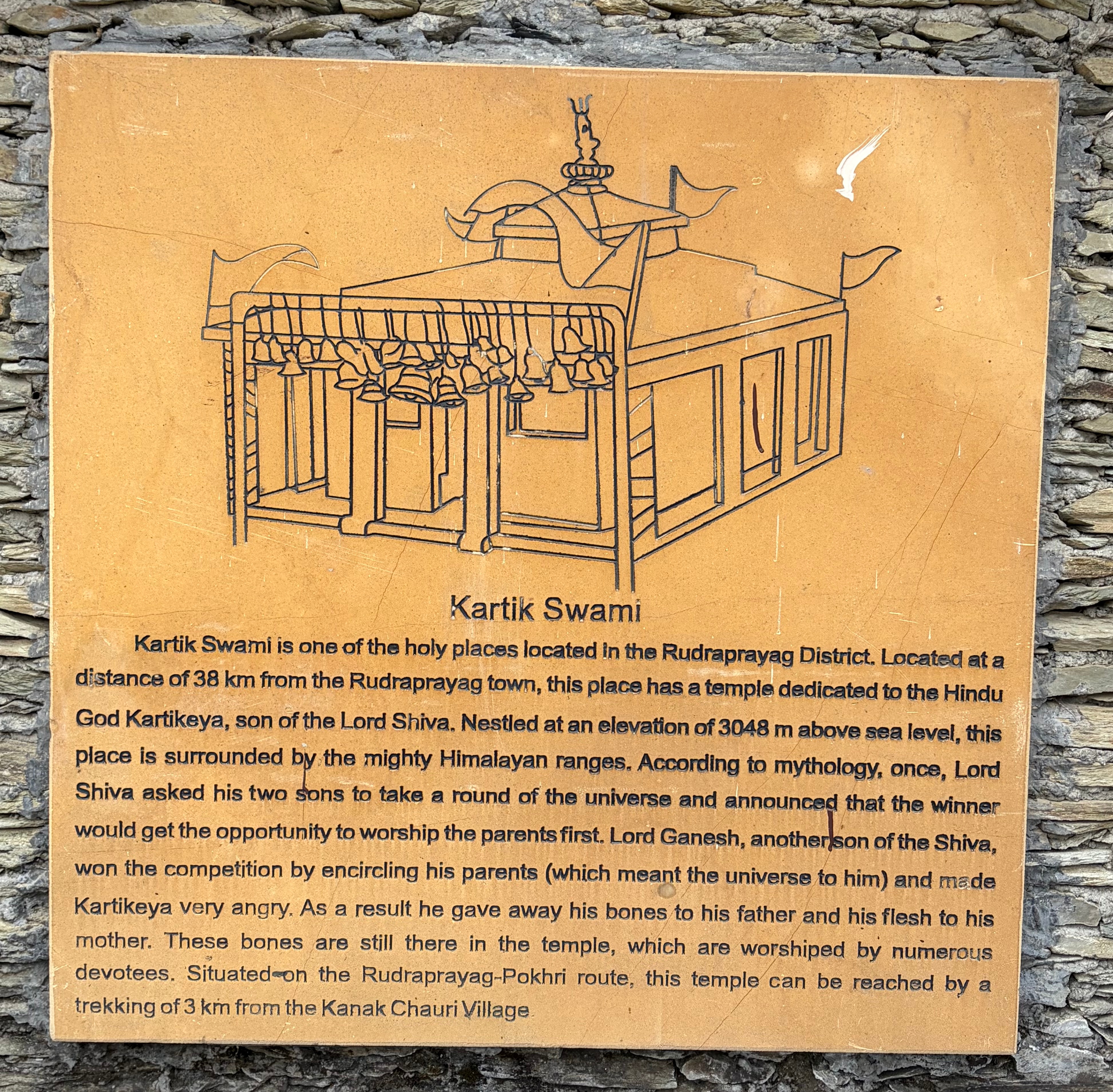
Day 5, Friday – Karthik Swami Temple (50 Km from the hotel – 2 Hr drive)
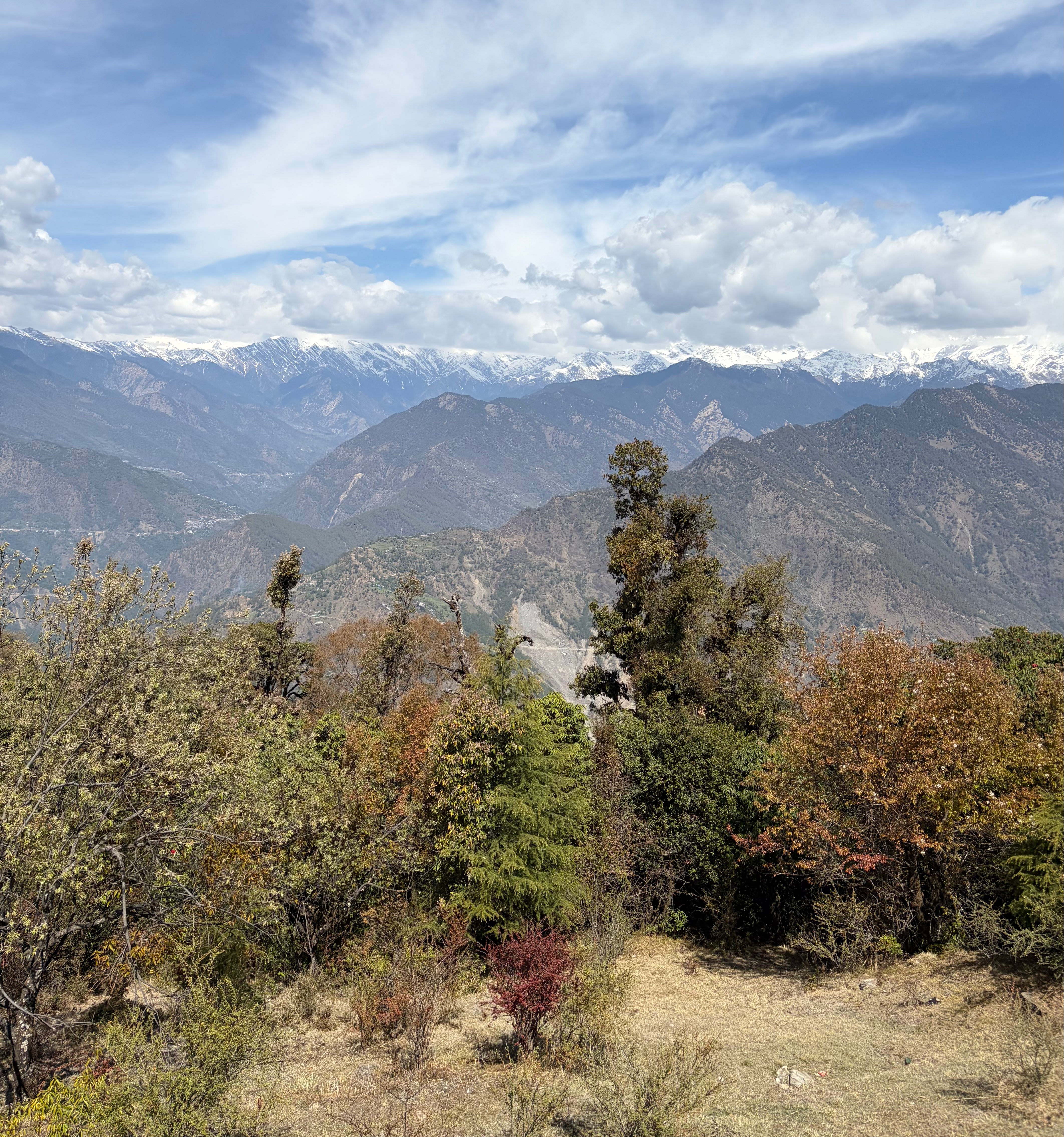
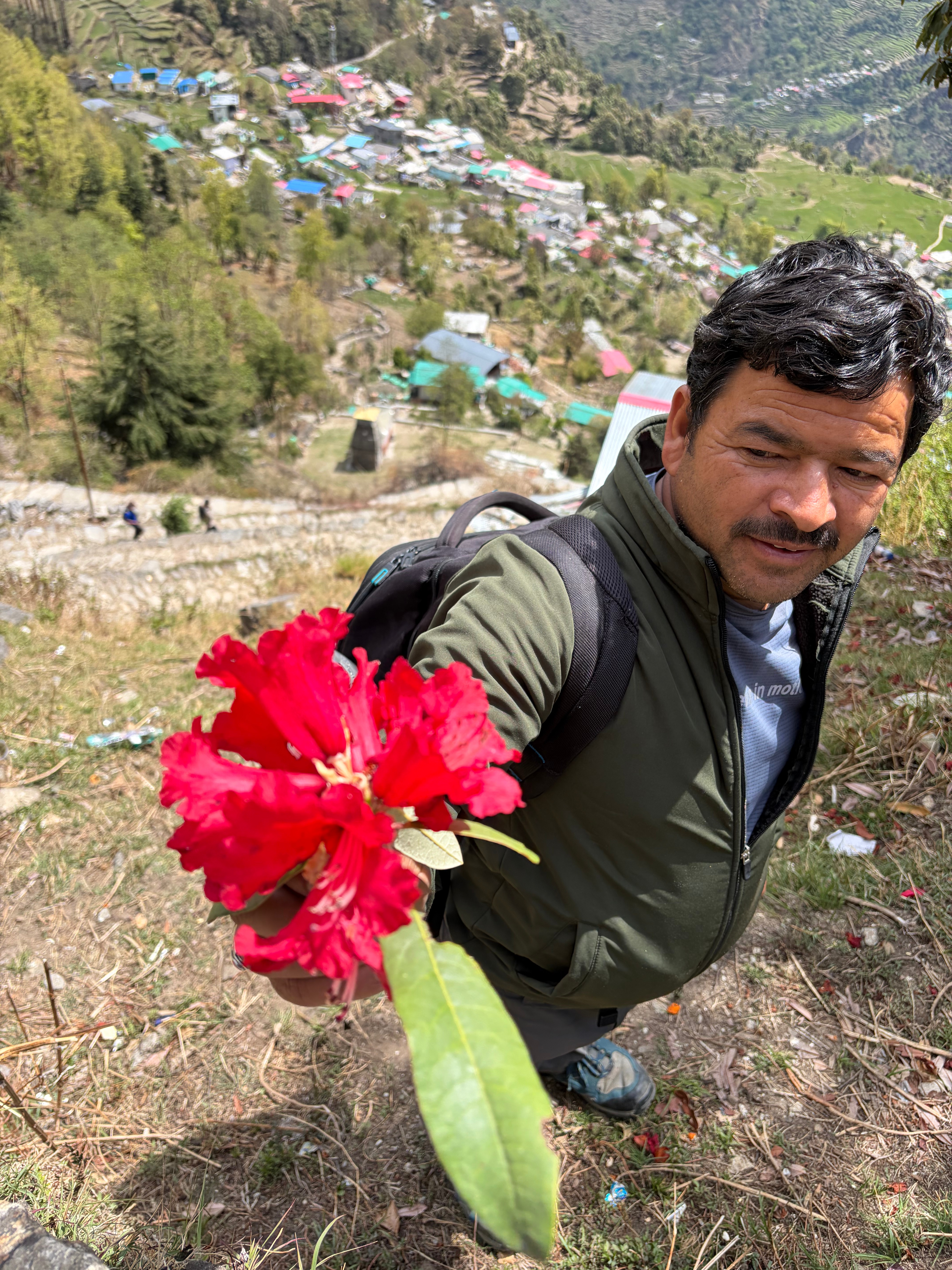
This was the most scenic drive. Small villages, nice mountain views, hardly any traffic enroute. We left at 8 AM and reached by 10.15 – started the trek and reached the temple at 10,000 feet at 11.15. Its an easy trek. Very scenic. This is the time of the year when these treks are supposed to be heavenly with the Rhododendron in full bloom – but this year the blooms are limited. Weather in the hills are changing and so is the flora and fauna.
Karthik Swamy temple is one of the rare temples dedicated to Lord Muruga in N India. After losing the race with Ganesha, Karthik is upset and offers his flesh to Parvati and comes here to offer his bones to Shiva. He then gets into a reflective mood in his subtle body and heads out to Palani to make that his final base. The statue here is made of marble / crystal – looks like bones. The temple is at 10,000 feet on a ledge and has a beautiful view of the surrounding mountains. We spent 45 min here and on the way back had lunch at a local shop, close to the temple peak. A relaxed journey back with some delay for road construction – we were back in the hotel by 5 PM.
Day 6, Saturday – Head back to Rishikesh
We check out and leave the hotel at 8 AM . On the way we stop by the ancient Auugstya Muni temple in the village called August Muni – 30 Min. We then stopped at Rudraprayag and walked down to the Sangam – it was quiet and nice. You can also visit the Umra Narayan and Koteshwar temple in Rudraprayag.
Lunch on the way, a stop at the Bengali sweet shop at Srinagar (Chauhan Bengali sweet shop in Srinagar, Pauri). It is located on the main Badrinath road. Pick up a few Uttarakhand delicacies to carry home. I suggest trying the Bal Mithai without the sugar balls on the top. Also, try the Singori (सिङ्गौड़ी) which is a delicacy from Uttarakhand made with Khoya. It is wrapped in a maalu leaf. It is akin to Kalakhand. We reached Rishikesh at 4 PM.
Few More Points
I had covered Tungnath in 2024 – so did not visit this time. But that is another nice trek – Tungnath is one of the Panch Kedar’s and at 14,200 feet the highest Shiva temple. It is a moderate trek – takes 2 hrs, but a very busy route. Its on the trek circuit and lot of trekkers go beyond Tungnath to Chandrashila for the views. So you could plan an extra day to cover Tungnath. This time of the year there will be snow in Tungnath. (Check my earlier blog on this https://vak1969.com/2024/10/06/essential-guide-to-your-himalayan-trip-badrinath-beyond/).
There is a place called Kali Shila close to Ukhimath , it is a short drive then a trek (Guide was saying maybe now car is allowed all the way) supposed to be an energised Devi Shrine – which has Her footprints. Few people visit – I missed this.
Madhmaheshwar (One of the Panch Kedars) is not far ~ 25 Km to the Ransi village from Ukhimath. But it involves an overnight trek from Ransi.
Anusiya Devi & Atri Ashram Temple is also a possible trek through thick jungles – but this would be a long 10 – 12 Hr day trip.
If you want to save time on the last day – from Karthik Swamy head to Rudraprayag and spend the night there. Karthik Swami is very close to Rudraprayag so you save almost 100 Km of driving if you head out from there Vs returning to Ukhimath.
I always have a guide. I travel solo – so the guide and driver are my companions. Hukum Singh is outstanding – contact him at 9690464301, 7579481621. he knows the hills like the back of his hand.
This is Hukum Singh holding a Rododendron flower.
Raghu Bisht was my driver. Nice person. You will see him in our Gupt Kashi photo. My trip was organised by Lakshman Ji a tour operator from Rishikesh. – 95960871691. He did a wonderful job. he was able to get my room at Regenta Madhuganga at a cheaper rate than the online rate + inclusive of dinner.
All along the route Network is excellent – restrooms are a challenge. Road quality since 2010 has not changed much. Food you get is simple Roti / Sabji / Dal in the roadside eateries. Regenta Inn has excellent food.
Rishikesh is a mess. Rafting crowd has created chaos – roads are jammed all the way from Shivpuri. Tapovan is the hub of youngsters – like Goa. My hotel was at Tapovan and it was a bit of panic to get to the airport.
When travelling to the hills always budget a day extra – and do not schedule your flight on the day you are driving back.
Weather was pleasant – full sleeve sweat shirts were sufficient. No heavy jackets, sweaters etc. (You may need for Tungnath)
Some of the videos of the Trip are getting uploaded in my YouTube channel (ohmanreadthegita) – here is one of them, please subscribe to the channel – there is a lot of interesting short videos and podcasts.
By the grace of God, this trip went smoothly. Having covered the sights around Alaknanda in 2024 and now the Mandakini belt in Rudraprayag, let me start exploring the Bhageerathi trail for 2027 from Harsil to Uttarkashi.
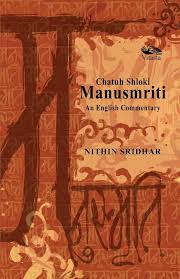
I have always wanted to get to understand firsthand what’s in the Manusmriti. It’s a text that is rarely read but frequently maligned. A topic that raises red flags and earns more brickbats than bouquets. So, when Nithin Sridhar informed me of his new book Chatuh Shloki – Manusmriti, I immediately got my copy.
Nithin is a Director at the INDICA centre for Moksha studies. He has authored six books and is a frequent speaker on Vedanta and Hindu philosophy. Now Nithin is a learned man. He goes deep into a topic – like a scientist he cross references and backs his statement with proof. This book is not a light read – and requires you sit with pen, pencil and highlighter to understand. For a common man this is a heavy read.
The book has received rare reviews from many scholars and seems to be an authoritative work on this subject. You can’t find many books on this topic.
The Manusmriti contains 12 chapters and 2685 verses. Nithin has focused on the first 4 verses and explained it in detail. One of the controversial parts of the Manusmriti is the section on the Varnas and Nithin has spent a lot of time explaining this lucidly. He references sections from the Gita and Rigveda to clarify that modern commentators have misinterpreted the meaning of the Varnas. The other controversy is around the role of women – the book does touch upon that also but in lesser detail.
I learnt a lot from the book, however I intend to get Nithin on my podcast to spell out clearly answers to a few more questions.
Who is Manu – why is he called Swayambhu Manu? Is he God or Man …. Is he the Adam of Hinduism. He got his knowledge from Brahma … so why are the great sages Marichi, Angirasa, Pulastaya, Vashishta, Bhrigu, Narada, Prachetas, Kratu …, great Brahmins coming to a Kshatriya King for knowledge on how to conduct life. Were they listening or was this a discussion where they formed a committee to debate and arrive at a set of guidelines. A modern women would ask – why was there no female representation in this committee.
Manusmriti – is not a constitution, it’s not a rule book – it is laying down conventions for society. Can Version 1 of Manusmriti written in the past be relevant today? Somewhere in the book Nithin mentions that Dharma is sacred and we cannot question it – I want to dig deeper on this.
I am sharing some interesting points from the book.
Page 120
Adi Shankara while commenting on the Bhagavad Gita Verse 4.13 says that a Brahmana is a designation given to one who has a predominance of Sattva Guna. Kshatriya has both Sattva and Rajas – Rajas dominates. In Vaishya Rajas and Tamas exists – but Rajas dominates, Shudra is one in who Rajas and Tamas exist – but Tamas dominates. Thus, with the different combinations of the 3 Gunas the different Varnas with distinct qualities emerge. Manusmriti 1.87 notes that for protection of the universe each of the four Varnas have been given different dharmas to pursue.
Now comes the contentious part – Janma , Guna and Karma form the three-fold criteria for determining Varna with Janma constituting the primary criteria. And all three are dependent on a person’s Prarabdha Karma ( karma from previous life)
Page 131
Manusmriti does not posit an egalitarian socio-political order where everybody is equal, where everyone has equal rights, where there are no gaps between the haves and have nots or where everyone is happy. That is a utopian idea. Human reality is that no two persons are the same. Diversity is very core to how nature functions.
Page 132
Manusmriti is not a law book in the sense of a constitution that was despotically implemented by a ruler. It is not a biblical commandment. Nithin explains that it is a Pramana Shastra that reveals knowledge about Karma and Karma Phala. What actions lead to happiness and sorrow. What duties apply to whom. He makes a strong case these texts remain valid today as they did in the past. He adds – whether we approach these texts for knowledge or to caricature them is upto us.
Page 147
Smritis are teachings based on Vedas and hence they are valid. Because Vedas came from God – they are the ultimate Truth.
Page 158
Manu was questioned by the great Sages. So this was not a one-way communication – it involved discussions.
Page 166
An interesting discussion on how the Varnas emerged from the sacrificial fire as explained in the Purusha Suktam (Rigveda)
Page 176
This is the debatable part in today’s era. Four conditions can be considered as necessary for classifying a person into a Varna.
Person must be born of marriage and not outside it
The marriage must be dharmically legitimate
Both parents must belong to the same varna
Mother at the time of marriage must be a virgin, excluding cases such as remarriage
So that explains why Karna was not a Kshatriya. But by this logic even the Pandavas were fathered by Yama, Vayu, Indra and the Ashwini Brothers – So how is it they continue to be regarded as Kshatriyas.
Page 185
Bhishma in response to a question tells Yudhishtra
For a Kshatriya and the others becoming a Brahmana is extremely difficult . That is the best state. If one is repeatedly and progressively cooked in the cycle of life one can be born as a Brahmana. Then Bhishma narrates the story of Matanga who was born a Chandala ( Shudra Father and Brahmana Mother) and wanted to attain through austerity the Brahmana status. Indira tells him that it is almost impossible inspite of all the austerities he may undertake. Matanga realizing that it was well-nigh impossible requests a different boon to be celebrated as a deity of metre.
Page 196 – 198
How did Vishwamitra achieve the state of Brahmana when Matanga failed. An interesting story is narrated on how this was achieved
Page 204
Manusmriti 2.103 talks of varna as a ritual state and if the Brahmana does not perform the mandatory Japa of Savitri mantra, then he loses the ritual state. He is only a Brahmana by name. This raises a lot of questions in today’s world.
Overall its an interesting topic to get educated on. And this is a well researched book. So do get your copy and read up. And very soon we will have Nithin on my Podcast to elaborate more on this topic
This is the story of the divine origin of the Lalita Sahasranamam.
The eight Vāk Devis, embodying the eight sacred facets of Goddess Saraswati, came together to compose this powerful and timeless hymn. Through the boundless grace of Lord Hayagriva, this divine knowledge was revealed to Sage Agastya, for the spiritual upliftment and welfare of all humanity.
This video reflects on the sacred story behind the Lalita Sahasranamam—its origin, its divine transmission, and its enduring spiritual significance. A gentle reminder of how wisdom, devotion, and grace flow together through the Mother’s thousand names.
Have you ever wondered who recorded the Vishnu Sahasranama and how this sacred hymn was preserved?
In the Mahabharata, Sage Ved Vyasa composed it, and Bhishma Pitamaha recited it on the battlefield, answering Yudhishthira’s questions on Dharma. It is believed that Sahadeva carefully recorded this divine narration, which was later passed down through tradition.
This powerful story and its significance were beautifully narrated by Maha Periyava, reminding us why the Vishnu Sahasranama holds such deep spiritual importance even today.
In the mad rush for growth and valuations, are building blocks like Values, Culture, Managerial Mentoring, and Strategic HR disintegrating. Why are there so few women CEOs and Entrepreneurs? What are the barriers to their development?
This edition of Back to Basics with Mythily Ramesh explores these issues. Based on her experience of over 35 years she provides deep insights on what is causing disharmony at work. She beautifully blends solutions with spirituality. Mythily is an alumnus of Guindy college of Engineering and IIM Ahmedabad. She has worked in leadership roles at Wipro and is currently the Co-Founder and Managing Director at NextWealth.




Recent Comments