Archive by Author

Kolar & Avani : Day Trips in Bangalore 7.30AM – 3.30PM (Trip 9)

10 Oct

Trip – 9 :  Kolaramma Temple – Someshwara Temple Kolar – Avani Rama Lingeshwara temples – Mayyas (7.30 AM – 3.30 PM) 

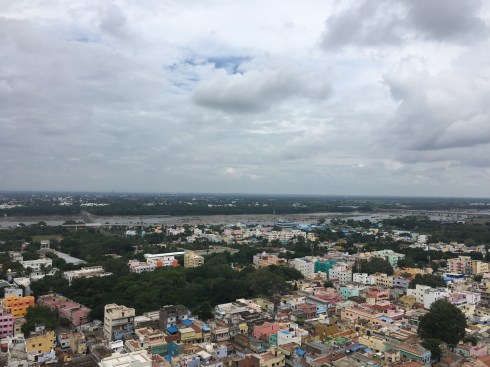
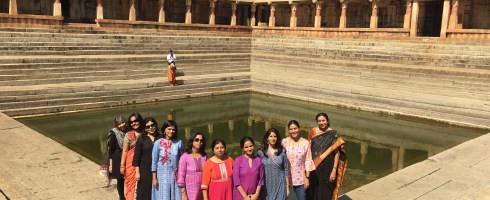
When you think of Kolar you think of Gold Mines – but there is more to Kolar. I had heard about the “Koti Lingeshwar”  temple in Kolar and as part of my recee went to check the place. We always try to do 3 things in our trips so I kept searching for other interesting places close by – thats how we discovered the ancient temples at Kolar & Avani. We were disappointed with Koti Lingeshwar – it does have many Shiv Lingas – but the place is so commercial and devoid of energy that we decided to skip it.

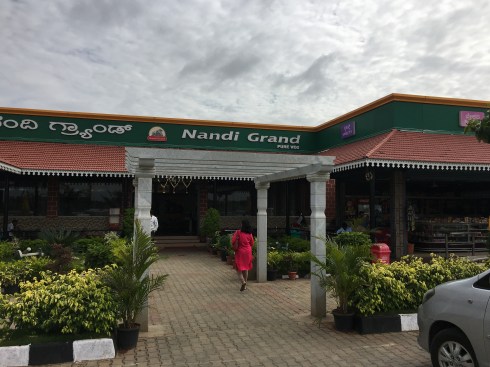
Old Madras Road is a mess – so ensure you leave by 730 AM sharp or better 7.15 AM so that you can get past the inner ring road and the crowded sections of Old Madras road by 8.15 AM before the traffic madness starts. Kolar is 71 KM’s from Koramangla – 1 hr 30 min drive in the morning. We left by 7.25 AM and reached our breakfast point by 8.35 AM. Nandi Grand is the best place to stop – has a wide range of dishes – service is fast and restrooms are clean

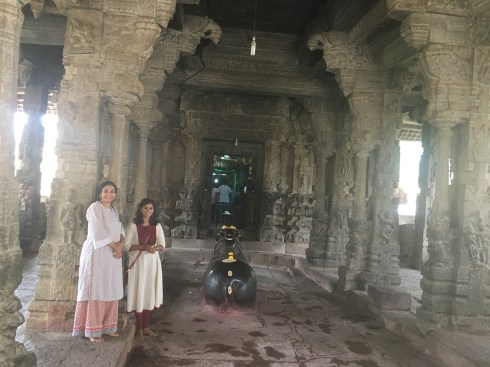
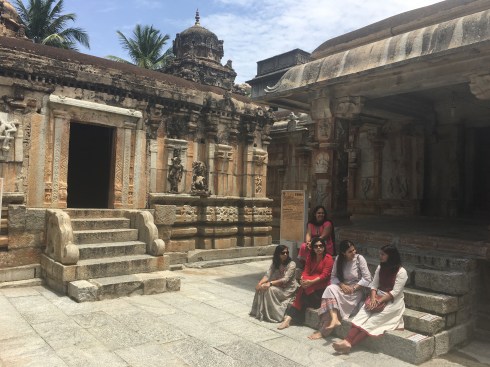
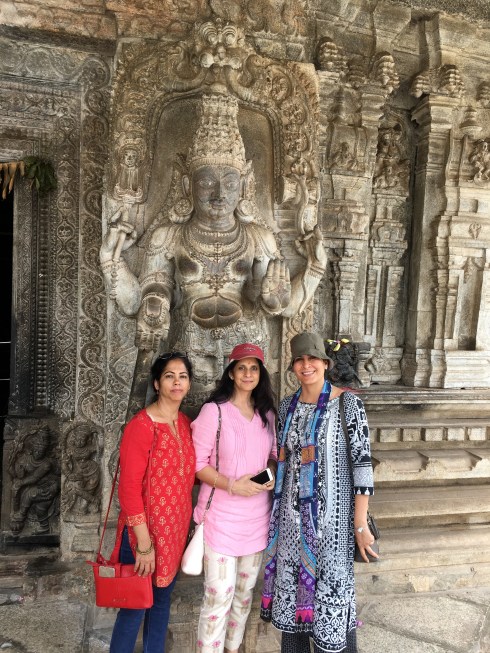
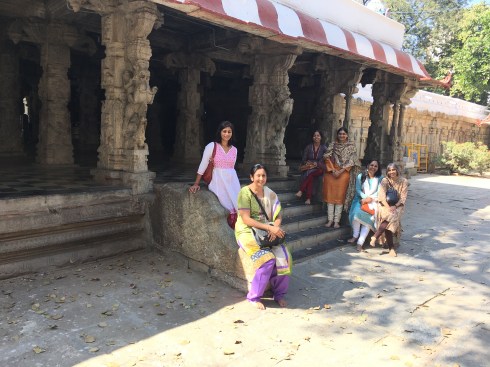
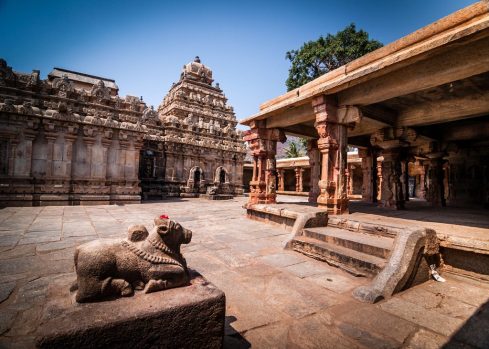
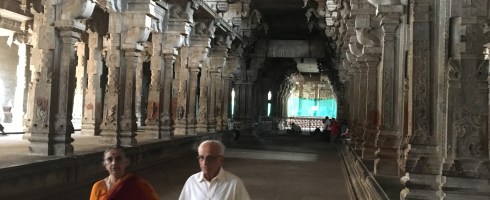
Kolar from here is a 20 min drive – you take a clover leaf exit ( remember this is a toll road so if you have Fast Tag in your car it helps save time). Our first stop was the ancient Kolaramma temple. Built by the Cholas 1200 years back. The presiding deity in the temple is Mahishasuramardini, who is named Kolaramma by the local people. She is an eight-armed Goddess Durga. The devotees worship her by looking at the mirror which is placed opposite the idol. There is a special pooja conducted on Tuesdays and Fridays, temple is open till 2 PM those days – on other days it closes at 11 AM. The temple also has a large brass idol of a Scorpion that is worshipped.

The priest claimed that the shrine of Goddess Durga is supposed to be over 5000 years old and was installed by Parashuram. This is a shrine visited by Adi Shankaracharya and is considered to be a very powerful deity. Legend has it that the fight with Mahisasura started here and finally ended at Chamundi Hills.

In the center of the temple, there is Saptamatrikas. They are seven mothers placed in a significant key position.

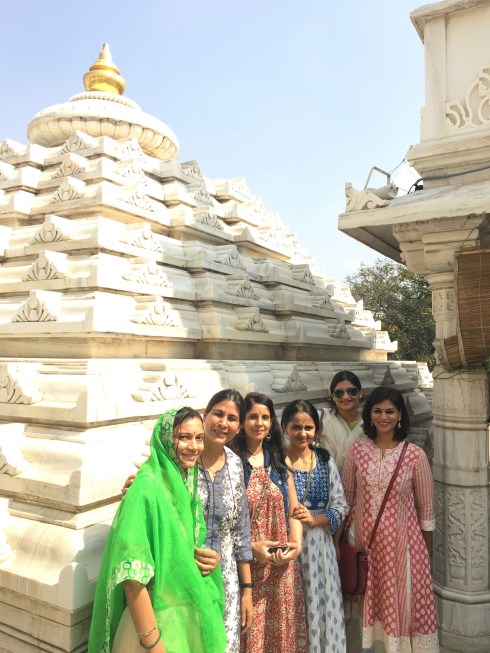
Its a small but extremely powerful temple- the architecture has the stamp of Cholas written all over it with its intricate carvings. I have had the good fortune of visiting this beautiful temple 3 times within a month.

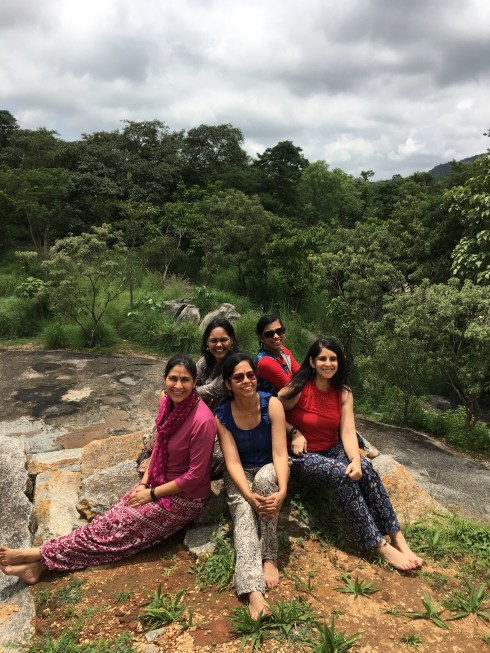
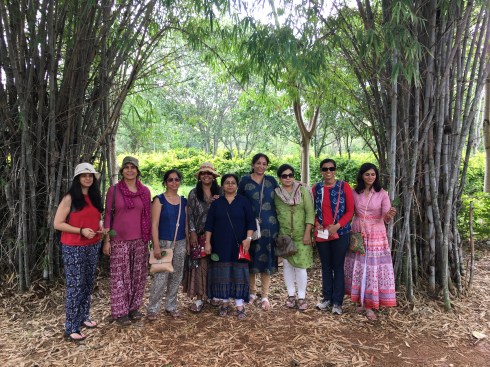
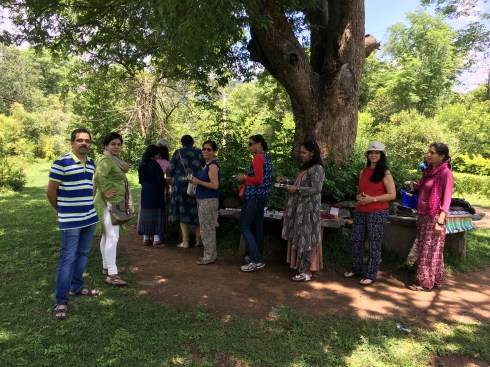
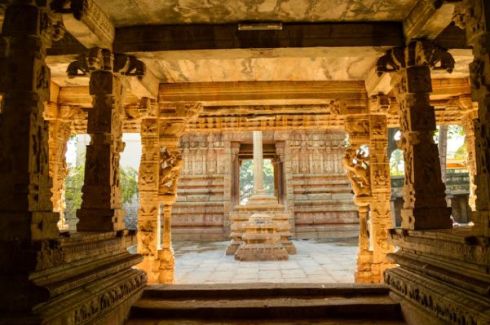
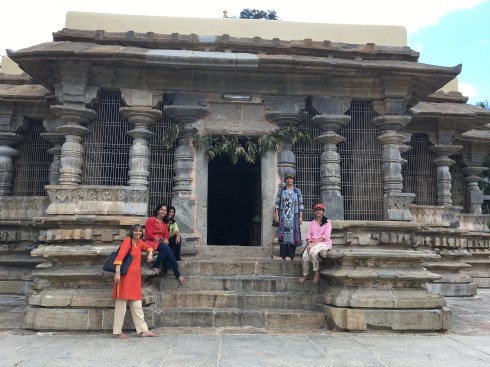
A short walk from this temple is the Someshwara temple – you need to rush as this temple also closes by 11 AM. We were comfortable on time , we had reached Kolaramma by 9.15 and headed to the Someshwara temple 200 metres away by 10.15 AM. Built a little later – this is a grander and larger temple dedicated to Lord Shiva. We visited on a. Tuesday and the temples were empty – the weather was bright and sunny and pleasant and it was perfect to relax and enjoy the magical beauty of these ancient temples. I continue to be amazed at what lies in the vicinity of Bangalore – such beautiful temples at a 100 km distance – less than 2 hr drive and most people in Bangalore have no clue about them.


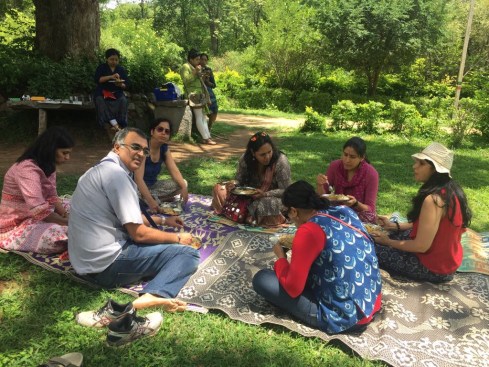
But there was more in store as we headed for Avani a small village located 20 km from Kolar – 30 min drive. Enroute we stopped by at a modern Mayya’s Complex that has multiple restaurants , super clean rest rooms , showers , feeding room and ATMS’s. This complex is world class – I am yet to see a nicer set up in any highway across India. We stopped for a restroom break and then headed to Avani.

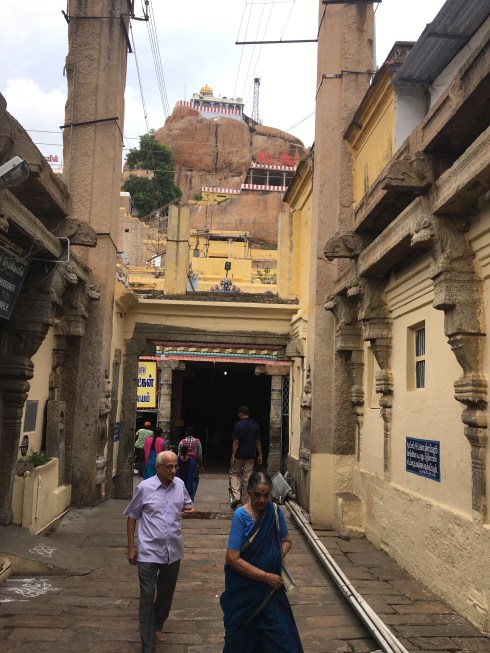
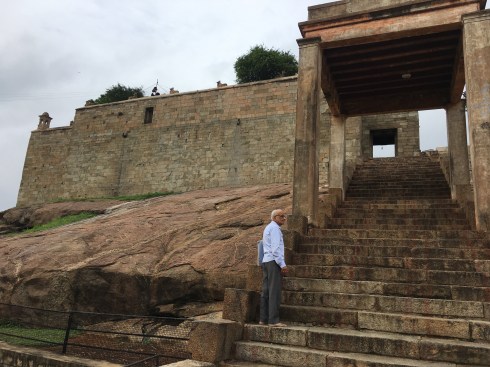
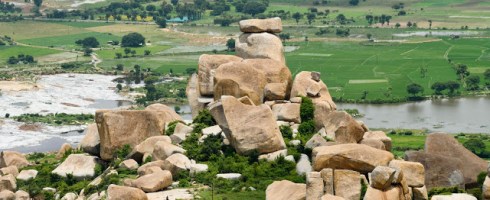
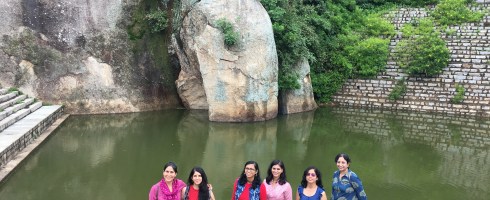
Avani is known for the Sita temple situated on a hill. This temple is one of the few temples dedicated to Sita in India. There is a belief that the sage Valmiki was residing here. Sita lived here in his ashram while in exile. Sit gave birth to her twin children Lava – Kusha here. Even today the room where Sita gave birth to her children exists. The war between Lord Rama and his sons Lava and Kusha happened in this village.

Avani is also known as the Gaya of the south and has ancient temples known as the Ramalingeshwara, Lakshmaneshwara, Bharateshwara and Shatrugneshwara, dating back to the period of the Nolamba Dynasty 

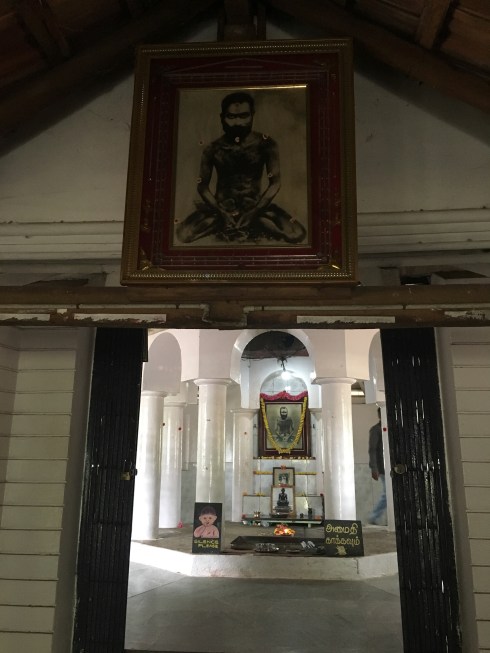
A monk from the Sringeri Peetham camped here for a few days and found an idol of Goddess Sharada in standing posture flanked by  Adi Shankaracharya and the Sri Chakra. He consecrated this idol here and established a new Matha and installed one of his shisyas as the head of the new Matha.


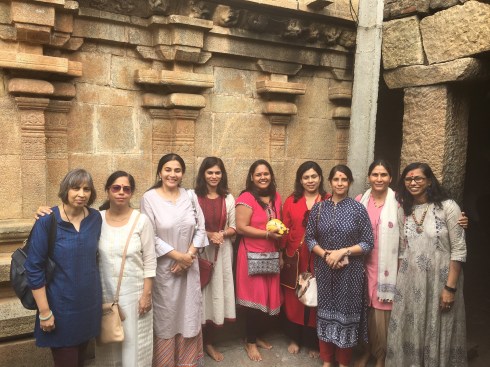
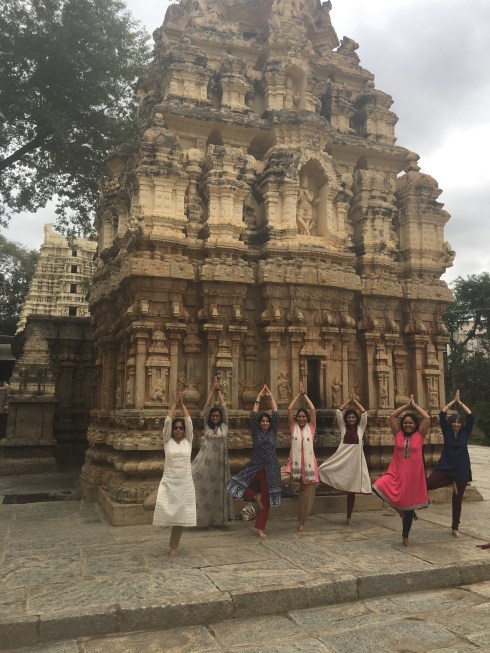
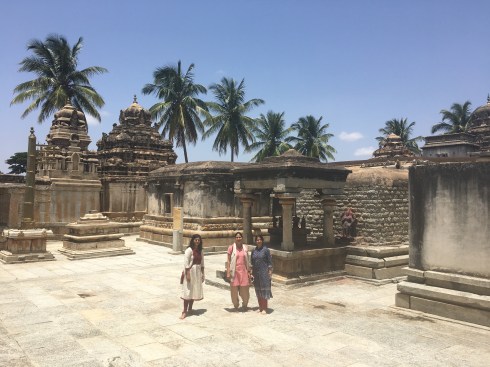
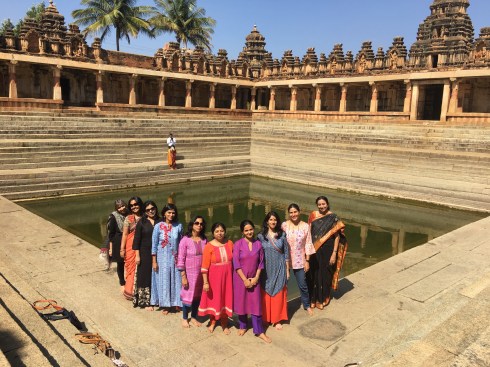
The temples are built by the Nolomba dynasty and later renovated by the Cholas. The gopurams look a bit like those built by the Pallavas. They are well maintained and the best part is they are totally empty. There are multiple small temples of Shiva each consecrated by Lord Rama &  His Brothers.

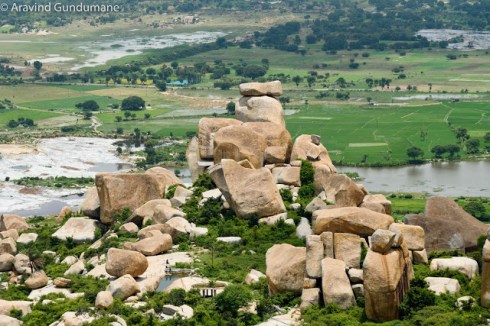
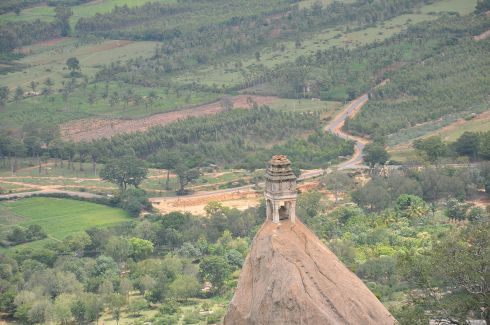
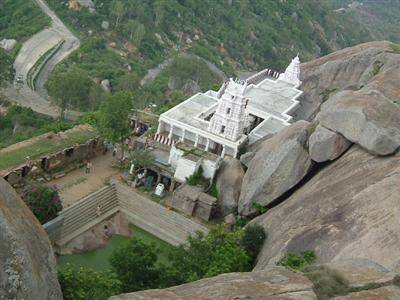
Close to the temple is a hillock which is a 2 hr trek ( up and down) and leads to caves where Sita is supposed to have lived. We reached the temple by 11.45 and with a deadline to return by 3.30 we had to keep the Trek for a later date.

            Photo Credit  http://aravindgj.blogspot.in/2017/

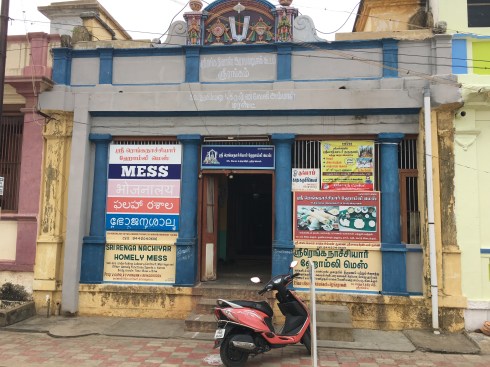
After visiting the main temple complex we visited the Sharada temple which was closed and then headed for lunch at the Mayyas complex. While coming back its on the other side of the highway – but there are gaps in the median that allows you take U Turn with travelling far. A good lunch and we left by 1.30 to reach home by 3.15 PM.

Kolar & Avani were great discoveries – so close to Bangalore, fascinating temples, lots of history & mythology, excellent roads , good food – so easy to cover in a day trip from 7.30 AM to 3.30 PM.

The trek up the hillock is pending and thats is on our To Visit list soon.

________________________

Please follow my Facebook page for regular updates on A Few Good Things 

https://facebook.com/afewgoodthingsvak1969/
For other fascinating day trips in and around Bangalore visit below

https://atomic-temporary-14030268.wpcomstaging.com/2018/07/11/explore-bangalore-21-curated-day-trips/


Malleshwaram : Day Trips in Bangalore 7.30AM – 3.30PM (Trip 8)

9 Oct

Trip – 8 :  Veena Stores – Malleshwaram temples – Kote Venkatramana Temple – Mahabodhi Society – Little Italy (7.30 AM – 3.30 PM) 

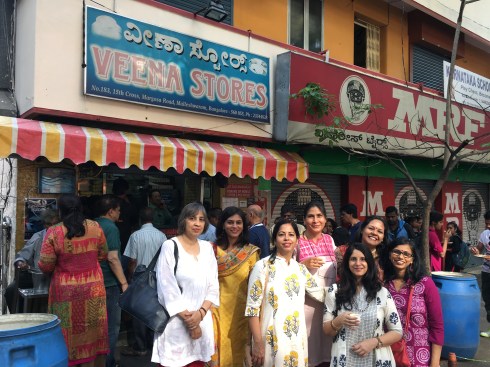
As usual we started at 7.30 AM and headed to Malleswaram via MG Road and Windsor Manor and reached our breakfast point by 8.10 AM. Malleswaram is old age Bangalore – narrow well maintained roads , smells of jasmine flowers , dotted with temples – its a good mix of TN & Karnataka – full of great economical eateries – of which Veena Stores is amongst the best. Located at 15th Cross , Margosa Road Its a small 100 sft store which serves piping hot delicious food – take away only. Weekends can be a mad rush with waiting time of over an hr as Mercs and BMW’s line up for pick up – but on Wednesday we were served in minutes. Kesari Bath, Idli Vada, Sweet Pongal, Kharabath, Filter Coffee and a few more authentic tasty dishes all of which cost 30 – 40 Rs a plate.

Malleshwaram trips in Bangalore

A few minutes drive from here is 15th Cross Rd which is home to 4 majestic temples – adjacent to each other. The Kaadu Malleshwara Temple, Sri Dakshinamukha Nandi Tirtha Kalyani Kshetra, Gangamma Temple and a beautiful Vishnu temple. The Kaadu Malleshwaram Temple dates back to 1600 AD – and was built during the period when the Marathas held sway over Bangalore and is said to have been built by Venkoji Shivaji’s step brother who found a “Swayambu” there during one of his Tax Collection drives. its a well maintained beautiful  green temple on a small hillock with lots of open spaces. There are 40 steps that lead to the temple top.

Kaadu Malleshwaram Temple

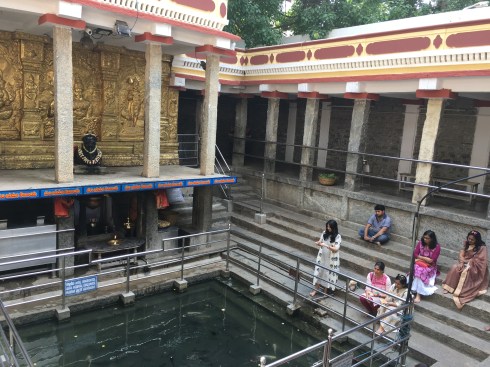
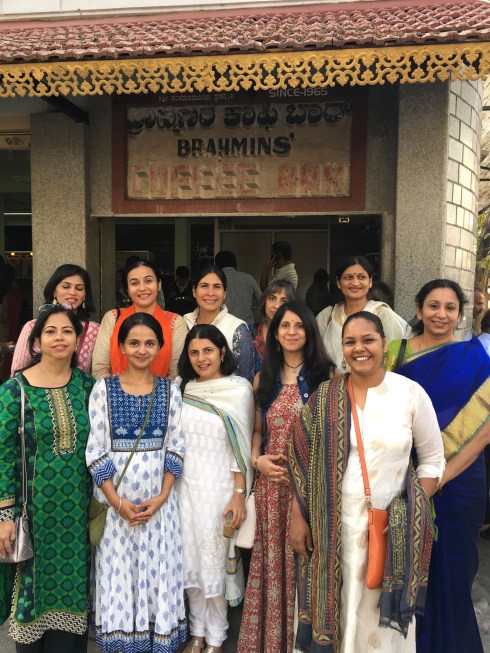
Diagonally opposite to this is a unique temple worthy of the UNESCO world heritage tag – The “Dakshinamukha Nandi Tirtha Kalyani Kshetra“. Some say this temple is 1000’s of years old and was unearthed recently. Water from the Nandi gushes on to the Shiva Lingam and then flows to a pond which some say is the underground source of the Sankey Tank. Of the 4 temples on this road – these two are outstanding and we spent most of our time here. But do visit the Gangamma and the Vishnu temple also. In all you can budget 90 – 120 minutes to cover these 4 temples. Right next to these temples is a Brahmins Coffee Bar – so if you want to grab a coffee before you head out – you can do that

Dakshinamukha Nandi Tirtha Kalyani Kshetra

Our next stop was another historical temple – Kote Venkatramana Temple. The 17th century Venkataramana temple is located near the old fort (“fort” is kote in Kannada language) adjacent to what was once the residence of Mysore Wodeyar royal family, and later became the palace of Tipu Sultan. Temple closes by 12 noon – and we made it comfortably by 11.15 AM . Its a 20 min drive from Malleswaram. The green lawns of the fort adjacent to this temple looked inviting but we decided to keep the forts and palaces visit to another day. You need a drive – as parking is an issue at all these places.

Kote Venkatramana Temple

Keeping the Fusion spirit in mind our next stop was the Mahabodhi Society of Bangalore located next to Freedom Park. A 10 min drive from the Kote Venkatramana Temple.

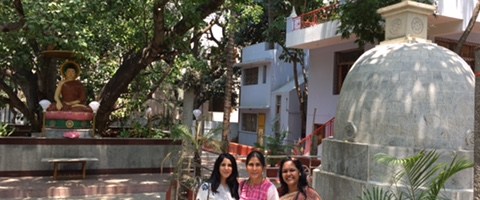
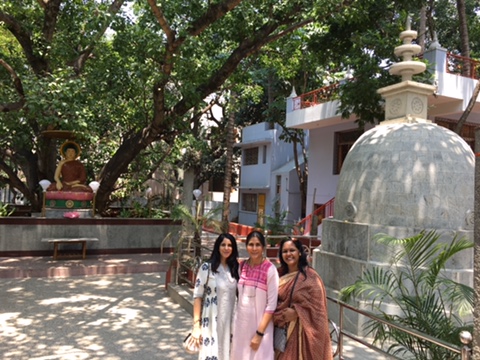
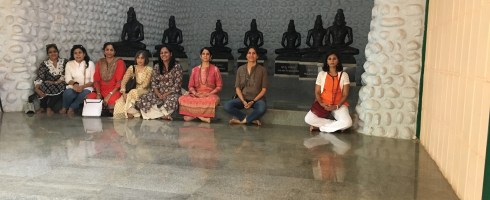
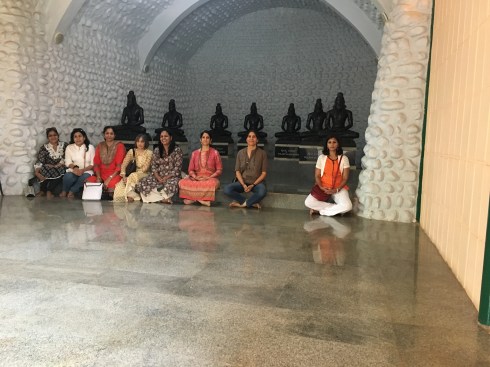
A zone of peace and equanimity – the centre has a large meditation hall , a beautiful Pipal tree, a stupa and a small garden . They also have a lovely store. This is a residential centre for Monks in Training so keep the chatter low.  If you are a meditative person you will love this place and can spend a few hrs here – but we had to move on keeping in mind our 3 PM return deadline.

Large meditation hall

It was 1 in the afternoon when we left the Mahabodhi Society at Gandhinagar and we drove past the tempting stores of Chickpet and Avenue Road heading back to Koramangla – on the way stopping for a roaring lunch at Little Italy ( Tavarkere Road near St John Woods apartment). One of the members of the group is a partner owner here and she magnified an already delicious buffet spread. The lunch buffet here is also a well kept secret – the variety of food is impressive , very tasty all of which is backed by excellent service. And to top it all its reasonably priced.

Home was a short 10 min ride from here and were back by 3 PM – we had seen some amazing places in the heart of Bangalore. This is an easy trip to replicate – packed with good food , history , architecture , mythology, spirituality and tranquility – the perfect elements for a Fusion trip.

________________________

Please follow my Facebook page for regular updates on A Few Good Things 

https://facebook.com/afewgoodthingsvak1969/
For other fascinating day trips in and around Bangalore visit below

https://atomic-temporary-14030268.wpcomstaging.com/2018/07/11/explore-bangalore-21-curated-day-trips/


Shivanasamudra ,Talakad, Somnathpura : Day Trips in Bangalore 7.30AM – 3.30PM (Trip 12)

4 Oct

Trip – 12 : Shivanasamudra – Talakad – Somnathpura (7.30 AM – 7.30 PM) 

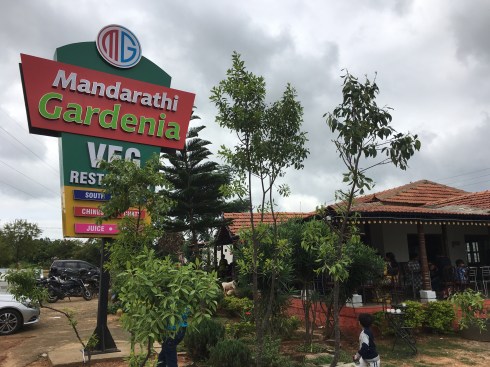
We covered a lot of ground and were almost 30 kms from Mysore. As usual we started at 7.30AM from Koramangla and reached the Nice Road by 8 AM and hit the Kanakpura Road by 8.15. Our breakfast stop was at 9 AM at a place called Mandarathi garden – a 45 minute drive from the Nice Road Kanakpura junction. Fast , efficient , economical with functional rest rooms – lunch was to be at 1.30 / 2 – so we had a heavy breakfast of Idlis. Dosas , Vadas and Coffee.

Mandarathi Gardenia

Our first halt was at the town of Shivanasamudra – which is 120 Km from Bangalore. You can reach Via the Kanakpura Road or Mysore Road – we preferred Kanakpura road – less traffic , scenic with more greenery , even if its a single road you can travel comfortable at 80 – 100 km / hr.

The town of Shivanasamudra is famous for its twin waterfalls Gaganachukki & Barachukki. River Cauvery splits into two forming a small island – which is also home to the famous Madhya Ranga temple of Reclining Vishnu – a 4000 year old temple which is part of the threesome on Cauvery – the Vishnu temples at Srirangapatnam and Srirangam.

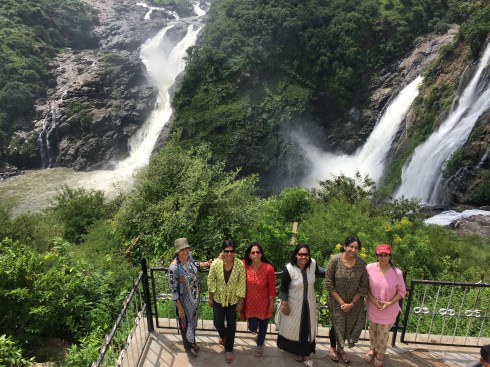
We reached Ganganchukki View point at 10.45 AM – its empty on a week day , walk down a few steps and you reach the viewing gallery for a very impressive massive waterfall. The best time to do this trip is in Sep – Oct after the rains when the waterfalls are gushing – and we were there on Oct 3rd after heavy rains. Roads are excellent – Google maps gets you to the right spot – search for Gaganchukki View point and not Shivanasamudra. The place has a small restaurant , rest rooms , a few shops selling coconut water – budget 30 minutes here.


Ganganchukki View point

From Gaganchukki we headed to Barachukki and on the way visited Madhya Ranga ( the 4000 year old reclining Vishnu temple) – a small temple under renovation and a Shiva temple where the Sri Yantra was consecrated by Adi Shankara. These temples have mythological significance but are not architectural marvels.  Ganganchukki to Barachukki is 14 Km – a 30 min drive thru small village roads in excellent condition. The View from Barachukki is equally good – the place is cleaner and there are steps that can take you right down the water body where the waterfall crashes down – sadly the step are closed and not accessible.

We left Barachukki at 12.30 and reached our next destination the Submerged / Excavated temples of Talakad – 31 kms from Barachukki – a 40 min drive and were there by 1.10 PM. Talakad has 5 temples – that date back to the Ganga / Chola dynasties over 1000 years old, the town on the banks of the Cauvery was submerged under sand on account of the curse of a Chieftains wife who was harassed by a Wodeyar king. Its a 30 – 45  min walk to cover the 5 temples , the whole place is full of sand so you may find it easier to walk by removing your sandals or shoes.

Excavated temples of Talakad

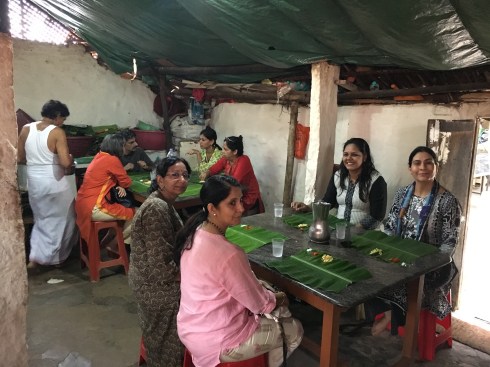
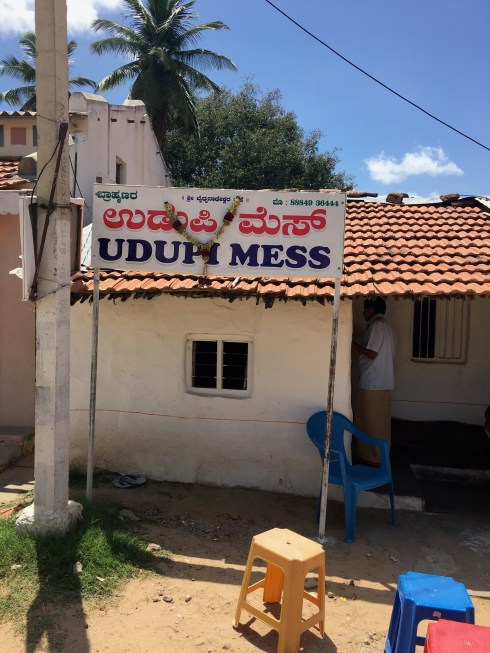
This where we had lunch at a local villagers house – its a Udupi mess , excellent tasty food served on plantation leave – normally they charge Rs 75/- but we had requested for a special meal with sweet , curd , unlimited servings – and we’re charged Rs 120 / person. The meal was a feast – Roti , Rice , two sabjis, salad , sambar , rasam , papad, curd , butter milk and sweets – and on a nice sunny day the mood was to take a nap  – but we had to move on.

Somnathpura Udipi meals

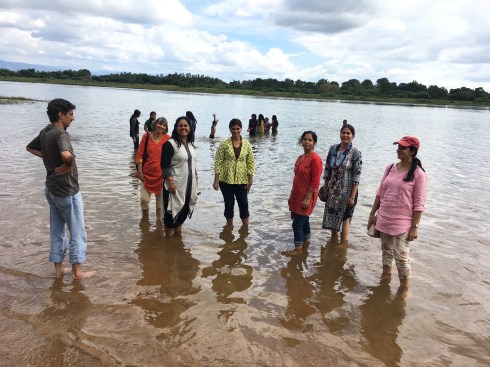
Before leaving Talakad we spent a few minutes at the banks of the Cauvery – you can take a dip or venture out for a Coracle ride if you have time. Water is very clean and the river is peaceful here.

Cauvery River

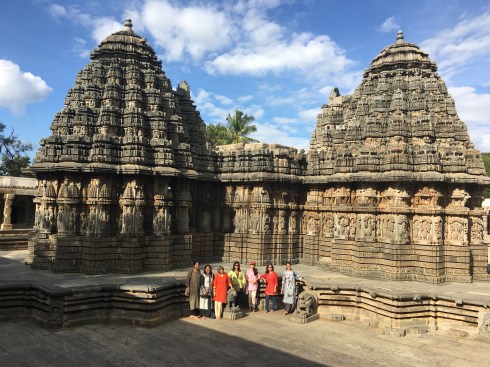
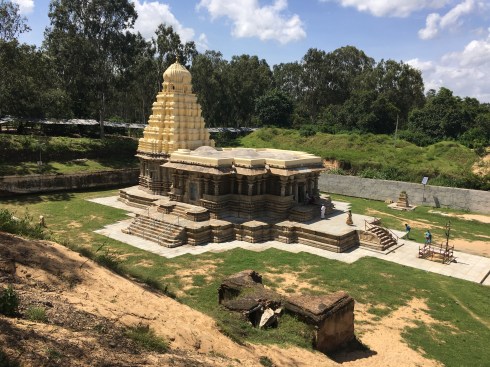
We reserved the best for the last – Somnathpura is a small village 30 kms from Mysore that is home to a beautiful  Hoysala temple from 1100 AD. The Hoysala Architecture is unique with its intricate carvings and this is one of the best examples of Hoysala architecture at its prime. A well preserved temple – sadly it was defaced by the muslim invaders and is not a temple where prayers are offered.

Talakad to Somnathpura is 26 kms – a 30 min drive – again excellent roads thru the rural hinterland of Karnataka. This is fertile Cauvery basin so the landscape is lush green , lots of lakes and ponds. We reached Somnathpura by 3.15 PM.

Somnathpura Hoysala Temple

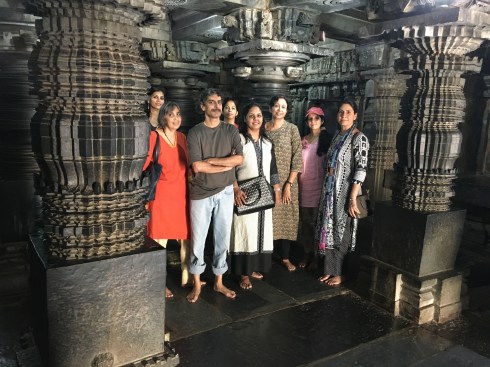
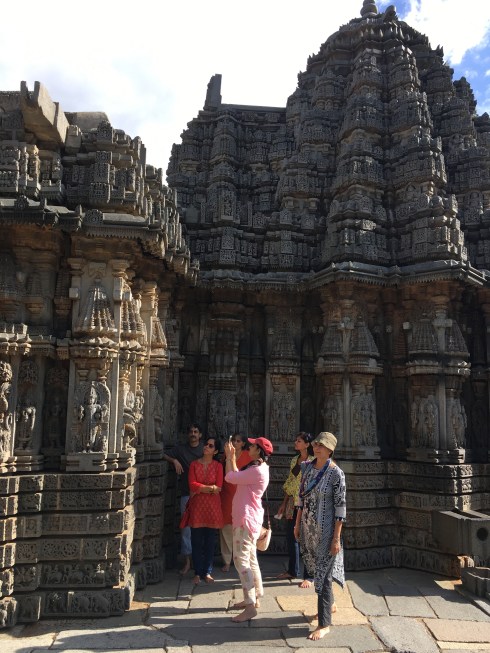
We engaged a guide for Rs 350 – who did an excellent job of detailing minutely all the intricacies of the temple. The start shaped temple with 3 tiers of intricate carvings is a treat for any history lover.

Beautiful Carvings

We left Somnathpura at 4.15 PM. We could have come via Mysore Road or by Kanakpura Road – Google Maps advised that the Kanakpura road route would be shorter by 20 min – so we zipped back the same way we had headed out in the morning – a ten min tea break at 5.45 and were at the nice road by 6.10 PM and at Hosur Road by 6.30 PM – unfortunately it was peak rush and it took us 70 minutes to cover the last 10 kms reaching home at 7.40 PM.

We had accomplished a lot in the last 12 hrs – driving almost 350 Kms. The per person cost was Rs 1025/-.

One last thought I am left with  after driving in the rural heartland of Karnataka. There is a lot of development in Rural Karnataka – its only Bangalore ( specifically Koramangla) that sucks – if the Govt can build rugged roads in rural Karnataka that has survived well this years rains ( we did not encounter a single pot hole as we zipped at 80 – 110 km / hrs thru the villages) wonder why our roads in Bangalore need surfacing every year. Maybe thats the game plan of the Siddaramaiah government – focus on the villages and ignore the City that provides 80% of the states revenue – after all 25 seats from Bangalore don’t make or break the Government.


Please follow my Facebook page for regular updates on A Few Good Things 

https://facebook.com/afewgoodthingsvak1969/
For other fascinating day trips in and around Bangalore visit below

https://atomic-temporary-14030268.wpcomstaging.com/2018/07/11/explore-bangalore-21-curated-day-trips/

Some more photos 

Shivanasamudra

Udupi Mess


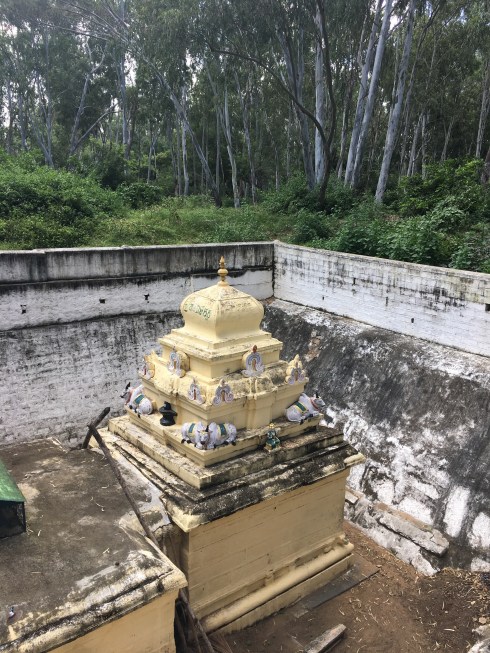
Temples in Shivanasamudra


Best Temples near Bangalore

Hoysala temples carvings


Lepakshi & Shivaganga : Day Trips in Bangalore : 7.30AM – 3.30 PM (Trips 6 & 7)

26 Sep

Trip – 6 : Visit to Lepakshi 

Located 120 Km from Bangalore – on the Bangalore Hyderabad road , beyond Devanhalli is the Lepakshi temple. The road is excellent – we left at 6AM and after a relaxed breakfast at Sri Krishna Grand ( You will find many restaurants after you cross the Airport Toll on your left side) we reached by 8 AM.

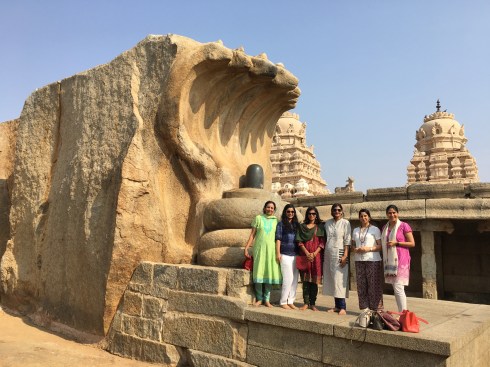
Lepakshi is a medium sized temple complex –  you can park the car right in front of the temple and enter in a few steps. As per Mythology this was the place where Jatayu fought against Ravana as he was carrying Sita. The main temple is dedicated to Virbhadra and was built during the Vijaynagara reign.Virbhadra is a fearsome form of Shiva. He was created by the wrath of Shiva and destroyed the Yagna  of Daksha, after Daksha’s daughter and Shiva’s consort Sati self-immolated in the sacrificial fire. The temple also has an Altar for Durga and Lord Rama. A small room led by a narrow alley is said to be the place where Sage Agastya meditated.

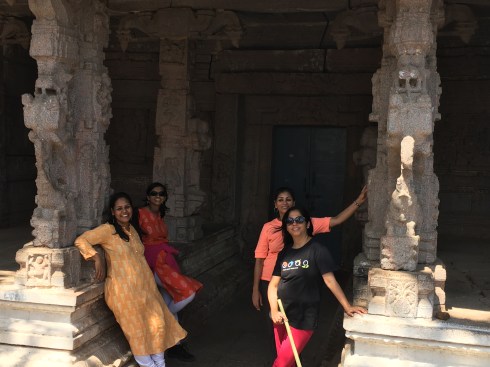
Its a semi finished temple – the main Sanctum Sanctorum area is complete but the courtyard and Kalyana Mandapa is unfinished. The main temple has intricate carvings the inspiration for many textile designs and the famous Lepakshi hanging pillar.

Lepakshi temple

A 30 min drive from here is a place called Vidurashwatha. This is a small village known for the Ashwatha tree which is believed to have been planted by Vidura.  The tree fell down in 2001. But part of the trunk is still preserved.  It is interesting to see hundreds of Nagadevata idols installed around the tree. Don’t forget to visit a small memorial built for 35 freedom fighters who lost their lives when police opened fire on them. This incident is knows as Jallianwala Bagh of South India.

The roads were excellent and we were back in Bangalore by 11.30 – Lunch at the Orchard Hotel on Palace Orchards , a short stopover at the Chitra Kala parishad and were back home by 2.30.

(Lepakshi temple is in Andhra – can be very hot in summer , best time to travel is Nov – Feb)

Trip – 7 : Shivaganga Trek 

Shivaganga known as Dakshina Kannada is a Shiva Linga shaped 2700 feet peak located about 75 km from Bangalore near Tumkur at Dobaspete. The place is famous for its ancient temples and as a Trekking destination.

We departed Koramangla at 6 AM and reached Shivaganga at 8 AM after a nice breakfast at Shree Rathnam a nice and efficient Veg restaurant – It has a big inviting poster and you can’t miss it. (The restaurant is located after a 10 – 15 min drive post the 2nd toll). As you drive out from the restaurant look around for a flyover and take the access road and then a left – don’t go up the flyover.

There are three sets of temples – the 1st is a 10 min walk up – the path forks , the right side goes to the Gavi Gangadeshwar , Devi Temple and Patalganga , while the left side is the way up the hill. Legend has it that there are underground tunnels that connects this temple to the Gavi Gangadeshwar temple at Basavangudi.

Temples in Shivaganga

At the halfway mark – about 1 hr of trekking you reach an ancient Virbhadra temple and a underground water tank called Okkal Theertha. These are all cave temples and the priest claims that the idols are thousands of years old.  The views are beautiful and it was breezy all thru the trek. ( there are two ways up – the shorter route bypasses the temples in the middle )

Virbhadra temple in the hill

As you near the top of the hill you will see a massive Nandi and at the summit there are two small temples. The oral also has the suicide drop point – from where queen Shanthala a Hoysala queen committed suicide.

The trek is a medium grade trek – takes about 90 minutes one way . Total distance is ~ 2 Km one way. The trail has rock steps for almost half the distance, the last 15 – 20 minute stretch is very steep. There are monkeys all around – so do carry a stick to scare them and don’t carry and food items in your bags. There are shops on the way for water and juice.

Trekking in Virbhadra temple

We started  our climb at 8AM – reached the top by 9.30 , spent 30 min at the summit , had a few glasses of refreshing lemon water and were back at the base by 12 noon. On the way back we had lunch at the Orchard Hotel near Place Orchards and were back home by 3 PM.

The temples open only by 9 AM – so on the way up you may miss it. Weekends tend to be crowded – I have been there on a Wed and a Saturday. Its empty on weekdays. Summers can be warm – Nov to Feb is the best time.


Please follow my Facebook page for regular updates on A Few Good Things 

https://facebook.com/afewgoodthingsvak1969/
For other fascinating day trips in and around Bangalore visit below

https://atomic-temporary-14030268.wpcomstaging.com/2018/07/11/explore-bangalore-21-curated-day-trips/


City Temples & More : Day Trips in Bangalore : 7.30 AM to 3.30 PM (Trips 4 & 5)

17 Sep

Trip 4  : A city trip in and around MG Road (Suryanarayana Temple – Someshwara Temple – National Gallery of Modern art – Planetarium) 

We started at 7.45 and our first stop was the Sun Temple at Domlur. This is probably Bangalore’s and India’s cleanest temple. It feels like a 5 start hotel with green polished marble maintained spotlessly clean. Its a short 10 min drive from Koramangla ( if the Inner ring road is not jammed) – the temple is built and managed by a Reddy family. the Main deity is the Sun God – Surya , but there are idols of Saturn – Shani , Vaishno Devi , Lord Rama, Ganesha and the Navagrahas. You can access the temple from the airport road or the Inner Ring Road (Take a left at Murugan Idli on the IRR and it takes you right to the temple). On a Wednesday at 8 AM we had the temple to ourselves.

Sun Temple at Domlur

A quick stop for piping hot Idlis and Kesari at the Udupi joint on Indranagar 100 feet road and we headed to the narrow bylines of Ulsoor to visit the ancient Someshwara temple – built by the Cholas over a 1000 years back. The temple was forgotten by Bangalore until the UK premier came to Bangalore and made a visit. Its in decent shape and the sanctum sanctorum is highly energised. Lucky for us as were inside the current went – and it was beautiful to be in the heart of the temple with only the  Diyas giving you light that was ethereal.

Someshwara temple built by the Cholas

We completed breakfast and the Someshwara temple by 10.30 and headed to the National Gallery of Modern Art near Cunningham Road – a short distance but in the Bangalore peak traffic it took us over 30 minutes. The NGMA is a wonderful place for art lovers. Its large , green and serene and you are lucky if there is a exhibition on display. they also have a small cafeteria which serves some lovely snacks and fresh juices. Depending on your interest in Art you could spend time here –  1 hr is sufficient for an amateur.

National Gallery of Modern Art near Cunningham Road

From here we rushed to the Planetarium – we have all visited a Planetarium as children or with our kids but it was a nice experience to bring the child in you alive to visit as adults  in a hall that was packed with school kids. They have shows in English and Kannada – book tickets in advance to avoid disappointment. Our show was  delayed by 30 min which cost us our stop over at Russel Market – we finally left at 1.15 for lunch at Sunheri –  Woodlands on Raja Ram Mohan Roy road app ITC Gardenia. The still serve you a royal meal at a very reasonable rate. Post lunch we left at 2.30 and were back home at Koramangla by 3.15.

Trip 5  : A city trip (Chokkanathar Perumal Temple – ISCKON Temple Banaswadi – Sapta Rishi Ashram Hennur) 

A wonderful trip that started with a sumptuous breakfast at Krishna Cafe. A small restaurant in Koramangla near Anand sweets that serves delicious authentic South Indian dishes ( Tamil style). From here we headed to our first stop. The Chokkanathaswamy temple, at Domlur  is one of the oldest temples in the city, dating to the Chola period of the 10th century AD. Inscriptions (in ancient Tamil script) on the stone walls of the temple indicate that the main deity is “Chokkaperumal” – Lord Vishnu with his consorts Sreedevi & Bhoodevi. They also indicate that the idols are made of saligrama stone, which is obtained from Nepal. The ancient temple was extensively renovated in the 1970’s – but the main Sanctum Sanctorum is preserved in its original form. Its a small but highly energised temple and when you sit inside close to the beautiful decorated idol with the chants of Vishnu Sahasranama it is a divine experience. You can cover this in 15 – 20 minutes.

Our second stop was an ISKCON temple. When you mention ISKCON Bangalore you automatically think of the temple on top of a hill in North Bangalore near Yeshwantpur. The one we visited at Banaswadi ( HBR Layout) was wonderful – Called “ISKCON Narasimha-Giridhari Mandir ” it is the house of Sri Sri Lakshmi Narasimha & Sri Sri Gandharvika Giridhari. A beautiful temple spread across two levels it has a lovely Goshala.  Budget 45 minutes here.

ISKCON Narasimha-Giridhari Mandir

Our third stop was a unique place – most people in Bangalore would not have heard of Sage Amara a divine light worker who had the blessings and the Guidance of the Sapta Rishis. In 1935, Maharshi Amara meditated for 24 days and nights on a nearby hillock when he saw a huge light falling from the sky near Taponagara. Then, it was revealed to him that a special Spiritual Centre would be established by the Light Masters here.

Maharshi Amara Spritual Centre

Manasa Foundaton is established in a newly budding township called Taponagara, by the side of a tiny village called Chikkagubbi which lies one kilometre off Hennur-Bagalur Road, which leads to new Bengaluru International Airport. Taponagara is about 20 KMs away from Bangalore city, India. Taponagara has the Head Quarters of the Path called Manasa. One Kilometre away, in another village called Gollahalli, the Study Centre is established. This area is known as Antar-Manasa.

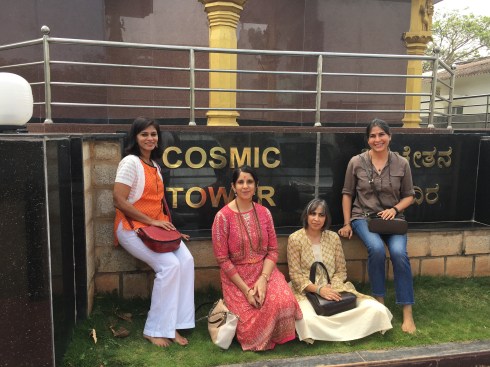
Taponagara has two important structures: Kundalini Tower where special Kundalini energy brought down from the Higher Plane of Adi Shakti is placed under the ground and the Cosmic Tower which has two pyramids, one inverted pyramid sitting on the other containing the energies and entry points into the Higher Planes.

Cosmic Tower Taponagara

You can easily spend a day here if you are into meditation , there are many places which are designed for deep meditation. We spent over an hr and then headed back. No good restaurants at Hennur or on the Outer Ring Road and we made the mistake of stopping at Phoenix Markectcity for lunch – the traffic was madness , we should have avoided this and come back for lunch to Indranagar or MG Road.  But as per plan we still made it back home at Mantri Classic Koramangla by 3.15 PM

________________________

Please follow my Facebook page for regular updates on A Few Good Things 

https://facebook.com/afewgoodthingsvak1969/
For other fascinating day trips in and around Bangalore visit below

https://atomic-temporary-14030268.wpcomstaging.com/2018/07/11/explore-bangalore-21-curated-day-trips/


Pyramid Valley, Bhoga Nandeeshwara, Gave Gangadeshwar ++ : Day Trips in Bangalore : 7.30 AM to 3.30 PM (Trips 1 – 3)

13 Sep

I discovered after nearly 25 years in Bangalore that the city  has a plethora of amazing sights that can be covered in less than a day. We call it the 7.30 to 3.30 trip. Leave after the school bus departs and be back at home when the kids return. Thats what we have been doing discovering amazing places in and around Bangalore. Here are the first 3 curated trips.

Trip – 1 : Pyramid Valley , Kanakpura Road

Pyramid Valley is a serene and peaceful place full of greenery. Its like an Ashram – you can meditate, be by yourself , even stay there and attend some programs. I have been wanting to attend their full moon meditation session. The place is the Karma Bhoomi of its Founder Brahmarshi Patriji.

Departure from Koramangla 7.45 AM , Arrival 9.30 AM ( We could have reached faster by the NICE Road – avoid the BTM / JP Nagar , Kanakpura Road – it was jammed – maybe better now with the Metro)

Google maps will take you to this place – its a small detour from the Kanakpura main road on your left – there are signs and it comes after you cross The Art of Living ashram.

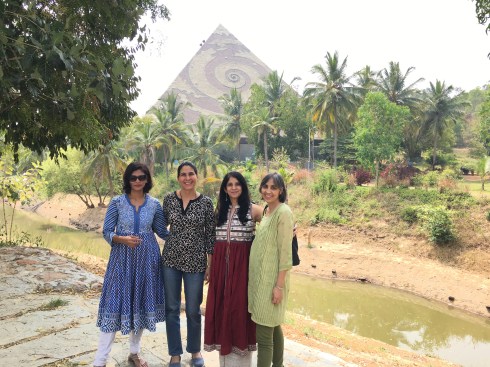
Watch a Video explaining the concept of the Pyramid Valley and the meditation techniques taught there and then enter the massive 160 ft X 160 ft Pyramid – supposedly the largest in the world for meditation. They claim that the intensity of meditation inside a Pyramid is 3 times higher. And yes the Meditation is indeed intense at the topmost raft right below the cone of the Pyramid. Visit the store and then drop by at the Cafeteria for a wholesome snack. they also serve free lunch at around 1 in the afternoon.

We had some Upma & Coffee and then on the way back stopped by at JP Nagar – at a nice homely place for Pasta and were back home by 3 PM.

http://pyramidvalley.org/about-us/


Trip – 2 : Bhoga Nandeeshwara Temple , School of Ancient Wisdom (Near the Airport) 

On the foothills of the Nandi Hills – an outstandingly beautiful temple with intricate sculptures that is over 1000 years old and was developed by multiple dynasties over centuries – The Cholas, Pallavas, Hoysala’s, Ganga and the Vijaynagar empire  – and you can see their unique architecture styles in the three sanctum sanctorum’s of the temple that houses Lord Shiva in his 3 forms – as a child (Arunachala)  , youth (Uma Mahesh)  and Adult (Bhoga Nandeeshwara) The Chola Pillars, Pallava Stupas ( similar to the Shore temple) and the intricate carvings of the Hoysalas adds to the grandeur and peace of the temple. This temple is one of Bangalore’s best kept secrets – if in the US this would have been a UNESCO world heritage site.

The shrine of Arunachaleshwara representing Shiva in his childhood it was built by the Gangas, Uma Maheshwar was built by the Hoysalas and Bhoga Nadeeshwara was built by the Cholas.

A very well maintained temple, spotlessly clean, with a beautiful tank that is supposed to be the source of a small river – you can easily spend 90 – 120 minutes enjoying the beauty of the place.

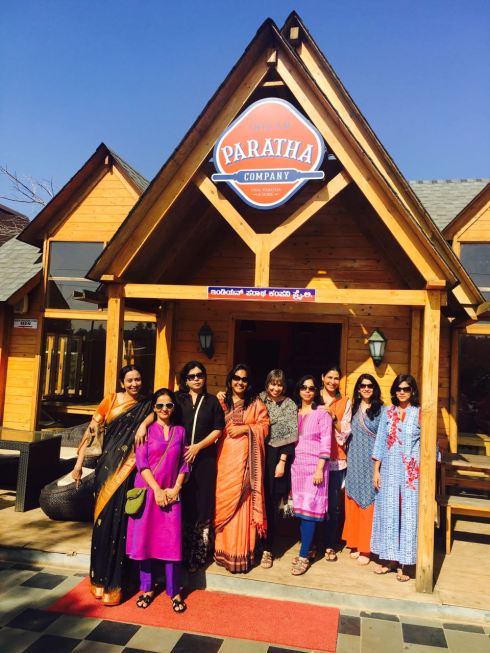
We left Koramangla at 7.45 AM and reached our breakfast joint – Indian Paratha company at 8.45 AM. This place is located on the Bangalore Hyderabad highway just after you pass the Airport. Being a Wednesday it was empty  – the Parathas here are outstanding and the service was excellent. (Weekends the place gets really busy)

From here the drive time to Bhoga Nandeeshwara is less than 30 minutes – we were at the Temple by 9.45 AM. Departure from Bhoga Nandeeshwara at 11.30 AM and reached our next stop – The School of Ancient Wisdom on IVC road by 12 Noon.

The School of Ancient Wisdom is a doorway to transformation and enlightened living. Its a mystical place that was founded by the saintly  Manize Sait (Late)  under the guidance of the masters. Its a centre where the belief is on the concept of energy – and Ram one of the founders of the place was an excellent guide. We had a lovely veg lunch here and left by 2 and were back home by 3.30. (You have to inform them before hand if you plan to have lunch here)

Trip – 3 : Brahmins Cafe – Ramkrishna Ashram – Gave Gangadeshwar Cave Temple – Jain temple  

This trip was in the heart of Bangalore in and around Basavangudi.

7.45 AM we left Koramangla and we reached our first stop – the Legendary Brahmins Cafe . You have limited option of dishes – Idli, Vada, Upma, Kesari, Coffee. They serve only Chutney – but its the tastiest Chutney you can eat. A standing joint the food is tasty and the service is very efficient.

Less than a km from Brahmins Cafe is the Ramkrishna Mission Ashram in Basavangudi. A well maintained green enclave which has a large meditation hall , a rock commemorating the spot where Sarada Devi meditated, and a rock bench on which Vivekananda was supposed to have spent time when he visited Bangalore.

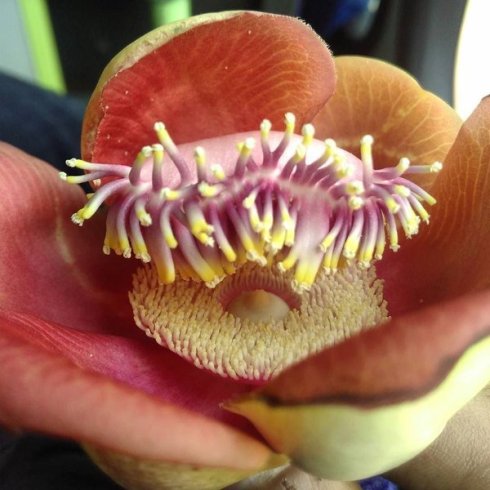
This is where we found a unique flower – which has a hood and a small Shiva Linga in it. The Couroupita guianensis, known by a variety of common names including cannonball tree  is sacred to Hindus, who believe its hooded flowers look like the nāga, and it is grown at Shiva temples.

The centre also has a large book store that has an excellent collection. ( Budget 30 – 45 min at the Ramkrishna Ashram) – added advantages clean bathrooms and very convenient parking.

Next stop was the Gavi Gangadeshwar Temple – a rock cut cave temple of Shiva where the Linga is a Swayambu and every year on Jan 14th the light rays mysteriously fall on the Shiva Linga from a narrow gap in the windows . A narrow tunnel behind the Shiva Linga is home to many ancient sculptures of Gods and Rishis and the priest claims that there is a hidden tunnel between the temple and Varanasi. He also added that the temple was from the Treta Yuga and more than 5000 years old. The temple has astrophysical relevance and is highly energising.  We visited the temple on Jan 11th on Thiruvathirai (Arudhra Darisanam) – surprisingly the temple was empty and getting ready for Jan 14th. It would have been impossible to visit a famous Shiva temple in Tamil Nadu on this day.

(For more details http://www.livemint.com/Sundayapp/X3uvXrojiRaPr31fhf6IQI/The-mysteries-of-Bengalurus-famed-Gavi-Gangadhareshwara-tem.html)

Right next to the temple is the Samadhi of Narayan Maharaj an enlightened soul. A short walk from here on a hilltop is a Hanuman Temple. During his exploration of the area of the town he was planning to build, Kempegowda-I came across the hillock housing the swayambu Anjaneya Swami in the Karenji area. He built the Gharbhagraham for the Anjaneya Swami and also arranged for the performance of the Pranaprathista of the deity. He made arrangements for the performance of the daily pujas in the temple. It is believed that Janamejayan, the grand son of Abimanyu, had done penance at the hillock in which Anjaneyaswamy’s idol is located. (Budget 30 – 45 minutes) and then we headed to our next stop – the Jain temple at Basavangudi. Budget 30 minutes here.

And we wrapped up the busy morning with lunch at Kamath Bugle Rock – a place that serves excellent North Karnataka food. We covered a lot of ground between 7.30AM and noon and could do justice to the excellent meal. Departure at 2 and we were back home by 3.

________________________

Please follow my Facebook page for regular updates on A Few Good Things 

https://facebook.com/afewgoodthingsvak1969/
For other fascinating day trips in and around Bangalore visit below

https://atomic-temporary-14030268.wpcomstaging.com/2018/07/11/explore-bangalore-21-curated-day-trips/


Relocating to Bangalore – Think Again !

24 Aug

Whats the trigger to writing this blog – When a 1 km drive from home to my daughters drawing class takes 30 minutes its time to vent your frustration. (You have to drive because there are no footpaths , the roads are full of potholes and choked with traffic)

A lot has been written on Bangalore’s infrastructure – but its no longer collapsing, its collapsed. Every month thousands relocate to Bangalore – to them I have to say STOP – Bangalore is choking, we are sold out , no waiting list , no RAC.  In the late 90’s I used to joke with my friends in Delhi – relocate to Bangalore now or very soon there will be a Visa – I wish the Visa had come ten years back

Lets look at a few facts

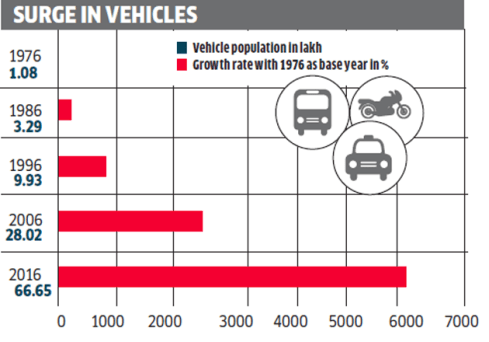
The current vehicle population in Bengaluru stands at 67.22 lakh. In the absence of an efficient public transport system, private vehicles dominate the city’s landscape. There are 46.54 lakh twowheelers (70%), 13.01 lakh cars (19%), 1.35 lakh taxis and 1.71 lakh autorickshaws. All this, with a population of a little over one crore.

And the population is exploding. Close to 10 M Bangalore’s population today is in excess of Chennai & Kolkatta put together. That is colossal. I recollect in 1992 when I was graduating and my 1st company gave us a choice of  selecting a city – I toyed between Pune, Ahmedabad & Bangalore – as they were Tier 2 Cities 

Today Bangalore ranks in the list of Top 3 Metros. Which is great –  but it has the infrastructure for a population of less than 5 M. The IT Boom and now the eCommerce wave has created millions of jobs , real estate rates have boomed, investors , politicians and builders have made billions – but in the process the city has been raped.
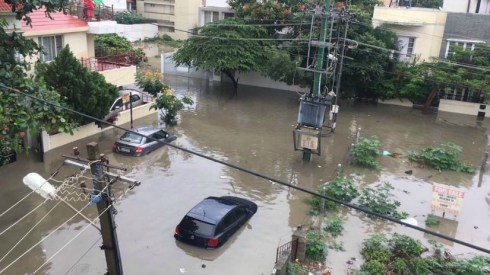
This is a photo of ST Bed (Srinivagulu Tank Bed) – in Koramangla 4th Block where I live. Its one of the most sought after expensive localities in Bangalore – Apartments sell  at 10 – 12,000 / sft and a 3 BHK rents for over 50,000. The average speed of traffic anytime between 7 AM and 9 PM is less than 5 KM / hr. To cross the Sony Junction signal will take you 20 – 30 minutes. The narrow roads and by-lanes have cars parked on both sides including the footpath – so less than 50% of the road is available for motoring. The drains are choked – and when you have an entire locality built on a Tank Bed you can imagine what happens when it rains for a few hrs. What you see below is the effect of 3 – 4 hrs of rain. Not a storm or cyclone that went on for 3 – 4 days. With this comes sickness – one of every 5 households in Bangalore has been hit by Dengue this year – you cannot sleep without spraying Hit, even at 530 AM when I step out I need to apply Odomos.
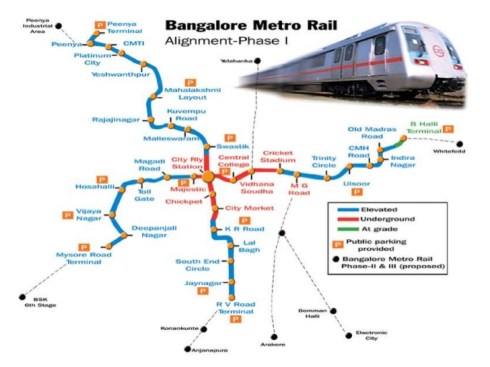
Yes Bangalore has a Metro. Namma Metro with a Phase – 1 length of 42.3 Km – probably the second largest metro after Delhi. It started late and Phase 1 was completed recently – a delay of many years. The metro should have happened in 2010 – but better late than never.  Its made an impact in places where it has come – the 2 wheeler and Auto traffic has reduced significantly. But look at the map and see what are the areas covered in Phase – 1 ?
The biggest residential &  office hubs in Bangalore housing thousands of office and millions of daily commuters are E City , Koramangla , Outer Ring Road , White Field , Bannerghata Road, Sarjapur  – Namma Metro Phase – 1 does not touch any of these parts. The result a drive from Koramangla to Whitefield a 15 km distance will take you a minimum of 2 hrs. The frustrating part is when you go out of station and drive 300 Km in 3 hrs and then the last 15 kms to get home takes 2 hrs. The Railways have planned it beautifully – as you get to a junction or main station the number of tracks increase – they need to do the same for the roads – a 4 lane road getting into Bangalore needs to become a 12 lane road.
It may be a coincidence but Namma Metro Phase – 1  covers most of the old city and the areas which have a higher density of the local Kannadigas. Koramangla, Whitefield, Sarjapur, Bannerghata Road are packed with IT workers – mainly Immigrants. In our apartment of 124 flats not even 5% are locals. Thats the story with all these localities. There is utter neglect of these localities. The nice broad roads , world class “Tender For Sure” footpaths, Metro – all of them exist but in Central Bangalore , Malleshwaram , Jaynagar , Basavangudi, Palace Grounds . These localities have Cauvery water and decent electricity supply.
Bangalore desperately needs some zoning laws. Residential houses on 30 ft X 40 ft plots have 4 stories – so the cars spill over to the roads , worse many of them are let out to companies. between these cars and the UBER / OLA’s the roads are jammed 18 hrs a day. God forbid a major fire or a medical emergency in these areas.
The lightest of Drizzle and the current is cut in Koramangla. Fortunately we have a Genset in our building – but as the current keeps coming and going it plays havoc with your electronic devices. While watching a 2 hr movie last week I timed that the current kept tripping 9 times. The Cauvery water does not meet even 25% of your requirement and the rest is managed thru Tankers ( In many localities 100% of the water supply is thru Tankers)
With 30% of the Bangalore Population being Tamilians there is no Saravana Bhavan here – wonder why ? the annual Cauvery water fight would have resulted in them being easy targets of demolition by local goons. But does Bangalore need Cauvery water – a City that has been bestowed with so many lakes. The city in its heyday had more than 250 lakes. In the 60’s with a population of less than 1 mn , full of green cover and hundreds of lakes – Bangalore was a Hill Station. The lakes are gone – its either Apartments or Offices or Golf Courses that are built on the lakes and storm water drains.
The lakes that are left are dying – they are choking with pollution and weeds. And there is total apathy at fixing this mess. The NGT has issued multiple deadlines to fix the frothing and fuming Varthur lake – but sadly there is no accountability. So the next time a builder solicits you with a lake facing apartment – think twice , the beautiful lake picture in the Ad may be from the 60’s – what you may actually get is something below.
Bangalore is jinxed – God has been kind in bestowing Bangalore with excellent weather , lakes , greenery , hundreds of lovely weekend getaways – but in the last 20 years we have destroyed it. Lalbagh and Cubbon park came up during Hyder Ali and the British – in the last 20 years not a single new large park has been established.
Its one of the few states where the State and the Central government are never in sync.
BBMP one of the largest city budgets after Mumbai – but one wonders where the millions are spent. The roads and drains are fixed every year and they hardly last for a few months. I wish an investigation journalist would compare the money spent on Bangalore Roads in the last 10 years with any other city ( Indian or International)
In the last BBMP elections the current CM requested the people to give him one chance to make Bangalore a golden city – he got the chance in a messed up coalition with JD(S) – the result is there for everyone to see. The future looks bleak – young dynamic BJP chief Ministers like Fadnavis and Adityanath are driving development and change – when it comes to Karnataka BJP has chosen Yedivuruppa – a sad choice.
In a way the IT bust is good for Bangalore – hopefully this mad growth will slow down. A few years back Villas in Whitefield ( the famed Palm Meadows and Prestige Ozones) would rent for a few Lacs and there were none available for sale even at a million dollars. Today 25% of these villas area available for rent at less than 50 K / month –  and there are no takers – a sharp drop from its heyday rates. With almost 30% of the Real Estate in Bangalore locked up – its a matter of time before the prices crash. Rent to Investment ratios are less than 2% – one of the lowest yields in the country.
Between the IT Slowdown , RERA and the collapsing Infrastructure lets hope the jobs and people migrate to Hyderabad and Amravati and Bangalore can slowly but surely get back to its feet as a livable city.

Journey to the Valley of Flowers

14 Aug

Nature rewards you after hard work. Getting to the Valley of Flowers in the middle Himalayas is a very long journey – almost 3 days from Bangalore. Its a trip that requires planning and getting in shape – but eventually the reward is worth the effort. For anyone wanting to make a trip to Valley of Flowers and Hemkunt Saheb this Blog will provide all the details.

A quick Summary of the trip

  • The journey : Bangalore – Delhi – Dehradun – Haridwar – Joshimath (6050 feet) – Gobind Ghat – Pulana – Ghangria ( ~ 9500 feet) – Valley of Flowers ( 9500 – 12000 feet) – Hemkunt Saheb (14500 feet)
  • Almost 50 kms of trekking ( I did 35 by trek and 15 by Mule) which treats you to Fresh air & Divine views
  • 25 hrs of driving in the rugged Himalayan landscape – we travelled in the monsoon and witnessed at least 25 landslides – by divine grace we were not impacted by rain or landslides and sailed thru smoothly.

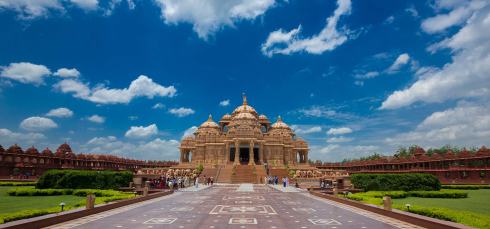
You can do this trip in 8 days but I decided to spend a few days at Gurgaon to meet friends and visit the Akshardham temple – A masterpiece where you can easily spend 4 – 5 hrs. Having travelled to Delhi so many times in the past 15 years this was one landmark that I had not visited. The story of the young sage Swami Narayan is fascinating and has close similarities to that of Shanakrachary. We missed the fountain and the light show in the evening – but I am sure I will come back to this well maintained energised place.

Swaminarayan Akshardham, New Delhi

Day 0 : Bangalore – Delhi – Haridwar 

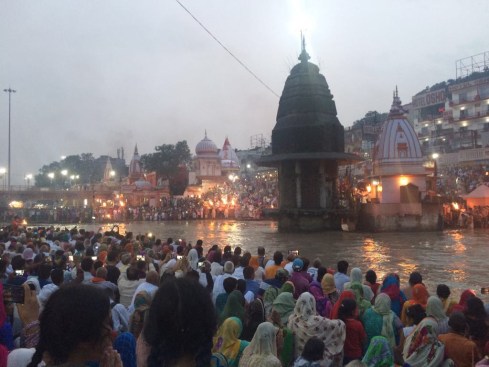
My friends house at Gurgaon is also a temple – so much of peaceful energy, and it was a great start to an exciting 8 days ahead. He was kind enough to drop me at Platform 16 Ajmera Gate, Delhi Dehradun Shatabadi. This is the last platform – so if you get dropped on the other side of the station its a very long walk . I reached Haridwar at 11.45 and was in my Hotel by 12.45 ( Regenta Hotel – Royal Orchid on the Haridwar Rishikesh Road). My friends from Bangalore had taken the morning flight and they also reached the hotel by 3 PM. That evening we stopped by the Sapta Rishi Ashram and the Adhbut Mandir on the way to Har Ki Pauri to view the Ganga Arti. Aug is not busy season, because of monsoon and the “kavad” season is over  – the Ganga was in spate, frothy and muddy. Haridwar is a chaotic place and the Ganga Arti at the Har Ki Pauri  was a shade compared to what I had seen in Varanasi or even Rishikesh. (Lord Shiva and Lord Vishnu are believed to have visited the Brahmakund in Har Ki Pauri in the Vedic times). For all the noise we make on Hindutva it would be good if Indian temples and places like Haridwar , Rishikesh and Varanasi are kept as clean as the Vatican or the Golden Temple. On our way back we had a tasty dinner and had an early sleep (Given the long travel ahead I made it a point to eat light and avoid gravy / spicy food all long )

Day – 1 : Haridwar – Joshimath (278 Km – 12 hrs drive) 

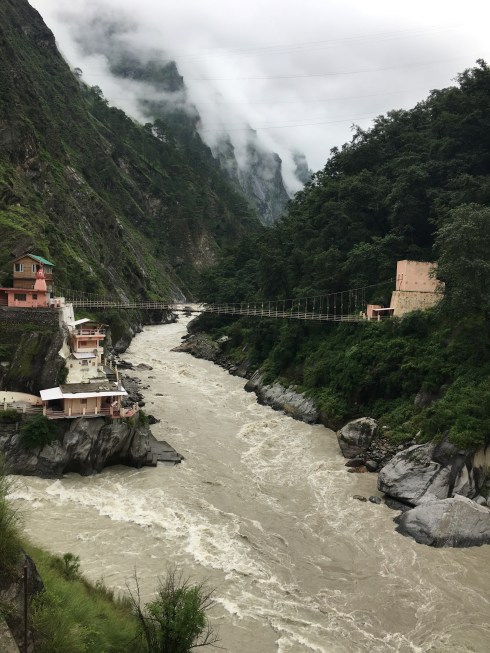
We left our hotel at 6 AM and reached Joshimath at 5.30 PM. The journey was pleasant – our 14 seater Tempo Traveller had only 9 – so there was enough space to stretch your legs. Enroute we crossed Rishikesh – Dev Prayag ( Bhageerathi & Alaknanda confluence) – Srinagar – Rudraprayag ( Alaknanda – Mandakini Confluence) – and finally Joshimath and checked into Auli – D. A decent hotel with basic functionality – neat rooms , geyser, decent food. The weather was hot and humid all through and only near Joshimath did we start feeling pleasant. The road is good – you ascend from the plains to 6050 feet over 278 km so the ascent is smooth – no sharp U bends. We stopped for breakfast and lunch (No branded restaurants on the way – food is decent but the ambience and cleanliness of the dhabas is sad, toilets are disappointing, big challenge for women travellers who comprise almost 50% of the Trekkers to the Valley of flowers)

Day – 2 : Joshimath – Gobind Ghat – Pulana – Ghangria 

After a breakfast of Aloo Paratha, Poha and Chai we left at 7 AM by the Tempo Traveller. Our next stop was Govind Ghat – 20 Km ( 45 min). On the way we stopped to admire the Vishnu Prayag – the confluence of Bhuyandar & Alaknanda – a place where sage Narada is supposed to have meditated.

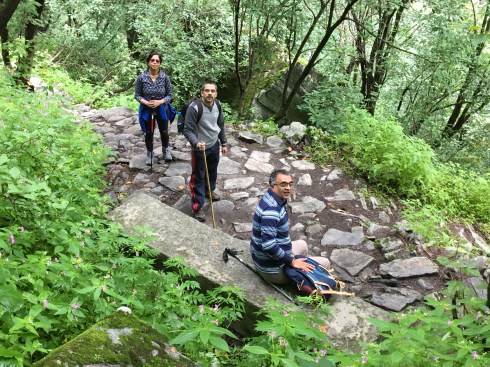
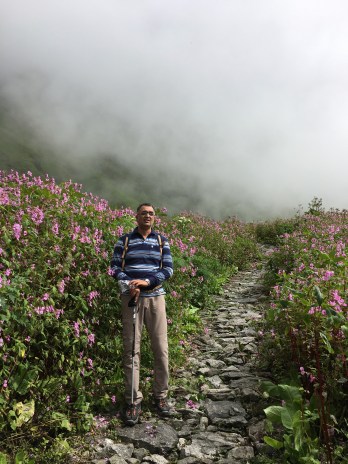
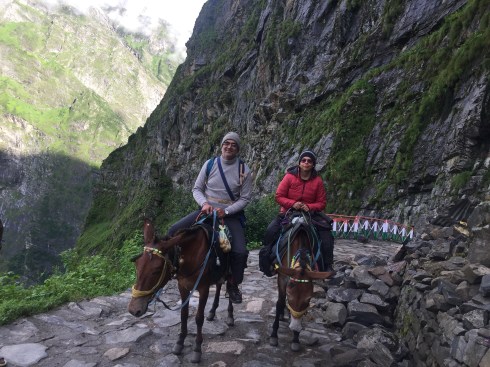
We reached Govind Ghat by 8.30 AM and had to stand in a Q to complete the registration process. We unloaded our luggage and took a Jeep to Pulana – 4 km away. From Gobind Ghat you will lose Mobile Connectivity – all you will have is very sporadic BSNL land line connection at Ghangria. The trek to Ghangria starts from Pulana – its a 11 Km trek , not very steep. If you walk at a relaxed pace it will take you about 4 – 5 hrs. We started at 9.30 and reached our room at Ghangria by 2 in the afternoon. You also have an option of riding a mule for Rs 850/- or be carried in a basket by a Nepali Sherpa or to take a chopper from Govind Ghat ( 5 Min – Rs 3500, Operates only if weather is good) . Most people walk – the guide had loaded our luggage on mules so that was easy. This is the first trek – energy levels are high – and I strongly advocate that you walk this stretch. There are nice views of forests , waterfalls , gushing springs. the pathway is cobbled – lots of shops on the way to stop for lemon juice or food or snacks. Keep your rain cover handy in your small backpack – the weather is very unpredictable. It did rain after almost 3 hrs of trek and the rain did slow me down.

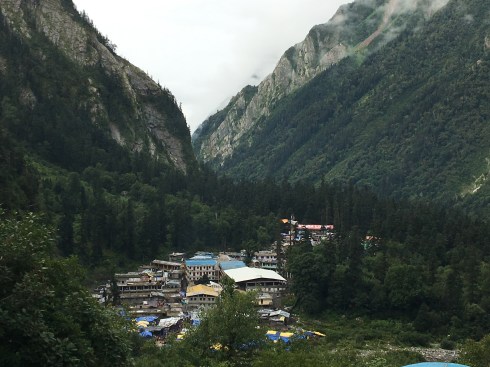
Ghangria is the base camp for both the Valley of Flowers and Hemkunt Saheb. Located at 9050 feet its a small hamlet that operates only for 4 months from June to Sep.

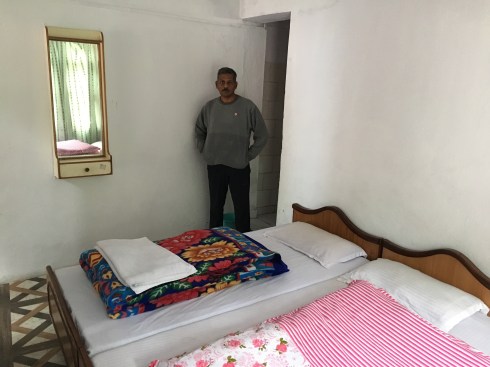
You have an option of staying in a small basic functionality hotel or in tents. The Tents may have better views but not electricity and running water. Blue Poppy the company that had planned our trip had booked us at a small inn called Krishna Place – its the type of room I may not have stayed even when I was in college. Small , Cramped, Basic , the quilts and bedsheets were dirty, the limited staff were stinking  – two of us stayed in a room designed for 3 – we used a bed for keeping our bags , there was no place in the ground to keep any bags.

The good things – You have electricity and running water and Hot Water was provided by Bahadur ( 1 bucket / day is free – extra is Rs 50/bucket) – the hotel provided Tea , Bottled water , Pakodas , Maggi etc and also a Foot Massager – who charged 200 Rs for a 10 min massage. That was a luxury for the first few days – before we realised that his rate was higher than that in a high end spa at Bangalore. The guy also washed and ironed clothes – we were in for a shock when he told us after washing that he charged Rs 150/- per piece. But thats the premium you pay at 9500 feet.  There are a few dhabas nearby that serve good food – all our meals were at Gangotri – from piping hot Upma at 6 AM to Rajma, Chole, Noodles and even Dosa – we had no challenges with good hot food all thru the trip. I stuck to Khichdi most of the days. Tea Coffee is served using Milk Powder – you do get curd , but I think even that is made from milk powder. Price for food is reasonable.

Day – 3 : Ghangria – Valley of Flowers – Ghangria

I had been praying for months for a safe trip with good weather and it was a joy to see clear sky at 5 AM. After a warm bath and breakfast we started our trek at 6.30. A short distance later you complete the registration formalities.(Our guide had taken all the details and entry fees earlier and done the needful so we had no waiting period). Entry pass is Rs 150 valid for 3 days The busiest day at the Valley of Flowers has seen 500 visitors , in July – August the average crowd is about 200 / day. the best part of this trek is that no ponies are allowed – you walk or you are carried by a Sherpa.

Climbing has always been easy for me – it coming down thats a challenge on my knees. Sunny skies and the excitement of the final destination nearby energises you and I covered the 4 km to the entrance of the valley of the flowers in 2 1 /2 hrs . Its a beautiful scenic trek thru forests and gushing springs. The weather is pleasant and perfect for trekking. the views are amazing.

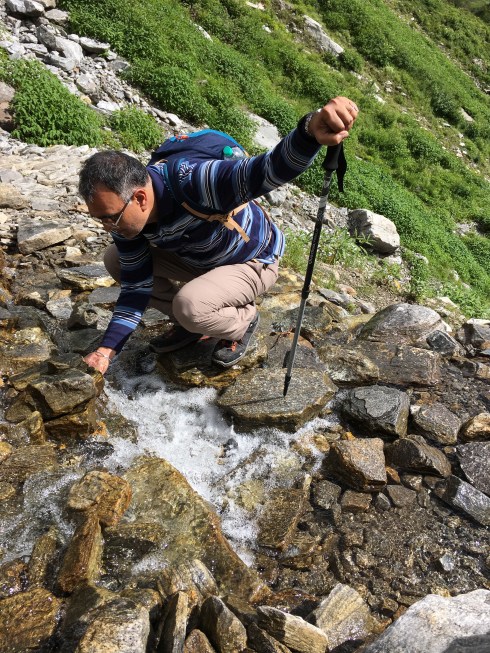
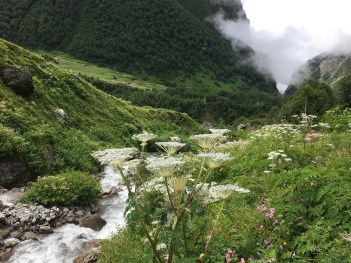
If you re tired and thirsty drink some water  from the spring – its energising and refreshes you, full of minerals. This is how life was as God made it and we messed it up. Every 30 minutes I stopped for doing a few Pranayams and deep breathing – this really helps in ensuring that the oxygen content in your blood is high. All along your trek you are walking along the Pushpavati river.

The climb was easy and at 9.15 I was in the Valley of Flowers. This UNESCO world heritage site is spread over 30 square kilometres. the end point is the Tipra Glacier ( 14,500 feet) – from the entry of the Valley of Flowers to the Tipra Glacier is a 10 Km Trek ( 6 Hrs) and you can pitch a tent there for the night.

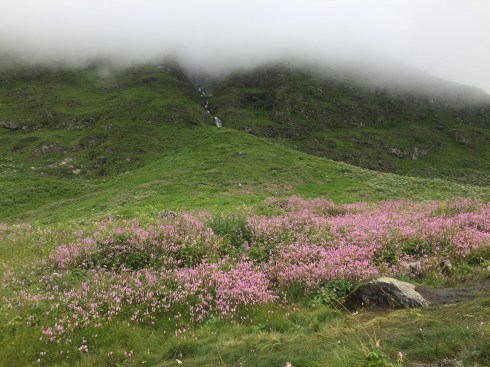
We walked 3 kms inside the valley – it was mystical , foggy , surrounded by mountains, brooks and waterfalls all around you – and flowers in a multitude of colours and shapes. Just you and nature. Its nice – but if you have expectations of meadows of flowers as far as the eye can see then you may be a tad disappointed. Which I was – the Valley of Flowers met expectations – did not exceed. It was very nice but it was not jaw dropping spectacular


We had packed lunch – there are no shops on this route , and after lunch we started the trek back to Ghangria by 12 noon. Going back is always tougher – and to add to the challenge of climbing down it started drizzling. The pathways here are not cemented – its just rocks of different shapes that are on a path – its wobbly and pokey – and on an incline it can be risky. I struggled and moved step by step , inch by inch and finally made it back to the room dead tired by 4 PM , almost 4 hrs. (Most people do not venture 3 Kms deep into the Valley)

A Foot massage followed by a nice warm bath , and a nourishing dinner and I slept like a log at 9 PM (My friends ensured that they were warmed up by a Patiala Peg – there is no liquor available at Ghangria , so ensure that you get it with you or buy it at Joshimath , the stores at Joshimath close by 6 PM – so chances are that by the time you reach its closed)

Day – 4 : Recovery Day 

Last 2 days I had trekked 25 Kms and I was tired. The Tour Company had smartly planned 2 days for the Valley of Flowers – in case of heavy rains there was a backup day. Fortunately for us this backup day was the rest day. The last 4 – 5 days I had been getting up at 4.30 , and was tiring – I needed rest. Guess what – this was the only day in our travel that it was raining heavily. My colleagues decided to walk around and visit a waterfall close by and see the tents. I stayed back in the room to catch up on my strength.

Day – 5 : Hemkunt Sahib 

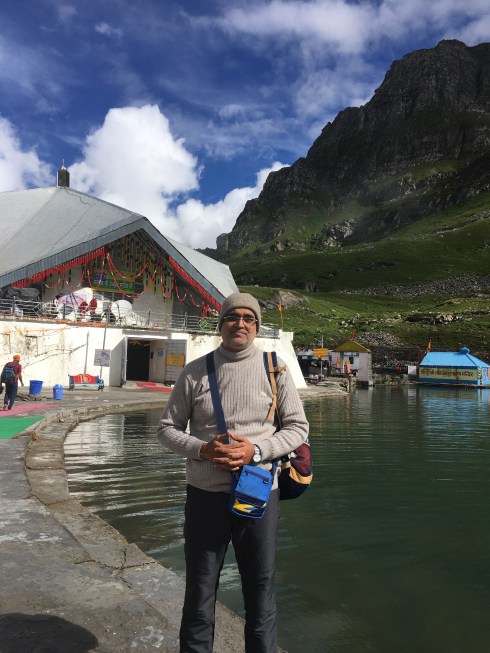
Located at 14,500 feet – the trek from Ghangria to Hemkunt ( Also spelled as Hemkund ) is steep. You scale 5500 feet in less than 6 kms. The pathway is in better shape than the Valley of Flowers – but most of the route is not as scenic as the Valley of Flowers. Climbing becomes difficult because of the steep altitude and lower oxygen. You have an option of taking a Mule ride – which I did. We left sharp at 6.30 and reached Hemkund at 8.30 – there are many shops on the way on this route. It was a bright and sunny day with Blue Skies. Good to reach early as it gets very foggy after 11 AM .

In his previous birth Guru Nanak is said to have meditated at this spot. Its a beautiful serene place with a glacial lake surrounded by 7 peaks. The mist plays peek a boo with the lake and the whole experience is magical. Right behind the Gurudwara is a place where Lakshman is said to have meditated – and there is a temple in memory of him. Hem Kund as the name suggests is a Snow Lake – and the Gurudwara is open only from June to Sep, rest of the year it is not accessible because of heavy snow. Best period to travel is September.

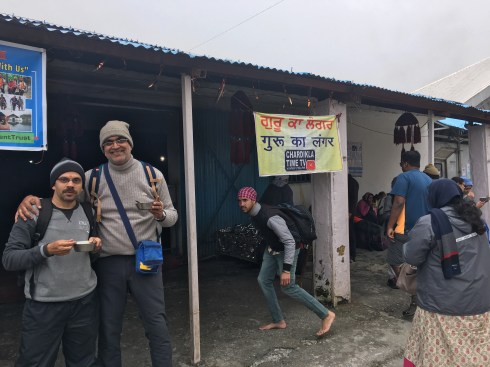
The water in the lake is freezing , but the strong sardars brave the cold and take dips bare bodied. After a walk around the lake I went and sat inside the Gurudwara from 9.15 to 10 AM. The “Ardas”  is at 10 AM  and at 12 AM ,  we attended the 10 AM “Ardas” after which very tasty Halwa was served as Prasad. Stepping out we had piping hot Khichdi and Tea. Our friends who started the trek at 5.40 AM made it by 9 AM (Which was great – most people take 5 – 6 hrs to climb up)

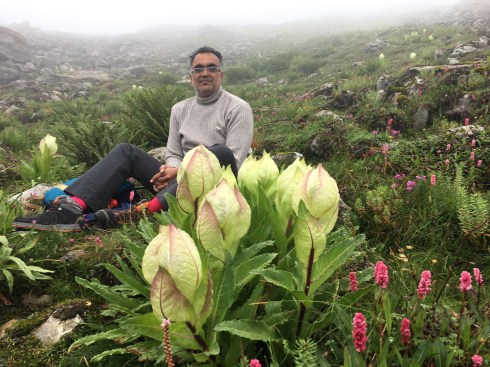
The rare Brahma Kamal flower blooms in plenty in and around the Hemkunt Saheb – we could see them as we started our trek back. We climbed a small hill – with no path just to get closer to these rare and beautiful flowers. There was a sense of accomplishment and peace as I sat next to the flowers.

I started the trek back with gusto but after an hr my feet started hurting. The steep incline puts pressure on your toes and I was mentally holding back running down – allowing gravity to help me in the way back. I ploughed along for 5 kms and finally the last 1 km I had to take a pony ride. the master trekkers in our team went down almost sprinting in less than 2 hrs.

Day – 6 : We head back to Joshimath 

After breakfast at 6 we started our journey back to Gobind Ghat – the plan was to reach by 9 and then head to Badrinath and Mana on the way to Joshimath. By now my feet were tired and I took the Mule back. We were at Gobind Ghat by 9 – collected the Prasad from the Gurudwara and headed towards Badrinath.

Its a 2 hr drive and the road has many tricky spots where landslides happen frequently. We had been informed that the road was closed for the last 2 days. Fortunately when we reached the roads were open. But there was the risk of landslide in a 100 metre stretch.

Having come so far I wanted to go but the fear of the majority over ruled the faith of a few. We travelled ~ 600 kms in the fragile Himalayan landscape safely and I was sure that we would have passed this 100 m stretch also – God had opened the path to us after 2 days – Badrinath was empty and we would have had great Darshan – but it was not to be. In 2010 I was at the gates of Badrinath but it was very crowded and the Q time was 3 hrs – and we were not able to get a Darshan – I am sure I will get lucky the 3rd time.

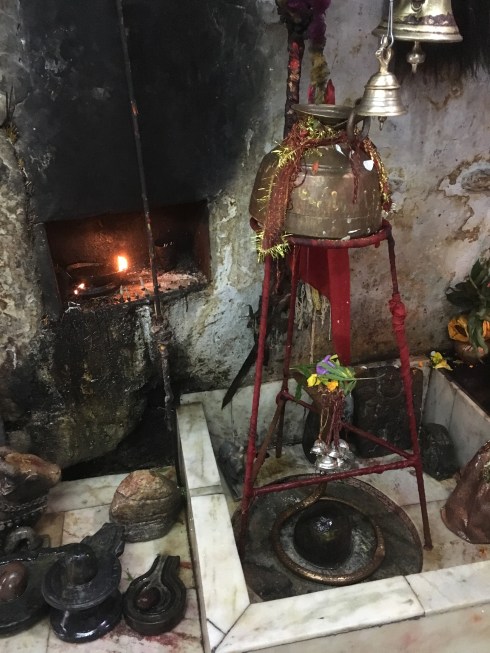
On the way back we stopped by at Jyotir Mutt – one of the 4 mutts established by Shankaracharya, he spent almost 14 years here. We were blessed to spend time in front of the Akhand Jyoti that he had lit almost 2500 years back, and pray in front of the “Swayambu” Shiv Linga below the 2500 year old Kalpa Vriksha. This place is brimming with energy and positive vibrations.

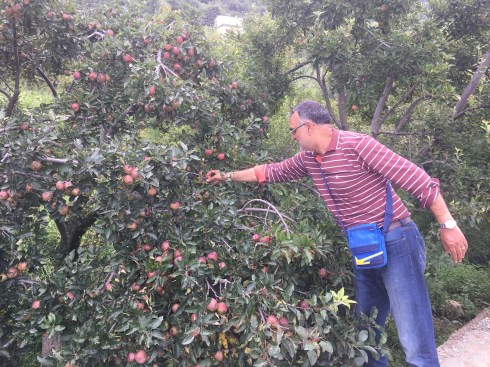
Blue Poppy the tour operator delighted us by putting us up at Auli for the night instead of Joshimath. Auli is a hill station at 9500 feet located 15 km from Joshimath.  I had visited Auli a few years back. Its a world famous Ski Town and the ITBP Skiing School is located here. Others in the group took the Cable Car from Joshimath to Auli while I went by the Tempo Traveller with the luggage and on the way stopped by an Apple Orchard. Its a rare joy to pluck an Apple from a tree and bite into it – with the juice flowing down your mouth.

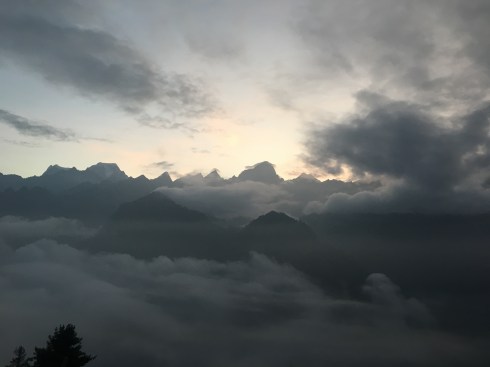
Blue Poppy has very nice Log Cottages at Auli with excellent view of the Nandi Devi. Its mostly cloudy but at 520 AM in the morning I got a good view of the peak. We rested , ate well and were ready to leave the next day.

Day – 7 : We head back to Rishikesh

Breakfast at 6.30 and we started our journey back at 7 AM – we saw multiple landslides that had been cleared and barring a 30 min stop we had a smooth drive all the way to Rishikesh. On the way we did a brief stop at the Dhari Devi temple – one of the 108 Shakti Peeths and highly revered in Garhwal. This is a Kali temple located between Rudraprayag and Srinagar. The temple has the upper part of the Goddess and the bottom part is in another temple called Kalimath in Agasyamuni ( near Uttar Kashi)


We reached Rishikesh by 5.30 PM. On the way we passed Vashisht Guha – I love this place and have visited it twice, but it looked like rain was round the corner and we had to abort our plans. At Rishikesh we stayed at the Vasundhara Palace – an excellent property in Muni Ki Reti, 2 min walks from the Ganga. Our friends braved the rain to walk and see the sights of Rishikesh but I preferred staying in the room.

Day – 8 : We head back to Bangalore 

Dehradun airport is closer to Rishikesh – on a Sunday it was a 30 min drive. My flight was at 12.40 and Indigo was nice enough to pre pone my connection at Delhi from 5 PM to 2.40 PM – being the long weekend Bangalore traffic was a breeze and after a comfortable flight I was back home at 6.45 PM

Coincidence – the couple sitting next to me in the flight were also coming back from the Valley of flower trek. They had gone thru a company called India Hikes.

We had gone thru Blue Poppy – a company run by a lovely couple. I was very happy with their arrangement and response. Always ready to customise and help it was a pleasure working with Seema and Devkant Sagwan. Blue Poppy does only Valley of Flowers Trek – they don’t cut corners and try to provide the best. The guide they had provided was excellent.

Other Useful Points ( The company you go with will provide a exhaustive list – this is just a reaffirmation of some important points) 

Valley of Flowers is open from June to Sep , June the valley is covered in snow , July / August is the best time to visit , by Sep the flowers start drying up .

  • 5 Years back 70% of the travellers were foreigners but now Indians have taken over and almost 80% of the travellers are Indians – and they come in all shapes and sizes from 16 year old to 75 + . Gujaratis, Bengalis form the largest groups , while a significant number travel from Bangalore. Its great to see Indians moving from just    ” Seeing Holidays” to ” Doing Holidays”
  • Invest in good gear – a Good trekking show with ankle support is a must
  • Get knee support – coming downhill that will be a big help
  • Ensure to use Sun Screen – we pray for sunny days but at this altitude the sun can be harsh and you will get sun burnt. So even if it is cloudy and rainy as you start remember to use the sunscreen
  • Stay Fit and put in some effort few months before you travel to be in shape. Some people are genetically fit to trek others like me have to pit in some effort.
  • Carry medicines but you don’t need them – on the 1st day night at Ghangria I felt my heart was thumping very fast – but I was able to meditate and bring it down. Don’t panic and take medicines proactively – they are not needed. A strong mind and a fit body is all you need.
  • Eat light – and avoid oily greasy food as you travel
  • This is cash only economy so carry 10 – 15 K with you in currency
  • Can you travel on your own ? Yes some people do but I feel its best to go with an agency that can provide professional guidance and help. An emergency situation is a step away in these regions and thats when you need the help of an agency.
  • Pray and have faith in the almighty – respect the mountains , don’t dirty it
  • Last but not the least – talk to someone who did the trek as you plan and pack , my wife’s guidance and support was invaluable ( she did this trip last year)


Journey to the Valley of Flowers

14 Aug

Nature rewards you after hard work. Getting to the Valley of Flowers in the middle Himalayas is a long and tedious journey – almost 3 days from Bangalore. Its a trip that requires planning and getting in shape – but eventually the reward is worth the effort. For anyone wanting to make a trip to Valley of Flowers and Hemkunt Saheb this Blog will provide all the details.

A quick Summary of the trip

  • The journey : Bangalore – Delhi – Dehradun – Haridwar – Joshimath (6050 feet) – Gobind Ghat – Pulana – Ghangria ( ~ 9500 feet) – Valley of Flowers ( 9500 – 12000 feet) – Hemkunt Saheb (14500 feet)
  • Almost 50 kms of trekking ( I did 35 by trek and 15 by Mule) which treats you to Fresh air & Divine views
  • 25 hrs of driving in the rugged Himalayan landscape – we travelled in the monsoon and witnessed at least 25 landslides – by divine grace we were not impacted by rain or landslides and sailed thru smoothly.

You can do this trip in 8 days but I decided to spend a few days at Gurgaon to meet friends and visit the Akshardham temple – A masterpiece where you can easily spend 4 – 5 hrs. Having travelled to Delhi so many times in the past 15 years this was one landmark that I had not visited. The story of the young sage Swami Narayan is fascinating and has close similarities to that of Shanakrachary. We missed the fountain and the light show in the evening – but I am sure I will come back to this well maintained energised place.

Swaminarayan Akshardham, New Delhi

Day 0 : Bangalore – Delhi – Haridwar 

My friends house at Gurgaon is also a temple – so much of peaceful energy, and it was a great start to an exciting 8 days ahead. He was kind enough to drop me at Platform 16 Ajmera Gate, Delhi Dehradun Shatabadi. This is the last platform – so if you get dropped on the other side of the station its a very long walk . I reached Haridwar at 11.45 and was in my Hotel by 12.45 ( Regenta Hotel – Royal Orchid on the Haridwar Rishikesh Road). My friends from Bangalore had taken the morning flight and they also reached the hotel by 3 PM. That evening we stopped by the Sapta Rishi Ashram and the Adhbut Mandir on the way to Har Ki Pauri to view the Ganga Arti. Aug is not busy season, because of monsoon and the “kavad” season is over  – the Ganga was in spate, frothy and muddy. Haridwar is a chaotic place and the Ganga Arti at the Har Ki Pauri  was a shade compared to what I had seen in Varanasi or even Rishikesh. (Lord Shiva and Lord Vishnu are believed to have visited the Brahmakund in Har Ki Pauri in the Vedic times). For all the noise we make on Hindutva it would be good if Indian temples and places like Haridwar , Rishikesh and Varanasi are kept as clean as the Vatican or the Golden Temple. On our way back we had a tasty dinner and had an early sleep (Given the long travel ahead I made it a point to eat light and avoid gravy / spicy food all long )

Day – 1 : Haridwar – Joshimath (278 Km – 12 hrs drive) 

We left our hotel at 6 AM and reached Joshimath at 5.30 PM. The journey was pleasant – our 14 seater Tempo Traveller had only 9 – so there was enough space to stretch your legs. Enroute we crossed Rishikesh – Dev Prayag (Bhageerathi & Alaknanda confluence) – Srinagar – Rudraprayag (Alaknanda – Mandakini Confluence) – and finally Joshimath and checked into Auli – D. A decent hotel with basic functionality – neat rooms, geyser, decent food. The weather was hot and humid all through and only near Joshimath did we start feeling pleasant. The road is good – you ascend from the plains to 6050 feet over 278 km so the ascent is smooth – no sharp U bends. We stopped for breakfast and lunch (No branded restaurants on the way – food is decent but the ambience and cleanliness of the dhabas is sad, toilets are disappointing, big challenge for women travellers who comprise almost 50% of the Trekkers to the Valley of flowers)

Day – 2 : Joshimath – Gobind Ghat – Pulana – Ghangria 

After a breakfast of Aloo Paratha, Poha and Chai we left at 7 AM by the Tempo Traveller. Our next stop was Govind Ghat – 20 Km (45 min). On the way we stopped to admire the Vishnu Prayag – the confluence of Bhuyandar & Alaknanda – a place where sage Narada is supposed to have meditated.

We reached Govind Ghat by 8.30 AM and had to stand in a Q to complete the registration process. We unloaded our luggage and took a Jeep to Pulana – 4 km away. From Gobind Ghat you will lose Mobile Connectivity – all you will have is very sporadic BSNL land line connection at Ghangria. The trek to Ghangria starts from Pulana – its a 11 Km trek , not very steep. If you walk at a relaxed pace it will take you about 4 – 5 hrs. We started at 9.30 and reached our room at Ghangria by 2 in the afternoon. You also have an option of riding a mule for Rs 850/- or be carried in a basket by a Nepali Sherpa or to take a chopper from Govind Ghat (5 Min – Rs 3500, Operates only if weather is good) . Most people walk – the guide had loaded our luggage on mules so that was easy. This is the first trek – energy levels are high – and I strongly advocate that you walk this stretch. There are nice views of forests, waterfalls, gushing springs. the pathway is cobbled – lots of shops on the way to stop for lemon juice or food or snacks. Keep your rain cover handy in your small backpack – the weather is very unpredictable. It did rain after almost 3 hrs of trek and the rain did slow me down.

Ghangria is the base camp for both the Valley of Flowers and Hemkunt Saheb. Located at 9050 feet its a small hamlet that operates only for 4 months from June to Sep.

You have an option of staying in a small basic functionality hotel or in tents. The Tents may have better views but no electricity and running water. Blue Poppy the company that had planned our trip had booked us at a small inn called Krishna Place – its the type of room I may not have stayed even when I was in college. Small, Cramped, the quilts and bedsheets were dirty, the limited staff were stinking  – two of us stayed in a room designed for 3 – we used a bed for keeping our bags, there was no place in the ground to keep any bags.

The good things – You have electricity and running water and Hot Water was provided by Bahadur ( 1 bucket / day is free – extra is Rs 50/bucket) – the hotel provided Tea, Bottled water, Pakodas, Maggi etc and also a Foot Massager – who charged 200 Rs for a 10 min massage. That was a luxury for the first few days – before we realised that his rate was higher than that in a high end spa at Bangalore. The guy also washed and ironed clothes – we were in for a shock when he told us after washing that he charged Rs 150/- per piece. But thats the premium you pay at 9500 feet.  There are a few dhabas nearby that serve good food – all our meals were at Gangotri – from piping hot Upma at 6 AM to Rajma, Chole, Noodles and even Dosa – we had no challenges with good hot food all thru the trip. I stuck to Khichdi most of the days. Tea Coffee is served using Milk Powder – you do get curd , but I think even that is made from milk powder. Price for food is reasonable.

Day – 3 : Ghangria – Valley of Flowers – Ghangria

I had been praying for months for a safe trip with good weather and it was a joy to see clear sky at 5 AM. After a warm bath and breakfast we started our trek at 6.30. A short distance later you complete the registration formalities.(Our guide had taken all the details and entry fees earlier and done the needful so we had no waiting period). Entry pass is Rs 150 valid for 3 days The busiest day at the Valley of Flowers has seen 500 visitors , in July – August the average crowd is about 200 / day. the best part of this trek is that no ponies are allowed – you walk or you are carried by a Sherpa.

Climbing has always been easy for me – coming down thats a challenge on my knees. Sunny skies and the excitement of the final destination nearby energises you and I covered the 4 km to the entrance of the valley of the flowers in 2 1 /2 hrs . Its a beautiful scenic trek thru forests and gushing springs. The weather is pleasant and perfect for trekking. the views are amazing.

If you get tired and thirsty drink some water from the spring – its energising and refreshes you, full of minerals. This is how life was as God made it and we messed it up. Every 30 minutes I stopped for doing a few Pranayams and deep breathing – this really helps in ensuring that the oxygen content in your blood is high. All along your trek you are walking along the Pushpavati river.

The climb was easy and at 9.15 I was in the Valley of Flowers. This UNESCO world heritage site is spread over 30 square kilometres. the end point is the Tipra Glacier (14,500 feet) – from the entry of the Valley of Flowers to the Tipra Glacier is a 10 Km Trek (6 Hrs) and you can pitch a tent there for the night.

We walked 3 kms inside the valley – it was mystical , foggy, surrounded by mountains, brooks and waterfalls all around you – and flowers in a multitude of colours and shapes. Just you and nature. Its nice – but if you have expectations of meadows of flowers as far as the eye can see then you may be a tad disappointed. Which I was – the Valley of Flowers met expectations – did not exceed. It was very nice but it was not jaw dropping spectacular

We had packed lunch – there are no shops on this route , and after lunch we started the trek back to Ghangria by 12 noon. Going back is always tougher – add to the challenge of climbing down it started drizzling. The pathways here are not cemented – its just rocks of different shapes that are on a path – its wobbly and pokey – and on an incline it can be risky. I struggled and moved step by step, inch by inch and finally made it back to the room dead tired by 4 PM, almost 4 hrs. (Most people do not venture 3 Kms deep into the Valley)

A Foot massage followed by a nice warm bath, and a nourishing dinner and I slept like a log at 9 PM (My friends ensured that they were warmed up by a Patiala Peg – there is no liquor available at Ghangria, so ensure that you get it with you or buy it at Joshimath, the stores at Joshimath close by 6 PM – so chances are that by the time you reach its closed)

Day – 4 : Recovery Day 

Last 2 days I had trekked 25 Kms and I was tired. The Tour Company had smartly planned 2 days for the Valley of Flowers – in case of heavy rains there was a backup day. Fortunately for us this backup day was the rest day. The last 4 – 5 days I had been getting up at 4.30 , and was tiring – I needed rest. Guess what – this was the only day in our travel that it was raining heavily. My colleagues decided to walk around and visit a waterfall close by and see the tents. I stayed back in the room to catch up on my strength.

Day – 5 : Hemkunt Sahib 

Located at 14,500 feet – the trek from Ghangria to Hemkunt ( Also spelled as Hemkund ) is steep. You scale 5500 feet in less than 6 kms. The pathway is in better shape than the Valley of Flowers – but most of the route is not as scenic as the Valley of Flowers. Climbing becomes difficult because of the steep altitude and lower oxygen. You have an option of taking a Mule ride – which I did. We left sharp at 6.30 and reached Hemkund at 8.30 – there are many shops on the way on this route. It was a bright and sunny day with Blue Skies. Good to reach early as it gets very foggy after 11 AM .

In his previous birth Guru Nanak is said to have meditated at this spot. Its a beautiful serene place with a glacial lake surrounded by 7 peaks. The mist plays peek a boo with the lake and the whole experience is magical. Right behind the Gurudwara is a place where Lakshman is said to have meditated – and there is a temple in memory of him. Hem Kund as the name suggests is a Snow Lake – and the Gurudwara is open only from June to Sep, rest of the year it is not accessible because of heavy snow. Best period to travel is September.

The water in the lake is freezing , but the strong sardars brave the cold and take dips bare bodied. After a walk around the lake I went and sat inside the Gurudwara from 9.15 to 10 AM. The “Ardas”  is at 10 AM  and at 12 AM ,  we attended the 10 AM “Ardas” after which very tasty Halwa was served as Prasad. Stepping out we had piping hot Khichdi and Tea. Our friends who started the trek at 5.40 AM made it by 9 AM (Which was great – most people take 5 – 6 hrs to climb up)

The rare Brahma Kamal flower blooms in plenty in and around the Hemkunt Saheb – we could see them as we started our trek back. We climbed a small hill – with no path just to get closer to these rare and beautiful flowers. There was a sense of accomplishment and peace as I sat next to the flowers.

I started the trek back with gusto but after an hr my feet started hurting. The steep incline puts pressure on your toes and I was mentally holding back running down – allowing gravity to help me in the way back. I ploughed along for 5 kms and finally the last 1 km I had to take a pony ride. the master trekkers in our team went down almost sprinting in less than 2 hrs.

Day – 6 : We head back to Joshimath 

After breakfast at 6 we started our journey back to Gobind Ghat – the plan was to reach by 9 and then head to Badrinath and Mana on the way to Joshimath. By now my feet were tired and I took the Mule back. We were at Gobind Ghat by 9 – collected the Prasad from the Gurudwara and headed towards Badrinath.

Its a 2 hr drive and the road has many tricky spots where landslides happen frequently. We had been informed that the road was closed for the last 2 days. Fortunately when we reached the roads were open. But there was the risk of landslide in a 100 metre stretch.

Having come so far I wanted to go but the fear of the majority over ruled the faith of a few. We travelled ~ 600 kms in the fragile Himalayan landscape safely and I was sure that we would have passed this 100 m stretch also – God had opened the path to us after 2 days – Badrinath was empty and we would have had great Darshan – but it was not to be. In 2010 I was at the gates of Badrinath but it was very crowded and the Q time was 3 hrs – and we were not able to get a Darshan – I am sure I will get lucky the 3rd time.

On the way back we stopped by at Jyotir Mutt – one of the 4 mutts established by Shankaracharya, he spent almost 14 years here. We were blessed to spend time in front of the Akhand Jyoti that he had lit almost 2500 years back, and pray in front of the “Swayambu” Shiv Linga below the 2500 year old Kalpa Vriksha. This place is brimming with energy and positive vibrations.

Blue Poppy the tour operator delighted us by putting us up at Auli for the night instead of Joshimath. Auli is a hill station at 9500 feet located 15 km from Joshimath.  I had visited Auli a few years back. Its a world famous Ski Town and the ITBP Skiing School is located here. Others in the group took the Cable Car from Joshimath to Auli while I went by the Tempo Traveller with the luggage and on the way stopped by an Apple Orchard. Its a rare joy to pluck an Apple from a tree and bite into it – with the juice flowing down your mouth.

Blue Poppy has very nice Log Cottages at Auli with excellent view of the Nandi Devi. Its mostly cloudy but at 520 AM in the morning I got a good view of the peak. We rested , ate well and were ready to leave the next day.

Day – 7 : We head back to Rishikesh

Breakfast at 6.30 and we started our journey back at 7 AM – we saw multiple landslides that had been cleared and barring a 30 min stop we had a smooth drive all the way to Rishikesh. On the way we did a brief stop at the Dhari Devi temple – one of the 108 Shakti Peeths and highly revered in Garhwal. This is a Kali temple located between Rudraprayag and Srinagar. The temple has the upper part of the Goddess and the bottom part is in another temple called Kalimath in Agasyamuni ( near Uttar Kashi)


We reached Rishikesh by 5.30 PM. On the way we passed Vashisht Guha – I love this place and have visited it twice, but it looked like rain was round the corner and we had to abort our plans. At Rishikesh we stayed at the Vasundhara Palace – an excellent property in Muni Ki Reti, 2 min walks from the Ganga. Our friends braved the rain to walk and see the sights of Rishikesh but I preferred staying in the room.

Day – 8 : We head back to Bangalore 

Dehradun airport is closer to Rishikesh – on a Sunday it was a 30 min drive. My flight was at 12.40 and Indigo was nice enough to pre pone my connection at Delhi from 5 PM to 2.40 PM – being the long weekend Bangalore traffic was a breeze and after a comfortable flight I was back home at 6.45 PM

Coincidence – the couple sitting next to me in the flight were also coming back from the Valley of flower trek. They had gone thru a company called India Hikes.

We had gone thru Blue Poppy – a company run by a lovely couple. I was very happy with their arrangement and response. Always ready to customise and help it was a pleasure working with Seema and Devkant Sagwan. Blue Poppy does only Valley of Flowers Trek – they don’t cut corners and try to provide the best. The guide they had provided was excellent.

Other Useful Points ( The company you go with will provide a exhaustive list – this is just a reaffirmation of some important points) 

Valley of Flowers is open from June to Sep , June the valley is covered in snow , July / August is the best time to visit , by Sep the flowers start drying up .

  • 5 Years back 70% of the travellers were foreigners but now Indians have taken over and almost 80% of the travellers are Indians – and they come in all shapes and sizes from 16 year old to 75 + . Gujaratis, Bengalis form the largest groups , while a significant number travel from Bangalore. Its great to see Indians moving from just    ” Seeing Holidays” to ” Doing Holidays”
  • Invest in good gear – a Good trekking show with ankle support is a must
  • Get knee support – coming downhill that will be a big help
  • Ensure to use Sun Screen – we pray for sunny days but at this altitude the sun can be harsh and you will get sun burnt. So even if it is cloudy and rainy as you start remember to use the sunscreen
  • Stay Fit and put in some effort few months before you travel to be in shape. Some people are genetically fit to trek others like me have to pit in some effort.
  • Carry medicines but you don’t need them – on the 1st day night at Ghangria I felt my heart was thumping very fast – but I was able to meditate and bring it down. Don’t panic and take medicines proactively – they are not needed. A strong mind and a fit body is all you need.
  • Eat light – and avoid oily greasy food as you travel
  • This is cash only economy so carry 10 – 15 K with you in currency
  • Can you travel on your own ? Yes some people do but I feel its best to go with an agency that can provide professional guidance and help. An emergency situation is a step away in these regions and thats when you need the help of an agency.
  • Pray and have faith in the almighty – respect the mountains , don’t dirty it
  • Last but not the least – talk to someone who did the trek as you plan and pack , my wife’s guidance and support was invaluable ( she did this trip last year)

________________________

Please follow my Facebook page for regular updates on A Few Good Things 

https://facebook.com/afewgoodthingsvak1969/
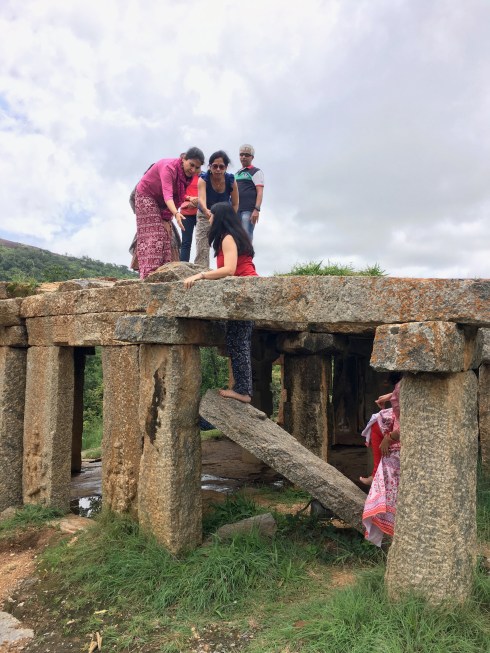
Buy Buy ITC

19 Jul

Todays headlines has been the 13% drop in ITC stock – as an unexpected cess is expected to affect the bottomline. So the mood of the day is SELL SELL SELL. And thats how the market operates – knee jerk reaction. The impact of higher Taxes on ITC is a regular phenomena – Cigarettes are one of the highest category Tax products in the country – and the stock always bounces back to new highs. This is the perfect time to look at the history of the stock.

ITC is one of the best buys in the market. And with a 13% drop – this is a great opportunity to get into the stock. Every long term investor must have this in their portfolio.

Not many know that ITC’s FMCG business, which includes packaged food, personal care and education stationary products, crossed the Rs 10,000 crore revenue milestone in 2016-17 with sales growing by 8% to Rs 10,511.83 crore. Thats colossal and with a fast growing India – consumption stocks like ITC will continue to grow rapidly.

India has over 100M Smokers. By 2015, there were roughly equal numbers of men smoking cigarettes or bidis. About 11 million women aged 15–69 smoked in 2015. The absolute numbers of men smoking any type of tobacco at ages 15–69 years rose by about 29 million or 36% in relative terms from 79 million in 1998 to 108 million in 2015. This represents an average increase of about 1.7 million male smokers every year. Habits die hard – and whatever be the price consumption will continue to grow. As affluence steps in more Bidi smokers will switch to Cigarettes. Legal cigarettes constitute only 11% of all tobacco usage in India and the per capita consumption of Cigarettes in India is one of the lowest in the world.

(Source – Trends in bidi and cigarette smoking in India from 1998 to 2015, by age, gender and education – http://www.cghr.org/wordpress/wp-content/uploads/low_bmjgh-smoking-trends-paper.pdf

Click to access ITC-Corporate-Presentation.pdf

Lets look at the story in some simple visuals and question the knee jerk reaction


ITC  Crashes on July 17th – Panick button – everyone is in sell mode – headlines scream of thousands of crores of losses – mostly  notional.


Now look at the ten year graph and how ITC has given annualised returns of 18.6% beating the Sensex handsomely


Even in a 2 year period the stock has gone up from 190 to 280 ( after rallying to 350) and remember the 280 price is post Split. 


Talking of Bonus – this is one stock that gives you Bonus with regularity every 5 years 


And here is the company performance track record over the last 20 years – a tough one to beat and with Consumption and growth in India accelerating things can get only better. 


So make the most of it – remember every great stock gives you an opportunity to enter and this is the time to BUY ITC.