Archive | Daily Life RSS feed for this section

2021 Global Economy Trends – Highlights from Ruchir Sharma

10 Jan

Whats the outlook for 2021 and where do we invest money? Simple, straightforward, logical insights from Ruchir Sharma 

Here is a summary for you to absorb in 1 minute, detailed 1 hr Interview Link enclosed below. 

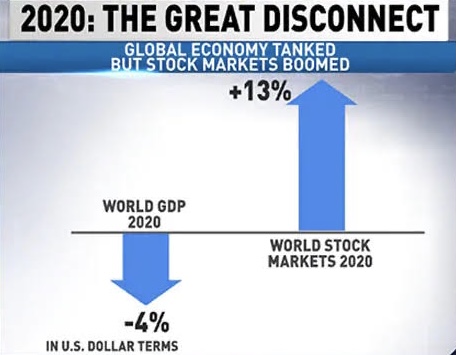
  • 2020 Economy had negative growth of 4% and stock markets had a 13% + growth. In 2021 this trend could be the opposite – as economies boom Stock Markets may slow down

  • 2020 Stimulus was 5X of that during the Lehman Crisis, came immediately. Most of it went to savings & Stocks as avenues for spending where limited. 2021 could see pent up spending
  • 2021 – Markets are already pricing in higher consumption / Govt will not have any money for stimulus
  • Inflation is set to rise and interest rates may go up. Global Inflation has been stable for 20 years ~ 2.8%. Could rise steeply in 2021 driven by labour shortage/ less competition / declining productivity / excess money printing

  • Higher Inflation could lead to higher interest rates. In 1980 Global GDP = Valuation of Stock Market, in 2020 Stock markets globally are valued 4X of the Global GDP

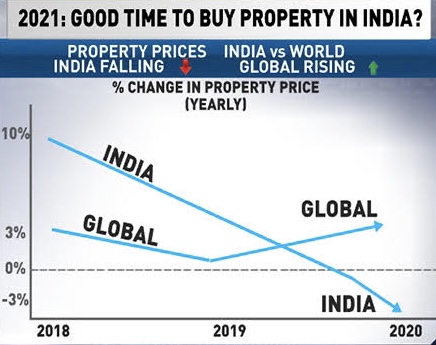
  • This is a good time to buy property at Fixed interest. Home prices in US / China surging last few years – India declining. Income has been increasing put prices are declining.

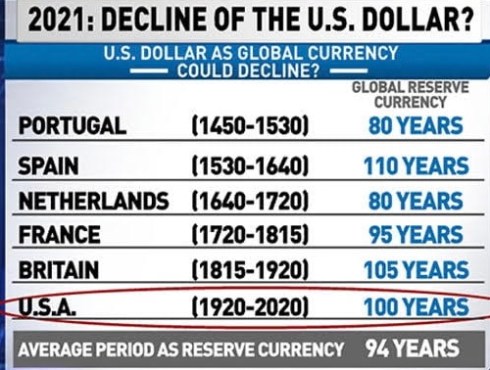
  • USD is declining after maintain global control for 100 years. Driven by excessive currency printing. In 2020,  5 Tn USD printed

  • Distrust in USD is driving alternative Cryptocurrency. Bitcoin emerging as the new Gold. Strong interest in younger generation

  • Revival of Commodity cycle after 10 years. Weakness in USD is directly linked to strong commodity cycle

  • Developing countries make a stronger comeback. More resilient, faster to change. Digitization share of economy is already high.
  • Best companies of one decade perform poorly in the next. New stars will be born.

Full Interview 

Simplifying Investing – A Layman’s guide to leverage compounding

4 Jan

When it comes to life there are 2 rules that are almost universal

  • Everyones wants to be HAPPY
  • Everyone wants to be RICH

While Happiness is a state of mind, being Rich is something that can be actioned. The Universe is constantly showering us with Richness – but we with our confused thinking are looking the other way as opportunity constantly knocks.

In this BLOG I am going to share some simple messages that can be of help to one and all. Definitely to a youngster who has started his career and even to folks my age who missed this common sense investing advise. We may at least be able to create an inheritance for our children or build a corpus for charity in our old age. Almost all the content of this Blog is based on discussions and inputs from Friends. 

The industry can be confusing and many wealth managers try to market products where they make hefty commissions. So do your own research.


You make wealth when you understand the power of Compounding

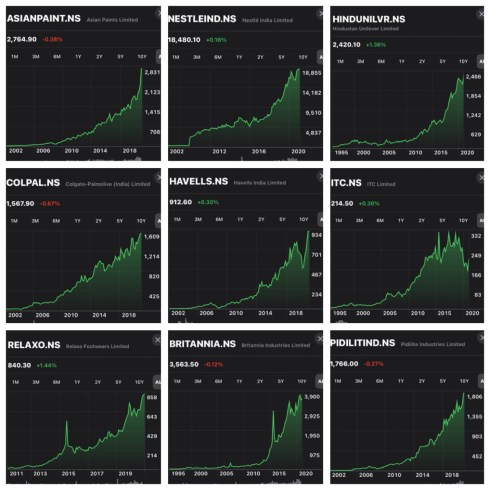
Start early and stick to it. I will share with you almost 50 companies across sectors (and I am sure there are many more) that have created phenomenal wealth over the last 25 years. These are companies in which our friends work, companies we read about every day. We may have in passing bought and sold these stocks, but we missed out on the power of compounding.

Three simple rules 

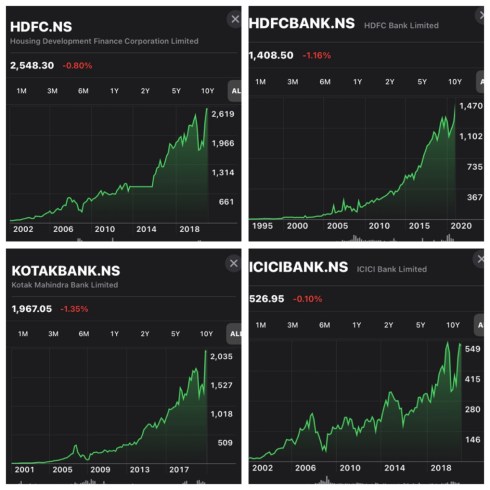
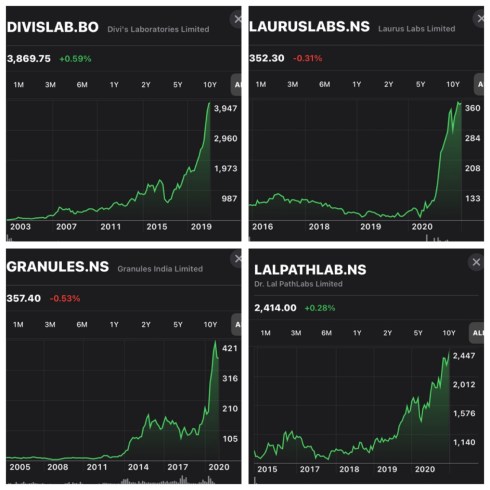
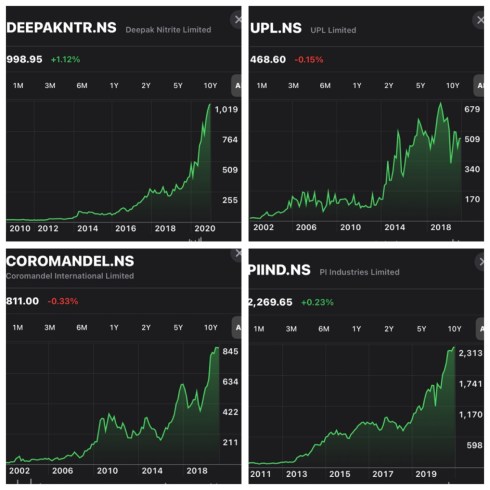
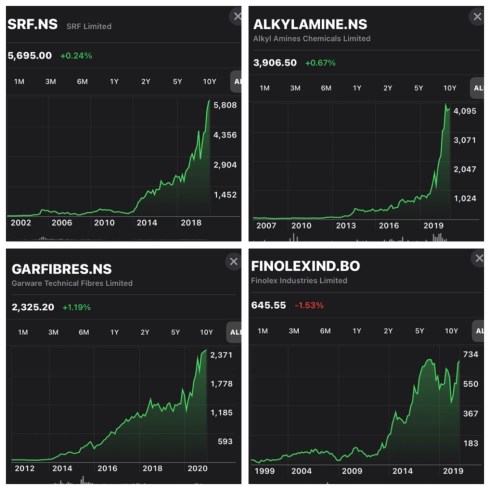
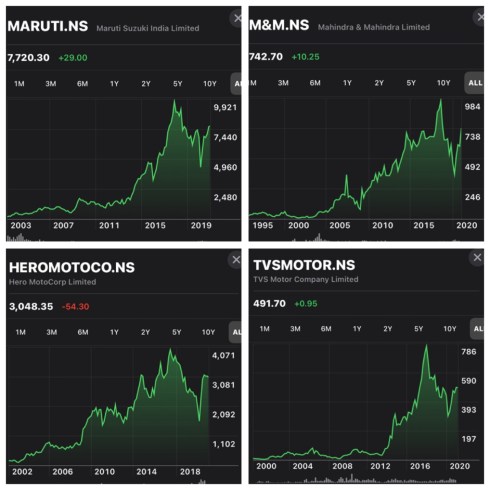
  • Is it a DIAGONAL Stock (Look at the last 20 year graph of the stock and see if its like a diagonal of a rectangle)
  • Is it a good established Brand with Products / Customers / Revenue / Profit – Is it in the top 3 in its Industry
  • How good is the Management

Good companies run a marathon, you can get in at any point and ride the wave

Its OK if you missed the IPO


Stocks Vs MF 

Last few years MF seem to be lagging the index, and are not delivery an alpha. HNI’s have started shifting to the Index and to select stocks across sectors creating a diversified portfolio of their own. This trend may accelerate.

Before we look at some of the sectors and the market leaders lets look at the Simple Humble PPF.

Company PF & Public Provident Fund are the best examples of the power of compounding. You start early and the corpus quietly keeps multiplying at ~ 8%, you also keep adding to this monthly / annually. Always invest in your PPF on April 1st the max limit and if its a payroll PF do contribute with your Voluntary Contributions. And remember a PPF does not have a 15 year limit you can keep extending it by 5 years for ever. The power of compounding starts to kick in when you have a  30 – 40 Lac corpus after 20 years, that when you see the money doubling every 7 – 8 years. This is TAX FREE Income.

You can’t beat the Index

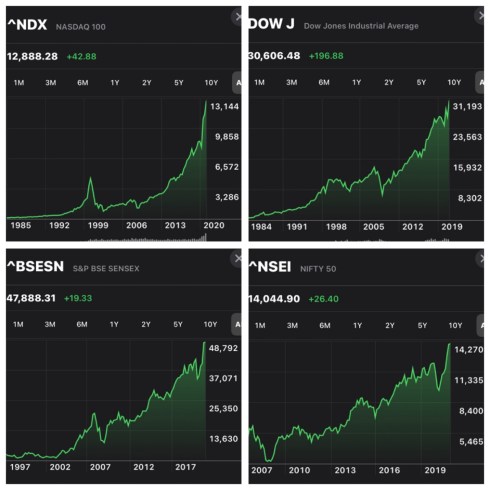
If in the last 25 years you had invested a few thousand rupees every month in the index you would have made a lot of money. On a weekly / monthly / annual basis we see the volatility but over an extended period the markets have given a 15% +return. You can see the diagonal graphs below.

Indian IT – A Global leadership play that is getting stronger

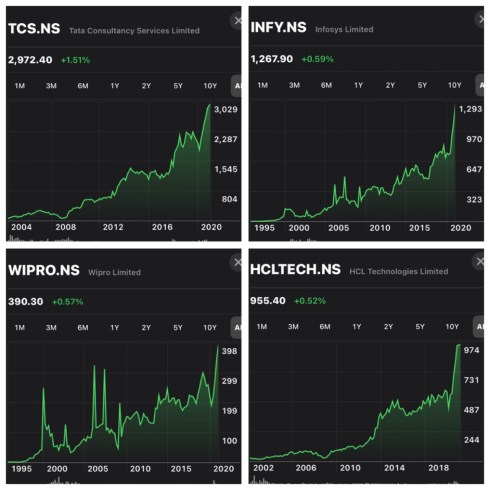
We all have friends and family working in the large IT companies. All you had to do was invest in Infosys & TCS regularly and stay put. You may have missed the bus but the ride is still on, so get onboard.

The great Indian consumer boom – A billion people eat a lot of biscuits and drink a lot of tea. You buy undergarments, soaps, shoes and slippers. You paint your house. Life goes on and you continue to use the leading Brands of the country.

Make money from select Indian Banks  – A Growing country like India needs banks and India’s Pvt sector banks have done very well. Some like Kotak are world leaders. Kotak Mahindra Bank, has comfortably pipped all lenders in the world to become the most expensive bank stock, a crown which until recently belonged to  HDFC Bank. Investors who bought into these banks early and stayed with them have made a lot of wealth. And the banking game is just starting – as banks consolidate the big will get bigger.  The life insurance story is just beginning and this is the time to look at HDFC Life, SBI Life or other quality companies that have recently hit the markets. Bajaj Finance is a giant amongst NBFC’s and may well be a bank soon. Last 5 years this stock has created a lot of wealth for investors.

Like IT – India is also big on Pharma. This is more complex given the investments and the approvals needed. But many Indian companies have established a position of leadership.While we all know Sun Pharma, Dr Reddy, Alembic, Aurobindo and many others – here are 4 companies that follow the rule of the Diagonal in this sector.

Agriculture – The country is agrarian. Just like Pharma, India is home to many companies that specialises in pesticides/ fertilisers/ seeds / Tillers, here are a few star performers of this industry. Given the small land holding in India where tractors cannot be used VST Tillers is another great idea to explore.

The world of Chemicals & Plastics goes beyond Pharma & Agricultured. Here are some market leaders who have performed well over the years in their own areas of specialisation. Some of them are global players with over 50% MS.

Indian Automobile Sector 

Companies like Maruti, Hero, TVS and many component companies have rewarded investors handsomely in the last 20 years and the trend will continue. Component and battery manufacturers Like Exide & Amara Raja who supply to the Industry and export have also performed handsomely. This year the sector has been impacted and inspite of markets reaching an all time high these stocks still have some distance to go.

Platform Stocks 

Amazon & Flipkart are platforms. The last decade has seen the explosive growth of Platform Stocks. Indian markets have 3 Platform Stocks. Multi Commodity Exchange, India Energy Exchange & IndiaMart. These are relatively new to the market. Stocks like IndiaMart have been explosive and MCX has started performing in the last one year. One hears news about the Energy exchange also. These are again ideas to explore for the future.


So how could you go about building your portfolio 

Here there is no rule that fits all. There are many roads – the common rule is stay invested for the long term.


Should you buy 50 stocks or 10? Should you dip your finger in all sectors or choose only the top 3? Do you invest only in the market leader or in the Top 3 in every sector ? Do you buy at one shot or spread your buying over  12 months? Do you book profits periodically or stay put? How much should you invest in a. stock? Do you categorise stocks in your Portfolio as Tier 1/2/3?


These are questions that each person needs to solve for themselves. There is no fixed answer. As I write this Blog markets are at an all time high, so this may not be the best time to invest all your hard earned money.

Finally an important note – the information above is for each person to absorb, research and decide on what is best for them. This is not a recommendation of stocks. 

Plum Cakes & Christmas – Whats the Connection?

19 Dec

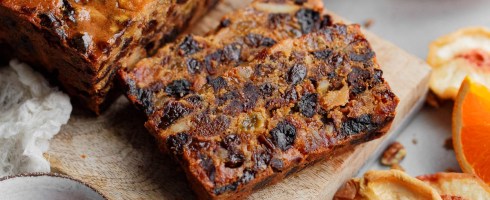
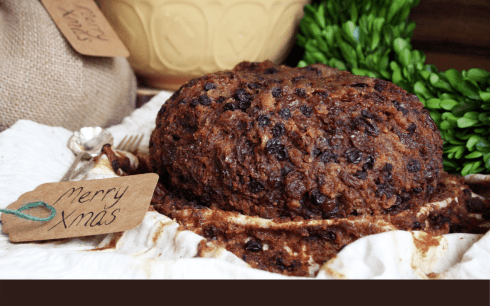
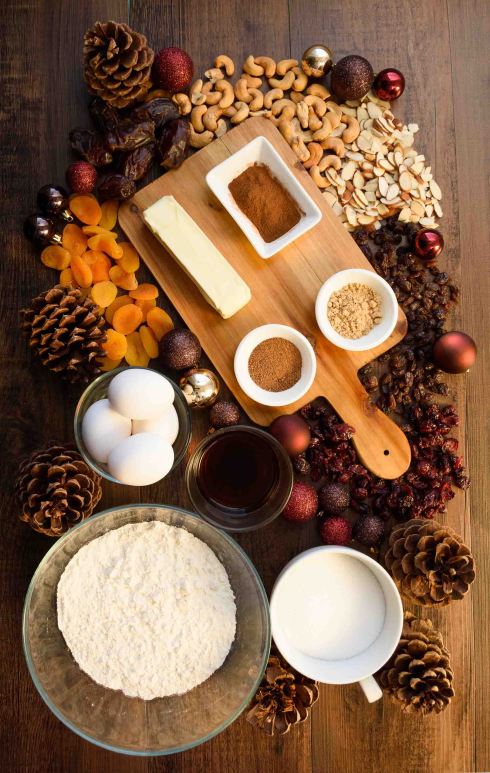
Christmas is all about Cakes – specifically Plum Cakes (Do you know that Plum Cakes have no plums in them?)

Lets discuss

  • Where to get the best Plum cake in Bangalore (Its a secret)
  • The fascinating history of Plum Cake
  • An overview of Cakes baked across the globe during Christmas

But first let me share how I discovered the most delicious Plum Cake in Bangalore

Its an annual ritual to get a Plum Cake during Christmas. Normally its from a neighbourhood store. This year I decided to hunt for the best plum cake in town. I researched online, spoke to friends and looked at pictures (Good Brands & food talk to you). There was wide range out there – From the humble Iyengar bakery to the Exotic 5 Star bakes, Nilgiris, Smoor, Cakewalk, Glen’s bakehouse, Lavonne, Michelle Gafoor, Excelsior and a few more… from Rs 90 for a 200 gram cake at Iyengar’s bakery to premium stores charging 1000 – 1500/Kg.

But they all seemed the same. I could not connect with any of them. Something seemed amiss. They could not entice me to click on the Buy Button.


 Thats when I discovered the Plum Cake from L’inouï


L’inouï – means ‘extraordinary, incredible, unheard of, unprecedented’ in French. Their mission is to bring the finest chocolates and the fine art of chocolate making to Bangalore. And if you have a passion (and palate) for the finer things in life you must explore their products. They also make Plum Cakes.

The minute I saw the website and read about the company I connected. It seemed truthful and of high quality. While I placed my order immediately, I also called up asking to meet the owner of this unique Brand.

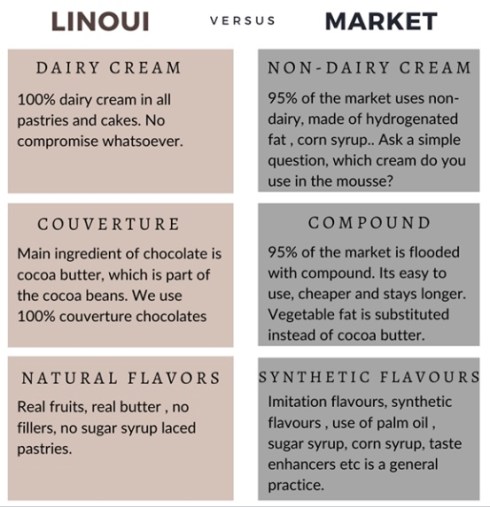
Anusha is a young 1st generation entrepreneur. The idea of creating a Chocolate Shop with European standards came to her mind when she was studying in Belgium. Most pastries in India try to appeal to the masses not via taste, but cost. So, corners are cut, substitutes are employed and an impersonator is born. The little treats often come out overly sugary and underwhelming. And the customer is left wanting. She embarked on a mission  – Use the best ingredients, don’t cut corners, and have specialists working for you. The results are remarkable and loyal customers are turning up in large numbers. When I asked her why Linoui products were 3 – 4 times more expensive, this was her answer.


So what did I like about Linoui’s Plum Cake? 

The packaging was elegant and nice. It was dense – packed with dry fruits, It was rich but not greasy. It did not crumble. It was delicious and it got better on day 2 & day 3. Most Plum Cakes you find in stores are 95% dough and 5% dry fruits. This one was the other way round. Plum cakes are best eaten after a few days of baking. Its good to feed it with Rum, that helps it to darken and stay moist. So when you buy your cake ask when it was baked.

Is the L’inouï Plum cake worth the steep premium? I would definitely say YES – Christmas comes only once a year, go for the best. For Online ordering – https://www.linoui.in/collections/celebration-cakes/products/xmas-plum-cake


Lets now look at some interesting Plum cake Trivia


What’s the Origin of Plum Cakes 

Fruit cakes date back to Roman times, where the people prepared a dessert called Satura, which comprised barley, dried raisins, pine nuts, pomegranate seeds and mead (wine made with honey). The English began making a different version of Satura during the Victorian period. This became a popular and an integral part of holiday feasts. They came to be known as Plum Cakes or plum puddings in England.

Plum Cakes and Christmas – what’s the connection

During the medieval period, there was a popular tradition of observing a period of fast before Christmas. Right before indulging in heavy treats and meals during Christmas, most people consumed a rich porridge that “prepared the stomach for feasting”. This porridge was made of oats, dried fruits, spices, honey and meat. Ingredients such as oats and meat were excluded from the recipe eventually. New ingredients such as flour, eggs and butter replaced meat and oats, paving way for the birth of the famous plum cakes, which are also known as plum puddings or fruit cakes.

Why the name Plum Cake when there is no Plum in them 

The term “plum cake” and “fruit cake” have become interchangeable. Dried fruit is used as a sweetening agent and any dried fruit used to be described as “plums”. Most plum cakes and plum puddings do not contain the plum fruit as we know today. The term “plum” originally referred to prunes, raisins or grapes.Thus the so-called plums from which English plum puddings are made “were always raisins, not the plump juicy fruits that the name suggests today.

In Old English, the term plūme was “from medieval Latin pruna, from Latin prunum,” which equated to “prune“. Prune in modern French means plum, so plum tarts have names such as tarte aux prunes. In English, prunes are dried plums, and when modern cakes use them as a primary ingredient, they may be referred to as a plum cake.

How did Plum cakes travel across the globe

Plum cakes moved out of England primarily due to colonization. English men working in colonies such as Australia, and the Americas, Canada and India received Christmas gifts and hampers from their families in England. Plum cakes were sent along with these hampers. The locals eventually began making these cakes in their households during the holiday season.

How did the cakes last long voyages in those days by ship and land

The cake is prepared by soaking the fruits and nuts in rum/ alcohol. Some soak it for weeks and months while others soak it longer. (Non alcoholic variants are also available) The cake containing good deal of alcohol remains edible for many years. For example, a fruit cake baked in 1878 is kept as an heirloom by a family (Morgan L. Ford) in Tecumseh, Michigan.

Here is some advice from a celebrity Chef on how to make the Plum Cake

Here is a menu from pastry Chef Ravi Varma at Taj Coromandel “Instead of mixing our fruit a few months in advance, we do it a whole year ahead, for maximum flavour,” says the chef. Imagine that. Don’t choose a metal container though or it might react with the alcohol and alter the flavour, advises the chef, “Drain the excess liquid or the cake will become sticky and don’t leave out the candied orange or lime peel in the mix, as that breaks the sweetness in flavour,” he advises.

Plum Cake (Makes 1.5 kg)

Ingredients: Fruits for Soaking
150 gms Raisins | 150gms Candied
Fruits | 150gms Currents
150 gms glazed cherries | 150 gms candied peel | 50 gms cinnamon powder | 50 gms ginger powder
120 ml vodka | 120 ml Brandy | 120 ml whiskey

Method
Soak the fruits in alcohol, pack them in an air-tight container and leave them for a minimum of 15 days, for the fruits
to soak.

Ingredients: Cake
150 gms Butter | 220gms Sugar | 4 eggs
150 gms Flour | 50gms bread crumbs
1 apple | 50 gms apricot Jam | 800 gms soaked fruits | 50 ml Caramel colouring
10 gms ground spices (garam masala)

Method
Cream butter and sugar
Add eggs one by one
Add caramel colour
Mix soaked fruits to it
Then fold all dry ingredients into the batter
Put the batter in a lined pudding mould, bake in double boiler at 150 °C
for 45 to 50 minutes.


Cakes from all over the World

While Plum Cake is very British there are many delicious Cakes made across the world during Christmas. 


Tres Leches cake

The Mexican sponge or butter cake is soaked in three types of milk—condensed milk, evaporated milk and heavy cream—to give it a creamy and spongy texture. The cake is topped with whipped cream and berries and is refrigerated overnight so that the cake can soak up the milk mixture. It is also called the ‘three milk’ cake. Though it can last upto four days when refrigerated, it is best to consume it in 48 hours.

Tarta De Santiago – Spanish delicacy

This Spanish cake recipe comes from Galicia in Spain and literally it means Cake of St James. It is an almond cake consisting of ground almonds, sugar, eggs, sweet wine, lemon zest and brandy. The round cake’s top is sprinkled with powdered sugar with an imprint of the Cross of St James in the middle.

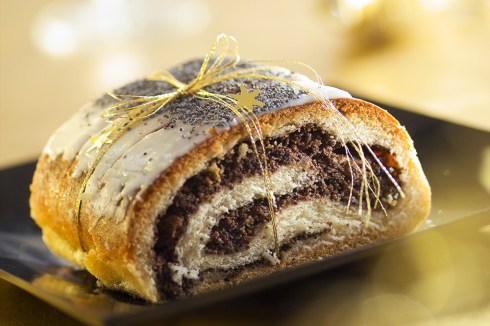
Makowiec from Poland 

Makowiec (pronounced: Mak-ov-yetz) is a strudel-like, yeast poppy seed cake that’s one of Poland’s most popular desserts. It’s main attraction is the filling spun inside, made of finely-ground poppy seeds, honey, butter, raisins and walnuts. When made right, the cake is absolutely delicious. It’s safe to say that many a poppy-seed cake lover would agree that the more the filling, the better

Turkish Revani

This Turkish cake recipe has been served in Turkey since the Ottoman period. Many Middle-Eastern and Mediterranean cultures have adopted the cake with some variations. It is widely served in homes and restaurants and is a single layer of soft and yellow semolina sponge cake covered in light syrup. The cake is made with flour, yoghurt, vanilla, lemon, sugar, vegetable oil, semolina, hazelnuts and so on, while the sugar and lemon syrup are added to the cake later

Stollen from Germany

Stollen is traditional German bread that is eaten during Christmas and is called Christsollen or Weihnachtsstollen. It is a fruit bread made of nuts, dry fruits, spices and powdered sugar. It was baked as Christmas bread for the first time in 1545 with flour, yeast, oil and water

Yule Log

This is a traditional Christmas cake served in France, Belgium, Switzerland, Canada, Lebanon, Syria and some French colonies. A sponge cake is made to resemble an actual Yule Log, a form of sweet roulade. Its recipe flourished around the 19th century.

Italian Pandoro & Panettone 

Panettone is a Christmastime cake from Milan. The sweet, yeasty cake has a distinctive domed shape. Panettone is often compared to fruitcake because both are traditionally made with raisins and candied fruits. Pandoro is a Christmas cake that originated in Verona. True to its name (pan d’oro means “golden bread”), the cake has a bright yellow color. Pandoro is traditionally a star-shaped cake that is dusted with powdered sugar. In the medieval times, the sweet, golden bread was only served in palaces, while the common people could only afford the black bread

French Galette Des Rois

Also called King Cake, this French Christmas cake is usually made during the festival of Epiphany around Christmas. It started roughly 300 years ago as a dry French bread with sugar and bean, and is now made of a sweet brioche dough in a hollow circle shape sprinkled with coloured sugar and a glazed topping. In some countries, king cakes are made with a puff filled with fillings like almond, chocolate, pear or apple and have a feve, a small figurine hidden inside. The cake is named after the three biblical Kings or the three wise men.

Pan de Pascua from Chile 

Despite the fact that the name ‘Pan de Pascua’ means ‘Easter bread’, this cake is a traditional Christmas cake from Chile! It is made with the fusion of fruitcake batter and rum. If you ever visit Chile during the Christmas period, you will be served with a boozy holiday coffee called ‘Cola de Mono’ and ‘Pan de Pascua’ together as a meal!

Dundee Cake – Traditional Scottish Cake

Dundee Cake is a traditional Scottish fruit cake made with almonds, currants and sultanas and fruit peels. Its recipe started developing in Dundee (a coastal city on the Firth of Tay estuary in eastern Scotland) in the 1700s when it started to be mass produced by the marmalade company Keiller’s marmalade, said to be the originators of it. Dundee Cake is also said to be Queen Elizabeth’s favourite during tea time.

Mochi from Japan 

Mochi is a traditional Japanese cake that is made with rice paste. The rice paste is prepared by mixing rice flour with water and the mixture is cooked well till a paste-like consistency is found. The paste is later moulded into any desired shape and decorated with powdered sugar or chocolate flakes

Bolo Rei from Portugal 

This traditional cake from Portugal is very unique in its own way! It is shaped like a crown in reference to the story of the three kings called ‘bolo rei’. This cake is relished by the locals throughout the whole festive period starting from the Christmas to Dias de Reis on January 6.

The End 


Sourhouse – the best place for Sourdough Bread & Pastries in Bangalore

17 Dec

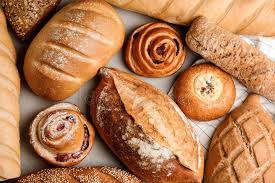
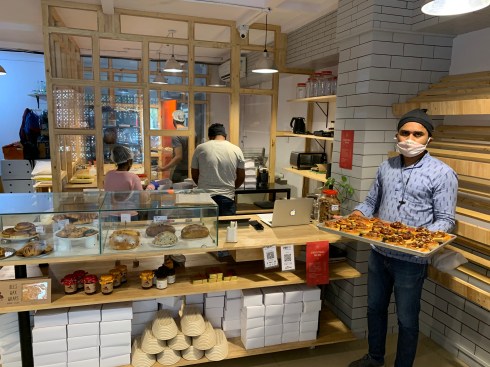
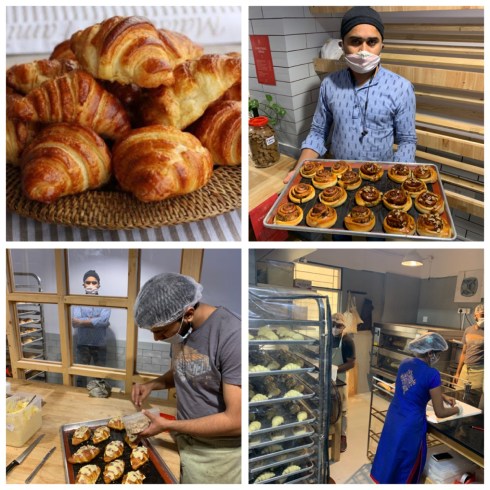
Over the years I have struggled to get a good loaf of bread and fresh soft Croissants in Bangalore. The hunt ended when we  discovered Sourhouse. They make the best Sourdough and fermented products in Bangalore – there is no distant 2nd. Add to this their collection of pastries and dips – its a place to bookmark for a connoisseurs of good food.

With products of this quality you would think that the Chef is trained in one of the famous Boulangeries of Paris. You will be surprised to know that the owner is an engineer with a MS in Human Computer Interface. A simple middle class South Indian lad from Coimbatore. A campus recruit at Wipro, MS in Indiana, a short stint at Siemens US and then the 2008 crisis forced him to come back to India. A brief stint at an NGO in Chennai and then 3 years at a Product design Company. His friends working at the NGO in Chennai started Blue Tokai Coffee and that is when he had the first idea of breaking free and doing something of his own. With no formal training he started baking Sourdough bread at home. 

I asked him – When most people start experimenting with Cup cakes, Muffins, Biscuits and regular bread why Sourdough? He felt that regular bread with Yeast was not challenging – making Sourdough was more exciting and it was a eureka moment when everything worked out perfect. Practise and Passion makes things perfect, add to this the skill and expertise of his British wife Mia the couple started small and went from strength to strength to establish a name for themselves all over Bangalore.

Whats the secret behind their success? Perfecting the art of Fermentation. Thats when I realised that a bakery is not about cream, cheese, chocolate, sugar and butter – Its all about FERMENTATION.

___________________________________

At Sour House, we want to bring the focus back to fermentation – to create products that are naturally processed, using ingredients sourced directly from producers. In short, we aim to bring you good, honest, healthy food in a socially responsible way

___________________________________

What Is Sourdough Bread

Sourdough is one of the oldest forms of grain fermentation.It’s believed to have originated in ancient Egypt around 1,500 BC and remained the customary form of bread leavening until baker’s yeast replaced it a few centuries ago.

What is the difference between regular Leavened bread & Sourdough

A leavened bread is a bread whose dough rises during the bread-making process as a result of gas being produced as the grain ferments. Most leavened breads use commercial baker’s yeast to help the dough rise. However, traditional sourdough fermentation relies on “wild yeast” and lactic acid bacteria that are naturally present in flour to leaven the bread.

The mix of wild yeast, lactic acid bacteria, flour and water used to make sourdough bread is called a “starter.” During the bread-making process, the starter ferments the sugars in the dough, helping the bread rise and acquire its characteristic taste. Sourdough bread takes much longer to ferment and rise than other types of bread, which is what creates its particular texture.

________________________________

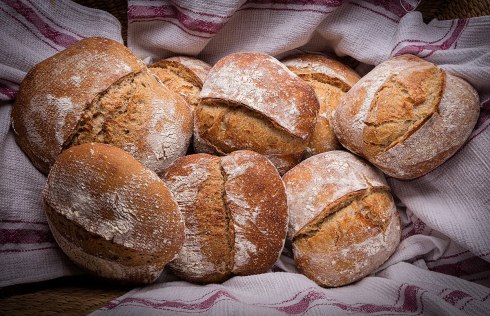
I looked at the wide range of Sourdough bread at the store – Whole wheat, Seeded Loaf, Olive & Rosemary, Sour Loaf, Dark Loaf, Sprouted Buckwheat etc. And I wanted to know why the shape of the bread was in a certain way. 

This shape is called a ‘BOULE” . Boule, from French, meaning “ball,” is a traditional shape of French bread resembling a squashed ball. A boule can be made using any type of flour and can be leavened with commercial yeast, chemical leavening, or even wild yeast sourdough. The name of this rustic loaf shape is reason the French call bread bakers “boulangers” and bread bakeries “boulangeries.”

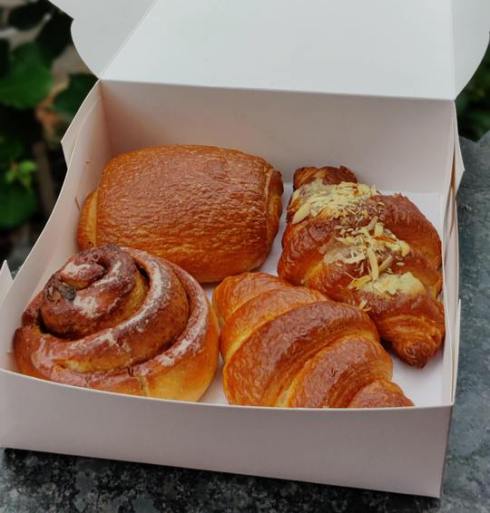
While Sourhouse positioning and claim to fame is around Fermented products (Not just bread but also Kimchi, Fermented Drinks, Dips etc) – they also have an excellent collection of Pastries. (Sourdough pastries are difficult to make and more chewy – the Sourhouse pastries are not made of Sourdough). Sourhouse makes fabulous Pastries. The best Croissants & Cinnamon rolls I have tasted in India. Soft, fresh and massive in size. They also make delicious Palmiers – A classical French pastry made using 80% whole-wheat and 20% white flour coated with sugar.

And here again there was some education for me. As a I kid I grew up knowing two type of cakes – A pastry (a sweet bread block with a thin layer of icing and cream on top) and a Roll Cake that was filled with a white sugary semi solid. Today I realised there is a lot more to the family of Pastries.

The word Pastry comes from the word PASTE. Credit again goes to the Egyptians. One of the earliest forms of pastry was made by combining flour and water into a paste which was then wrapped around meat to be baked. Pastries were later developed in the Middle East and would eventually be brought to Europe, gaining popularity in the medieval period. By the 1600s, different types of pastry were developed. A Pastry is a small bun made using a stiff dough enriched with fat

There are five basic types of pastry – shortcrust pastry, filo pastry, choux pastry, flaky pastry and puff pastry. Two main types of pastry are nonlaminated (when fat is cut or rubbed into the flour) and laminated (when fat is repeatedly folded into the dough using a technique called lamination) An example of a nonlaminated pastry would be a pie or tart crust and brioche. An example of a laminated pastry would be a croissant, danish, or puff pastryBaklava is an Ottoman Pastry and Gujiya an Indian pastry. ( Wikipedia even classifies a Samosa as a pastry)

All of this made by a few passionate, dedicated staff. Its all hand made – there is no mass production. Business is booming and large outlets like Foodhall, Nature Basket, Namdhari and Organic world have started placing bulk orders. Its a lot of hard work.

They make almost 25 different products and the best time to visit the store is at 2 in the afternoon. I assure you the smell of freshly baked products is heavenly. Almost everything is made to order and there is no stock that is carried over to the next day. They have a retail outlet in Koramangla near Ooty Chocolate.

And its easy to get their products – they deliver all over Bangalore. You can place your order before 4 PM for the next day delivery. https://www.sourhouse.in. You can also call them at + 91 98940 62073. 

Christmas is round the corner, but unique that they are there is no Rich Plum Cake in the menu – instead you can enjoy STOLLEN – A German speciality. Stollen  is a fruit bread of nuts, spices, and dried or candied fruit, coated with powdered sugar or icing sugar. It is a traditional German bread eaten during the Christmas season. They also have plans to start breakfast at 8 AM on Sunday – Fresh Bread, Pastries and Coffee. Selvan wanted to experiment with Bread and Chicken Curry – now that is something I frowned at. I would rather they stick to a traditional English Breakfast.

A few More Interesting Facts 

A Patisserie is a type of Italian, French or Belgian bakery that specialises in pastries and sweets, as well as a term for these types of food.

Croissant – A buttery flaky bread named for its distinctive crescent shape. The Kipferl, ancestor of the croissant – has been documented in Austria going back  as far as the 13th century, in various shapes.The “birth” of the croissant itself – that is, its adaptation from the plainer form of Kipferl can be dated back to 1839.The French version of the Kipferl was named for its crescent (croissant) shape

Why Sourdough Bread is one of the healthiest Bread –  https://www.healthline.com/nutrition/sourdough-bread

What is wild yeast?

Wild yeast are single-celled organisms that exist all around you. They feed on carbohydrates, and as they do so they release carbon dioxide, B vitamins, and alcohol. Because they release carbon dioxide, yeast can leaven bread, and because they convert carbohydrates to alcohol, brewers use yeast to make beer and wine, too.

Traditionally, all brewing and baking used wild yeast – or the yeast found in the natural environment on your skin, in flour, on grains, and in the home.

With time, brewers and bakers cultivated these wild yeasts and, in the 19th century, chemists were able to isolate and domesticate certain strains from the yeast species saccharomyces cerevisiae, which is what you find in packets of baking yeast today.

What is the shelf life of a Sour House loaf?
Consume your bread while it is still fresh. If you leave it outside for more than 2 days the crust may become hard. However, sourdough has a good shelf life and you can still eat it until it begins to go mouldy. (We hope you won’t leave it that long!)

How to store Sourdough bread? ‎
Avoid refrigeration – it will remove all the moisture. Also avoid putting your loaf in a plastic bag, as that will make the crust begin to soften. Storing your loaf in a clean cotton cloth bag will help keep it fresh for longest. ‎If you are planning to save it for later consumption, we advise slicing the loaf, wrapping it in cling-film and freezing it.


A simple narration of Bangalore’s history over the last 2000 years

13 Dec

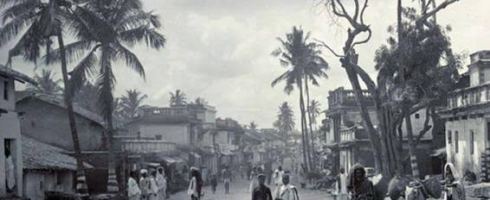
How many of us know the History of Bangalore? I got the first glimpse and interesting insights from Sushma of Yours Truly India when I was helping her conduct walking tours. That triggered me to research and come up with something that is easy to read in a Q&A format and studded with interesting highlights. I encourage you to go through this 10 Minute read and share it with your children, family & friends.

To get you started here are some fun facts from the Blog

  • Do you know where Shivaji was married? 
  • Bangalore was sold by Aurangzeb to the Wodeyars – Guess for how much?
  • There is a reason that Malleshwaram and Basavangudi are on hilly terrain 
  • Do you know why Cubbon Park was built?
  • The iconic Taj West End started as a boarding house with 10 beds
  • Learn about Swami Vivekananda’s connection with IISC
  • Bellandur lake was a seaplane landing strip during WW 2 in 1942……. 
  • The grand Vidhan Soudha was built at a cost that is cheaper than a 3 Bedroom apartment today


Who ruled Bangalore for the longest period in the last 2000 years? Hint its not the Wodeyars    

The longest tenure was with the Western Ganga Dynasty from 350 – 1000 AD. They asserted their rule after the weakening of the Pallava empire. For the 1st 200 years they ruled a large area called Gangawadi, but after 550 AD when the Chalukyas and later the Rastrakutas and Hoysala’s dominated the south they became their vassals. Their capital was initially Kolar and later shifted to Talakad and then Manne (Near Neelmangala)

The mighty Cholas ruled Bangalore for only a century

The Cholas defeated the Gangas in 1024, but their rule was a short one for barely a century. But during this brief period many Chola temples were built in and around Bangalore. In 1117 AD The Hoysala King Vishnuvardhan defeated the Cholas in the battle of Talakad and Bangalore became a part of the Hoysala empire.

The Bhoga Nandeeshwara temple near Nandi Hills built in early 9th century,is a good example of how different dynasties expanded on the existing temples. The shrine of Arunachaleshwara representing Shiva in his childhood it was built by the Gangas, Uma Maheshwar was built by the Hoysalas and Bhoga Nadeeshwara was built by the Cholas. The Vijayanagara kings also added to the splendour of the temple.


Is the name “Bengaluru” attributed to a tired and lost Hoysala king being fed boiled beans by an old lady?

The Popular Tale Of Bengalooru getting Its Name From ‘Bende Kaalu Ooru‘ Meaning ‘Town Of Boiled Beans’, After King Veera Ballala II Of The Hoysala Dynasty In 1120 AD was fed boiled beans by an old woman in the forest is historically incorrect. The Name ‘Bengalooru’  was recorded in a 9th Century inscription found in a temple in Begur village near Bangalore. 

The ancestors of Kempe Gowda came from Kanchipuram?

Legend traces the lineage of Kempegowda to a Rana Byre Gowda, a resident of Alur village in Kanchipuram, TN. He decided to migrate from there at the end of the 13th century with his 7 brothers and family and settled in Avati village near Devanahalli Bangalore.

Kempe Gowda – 1 was a feudatory of the Vijaynagar empire.  He and his sons administered this area for almost a 100 years and they saw the development of Bangalore as a planned and structured city. They were collectively called Yelahanka Nada Prabhus, and were chiefs of Bangalore, Magadi and Sivaganga.

Why is Kempe Gowda called the founder of Bangalore? 

In the 16th century, Vijayanagar Empire was at its peak under the rule of Krishna Deva Raya, with Hampi as its capital city. The empire was ruled by many Chieftains who owed allegiance to the emperor. Yelahankanadu (It is today called Yelahanka) was one such prosperous town ruled by a Chieftain (Nada Prabhu) named Kempe Gowda. Upon his visit to Hampi sometime during the mid 1530s, he was mesmerised by the glory of the rich city and its sophisticated layout & planning. Being a Nada Prabhu himself, he dreamt of building such a city with fort, temples, water tanks and people from all trades & professions.

How did Kempe Gowda initiate the development of Bangalore?

During one of his hunting expeditions in the forest area adjoining Yelahankanadu, he saw a rabbit chasing a dog, which was perceived as an auspicious sign.After seeking permission & blessings from Achyutharaya (King of Vijayanagar Empire), Kempe Gowda spent the next few years establishing Bangalore as a thriving city with commerce, culture, military & education. The capital was then shifted from Yelahanka to Bangalore by Kempe Gowda 1. The king was very pleased with the new city and in return gifted him the villages of Halasur, Begur, Vartur, Jigani, Talaghattapur, Kumbalagode, Kengeri and Banavar all yielding an annual revenue of 30,000 pagodas (a pagoda – gold or silver coin was worth 3 1⁄2 rupees in 1818.)

How was the original Bangalore layout created? 

On a bright sunny morning in 1537 AD, 4 pairs of white bullocks with decorated ploughs, assembled in the middle of the forest at the junction between dodapette and chikapete were waiting for further orders. At an auspicious time, as Kempe Gowda flagged off the event, these 4 pairs driven by young men started furrowing the ground in 4 cardinal directions. The routes ploughed by these bullocks were marked as the main streets of this new city. Even 500 years later today, these streets are still buzzing with activity.

The street running east-west was named Chikkapete street & the north- south street was named Doddapete street (later renamed as “Avenue Road”)

To guard this new city, Kempe Gowda built a strong mud fort with 4 main gates for entry/exit. The entire fort was surrounded by moat (ditch filled with water). The city itself was only on 1.5 square kilometres of land

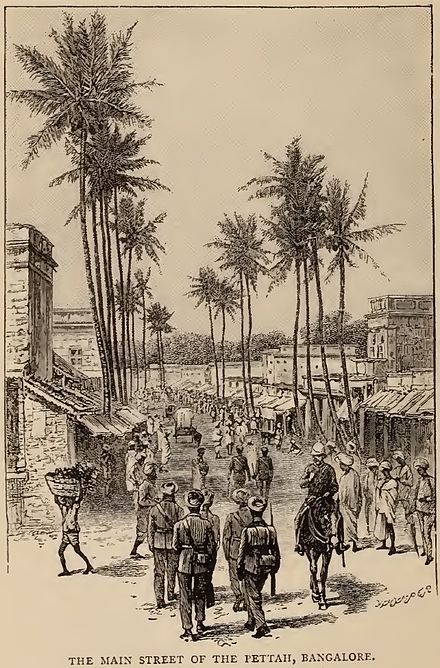
To streamline activities of traders, he hit upon an interesting plan of forming several layouts, each catering to a certain trade or profession. Doddapete was for large businesses (Dodda means large in Kannada) and Chikkapete was for smaller businesses (Chikka means small). For rice traders, there was Akkipete. Ragipete for ragi traders. Balepete for bangle traders, Ganigarapete for oil traders, Nagarthapete for Gold traders, Gollarpete for cowherds & cattle traders, Kurubarapete for sheep traders, Thigalarapete for farmers of Tigala community Upparapete for salt traders, Aralepete (now Cottonpete) for cotton traders, Kumbarapete for pot traders and many more such petes. (These petes still exist )

Kempe Gowda and his sons did a lot between 1537 and 1638 and deserve to be called the founders of Bangalore

Temples : Kempe Gowda built many Temples including Bull Temple (in Basavanagudi), Anjenaya Temple (at Avenue road entrance) Gavi Gangadhareshwar Temple and Ulsoor Someshwara temple (made additions to the existing structure built by the Cholas)

Watch Towers: Kempe Gowda II erected four watch towers to mark the boundaries of Bangalore during his reign. All four towers are now in the heart of the city, standing as an indication of its expansion. In the north on Bellary road, in the South inside the Lalbagh Botanical Gardens, the eastern one on a rock near Ulsoor lake and Western one overlooks the Kempambudhi tank.

Tanks: In order to supply water for domestic & irrigational purposes, Kempe Gowda built several water tanks & reservoirs around the fortified city. Dharmambudi (present majestic bus stand) & Kempambudhi tanks were built for domestic purposes while Sampangi tank was for irrigation. Apart from these, there were also several lakes in and around Bangalore.

The Kempe Gowdas built 9 Forts to fortify Bangalore – many of them are favourite trekking zones today?

Some of the forts are very popular amongst the public, like Savandurga, Nandidurga alias Nandi Hills, Makalidurga and Devarayanadurga. The lesser known ones amongst them are Hutridurga, Huliyurdurga, Channarayana durga, Kabbaladurga and Bairavadurga which are visited by the villagers surrounding the place or by avid trekkers, who are on the lookout to experience the thrill of the off beat path. These forests are in a dilapidated state today.

What is Bangalore’s connect with the Marathas?

Shivaji’s father Shahji Bhonsle working for Adil Shah of the Bijapur sultanate attacked Kempe Gowda and captured Bangalore. Shahji negotiated a treaty by which Kempegowda surrendered Bangalore fort and its surroundings. Kempegowda withdrew to Magadi and would be referred to as Magadi Kempe Gowda. Bangalore was given to Shahji as his personal jagir, a reward for his role in the victory. The acquisition of Bangalore by Bijapur in 1638 is significant for it was after the city came into the hands of Shahji that it became a centre for Maratha activities

Shivaji was married in Bangalore 

While Shahji was in Bangalore he sent for Shivaji and Jijabai (1st wife). Shivaji stayed in Bangalore from 1640 to 1642 and married Saibai Nimbalkar around the age of 12 after which he was given the Poona Jagir to which he returned.

How did Aurangzeb annex Bangalore?

A lot of battles took place both internal conflict (between Shahji and the Bijapur ruler) and outside with Kantirava Wodeyar and other rulers. Shahji died in Bangalore after a fall from a horse in 1664. Over political issues and conflict Venkoji shifted his capital to Tanjore. The Mughals under the leadership of Aurangzeb proceeded towards south and captured Bangalore in 1689

Lets have a quick recap on the Wodeyar dynasty

The Wodeyar dynasty was founded as a feudatory principality in 1399, which grew into the Kingdom of Mysore. The Wodeyars ruled that kingdom almost uninterruptedly between 1399 and 1947; they ruled initially as vassals of the Vijayanagara Empire (1399–1565), then as independent rulers (1565–1761), then as puppet rulers under Hyder Ali and Tipu Sultan (1761–1796) and finally as allies of the British crown (1799–1947)

Was Bangalore actually sold for the equivalent of Rs 3 Lacs to the Wodeyars in 1689?

Venkoji faced with defeat against the Mughals started negotiating with the Wodeyar king Chikka Devraja Wodeyar the sale of Bangalore for Rs 3 Lacs. However the Wodeyar king aligned and supported the Mughals, as a reward Aurangazeb sold Bangalore to the Wodeyar’s for the same amount. So 1689 was the first time that the Wodeyars became rulers of Bangalore.

Who was Chikka Devaraja Wodeyar and why is he important to the development of Bangalore?

Chikka Devaraja Wodeyar was the 14th ruler of the Mysore dynasty. He was known for his friendship with Aurangzeb, which helped Mysore become a tributary state (one with no administrative curbs or interference by the ruling hegemon) under the Mughal rule. At the same time, he earned Maratha admiration by defeating Shivaji  in a cavalry battle. He earned the title of Apratima Vira for his valour and shrewdness in dealing with both the Marathas and the Mughals. He was also responsible for establishing the postal system and the Attara Kacheri in the city and built the Kote Venkataramana Temple in Chamarajpet.

How did Haider Ali establish a brief 30 year period of sultanate type rule in the south?

Hyder Ali was a petty office in the Nizam’s army. As a warrior he proved his mettle in the 1750’s against the Peshwa Balaji Baji Rao (Marathas). When the Nizam was assassinated, a lot of confusion followed and in the midst of the chaos, Hyder Ali’s services attracted the attention of the minister of the Raja of Mysore. But in a series of fascinating events where the Machiavellian Haidar ran with the hare and hunted with the hounds, he ended up overthrowing his own benefactor and usurping the throne of Mysore from the Wodeyars in 1761. Haidar was shrewd enough not to dispense with the Wodeyars who had been ruling Hindu-majority Mysore since 1399. The maharaja was a titular puppet.

Haider Ali and his son Tipu Sultan ruled a large part of South India from Srirangapatna for a brief period of 30 years from 1761 – 1799. They also had palaces and forts in Bangalore. After Haider’s death in 1782 Tipu continued the war against the Marathas and English. In 1791 under Lord Cornwallis Tipu was defeated and driven out of Bangalore. The city was now taken over by the British. Later in 1799 Tipu was killed at Srirangapatna.

Did you know that Lalbagh was established by Haider Ali?

Hyder Ali commissioned the building of this garden in 1760 but Tipu completed it and later adorned it with unique plant species. In his book Heritage Trees, naturalist Vijay Thiruvady writes that before the 1800s, the Bengaluru plateau was largely barren except for Lalbagh, with a few groves around temples and village commons. It was called ‘the naked country’.

So how did Bangalore comes back to the Wodeyars?

Upon the passing of Tipu Sultan in 1799, the Wodeyars returned to the throne of Mysore, and therefore Bangalore, although only as figureheads. Bengaluru remained part of British East India until Indian independence in August, 1947.

The ‘Residency’ of Mysore State was first established at Mysore in 1799 and later shifted to Bengaluru in the year 1804. It was abolished in the year 1843 only to be revived in 1881 at Bengaluru and finally to be closed down in 1947 with the departure of the British

The Wodeyars and British in close alignment developed Bangalore and Mysore state as an ideal state

Maharaja Krishnaraja Wodiyar IV ( 1884 –  1940) was the twenty-fourth maharaja of the Kingdom of Mysore. At the time of his death, he was one of the world’s wealthiest men, with a personal fortune estimated in 1940 to be worth US$400 million, equivalent to $7 billion at 2018 prices. He was a philosopher-king, who was seen by Paul Brunton as living the ideal expressed in Plato’s Republic. He has been compared to Emperor Ashoka by the English statesman Lord Samuel. Acknowledging Krishnaraja Wadiyar IV’s noble and efficient kingship, Lord John Sankey declared in 1930 at the Round Table Conference in London, “Mysore is the best administered state in the world“. His contribution to Bangalore is immense and long – a few notable ones being the K.R.Market, School of engineering Bangalore, Raman research Institute, IISC.

Why did the British soldiers move from Srirangapatna to Bangalore? 

The British troops which were first stationed at Srirangapatna after the fall of Tipu Sultan in 1799 were later shifted to the Civil and Military Station of Bangalore in 1809.

Mysore was hot and malaria infested. The salubrious climate of Bangalore attracted the ruling class and led to the establishment of the famous Military Cantonment, a city-state close to the old town of Bangalore. The area became not only a military base for the British but also a settlement for a large number of Europeans, Anglo-Indians and missionaries.

Why are the names of many streets in Bangalore derived from military nomenclature?

In Cantonment, the names of many of its streets are derived from military nomenclature — Artillery Road, Brigade Road, Infantry Road and Cavalry Road. The South Parade (now known as Mahatma Gandhi Road) was to the south of the Parade Ground. The Plaza theatre was constructed in the year 1936 on the South Parade and was used by the soldiers for viewing Hollywood movies. The British representative maintained a residence within the cantonment area and his quarters was called the Residency and hence the name Residency Road. Around 1883, three developments were added to the cantonment – Richmond Town, Benson Town and Cleveland Town. The Cantonment has retained it distinct atmosphere through the years with large populations of Anglo-Indians and Tamils from the British era.

How was British rule beneficial to Bangalore?

Bangalore saw rapid development under the British Commissioners. Infrastructure, Law & Order, Education under Missionaries, and Health Services were improved under the direct administration of the British. The Wodeyars were in full alignment with the British and there was finally peace in the region. The 1857 mutiny which was strong in N & Central India had no impact in Bangalore

Did you know that Bangalore was the first city in Asia to get Electric Street Lights?

Thanks to the Maharajas of Mysore for being visionaries and putting Mysore state in the forefront of the industrialisation, Bangalore was the first city in undivided India and even Asia to get electricity. Asia’s first hydel power station was set up at the foot of the Shivanasamudra falls. This was done primarily to supply power to Kolar Gold Fields. The power lines went through Bangalore and since there was excess power being generated it was used to light up the streets of Bangalore. On the evening of August 5, 1905, it had blazed to life at the flick of a switch by Sir John Hewett of the Viceroys’ Council – inspiring awe among the townsfolk, when the rest of India was lit up by oil lamps. Below is the photo of the street lamp that was lit that day. It still exists near the KR Market flyover.

Whats the history behind Cubbon park?

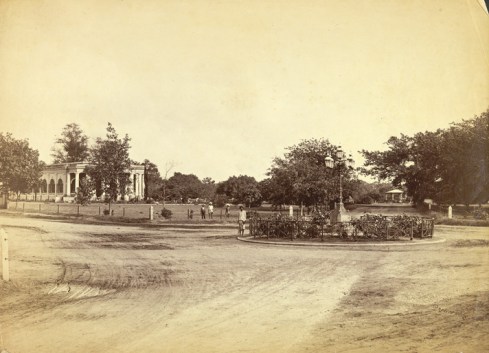
The old city built by Kempegowda and the new Cantonment built by the British for its officers and soldiers was quite a distance by walk / carriage. There was a lot of movement between these two places and hence it was decided to create a rest area for the people. Thus was born Cubbon park. The Cubbon Park has a history of over 100 years. It was established in the year 1870 by Sri John Meade, the then acting Commissioner of Mysore. The vast landscape of the park was conceived by Major General Richard Sankey, the then Chief Engineer of the State. As a mark of honor to Sri John Meade, the park was initially named as “Meade’s Park” and subsequently it was called the Cubbon Park.

Right next to the Cubbon Park is the St Marks Cathedral. It began as a garrison church in 1808 of the Madras Army of the East India Company. The foundation stone was laid in 1808, and construction was completed in 1812.The church was consecrated by the Bishop of Calcutta in 1816. The church was expanded in 1901, and went through reconstruction in 1927 after the fire of 1923.

The great famine of 1876 – 1878

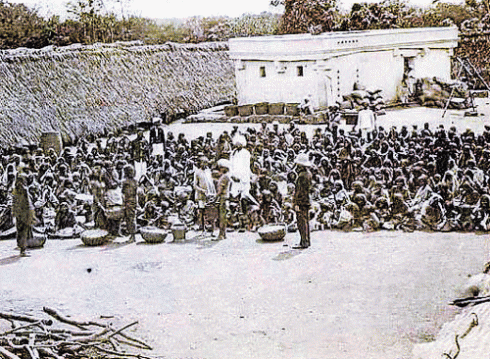
A severe famine hit the Bombay, Mysore and Madras presidencies. The death toll was alarming.The mortality in Mysore Presidency was appalling, reaching the terrible total of 1,250,000, one-fourth of the population of the province. More than 5 lakh bullocks, buffaloes, sheep and goats died alongside. Bangalore became a heaven for the huge influx of people who migrated for food and work from other parts of the state. These people were engaged in civil works and in turn were paid in grains. Around 20,000 migrants were employed for constructing the Bangalore Mysore railway line. New tanks were constructed and renovation and repair of old tanks were also taken up in a war footing manner.

How Bangalore weathered the great Plague of 1898

The most documented and dreaded outbreak in India was of bubonic plague (1896-1899) that spread terror across Bombay and Calcutta Presidencies, Mysore State, Dharwad and Hyderabad. There were 36,381 seizures in Bombay, 7,176 in Bangalore and around 36,459 in Dharwad. That wiped out almost 10 percent of Bengaluru’s population. Strict control was established, houses were marked, stations and trains were sanitised and Inoculation drives were started city wide. But people were scared to visit hospitals – on account of religious bias a Brahmin did not want to share a ward with a lower caste. People were scared of inoculation. The disease spread widely and caused havoc. Post the plague people were requested to move from the densely populated areas of the Petes to the newly created colonies of Malleswaram and Basavangudi. There was resistance. But the few who moved – their ancestors will thank them for their wise decision.

Why are Malleshwaram and Basavangudi on hilly terrain?

Most of the city was under the authorities of the British Cantonment in the 19th century, and had various well-planned layouts such as Richmond Town, Cox Town and Benson Town. The Wadiyar government planned and executed similar planned layouts in 1880s, leading to the formation of Basavanagudi and Malleswaram

Just as Basavanagudi layout was named after the Basavanna temple, Malleswaram was named after the Kadu Mallikarjuna (Malleswara) temple. These layouts were founded in 1889 as an alternative to the crowded Pete area which was low lying and prone to flooding and disease. The Wodeyar’s of the Mysore kingdom wanted to provide a modern lifestyle to all communities, in which they could live in hygienic conditions.

Interestingly, both these new layouts were created on foothills: Basavanagudi lies on the foothills of the Bull Temple, Bugle Rock and Lal Bagh, while Malleswaram is on the foothills of the Kempegowda watchtower and Palace Guttahalli. This was a strategic design to avoid flooding and disease.

Why was the Victoria hospital named after Queen Victoria?

The plague resulted in a health officer being appointed for the first time in the City. The Victoria Hospital was inaugurated by Lord Curzon, the then Governor General in 1900 to help the plague victims. The foundation stone for the hospital was laid in 1897. This year was important because it marked the completion of 60 years of Queen Victoria’s rule. The Victoria Hospital was christened in the honour of the diamond jubilee of Queen Victoria. Initially it had 100 beds – but is now one of the largest hospitals in S India.

How was Swami Vivekananda involved in setting  up IISC?

The Indian Institute of Science was set up in 1909, laying the foundation for Bangalore becoming the “Science Capital” of the country.

The Indian Institute of Science (IISc) was conceived as a ́Research Institute ́ by Jamsetji Nusserwanji Tata, in the final years of the 19th century. A long period of almost thirteen years was to elapse from the initial conception in 1896 to the birth of the institute on May 27, 1909. The people who made it happen include – its charismatic and generous founder J.N. Tata, Swami Vivekananda (whom J.N. Tata befriended on his famous voyage to the United States) the Maharaja of Mysore, Shri Krishnaraja Wodeyar IV and his mother then acting on his behalf, and Lord Curzon the Viceroy of India,

Swami Vivekananda and Tata met during a voyage to the US aboard the steamship SS Empress of India. Tata was on his way to test his bags of Indian soil for iron content in Germany. Swami Vivekananda discouraged this stating the European nations will not support this and discourage anything indigenous. He asked Tata to come up with a research institute in India itself, and train Indians for this. Originally the institute was to be setup in Bombay. The Noble prize winning scientist Ramsey was asked to tour India to find the best place conducive to research. He suggested Bangalore, but Tata favoured Bombay. Johns Hopkins University in the U.S. was taken as the model.  The Mysore government would, in the end, provide more than 371 acres of land for the institute, as well as grants to help set it up. This help from the Mysore government also ensured that the institute was situated in Bangalore.

Did you know that Mahatma Gandhi visited Bangalore many times. 

He visited the city five times between 1915 and 1940. An ailing Mahatma Gandhi stayed at Nandi Hills for 45 days in 1936 to recuperate from a spell of high blood pressure. The guest house atop Nadi Hills is still called Gandhi Bhawan.

Winston Churchill lived in Bangalore and got bored

In October 1896 Winston Churchill reached Bangalore, then not a bustling megapolis but a small, sleepy, cantonment town. He liked the climate: ‘the sun even at midday is temperate and the mornings and evenings are fresh and cool’. He liked the house alloted to him: ‘a magnificent pink and white stucco palace in the middle of a large and beautiful garden’. And he was well served by his staff, who included a gardener, a water-carrier, a dhobi, and a watchman.

After eight months in Bangalore the young subaltern wrote to his mother summing up his life there. ‘Poked away in a garrison town which resembles a 3rd rate watering place, out of season and without the sea, with lots of routine work and … without society or good sport—half my friends on leave and the other half ill—my life here would be intolerable were it not for the consolations of literature….’. Churchill still owes the Bangalore Club a princely sum of Rs 13.

Bangalore club was established in 1868, named the Bangalore United Services Club for officers of the British Empire. In 1915, membership was opened to Indian officers. Membership for civilians was opened in 1946, and the club was renamed the Bangalore Club.

Bangalore Palace was built in 1878 by the British using the Maharaja’s money – The property was purchased from Rev. Garrett in 1873 at a cost of Rs. 40,000 by the British Guardians of the minor Maharaja using his personal funds. They were in charge of his education and administrative training to ready him to take over his reign in 1881 AD. As the young Maharaja did not have a suitable place to stay during his training in Bengaluru, this property was purchased and transformed. Construction of a palace building was started in April 1874 and completed by 1878. The palace was built in Tudor Revival style architecture with fortified towers, battlements and turrets. The interiors were decorated with elegant wood carvings, floral motifs, cornices and relief paintings on the ceiling. The furniture was neo-classical, Victorian and Edwardian in style.The palace has a floor area of 45,000 sft, and grounds of 454 acres


What happened to the lakes and gardens of Bangalore?

Bangalore once had 141 lakes of which seven cannot be traced, seven are recognisable as small pools of water, 18 have been unauthorisedly occupied by slums and private parties, 14 have dried up and are leased out by the Government. In the area where there were once 28 lakes (in different locations, of course), the Bangalore Development Authority has distributed sites and built extensions. The remaining 67 lakes are in fairly advanced state of deterioration.

  • The Siddikatte Lake has now become the bustling City Market
  • Sampangi tank now houses the Kanteerava Sports Stadium
  • Dharmambudhi is now the busy Kempe Gowda Bus Stand
  • The Karanji tank is the Gandhi Bazar area
  • Kempambudhi is now a sewerage collection tank
  • Chennamma tank a burial ground
  • Akkithimmanahalli tank is the Corporation Hockey Stadium
  • Jakkarayanakere is also converted into a sports ground
  • Miller Tank area houses the Guru Nanak Bhavan, schools, and several buildings.

It was only in 1894 that Bangalore city got clean protected water supply. Prior to this, unfiltered water was being supplied to Bangalore in the Karanjee system from a number of tanks viz., Dharmambudi, Sampangi, Ulsoor etc, supplemented by local wells and Kalyanis or Stepped Ponds. In the year 1894, the first protected water supply scheme “Chamarajendra Water Works” was started by Sir.K.Seshadri Iyer, the then Dewan of erstwhile Mysore province. The source of water was Hesarghatta lake on Arkavathi River.

In his travel account of 1800, Francis Buchanan refers to the greenery of Bangalore owing to its vegetable farms, coconut gardens, beetle leaf farms, and flower gardens. Today most of these gardens have given way to residential localities which have retained the old names such as Chikkanna Gardens, Tulasi Thota, Wilson Gardens, Yellappa Gardens, Sankamma Thota, Rudrappa Garden, Mavina Thota (Banashankari), Pillanna Gardens, Thengina Thotada Raste (Coconut Garden Road), Margosa Road, and Sampige Road.

Some more developments since 1840 

  • The first printing-press in Bangalore was established in the year 1840. In 1859, Bangalore Herald became the first English bi-weekly newspaper to be published in Bangalore and in 1860, Mysore Vrittanta Bodhini became the first Kannada newspaper to be circulated in Bangalore
  • Girls’ Education – Mysore state was one of the most progressive regions in pre-independent India. It was a pioneer in establishing modern systems of education; the London Mission was the first girls’ school in the state, established in Bangalore city in 1840.
  • The Raj Bhavan (known as Residency earlier) was built by Sir Mark Cubbon (the Commissioner of Mysore territories of the British) in 1840-1842.
  • At the east end of M G Road, what used to be known as Parade Grounds, lies the Holy Trinity Church, a Protestant church built in 1852 to accommodate the increasing English speaking congregation in the Cantonment area of Bangalore.
  • 1864 Bangalore gets a train line – Bangalore mail starts running to Cantonment station, probably the first regular named train service in India.
  • Attara Kacheri (literally means 18 government offices), located at the entrance to the Cubbon Park was built in 1864 A.D. It is a two storied stone structure in an intense red hue, with Corinthian (most ornate of the Roman architecture) columns in Gothic Style of architecture. The Public offices (Secretariat of the Government of Karnataka) were located here from 1868 AD to 1956 AD, which were later moved to the Vidhana Soudha. The building now accommodates the Karnataka High Court.

  • Bangalore City Municipality established in 1862 when the city’s population was just over 1 Lac. The BCM’s revenue for the year 1862-63, according to the Karnataka Gazette, was Rs 21,981.
  • St. Mary’s Basilica located in Shivajinagar, is the oldest church in the city, which dates back to 1685. It used to be a small chapel, which was rebuilt by Abbe Dubois, who came to Bangalore after Tipu Sultan was defeated at Srirangapatna. As it stands today, it was built between 1875 and 1882 at a total cost of Rs 30,000.
  • St. Joseph’s College was founded in 1882 by the Fathers of the French Foreign Mission. The Foreign Missions Society of Paris bought a plot of land on St. John’s Hill and gradually made the transition to the location it occupies today.
  • Whitefield established in 1882 – On the 27th April, 1882, His Highness, Chamaraja Wodeyar, the Maharaja of Mysore, granted 3,900 acres (16 km2) of land to the Eurasian and Anglo-Indian Association, Mysore and Coorg (E&AI) for the establishment of agricultural Settlements at Whitefield (then Mysore state)
  • The Central College, Bengaluru was started in 1886 by the British government to award University Degrees. It was renamed as the Bangalore University by the University Grants Commission on 10 July 1964
  • In 1887, a British woman named Mrs. Bronson started a boarding house with 10 beds. As the popularity of the first hotel in the city grew, it began to expand. In 1912, the place changed hands, with Spencer’s buying it for a princely Rs.4,000. Decades later, in 1984, it was sold again, to the management of what is now the Taj West End

  • Ramakrishna Math, Basavangudi –  Bangalore devotees requested to establish a permanent Centre of Ramakrishna Order in Bangalore. Upon their requests Ramakrishna Math, Bangalore came into existence in 1904 in a rented building. The foundation stone for the Ashram at Basavangudi was laid in 1906 by Swami Abhedananda. On 20 January 1909, the Ashram building was inaugurated. Holy Mother Sri Sarada Devi visited Bangalore in March 1911. She stayed at Ramakrishna Ashrama for 4 days and blessed the devotees
  • Mysore Sandal soap has been manufactured since 1916 when Nalvadi Krishnaraja Wodeyar, the king of Mysore set up the Government Soap Factory in Bangalore. This was done to deal with the excess sandalwood reserves. It is the only soap in the world made from 100% pure sandalwood oil.
  • Mavalli Tiffin Room (MTR) founded in 1924 is an iconic landmark of Bangalore. The food served at MTR is a regular, wholesome Karnataka Brahmin food. During World War II, MTR found it difficult to make idlis since rice was in short supply. According to MTR, they experimented with semolina instead of rice and thus invented the very popular breakfast item of Rava idli. The other iconic restaurant Vidyarthi Bhavan was started in 1942. As the name suggested it was initially a mess for hostel students living in that area.

  • K R Market was established in 1928. The location of the market is said to have been a water tank and then a battlefield in the 18th century during the Anglo-Mysore Wars.
  • Nilgiri’s opened their first store on Brigade Road in Bangalore in 1939. The store continues to stand at that location till date. (Walmart opened its 1st store in 1962)

  • HAL was established as Hindustan Aircraft in Bangalore in 1940 by Walchand Hirachand to produce military aircraft for the Royal Indian Air Force.
  • 1942 Bangalore and World War II – Seaplane landing strip at Bellandur lake was created during World War II. The lake could accommodate six huge planes
  • The Raman Research Institute was founded in 1948 by the Indian physicist and Nobel Laureate, Sir C V Raman, to continue his studies and basic research after he retired from the Indian Institute of Science. Sir C V Raman served as its director carrying on his personal research until his demise in 1970.
  • The foundation of Jayanagar was laid in 1948. It was one of the first planned neighbourhoods in Bangalore and, at the time, the largest in Asia. Jayanagar was traditionally regarded as the southern end of Bangalore. The “South End Circle”, where six roads meet, and the historic Ashoka Pillar bear this fact.
  • The Vidhana Soudha, completed in 1956. Kengal Hanumanthaiah is credited with the conception and construction.  The cost of construction at that time was just 1.75 Crore. Without a doubt it is the most impressive state legislature building in the country.

  • Karnataka Milk Federation set up in 1965  – Biggest Dairy in Karnataka with 1.5 lakh liters per day (LLPD) liquid milk processing facility set up in Bangalore; in 2012 it reached a record level procurement of 50 LLPD. After Amul, it is the second largest milk cooperative in india.
  • 1969 Chinnaswami Stadium  – The foundation stone of this stadium was laid in 1969 and construction work commenced in 1970. The stadium was first used for First-class cricket matches during the 1972–73 season. It earned Test status during the 1974–75 season when the West Indies toured India.The first Test played at this stadium was on 22–29 November 1974. Incidentally, this was the debut Test match for the West Indian batting giants Viv Richards and Gordon Greenidge
  • 1975 Dharmambudhi lake becomes Majestic – Kempe Gowda bus terminal (popularly known as ‘Majestic’ because of the theatre by the same name) was constructed in 1975
  • 1974 City gets Cauvery water – To meet the growing needs of the city through new sources of water supply, State Government constituted an Expert Committee in 1958 that recommended tapping the perennial river Cauvery rather than any of the other three sources Arkavathi, Hemavathy or Shimsha. This recommendation was accepted by the Government in 1964 and administrative approval was accorded to the Cauvery Water Supply Scheme (CWSS) 1 st Stage Project. Work was started during 1969 and the supply of Cauvery water to Bangalore commenced from 24th January 1974.
  • Electronics City was the brainchild of R.K. Baliga, the first Chairman and MD of Keonics, Karnataka Electronics. In 1978, Keonics established Electronics City on 332 acres of land in Konappana Agrahara and Doddathogur villages. About 120 companies have their offices there
  • Wipro hires a few technocrats and engineers from IISC and starts Wipro Infotech, manufacturing IT products in 1980. Infosys was established by seven engineers in Pune, Maharashtra, India with an initial capital of $250 in 1981. In 1983, it relocated its office to Bangalore, Karnataka, India.
  • Sampangi lake gave way to the Kanteerva Indoor Stadium in 1995, while the Koramangala lake became an apartment complex called the National Games Village in 1996.
  • Bangalore International Airport opened in May 2008 as an alternative to increased congestion at HAL Airport. Named after Kempe Gowda I, the founder of Bangalore, Kempegowda International Airport became Karnataka’s first fully solar powered airport. Kempegowda Airport is the third-busiest airport by passenger traffic in the country. It handled around 33 million passengers in the calendar year 2018 with 658 aircraft movements a day. Its one of the most well designed airport in the world.

  • Conceptualised in 1977, Namma Metro becomes the 1st operational Metro of S india in 2011. At its peak it was carrying 4.5 Lacs commuters every day with 50 trains.
  • Bangalore becomes Bengaluru – On Oct 17th 2014, the union Ministry of Home Affairs approved, 8 years after the proposal was first presented, the changing of name of the city of Bangalore to Bengaluru. 11 other cities of the state of Karnataka also had their names changed. Following the approval the Karnataka State Government issued a notification making the name change officially effective from Nov 1st 2014

______________________________________

In 1901 Bangalore had a population of over 1.5 Lacs and was ranked 14th in the country. In 2020 with population of over 12M Bangalore is ranked 3rd in importance after Mumbai & Delhi. The explosive growth has stretched the city to its limits but the cosmopolitan culture and safe environments continue to make Bangalore the #1 destination for job seekers. The garden city and pensioners paradise had indeed evolved into the brand conscious upmarket Silicon Valley of India. A city which we all love and are proud off. 

References

  • The idea for this Blog was seeded after I met Sushma. She runs a Bangalore tour company called Yours Truly India. Sushma is very passionate about the history of Bangalore. https://yourstrulyindia.com
  • This link has a beautiful Timeline of Bangalore over the years, https://bengaluru.mapunity.com/heritage/timeline_events
  • A lot of information was gathered from the books – History of Wodeyars & History of South India.
  • And of course Wikipedia and Google was the source of many interesting nuggets and pictures

The search to find Pure Honey – Myths & Facts

4 Dec

I have always been suspicious of the authenticity of large brand honey sold in retail stores. As I was researching on this topic I caught up with the founders of Honey and Spice – India’s first Online natural pure Honey company. The company was started in 2015 by a young couple when they were 25 years old. Good truthful things stand out, I was so impressed with their website that I spoke to them and educated myself on the Myths & Facts about Honey.

Ramya & Mithun hit upon the idea of selling pure Honey online when they were trekking at Dandeli in 2015. They met some tribals and got a deep understanding about Honey and how pure Honey was very different from the branded products sold in  retail stores. Since then they have embarked on a mission to supply pure Honey all over the country. They have travelled and painstakingly identified  reliable sources for pure Honey from Kerala, Eastern Ghats, Sunderbans, Central India, Himalayas. They now market a wide variety of products. All of which is available from their company. https://honeyandspice.in. 

Lets look at some points we discussed on the wonder-food called Honey 

How can a company make millions of bottles of Honey that looks and tastes identical

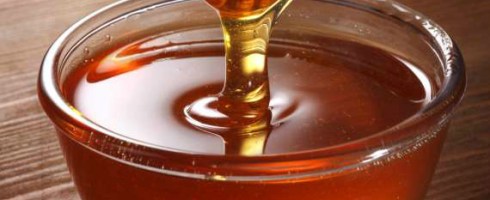
Standardised honey with same taste is not pure Honey. If a company is selling millions of bottles of Honey with the same identical taste – then be assured that its not pure honey. To standardise taste, texture and flavour – big brands destroy all the beneficial properties of your honey with ultra filtration and heating. However small companies like Honey and Spice collect the nectar from nature and bring it to you in its purest form. The Honey is not heated, blended or processed which ensures it has the maximum nutrients and benefits. And yes the taste will differ by lots because its impossible in nature to maintain 100%. consistency. All honey is not equal, and each honey’s colour, aroma and flavour varies depending upon its region, soil, and climate, and the type of blossom nectar gathered by the honeybee. Honey is an agricultural product of nature. Like apples and tomatoes, each one will be different.

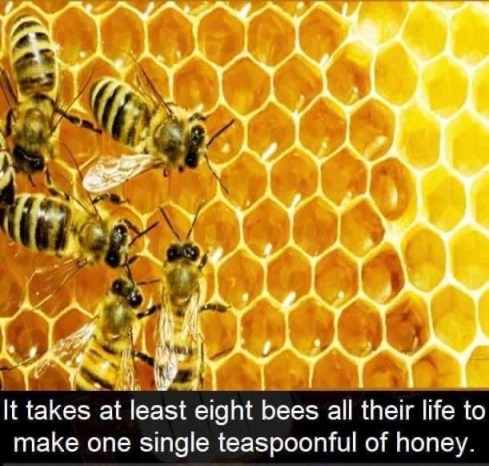
Each worker honeybee will make just 1/12 teaspoon of honey in her entire life. So “pure” honey is truly rare. Beekeepers across the globe only produce 1/3rd of what we consume, so the demand for honey is high.


What determines the taste of Pure Honey and why is it not consistent like branded honey in retail stores

This is a function of the type of flowers the bees visit. And the type of flowers vary by region – so Himalayan Honey is different from that of W Ghats and Kerala Honey is distinctly different from that of E Ghats & Sunderbans. The taste, texture, colour, thickness all vary depending on the type of flowers and region from which the Honey is sourced. Pure Wild Honey is not always sweet – it could even have a dash of sourness / bitterness in it. Thats why the honey marketed by Honey & Spice is distinctly packaged by region / variety.

Lets understand the process. Hard working honey bees make honey from nectar. Honey bees can fly  6 – 8Km to gather nectar, pollen, water and bee glue (used in the hive to seal cracks and varnish walls).

In her search for the best sources of nectar, a bee can visit more than 600 flowers a day, and to make a single pound of honey, bees will travel and collect nectar from more than a million flowers.

With nectar collected from so many different flowers and with native plants differing from region to region, it’s no wonder honey will taste different and color will vary.

Is this the reason why the thickness and consistency also varies

The thickness of honey can change year to year with the weather. For example, if there’s more rain in the spring and summer, the honey will likely be thinner. Another impact to the thickness of honey is the process used to bottle it. Pasteurized honey is heated to super high temperatures and will likely be thinner in your bottle. However heating kills a lot of the goodness of honey. To get the most nutrients (think vitamins and enzymes), you should select a honey that is raw and unfiltered. Honey straight from the hive will have bee parts and wax in it, so it needs to be strained manually . If the water content is more than 25% honey may ferment – Rather than heat to evaporate the water, you should dehumidify the air to bring the moisture level below 20%. Then Honey does not ferment. The dehumidification is done at the company processing unit.

Is Crystallized (Granulated) Honey spoilt Honey

No its not. Crystallization is Honey’s natural process of preserving itself. The main reason for this phenomenon is honey’s composition. Typically, honey contains natural sugars and around 20% water. Because this is saturated, the glucose may separate from the water and form crystals. If your honey has crystallized, that does not mean it has gone bad, in fact it is a sign of quality. If you gently warm the bottle by standing the bottle in hot water and gently stirring it , it will return to its liquid state. Take care not overheat it as this compromises the delicate flavors. Microwaving is not recommended.

Pure honey is the only unprocessed sweetener found in nature. It has naturally occurring minerals and vitamins not found in other sweeteners and heating it at 120F for as little as a few seconds can destroy them. Commercially made honeys are often heated to high temperatures to prevent crystallization so chose fresh honey from a trusted source.

Does darker honey or white “foam” mean the honey has gone bad

As explained earlier Honey comes in all colors and flavors. The color, taste and even scent can vary widely depending on the source of the flower nectar, region, soil and climate. Warmer temperatures, storage and age also tend to darken the honey and change the flavor. The white “foam” that appears at the top of honey is simply air. This “foam” is a result of tiny air bubbles in the honey escaping to the top of the bottle. So next time you see this, don’t throw out your honey!
Is Honey gluten free

Honey is naturally free of gluten. It contains no wheat, barley, rye or oats or their byproducts.

Is it OK to use metal spoons with honey

While honey is acidic, scooping your honey with a metal spoon is such a quick movement that corrosion of the metal is unlikely. However do not store a metal spoon within your honey for long periods of time.

Do all bees produce Honey

There are nearly 20,000 known bee species in the world. Of this, only 5% make edible honey. Only honeybees and stingless bees produce enough honey to make harvesting worth it. Bumblebees produce a small amount of honey for their own survival.

Is Honey the only food source produced by an insect that humans eat

YES. Out of the more than 950,000 known insect species in the world, honeybees are the only insect to produce edible food for humans.

Is it true that Honey never goes bad

Honey never spoils and never needs refrigeration. Archaeologists have discovered clay vessels filled with honey, wine and olive oil – more than 3,000 years old, in the tombs of the Pharaohs. The wine and olive oil had spoiled but the Honey remained intact and still edible. Honey is best consumed freshly harvested and will loose its delicate flavors as it ages. Although honey will last forever, it will not taste good or hold its health benefits

Is there truly such a thing as Organic honey

Honeybees will forage up to 8 – 10 Km  from their hive to gather nectar to make honey. It’s not possible to prevent them from visiting flowers that have been sprayed with chemicals whether by farmers or private homeowners. So its impossible to assure 100% organic honey

How do I store Honey

Do not refrigerate honey. Storing it at room temperature ~ sub 35 degrees is preferred.

Pure Vs Factory produced Honey – the Price says it all 

500g of Indies largest commercial Honey brand sells in retail for Rs 199. Pure Himalayan Honey will cost you Rs 295 for 250 g. Thats almost a 3X premium. So if you are looking for Pure unadulterated Honey right from the source visit companies that sell pure Honey like Under the Mango Treehttps://www.utmt.in or Honey & Spice – https://honeyandspice.in

When COVID comes HOME – Are you PREPARED

30 Jun

COVID is no longer just a datapoint on Worldometer or an interesting topic for debate. Its round the corner and could knock at your door any day. Bangalore wakes up daily to see its worst fears coming true. We seem to be headed the Delhi & Mumbai way. After months of lockdown the preparedness as usual has been sloppy. Two days of 800 + cases and newspapers say almost all beds are gone – I wonder how !

So what do you do when COVID comes home?

Frankly at this point there seems to be 3 things that you can do

  • Pray that it doesn’t come knocking at your doorstep
  • If you are Rich keep money ready (Minimum 10 lacs)
  • And hunt out all the contacts you have in Hospitals / Sr Govt officials in Bangalore

I searched a lot for guidelines / process document on how to tackle COVID but could find nothing. No documented process from the Govt, No clear steps on any Hospital website. All the information was on Social Distancing / Do’s & Donts. Nothing about how to tackle COVID when it attacks.

I finally managed to get valuable information from a Sr Doctor which is the basis of the BLOG.  I have consolidated all this information in a FAQ format. Its simple, its got all that you need – so please share this with friends and family. 

Life goes on – so lets see how well prepared we can be given the circumstances. Here are a few steps that you could follow.

How do I know if I have COVID ? 

COVID affects people in different ways. Most infected people will develop mild to moderate illness and recover without hospitalization

Most common symptoms: Fever, Dry cough, Tiredness
Less common symptoms: Aches and pains, Sore throat, Diarrhoea, Conjunctivitis, Headache, Loss of taste or smell, A rash on skin, or discolouration of fingers or toes
Serious symptoms: Difficulty in breathing or shortness of breath, Chest pain or pressure, Loss of speech or movement

CDC Recommends : Seek immediate medical attention if you have serious symptoms. People with mild symptoms who are otherwise healthy should manage their symptoms at home. On average it takes 5–6 days from when someone is infected with the virus for symptoms to show, however it can take up to 14 days.

If I have mild symptoms and decide to wait for a few days before going for a COVID test what self medication can I follow? 

You can take the regular home medicines like Paracetamol/ Crocin / Dolo 650 etc. Also heart patents and Sr citizens can take their regular medicines (But do check with your physician to be double sure). Do regular steam inhalation & gargle with Betadine. 

There is a mixed view on Ibuprofen. Initial days of COVID it was a strict no no. Some lab experiments have shown that ibuprofen may boost the amount of ACE2 receptors that the virus uses to infect cells and this could make the virus spread faster. But this opinion seems to be changing. To be on the safe side avoid Ibuprofen. https://www.healthline.com/health-news/what-to-know-about-ibuprofen-and-covid-19. 

Do not self medicate with HCQ or other COVID drugs that you see on the Internet.

When do I go for a COVID Test ?

It varies. If you have serious symptoms or you see your oxygen levels falling (Oximeter reading below 95) you must get a check done. To get a COVID test you need a doctor prescription.

There are two options

You go to a Fever Clinic – Most large hospitals have a Fever Clinic. Its a walk in. You meet the doctor and if he feels you need a COVID test he will direct you to the testing centre. https://www.karnataka.com/govt/covid-19-testing-fever-clinics-in-bangalore/

If your friend or family member is a doctor they can also prescribe a COVID test and then you can schedule a Home appointment with Apollo Clinic. The Lab Assistant conducting the test will be fully protected with a PPE suit. (https://www.apollodiagnostics.in/details/covid-19-rt-pcr-bengaluru/)

___________________________________________

What is Hypoxemia 

Hypoxemia is a below-normal level of oxygen in your blood, specifically in the arteries. It is a sign of a problem related to breathing or circulation, and may result in various symptoms, such as shortness of breath.

Hypoxemia is determined by measuring the oxygen level in a blood sample taken from an artery (arterial blood gas). It can also be estimated by measuring the oxygen saturation of your blood using a pulse oximeter — a small device that clips to your finger.

Normal arterial oxygen is approximately 75 to 100 millimeters of mercury (mm Hg). Values under 60 mm Hg usually indicate the need for supplemental oxygen. Normal pulse oximeter readings usually range from 95 to 100 percent. Values under 90 percent are considered low.

_______________________________________

While going to the fever Clinic or for a COVID test do I need to wear a PPE? 

A PPE is not a normal plastic covering you from head to feet. There are standard procedures on how to wear and remove a PPE. Even doctors struggle with it. If not properly done the PPE can be the source of spreading infection. So think twice before getting yourself a PPE.

Yes a fever Clinic / Test centre could be a hotbed of COVID. So protect yourself as well as possible. Also carry some snacks / water – you dont know how long your wait time is going to be here. Unfortunately there is no process of getting an appointment slot and avoiding the crowded waiting room.

What happens once you report COVID Positive? 

All COVID positive reports are sent to the Govt / ICMR. From then on they will call you and direct on next line of action. Not all COVID cases are immediately hospitalised. With increasing cases many are advised Home Quarantine if facilities exist. The apartment / House gets sealed. In some cases the entire floor is sealed. There is no clear rule book on this.

In Summary 

Other Points 

  • Get an Oximeter at home
  • While there is no proof – Pranayam could help in increasing Oxygen content. Try testing your oxygen levels before and after 30 min of Pranayam to see if there is any difference
  • A healthy nutritious diet helps in building immunity. Vitamin C / Fruits / Vitamin D Sachets once a week – all these could definitely help, even in normal days.

Information Source : Sr Doctor at Bangalore with 30+ years of experience.


Bharat Ratna for F.C.Kohli, NRN & AHP

17 May

There have been 48 Bharat Ratna Awardees till date. The majority of the awardees (65%) have been Politicians and Activists. There has been only 1 Industrialist / Entrepreneur in this list and that is the great J.R.D.Tata

Here is the break up of  the 48 Bharat Ratna awardees till date

  • Independence Activists / Politicians / Former PM’s / Presidents – 31 
  • Sports / Musicians / Movie Makers – 7
  • Social Reformers – 4
  • Scientists – 2
  • Economists / Scholars of Repute – 2
  • Entrepreneurs / Industrialists – 1  .

This list does not do justice to the Business Leaders and Entrepreneurs of our country who have transformed Brand India form a land of snake charmers to the IT Powerhouse of the world.

Rather than debate a Bharat Ratna for Veer Savarkar (No doubt he was a great man) can we live in the present and honour 3 good men and the companies they built. Men who  have transformed the image of India, created millions of jobs and helped the economy grow in the last three decades. And they have done it tirelessly for the last 40 years . These are men who successfully started the Make in India mantra in the 1970’s.  

Its time we corrected this anomaly . TCS, Infosys & Wipro have a cumulative revenue of ~ 45B USD and employ over a million people. They in turn generate subsidiary jobs for 8 million people. In total just these 3 companies directly & indirectly provide sustenance to ~ 45M people (Assuming average family size of 5).

They are the foundation on which the great Indian IT industry has been built. These companies over the years have transformed the way we live and contributed immensely to the success of the country. In 2019 the Indian IT Industry contributed 8% to the GDP.

Credit for this needs to be given to the visionary founders F.C.Kohli (Father of the Indian Software industry), Narayana Murthy (Considered to be among the 12 greatest entrepreneurs of our time) and the legendary Azim Premji.

If anybody in India deserves the Bharat Ratna – these 3 definitely do.

Here are a few reasons on why they need to be recognised with India’s highest Civilian Honour 

They changed the perception of Brand India. The Indian IT Industry generates a colossal revenue of 175 Billion Dollars every year. Very profitable. I cant even put a number to the cumulative Foreign Exchange it has generated over the last few decades. Its thanks to the efforts of these 3 great men and their companies which spearheaded this movement. They were the leaders who got going against strong headwinds and built organisations on the foundation of Integrity & professionalism making India proud.

Created employment in Millions – Just these 3 companies employe nearly 1M people. For every job in the IT Industry an additional 8 jobs are created in the ancillary industries like Training / Transport / Food / Logistics / Maintenance. It created a construction boom – not just for offices but for residences and apartments. Automobile sales and tourism took off thanks to the high paying IT jobs. The rub off effect could go on and on.

Empowered Women – TCS, Infosys & Wipro were amongst the first companies in India to employs 30 – 40% of their workforce with women. There was no bias – growth was purely based on performance and many grew to leadership roles.

Created wealth – These companies not only created high paying jobs, but they also shared their wealth. India Inc heard of Employee stock Options (ESOP’s) and Restricted Stock Units (RSU”s)from them. Not just the employee but millions of shareholders who invested in these companies have made an unbelievable amount of money.

Lets me now share a brief overview of these visionary leaders and the companies they built. Each one of them were simple, genuine, extremely hard working people who were hands on. They led from the front. The built organisations on rock solid values. Stories about their lifestyle and philanthropy is legendary. They built organisations on the fundamental principle “Respect the Individual – People are our Greatest Assets

Faqir Chand Kohli – Born March 19th, 1924 he went on to become the 1st CEO of TCS. When TCS was started in 1969 he was the GM. He became Director In Charge and then the Deputy Chairman in 1994. (Ratan Tata was Chairman of Tata Sons from 1990 – 2012)

TCS Today is a global conglomerate with a revenue of 22B and Market Cap of over 100B Dollars. It is the worlds largest IT Services company and operates from 149 locations in 46 countries. 70% of Tata Sons Dividend is generated by TCS.

Azim Premji fondly called as AHP needs no recognition. He was born on July 24th, 1945. (That is why many Wiproites say he works 24/7). Taking over the reigns of Wipro as a young 21 year old after his fathers sudden death he transformed a Vegetable Oil company to a global IT powerhouse. Wipro started its IT Business in the mid 70’s and became a leading Global Software player in the late 80’s. Premji is known for his simple life and strong business ethics. In a country where corruption is rampant he has built an organisation on a strong foundation of integrity and values. There is a famous quote attributed to Premji ” The idea of integrity, in his own words, is black and white. And he says it has to be black and white, because if you play around, and in between black and white, there are many shades of grey”. Wipro with revenues of ~ 10B is respected the world over for this quality.

Narayana Murthy or NRN as he is fondly called is India’s poster boy of a successful entrepreneur. Born on Aug 20th, 1946 the story of how he built Infosys from an initial capital of $250 is legendary. Mr. Murthy conceptualised, articulated and implemented the Global Delivery Model (GDM) which has become the backbone of the Indian software industry. GDM is based on collaborative distributed software development principles and has resulted in the delivery of superior quality software to global customers delivered on time and within budget. Mr. Murthy also introduced the concept of 24-hour work day to the world. Infosys is India’s biggest success story till date.

He is again a simple man and practises what he preaches. At last count Infosys had revenues of 12B +.

Here are 3 good men who truly deserve the Bharat Ratna. They have touched and transformed the lives of millions of middle class Indians – more than any social reformer till date. They may not be a vote bank, they may not help in getting brownie points from any caste – but every Indian will give you a thumbs up for this decision and it will make Brand India shine better in the global arena. It may just be a coincidence that the rules of Bharat Ratna allow 3 awards / year.


Curd Rice Vs Khichadi? Who is the King of comfort food

12 May

A time comes in life when the best meals are simple. In the competition for the best comfort food the four Semi Finalists were Rajma Chawal, Kadi Chawal, Khichadi and Curd Rice.

After a very close fight the Finalists were Vegetable Khichadi and Curd Rice. The popular vote cast by Indians across the globe was surprisingly a tie. But to decide the winner the judges decided to call Curd Rice and Khichadi for a public debate to present their credentials and stake claim for the winners trophy. But before we get to that a quick introduction of the participants.

Curd Rice is the ultimate food for a South Indian and no meal is complete without it. Curd Rice is not just Rice & Curd mixed – but there is an art to making it. The rice is cooked a bit extra, you dont use long grained rice and when its still hot you mix cold thick curd to it and mash it with a ladle. Add a pinch of salt to taste and finish it up with a tadka of urad dal, mustard, curry leaves, Asafoetida and red chillies. (The Original Curd Rice is not a khichadi of too many things – its simple, it does not have pomegranates, cucumber, grapes etc). And voila you have a winner that is simple and soothing for a meal all day long 365 days a year.

The Khichadi is a balanced meal. While most people prefer a vanilla version of it when sick or battling a digestion problem, the Khichadi can be a thrilling wholesome meal on its own. Its another matter that given the numerous things you can mix in it, there is a famous proverb in Hindi called ” Khichadi Pakana” – which roughly means confusing and making a mess of things. But be rest assured there is nothing confusing or messy about a Khichadi – its God’s own food. (How to cook video at the end of Blog)

With this context lets start the debate with the first speaking slot going to the Khichadi.

Khichadi – I am the food of the Gods. I am the bhog that is served to Ma Durga and Kali. I am the staple food in every ashram. When you are sick you invariably decide to eat me. I am light on the stomach but at the same time nutritious. I am the bachelors easy to cook meal after a long day at work. I am versatile, I am healthy and tasty. I am best eaten with Papad, Pickle or Curd.

Curd Rice – I am the food of the common man on a hot summer day. I am also the last meal of a king after a sumptuous feast. I am cool and calming. I have been the favourite dish of many intellectuals like C.V.Raman, Ramanujam and  Dr Radhakrishnan to name a few. Peek closer in a train during meal time and you may find millions enjoying me with a dash of a pickle. I am simple, easy to cook, tasty and healthy. I am also served in the temples – visit any S Indian temple on a hot summer day and you can be rest assured that the Prasad will be Curd Rice served on a small plantain leaf. I am best eaten with small home made mango pickle. (Vadu Manga)

Khichadi – I come in multiple versions. The plain Moong Dal khichadi, The Vegetable khichadi, Bajra khichadi, Sindhi style khichadi and the best of them all the Bengali masala Khichadi. I take many avatars – I can be a plain Jane or cooked with vegetables with lots of ghee. I was the staple meal for the great Ramakrishna and even today if you visit Belur Math you will be served a piping hot version. The great poet Rabindranath Tagore conceptualised many a song and poem after a hearty meal of Khichadi and papad. I am an international dish loved in many countries. The Spaniards have a modified version of me called Paella.The British took me to UK and created a modified version which they called as Kedgeree. I am as ancient as India – nobody knows when I was created.

The Greek king Seleucus during his campaign in India (305-303 BC), mentioned that rice with pulses is very popular among people of the Indian subcontinent. The Moroccan traveller Ibn Battuta  mentions kishri as a dish in India composed of rice and mung beans, during his stay around 1350. I was very popular with the Mughals. There is even a story about Birbal and me.

Curd Rice – I am the best meal for indigestion or diarrhoea because curd is a great source of probiotic. Curd is also a good source of protein. It is a good antioxidant and has high contents of calcium. The probiotics in curd helps improve immunity and makes the body capable of fighting diseases. Curd can be a stress-buster and can lift your mood. According to studies, probiotic bacteria and good fats, both found in curd, can help reduce stress. The reason it is often consumed at the end of the meal is because it helps digest the food better. Consuming curd rice helps to restore healthy microbial balance which, in turn, helps in better digestion.

Khichadi – Sorry to interrupt, but we are not debating on the benefit of Curd here, dear friend. Please come to the point.

Curd Rice – Well I was coming to that. You need to have some patience. Stay calm and cool, maybe you should have some curd rice.

Eating me gives you a sense of satisfaction, and contentment. It also makes one feel restful. Let me step back and explain to you the results of a study conducted  at MIT.

The first ingredient in this process of creating a sense of satisfaction is Tryptophan, an essential amino acid. That is present in Curd.  It is an essential amino acid meaning that it can’t be made by the body and must be taken through our diet.

The best way to reap the benefits of tryptophan is to combine complex carbohydrates with it. Extensive studies at MIT carried out by Richard Wurtman, M.D., showed that tryptophan, the building block of serotonin, could get into the brain only after sweet or starchy carbohydrates were eaten. The carb rich foods create production of insulin in the body that clears the competing amino acids from the blood stream so that brain can take up tryptophan. In absence of insulin the brain prefers the competing amino acids, so eating Tryptohan rich foods without the carbs doesn’t have the same impact that curd rice has.

So its the combination of Tryptophan containing curd and the carbs in the rice that creates the bliss we experience after eating curd rice!

Now you realise the scientific reason on why I create this immense feeling of satiation, contentment and happiness.

Khichadi – For someone who claims to be a simpleton thats a lot of ego I see in you Curd Rice. I am not just a mixture of rice and lentils but the source of carbohydrates, vitamins Calcium, dietary fibres, magnesium, potassium, and phosphorus. You can add different vegetables, and enhance my nutritional values and taste. I can be made mild with less spices. I am always easy on the stomach and intestines, making me an ideal meal for sick people. I am a nutritional meal, a perfect source of nourishment for babies, small kids and elderly people. I am part of the Ayurvedic diet. I have the ability to balance all three doshas – Vatta, Pitta and Kapha.  Apart from calming the digestive system along with detoxifying it, I aid in providing energy and enhancing immunity and digestion.

Curd Rice – I am the best home remedy for an upset stomach because I am easy to digest and works against bloating and indigestion.  The curd in me is rich in probiotics that promotes the growth of healthy gut bacteria thus relieving constipation and abdominal pain. I am always eaten cold. I am like a natural fire extinguisher that cools the body and helps maintain internal body temperature.  Thus if you’re feeling feverish or if it’s simply a very hot day, try me out.

I act as a stress buster. Curd contains antioxidants and good fats. This helps the brain deal with pain and emotions like stress. This makes me not only a tasty dish but also a stress busting one. I aid with weight loss. A bowl of curd rice can fill your stomach and keep you from snacking. It also has negligible calories when compared to a rich serving of Khichadi, Fried Rice or Biriyani. This makes me a good meal to indulge in when you’re attempting to lose weight. Being easy to digest is only one of the reasons curd rice is the best food to eat when ill. I am rich in antioxidants that give the body power to fight infections. It also gives the body much needed energy when ill.

Khichadi – I am free of Gluten. I am eaten almost in every nook and corner of the country and in many countries around the world. You are eaten in only 3 states. As the world starts adopting Vegan standards you will find lesser people eating Curd Rice and in some years you may cease to exist.

Curd Rice – Good things never die. I have my band of die hard followers who swear by me. I am also Gluten Free so thats not a + point in your favour. I can be eaten for Breakfast, Lunch or Dinner. I can be eaten with fresh rice or rice soaked in water overnight. I dont need to be heated to be served. Making me is so easy and fast. I have seen how you look when not eaten fresh. You become lumpy and hard and need to be reheated to be served. And it takes way too long to make you.

Khichadi – But you become sour after some time.

Curd Rice – Thats not true. People who carry me for long distances make me with a mix of milk and curd. That ensures I dont become sour. A little bit of hot water from the flask is all it takes to get me reactivated for a tasty meal.

Seeing the debate getting heated up the judges felt that the simple Tambram Curd Rice was getting beaten up by the more aggressive Khichadi. After much confabulation they were not able to decide a winner and declared them as Joint Winners.

Their final statement read as follows

Curd Rice & Khichadi are both deserving winners of the best comfort food category. They have a lot in common, they are simple and packed with benefits which is what endears them to one and all. They both aid in getting a good sleep (a point that both missed out). After a nice lunch of Curd Rice or Khichadi you are sure to enjoy a nice afternoon siesta.

They dont compete but compliment each other. We strongly recommend to Khichadi that it be served with a side dish of Curd or Raita so that the benefit of Curd can be leveraged.

What is also clear is that the power of Rice is unbeatable. Most Indian intellectuals have come from the land of Rice eaters. And that is a trend which we hope shall continue… so folks eat more Rice.


From Greed to Fear – An interview with COVID 19

18 Apr

You have taken the world by storm. You have no competition to be the Time Person of the year. Tell us more about yourself. Who are you and why have you caused this pandemic? 

I have no identity. I came suddenly and will vanish suddenly. You cannot catch me – at least for the near future. Let’s just say that everything in the universe happens for a reason.

But taking innocent lives and threatening humanity – is that a justifiable reason? 

Before you blame me, mankind should introspect and ask themselves a few questions. You are not the only inhabitants of planet earth. There are over 8.7M species that live on earth (Of which only 1.3M have been identified) – only humans are in panic not the other species. You have to ask yourself what is it that you have done to cause this situation. Before you point a finger at me kindly introspect.

I still dont get it – can you elaborate?

The essence of life is moderation. What your generation has done in the last 50 years is bringing the planet to the edge. In 1900 the population inhabiting earth was less than 2Bn. Today it is almost 8Bn. Over the last 50 years the incremental growth of population is in the range of 50 – 80M/year. Planet Earth cannot sustain this explosive growth.

This growth of population threatens the existence of all life forms. Nature is devastated. Look at your rivers, oceans, forests. In the last few decades over 500 species of animals have become extinct.  This generation in the last 50 years brought the planet to the edge. While everybody is aware – nobody takes action. And when a little girl cried in front of world leaders, most of them ridiculed her. Thats when I realised that it was time to take some action.

But humans have made so much advancement. Why do you think they turn a blind eye to the environment?

The first reasons is – GREED. The measure of success is growth & profit. Apple has a turnover greater than the GDP of most countries but the company still wants to grow and increase profits to shareholders. According to the Credit Suisse Global Wealth Report, the world’s richest 1 percent, those with more than $1 million, own 44 percent of the world’s wealth. The rich get richer and most elected Governments encourage this trend. the second reason is POWER. The global arms trade is worth 100Bn annually. Nobody has a count of the total value of of arms & ammunition lying in stockpiles across the world. The current form of capitalism is exploiting the world balance.

Its not just the environment that has been ignored. WHO says that 2.6M children die because of malnutrition every year.

So whats the point – are you here to eradicate mankind and set the equilibrium back in place. Will you leave only after wiping away 50% of the population? 

Like I said I came suddenly and I will leave suddenly. For eons I have come in different forms and shapes. Flu, Typhoid, Ebola, Small pox, TB, Chicken Pox. When I come there is panic and disaster but then things soon settle down.

In 2018 there were 10M people affected with TB and 1.5M died, but TB did not make headline news. And TB is ranked 10th in the Top 10 Global Causes of death. 

COVID 19 has a fatality rate of 2%. You may recollect that my cousins SARS and MERS had a much higher fatality rate. (SARS 9.6%, MERS 34%).

So why is there so much noise about you? 

You can attribute it to Social Media and a connected world where information can spread in seconds. It actually moves faster than me. I am the first global disease after the spread of social media. Yes, I started in a province of China and have spread globally in the last 4 months. But lets look at some data points  (As of today April 18th)

  • Total Active Cases 1.5 M
  • Deaths – 156,000
  • 20 Deaths /M

Now lets peel the onion. In the city of NY which has had a vicious attack there were only 3 deaths in the 0 – 17 age group. If you look at data closely across the globe I dont impact children and people below 20.

The biggest section of people impacted are male above 65 and a vast majority of them have some pre ailments which has weakened their immunity. Of the 4095 Male Deaths in NY 3087 had underlying conditions. 

I am not a statistician but if someone analyses the numbers you will see that less than 20% of the world population is at a risk of fatality.

But is it not cruel to go after the weak and the vulnerable?

Like I told you earlier, everything has a reason. I am not going after the weak and the vulnerable. Children and healthy women are statistically the safest from my attack. Yes they may get affected but most will recover like any normal Flu in a weeks time.

You should see the movie Logans Run. Its a science fiction that was released in 1976. It tells the story of a human like society in the 23rd century where nobody lives beyond the age of 30. While that may be an extreme and that is not something I am targeting. We need to realise that thanks to medical science, life expectancy has gone up from ~ 30 years to ~ 80 years. And if the trend continues many in their 80’s will go on to live to 100+. This is something that was unheard of 50 years back.

This is against the law of nature. I am fixing this. Again I am majorly impacting people who are already suffering from diseases like Cancer, Cardio, Kidney, Liver problems. Diseases that is causing pain, agony and  loss of wealth to families. Rather than suffer for years I help them move on to a better next life in a matter of weeks. The younger folks affected are people who have ruined their health by smoking, drinking, drug addiction etc. Find me a person who leads a healthy, positive moderate life who has been been impacted by me with death. So dont treat me as a villain. I am here for a reason and will leave after my message has been delivered.

So what is your message to mankind?

I have a few key messages

  • Dont blame me – blame yourself
  • Focus on what changes you need to make in your daily life
  • Versions of me have come in the past, I will keep coming in different levels of severity. Accept me as the new norm and get along with your lives

And finally a quote from the Holy Bhagavad Gita

जातस्य हि ध्रुवो मृत्युर्ध्रुवं जन्म मृतस्य च |
तस्मादपरिहार्येऽर्थे न त्वं शोचितुमर्हसि || 27||

Death is certain for one who has been born, and rebirth is inevitable for one who has died. Therefore, you should not lament over the inevitable.

What is the greatest fear of humans? Death, we all know it. Lord Krishna tells his friend and devotee Arjuna not to fear death at all. Death is merely a transitional phase. Death can only come to something which is not permanent; that which is real can never die. Whether a person is an ordinary citizen, a soldier or a leader, he must not fear of losing his life, position or wealth. Relationships, wealth and all other worldly objects are just temporary; they are tools to climb the ladder and realize the Self someday. It isn’t hard to guess how beautiful life would be if there is no fear at all.