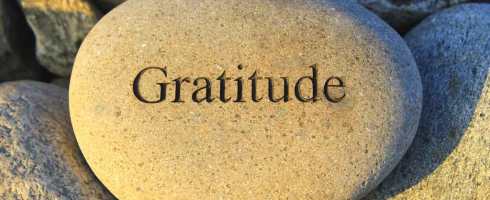
Most people struggle to sincerely say three simple words – Thank You, Please & Sorry.
The tone and body language show your sincerity and even babies can make out when you are being superficial. These words are powerful tools when you are sincere and the intent is real. They help you to connect better. You can build stronger relationships.
The Sanskrit word for gratitude is Kritajna (कृतज्ञा). It’s a beautiful word. It is formed from krita (कृत) meaning “cultivated.” The root jna (ज्ञा) refers to a state of consciousness. Kritajna thus means a state which is consciously created or chosen. It is the result of being fully here, the realization and acknowledgment of a particular moment in time. This is what brings the sincerity and depth in the emotion.

Expressing gratitude is a simple way to encourage positivism. The science of TA (Transaction Analysis) highlights the power of Positive Strokes. Gratitude is a step in that direction.
Gratitude is the ability to see value in others. When we get gratitude from someone, we feel seen, valued, and appreciated. It brings us joy and connection. We all seek gratitude and appreciate the feeling it inspires, but often we fail to express it.
So what holds us back from expressing our gratitude ?
The biggest reason is self-absorption. It’s a reflection of times where the “I” dominates. We often fail to express our gratitude for others because we can’t clearly see it. We can’t seem to get ourselves out of the way. And we struggle to compliment and acknowledge a job well done. Even on social media criticism is spontaneous and elaborate – compliments are rare and brief.

How to get started – Set an intention (Sankalpa)
Creating an intention of gratitude before and after your practice makes your practice powerful. It then acts as a guiding force after your yoga session.
An effective Sankalpa is short, positive and captures your wish or goal for yourself and benefiting others. Your Sankalpa or intention can change every day or be the same for a few days – it’s your choice. Here are a few examples of gratitude statements
- I am thankful for the abundance in my life.
- I am thankful for the joy and happiness I feel with each breath.
- I am thankful for the wonderful people in my life
- I am thankful to Mother Earth & the Universe for the bounty it has showered on me and my family
In Yoga the practice of Niyamas helps one develop gratitude. Santosha (Contentment) is a key step towards cultivating gratitude. Observing Ishvara Pranidhana (surrendering to God) is the most impactful step in developing gratitude.
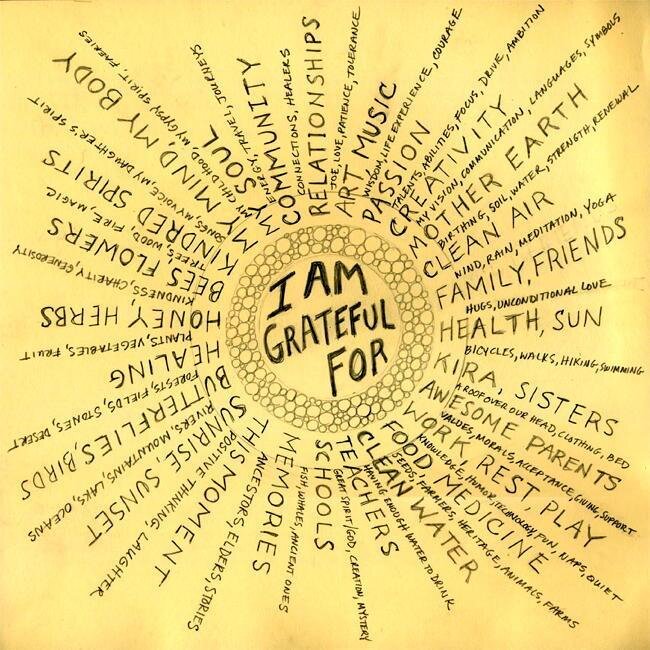
Lokah Samastah Sukhino Bhavantu
May all beings everywhere be happy and free. May the thoughts, words, and actions of my own life contribute in some way to that happiness. Let them also contribute to that freedom for all.
This ancient Shanti Mantra is a prayer we can practice daily. It reminds us that our relationships with all beings and things should be mutually beneficial. We must do this if we ourselves want happiness. It also helps with liberation from suffering. No true or lasting happiness can come from causing unhappiness to others. No true or lasting freedom can come from depriving others of their freedom. If we say we want every being to be happy and free, we must question everything we do. We need to examine our actions. We must reflect on how we live. We need to consider how we eat, what we buy, how we speak, and even how we think.
One of the greatest powers we wield is the words we use. Using the words Thank You, Please, and Sorry helps to build relationships of trust and understanding. Using the power of these words helps people feel valued, respected, and convey that they matter to you. This produces a reciprocal response. It builds mutual relationships. Both people are stronger because they can communicate in a more meaningful way.
This Blog was published in the Oct 2024 edition of Yogavidya , the monthly newsletter for Bharat Yogavidya Kendra.
 A Few Good Things
Recent Comments