International Yoga Day, celebrated annually on June 21st, aligns with the summer solstice, symbolizing harmony and balance.
Large gatherings will celebrate Yoga Day from New Delhi to Timbuktu. There will be Yoga competitions, and many will take pride in doing complex Asana’s and 108 Surya Namaskars. Asana is not a competition, it’s not about twisting your body and experiencing pain. The term ” sthira sukham asana” means a posture in which you can sit for long in “sukha” without fidgeting , without pain, comfortably.
First let’s bow down to the great Sage Patanjali who gave us the science of Yoga. His shrine in Chidambaram may be remembered by a few and will probably not see any grand celebration or reverence.
The Yogasutras explain 8 well-documented steps to progress on the path to Kaivalya or Nirvikalpa Samadhi. This is a state where you are one with the Eternal Truth or Brahman. Yoga is a science. It helps you to establish “Chitta Vritti Nirodha”. This means to control or quieten the fluctuations/waves of the mind.
The world appears to be on the brink of a 3rd world war and chaos. This is a perfect opportunity to revisit the essence of Yoga. The great saint Patanjali explains this in the Yoga Sutras. It’s a refresher on the rules of being a good human being. It guides us in embarking on the journey to happiness and peace. Let’s reflect on the first two steps – The Yamas & Niyamas.
These are the Rules & Observances that help you change your lifestyle, attitude and belief system. This is the starting point for everlasting peace and happiness that is elusive in the world.
The Yamas and Niyamas are not just a set of rules. They are a framework for cultivating ethical and mindful living. This applies both on and off the yoga mat. They are the first two limbs of the eightfold path of yoga. These limbs are essential for personal and spiritual growth.
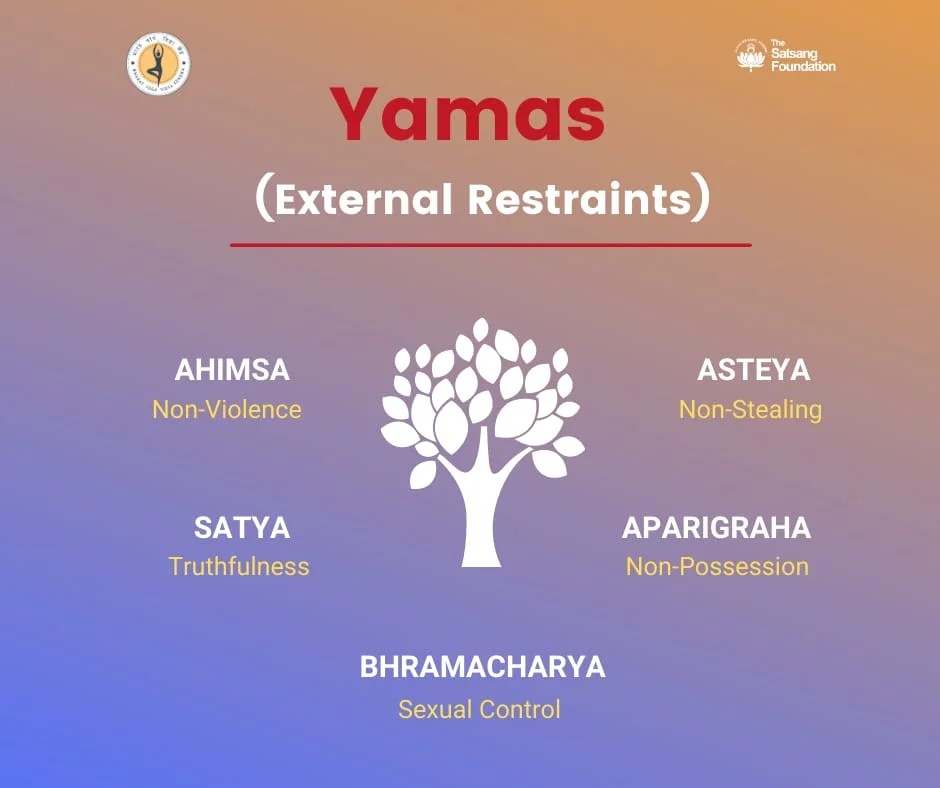
Yamas (Restraints)
- Ahimsa (Non-violence): Extending compassion and kindness to all beings, including oneself.
- Satya (Truthfulness): Being honest and truthful in thought, word, and deed.
- Asteya (Non-stealing): Avoiding taking what is not freely given, both physically and mentally.
- Brahmacharya (Continence/Moderation): Practicing moderation and self-control, particularly in regards to energy and desires.
- Aparigraha (Non-possessiveness/Non-greed): Releasing attachment to material possessions and desires.
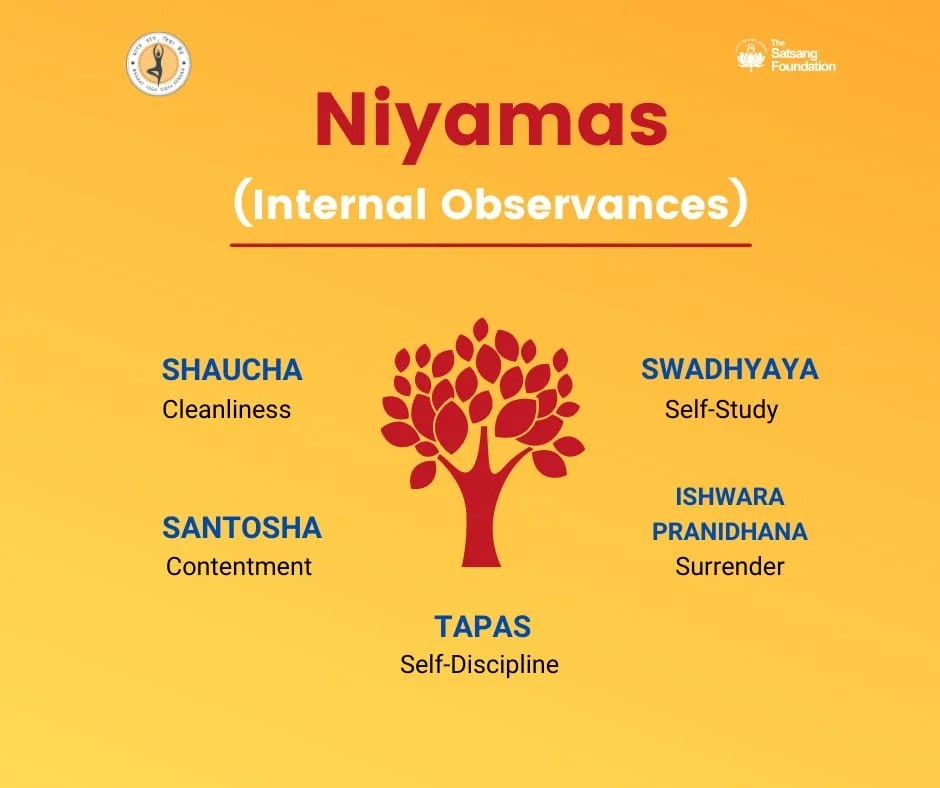
Niyamas (Observances)
- Saucha (Purity/Cleanliness): Maintaining physical and mental cleanliness, promoting a healthy and balanced state.
- Santosha (Contentment): Finding satisfaction and happiness in one’s current circumstances.
- Tapas (Self-discipline/Austerity): Cultivating inner strength and resilience through self-discipline and effort.
- Swadhyaya (Self-study): Engaging in self-reflection and study of spiritual texts.
- Ishvarapranidhana (Surrender to a Higher Power): Cultivating faith and surrendering to a higher power or a larger purpose.
Do your Duty perfectly – the world will be a better
In the Gita Lord Krishna gives a simple recipe to make the world an ideal place. If everyone does his job sincerely and truthfully without greed and expectations the world will be a better place.
This concept was explained beautifully by my 1st Yoga teacher. Any job you take up, do it to perfection. It could be as simple as chopping vegetables or folding clothes. The act of concentrating on doing even a small job perfectly is meditation.
Like Yama’s and Niyamas there are rules in society. If everyone follows the road rules there will be no accidents. If every politician and public worker follows his oath of office, we will live in an ideal corrupt free society. If every teacher is diligent and sincere the students will be role model citizens.
We can all make a difference on Yoga Day. Let’s try and follow at least one of the Yama & Niyamas. Be Truthful. This one small act done by millions can make a great positive impact in the world.
For more detailed information on this topic visit the Blog below.


 A Few Good Things
Leave a Reply