This is the story of the divine origin of the Lalita Sahasranamam.
The eight Vāk Devis, embodying the eight sacred facets of Goddess Saraswati, came together to compose this powerful and timeless hymn. Through the boundless grace of Lord Hayagriva, this divine knowledge was revealed to Sage Agastya, for the spiritual upliftment and welfare of all humanity.
This video reflects on the sacred story behind the Lalita Sahasranamam—its origin, its divine transmission, and its enduring spiritual significance. A gentle reminder of how wisdom, devotion, and grace flow together through the Mother’s thousand names.
Have you ever wondered who recorded the Vishnu Sahasranama and how this sacred hymn was preserved?
In the Mahabharata, Sage Ved Vyasa composed it, and Bhishma Pitamaha recited it on the battlefield, answering Yudhishthira’s questions on Dharma. It is believed that Sahadeva carefully recorded this divine narration, which was later passed down through tradition.
This powerful story and its significance were beautifully narrated by Maha Periyava, reminding us why the Vishnu Sahasranama holds such deep spiritual importance even today.
In the mad rush for growth and valuations, are building blocks like Values, Culture, Managerial Mentoring, and Strategic HR disintegrating. Why are there so few women CEOs and Entrepreneurs? What are the barriers to their development?
This edition of Back to Basics with Mythily Ramesh explores these issues. Based on her experience of over 35 years she provides deep insights on what is causing disharmony at work. She beautifully blends solutions with spirituality. Mythily is an alumnus of Guindy college of Engineering and IIM Ahmedabad. She has worked in leadership roles at Wipro and is currently the Co-Founder and Managing Director at NextWealth.
In recent years, Psychology has emerged as one of the most popular career choices, with colleges across India and globally reporting 80–90% female students in Psychology programs.
What is driving this strong trend? In this episode of Back to Basics, host V Anandkumar (VAK) speaks with Krittika and Ananya, Master’s students in Psychology, to explore the reasons behind the growing interest in Psychology—especially among women—and to break down what studying Psychology really involves. In this Podcast, we discuss:
Why girls are naturally drawn to Psychology as a career
Is Psychology a science or a liberal arts discipline?
How modern Psychology connects with ancient Eastern philosophy and Indian scriptures
Career roadmap after Psychology: degrees, specializations, and job options
Scope of Psychology in India and abroad
This episode is especially valuable for students, parents, and educators exploring career options in Psychology, understanding the gender gap in Psychology education, and learning about the future of Psychology as a profession.
In this episode of Back to Basic’s we look at some of the simple tools that we can all use to build wealth. This is especially of importance to a young couple starting their financial journey. We look at the mistakes we made in our career and how the youngsters can avoid that.
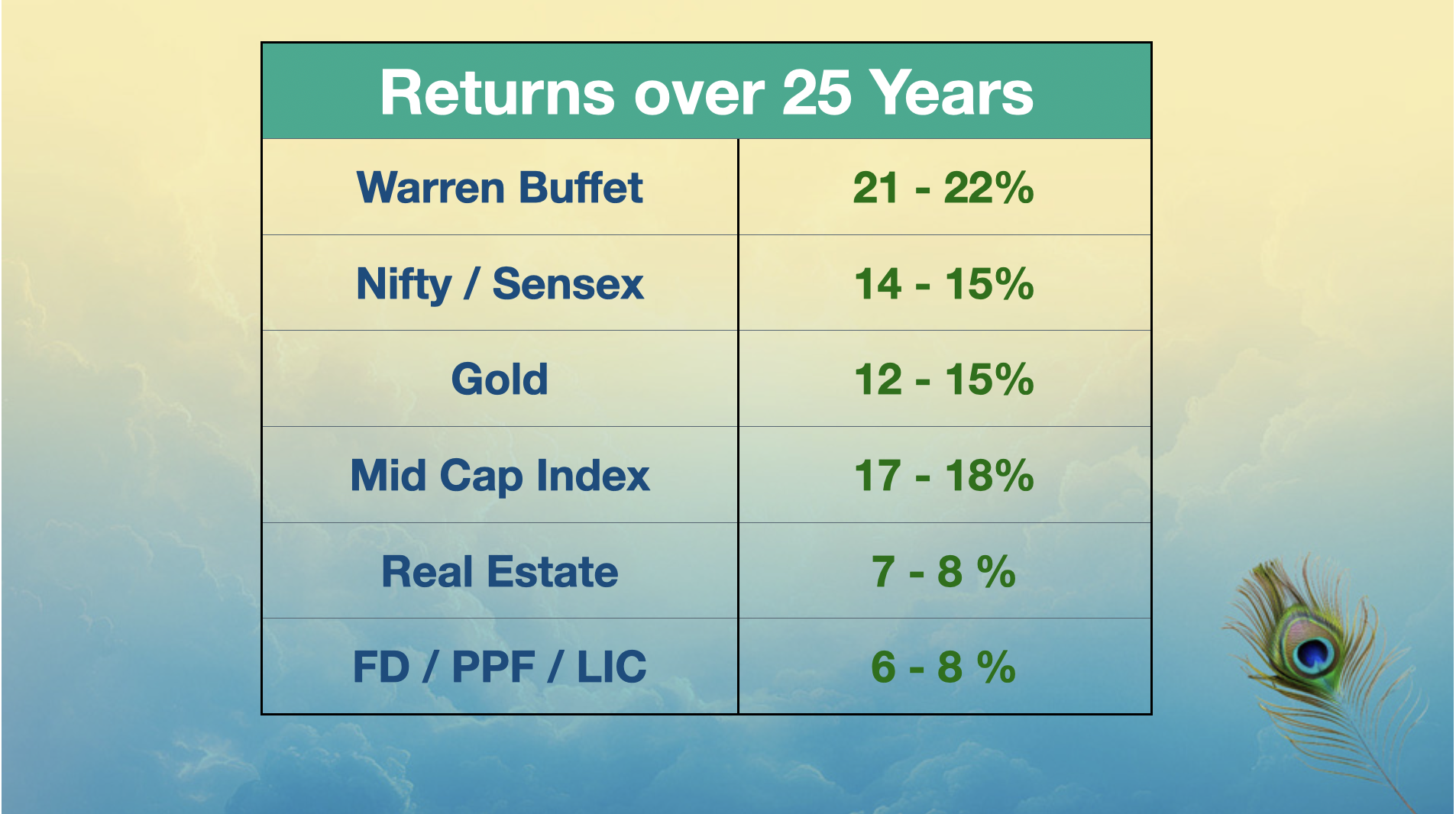
Is it feasible for a young couple in urban India to aim for a corpus of ₹100 crore? What are the fundamental principles of investing? How can one discern clarity amidst the noise? Just as Arjuna required guidance from Krishna, how can an investor find a reliable wealth advisor? What is SIF ? Is there a crash coming – How do I plan for that ? What are the 3 Golden rules of a sensible investor?
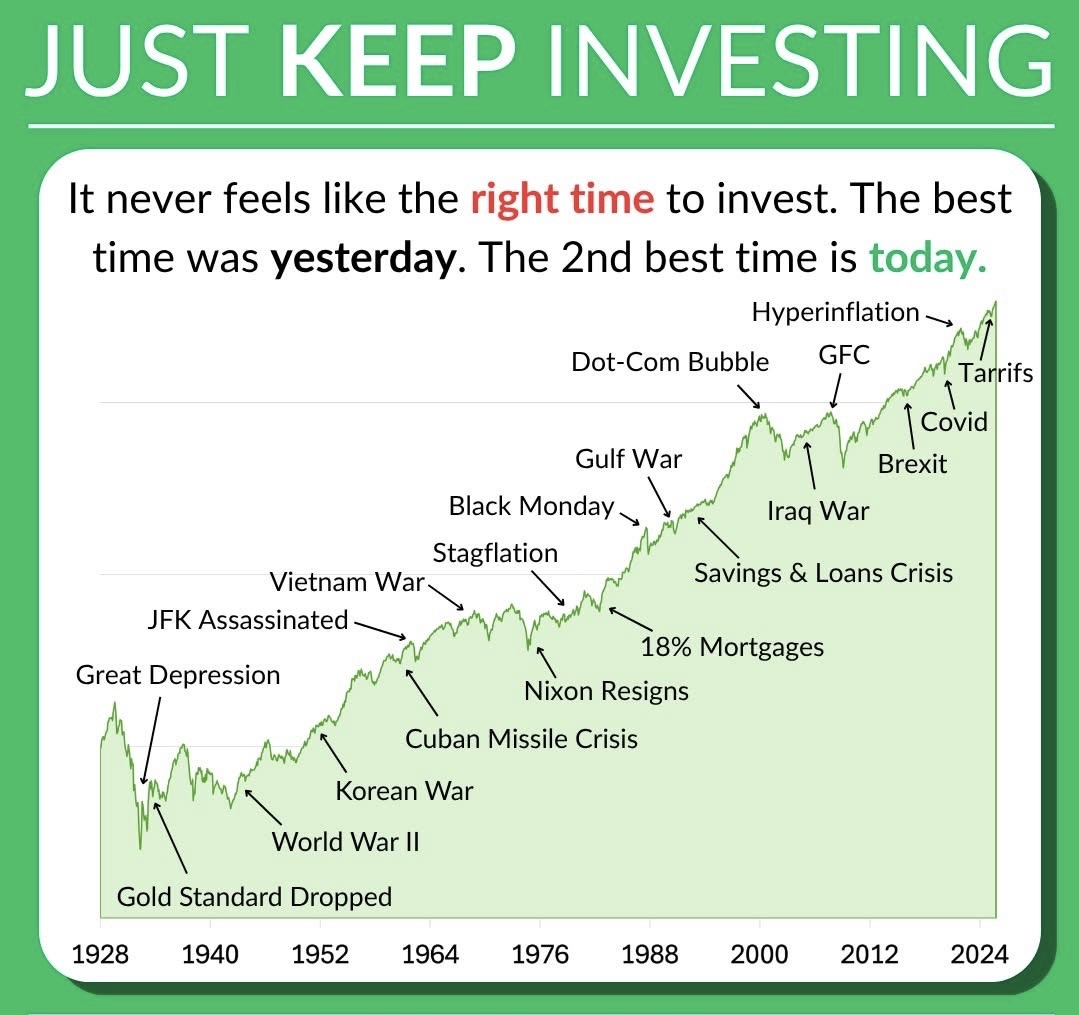
In this edition of Back to Basics, Deepak Jain helps answer these questions in a simple manner. He emphasises on the power of Compounding and importance of Asset Allocation. Think long terms – the next 25 years a disciplined investor can make a lot of wealth riding on the growth story of India.
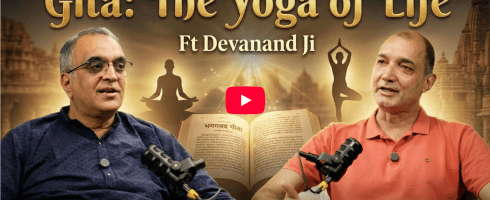
In this episode of Back to Basics, Devanand Ji explains the synergy between Yoga and Gita. A certified Yoga Teacher from Bihar School of Yoga, Devanand Ji exemplifies a life guided by the Gita’s teachings. He touches on important practical points on how to apply the profound teachings in your day to day life. Please watch and benefit from his insightful perspectives.
If you want to start your journey with the Gita – get a copy of Oh Man! Read the Gita – A simple easy to read book by Sri Krishna.
This Blog started in 2010 and has had a great history with many million views and a loyal follower base. Over time viewers are reading less and seem to prefer watching Videos.
Along with the Blog I am happy to launch a Podcast Series called – Back To Basics.
Here we look at issues in our daily life with a sharp lens. We interact with Passionate, Committed, Truthful individuals from diverse backgrounds. We learn from them the secret of navigating life’s volatility – and how they have knowingly or un knowingly implemented the teachings of the Gita
In the 1st episode, we discuss with Dr. Sanjay Kaul, a leading periodontist, the fundamentals of oral health, emphasising the significance of gum care. The 30-minute conversation touches on the evolution of eating habits, traditional remedies, and interesting facts.
We have other interesting topics planned for the next set of Podcasts. These topics include Gita & Yoga, Old Age – Blessing or Curse, Building Wealth over the next 25 Years .. etc. The plan is to have one episode every fortnight.
Kindly Subscribe to the channel and shared your feedback on the 1st Podcast
Gita Day (Gita Jayanti) is on Monday, December 1, 2025. This day marks the occasion when Lord Krishna revealed the profound knowledge of the Bhagavad Gita to Arjuna. This happened on the battlefield. This auspicious day is celebrated on the 11th day of the waxing moon in the Hindu month of Margashirsha. It is also known as Mokshada Ekadashi.
This is an opportunity to get started with the Gita. Oh Man ! Read the Gita is a simplified version of the Gita to help people get started.
A Discussion and Q&A on the Book is planned for 22nd Dec. The focus is on the application of the teachings of the Gita in daily life. This applies across all age groups.
Please join the discussion. Questions from the audience are encouraged.
Dr Hansaji Yogendra unveiled Oh Man! Read the Gita on 16th Sep. Hansaji is a globally acclaimed Spiritual Yoga Guru and director of the renowned Yoga Institute at Santa Cruz, Mumbai. It is the oldest organised yoga Center in the world.
Hansaji loved the title and simplicity of the book Oh Man! Read The Gita. She praised the compilers. They performed a great service. They brought the message of the Gita in a simple to read manner. In her 30-minute talk, she highlighted the core aspects of the Gita. She enthralled the audience with her fluency, clarity, and powerful oratory. Her key message was that the Gita is a guide for daily life. It offers powerful teachings for everyone.
Readers are loving the book and have shared positive feedback on Amazon. Here are some sample feedback
Loved the book.. to explain the key teachings of Bhagavad Gita in such simple style/language, is not easy. The author has managed to do that. Highly recommended!
This book is not just a summary- it is an illuminating guide that captures the essence of the original text.
Every chapter is distilled to its key message allowing the readers to grasp profound knowledge without being overwhelmed by detail. Clear and accessible to modern readers.
Great book on the Gita, provides an understanding of the text in a very simple and profound manner. The book covers all 18 chapters of the Gita and provides further essays that discuss various important topics. A very comprehensive text on all chapters and especially important today as the Gita provides us with key learning’s we can incorporate in our day to day life. Highly recommended to anyone who wants to learn about the Gita.
Nicely compiled in an easier to read format and in simple language. This would be an excellent gift that parents can give to their children. They will appreciate it in years to come
Get your copy. It’s also a great idea to gift this book during Diwali to near and dear ones. Enough of Kaju Katli & Dry Fruits. Try something different. Book is available in Amazon worldwide – Physical & eBook.
Born as Gadadhar Chattopadhyay in the quiet village of Kamarpukur, he would be revered as Thakur Ramkrishna or Ramkrishna Paramahamsa. His simple words and humorous stories conveyed a depth that resonated even with the most skeptical minds.
This Blog will help you plan a trip. It covers the important places linked to Ramkrishna Paramahamsa, Sarada Ma, and Swami Vivekananda. With Kolkata as your base you can cover these places in a few days. Most people visit Dakshineswar, Belur Math & Kalighat – but there is lots more.
Kamarpukur & Joyrambati – Birth Place
Kolkata – Kamarpukur is 100 Km. Drive time is around 3 – 4 hours. Joyrambati is a short 7 Km drive from Kamarpukur.
Kamarpukur is the birth place of Ramkrishna and Joyrambati of Sarada Ma. Both these centres are now managed by the Ramkrishna Math. They have beautifully preserved the birth place, ancestral home, family deities and associated spaces. The food they serve is a feast. But it is first come first served basis – limited coupons. Accommodation in the Ashram is difficult to get and gets sold out months in advance. The villages have basic hotels. I would recommend you plan to reach by 4 PM. Attend the evening Aarti in one of the places. The next day morning visit the other location and collect your Prasad coupon. Have a good Darshan, and leave after the Prasad lunch.
Dakshineswar
This is where Ramkrishna spent most of his life as a priest. It is located in North Kolkata, 12 Km from Central Kolkata. Traveling by car during the day takes 60 – 90 minutes. I have always visited the temple at 6 AM in the morning when it opens. Crowds are less at that time. The drive time then is less than 30 minutes. Again there are no good hotels in the temple vicinity. Cell phones and shoes are not allowed inside the temple complex. Leave them in the car or at a kiosk near the temple entrance. Don’t miss the small bedroom where Ramkrishna spent most of his time. It is a highly energized space. It’s now not accessible to the public, but you can see from outside through glass windows. Visit the temple and the 12 Jyotirlingas. Walk along the bank of the Hooghly river. Soak in the energy of this divine place. Budget 60 – 90 minutes.
Shyampukur Bati (8 Km from Central Kolkata)
This is the house where Ramkrishna stayed for 70 days in 1885 before moving to Cossipore. He was ailing and Ma Sarada with all his disciples stayed in this house. This house was acquired and renovated by the Ramkrishna Math in 2010. The house is located in the heart of N Kolkata midst narrow bye lanes. You will need to ask around to find the place.
Kashipur Udyanbati (Cossipore) ( 3.5 Km from Shyampukur Bati – roughly midway between Daksineshwar and Shyampukur Bati)
Sri Ramakrishna spent the last days of his mortal life here. His disciples rented a large house with a garden a short distance away from Shyampukur Bati. Between Dec 11 – 1885 and Aug 16 – 1886 he stayed here. This place was quiet, had a beautiful garden and was more spacious.
It is here that on January 1 – 1886 (Kalpataru day) He revealed Himself to be an Avatara. This is a large well maintained, serene garden house. Unlike Belur Math and Dakshineswar which see large crowds this place is relatively empty on normal days.
Kalighat (S Kolkata)
Ramakrishna visited the Kalighat temple – an important Shakti Peeth. He had a spiritual experience where he saw the Mother Goddess Kali as a virgin girl playing by the pond. Later at the temple he saw the Goddess dressed in the same dress. he also encountered a priest who kicked him – but out of compassion chose to protect him and asked his nephew also not to narrate the incident.
Reliance foundation has undertaken a significant renovation of the temple in 2024. It is crowded and there are many middlemen who will try to make a quick buck. Best time to visit towards the end of the day before closing.
Belur Math
Located on the other side of the Ganges exactly opposite to Dakshineswar, this is the HQ of the Ramkrishna Mission. It also houses the Samadhi Mandir of Ramkrishna, Sarada Ma, Swami Vivekananda and others. A beautiful museum in the complex highlights the life of Ramkrishna and is a must visit. A well maintained, well laid out complex you can easily spend a few hours at Belur Math. For the Bhog Prasad, first collect a lunch coupon. Do this at the designated office before lunch. Lunch typically starts around 11:30 AM. The coupon itself is free. Visitors are welcome to donate any amount they wish at the office when they collect it. The meal is a delicious offering served to many devotees in a community setting
To finish your circuit there are 2 more places that you must visit and these are linked with Swami Vivekananda.
Birthplace of Swami Vivekananda
105 Vivekananda Road / 3 Gourmohan Mukherjee Street in Kolkata is the historic ancestral home of Swami Vivekananda. It is now a museum and cultural center. This center is operated by the Ramakrishna Mission. This site served as the birthplace of Swami Vivekananda (born Narendranath Datta) on January 12, 1863, and his life and teachings are celebrated and preserved within this location
1st Monastery of the Ramkrishna order – Baranagar
After the Samadhi of Ramakrishna in 1886, his young disciples were led by Swami Vivekananda. They assembled for the first time in a dilapidated house in Baranagar, North Kolkata. Their purpose was to form their monastic brotherhood. This was the first Ramakrishna Math. The disciples had cared for their ailing Master at a garden house in Cossipore during his final months. They came together to lead a life of renunciation. They did this as a unified monastic order. It was here that they formally took their monastic vows in January 1887.
If time permits, visit Balaram Mandir. An ashram named ‘Balaram Mandir’ began in 1922. It was established in the house of Sri Balaram Basu. He was a chief disciple of Sri Ramakrishna. The place has been sanctified by numerous visits of Sri Ramakrishna, his disciples, and Holy Mother Sri Sarada Devi. It was here that Swami Vivekananda inaugurated the Ramakrishna Mission Association on May 1, 1897.
You can also visit Kathamrita Bhawan. This is the house of Mahendra Nath Gupta, also known as M, who chronicled the Gospel of Sri Ramkrishna. Additionally, explore Baghbazar Maayer Badi. This center is also known as Mother’s House. It served as the residence of the Holy Mother Sri Sarada Devi whenever she visited Kolkata.
Travel TIP
Try to travel during week days. Summers in this part of the country can be hot and humid – Dec to Feb is a good time. Avoid Birth days, Kalpataru day, Samadhi days. (Jan 1 , Jan 12 , Feb 18, July 4, July 21, Aug 16, Dec 22)
Recent Comments