Archive by Author

Shiva Tandava Stotram – Learn to Chant

21 Mar

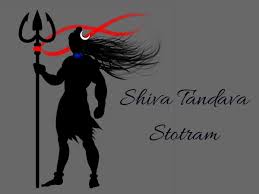
Shiva Tandava Stotram

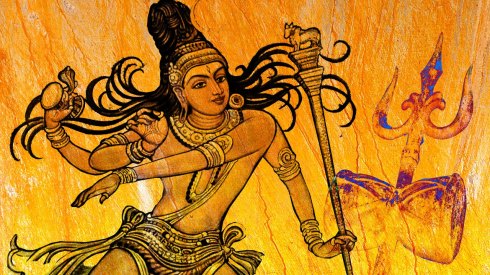
Shiva Tandava Stotram is the most popular Shiva Stotram composed by Ravana, a Sanskrit scholar par excellence and a great devotee of Lord Shiva. Shiva Tandava Stotram is one of his many works.It is believed that Ravana composed the hymn in praise for Shiva, and pleading for moksha. The stotra has 16 syllables per line of the quatrain, with laghu (short syllable) and guru (long syllable) characters alternating. The poetic meter is iambic octameter by definition.  Alliteration and onomatopoeia create rolling waves of resounding beauty in this example of devotional poetry.

In the final stanza of the poem, after tiring of rampaging across the earth, Ravana asks, “When will I be happy?” Because of the intensity of his prayers and ascetic meditation, of which this hymn was an example, Ravana received from Shiva powers and a celestial sword called Chandrahas.

_______________________________

I have made it easy for every person to learn this highly energising songs. Listed below are the words in Sanskrit and the exact pronunciation in English. Word by word meaning and the explanation of each stanza is enclosed. This is a beautiful chant and you can appreciate it better if you understand the meaning. I owe my gratitude to Muthulaxmi Rao for spending time and explaining this beautiful song word by word. I have also enclosed the YouTube links for the same

_______________________________


जटाटवीगलज्जलप्रवाहपावितस्थले
गलेऽवलम्ब्य लम्बितां भुजङ्गतुङ्गमालिकाम् ।
डमड्डमड्डमड्डमन्निनादवड्डमर्वयं
चकार चण्डताण्डवं तनोतु नः शिवः शिवम् ॥१॥

Jata Tavi Galla Jala Pravaha Pavita Asthale
Galela Lambya Lambitam Bhujanga Tunga Malikaam
Damad Damad Damad DamanniNada Vad Damar Vayam
Chakara Chanda Tandavam Tanothu Na Shivam Shivam

Jata Tavi – Matted hair like a forest, Galla Jala – water pouring out, Pravaha – Flow Streaming forth, Pavita – Purifying, Sthala – Ground. Galela Lambya – Long Neck that is supporting the serpents, Lambitam – Hanging, Bhujanga – Snakes, Tunga – Big, Malikaam – Garland, Damad Damad – Sound of Damroo , Tanothu – Please bless me.

The sacred Ganges is pouring out from his matted locks which are dense like a forest. The sacred water is purifying the place on which it falls. On that holy place Shiva is dancing the great Tandava dance. His neck is supporting the serpents that are hanging down and adorning him like garlands. His Damaru is constantly weaving out the sound Damad Damad and filling the space all around. O Lord please bless us and extend this auspicious Tandava Dance with all beings.


जटाकटाहसम्भ्रमभ्रमन्निलिम्पनिर्झरी_
विलोलवीचिवल्लरीविराजमानमूर्धनि ।
धगद्धगद्धगज्जलल्ललाटपट्टपावके
किशोरचन्द्रशेखरे रतिः प्रतिक्षणं मम ॥२॥

Jata Kataha Sambhrama Bhramanni Limpa Nirjhari
Vilola Veechi Vallari Viraja Mana Muurdhani
Dhagad Dhagad Dhagajwalla Lalata Patta Pavake
Kishora Chandra Shekhare Rathi Pratik Shanamava Mama

Jata Kataha – Matted hair like a big cauldron, Sambhrama Bhramanni – Revolving and whirling around , Limpa Nirjhari – Goddess Ganga as a waterfall flowing from his locks, Villola Veechi – Undulating moving waves, Viraja – Resplendent, Murdhani – Forehead, Dhagad Dhagad – Throbbing pulsating sound of fire blazing on his forehead, Dhagga Jwala – Embers, Lalata – Forehead, Patta – Flat , Pavaka – Pure/ Shining / Bright, Kishora Chandra Shekhara – Young crescent moon on the top of His head, Rathi – Delight, Pratik Shanam – Every Second, Mama – Through my being

His matted hair like a cauldron is whirling and going round and round as he dances his Tandava. And from these matted locks comes gurgling the goddess Ganga. The strands of his matted hair which are like creepers are waving while dancing like the waves of an ocean. His forehead is brilliantly effulgent. The throbbing sound of a raging fire can be heard – Dhaggad Dhaggad (His 3rd Eye). A young crescent moon is shining on the peak of his head. O Lord as you dance every second a rare ecstasy is surging every moment thru my being.


धराधरेन्द्रनन्दिनीविलासबन्धुबन्धुर
स्फुरद्दिगन्तसन्ततिप्रमोदमानमानसे ।
कृपाकटाक्षधोरणीनिरुद्धदुर्धरापदि
क्वचिद्दिगम्बरे मनो विनोदमेतु वस्तुनि ॥३॥

Dhara Dharendra Nandini Vilasa Bandhu Bandhura
Sphurad Diganta Santati Pramoda Mana Manase
Kripa Kataksha Dhorani Niruddha Dhurdhara Apadhi
Kvachit Digambare Mano Vinoda Metu Vastuni

Dhara – One who supports the earth, Dharendra – Montain King, Nandini – Daughter of the mountain king, Vilasa – Sport, Bandhu – Friend, Bandhura – Charming, Sphurad – Trembling, Diganta – Horizon at remote distance, Santati – Continuous/ Uninterrupted, Pramaoda Mana – Delight , Manase – Belonging to me, Kripa – Grace/ Compassion / Tenderness , Kataksha – Side glance, Dhorani – Uninterrupted Tradition ( Like a Thoran – series), Niruddha – Restrained / Witheld , Dhurdhara – Irresistable, Apadhi – Distress / Calamity, Kvachit – Short span of time, Digambare – Sky clad / ever free, mano – Mind, Vinoda Metu – Divine Entertainment , Vastuni – Many Things

In this beautiful cosmic dance he is accompanied by Nandini, the daughter of the mountain king – the one who supports the earth. She is always his companion in his various divine sports. The entire horizon as far as the eye can see is trembling with the force of the Tandava. The subtle waves are entering the mind and creating wave after wave of ecstasy. This great Shiva whose side glance can restrain even the most irresistible calamities. He is sky clad and when in his mind the desire to play the Divine sport materialises it results in the great Tandava


जटाभुजङ्गपिङ्गलस्फुरत्फणामणिप्रभा
कदम्बकुङ्कुमद्रवप्रलिप्तदिग्वधूमुखे ।
मदान्धसिन्धुरस्फुरत्त्वगुत्तरीयमेदुरे
मनो विनोदमद्‍भुतं बिभर्तु भूतभर्तरि ॥४॥

Jata Bhujanga Pingala Sphurat Fana Mani Prabha
Kadamba Kumkuma Drava Pralipta Dig Vadhu Mukhe
Madanda Sindhura Sphurat Tvag Uttariya Medure
Mano Vinodam Adhbhutham Bhibarthu Bhuta Bhartari

Jata – Matted hair, Bhujanga – Serpent, Pingala – Reddish brown colour, Sphurat – Trembling, Fana – Hood of the snake, Mani Prabha – Radiant Jewel, Kadamba – Flowers, Kumkuma – Red colour Vermillion, Drava – Melted Liquified, Pralipta – Smeared, Dig – Directions, Vadhu – New Bride, Mukhe – face, Madanda Sindhure – Intoxicated Elephant, Sphurat – Trembling, Tvag – Skin, Uttariya – Cloth on upper body, Medure – Thick, Mano – Mind, Vinodam – Entertainment, Adhbhutam – Marvellous, Bhibharthe – Mind is carried away, Bhuta – Living Being, Bhartani – Sustainer

The reddish brown serpents adorning his head are throbbing with their raised hoods. This is making the jewels on their hood shine and glisten with radiance. This beautiful red colour like liquid saffron is smearing all the directions of the Sky as far as the eye as can see. It looks so beautiful like the face of a new bride adorned with sindoor. His upper garment is flying in the breeze and shaking like the thick skin of an intoxicated elephant as he dance the marvellous Tandava. As I watch this my mind is experiencing a marvellous thrill and is carried away by The sustainer of all beings


Slow Chanting

Om Namah Shivaya
Sadashivam Bhajamyaham ( 2 Times)
Om Namah Shivaya

सहस्रलोचनप्रभृत्यशेषलेखशेखर
प्रसूनधूलिधोरणी विधूसराङ्घ्रिपीठभूः |
भुजङ्गराजमालया निबद्धजाटजूटक
श्रियै चिराय जायतां चकोरबन्धुशेखरः ||५||

Sahashra Lochana PrabhrutyAshesha Lekha Shekara
Prasuna Dhuli Dhorani Vidhusara Angri Pitha Bhuh
Bhujanga Raja Malaya Nibaddha Jata Jutaka
Shriyai Chirai Jayataam Chakora Bandhu Shekara

Sahasra – Thousand, Lochana – Eyes, Prabhriti Ashesha – Starting from this to that – all encompassing, Lekha – Line / streak, Shekhara – Crown of the head, Prasuna – Fresh Flower / Newly born, Dhuli – Dust, Dharani – Uninterrupted series, Vidhusara – Dust coloured, Angri – Foot, Pitha – Throne, Bhuh – Earth, Bhujanga Raja – King of snakes, Malaya – Garland, Nibaddha – Tied, Juta Jata – Matted Hair, Shriyai – Beauty & Auspiciousness, Chirai – Long lasting / eternal, Jayatam – taken place, Chakora – rare bird that feeds on moonlight, bandhu – Friend, Shekhara – Top of the head.

The devas and Indra with their thousand eyes forming an unending Q are being entertained by the great Tandava dance. They are being blessed by the dust that is coming from the great dance. His matted hair is bound by the serpent king like a garland. The shining moon on the top of his head which is a friend of the Chakora bird is radiating the deep beauty and auspiciousness of Shiva.


ललाटचत्वरज्वलद्धनञ्जयस्फुलिङ्गभा
निपीतपञ्चसायकं नमन्निलिम्पनायकम् |
सुधामयूखलेखया विराजमानशेखरं
महाकपालिसम्पदेशिरोजटालमस्तु नः ||६||

Lalata Chatwara Jwallat Dhanunjaya Sphulinga Bha
Nipeeta Pancha Sayakam Naman Nilimpa Nayakam
Sudha Mayukha Lekhaya Virajamana Shekharam
Maha Kapali Sampade Shiro JathalaMastunaah

Lalata – Forehead, Chatwala – Levelled ground prepared for sacrifice/ Yagna, Jwallat Dhanunjaya – Sparkling embers of the blazing fire, Sphulinga – Embers, Bha – Shining, Nipeeta – Drink / Absorb, Pancha – 5, Sayaham – Arrows, Namann – Bow / Pay Obessiance, Nilimpa Nayakam – Chief God of Kama, Sudha – Amrit, Mayukha – Ray of light, Lekha – Line / stroke, Viraja – Sitting , Shekaram – Peak / Crest, Maha – Large , Kapali – Lord Shiva, Sampada – Prosperity, Shiro – Head, jata – Matted hair, Astu – So be it.

The blazing fire on his forehead is radiating lustre and energy. (Referring to His 3rd eye). This fire engulfed and absorbed Kama and his 5 arrows (The lord of Love). Finally Kama the Chief God of love bowed down in obeisance to the great Lord on whose head is shining the crescent moon. May we also receive the grace, blessings and prosperity from the Great Kapali.


करालभालपट्टिकाधगद्‍धगद्‍धगज्ज्वलद्_
धनञ्जयाहुतीकृतप्रचण्डपञ्चसायके ।
धराधरेन्द्रनन्दिनीकुचाग्रचित्रपत्रक
प्रकल्पनैकशिल्पिनि त्रिलोचने रतिर्मम ॥७॥

Karala Bhala Pattika Dhaggad Dhaggad Dhaggajwallad
DhanunjayAaahuti Kritta Prachanda Pancha Sayake
Dhara Dharendra Nandini Kuchagra Chitra Patraka
Prakalpana Aika Shilpini Trilochane Ratheer Mama

Karala – Terrible / Gory, Bhala – Forehead , Pattika – Flat, Dhaggad Dhaggad – Sound of burning embers, Dhanujaya – Fire, Aahuti – offering to Fire, Kritta – Performed, Prachanda – Terrible, Pancha – 5, Sayaki – Arrows, Dhara – One who supports the earth, Dharendra – Montain King, Nandini – Daughter of the mountain king, Kuchagra – Front of the bosom, Chitra Patra – Varigated leaves, Prakalpana – Praising, Aika – One, Shilpini – Artist, Trilochane – 3 Eyed, Ratheer mama – Enjoying me

The terrible surface of his forehead is throbbing with the sound of the raging fire. This was the fire that consumed Kama. The fire to which we offer our prayers. His dancing steps are drawing various pictures on the bosom of Mother Earth – who in turn is the daughter of the mountains. He is an artist par excellence. My mind is delighted with the wonderful spellbinding dance of the 3 eyed Lord Shiva.


नवीनमेघमण्डली निरुद्‍धदुर्धरस्फुरत्_
कुहूनिशीथिनीतमः प्रबन्धबद्धकन्धरः ।
निलिम्पनिर्झरीधरस्तनोतु कृत्तिसिन्धुरः
कलानिधानबन्धुरः श्रियं जगद्धुरंधरः ॥८॥

Naveena Megha Mandali Niruddha Dhurdhara Sphurat
Kuhu Nishithini Tamah Prabanddha Baddha Kandharah
Nilimpa Nirjhari Dharas Tanotu Krutti Sindhurah
Kala Nidhanah Bandhurah Sriyam Jagad Dhurandharah

Naveena Megha Mandali – Fresh new cloud mass, Niruddha – Restrained, Dhurdhara – Irresistible, Sphurat – Trembling, Kuhu – New Moon, Nishithini – Midnight, Tamah – Darkness, Prabandha Baddha – Tied, Kandarah – Nexk, Nilimpa – Godess, Nirjhari – Waterfall, Dharasta – Bearing the mountain / Womb, Tanotu – Spread, Kritthi – Skin, Sindhurah – Elephant, Kala – Small part of the moon – the last part 1/16th, Nidhanah – Containing, Bandhurah – Curved / Pleasant, Sriyam Jagad Dhurandarah – Holding the universe together.

The great dance has restrained the unrestrainable orb of newly formed clouds. Has bound the darkness of the night and the curved moon around his neck. The bearer of the Goddess Ganga and one wearing the elephant hide please extend the auspiciousness and welfare from this great Tandava to all.


Slow Chanting

Om

प्रफुल्लनीलपङ्कजप्रपञ्चकालिमप्रभा_
वलम्बिकण्ठकन्दलीरुचिप्रबद्धकन्धरम् ।
स्मरच्छिदं पुरच्छिदं भवच्छिदं मखच्छिदं
गजच्छिदान्धकच्छिदं तमन्तकच्छिदं भजे ॥९॥

Prafulla Neela Pankaja Prapancha Kalima Prabha
Valambi Kantha Kandali Ruchi Prabaddha Kandharam
Smara Chidam Pura Chidam Bhava Chidam Makha Chidam
Gajja Chida Andaka Chidam Tamantaka Chidam Bhaje

Prafulla – Expanded/ Blooming, Neela – Dark Blue, Pankaja – Lotus blooming in mud, Prapancha – Universe constantly expanding, Kalim – Darkness, Prabha – Light, Valambi – Support , Kantha – Throat, Kandala – Girdle / Cheek, Ruchi – Relish, Prababdha – Bound, Kandhara – Nexk, Smara – Kama , Chidam – Destroyer, Pura – Asuras , Bhava – Samsaram, Makha – Daksha’s yagna , Gaja – Gajasura, Andaka – Asura, Tamantakam – Yama

The dark black lustre of the universe (Poison drunk by Lord Shiva) looks like a blooming blue lotus, resting within his throat like a girdle. This poison he himself has restrained by his own will. I worship the destroyer of Kama, The Tripura Asura’s, Gaja, Andaka, the destroyer of worldly delusions. I worship the one who controls and restrains Yama. I worship my Lord Shiva.


अखर्वसर्वमङ्गलाकलाकदम्बमञ्जरी_
रसप्रवाहमाधुरीविजृम्भणामधुव्रतम् ।
स्मरान्तकं पुरान्तकं भवान्तकं मखान्तकं
गजान्तकान्धकान्तकं तमन्तकान्तकं भजे ॥१०॥

Akharva Sarva Mangala Kala Kadamba Manjhari
Rasa Pravaha Madhuri Vijrumbhana Madhu Vratam
Smarantakam Purantakam Bhavantakam Makhantakam
Gajaanta Kaandha Kaantakam Tamanta Kaantakam Bhaje

Akharva – Mutilated, Sarva – All, Mangala – Auspicious, Kala – Small part / Division of time, Kadamba – Tree / Flower, Manjhari – Cluster of blossom, Rasa – Nectar, Pravaha – Flowing, Madhuri – Sweetness, Vijrumbha – Opening mouth wide, Madhu – Honey / sweet, Vrata – In the service of / Command, Smara – Kama, Antakam – End, Pura – Asuras, … name of Asuras as in the earlier stanza.

He is the infinite source of auspiciousness for the welfare of all. He is the source of all Arts, which he manifests like a cluster of blossoms. From his Tandava is surging forth the nectar of Art in various forms. I worship the destroyer of Kama, The Tripura Asura’s, Gaja, Andaka, the destroyer of worldly delusions. I worship the one who controls and restrains Yama. I worship my Lord Shiva.


Fast Chanting

Om

जयत्वदभ्रविभ्रमभ्रमद्‍भुजङ्गमश्वसद्_
विनिर्गमत्क्रमस्फुरत्करालभालहव्यवाट् ।
धिमिद्धिमिद्धिमिध्वनन्मृदङ्गतुङ्गमङ्गल
ध्वनिक्रमप्रवर्तितप्रचण्डताण्डवः शिवः ॥११॥

Jayat Vada Bra Vibhrama Bhramad Bhujangama Shvasad
Vinirgama Krama Spurat Karala Bhala Havya Vaat
Dhimid Dhimid Dhimid Dhvanan Mridanga Tunga Mangala
Dhvani Krama Pravartita Prachanda Tandavah Shiva

Jayat – Victory, Vada – Peak, Bra (Bru) – Eyebrow, Vibrama Bhramad – Revolving / Moving to & fro, Bhunjangama – Sepent, Shvasad – Hissing sound from breath, Vinigrama – Spreading out, Krama – Steady Progress, Sphurat – trembling, Karal – Dreadful/Terrible, Bhala – Forehead, Havya – Anything offered as Oblation, Vaat – Exclamation while performing sacrifice, Dhimid Dhimd – Sound of drums, Dhvanam – Resonance, Mridanga – Drums, Tunga – Big, Mangala – Auspicious, Dhvani – Melodious sound, Krama – Step by step process, Pravartita – Established/ set in motion, Prachanda – terrible,

As he dances his eyes and eyebrows are moving to and fro expressing his mastery over all the worlds. The fast movements is making the rolling serpents hiss and spew out hot breath. It looks like a raging fury. The terrible 3rd eye is throbbing like an altar. The Mridangam is constantly bellowing with the auspicious beats of Dhimd Dhimid. And in this beautiful but ferocious manner Shiva is dancing his Tandava.


स्पृषद्विचित्रतल्पयोर्भुजङ्गमौक्तिकस्रजोर्
गरिष्ठरत्नलोष्ठयोः सुहृद्विपक्षपक्षयोः ।
तृणारविन्दचक्षुषोः प्रजामहीमहेन्द्रयोः
समप्रवृत्तिकः कदा सदाशिवं भजाम्यहम् ॥१२॥

Drushad Vichitra Talpa Yoh Bhujanga Mauktika Srajor
Garishta Ratna Loshta Yoh Suhrid Vipaksha Paksha Yoh
Trinara Vinda Chakshu Sho Praja Mahim Mahendra Yoh
Samapravruttika Khada Sada Shivam Bhajamyaham

Drushad – Behold / To see, Vichitra – Manifold / Varigated / Many colours, Talpa Yoh– Of the Bed, Bhujanga – Snake, Mauktika – Pearls, Srajor – Garland made of pearls, Garishta – excessive, Ratna – Jewel, Loshta – Lump of earth like clay, Suhrid – Friend / Ally, Vipaksha – opponent, Paksha – Supporter, Trinara Vinda – Grass & Lotus two views, Chakshu Shoh – Two Eyes, Praja – Subject, Mahim – Earth, Mahendra – Great King Indra, Samapravruttika – Equal moving forward, Khada – When

When will I stop differentiating and start seeing a hard ground a comfortable colourful variegated bed as the same. When I will see a garland of serpents and that of pearls as one and the same. When will I stop differentiating between a Jewel and a lump of clay. When I will feel the sameness in a relationship between a friend & a foe. When will I feel the sameness in Vision between a Grass-like Eye (representing ordinary look) and a Lotus-like Eye (representing beautiful look). When will I feel the sameness in the soul of an ordinary Subject and the King of the World And when will I Worship Sadashiva with the Equality of Vision and Conduct.


कदा निलिम्पनिर्झरीनिकुञ्जकोटरे वसन्
विमुक्तदुर्मतिः सदा शिरस्थमञ्जलिं वहन् ।
विमुक्तलोललोचनो ललामभाललग्नकः
शिवेति मन्त्रमुच्चरन्कदा सुखी भवाम्यहम् ॥१३॥

Kada Nilimpa Nirjhari Nikunja Kotare Vasanh
Vimukta Durmatis Sada Shirashtham Anjalim Vahanh
Vimukta Lola Lochano Lalama Bhala Lagna Kah
Shiveti Mantram Uchharan Kada Sukhi Bhavamyaham

Kada – When , Nilimpa – Godess, Nirjhari – Waterfall, Nikunja – Thick bush / Thicket, Kotara – Cave / Gap in Thick Bush, Vasanh – Dwell / Stay Put, Vimukta – Free from sinful mental disposition, Durmatis – Bad Conduct, Sada – Always, Shirastham Anjalim – Bowing down head in respect, Vahanh – Carrying, Vimukta – Liberated, Lola – Moving, Lochana – Eyes, lalama – Mark on forehead, Bhala – Forehead, Lagnaha – Sureity.

When will I dwell in the hollow of a tree by the dense woods with the River Ganga flowing by and be free from all sinful mental dispositions. And constantly worship Lord Shiva by keeping my hands on the forehead. When will I be free from my lustful desires (rolling of eyes) and worship Lord Shiva by applying the sacred ash on my forehead. When will I be happy chanting the Mantras of Shiva?


इदम् हि नित्यमेवमुक्तमुत्तमोत्तमं स्तवं
पठन्स्मरन्ब्रुवन्नरो विशुद्धिमेतिसंततम् ।
हरे गुरौ सुभक्तिमाशु याति नान्यथा गतिं
विमोहनं हि देहिनां सुशङ्करस्य चिन्तनम् ॥१४॥

Idam Hi Nityam Evam Uktam Uttamotamam Sthavam
Pathan Smaran Bruvan Naro Vishuddhim Eti Santatam
Hare Gurau Subhaktim Aashu Yati Naanyatha Gatim
Vimohanam Hi Dehinam Su Shankarasya Chintanam (3 Times)

Imam Idam – This, Nityam – Daily/ Continuously, Evam – In this manner, Uktam – Told / Uttered, Uttamotamam – Best of best, Sthavam – Praise , Pathan – Read, Smaran – Remember, Bruvanna – telling, Nara – Human, Vishuddhim – Purification, Eti – he gets, Santatam – Continuously, Hare – In Shiva, Gurau – Spiritual Perceptor, Subhakti – Great devotion, Aashu – fast, Yati nanyata Gatim – Advance towards, Vimohanam – Confusion, Dehinam – Human, Su Shankarasya Chintanam – Meditate deeply on Shiva

And thus the greatest Hymn of Shiva has been chanted. Those who contemplate on Shiva and chant this regularly with purity of mind in an uninterrupted manner will quickly advance towards him. There is no other way or refuge. The delusion of that person will be destroyed by deep contemplation and meditation on lord Shiva.

Slow Chanting

Om Namah Shivaya

YouTube Links to Chant along 

Understanding the beautiful Nirvana Shatakam

10 Mar

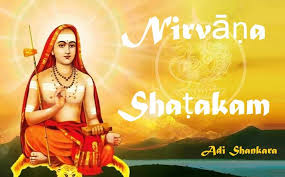
The Nirvana Shatakam is a beautiful chant from Adi Shankara. Its an essence of all that the Upanishad’s try to explain. Following the Neti Neti approach ( I am not this or that .. ) the great Shankara explains that in reality we are pure consciousness.

A detailed explanation of the Nirvana Shatakam by Sri M is a must watch. Sir has explained this in 3 sessions. Links for the same are enclosed below.

I am sharing the verse in English for those who may not know Sanskrit – the meaning below is the basic word by word meaning and not in depth explanation.

Nirvana Shatakam
(Nirvana – Eternal Freedom – Not attached to anything , Shatakam – 6 Verses)


Mano Buddhi Ahankara Chitta Ni Naaham
Na Cha Shrotra Jihvye Na Cha Gra Na Netre
Na Cha Vyoma Bhumir Na Tejo Na Vayuh
Chidananda Rupah Shivoham Shivoham

I am not the mind, the intellect, the ego or the memory,
I am not the ears, the skin, the nose or the eyes,
I am not space, not earth, not fire, water or wind,
I am the form of consciousness and bliss,
I am the eternal Shiva…


Na Cha Prana Sangyo Na Vai Pancha Vayuhu
Na Va Sapta Dhatur Na Va Pancha Koshah
Na Vak Pani-Padam Na Chopastha Payuh
Chidananda Rupah Shivoham Shivoham

I am not the breath, nor the five elements,
I am not matter, nor the 5 sheaths of consciousness
Nor am I the speech, the hands, or the feet,
I am the form of consciousness and bliss,
I am the eternal Shiva…


Na Me Dvesha Ragau Na Me Lobha Mohau
Mado Naiva Me Naivya Matsarya Bhavaha
Na Dharmo Na Chartho Na Kamo Na Mokshaha
Chidananda Rupah Shivoham Shivoham

There is no like or dislike in me, no greed or delusion,
I know not pride or jealousy,
I have no duty, no desire for wealth, lust or liberation,
I am the form of consciousness and bliss,
I am the eternal Shiva…


Na Punyam Na Papam Na Saukhyam Na Duhkham
Na Mantro Na Tirtham Na Veda Na Yajnah
Aham Bhojanam Naiva Bhojyam Na Bhokta
Chidananda Rupah Shivoham Shivoham

No virtue or vice, no pleasure or pain,
I need no mantras, no pilgrimage, no scriptures or rituals,
I am not the experienced, nor the experience itself,
I am the form of consciousness and bliss,
I am the eternal Shiva…


Na Mrityur Na Shankha Na Mejati Bhedaha
Pita Naiva Me Naiva Mata Na Janmaha
Na Bandhur Na Mitram Gurur Naiva Shishyaha
Chidananda Rupah Shivoham Shivoham

I have no fear of death, no caste or creed,
I have no father, no mother, for I was never born,
I am not a relative, nor a friend, nor a teacher nor a student,
I am the form of consciousness and bliss,
I am the eternal Shiva…


Aham Nirvikalpo Nirakara Rupo
Vibhut Vatcha Sarvatra Sarvendriyanam
Na Cha Sangatham Naiva Muktir Na Meyaha
Chidananda Rupah Shivoham Shivoham

I am devoid of duality, my form is formlessness,
I exist everywhere, pervading all senses,
I am neither attached, neither free nor captive,
I am the form of consciousness and bliss,
I am the eternal Shiva…

Nirvana Shatakam Chanted by Sri M 


Part – 1 

Part – 2 

Part – 3 

Explore Dandeli from the friendly Amara homestay

10 Feb

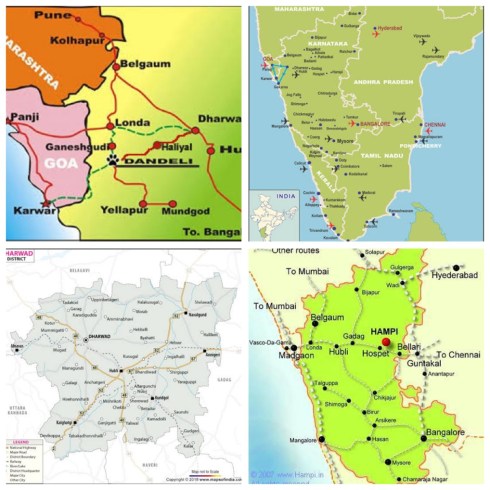
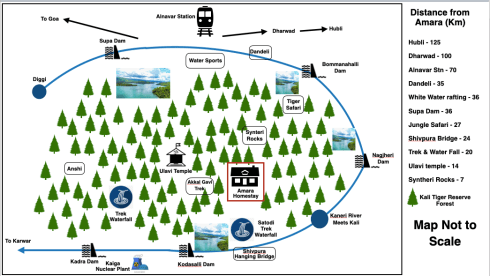
Most people associate Dandeli with white water rafting. Yes – its true that in S India this is probably the only white water rafting spot, there is a lot more to explore in this beautiful place. This area is located in the North West of Karnataka, bordering Goa and close to Maharashtra. Vast expanse of thick W Ghats evergreen forests bustling with wildlife, energising streams and waterfalls, simple good people  – and all of this in an environment that is clean, Eco friendly and sparsely populated. The Blue Triangle in Picture 2 is the place I am referring to.

We explored all of this in 4 days from Amara Homestay. A great discovery that stands out on 3 areas

  • A genuinely warm and friendly homestay that believes and implements Eco Tourism – where the concept of Atithi Devo Bhava is practised to perfection
  • Great location – the only homestay in the heart of the Kali Tiger Reserve
  • Outstanding Veg food – made fresh and served piping hot. Wide variety that is wholesome and tasty

The Hegde’s own a 10 acre farm that has been part of the family for the last 500 years. Currently 4 generations live together happily. While farming is the core occupation, they started the homestay business about 12 years back. This is the best place to soak in the atmosphere of a N Karnataka Brahmin Havyaka community and relish Malnad Veg cuisine.They speak Konkani & Havyaka Kannada. We relished Kottai Idli, Kadabu, Rice Ajwain Patta, Tambli, Brahmi & Kokum juice and many more delicious dishes. Recipes from Archana (Click here for Recipes)


Everything here is fresh and natural. The food is grown locally in the farm – fully organic no chemicals, the water is natural spring water rich in minerals, milk is from their cows, the spices are ground fresh every day


Thats what keeps the locals healthy and strong. In the 4 days we spent here I did not see a single hospital or pharmacy store. On enquiry I learnt that there are no allopathy doctors in these villages. Everyone relies on grandmothers home made Ayurvedic potion and for serious issues like a snake bite there is an Ayurvedic doctor in the village

Getting here is easy

06589 Bangalore Mirajpur train leaves SBC at 9 PM and reaches Alnavar Junction at 6.30 AM. The ride from Alnavar to Amara is about 90 Min. You will reach your destination before 9AM and a hearty breakfast awaits you. The return journey on 06590 Mirajpur Bangalore is equally convenient – the train leaves Alnavar at 8PM and reached Bangalore at 6.30AM. Train operates every day.

This is not Dandeli 

While everyone refers to this area as Dandeli – you are actually not in proper Dandeli town. Amara is located in Gund Village inside the Kali Tiger reserve forest. It is very conveniently located to all the major attractions that are 20 – 30 kms from there. Here is a not to scale visual representation of the area you will cover


This is Kali River territory

The Kali river is a short 184 km river. But it is ferocious. It originates from an underwater spring on the Goa – Karnataka border. Numerous springs and streams from the hills add to its flow. The heavy rains in the W Ghats adds to its charm and intensity.  The word “Kali” is not a reference to the Godess but to the black stones on the riverbed that gives the pure water a black colour. The river flows mainly through thick jungles and is not accessible for most of its course. In a short span of 50 Kms it has 5 dams and the 2nd largest backwater catchment area in Asia. Two of the dams store water for the Kaiga Nuclear reactors. The river then finds its way to the Arabian Sea along the Karwar coast.

This is also a Tiger Reserve 

The forest area around here was notified as the Kali Tiger reserve about 8 years back. Post that no new homestay / construction activity is allowed. Existing homestay continue to operate with limited capacity. Amara is the only operating homestay from within the Kali Tiger reserve.


Planning your time here – sights to see 


Ajit who runs the day to day operations at Amara put together a plan for us to maximise coverage of the sights. Each day we covered two areas.

Morning 9 AM  – 1.30 PM  session 1 , followed by lunch and a brief siesta and then the 2nd session from 3 PM to 6.30 PM. Our man Friday was Uday – the driver + Guide who went out of the way to show us the sights of the place and also spot a black panther and leopard.

Day – 1 : Morning session, Trek to a beautiful waterfall thru thick forests

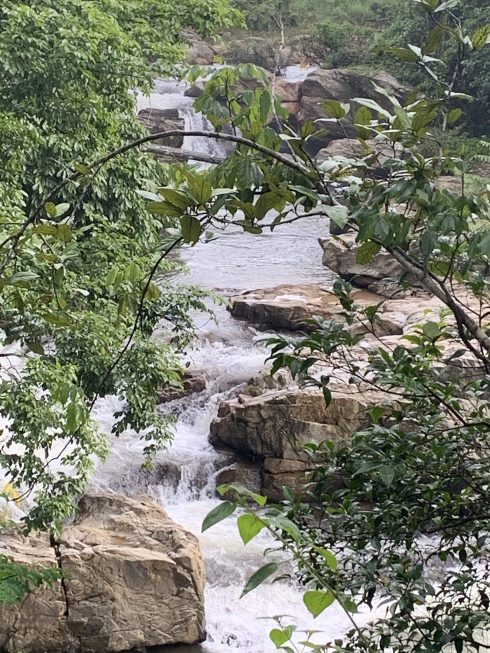
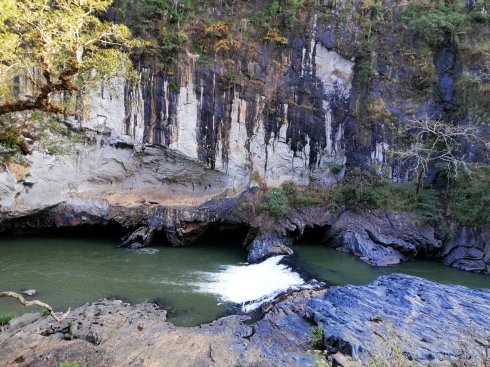
These are sights which only the locals know. The drive was about 45 minutes and then a 1 hr trek ( up & down) to a beautiful waterfall that originates from an underground spring, the rivulet then joins the Kaneri river – one of the main tributaries of the Kali river. This waterfall is full of water all 12 months. On the trek we spotted many snakes peeping out of their holes. Take a change of clothes as you will enter the waterfalls and get drenched

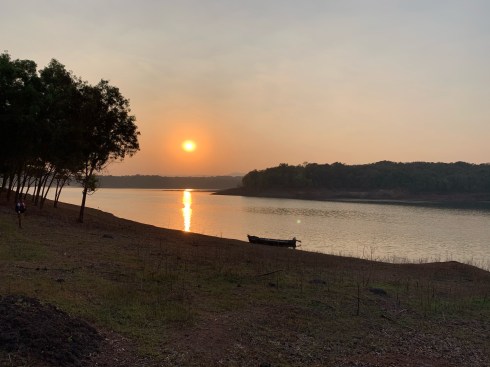
Day – 1 : Post Lunch session, Boat ride to the Supa Dam backwaters and beautiful islands, Sunset viewing 

A nice drive thru dense forests we reach the vast expanse of backwaters of Supa Dam dotted with beautiful islands. The place is vast and not a soul in sight. But yes we spotted numerous birds and at least 20 of the rare Hornbills. The islands are calm and serene and a great place to view the sunset. On the way back Uday ensured that we started late and were driving around 7 PM – thats the time when you get a chance to spot the animals, we were lucky in spotting a rare Black Panther crossing the road.

Day – 2 : Morning session, Whitewater rafting

The white water resort that offers multiple activities is about 35 Kms from Amara ( 75 min drive). It was not crowded even on a Sunday. We took the 30 min, 1 km option for Rs 450/- which gets you a feel of a level 3 Rapid. We went by the same rapid  3 times. A longer option is a 8 Km rafting session across multiple rapids that takes a few hrs. This is priced at Rs 1450. Compared to the Rishikesh experience this was a cakewalk – very safe, so go for it. If you are wondering who took this photo – Rs 1400 extra gets you a professional photographer to shoot you as you tumble down the rapid and the guide on his iPro gives you a video of your rafting session. As expected this area is clean but commercial and crowded. Take a change of clothes. 

Day – 2 : Post Lunch , Syntheri Rocks 

This is a nice view point located about 7 Km from Amara. The drive is less than 30 minutes. Its a walk down 200 steep steps to view the Kaneri river cut thru a steep cliff.

On the way back we stopped at an isolated location in the Anshi Forest and trekked thru dense jungle to the Kaneri river. The water level here during the rains rises by over 20 feet covering all the rocks, but now it was nice and calm. A great way to spend a few hours in the scenic beauty of the river surrounded by forests.

Day – 3 : You have two options 

Option – 1 : Dudhsagar 

My colleagues headed to Dudhsagar which is a full day trip. You drive to the Goa border and then the contact picks you up by jeep from there. You can then trek 26 Km (up and down) or drive all the way to Dudhsagar (1 Km trek). The 26 Km trek can be thru dense forests or along the rail track. If you decide to trek, it can be very tiring. You leave by 5.30 AM and get back at 9 PM, remember to carry water / snacks – there is no food on the route. Best time to Visit Dudhsagar is Sep – Nov immediately after the rains.

Option – 2 : Nature walk – Visit to the River etc

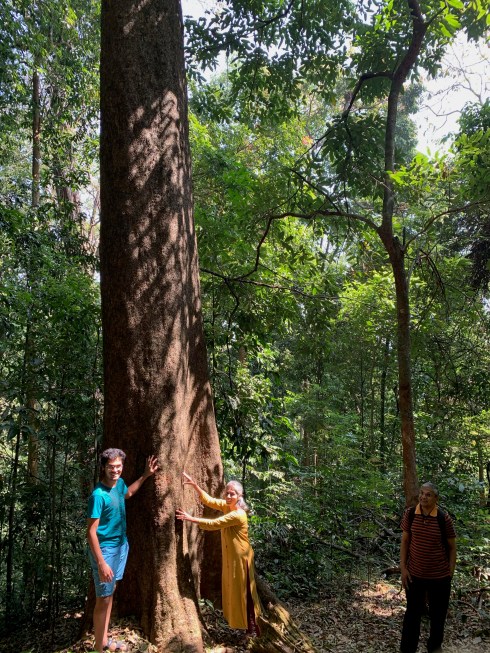
I stayed back and soaked in the atmosphere of the homestay. Spoke to the family members had meals in their house. Morning was spent in nature walk spotting birds and rare plants followed by a walk thru the Hegde’s 10 acre farm. Thats when you realise that life in a farm is hard work. You need to be multifaceted to manage the work all year around. They are so self sufficient that even 70% of their LPG needs are met from their Gobar gas plant.

In the evening we visited a neighbouring farm who are lucky to have the river flow along their border. How lucky can you get. I enjoyed my solitude sitting by the river and listening to the gurgling rapids.

Day – 4 : Jeeva Samadhi of Chinna Basaveshwara & trek to Akkal Gavi Caves 

The Jeeva samadhi of  the youth saint Chinna Basaveshwara is at Ulavi – 14 Km from Amara. This is a very famous site for the Lingayat’s of N Karnataka. A few Km from here is a trek to the Akka Nagamma caves. This is the place where Akka Nagamma hid her son (Chinna Basaveshwara) from the soldiers of the sultan who were trying to kill him (Around 1100 AD). The trek is a long one – but not difficult. There are 3 sets of caves. While there is a proper trail and steps – this is again thru dense forests.

You come back from the trek have lunch, a short nap and then by 4.30 you are ready to leave, to catch your train at Alnavar. On the way you may want to explore Shivaji’s fort (we did not) – but we did stop by the Crocodile park – that was disappointing.

So what we could not cover this trip 

  • The Jungle safari at Potoli gate Tiger reserve that operates between 6 – 8AM & 4 – 6PM
  • Shivpura Hanging bridge and Satodi Falls trek – Great place for sunset viewing
  • Diggi Hills – the source of the Kali River

I am sure I will come back to complete the list. Our friendly guide assured us that there were many more offbeat places to see which only the locals knew about. Best time to travel is April & Oct / Nov. April the hills are full of flowers and Oct / Nov the rivers are overflowing.

A few more points as you plan the trip 

  • Take the train – don’t drive from Bangalore – its a long 11 hr drive. You lose 2 days in the process. Train is convenient and you need a local jeep / guide to show you the places
  • Network coverage is poor – this is BSNL land. While Amara provides BSNL Wi Fi you will not get coverage on your Airtel / Voda / Jio phones.
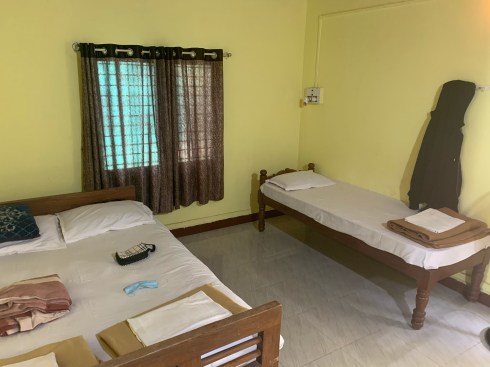
  • The rooms are clean, functional & basic. Each cottage has a twin bed and a single bed + a mattress to accommodate a 4th person. Soap & towel are provided by Amara. Carry your toiletries. You get hot water and nice views.  Remember this is a homestay not a hotel
  • This is not a place for wild parties, loud music and liquor. Food is pure Veg. Respect the communities way of life.
  • The treks can be steep, carry good shoes. Carry change of clothes – the waterfalls and rafting will make you wet. Pack a rubber waterproof sandal – the river bed and waterfall area is rocky – good to have a footwear.
  • Carry water / snacks on the treks – there are no shops around these places. Carry your medicines.
  • Dont forget to pack your binoculars – lots of birds to watch
  • This place is not at an altitude – but the dense greenery and rivers make it cold. Max temperature is 35 degrees. Nov – Feb can be cold. Minimum temp in Jan can be 6 – 7 degrees. Carry some warm clothes and socks. Especially if you are planning early morning trips
  • This is a place you will feel like visiting again and again – a group of friends from Pune have visited Amara over 20 times.
  • Most people who visit them are from Maharashtra / Belgaum / Hubli / Dharwad – Bangaloreans are yet to discover this place
  • Roads are in great condition – they are almost empty so people go fast. While its not hilly terrain many roads are curvy and zig zag. Restrooms are a challenge – that’s why you do morning and evening sessions and head back to Amara for lunch.
  • Carry something for the Hegde’s – the 4th generation kid Atharva is very cute and you will feel bad if you don’t carry some goodies for them. Remember they treat you like family – so you better reciprocate
  • This place is real Value for money – Rs 1600/- per person / day inclusive of all meals (Breakfast / Lunch / Dinner / Tea/ Coffee / Fresh Juices / Snacks). You rent a jeep that can accommodate 8 people – for Rs 2800/day , driver cum guide extraordinary comes free
  • Go as a group of 6 – 7 people, thats more fun

And one more thing…. 

The word Amara has two meanings, it means immortal – it also stands for the initials of the owners Ajit – Mangala – Ramchandran. Ajit has a Masters in Hotel Management and his wife Rachna in Fine Arts. The family is an ideal, happy, contended family. They are good people who work hard, lead a simple life and serve you like family.When you travel to a place like this staying in a homestay is such a great learning experience, dont miss that.

So do spare a few days and go visit them – Amara Homestay, PO Gund, Via Dandeli. https://dandeliamara.com


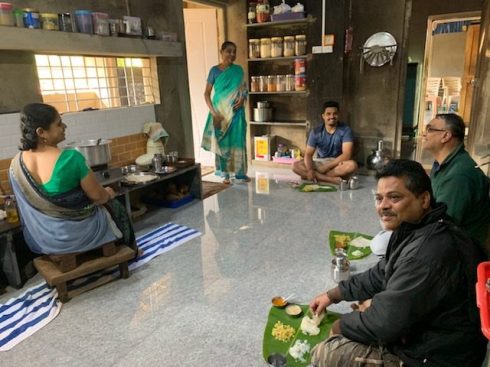
4 Generations of the Hegde family 


Some more Views from the trip …..

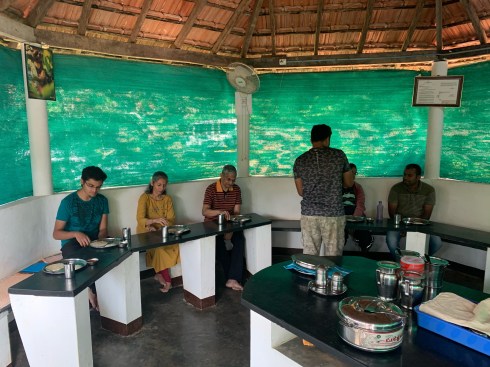
Everyone concentrating on breakfast


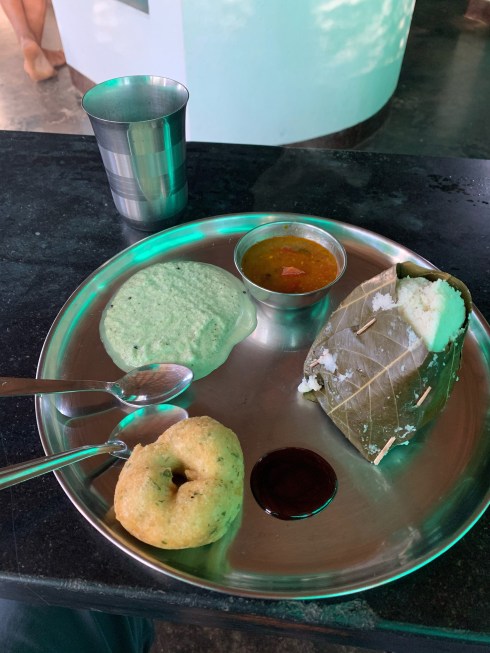
That is Kottai Idli and the freshest coconut chutney, the red liquid is jaggery syrup made at home


A view of the room 


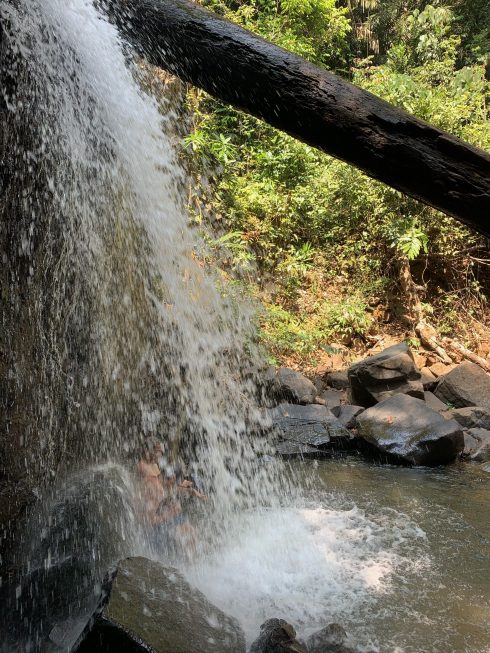
The waterfall we visited on Day 1


Backwaters of Supa Dam


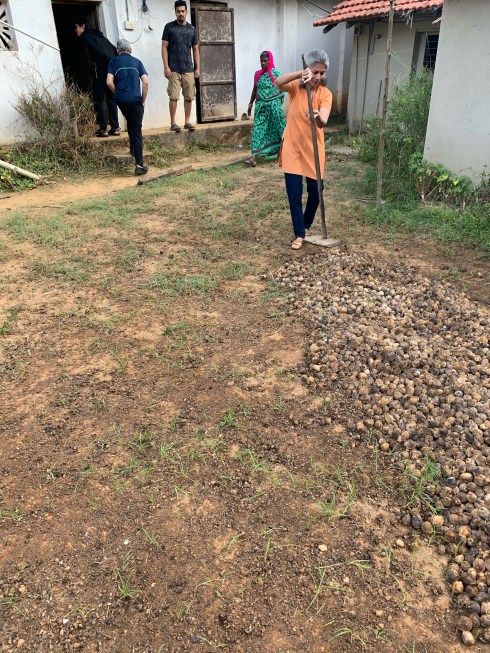
Helping accumulate the Arecanut 

Piping hot Neer Dosas being made on a 100 year old metal Tava by Mangala Ji 


Skill at work 

Explore Wayanad from the comfort of Tranquil Resorts

1 Feb

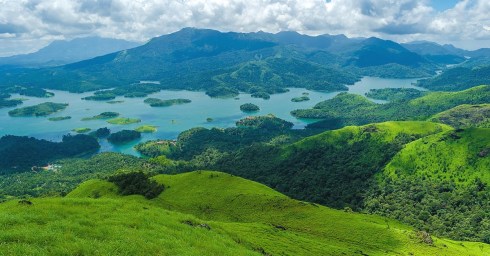
Sometimes its good to be landlocked with no train and airport connectivity. The beauty of Nature is preserved. Wayanad is the perfect example of such a place. Its as close to Bangalore as Ooty & Coorg but attracts less than 10% of the crowd. So if you are looking to soak in the best of un – trespassed nature nestled amidst the gorgeous western ghats – then head to Wayanad.

Wayanad is one of those holiday destinations that promise a little bit of everything – peace and tranquillity, stunning landscapes, nature and wildlife, trekking and camping adventures, history and culture, great food and excellent infrastructure.

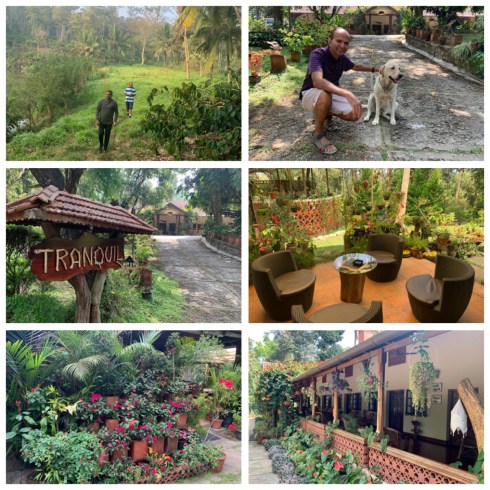
We explored Wayanad from Tranquil Resorts (https://www.tranquilresort.com). A wonderful homestay with a great central location. Just 10 rooms in a 400 acres estate that grows Coffee /Arecanut / Exotic Fruits / Avocado and a lot more. It has the size of a resort but the warmth of a homestay. Tranquil has a history that dates back to 1896 and the current owners took over the property in 1994 and transformed it. The pedigree of the family is rich and diverse. Ajay – who runs the place is a great communicator and he can go non – stop narrating stories and anecdotes of family and guests who have visited Tranquil from all over the world. He is an amazing person full of positive energy. The passion with which they run the place would make you feel that they started this Home Stay last month – its been operational for 20 years.

Tranquil has 10 rooms – 5 garden rooms, a Tree Villa & Tree House, A Deluxe room, Luxury Suite and a 2 Bedroom Cottage. The place is warm, rustic and comfortable. The ambience is welcoming – The gardens are blooming with multitude of rare flowers and plants – all nurtured by Nisha (Ajay’s Wife), the dogs are friendly and the food is fresh, tasty and homely

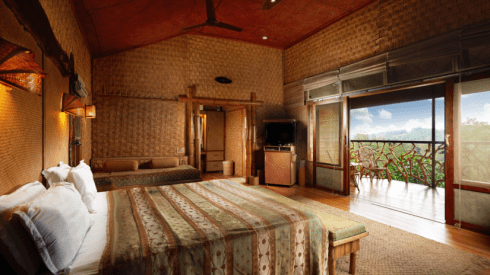
We stayed at the Tree Villa – a huge room that can accommodate 4 and comes with 2 bathrooms and a large sit out. Its in the midst of the plantation surrounded with verdant greenery and great views and at 6.30 AM you can hear a zillion birds and if lucky the trumpet of an elephant. But as a family of 4 for the same price you could also take 2 Garden Rooms.

Its important that you choose the right place to stay. Waynad end to end is a 1 1/2 hr + drive , so if you pick a resort that at the edge of Waynad the drive from Bangalore is going to be very tedious. Also the Lakkadi view points at the Tip of Waynad is one of the wettest regions of the country. Tranquil is perfectly located – close to all the attractions and a 2 1/2 hr drive from Mysore.


Having decided to go to Wayanad and stay at Tranquil,

What can you do in Waynad 


There is a let to do. To cover all the sights may take you a week. The first step is to find a guide – you can do a lot more with the help of an able local. Ajay had patched us to Sabu Abraham – A bird watcher / trekker / nature enthusiast and a good human being. Sabu is associated with the local District Tourism Promotion Council. He was a great asset who helped us cover a lot of ground in the time we spent there (2 Nights) – so do contact him at +91 94479 52186.  You can also visit his website http://www.wayanad-naturetours.com

Trekking 

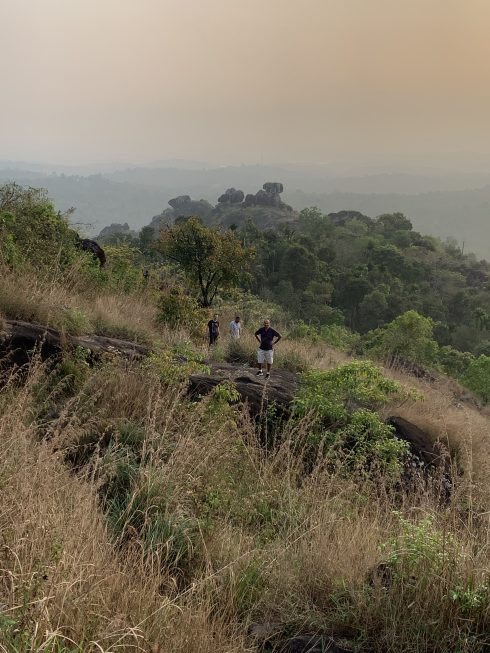
This place is paradise for trekkers. We climbed a steep hill called Kolagapara, a short drive from Tranquil. Took us 2 hrs – but it was intense and steep all along the way. There is also the Chembara peak which has a lake on the top. As you climb this hill the landscape changes – you see evergreen forests , grass lands and even a lake at the top. Professionals will head to Brahmagiri which is a full day affair. (70 Km from Tranquil). Close to Brahmagiri is an ancient temple Thirunelly

Waterfalls 

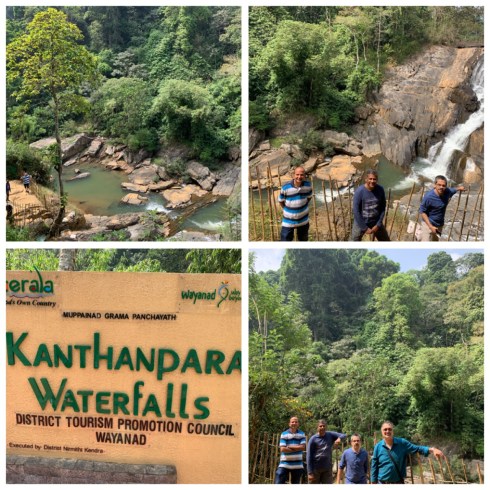
We visited the Kanthanpara falls. A very well maintained spotlessly clean picturesque waterfall. This was about 45 min from Tranquil. Two other beautiful waterfalls are Soochipara & Meen Mutty – both are located about about 20 Km from Tranquil.

Edakkal Caves 

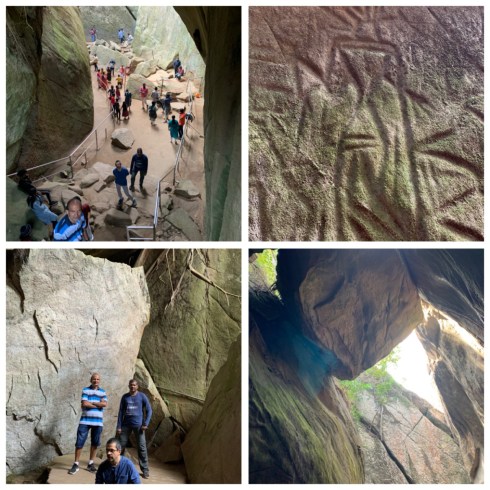
A short 10 min drive from Tranquil gets you to Edakkal Caves. This is the only known place in India with Stone Age carvings. that date back to the Neolithic and Mesolithic ages (5000 – 6000 BC). Edakkal is said to have had links with Indus Valley – 400 signs discovered recently establish this linkage. Getting to the caves is not easy. A steep climb along a pathway for 1 Km and then 350 steps gets you to the caves. This place deserves a UNESCO World heritage tag. Its very well maintained

Opening 8.30 AM – Closing 4 PM. Closed on Mondays.

Banasura Sagar Earth Dam 

Second largest Earthen dam in Asia. Located about 1 hr 15 min from Tranquil. They have scenic walking trails and a nice lake.

Gurukul Botanical Sanctuary (https://www.gbsanctuary.org/ourstory.html)

Started on a small scale 40 years back by a passionate German environmentalist – its a place where endangered species of the W Ghats are are nurtured in a natural environment. The Gurukula Botanical Sanctuary is tucked away in the far away hills of the Wayanad forests of Kerala. It sits perched on a hillock by a perennial stream that flows all the way into the Bay of Bengal.

The Sanctuary is a patch of 50 acres of forests land of which some 40 acres are left largely alone for natural succession. About 5 acres is meticulously tended and doubles as a showcase for visitors to visit, explore, interrogate and comprehend. The Gurukula tends its forests on the principles of restoration ecology with careful, conscious human interference. Form the mosses, liverworts, ferns, orchids, lichens to the massive angiosperms, each one is documented, catalogued, tended and known by nature, place, origin, age and stage. You can schedule a trip here by calling them up.

Distance from Tranquil – 1 Hr 45 Min (Near Brahmagiri Trek)

Wildlife Sanctuaries 

The Muthanga wildlife sanctuary is located 25 Km from Tranquil. Booking is first come basis for a jeep ride and you have a good chance of spotting Elephants / Deers / Peacocks…. . Of the 3 sanctuaries in this area ( Bandipur / Muthanga / Kabini – Your chances of spotting wildlife is best in Kabini). Morning sessions start at 7 AM and evening at 3 PM. Weekend can be very crowded

Lakkidi View Point

Lakkidi is one of the highest locations in Wayanad, Vythiri is the nearest town. Three km from Lakkidi is Pookot Lake, a natural freshwater lake spread across 15 acres. It is one of the rarest reservoirs of water in Wayanad. Surrounded by meadows and hills, it is a favourite picnic spot. Lakkidi’s annual rainfall averages from 600cm to 650cm.

There are a few other places worth visiting – Jain Temple at Sultan Batheri, Lav Kush Temple etc. Locals say that a must visit is the Glass temple of Koottamunda situated about 20 km from Kalpetta. It is a famous Jain temple, on the slopes of Vellarimala. It is dedicated to the third Thirthankara of the Jains, Parswanatha Swami. The exquisite beauty of the temple owes a lot to its construction. There are icons of Parswanatha Swami and Padmavathi Devi in the sanctum of the temple. Mirrors are placed in the inner walls of the temple and you can see numerous beautiful patterns of the reflections of these idols in these mirrors.

A few  points about Waynad 

  • The word Wayanad comes from ” Vayal” – Paddy Fields and Nadu – “Land”
  • Wayanad is landlocked – shares borders with Karnataka & Tamil Nadu.
  • The altitude varies from 700 – 2100M. But the drive is not hairpin drive.
  • Given this altitude the weather is pleasant all year around – max temp is 32 degrees. lowest temperature in Dec – Jan is 10 – 12 degree. Rainy seasons can be very wet.
  • Given the range of altitude you will find a wide variety of flora and fauna – from deciduous trees to evergreen forests, pine trees and meadows
  • The place is well maintained and spotlessly clean. The roads are great – no potholes. the town of Sultan Bathery was picture perfect with neatly painted shops, flower pots on the pathways and not an ounce of garbage.
  • The town of Sulthan Bathery was formerly called Ganapathyvattam. During the invasion of Malabar by Tipu this town was used by his army as the storeroom or battery for his ammunition. Thus the town came to be known as Sultan’s Battery which later became Sultan Bathery.
  • The total size of Wayanad is only 2132 Sq Km (Thats smaller than Bangalore) of which 900 Sq Km is under forest cover
  • Dont be worried with the demographics of Wayanad – its not like Mirzapur or Meerut, its clean, efficient and beautiful.

Distances

  • Bangalore – Thotada Mane 144 Km (Restaurant break at Srirangapatna)
  • Bangalore – Mysore 159 Km
  • Bangalore – Tranquil Resorts 279 Km
  • Distances can be deceptive – a drive from Bangalore to Wayanad with a stopover can be a tiring 6 – 7 hrs. The Bangalore – Mysore stretch slows you down. Recommend a stopover at Mysore for the night, then you can reach Waynad the next day by 11 AM after a relaxed breakfast at Mysore
  • Once you leave Mysore there is no good restaurant / restroom break. So if you are driving non stop do a stop over near Mysore.
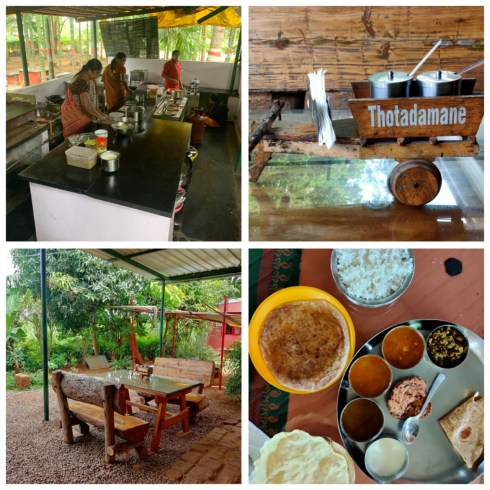
  • I would recommend this lovely place called Thotada Mane, its a few km off the highway. A very nice homely place where they serve fresh Veg food in a nice green ambience amidst fields. Clean restrooms. Make note of the timings – they are normally open from 8.30 – 3.30 and closed on Mondays.

A Few points about Tranquil 

  • Network connection is great – your 4G works very well, rooms have TV.
  • Room rates are inclusive of Breakfast & Dinner.
  • Bird watching and walking around the Plantation – Budget for 2 hrs
  • The garden rooms are located in the main building adjacent to the owners house. These rooms face the garden and share a common verandah. Rooms come with two speerate twin beds. The bathrooms are very spacious
  • Tranquil serves Beer – but other liquor you need to get from local stores. Remember you can’t carry liquor from Karnataka to Kerala. The Govt stores have a premium counter with no Q
  • Get your emission test, carry your Car documents – the Cops may trouble you at the border
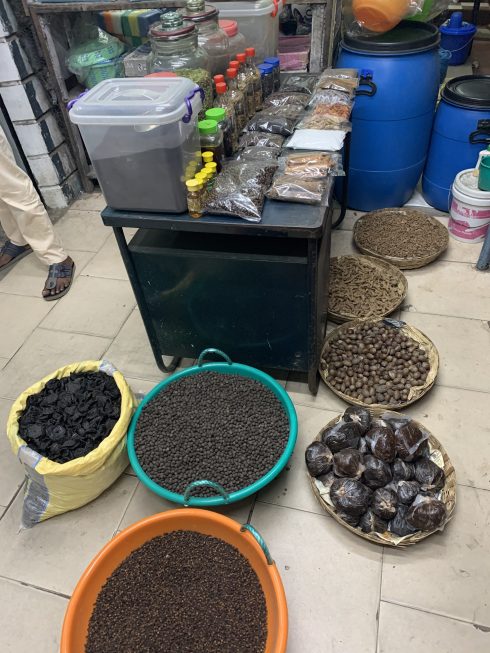
  • Waynad is the place to buy spices – great quality at excellent prices. So visit a wholesaler and stock up on Pepper / Cashews / Turmeric / Kokum / Coffee etc


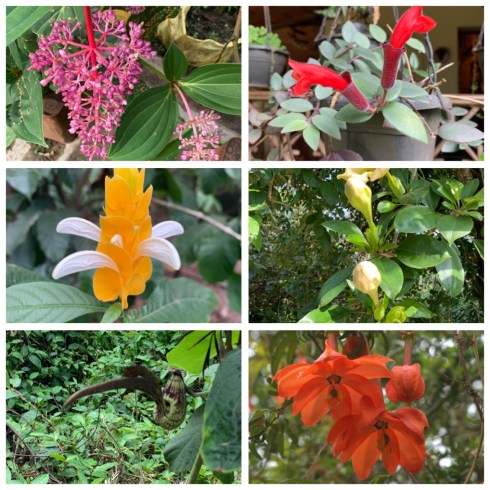
Exotic flowers – we spotted the rare Dutchman’s Pipe and a leaf that is like sandpaper


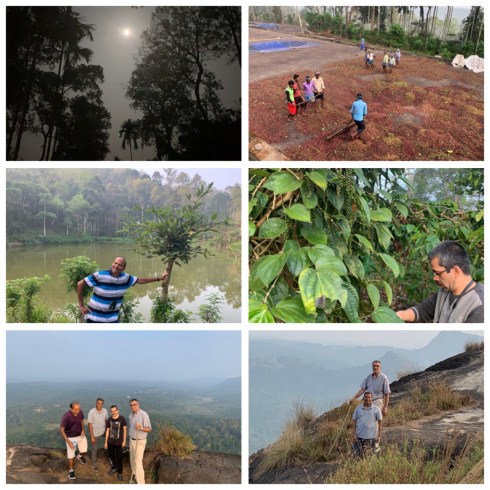
The full moon was brilliant from our room, and thats freshly plucked Coffee beans being spread for drying.

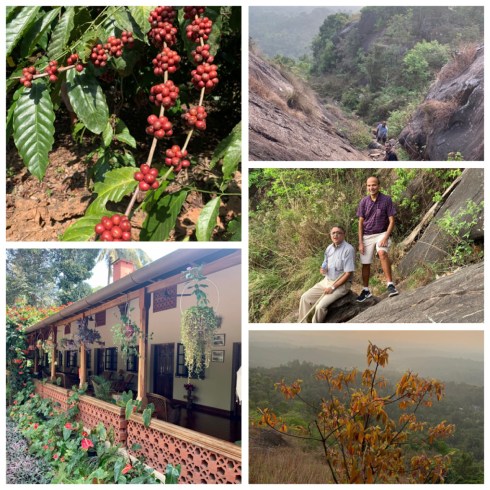
A Coffee shrub with densely packed Coffee beans and views from our Trek.

2021 Global Economy Trends – Highlights from Ruchir Sharma

10 Jan

Whats the outlook for 2021 and where do we invest money? Simple, straightforward, logical insights from Ruchir Sharma 

Here is a summary for you to absorb in 1 minute, detailed 1 hr Interview Link enclosed below. 

  • 2020 Economy had negative growth of 4% and stock markets had a 13% + growth. In 2021 this trend could be the opposite – as economies boom Stock Markets may slow down

  • 2020 Stimulus was 5X of that during the Lehman Crisis, came immediately. Most of it went to savings & Stocks as avenues for spending where limited. 2021 could see pent up spending
  • 2021 – Markets are already pricing in higher consumption / Govt will not have any money for stimulus
  • Inflation is set to rise and interest rates may go up. Global Inflation has been stable for 20 years ~ 2.8%. Could rise steeply in 2021 driven by labour shortage/ less competition / declining productivity / excess money printing

  • Higher Inflation could lead to higher interest rates. In 1980 Global GDP = Valuation of Stock Market, in 2020 Stock markets globally are valued 4X of the Global GDP

  • This is a good time to buy property at Fixed interest. Home prices in US / China surging last few years – India declining. Income has been increasing put prices are declining.

  • USD is declining after maintain global control for 100 years. Driven by excessive currency printing. In 2020,  5 Tn USD printed

  • Distrust in USD is driving alternative Cryptocurrency. Bitcoin emerging as the new Gold. Strong interest in younger generation

  • Revival of Commodity cycle after 10 years. Weakness in USD is directly linked to strong commodity cycle

  • Developing countries make a stronger comeback. More resilient, faster to change. Digitization share of economy is already high.
  • Best companies of one decade perform poorly in the next. New stars will be born.

Full Interview 

Simplifying Investing – A Layman’s guide to leverage compounding

4 Jan

When it comes to life there are 2 rules that are almost universal

  • Everyones wants to be HAPPY
  • Everyone wants to be RICH

While Happiness is a state of mind, being Rich is something that can be actioned. The Universe is constantly showering us with Richness – but we with our confused thinking are looking the other way as opportunity constantly knocks.

In this BLOG I am going to share some simple messages that can be of help to one and all. Definitely to a youngster who has started his career and even to folks my age who missed this common sense investing advise. We may at least be able to create an inheritance for our children or build a corpus for charity in our old age. Almost all the content of this Blog is based on discussions and inputs from Friends. 

The industry can be confusing and many wealth managers try to market products where they make hefty commissions. So do your own research.


You make wealth when you understand the power of Compounding

Start early and stick to it. I will share with you almost 50 companies across sectors (and I am sure there are many more) that have created phenomenal wealth over the last 25 years. These are companies in which our friends work, companies we read about every day. We may have in passing bought and sold these stocks, but we missed out on the power of compounding.

Three simple rules 

  • Is it a DIAGONAL Stock (Look at the last 20 year graph of the stock and see if its like a diagonal of a rectangle)
  • Is it a good established Brand with Products / Customers / Revenue / Profit – Is it in the top 3 in its Industry
  • How good is the Management

Good companies run a marathon, you can get in at any point and ride the wave

Its OK if you missed the IPO


Stocks Vs MF 

Last few years MF seem to be lagging the index, and are not delivery an alpha. HNI’s have started shifting to the Index and to select stocks across sectors creating a diversified portfolio of their own. This trend may accelerate.

Before we look at some of the sectors and the market leaders lets look at the Simple Humble PPF.

Company PF & Public Provident Fund are the best examples of the power of compounding. You start early and the corpus quietly keeps multiplying at ~ 8%, you also keep adding to this monthly / annually. Always invest in your PPF on April 1st the max limit and if its a payroll PF do contribute with your Voluntary Contributions. And remember a PPF does not have a 15 year limit you can keep extending it by 5 years for ever. The power of compounding starts to kick in when you have a  30 – 40 Lac corpus after 20 years, that when you see the money doubling every 7 – 8 years. This is TAX FREE Income.

You can’t beat the Index

If in the last 25 years you had invested a few thousand rupees every month in the index you would have made a lot of money. On a weekly / monthly / annual basis we see the volatility but over an extended period the markets have given a 15% +return. You can see the diagonal graphs below.

Indian IT – A Global leadership play that is getting stronger

We all have friends and family working in the large IT companies. All you had to do was invest in Infosys & TCS regularly and stay put. You may have missed the bus but the ride is still on, so get onboard.

The great Indian consumer boom – A billion people eat a lot of biscuits and drink a lot of tea. You buy undergarments, soaps, shoes and slippers. You paint your house. Life goes on and you continue to use the leading Brands of the country.

Make money from select Indian Banks  – A Growing country like India needs banks and India’s Pvt sector banks have done very well. Some like Kotak are world leaders. Kotak Mahindra Bank, has comfortably pipped all lenders in the world to become the most expensive bank stock, a crown which until recently belonged to  HDFC Bank. Investors who bought into these banks early and stayed with them have made a lot of wealth. And the banking game is just starting – as banks consolidate the big will get bigger.  The life insurance story is just beginning and this is the time to look at HDFC Life, SBI Life or other quality companies that have recently hit the markets. Bajaj Finance is a giant amongst NBFC’s and may well be a bank soon. Last 5 years this stock has created a lot of wealth for investors.

Like IT – India is also big on Pharma. This is more complex given the investments and the approvals needed. But many Indian companies have established a position of leadership.While we all know Sun Pharma, Dr Reddy, Alembic, Aurobindo and many others – here are 4 companies that follow the rule of the Diagonal in this sector.

Agriculture – The country is agrarian. Just like Pharma, India is home to many companies that specialises in pesticides/ fertilisers/ seeds / Tillers, here are a few star performers of this industry. Given the small land holding in India where tractors cannot be used VST Tillers is another great idea to explore.

The world of Chemicals & Plastics goes beyond Pharma & Agricultured. Here are some market leaders who have performed well over the years in their own areas of specialisation. Some of them are global players with over 50% MS.

Indian Automobile Sector 

Companies like Maruti, Hero, TVS and many component companies have rewarded investors handsomely in the last 20 years and the trend will continue. Component and battery manufacturers Like Exide & Amara Raja who supply to the Industry and export have also performed handsomely. This year the sector has been impacted and inspite of markets reaching an all time high these stocks still have some distance to go.

Platform Stocks 

Amazon & Flipkart are platforms. The last decade has seen the explosive growth of Platform Stocks. Indian markets have 3 Platform Stocks. Multi Commodity Exchange, India Energy Exchange & IndiaMart. These are relatively new to the market. Stocks like IndiaMart have been explosive and MCX has started performing in the last one year. One hears news about the Energy exchange also. These are again ideas to explore for the future.


So how could you go about building your portfolio 

Here there is no rule that fits all. There are many roads – the common rule is stay invested for the long term.


Should you buy 50 stocks or 10? Should you dip your finger in all sectors or choose only the top 3? Do you invest only in the market leader or in the Top 3 in every sector ? Do you buy at one shot or spread your buying over  12 months? Do you book profits periodically or stay put? How much should you invest in a. stock? Do you categorise stocks in your Portfolio as Tier 1/2/3?


These are questions that each person needs to solve for themselves. There is no fixed answer. As I write this Blog markets are at an all time high, so this may not be the best time to invest all your hard earned money.
Finally an important note – the information above is for each person to absorb, research and decide on what is best for them. This is not a recommendation of stocks. 

Plum Cakes & Christmas – Whats the Connection?

19 Dec

Christmas is all about Cakes – specifically Plum Cakes (Do you know that Plum Cakes have no plums in them?)

Lets discuss

  • Where to get the best Plum cake in Bangalore (Its a secret)
  • The fascinating history of Plum Cake
  • An overview of Cakes baked across the globe during Christmas

But first let me share how I discovered the most delicious Plum Cake in Bangalore

Its an annual ritual to get a Plum Cake during Christmas. Normally its from a neighbourhood store. This year I decided to hunt for the best plum cake in town. I researched online, spoke to friends and looked at pictures (Good Brands & food talk to you). There was wide range out there – From the humble Iyengar bakery to the Exotic 5 Star bakes, Nilgiris, Smoor, Cakewalk, Glen’s bakehouse, Lavonne, Michelle Gafoor, Excelsior and a few more… from Rs 90 for a 200 gram cake at Iyengar’s bakery to premium stores charging 1000 – 1500/Kg.

But they all seemed the same. I could not connect with any of them. Something seemed amiss. They could not entice me to click on the Buy Button.


 Thats when I discovered the Plum Cake from L’inouï


L’inouï – means ‘extraordinary, incredible, unheard of, unprecedented’ in French. Their mission is to bring the finest chocolates and the fine art of chocolate making to Bangalore. And if you have a passion (and palate) for the finer things in life you must explore their products. They also make Plum Cakes.

The minute I saw the website and read about the company I connected. It seemed truthful and of high quality. While I placed my order immediately, I also called up asking to meet the owner of this unique Brand.

Anusha is a young 1st generation entrepreneur. The idea of creating a Chocolate Shop with European standards came to her mind when she was studying in Belgium. Most pastries in India try to appeal to the masses not via taste, but cost. So, corners are cut, substitutes are employed and an impersonator is born. The little treats often come out overly sugary and underwhelming. And the customer is left wanting. She embarked on a mission  – Use the best ingredients, don’t cut corners, and have specialists working for you. The results are remarkable and loyal customers are turning up in large numbers. When I asked her why Linoui products were 3 – 4 times more expensive, this was her answer.
 

So what did I like about Linoui’s Plum Cake? 

The packaging was elegant and nice. It was dense – packed with dry fruits, It was rich but not greasy. It did not crumble. It was delicious and it got better on day 2 & day 3. Most Plum Cakes you find in stores are 95% dough and 5% dry fruits. This one was the other way round. Plum cakes are best eaten after a few days of baking. Its good to feed it with Rum, that helps it to darken and stay moist. So when you buy your cake ask when it was baked.

Is the L’inouï Plum cake worth the steep premium? I would definitely say YES – Christmas comes only once a year, go for the best. For Online ordering – https://www.linoui.in/collections/celebration-cakes/products/xmas-plum-cake


Lets now look at some interesting Plum cake Trivia


What’s the Origin of Plum Cakes 

Fruit cakes date back to Roman times, where the people prepared a dessert called Satura, which comprised barley, dried raisins, pine nuts, pomegranate seeds and mead (wine made with honey). The English began making a different version of Satura during the Victorian period. This became a popular and an integral part of holiday feasts. They came to be known as Plum Cakes or plum puddings in England.

Plum Cakes and Christmas – what’s the connection

During the medieval period, there was a popular tradition of observing a period of fast before Christmas. Right before indulging in heavy treats and meals during Christmas, most people consumed a rich porridge that “prepared the stomach for feasting”. This porridge was made of oats, dried fruits, spices, honey and meat. Ingredients such as oats and meat were excluded from the recipe eventually. New ingredients such as flour, eggs and butter replaced meat and oats, paving way for the birth of the famous plum cakes, which are also known as plum puddings or fruit cakes.

Why the name Plum Cake when there is no Plum in them 

The term “plum cake” and “fruit cake” have become interchangeable. Dried fruit is used as a sweetening agent and any dried fruit used to be described as “plums”. Most plum cakes and plum puddings do not contain the plum fruit as we know today. The term “plum” originally referred to prunes, raisins or grapes.Thus the so-called plums from which English plum puddings are made “were always raisins, not the plump juicy fruits that the name suggests today.

In Old English, the term plūme was “from medieval Latin pruna, from Latin prunum,” which equated to “prune“. Prune in modern French means plum, so plum tarts have names such as tarte aux prunes. In English, prunes are dried plums, and when modern cakes use them as a primary ingredient, they may be referred to as a plum cake.

How did Plum cakes travel across the globe

Plum cakes moved out of England primarily due to colonization. English men working in colonies such as Australia, and the Americas, Canada and India received Christmas gifts and hampers from their families in England. Plum cakes were sent along with these hampers. The locals eventually began making these cakes in their households during the holiday season.

How did the cakes last long voyages in those days by ship and land

The cake is prepared by soaking the fruits and nuts in rum/ alcohol. Some soak it for weeks and months while others soak it longer. (Non alcoholic variants are also available) The cake containing good deal of alcohol remains edible for many years. For example, a fruit cake baked in 1878 is kept as an heirloom by a family (Morgan L. Ford) in Tecumseh, Michigan.
Here is some advice from a celebrity Chef on how to make the Plum Cake

Here is a menu from pastry Chef Ravi Varma at Taj Coromandel “Instead of mixing our fruit a few months in advance, we do it a whole year ahead, for maximum flavour,” says the chef. Imagine that. Don’t choose a metal container though or it might react with the alcohol and alter the flavour, advises the chef, “Drain the excess liquid or the cake will become sticky and don’t leave out the candied orange or lime peel in the mix, as that breaks the sweetness in flavour,” he advises.

Plum Cake (Makes 1.5 kg)

Ingredients: Fruits for Soaking
150 gms Raisins | 150gms Candied
Fruits | 150gms Currents
150 gms glazed cherries | 150 gms candied peel | 50 gms cinnamon powder | 50 gms ginger powder
120 ml vodka | 120 ml Brandy | 120 ml whiskey

Method
Soak the fruits in alcohol, pack them in an air-tight container and leave them for a minimum of 15 days, for the fruits
to soak.

Ingredients: Cake
150 gms Butter | 220gms Sugar | 4 eggs
150 gms Flour | 50gms bread crumbs
1 apple | 50 gms apricot Jam | 800 gms soaked fruits | 50 ml Caramel colouring
10 gms ground spices (garam masala)

Method
Cream butter and sugar
Add eggs one by one
Add caramel colour
Mix soaked fruits to it
Then fold all dry ingredients into the batter
Put the batter in a lined pudding mould, bake in double boiler at 150 °C
for 45 to 50 minutes.


Cakes from all over the World

While Plum Cake is very British there are many delicious Cakes made across the world during Christmas. 


Tres Leches cake

The Mexican sponge or butter cake is soaked in three types of milk—condensed milk, evaporated milk and heavy cream—to give it a creamy and spongy texture. The cake is topped with whipped cream and berries and is refrigerated overnight so that the cake can soak up the milk mixture. It is also called the ‘three milk’ cake. Though it can last upto four days when refrigerated, it is best to consume it in 48 hours.

Tarta De Santiago – Spanish delicacy

This Spanish cake recipe comes from Galicia in Spain and literally it means Cake of St James. It is an almond cake consisting of ground almonds, sugar, eggs, sweet wine, lemon zest and brandy. The round cake’s top is sprinkled with powdered sugar with an imprint of the Cross of St James in the middle.

Makowiec from Poland 

Makowiec (pronounced: Mak-ov-yetz) is a strudel-like, yeast poppy seed cake that’s one of Poland’s most popular desserts. It’s main attraction is the filling spun inside, made of finely-ground poppy seeds, honey, butter, raisins and walnuts. When made right, the cake is absolutely delicious. It’s safe to say that many a poppy-seed cake lover would agree that the more the filling, the better

Turkish Revani

This Turkish cake recipe has been served in Turkey since the Ottoman period. Many Middle-Eastern and Mediterranean cultures have adopted the cake with some variations. It is widely served in homes and restaurants and is a single layer of soft and yellow semolina sponge cake covered in light syrup. The cake is made with flour, yoghurt, vanilla, lemon, sugar, vegetable oil, semolina, hazelnuts and so on, while the sugar and lemon syrup are added to the cake later

Stollen from Germany

Stollen is traditional German bread that is eaten during Christmas and is called Christsollen or Weihnachtsstollen. It is a fruit bread made of nuts, dry fruits, spices and powdered sugar. It was baked as Christmas bread for the first time in 1545 with flour, yeast, oil and water

Yule Log

This is a traditional Christmas cake served in France, Belgium, Switzerland, Canada, Lebanon, Syria and some French colonies. A sponge cake is made to resemble an actual Yule Log, a form of sweet roulade. Its recipe flourished around the 19th century.

Italian Pandoro & Panettone 

Panettone is a Christmastime cake from Milan. The sweet, yeasty cake has a distinctive domed shape. Panettone is often compared to fruitcake because both are traditionally made with raisins and candied fruits. Pandoro is a Christmas cake that originated in Verona. True to its name (pan d’oro means “golden bread”), the cake has a bright yellow color. Pandoro is traditionally a star-shaped cake that is dusted with powdered sugar. In the medieval times, the sweet, golden bread was only served in palaces, while the common people could only afford the black bread

French Galette Des Rois

Also called King Cake, this French Christmas cake is usually made during the festival of Epiphany around Christmas. It started roughly 300 years ago as a dry French bread with sugar and bean, and is now made of a sweet brioche dough in a hollow circle shape sprinkled with coloured sugar and a glazed topping. In some countries, king cakes are made with a puff filled with fillings like almond, chocolate, pear or apple and have a feve, a small figurine hidden inside. The cake is named after the three biblical Kings or the three wise men.

Pan de Pascua from Chile 

Despite the fact that the name ‘Pan de Pascua’ means ‘Easter bread’, this cake is a traditional Christmas cake from Chile! It is made with the fusion of fruitcake batter and rum. If you ever visit Chile during the Christmas period, you will be served with a boozy holiday coffee called ‘Cola de Mono’ and ‘Pan de Pascua’ together as a meal!

Dundee Cake – Traditional Scottish Cake

Dundee Cake is a traditional Scottish fruit cake made with almonds, currants and sultanas and fruit peels. Its recipe started developing in Dundee (a coastal city on the Firth of Tay estuary in eastern Scotland) in the 1700s when it started to be mass produced by the marmalade company Keiller’s marmalade, said to be the originators of it. Dundee Cake is also said to be Queen Elizabeth’s favourite during tea time.

Mochi from Japan 

Mochi is a traditional Japanese cake that is made with rice paste. The rice paste is prepared by mixing rice flour with water and the mixture is cooked well till a paste-like consistency is found. The paste is later moulded into any desired shape and decorated with powdered sugar or chocolate flakes

Bolo Rei from Portugal 

This traditional cake from Portugal is very unique in its own way! It is shaped like a crown in reference to the story of the three kings called ‘bolo rei’. This cake is relished by the locals throughout the whole festive period starting from the Christmas to Dias de Reis on January 6.

The End 


Sourhouse – the best place for Sourdough Bread & Pastries in Bangalore

17 Dec

Over the years I have struggled to get a good loaf of bread and fresh soft Croissants in Bangalore. The hunt ended when we  discovered Sourhouse. They make the best Sourdough and fermented products in Bangalore – there is no distant 2nd. Add to this their collection of pastries and dips – its a place to bookmark for a connoisseurs of good food.

With products of this quality you would think that the Chef is trained in one of the famous Boulangeries of Paris. You will be surprised to know that the owner is an engineer with a MS in Human Computer Interface. A simple middle class South Indian lad from Coimbatore. A campus recruit at Wipro, MS in Indiana, a short stint at Siemens US and then the 2008 crisis forced him to come back to India. A brief stint at an NGO in Chennai and then 3 years at a Product design Company. His friends working at the NGO in Chennai started Blue Tokai Coffee and that is when he had the first idea of breaking free and doing something of his own. With no formal training he started baking Sourdough bread at home. 

I asked him – When most people start experimenting with Cup cakes, Muffins, Biscuits and regular bread why Sourdough? He felt that regular bread with Yeast was not challenging – making Sourdough was more exciting and it was a eureka moment when everything worked out perfect. Practise and Passion makes things perfect, add to this the skill and expertise of his British wife Mia the couple started small and went from strength to strength to establish a name for themselves all over Bangalore.

Whats the secret behind their success? Perfecting the art of Fermentation. Thats when I realised that a bakery is not about cream, cheese, chocolate, sugar and butter – Its all about FERMENTATION.

___________________________________

At Sour House, we want to bring the focus back to fermentation – to create products that are naturally processed, using ingredients sourced directly from producers. In short, we aim to bring you good, honest, healthy food in a socially responsible way

___________________________________

What Is Sourdough Bread

Sourdough is one of the oldest forms of grain fermentation.It’s believed to have originated in ancient Egypt around 1,500 BC and remained the customary form of bread leavening until baker’s yeast replaced it a few centuries ago.

What is the difference between regular Leavened bread & Sourdough

A leavened bread is a bread whose dough rises during the bread-making process as a result of gas being produced as the grain ferments. Most leavened breads use commercial baker’s yeast to help the dough rise. However, traditional sourdough fermentation relies on “wild yeast” and lactic acid bacteria that are naturally present in flour to leaven the bread.

The mix of wild yeast, lactic acid bacteria, flour and water used to make sourdough bread is called a “starter.” During the bread-making process, the starter ferments the sugars in the dough, helping the bread rise and acquire its characteristic taste. Sourdough bread takes much longer to ferment and rise than other types of bread, which is what creates its particular texture.

________________________________

I looked at the wide range of Sourdough bread at the store – Whole wheat, Seeded Loaf, Olive & Rosemary, Sour Loaf, Dark Loaf, Sprouted Buckwheat etc. And I wanted to know why the shape of the bread was in a certain way. 

This shape is called a ‘BOULE” . Boule, from French, meaning “ball,” is a traditional shape of French bread resembling a squashed ball. A boule can be made using any type of flour and can be leavened with commercial yeast, chemical leavening, or even wild yeast sourdough. The name of this rustic loaf shape is reason the French call bread bakers “boulangers” and bread bakeries “boulangeries.”

While Sourhouse positioning and claim to fame is around Fermented products (Not just bread but also Kimchi, Fermented Drinks, Dips etc) – they also have an excellent collection of Pastries. (Sourdough pastries are difficult to make and more chewy – the Sourhouse pastries are not made of Sourdough). Sourhouse makes fabulous Pastries. The best Croissants & Cinnamon rolls I have tasted in India. Soft, fresh and massive in size. They also make delicious Palmiers – A classical French pastry made using 80% whole-wheat and 20% white flour coated with sugar.

And here again there was some education for me. As a I kid I grew up knowing two type of cakes – A pastry (a sweet bread block with a thin layer of icing and cream on top) and a Roll Cake that was filled with a white sugary semi solid. Today I realised there is a lot more to the family of Pastries.

The word Pastry comes from the word PASTE. Credit again goes to the Egyptians. One of the earliest forms of pastry was made by combining flour and water into a paste which was then wrapped around meat to be baked. Pastries were later developed in the Middle East and would eventually be brought to Europe, gaining popularity in the medieval period. By the 1600s, different types of pastry were developed. A Pastry is a small bun made using a stiff dough enriched with fat

There are five basic types of pastry – shortcrust pastry, filo pastry, choux pastry, flaky pastry and puff pastry. Two main types of pastry are nonlaminated (when fat is cut or rubbed into the flour) and laminated (when fat is repeatedly folded into the dough using a technique called lamination) An example of a nonlaminated pastry would be a pie or tart crust and brioche. An example of a laminated pastry would be a croissant, danish, or puff pastryBaklava is an Ottoman Pastry and Gujiya an Indian pastry. ( Wikipedia even classifies a Samosa as a pastry)

All of this made by a few passionate, dedicated staff. Its all hand made – there is no mass production. Business is booming and large outlets like Foodhall, Nature Basket, Namdhari and Organic world have started placing bulk orders. Its a lot of hard work.

They make almost 25 different products and the best time to visit the store is at 2 in the afternoon. I assure you the smell of freshly baked products is heavenly. Almost everything is made to order and there is no stock that is carried over to the next day. They have a retail outlet in Koramangla near Ooty Chocolate.

And its easy to get their products – they deliver all over Bangalore. You can place your order before 4 PM for the next day delivery. https://www.sourhouse.in. You can also call them at + 91 98940 62073. 

Christmas is round the corner, but unique that they are there is no Rich Plum Cake in the menu – instead you can enjoy STOLLEN – A German speciality. Stollen  is a fruit bread of nuts, spices, and dried or candied fruit, coated with powdered sugar or icing sugar. It is a traditional German bread eaten during the Christmas season. They also have plans to start breakfast at 8 AM on Sunday – Fresh Bread, Pastries and Coffee. Selvan wanted to experiment with Bread and Chicken Curry – now that is something I frowned at. I would rather they stick to a traditional English Breakfast.

A few More Interesting Facts 

A Patisserie is a type of Italian, French or Belgian bakery that specialises in pastries and sweets, as well as a term for these types of food.

Croissant – A buttery flaky bread named for its distinctive crescent shape. The Kipferl, ancestor of the croissant – has been documented in Austria going back  as far as the 13th century, in various shapes.The “birth” of the croissant itself – that is, its adaptation from the plainer form of Kipferl can be dated back to 1839.The French version of the Kipferl was named for its crescent (croissant) shape

Why Sourdough Bread is one of the healthiest Bread –  https://www.healthline.com/nutrition/sourdough-bread

What is wild yeast?

Wild yeast are single-celled organisms that exist all around you. They feed on carbohydrates, and as they do so they release carbon dioxide, B vitamins, and alcohol. Because they release carbon dioxide, yeast can leaven bread, and because they convert carbohydrates to alcohol, brewers use yeast to make beer and wine, too.

Traditionally, all brewing and baking used wild yeast – or the yeast found in the natural environment on your skin, in flour, on grains, and in the home.

With time, brewers and bakers cultivated these wild yeasts and, in the 19th century, chemists were able to isolate and domesticate certain strains from the yeast species saccharomyces cerevisiae, which is what you find in packets of baking yeast today.

What is the shelf life of a Sour House loaf?
Consume your bread while it is still fresh. If you leave it outside for more than 2 days the crust may become hard. However, sourdough has a good shelf life and you can still eat it until it begins to go mouldy. (We hope you won’t leave it that long!)

How to store Sourdough bread? ‎
Avoid refrigeration – it will remove all the moisture. Also avoid putting your loaf in a plastic bag, as that will make the crust begin to soften. Storing your loaf in a clean cotton cloth bag will help keep it fresh for longest. ‎If you are planning to save it for later consumption, we advise slicing the loaf, wrapping it in cling-film and freezing it.


A simple narration of Bangalore’s history over the last 2000 years

13 Dec

How many of us know the History of Bangalore? I got the first glimpse and interesting insights from Sushma of Yours Truly India when I was helping her conduct walking tours. That triggered me to research and come up with something that is easy to read in a Q&A format and studded with interesting highlights. I encourage you to go through this 10 Minute read and share it with your children, family & friends.

To get you started here are some fun facts from the Blog

  • Do you know where Shivaji was married? 
  • Bangalore was sold by Aurangzeb to the Wodeyars – Guess for how much?
  • There is a reason that Malleshwaram and Basavangudi are on hilly terrain 
  • Do you know why Cubbon Park was built?
  • The iconic Taj West End started as a boarding house with 10 beds
  • Learn about Swami Vivekananda’s connection with IISC
  • Bellandur lake was a seaplane landing strip during WW 2 in 1942……. 
  • The grand Vidhan Soudha was built at a cost that is cheaper than a 3 Bedroom apartment today


Who ruled Bangalore for the longest period in the last 2000 years? Hint its not the Wodeyars    

The longest tenure was with the Western Ganga Dynasty from 350 – 1000 AD. They asserted their rule after the weakening of the Pallava empire. For the 1st 200 years they ruled a large area called Gangawadi, but after 550 AD when the Chalukyas and later the Rastrakutas and Hoysala’s dominated the south they became their vassals. Their capital was initially Kolar and later shifted to Talakad and then Manne (Near Neelmangala)

The mighty Cholas ruled Bangalore for only a century

The Cholas defeated the Gangas in 1024, but their rule was a short one for barely a century. But during this brief period many Chola temples were built in and around Bangalore. In 1117 AD The Hoysala King Vishnuvardhan defeated the Cholas in the battle of Talakad and Bangalore became a part of the Hoysala empire.

The Bhoga Nandeeshwara temple near Nandi Hills built in early 9th century,is a good example of how different dynasties expanded on the existing temples. The shrine of Arunachaleshwara representing Shiva in his childhood it was built by the Gangas, Uma Maheshwar was built by the Hoysalas and Bhoga Nadeeshwara was built by the Cholas. The Vijayanagara kings also added to the splendour of the temple.


Is the name “Bengaluru” attributed to a tired and lost Hoysala king being fed boiled beans by an old lady?

The Popular Tale Of Bengalooru getting Its Name From ‘Bende Kaalu Ooru‘ Meaning ‘Town Of Boiled Beans’, After King Veera Ballala II Of The Hoysala Dynasty In 1120 AD was fed boiled beans by an old woman in the forest is historically incorrect. The Name ‘Bengalooru’  was recorded in a 9th Century inscription found in a temple in Begur village near Bangalore. 

The ancestors of Kempe Gowda came from Kanchipuram?

Legend traces the lineage of Kempegowda to a Rana Byre Gowda, a resident of Alur village in Kanchipuram, TN. He decided to migrate from there at the end of the 13th century with his 7 brothers and family and settled in Avati village near Devanahalli Bangalore.

Kempe Gowda – 1 was a feudatory of the Vijaynagar empire.  He and his sons administered this area for almost a 100 years and they saw the development of Bangalore as a planned and structured city. They were collectively called Yelahanka Nada Prabhus, and were chiefs of Bangalore, Magadi and Sivaganga.

Why is Kempe Gowda called the founder of Bangalore? 

In the 16th century, Vijayanagar Empire was at its peak under the rule of Krishna Deva Raya, with Hampi as its capital city. The empire was ruled by many Chieftains who owed allegiance to the emperor. Yelahankanadu (It is today called Yelahanka) was one such prosperous town ruled by a Chieftain (Nada Prabhu) named Kempe Gowda. Upon his visit to Hampi sometime during the mid 1530s, he was mesmerised by the glory of the rich city and its sophisticated layout & planning. Being a Nada Prabhu himself, he dreamt of building such a city with fort, temples, water tanks and people from all trades & professions.

How did Kempe Gowda initiate the development of Bangalore?

During one of his hunting expeditions in the forest area adjoining Yelahankanadu, he saw a rabbit chasing a dog, which was perceived as an auspicious sign.After seeking permission & blessings from Achyutharaya (King of Vijayanagar Empire), Kempe Gowda spent the next few years establishing Bangalore as a thriving city with commerce, culture, military & education. The capital was then shifted from Yelahanka to Bangalore by Kempe Gowda 1. The king was very pleased with the new city and in return gifted him the villages of Halasur, Begur, Vartur, Jigani, Talaghattapur, Kumbalagode, Kengeri and Banavar all yielding an annual revenue of 30,000 pagodas (a pagoda – gold or silver coin was worth 3 1⁄2 rupees in 1818.)

How was the original Bangalore layout created? 

On a bright sunny morning in 1537 AD, 4 pairs of white bullocks with decorated ploughs, assembled in the middle of the forest at the junction between dodapette and chikapete were waiting for further orders. At an auspicious time, as Kempe Gowda flagged off the event, these 4 pairs driven by young men started furrowing the ground in 4 cardinal directions. The routes ploughed by these bullocks were marked as the main streets of this new city. Even 500 years later today, these streets are still buzzing with activity.

The street running east-west was named Chikkapete street & the north- south street was named Doddapete street (later renamed as “Avenue Road”)

To guard this new city, Kempe Gowda built a strong mud fort with 4 main gates for entry/exit. The entire fort was surrounded by moat (ditch filled with water). The city itself was only on 1.5 square kilometres of land

To streamline activities of traders, he hit upon an interesting plan of forming several layouts, each catering to a certain trade or profession. Doddapete was for large businesses (Dodda means large in Kannada) and Chikkapete was for smaller businesses (Chikka means small). For rice traders, there was Akkipete. Ragipete for ragi traders. Balepete for bangle traders, Ganigarapete for oil traders, Nagarthapete for Gold traders, Gollarpete for cowherds & cattle traders, Kurubarapete for sheep traders, Thigalarapete for farmers of Tigala community Upparapete for salt traders, Aralepete (now Cottonpete) for cotton traders, Kumbarapete for pot traders and many more such petes. (These petes still exist )

Kempe Gowda and his sons did a lot between 1537 and 1638 and deserve to be called the founders of Bangalore

Temples : Kempe Gowda built many Temples including Bull Temple (in Basavanagudi), Anjenaya Temple (at Avenue road entrance) Gavi Gangadhareshwar Temple and Ulsoor Someshwara temple (made additions to the existing structure built by the Cholas)

Watch Towers: Kempe Gowda II erected four watch towers to mark the boundaries of Bangalore during his reign. All four towers are now in the heart of the city, standing as an indication of its expansion. In the north on Bellary road, in the South inside the Lalbagh Botanical Gardens, the eastern one on a rock near Ulsoor lake and Western one overlooks the Kempambudhi tank.

Tanks: In order to supply water for domestic & irrigational purposes, Kempe Gowda built several water tanks & reservoirs around the fortified city. Dharmambudi (present majestic bus stand) & Kempambudhi tanks were built for domestic purposes while Sampangi tank was for irrigation. Apart from these, there were also several lakes in and around Bangalore.

The Kempe Gowdas built 9 Forts to fortify Bangalore – many of them are favourite trekking zones today?

Some of the forts are very popular amongst the public, like Savandurga, Nandidurga alias Nandi Hills, Makalidurga and Devarayanadurga. The lesser known ones amongst them are Hutridurga, Huliyurdurga, Channarayana durga, Kabbaladurga and Bairavadurga which are visited by the villagers surrounding the place or by avid trekkers, who are on the lookout to experience the thrill of the off beat path. These forests are in a dilapidated state today.

What is Bangalore’s connect with the Marathas?

Shivaji’s father Shahji Bhonsle working for Adil Shah of the Bijapur sultanate attacked Kempe Gowda and captured Bangalore. Shahji negotiated a treaty by which Kempegowda surrendered Bangalore fort and its surroundings. Kempegowda withdrew to Magadi and would be referred to as Magadi Kempe Gowda. Bangalore was given to Shahji as his personal jagir, a reward for his role in the victory. The acquisition of Bangalore by Bijapur in 1638 is significant for it was after the city came into the hands of Shahji that it became a centre for Maratha activities

Shivaji was married in Bangalore 

While Shahji was in Bangalore he sent for Shivaji and Jijabai (1st wife). Shivaji stayed in Bangalore from 1640 to 1642 and married Saibai Nimbalkar around the age of 12 after which he was given the Poona Jagir to which he returned.

How did Aurangzeb annex Bangalore?

A lot of battles took place both internal conflict (between Shahji and the Bijapur ruler) and outside with Kantirava Wodeyar and other rulers. Shahji died in Bangalore after a fall from a horse in 1664. Over political issues and conflict Venkoji shifted his capital to Tanjore. The Mughals under the leadership of Aurangzeb proceeded towards south and captured Bangalore in 1689

Lets have a quick recap on the Wodeyar dynasty

The Wodeyar dynasty was founded as a feudatory principality in 1399, which grew into the Kingdom of Mysore. The Wodeyars ruled that kingdom almost uninterruptedly between 1399 and 1947; they ruled initially as vassals of the Vijayanagara Empire (1399–1565), then as independent rulers (1565–1761), then as puppet rulers under Hyder Ali and Tipu Sultan (1761–1796) and finally as allies of the British crown (1799–1947)

Was Bangalore actually sold for the equivalent of Rs 3 Lacs to the Wodeyars in 1689?

Venkoji faced with defeat against the Mughals started negotiating with the Wodeyar king Chikka Devraja Wodeyar the sale of Bangalore for Rs 3 Lacs. However the Wodeyar king aligned and supported the Mughals, as a reward Aurangazeb sold Bangalore to the Wodeyar’s for the same amount. So 1689 was the first time that the Wodeyars became rulers of Bangalore.

Who was Chikka Devaraja Wodeyar and why is he important to the development of Bangalore?

Chikka Devaraja Wodeyar was the 14th ruler of the Mysore dynasty. He was known for his friendship with Aurangzeb, which helped Mysore become a tributary state (one with no administrative curbs or interference by the ruling hegemon) under the Mughal rule. At the same time, he earned Maratha admiration by defeating Shivaji  in a cavalry battle. He earned the title of Apratima Vira for his valour and shrewdness in dealing with both the Marathas and the Mughals. He was also responsible for establishing the postal system and the Attara Kacheri in the city and built the Kote Venkataramana Temple in Chamarajpet.

How did Haider Ali establish a brief 30 year period of sultanate type rule in the south?

Hyder Ali was a petty office in the Nizam’s army. As a warrior he proved his mettle in the 1750’s against the Peshwa Balaji Baji Rao (Marathas). When the Nizam was assassinated, a lot of confusion followed and in the midst of the chaos, Hyder Ali’s services attracted the attention of the minister of the Raja of Mysore. But in a series of fascinating events where the Machiavellian Haidar ran with the hare and hunted with the hounds, he ended up overthrowing his own benefactor and usurping the throne of Mysore from the Wodeyars in 1761. Haidar was shrewd enough not to dispense with the Wodeyars who had been ruling Hindu-majority Mysore since 1399. The maharaja was a titular puppet.

Haider Ali and his son Tipu Sultan ruled a large part of South India from Srirangapatna for a brief period of 30 years from 1761 – 1799. They also had palaces and forts in Bangalore. After Haider’s death in 1782 Tipu continued the war against the Marathas and English. In 1791 under Lord Cornwallis Tipu was defeated and driven out of Bangalore. The city was now taken over by the British. Later in 1799 Tipu was killed at Srirangapatna.

Did you know that Lalbagh was established by Haider Ali?

Hyder Ali commissioned the building of this garden in 1760 but Tipu completed it and later adorned it with unique plant species. In his book Heritage Trees, naturalist Vijay Thiruvady writes that before the 1800s, the Bengaluru plateau was largely barren except for Lalbagh, with a few groves around temples and village commons. It was called ‘the naked country’.

So how did Bangalore comes back to the Wodeyars?

Upon the passing of Tipu Sultan in 1799, the Wodeyars returned to the throne of Mysore, and therefore Bangalore, although only as figureheads. Bengaluru remained part of British East India until Indian independence in August, 1947.

The ‘Residency’ of Mysore State was first established at Mysore in 1799 and later shifted to Bengaluru in the year 1804. It was abolished in the year 1843 only to be revived in 1881 at Bengaluru and finally to be closed down in 1947 with the departure of the British

The Wodeyars and British in close alignment developed Bangalore and Mysore state as an ideal state

Maharaja Krishnaraja Wodiyar IV ( 1884 –  1940) was the twenty-fourth maharaja of the Kingdom of Mysore. At the time of his death, he was one of the world’s wealthiest men, with a personal fortune estimated in 1940 to be worth US$400 million, equivalent to $7 billion at 2018 prices. He was a philosopher-king, who was seen by Paul Brunton as living the ideal expressed in Plato’s Republic. He has been compared to Emperor Ashoka by the English statesman Lord Samuel. Acknowledging Krishnaraja Wadiyar IV’s noble and efficient kingship, Lord John Sankey declared in 1930 at the Round Table Conference in London, “Mysore is the best administered state in the world“. His contribution to Bangalore is immense and long – a few notable ones being the K.R.Market, School of engineering Bangalore, Raman research Institute, IISC.

Why did the British soldiers move from Srirangapatna to Bangalore? 

The British troops which were first stationed at Srirangapatna after the fall of Tipu Sultan in 1799 were later shifted to the Civil and Military Station of Bangalore in 1809.

Mysore was hot and malaria infested. The salubrious climate of Bangalore attracted the ruling class and led to the establishment of the famous Military Cantonment, a city-state close to the old town of Bangalore. The area became not only a military base for the British but also a settlement for a large number of Europeans, Anglo-Indians and missionaries.

Why are the names of many streets in Bangalore derived from military nomenclature?

In Cantonment, the names of many of its streets are derived from military nomenclature — Artillery Road, Brigade Road, Infantry Road and Cavalry Road. The South Parade (now known as Mahatma Gandhi Road) was to the south of the Parade Ground. The Plaza theatre was constructed in the year 1936 on the South Parade and was used by the soldiers for viewing Hollywood movies. The British representative maintained a residence within the cantonment area and his quarters was called the Residency and hence the name Residency Road. Around 1883, three developments were added to the cantonment – Richmond Town, Benson Town and Cleveland Town. The Cantonment has retained it distinct atmosphere through the years with large populations of Anglo-Indians and Tamils from the British era.

How was British rule beneficial to Bangalore?

Bangalore saw rapid development under the British Commissioners. Infrastructure, Law & Order, Education under Missionaries, and Health Services were improved under the direct administration of the British. The Wodeyars were in full alignment with the British and there was finally peace in the region. The 1857 mutiny which was strong in N & Central India had no impact in Bangalore

Did you know that Bangalore was the first city in Asia to get Electric Street Lights?

Thanks to the Maharajas of Mysore for being visionaries and putting Mysore state in the forefront of the industrialisation, Bangalore was the first city in undivided India and even Asia to get electricity. Asia’s first hydel power station was set up at the foot of the Shivanasamudra falls. This was done primarily to supply power to Kolar Gold Fields. The power lines went through Bangalore and since there was excess power being generated it was used to light up the streets of Bangalore. On the evening of August 5, 1905, it had blazed to life at the flick of a switch by Sir John Hewett of the Viceroys’ Council – inspiring awe among the townsfolk, when the rest of India was lit up by oil lamps. Below is the photo of the street lamp that was lit that day. It still exists near the KR Market flyover.

Whats the history behind Cubbon park?

The old city built by Kempegowda and the new Cantonment built by the British for its officers and soldiers was quite a distance by walk / carriage. There was a lot of movement between these two places and hence it was decided to create a rest area for the people. Thus was born Cubbon park. The Cubbon Park has a history of over 100 years. It was established in the year 1870 by Sri John Meade, the then acting Commissioner of Mysore. The vast landscape of the park was conceived by Major General Richard Sankey, the then Chief Engineer of the State. As a mark of honor to Sri John Meade, the park was initially named as “Meade’s Park” and subsequently it was called the Cubbon Park.

Right next to the Cubbon Park is the St Marks Cathedral. It began as a garrison church in 1808 of the Madras Army of the East India Company. The foundation stone was laid in 1808, and construction was completed in 1812.The church was consecrated by the Bishop of Calcutta in 1816. The church was expanded in 1901, and went through reconstruction in 1927 after the fire of 1923.

The great famine of 1876 – 1878

A severe famine hit the Bombay, Mysore and Madras presidencies. The death toll was alarming.The mortality in Mysore Presidency was appalling, reaching the terrible total of 1,250,000, one-fourth of the population of the province. More than 5 lakh bullocks, buffaloes, sheep and goats died alongside. Bangalore became a heaven for the huge influx of people who migrated for food and work from other parts of the state. These people were engaged in civil works and in turn were paid in grains. Around 20,000 migrants were employed for constructing the Bangalore Mysore railway line. New tanks were constructed and renovation and repair of old tanks were also taken up in a war footing manner.

How Bangalore weathered the great Plague of 1898

The most documented and dreaded outbreak in India was of bubonic plague (1896-1899) that spread terror across Bombay and Calcutta Presidencies, Mysore State, Dharwad and Hyderabad. There were 36,381 seizures in Bombay, 7,176 in Bangalore and around 36,459 in Dharwad. That wiped out almost 10 percent of Bengaluru’s population. Strict control was established, houses were marked, stations and trains were sanitised and Inoculation drives were started city wide. But people were scared to visit hospitals – on account of religious bias a Brahmin did not want to share a ward with a lower caste. People were scared of inoculation. The disease spread widely and caused havoc. Post the plague people were requested to move from the densely populated areas of the Petes to the newly created colonies of Malleswaram and Basavangudi. There was resistance. But the few who moved – their ancestors will thank them for their wise decision.

Why are Malleshwaram and Basavangudi on hilly terrain?

Most of the city was under the authorities of the British Cantonment in the 19th century, and had various well-planned layouts such as Richmond Town, Cox Town and Benson Town. The Wadiyar government planned and executed similar planned layouts in 1880s, leading to the formation of Basavanagudi and Malleswaram

Just as Basavanagudi layout was named after the Basavanna temple, Malleswaram was named after the Kadu Mallikarjuna (Malleswara) temple. These layouts were founded in 1889 as an alternative to the crowded Pete area which was low lying and prone to flooding and disease. The Wodeyar’s of the Mysore kingdom wanted to provide a modern lifestyle to all communities, in which they could live in hygienic conditions.

Interestingly, both these new layouts were created on foothills: Basavanagudi lies on the foothills of the Bull Temple, Bugle Rock and Lal Bagh, while Malleswaram is on the foothills of the Kempegowda watchtower and Palace Guttahalli. This was a strategic design to avoid flooding and disease.

Why was the Victoria hospital named after Queen Victoria?

The plague resulted in a health officer being appointed for the first time in the City. The Victoria Hospital was inaugurated by Lord Curzon, the then Governor General in 1900 to help the plague victims. The foundation stone for the hospital was laid in 1897. This year was important because it marked the completion of 60 years of Queen Victoria’s rule. The Victoria Hospital was christened in the honour of the diamond jubilee of Queen Victoria. Initially it had 100 beds – but is now one of the largest hospitals in S India.

How was Swami Vivekananda involved in setting  up IISC?

The Indian Institute of Science was set up in 1909, laying the foundation for Bangalore becoming the “Science Capital” of the country.

The Indian Institute of Science (IISc) was conceived as a ́Research Institute ́ by Jamsetji Nusserwanji Tata, in the final years of the 19th century. A long period of almost thirteen years was to elapse from the initial conception in 1896 to the birth of the institute on May 27, 1909. The people who made it happen include – its charismatic and generous founder J.N. Tata, Swami Vivekananda (whom J.N. Tata befriended on his famous voyage to the United States) the Maharaja of Mysore, Shri Krishnaraja Wodeyar IV and his mother then acting on his behalf, and Lord Curzon the Viceroy of India,

Swami Vivekananda and Tata met during a voyage to the US aboard the steamship SS Empress of India. Tata was on his way to test his bags of Indian soil for iron content in Germany. Swami Vivekananda discouraged this stating the European nations will not support this and discourage anything indigenous. He asked Tata to come up with a research institute in India itself, and train Indians for this. Originally the institute was to be setup in Bombay. The Noble prize winning scientist Ramsey was asked to tour India to find the best place conducive to research. He suggested Bangalore, but Tata favoured Bombay. Johns Hopkins University in the U.S. was taken as the model.  The Mysore government would, in the end, provide more than 371 acres of land for the institute, as well as grants to help set it up. This help from the Mysore government also ensured that the institute was situated in Bangalore.

Did you know that Mahatma Gandhi visited Bangalore many times. 

He visited the city five times between 1915 and 1940. An ailing Mahatma Gandhi stayed at Nandi Hills for 45 days in 1936 to recuperate from a spell of high blood pressure. The guest house atop Nadi Hills is still called Gandhi Bhawan.

Winston Churchill lived in Bangalore and got bored

In October 1896 Winston Churchill reached Bangalore, then not a bustling megapolis but a small, sleepy, cantonment town. He liked the climate: ‘the sun even at midday is temperate and the mornings and evenings are fresh and cool’. He liked the house alloted to him: ‘a magnificent pink and white stucco palace in the middle of a large and beautiful garden’. And he was well served by his staff, who included a gardener, a water-carrier, a dhobi, and a watchman.

After eight months in Bangalore the young subaltern wrote to his mother summing up his life there. ‘Poked away in a garrison town which resembles a 3rd rate watering place, out of season and without the sea, with lots of routine work and … without society or good sport—half my friends on leave and the other half ill—my life here would be intolerable were it not for the consolations of literature….’. Churchill still owes the Bangalore Club a princely sum of Rs 13.

Bangalore club was established in 1868, named the Bangalore United Services Club for officers of the British Empire. In 1915, membership was opened to Indian officers. Membership for civilians was opened in 1946, and the club was renamed the Bangalore Club.

Bangalore Palace was built in 1878 by the British using the Maharaja’s money – The property was purchased from Rev. Garrett in 1873 at a cost of Rs. 40,000 by the British Guardians of the minor Maharaja using his personal funds. They were in charge of his education and administrative training to ready him to take over his reign in 1881 AD. As the young Maharaja did not have a suitable place to stay during his training in Bengaluru, this property was purchased and transformed. Construction of a palace building was started in April 1874 and completed by 1878. The palace was built in Tudor Revival style architecture with fortified towers, battlements and turrets. The interiors were decorated with elegant wood carvings, floral motifs, cornices and relief paintings on the ceiling. The furniture was neo-classical, Victorian and Edwardian in style.The palace has a floor area of 45,000 sft, and grounds of 454 acres


What happened to the lakes and gardens of Bangalore?

Bangalore once had 141 lakes of which seven cannot be traced, seven are recognisable as small pools of water, 18 have been unauthorisedly occupied by slums and private parties, 14 have dried up and are leased out by the Government. In the area where there were once 28 lakes (in different locations, of course), the Bangalore Development Authority has distributed sites and built extensions. The remaining 67 lakes are in fairly advanced state of deterioration.

  • The Siddikatte Lake has now become the bustling City Market
  • Sampangi tank now houses the Kanteerava Sports Stadium
  • Dharmambudhi is now the busy Kempe Gowda Bus Stand
  • The Karanji tank is the Gandhi Bazar area
  • Kempambudhi is now a sewerage collection tank
  • Chennamma tank a burial ground
  • Akkithimmanahalli tank is the Corporation Hockey Stadium
  • Jakkarayanakere is also converted into a sports ground
  • Miller Tank area houses the Guru Nanak Bhavan, schools, and several buildings.

It was only in 1894 that Bangalore city got clean protected water supply. Prior to this, unfiltered water was being supplied to Bangalore in the Karanjee system from a number of tanks viz., Dharmambudi, Sampangi, Ulsoor etc, supplemented by local wells and Kalyanis or Stepped Ponds. In the year 1894, the first protected water supply scheme “Chamarajendra Water Works” was started by Sir.K.Seshadri Iyer, the then Dewan of erstwhile Mysore province. The source of water was Hesarghatta lake on Arkavathi River.

In his travel account of 1800, Francis Buchanan refers to the greenery of Bangalore owing to its vegetable farms, coconut gardens, beetle leaf farms, and flower gardens. Today most of these gardens have given way to residential localities which have retained the old names such as Chikkanna Gardens, Tulasi Thota, Wilson Gardens, Yellappa Gardens, Sankamma Thota, Rudrappa Garden, Mavina Thota (Banashankari), Pillanna Gardens, Thengina Thotada Raste (Coconut Garden Road), Margosa Road, and Sampige Road.

Some more developments since 1840 

  • The first printing-press in Bangalore was established in the year 1840. In 1859, Bangalore Herald became the first English bi-weekly newspaper to be published in Bangalore and in 1860, Mysore Vrittanta Bodhini became the first Kannada newspaper to be circulated in Bangalore
  • Girls’ Education – Mysore state was one of the most progressive regions in pre-independent India. It was a pioneer in establishing modern systems of education; the London Mission was the first girls’ school in the state, established in Bangalore city in 1840.
  • The Raj Bhavan (known as Residency earlier) was built by Sir Mark Cubbon (the Commissioner of Mysore territories of the British) in 1840-1842.
  • At the east end of M G Road, what used to be known as Parade Grounds, lies the Holy Trinity Church, a Protestant church built in 1852 to accommodate the increasing English speaking congregation in the Cantonment area of Bangalore.
  • 1864 Bangalore gets a train line – Bangalore mail starts running to Cantonment station, probably the first regular named train service in India.
  • Attara Kacheri (literally means 18 government offices), located at the entrance to the Cubbon Park was built in 1864 A.D. It is a two storied stone structure in an intense red hue, with Corinthian (most ornate of the Roman architecture) columns in Gothic Style of architecture. The Public offices (Secretariat of the Government of Karnataka) were located here from 1868 AD to 1956 AD, which were later moved to the Vidhana Soudha. The building now accommodates the Karnataka High Court.

  • Bangalore City Municipality established in 1862 when the city’s population was just over 1 Lac. The BCM’s revenue for the year 1862-63, according to the Karnataka Gazette, was Rs 21,981.
  • St. Mary’s Basilica located in Shivajinagar, is the oldest church in the city, which dates back to 1685. It used to be a small chapel, which was rebuilt by Abbe Dubois, who came to Bangalore after Tipu Sultan was defeated at Srirangapatna. As it stands today, it was built between 1875 and 1882 at a total cost of Rs 30,000.
  • St. Joseph’s College was founded in 1882 by the Fathers of the French Foreign Mission. The Foreign Missions Society of Paris bought a plot of land on St. John’s Hill and gradually made the transition to the location it occupies today.
  • Whitefield established in 1882 – On the 27th April, 1882, His Highness, Chamaraja Wodeyar, the Maharaja of Mysore, granted 3,900 acres (16 km2) of land to the Eurasian and Anglo-Indian Association, Mysore and Coorg (E&AI) for the establishment of agricultural Settlements at Whitefield (then Mysore state)
  • The Central College, Bengaluru was started in 1886 by the British government to award University Degrees. It was renamed as the Bangalore University by the University Grants Commission on 10 July 1964
  • In 1887, a British woman named Mrs. Bronson started a boarding house with 10 beds. As the popularity of the first hotel in the city grew, it began to expand. In 1912, the place changed hands, with Spencer’s buying it for a princely Rs.4,000. Decades later, in 1984, it was sold again, to the management of what is now the Taj West End

  • Ramakrishna Math, Basavangudi –  Bangalore devotees requested to establish a permanent Centre of Ramakrishna Order in Bangalore. Upon their requests Ramakrishna Math, Bangalore came into existence in 1904 in a rented building. The foundation stone for the Ashram at Basavangudi was laid in 1906 by Swami Abhedananda. On 20 January 1909, the Ashram building was inaugurated. Holy Mother Sri Sarada Devi visited Bangalore in March 1911. She stayed at Ramakrishna Ashrama for 4 days and blessed the devotees
  • Mysore Sandal soap has been manufactured since 1916 when Nalvadi Krishnaraja Wodeyar, the king of Mysore set up the Government Soap Factory in Bangalore. This was done to deal with the excess sandalwood reserves. It is the only soap in the world made from 100% pure sandalwood oil.
  • Mavalli Tiffin Room (MTR) founded in 1924 is an iconic landmark of Bangalore. The food served at MTR is a regular, wholesome Karnataka Brahmin food. During World War II, MTR found it difficult to make idlis since rice was in short supply. According to MTR, they experimented with semolina instead of rice and thus invented the very popular breakfast item of Rava idli. The other iconic restaurant Vidyarthi Bhavan was started in 1942. As the name suggested it was initially a mess for hostel students living in that area.

  • K R Market was established in 1928. The location of the market is said to have been a water tank and then a battlefield in the 18th century during the Anglo-Mysore Wars.
  • Nilgiri’s opened their first store on Brigade Road in Bangalore in 1939. The store continues to stand at that location till date. (Walmart opened its 1st store in 1962)

  • HAL was established as Hindustan Aircraft in Bangalore in 1940 by Walchand Hirachand to produce military aircraft for the Royal Indian Air Force.
  • 1942 Bangalore and World War II – Seaplane landing strip at Bellandur lake was created during World War II. The lake could accommodate six huge planes
  • The Raman Research Institute was founded in 1948 by the Indian physicist and Nobel Laureate, Sir C V Raman, to continue his studies and basic research after he retired from the Indian Institute of Science. Sir C V Raman served as its director carrying on his personal research until his demise in 1970.
  • The foundation of Jayanagar was laid in 1948. It was one of the first planned neighbourhoods in Bangalore and, at the time, the largest in Asia. Jayanagar was traditionally regarded as the southern end of Bangalore. The “South End Circle”, where six roads meet, and the historic Ashoka Pillar bear this fact.
  • The Vidhana Soudha, completed in 1956. Kengal Hanumanthaiah is credited with the conception and construction.  The cost of construction at that time was just 1.75 Crore. Without a doubt it is the most impressive state legislature building in the country.

  • Karnataka Milk Federation set up in 1965  – Biggest Dairy in Karnataka with 1.5 lakh liters per day (LLPD) liquid milk processing facility set up in Bangalore; in 2012 it reached a record level procurement of 50 LLPD. After Amul, it is the second largest milk cooperative in india.
  • 1969 Chinnaswami Stadium  – The foundation stone of this stadium was laid in 1969 and construction work commenced in 1970. The stadium was first used for First-class cricket matches during the 1972–73 season. It earned Test status during the 1974–75 season when the West Indies toured India.The first Test played at this stadium was on 22–29 November 1974. Incidentally, this was the debut Test match for the West Indian batting giants Viv Richards and Gordon Greenidge
  • 1975 Dharmambudhi lake becomes Majestic – Kempe Gowda bus terminal (popularly known as ‘Majestic’ because of the theatre by the same name) was constructed in 1975
  • 1974 City gets Cauvery water – To meet the growing needs of the city through new sources of water supply, State Government constituted an Expert Committee in 1958 that recommended tapping the perennial river Cauvery rather than any of the other three sources Arkavathi, Hemavathy or Shimsha. This recommendation was accepted by the Government in 1964 and administrative approval was accorded to the Cauvery Water Supply Scheme (CWSS) 1 st Stage Project. Work was started during 1969 and the supply of Cauvery water to Bangalore commenced from 24th January 1974.
  • Electronics City was the brainchild of R.K. Baliga, the first Chairman and MD of Keonics, Karnataka Electronics. In 1978, Keonics established Electronics City on 332 acres of land in Konappana Agrahara and Doddathogur villages. About 120 companies have their offices there
  • Wipro hires a few technocrats and engineers from IISC and starts Wipro Infotech, manufacturing IT products in 1980. Infosys was established by seven engineers in Pune, Maharashtra, India with an initial capital of $250 in 1981. In 1983, it relocated its office to Bangalore, Karnataka, India.
  • Sampangi lake gave way to the Kanteerva Indoor Stadium in 1995, while the Koramangala lake became an apartment complex called the National Games Village in 1996.
  • Bangalore International Airport opened in May 2008 as an alternative to increased congestion at HAL Airport. Named after Kempe Gowda I, the founder of Bangalore, Kempegowda International Airport became Karnataka’s first fully solar powered airport. Kempegowda Airport is the third-busiest airport by passenger traffic in the country. It handled around 33 million passengers in the calendar year 2018 with 658 aircraft movements a day. Its one of the most well designed airport in the world.

  • Conceptualised in 1977, Namma Metro becomes the 1st operational Metro of S india in 2011. At its peak it was carrying 4.5 Lacs commuters every day with 50 trains.
  • Bangalore becomes Bengaluru – On Oct 17th 2014, the union Ministry of Home Affairs approved, 8 years after the proposal was first presented, the changing of name of the city of Bangalore to Bengaluru. 11 other cities of the state of Karnataka also had their names changed. Following the approval the Karnataka State Government issued a notification making the name change officially effective from Nov 1st 2014

______________________________________

In 1901 Bangalore had a population of over 1.5 Lacs and was ranked 14th in the country. In 2020 with population of over 12M Bangalore is ranked 3rd in importance after Mumbai & Delhi. The explosive growth has stretched the city to its limits but the cosmopolitan culture and safe environments continue to make Bangalore the #1 destination for job seekers. The garden city and pensioners paradise had indeed evolved into the brand conscious upmarket Silicon Valley of India. A city which we all love and are proud off. 

References

  • The idea for this Blog was seeded after I met Sushma. She runs a Bangalore tour company called Yours Truly India. Sushma is very passionate about the history of Bangalore. https://yourstrulyindia.com
  • This link has a beautiful Timeline of Bangalore over the years, https://bengaluru.mapunity.com/heritage/timeline_events
  • A lot of information was gathered from the books – History of Wodeyars & History of South India.
  • And of course Wikipedia and Google was the source of many interesting nuggets and pictures

The search to find Pure Honey – Myths & Facts

4 Dec

I have always been suspicious of the authenticity of large brand honey sold in retail stores. As I was researching on this topic I caught up with the founders of Honey and Spice – India’s first Online natural pure Honey company. The company was started in 2015 by a young couple when they were 25 years old. Good truthful things stand out, I was so impressed with their website that I spoke to them and educated myself on the Myths & Facts about Honey.

Ramya & Mithun hit upon the idea of selling pure Honey online when they were trekking at Dandeli in 2015. They met some tribals and got a deep understanding about Honey and how pure Honey was very different from the branded products sold in  retail stores. Since then they have embarked on a mission to supply pure Honey all over the country. They have travelled and painstakingly identified  reliable sources for pure Honey from Kerala, Eastern Ghats, Sunderbans, Central India, Himalayas. They now market a wide variety of products. All of which is available from their company. https://honeyandspice.in. 

Lets look at some points we discussed on the wonder-food called Honey 

How can a company make millions of bottles of Honey that looks and tastes identical

Standardised honey with same taste is not pure Honey. If a company is selling millions of bottles of Honey with the same identical taste – then be assured that its not pure honey. To standardise taste, texture and flavour – big brands destroy all the beneficial properties of your honey with ultra filtration and heating. However small companies like Honey and Spice collect the nectar from nature and bring it to you in its purest form. The Honey is not heated, blended or processed which ensures it has the maximum nutrients and benefits. And yes the taste will differ by lots because its impossible in nature to maintain 100%. consistency. All honey is not equal, and each honey’s colour, aroma and flavour varies depending upon its region, soil, and climate, and the type of blossom nectar gathered by the honeybee. Honey is an agricultural product of nature. Like apples and tomatoes, each one will be different.

Each worker honeybee will make just 1/12 teaspoon of honey in her entire life. So “pure” honey is truly rare. Beekeepers across the globe only produce 1/3rd of what we consume, so the demand for honey is high.


What determines the taste of Pure Honey and why is it not consistent like branded honey in retail stores

This is a function of the type of flowers the bees visit. And the type of flowers vary by region – so Himalayan Honey is different from that of W Ghats and Kerala Honey is distinctly different from that of E Ghats & Sunderbans. The taste, texture, colour, thickness all vary depending on the type of flowers and region from which the Honey is sourced. Pure Wild Honey is not always sweet – it could even have a dash of sourness / bitterness in it. Thats why the honey marketed by Honey & Spice is distinctly packaged by region / variety.

Lets understand the process. Hard working honey bees make honey from nectar. Honey bees can fly  6 – 8Km to gather nectar, pollen, water and bee glue (used in the hive to seal cracks and varnish walls).

In her search for the best sources of nectar, a bee can visit more than 600 flowers a day, and to make a single pound of honey, bees will travel and collect nectar from more than a million flowers.

With nectar collected from so many different flowers and with native plants differing from region to region, it’s no wonder honey will taste different and color will vary.

Is this the reason why the thickness and consistency also varies

The thickness of honey can change year to year with the weather. For example, if there’s more rain in the spring and summer, the honey will likely be thinner. Another impact to the thickness of honey is the process used to bottle it. Pasteurized honey is heated to super high temperatures and will likely be thinner in your bottle. However heating kills a lot of the goodness of honey. To get the most nutrients (think vitamins and enzymes), you should select a honey that is raw and unfiltered. Honey straight from the hive will have bee parts and wax in it, so it needs to be strained manually . If the water content is more than 25% honey may ferment – Rather than heat to evaporate the water, you should dehumidify the air to bring the moisture level below 20%. Then Honey does not ferment. The dehumidification is done at the company processing unit.

Is Crystallized (Granulated) Honey spoilt Honey

No its not. Crystallization is Honey’s natural process of preserving itself. The main reason for this phenomenon is honey’s composition. Typically, honey contains natural sugars and around 20% water. Because this is saturated, the glucose may separate from the water and form crystals. If your honey has crystallized, that does not mean it has gone bad, in fact it is a sign of quality. If you gently warm the bottle by standing the bottle in hot water and gently stirring it , it will return to its liquid state. Take care not overheat it as this compromises the delicate flavors. Microwaving is not recommended.

Pure honey is the only unprocessed sweetener found in nature. It has naturally occurring minerals and vitamins not found in other sweeteners and heating it at 120F for as little as a few seconds can destroy them. Commercially made honeys are often heated to high temperatures to prevent crystallization so chose fresh honey from a trusted source.

Does darker honey or white “foam” mean the honey has gone bad

As explained earlier Honey comes in all colors and flavors. The color, taste and even scent can vary widely depending on the source of the flower nectar, region, soil and climate. Warmer temperatures, storage and age also tend to darken the honey and change the flavor. The white “foam” that appears at the top of honey is simply air. This “foam” is a result of tiny air bubbles in the honey escaping to the top of the bottle. So next time you see this, don’t throw out your honey!

Is Honey gluten free

Honey is naturally free of gluten. It contains no wheat, barley, rye or oats or their byproducts.

Is it OK to use metal spoons with honey

While honey is acidic, scooping your honey with a metal spoon is such a quick movement that corrosion of the metal is unlikely. However do not store a metal spoon within your honey for long periods of time.

Do all bees produce Honey

There are nearly 20,000 known bee species in the world. Of this, only 5% make edible honey. Only honeybees and stingless bees produce enough honey to make harvesting worth it. Bumblebees produce a small amount of honey for their own survival.

Is Honey the only food source produced by an insect that humans eat

YES. Out of the more than 950,000 known insect species in the world, honeybees are the only insect to produce edible food for humans.

Is it true that Honey never goes bad

Honey never spoils and never needs refrigeration. Archaeologists have discovered clay vessels filled with honey, wine and olive oil – more than 3,000 years old, in the tombs of the Pharaohs. The wine and olive oil had spoiled but the Honey remained intact and still edible. Honey is best consumed freshly harvested and will loose its delicate flavors as it ages. Although honey will last forever, it will not taste good or hold its health benefits

Is there truly such a thing as Organic honey

Honeybees will forage up to 8 – 10 Km  from their hive to gather nectar to make honey. It’s not possible to prevent them from visiting flowers that have been sprayed with chemicals whether by farmers or private homeowners. So its impossible to assure 100% organic honey

How do I store Honey

Do not refrigerate honey. Storing it at room temperature ~ sub 35 degrees is preferred.

Pure Vs Factory produced Honey – the Price says it all 

500g of Indies largest commercial Honey brand sells in retail for Rs 199. Pure Himalayan Honey will cost you Rs 295 for 250 g. Thats almost a 3X premium. So if you are looking for Pure unadulterated Honey right from the source visit companies that sell pure Honey like Under the Mango Treehttps://www.utmt.in or Honey & Spice – https://honeyandspice.in