Archive by Author

Gali Gali Jaipur (Exploring the bye-lanes of Jaipur)in 2 1/2 days

17 Mar

The holiday I look forward to is the annual getaway with my dear friends. If in a career of 30+ years after interacting with thousands you find 3 genuine friends – consider yourself lucky. This was our 4th edition – after Chickamagalur, Binsar and Kodaikanal we decided to spend a few days at Jaipur.

Planning started 3 monthly early  and even the threat of the Corona Virus could not hold us back. With the divine positive energy of my dear friends everything as usual turned out to be perfect. Flights were on time, Jaipur was a pleasant 12 – 23 Degrees, the hotels were great,  and the City of Jaipur welcomed us and treated us like royalty.

This was my 3rd trip to Jaipur (2003, 2012 and now 2020) – the earlier ones were rushed 1 day trips. This time we wanted to explore the bye lanes of Jaipur, taste the local food, shop in the local markets and soak in the charm of Jaipur. And that’s exactly what we did. My friend who has visited Jaipur a million times was the best guide we could have had.

A quick history of Jaipur 

Jaipur was built in 1727 by Maharaja Sawai man Singh – II (That makes it only as old as Bangalore/ Kolkata/Hyderabad). The kings of Amber (Jaipur State) aligned with the Mughals and Akbar even married one of the princes to who Jahangir was born. Jaipur  was the 1st planned city of India. In 1876 Maharaja Ram Singh adorned the city in pink (Supposed to be the colour of hospitality) to welcome Prince Wales – Thus it acquired the name Pink City

The Energy of Jaipur

A few days in Delhi and you get the sense of an aggressive, greedy, wicked smart city that is difficult to trust. Jaipur on the contrary exudes a sense of efficiency and calm, a city that is grounded and contended. Today it is probably the most organised city in India. Broad well lit roads, fast moving traffic, no potholes, no garbage, nice footpaths, efficient traffic police, very clean and affordable. No wonder that Rajasthan attracts ~ 50M tourists every year. Credit should go to the JDA chairman (who happens to be my classmate) and the citizens of Jaipur for maintaining their city so well.

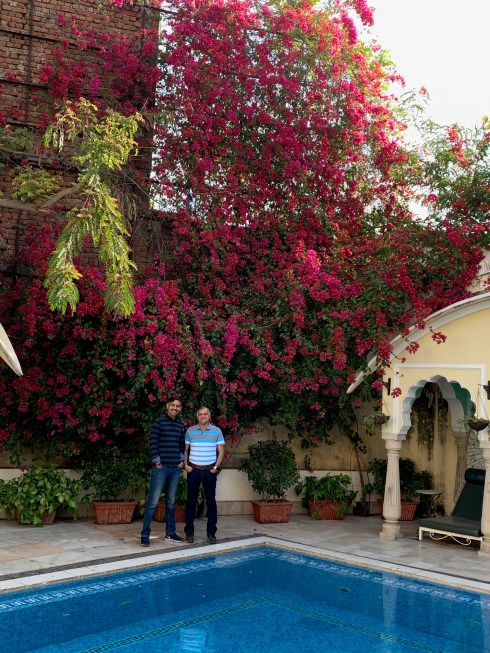
Alsisar Haveli – The property where we stayed

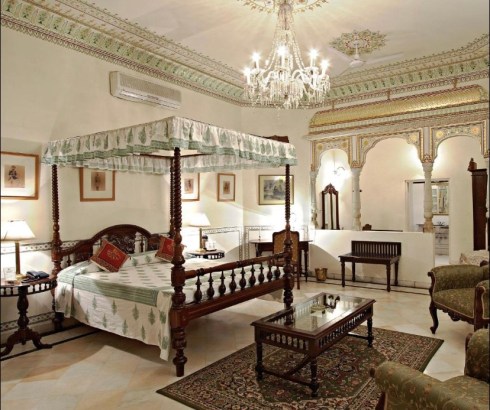
When it comes to hotels you are spoilt for choice. From a wide range of 5 Star properties, Palaces converted to hotels, havelis, small but efficient properties – there is no dearth of options. Just visit booking.com to choose what suits you best. We hunted down a traditional Haveli property in the heart of the city. Alisisar Villa is the ancestral home of the Landlord of Alsisar Village (225km North of Jaipur). This property was built in 1892 and converted to a hotel in 1993. It has 44 rooms. The Alisisar group also has fabulous heritage properties in Shkhawati & Ranathambore. A 4th property will be opening in Khetri Village at Ahaygardh in 2022.

The property is picture perfect, the rooms are divine, the food is average and the service could have been better .

A 200m walk from Alsisar Haveli is a second option – an efficient budget option called Hotel Arya Niwas. We had stayed here in 2003 and loved the place. We did drop by for breakfast and lunch. The place now is larger with a new annexe and still provides the same level of efficient service.

How we spent the 2 1/2 days at Jaipur

When you plan a trip to Jaipur you have to try and cover a lot – Forts, Palaces, Cenotaphs, Food, Bangles, Quilts, Joothis…. the list is long. But yes you can do justice to almost everything in 2 1/2 days if you follow this plan.

Day 1 we land at 11.45 AM 

Our Indigo flight from Bangalore landed on time. Jaipur has a small and efficient airport and we are out in less than 10 minutes. The waiting Innova takes us to our Haveli. Its a 15 min drive and we check in before 1230. The rooms are yet to be ready so rather than waste time we head to Laxmi Mishtana Bhandar (LMB).

In 1727, when by Maharaja Sawai Jai Singh II, the ruler of Amber, founded the new capital city of Jaipur, he invited traders and artists from nearby towns to the newly built city, amongst them were a group of halwais, who set up a small sweet shop in Johri Bazaar. Years later in around, 1949/1950, one of the descendants of these halwais, Maliram Ghodawat, branded this sweet shop, as the Lakshmi Mishthan Bhandar (LMB)

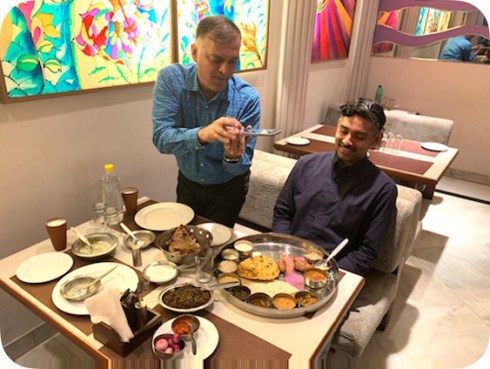
LMB is famous for its restaurant and sweetshop on the street-level. The restaurant serves pure vegetarian food and is known for its Rajasthani thali, Dal bati churma, and kulfi. While I experimented with Kair Sangri (a traditional spicy Rajasthani dish) my friend explored the Rajathani Thali. Food was delicious and rich. We treated ourselves to Kulfi’s and Rasmalais to end a satisfying meal.

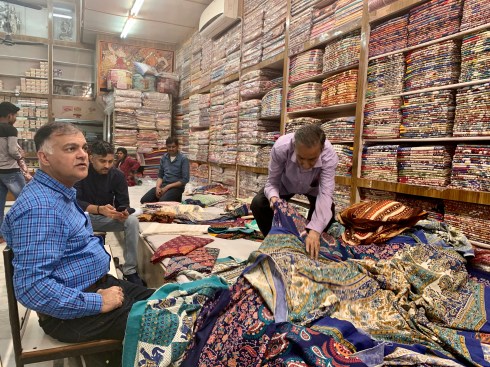
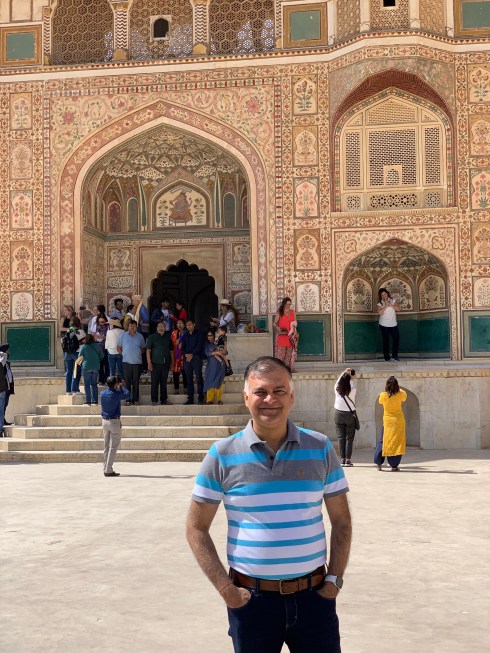
A short drive from here passing the iconic Hawa Mahal is the City Palace. Having been here in the past we spent 45 min and covered ground fast before heading to Rajasthan Shilp Gram Udyog that is located close to on the Exit gates. A huge shop (Private) you can find an excellent variety of traditional items – all good Quality (My friend who has bought many times from here assured us of their quality). Excellent variety and very affordable prices. we ended up buying a few quilts and bedsheets.

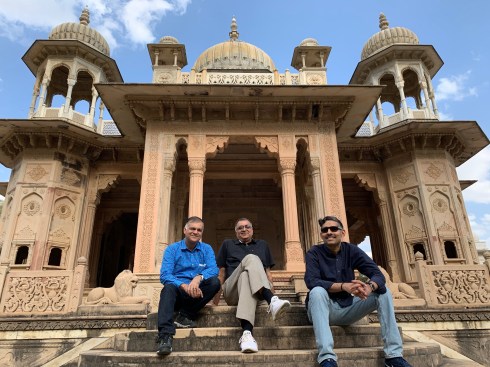
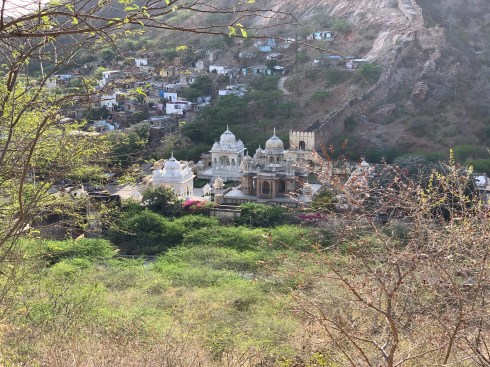
It was almost 4 PM by now and we headed out to a place called  Gatore Ki Chatriyan – Cenotaph of the Kings. The Taxi driver, a local did not know about this place and we were happy to find at sunset a beautiful and empty place that housed the remains of the royal Kings. Its a photographers delight, do take a guide – you can easily spend 1 hr here.

Next to the Cenotaph is a set of 400 steep steps that takes you to the Garh Ganesha temple – which was the temple set up by the 1st king when he started laying the foundation of the city of Jaipur. The climb is a nice exercise and can substitute for your daily gym workout. The view of the city from the top is breathtaking – but thats when you realise that Jaipur is no longer a Pink city.

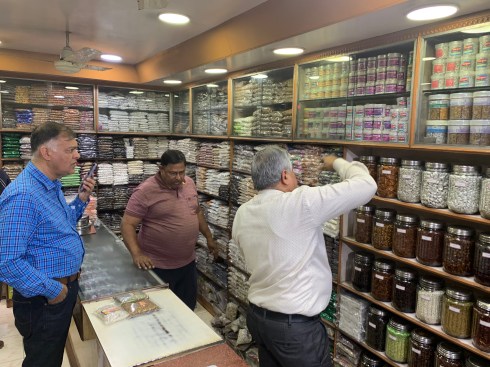
From here we headed to Saraogi Mansion (The underground market has a nice store that sells unique children toys) and then walked the bye-lanes of Bapu Bazar. This is the best place to get all things Rajasthani – from dresses, bangles, joothis, bags, mouth fresheners… and you can bargain.

Jaipur has many markets and most of them are adjacent to each other. Markets are clean, it was empty but can be very crowded in peak season so be careful of pick pockets.

• Johari Bazaar – For Jewelry
• Tripolia Bazaar – For Bangles
• Chandpole Bazaar – For Handicrafts
• Kishanpole Bazaar – For Textiles
• Nehru Bazaar – For Traditional Jootis
• Sireh Deori Bazaar – For Street Shopping
• Bapu Bazaar – For All Jaipuri Items
• Mirza Ismail Road (MI Road) – For Pottery
• Tibbati Market – For Local Souvenirs
• Anokhi – For Colorful Garments
• Gaurav Tower – For Local Products
• The Gem Palace – For Antique Charms
• Kripal Kumbh – For Blue Pottery
• Aravali Bazaar – For Home Decor Items
• Purohit Ji Ka Katla – For Wedding Items

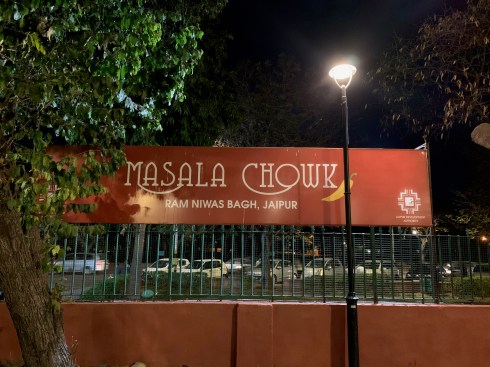
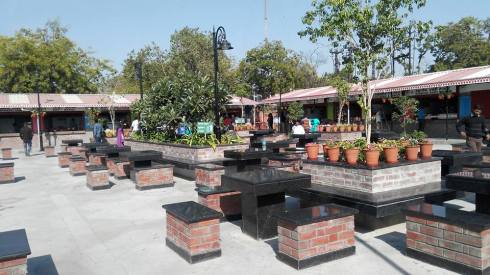
We had covered a lot for 1/2 a day and now it was time for dinner. The heavy lunch was still making us feel guilty and hence we went to a place called Masala Chowk. A few minutes drive from Bapu Bazar next to the Albert Hall – Masala Chowk is a new Food Market  that houses all the famous local eateries in one place.

Masala Chowk is a one-stop place to end all of the street food cravings. This new destination for Street Food in Jaipur is an open food court in Ram Niwas Garden. The place acts as a home for all prominent local cuisines. The common open sitting gives the families and friends freedom to choose from the vast varieties of street foods. This place was intended for the tourists and has gradually turned into a favourite hangout spot for the residents of Jaipur. Masala Chowk has all the traditional Rajasthani dishes from leading stores like Rawat, LMB etc. It also has street food  like Samosa, Jalebi, Gol Gappa, Chole Bhature, Tea, Mishri Mawa and also South Indian Dishes like Masala Dosa and Uttapa but in a different style. This world of mouthwatering food has an entry ticket of INR 10 only. Masala Chowk is one of the best places to eat in Jaipur.

We did try a lot of tasty dishes but the freshly made Jalebis was the icing on the cake.We drove past the well lit Albert Museum and headed back to our Haveli. We were home by 10PM. Teetotallers that we were – we ended up chatting and listening to old Kishore Kumar music before calling it a day.

Day – 2 : A few Forts and more 

We start day 2 at 9 AM and head to the Nahargarh Fort. Its a 20 min drive up the hill with sparse rugged vegetation. The Nahargarh Fort stands on the edge of the Aravalli Hills, overlooking the city of Jaipur. Along with Amer Fort and Jaigarh Fort, Nahargarh once formed a strong defense ring for the city. The fort was originally named Sudarshangarh, but it became known as Nahargarh, which means ‘abode of tigers’. You can get an excellent view of the city from here. Its a large fort, mostly empty and has rustic beauty. Most tourists give this fort a miss. Budget 30 – 45 minutes for seeing this place.

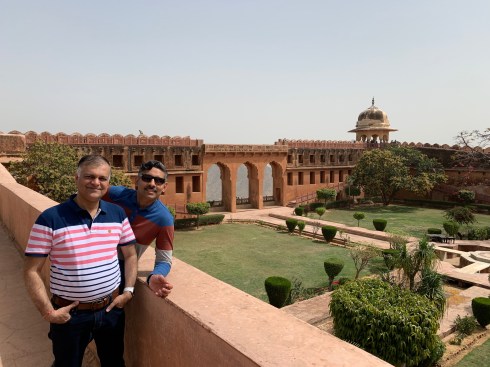
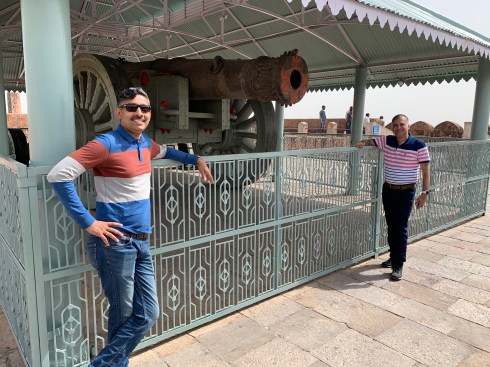
The next in line was the Jaigarh Fort. A 10 min drive from Nahargarh it overlooks the Amer Fort. The fort was built in 1726 to protect the Amer Fort and its palace complex. Rugged and similar in structural design to the Amer Fort it is also known as the Victory Fort.  The fort features a cannon named “Jaivana“, which was manufactured in the fort precincts and was then the world’s largest cannon on wheels. Jaigarh Fort and Amer Fort are connected by subterranean passages and considered as one complex

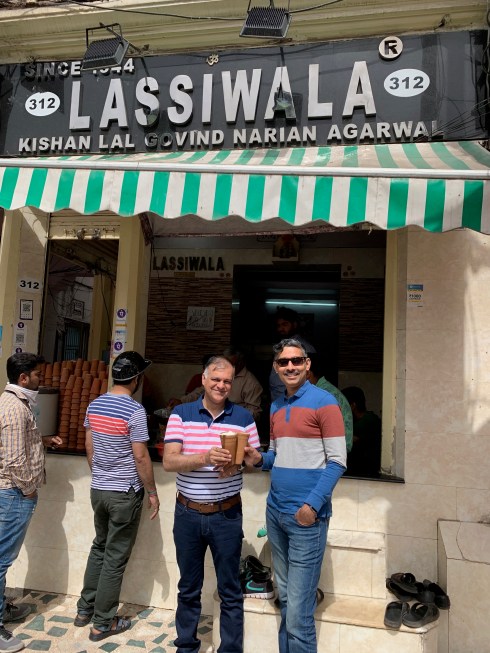
You can get an excellent view of Amer Fort from Jaigarh. After the two Forts we had plans to head to the village of Abhaneri which was home to one of the grandest, deepest step-wells in the country. Abhaneri is ~ 100 Km from Jaipur and a 90 minute drive on the highway. The walk in the Forts had made us thirsty and it was almost 11 AM. Before heading to Abhaneri we stopped by at Lassiwala – the famous lassi joint of Jaipur. Lassiwala is located at 312 MI Road, Jayanti Market, New Colony. Dont miss this – the Lassis is delicious and filling and served in large Kulhads.

The highway drive to Abhaneri got us out of the city to rural Rajasthan. Summer was on the anvil so the fields were still green – we were in Dausa the territory of Sachin Pilot. Roads were good (too many toll gates) and we passed by a small town that specialises in stone carvings before reaching the small village of Abhaneri.

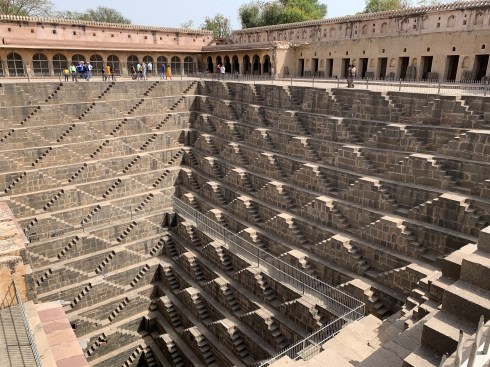
Chand Baori is a step well that is over 1000 years old. It is one of the largest and oldest step wells in the world extending almost 100 feet deep. The baori has precise geometrical patterns and the steps form a maze and the play of light gives it a captivating look.  This place has been used as a filming location for a number of films including Paheli, Bhool Bhulaiya & The Fall. Next to the well is an ancient temple in ruins.

On the way back we stopped at Umaid Lake Palace for lunch – a very nice resort on the highway about 30 min from the step well on the way back to Jaipur. We were the only folks at lunch. Food was fresh and tasty – it was almost 2.30 PM and we were hungry. The trip was fun and a nice getaway from the city – but the step well was a bit disappointing. One of those things which looks and reads better on the Internet.

We reached Jaipur at 5 PM , just in time for me to freshen up and meet my college buddy – an IAS Officer who has now become the Commissioner of Jaipur Development Authority. I congratulated him on the wonderful upkeep of the city and we caught up on old times and old friends dating back to 1988 – 92. My friends picked me up from the JDA office which is just opposite the beautiful Birla Mandir. It was already 6.45 and the entry hours were over so we could just see the temple from outside. As we headed to the markets we stopped by at LMB for some Pyaj Kachodi and Chai and then walked by Hawa Mahal. Most tourists would do that but we had plans to come back and visit Hawa Mahal from the inside the next day.  At the Markets my friend bought bangles (Remember to carry sample bangles for size). After shopping for colourful knick knacks we headed out for dinner.

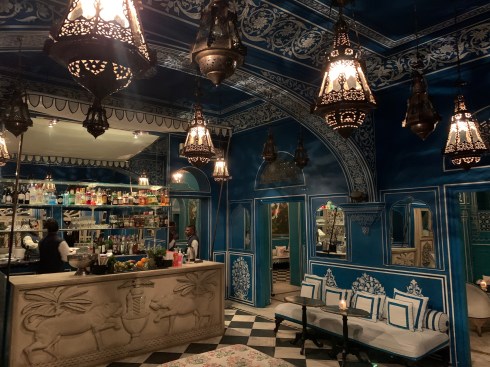
We had had enough of local cuisine and decided to try out a place called Cafe & Bar Palladio – a highly rated Italian restaurant that is frequented mostly by foreigners. Its located at Narain Niwas palace and is part of a 3 restaurant complex. The ambience is nice, the interiors are done up in my favourite color Blue, food and drinks are reasonably priced but the taste of food was OK. We ended the day by 11 PM and reached our Haveli tired for a good nights sleep.

The last day – Day 3 

We had covered a lot in the last 1 1/2 days. But we still had the most prominent landscapes of Jaipur – Hawa Mahal & Amer Fort to be covered.

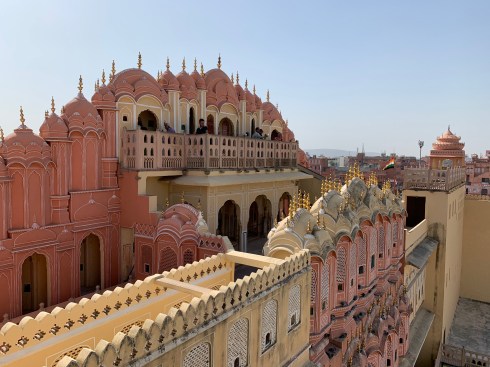
Hawa Mahal  is a palace made with red and pink sandstone. The palace sits on the edge of the City Palace, Jaipur, and extends to the Zenana, or women’s chambers. The structure is relatively new – built in 1799 by Maharaja Sawai Pratap Singh, the grandson of Maharaja Sawai Jai Singh, who was the founder of Jaipur. Its unique five floors exterior is akin to the honeycomb of a beehive with its 953 small windows called Jharokhas decorated with intricate latticework. The original intent of the lattice design was to allow royal ladies to observe everyday life and festivals celebrated in the street below without being seen, since they had to obey the strict rules of “purdah”, which forbade them from appearing in public without face coverings. This architectural feature also allowed cool air from the Venturi effect to pass through, thus making the whole area more pleasant during the high temperatures in summer. Many people see the Hawa Mahal from the street view and think it is the front of the palace, but in reality it is the back of that structure. Most people just walk by – but do buy a ticket and venture inside. Its a fascinating piece of architecture.

Our next stop was Amer Fort. It is the principal tourist attraction in Jaipur. Amer Fort is known for its artistic style elements. With its large ramparts and series of gates and cobbled paths, the fort overlooks Maota Lake, which is the main source of water for the Amer Palace. We had visited Amer Fort in 2012 as part of the Palace on Wheels Tour and I recollect we had seen areas which are not accessed to normal tourists. The fort is large and could take 2 – 3 hrs to cover, but we were faster.

On our way to the hotel to check out by 12 Noon we picked up Ghewar from LMB (A traditional Rajasthani sweet) and then had lunch at Arya Niwas. This is a nice hotel that provides clean rooms and homely tasty food. We had a simple meal of Phulka, Dal, Dry Sabji (No Gravy), Curd Rice and Kheer.

Post lunch we drove past the Vidhan Soudha, Cricket Stadium, Rambag Palace Hotel (Managed by Taj) and stopped by  at WTP or World Trade Park. A large complex that is beautifully designed across multiple towers. I would rate this as one of the nicest malls in India. From here I rushed out to meet another classmate – who heads the Bharat Broadband Org for Rajasthan and then we headed to the airport at 630 PM in time for the 745 PM flight. Jaipur airport is nice – they even have TT tables and Chess Boards to keep you entertained.

We did cover a lot –  we wanted to visit Tapri, a popular tea joint but did not have the time. We had plans to visit the Galtaji Temple – but I believe the surroundings are not very clean. Sisodia Garden is a nice place to hang out in the evening and if we had an extra night maybe we would have headed to Saltwater Sambhar Lake (70 Km from Jaipur). Another place worth visiting would have been the Anokhi Museum of Hand Printing (AMHP). Located in a magnificently restored haveli, the museum displays a varied selection of block printed textiles alongside images, tools and related objects – all chosen to provide an in-depth look into the complexity of this ancient tradition. And of course we stayed away from Surana Jewellers famous for its uncut diamonds and semi precious Gem stones. Most first time visitors would also plan an evening at Chokhi Dhani, a well-known tourist attraction in Jaipur. The aim of the resort is to give tourists a full experience of Rajasthani culture. The entire resort’s theme is inspired by a village setting, with many cultural activities held here.

Jaipur is a fascinating city – most metros have direct flights so that makes it easier. Plan a 2 – 3 day trip and you can cover the city in detail. it really helps if you have a local from Delhi / N India who can help you navigate the city. Oct – to early March is the best time to travel.

In conclusion a trip that was threatened by the Corona outburst did end up perfect. Even that last day storm at Delhi did not disrupt our flights. Thanks to Corona – the city / flights / eateries were empty. The weather was nice – and I would give credit to all of this to my two good friends whose +ve energy makes these holidays a grand success.

All photographs shot on our iPhones (Only Masala Chowk Photo sourced from Google Images)

2010 – 2020 : A Decade of CHANGE that whizzed by

4 Jan

A decade is a long period of time. How was the world in 2010? Many of us may have forgotten how rapidly the world has changed in the last ten years. Let’s take a look at some of the key changes and see if we are better off or worse.

Smart Phone & the App Revolution 

Remember the company called Nokia. In 2009 Nokia was the market leaders with a 46% Market Share. Smart Phones were just beginning to make an appearance – of the 1.6 B Phones sold globally in 2009 only 297M were Smart Phones. China alone sells more smart phones today and the feature phone is almost non existent.

The Smart Phone explosion carried in its wave the APP revolution. probably the biggest revolution of the decade. The history of the APP probably dates back to 1994 when the 1st Smart Phone IBM’s Simon was launched with inbuilt apps like address book, calculator, calendar etc. But the APP story really took off after Steve Jobs launched the App Store in July 2008, a year after the launch of the iPhone.  In 2010 the Tech Slang “APP” was voted the ” Word Of the Year” by the American Dialect society.

This was followed by the launch of Google Play in 2012. Today App’s like Game of war , Tinder, Candy Crush … generate monthly revenues that would put hedge funds to shame. The Free lance industry opened up the doors for App Millionaires working from home. WhatsApp was founded in 2009 by Brian Acton and Jan Koum, former employees of Yahoo.  At one point, they applied for jobs at Facebook but were rejected.When Facebook announced its plans to acquire WhatsApp in February 2014, WhatsApp’s founders attached a purchase price of $16 billion. This price tag is dwarfed by the actual price Facebook paid: $21.8 billion, or $55 per user.

Looking back at our daily life many of the Apps we take for granted today did not exist in 2010. The world  of Apps has changed the way we live.  Swiggy was launched in 2014 and PayTM in 2010 as a prepaid mobile and DTH recharge platform.  In 2010 Flipkart was still a website selling books. The world of Banking , Commerce, Communication has all changed thanks to the Smart Phone and the associated Apps.

Data Explosion 

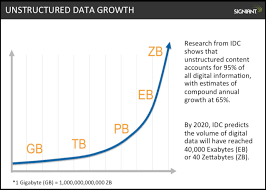
This decade also saw the explosion of unstructured data.We no longer talk in terms of Gigabytes & Terabytes but Petabytes, Exabytes and Zetabytes.

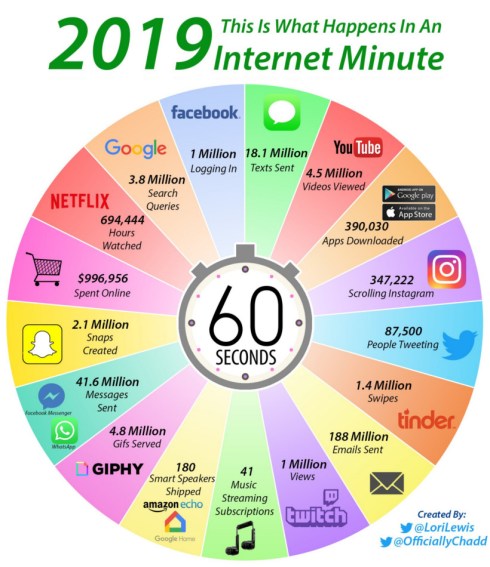
The world today adds in a few days the equivalent of data that we added in years in the past. The visual below will give you an indication of what happens in 1 minute across the Internet. the messages/ photos/ Videos that consumers generate are taking up enormous amount of data. Hence the need for massive Data centres and super high bandwidth.

The decade also saw the emergence of a new currency called Bitcoin. As the common man tries to figure out the world of Block Chain and Bitcoin its worthy to remember that on January 3rd, 2009, in the wake of a global financial crisis that accelerated the growing chasm of inequality throughout world economies, a mysterious figure named Satoshi Nakamoto launched a virtual currency named Bitcoin. 

The Rich get Richer

In 2010, the 10 richest people in the world had total wealth of $296.8 billion as compared to $822.5 billion in the end of 2019.

For context, in 2010, global wealth totaled $200 trillion as compared to $360.6 trillion in 2019, according to an October report on global wealth from financial services company Credit Suisse.

Today, wealth inequality between the world’s richest and poorest continues to grow. According to an Oxfam report published in January, the world’s wealthiest 26 individuals had the same amount of wealth as the poorest half of the population in 2018, the latest figures available. During the same period, the wealth of the world’s billionaires increased by $900 billion ($2.5 billion per day), while the wealth of the poorest half of the population (3.8 billion people) fell by 11%, the Oxfam report found.

A few changes closer home to us in India

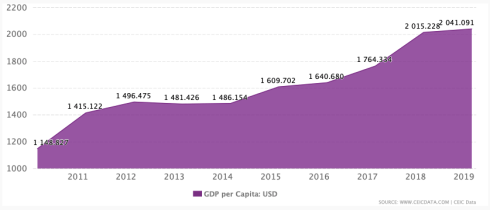
India did well in the decade that went by as our GDP grew from 1.7 Trillion to 3.2 Trillion and there is hope that we will get to 5 Trillion by 2025. While this looks impressive our neighbour China galloped ahead.

In 1987 India and China had comparable GDP’s, in 2019 China’s GDP was 4.87 Time bigger than India’s. As population growth started slowing down the per capita income of India has almost doubled. But this may be a misnomer since the top 10% income grew a lot more exponentially than that of the masses.

More Consumption 

More disposable income meant more consumption and travel. In 2010 only 51M Indian travelled by plane, that figure has almost tripled in 2019 to 150M. Indians bought less than 150,000 cars in 2010 but that figure almost doubled in 2019 – and remember 2019 was a bad year for car sales. While more cares were on the clogged city roads global crude prices came down steeply but the price of petrol for an Indian consumer was still amongst the highest in the world. Jan 2010 Petrol in New Delhi was priced at Rs 51/Litre and Dec 2019 it was priced at Rs 75.51/ Litre

Investments & Interest Rates 

Those who invested in the Sensex made handsome returns. The Sensex surged from 21000 in Nov 2010 to  an all time high of 41,000 in Dec 2019. A point to remember here inspite of the rapid fluctuations the Sensex has been growing steadily at a CAGR of 16% over the years. Its journey from 100 – 39,000 happened over 40 years.

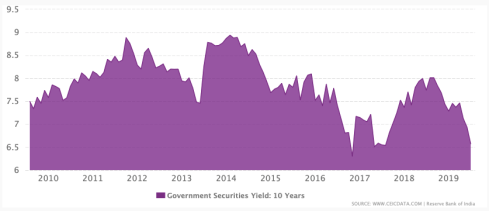
2019 saw multiple Interest rate drops and we are probably at the lowest level of Interest rates over the decade. What this means is that a retired pensioner living on his interest income has seen the interest income swing from 9% to 6.5%. While that may look like a 2.5% interest drop your income actually reduced by more than 25% 

Low interest rates is thanks to low inflation. While most Sr citizens and investors miss the 9 – 10% interest rates on their FD’s those were also years when Inflation was 7 – 8%. The 2 % spread between Inflation and Investment rates continue to be maintained so that’s a mental benchmark that people need to come to terms with.

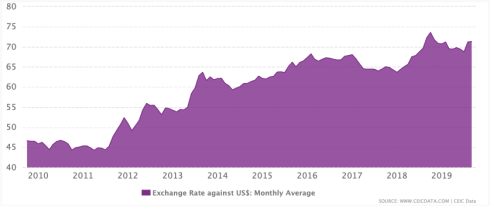
The Indian rupee fared badly between 2010 and 2014 going from 1 USD = 45 INR to 1 USD = 64INR. That pace has thankfully slowed down in the last 5 years, but Exporters want a steep devaluation of the Rupee and with rising Crude prices we may very well see a conversion of 80 soon and I wonder where it will be in 2020.

What about 2030

Well predicting the future is a challenge. Our generation has seen not just in the last 10 years but in the last 50 years a level of  peace and prosperity that is unparalleled in the history of the world. So let’s hope and pray that peace prevails and the good times continue.

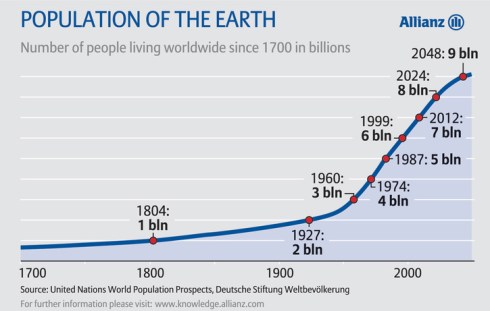
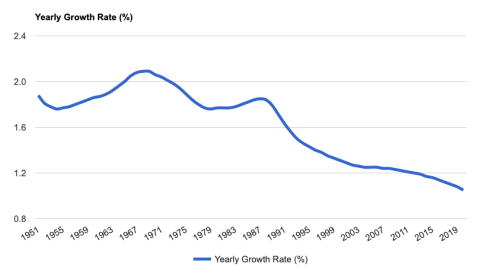
The best news is that world population is slowing down. Population in the world is currently (2020) growing at a rate of around 1.05% per year (down from 1.08% in 2019, 1.10% in 2018, and 1.12% in 2017). The current average population increase is estimated at 81 million people per year.

Secret Revealed – Where to find Bangalore’s best Chocolates

22 Oct

Everyone loves Chocolates. Almost everyone I know barring one. While day to day after meals craving can be met with Lindt, 5 Star , Dairy Milk, Toblerone and Amul Chocolates – many of those will be at the bottom of the pile in a chocolate connoisseur’s ranking.

So where do you get the best Chocolates in Bangalore? The city has a decent array of Chocolate shops. Ooty Chocolate, Chocolate Junction, Zoroy, Royce, Jus’Truf, Smoor (Earlier BLISS) and Fabelle (ITC) are the leading brands. Of them my favourites have been Smoor & Fabelle – that was till I discovered Gallianoz.

Smoor & Fabelle have taken chocolate retailing to a different level – their variety, experience and packaging is a delight. But they are very expensive – and as the brand has become popular the rates have been going higher and higher. Smoor has doubled its rates in the last 6 years. They sell Boxes based on Pieces (Not on weight) – So a small box with 10 tiny pieces can cost you 800 – 1000 Rs. That is exorbitant. And thats where Gallianoz scores.

Gallianoz sells an amazing range of Tastier, Bigger Chocolates that can be customised in shape, size, flavour, packaging at a price that is almost 1/2 of what you get at Smoor or Fabelle. Yes the retail experience will not be so good since this is sold from a tiny shop tucked in the bye lanes of Rhenius Street near the Hockey stadium in Richmond Town. Good things always need to be hunted down, and Gallianoz is indeed a great secret to discover in Bangalore.

Gallianoz was started by a housewife – Zaver in 2002. Born in Mumbai and having lived in Toronto & New York she could not find good Chocolates in Bangalore. Thats when she started experimenting at home and crafted the art of becoming a master Chocolatier. Her friends loved her chocolates and spread the good news word of mouth. It has been almost 18 years and thats how she runs her business. Happy satisfied customers get her more customers.

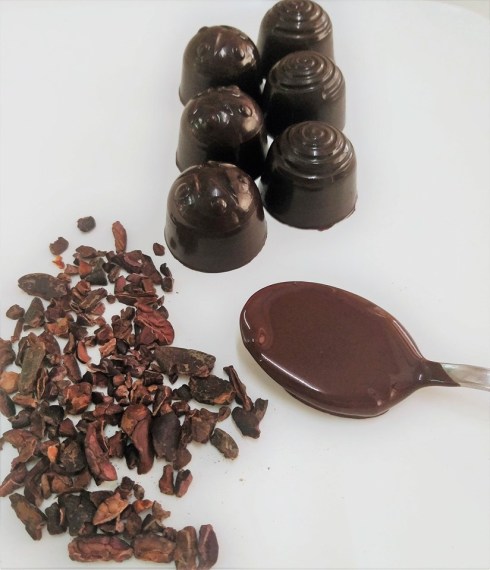
Gallianoz specialises in making Truffles. A chocolate truffle is a type of chocolate confectionery, traditionally made with a chocolate ganache centre coated in chocolate, cocoa powder or chopped toasted nuts (typically hazelnuts, almonds, or coconut). Most Truffles you get in the market are Cream Based – Gallianoz Truffles are hand made with fresh chocolate – No ready made pastes or fillings are used.

These Truffles are priced at Rs 2000 + GST / KG ( 1 KG = 44 Pieces) – Thats less than Rs 50/piece for a huge piece of Chocolate. And Fabelle will sell you Chocolates that are half the size at Rs 100/piece. The assorted Chocolates are smaller in size and are priced at Rs 1800/kg + GST (1 Kg = 80 Pieces) ~ Rs 25 / piece. And if you wonder how they manage to keep their prices so affordable – Its easy they focus on the product. Cost of retailing in a high street / mall with many employees adds up to 1/2 the cost.

In addition to their trademark Truffles (which are always in stock and stored at a controlled temperature of 14 Degrees) you can custom order a wide variety – Caramel, Coffee, Walnut, Almonds, Orange , Mint, Dates dipped in Chocolate, White Chocolates, Cardamom, Pepper Chilly ….

Every Chocolate is hand made and crafted to perfection. Its never kept in stock as the taste of Chocolates are best when eaten fresh. Gallianoz sources its Chocolate from Ghana & Ivory Coast. They also make fresh hot chocolate Drinks powder. You can mix it with milk or drink it concentrated like a rich Chocolate shot. This is rich pure chocolate and gives you a ton of energy. It comes in 3 flavours – Dark, Orange & Mint and is priced Rs 2400 / Kg.


So the next time you want to celebrate or gift chocolates head to Gallianoz. Call the friendly Zaver at +91 99455 95645. And remember – Truffles are available all the time but other products need to be pre ordered.

Address – 14/2, Rhenius Street, Richmond Town, Bangalore, India 560025 (Google Maps may not take you to the exact location)

Himalaica – Calm, Serene, Meditative luxury home stay in Kumaon

9 Oct

Kumaon in Uttarakhand is one of the few easily accessible lower Himalayas that is still fresh, green and beautiful. I hope it stays that way.

Delhi – Kathgodam Shatabdi gets you to Kathgodam by 11.30 AM and in less than 60 mins you are in the beautiful hills with dense forests. Driving is a long way  8 – 9 hrs. I love this region and am always on the lookout for offbeat home-stays.

It was by chance that I read about Himalaica in a National Geography article and instantly fell in love with the place. I normally plan my trip 6 months in advance – but this time everything fell in place in less than 10 days. Rooms, Shatabdi tickets on exactly the dates we wanted, free nights at Delhi Hyatt and air tickets that were not very cheap. Everything went like clockwork precision – Weather was excellent, Flights were on time, the Hyatt Regency & Andaz extended great hospitality and dinner with the Marwah’s –  the nicest people you can meet in NCR made the whole trip perfect.

Himalaica is the home of Uttam & Shalini Dave. They built this home with a lot of love over 3 long years. Its a green oasis on 1 1/2 acres of hillside at Bhowali (1 hr from Kathgodam and 30 min from Nainital). A lot of thought has gone into the design, the plants, the curios, the beautiful dogs  and everything that makes this a special and warm place. I can never imagine owning a place like this and staying her for 4 days was like a dream come true.

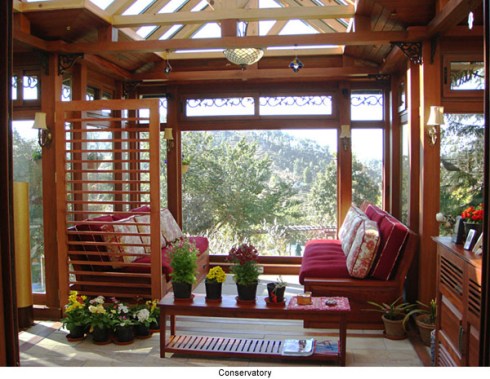
The main building has 4 rooms and the adjoining cottage 2. It would be ideal to come as an extended group and book the full place. The highlight of Himalaica is the conservatory – a glass house that overlooks the garden. The photo shows you a part of it. There are 3 sections here- one with two comfy chairs and the other with a small breakfast table. The conservatory is packed with rare plants and curios. Shalini clearly loves owls – we must have seen at least 50 different statues and figures of owls in the conservatory.

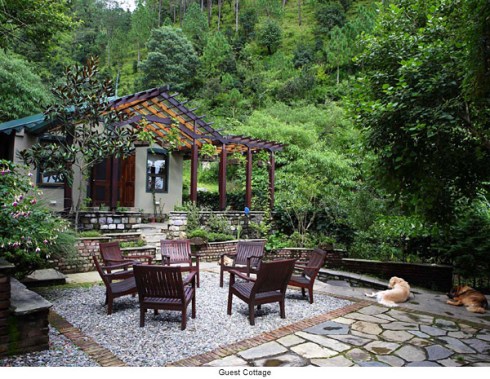
The Ground floor houses the kitchen, dining room, a sitting room with a cozy fireplace and a TV room stocked with a great collection of DVD’s. There are  4 rooms are in the 1st floor – a study, a 2 bedroom unit and a single bedroom. Leading from the kitchen in the rear is the cottage with two rooms. The cottage rooms are smaller but offer more privacy. The front of the building has a nice garden and when you sit there with a book you can hear a wide variety of birds and bees and the gurgling sound of a hidden stream that runs adjacent to Himalaica.

The staff are warm and friendly and The chef  serves you tasty homely food. A wide variety from North Indian, Kumaoni to even french fries & pasta. Both veg & non veg. We loved the food especially the Kumaoni dinner that he made for us – Ram Karela, Bhatke Dubke, Lauki with Dahi, Kumaoni Raita, Cabbage Sabji  from the Cabbages we plucked in the fields in the morning.

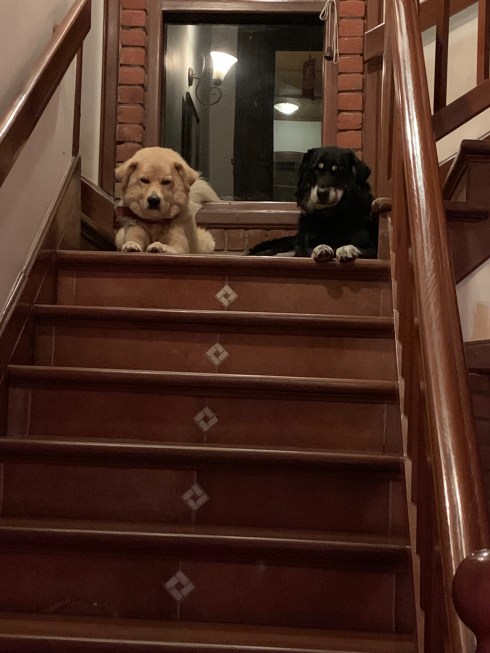
They also have 3 adorable dogs – Cyber, Raja & Llama. I overcame my fear of dogs a few years back thanks to Caesar & Sparky, but these dogs were so adorable that my wife and daughter who are normally scared of dogs fell in love with them instantly and were very comfortable.

With a fairytale house like this you may not want to step out – but if you do here are a few options to explore

  1. A short 3 hr trek to Jhandidhar from where on a clear day you can see the snow capped mountains of Uttarakhand. The peak also has a small Shiva temple and a Sadhu in a hut with his Dhuni
  2. A drive to Padampuri – 20 Km from Himalica , where on the banks of the Khalsa river is the ashram of Somvar Baba – 3 Hr trip. The Khalsa is one of the few himalayan rivers that flows North.
  3. A trip to Nainital for boating & lunch / dinner – 3 Hrs
  4. A day trip to Jageshwar and stop by at Kainchi Dham (Neem Karoli Baba) and a few other Ashrams / Temples
  5. A British cemetery that is considered spooky by many

Weather at Himalaica 

At 6500 feet – it was cold in Oct. We were lucky as the rains had stopped on the day we reached so everything was lush green. In early Oct the morning and evenings were 11 – 12 Degrees. In Dec – Jan they can get to Zero or below. Rarely snows here. Oct, Nov, Dec and April would be the best time to visit.

Getting to Himalaica 

Its a 1 hr drive from Kathgodam , its better to get down at Haldwani as Shatabdi takes almost 30 min to travel this 5 Km distance. Madhusudan is my regular driver – a friendly young man full of positive energy who is both a driver and guide. You can contact him at +91 9756930090. His rates are very reasonable.

How to contact Himalaica 

Suggestions to the Host 

Room rates are reasonable for such a splendid property. Should explore including breakfast  in the room rate and make Lunch / Dinner more affordable. Currently a family of 3 over Breakfast / Lunch / Dinner will spend 9K on food @ Rs 1000/- meal. Thats expensive. A more reasonable rate would be Rs 500 for Veg and Rs 750 for Non Veg.

Thats Llama & Cyber. They are great buddies. Raja is slightly older and is a loner. 


Healthy Carrots – History & Trivia

8 Sep

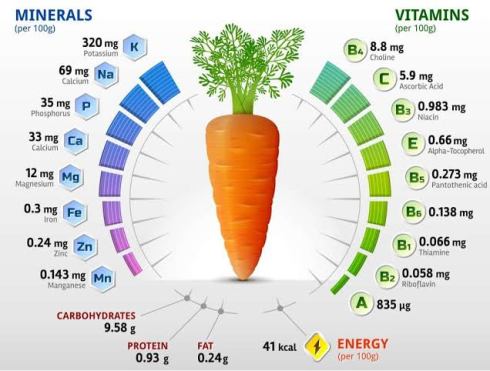
Here is some interesting Trivia on Carrots. Our parents always told us to eat Carrots for healthy eyes and good skin. And we always knew that rabbits loved carrots. But there is a lot more to the story of this amazing vegetable.

  • While the carrot is known as a bright orange root crop (Or Red during Winter) the original carrots domesticated in Central Asia  around 900 CE were purple and yellow. It was only around 1500 AD that Orange carrots were cultivated in Netherlands.

  • In the late 16th century Dutch Farmers took mutant strains of the purple carrot and gradually developed them into the sweet, plump, orange variety we have today. Some think that the reason the orange carrot became so popular in the Netherlands was in tribute to the emblem of the House of Orange and the struggle for Dutch independence.
  • Afghanistan & Persia is probably were Carrots were first cultivated, but today China is the largest producer of Carrots in the world with an annual production of ~ 18Million tonnes.
  • When they were first cultivated, carrots were grown for their aromatic leaves and seeds rather than their roots.
  • Some close relatives of the carrot are still grown for their leaves and seeds, such as parsley, cilantro, coriander, fennel, anise, dill and cumin.
  • Of all known vegetables except for beet, carrots are known to have highest naturally occurring sugar content. So, beet take number 1 position while carrots take 2nd position in terms of sweet vegetables. No wonder carrots make a wonderful snack even when eaten raw.
  • Did you know that carrots are far more nutritious when they are cooked and eaten rather than being eaten raw? This is exactly opposite of every known vegetable in world. The reason for this is the cell walls of carrots are very tough and it is very difficult to digest the cell walls. When cooked, these cell walls break and release the nutrients, making cooked carrot far more nutritious.
  • If you are traveling to places where food is scanty, make sure you carry carrots with you. A single carrot can give you enough energy to walk 1 mile

Joy & Anxiety of joining a US College (UCLA) – Our Experience

8 Aug

A few months back I had written a detailed Blog on how to go about getting an admission for an undergraduate degree in US (https://vak1969.wordpress.com/2018/12/16/undergrad-in-us-simple-tips-to-get-you-started/). 

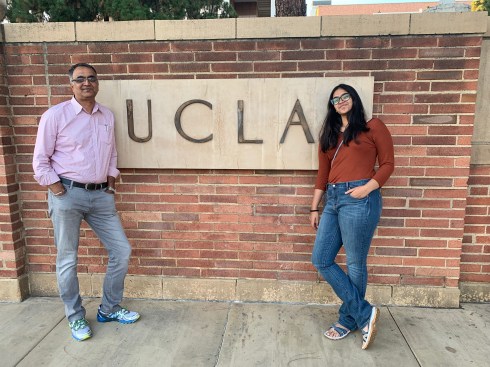
This Blog is a continuation on US College admissions and shares our experience and learnings on joining college for an undergrad degree. I just came back after settling my daughter at UCLA for her College Summer Session (CSI). Which brought to a logical beginning a 2 year project. While this may have specific information on UCLA many of the points can help the 15,000 students from India heading to US for their undergrad.

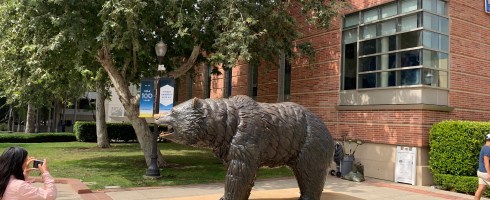
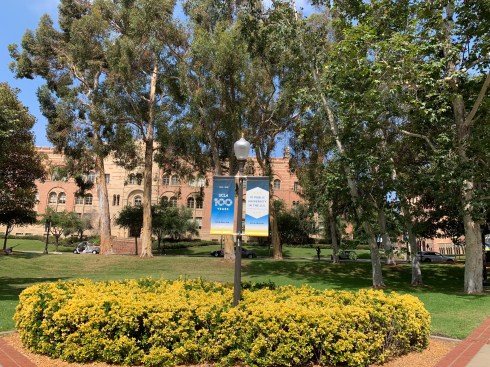
I have studied in an REC and visited most IIT’s & IIM’s in India. But what I experienced in UCLA was unique. It’s massive, majestic and meticulously designed. My nephew who lives in LA defined it aptly when he said UCLA is like a theme park and probably has the best campus life across all US colleges.

And like Disney Land it does attract people in thousands. For Fall 2019 UCLA attracted over 110,000 applications (The largest across US) of which about 7% were selected. 14 Nobel laureates, over 261 Olympic Medals, 3800 Courses – 125+majors & 90+ minors, 12 Libraries, 9M Books, annual research budget of 1Bn, 4 museums, a sculpture & botanical garden and the best food across all US Colleges  – All of this and more is what makes UCLA the #1 Public University in California. Add to this its blessed with excellent Souther California weather, located in West LA it rubs shoulders with Beverly Hills & Hollywood and has close proximity to LAX airport making it one of the most after colleges in the US.

Getting into UCLA is not easy but the focus of this blog is to help students from India who have gained admission to plan their homecoming.

Check out Summer School  

UCLA follows a Trimester system. 2019 Fall Session starts from Sep 26th and students start arriving by Sep 19th. However well you manage it when 9000 students land up in a week there is bound to be chaos. Thats why it helps to join up for CSI (College Summer Institute). CSI helps you settle down faster and also acquire additional credits. You are 18, staying alone for the first time. You got to figure out the system in campus where everything is DIY, adjust with your room mates and the food and start studying. College in US is tough. All of this takes a toll and most students struggle in their first term exams. CSI in UCLA is a 7 week paid program that starts by end July and ends Aug 13th, it attracts about 200 students. This 7 week period helps you settle down, complete 3 subjects ( additional credits) and takes. a lot of load of your back before the normal term starts. It also gives you time to meet professors, and get a thorough understanding of the resources in campus

Planning your Travel

Flight tickets to US are expensive. There are very few periods when you can get a round ticket for $ 1000. Most of the year fares vary from $1250 – $2500. So book tickets in advance. More than tickets book your Air BnB well in advance. If you are attending the regular start session – then thousands of families are going to land up hunting for rooms and rental cars close to campus, so book well in advance. Please note that UCLA has its own Guest House and you can stay there – http://guesthouse.ucla.edu

How much baggage do airlines allow

In the past you could carry two bags of any size / any weight. That has been curtailed. Most airlines now allow two bags with weight of each not to exceed 23 Kgs. So if you have bag one at 27 Kgs and bag 2 at 18 Kgs that is NOT OK. So pack accordingly. Invest in a simple suitcase weighing machine – you can get them at Amazon for about Rs 500. There is also a size limit on bags – Length + Weight + Height should not exceed 158 Cms. (These limits could vary by airline so check the airline website while booking).

What to carry

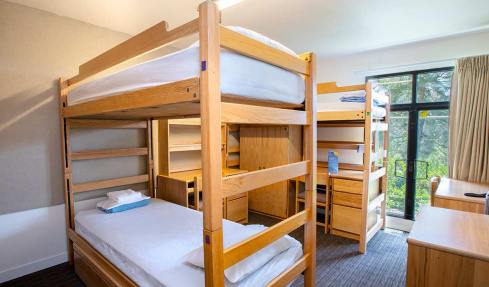
Indian’s carry too much luggage. The rooms in UCLA are triple sharing so there is limited place. Your clothes, a few pairs of shoes, essential medicines are a must carry. Plan clothes in a manner that they last you 7 – 10 days , that’s the frequency with which you will be washing them. Other items like towels, bedsheets, hangers, plastic boxes, shower robe etc can  be purchased from stores near the campus. Don’t forget to buy a shower caddy and Tide pods from the local store. A Plastic pouch can be of help as you may carry your access card & phone to the bathroom.  If you are travelling early you can get a laptop from US (Its cheaper) else buy it here and get a charger locally.  The Mac is designed for 110 – 220 V so there will be no issue plugging it in with a local charger. Write your name on the Mac, cables with a permanent marker or stick some stickers on them. Laptops are the most commonly lost items in campus.  You can carry stationery – Notebooks, pens, staplers, highlighters  etc they are very expensive in campus. The weather is pleasant all year around so you don’t need too much of winter wear – a jacket, few light sweaters and a fleece is probably all you need.

Carrying Food

Fortunately the food in UCLA is excellent. Lots of variety for vegetarians also. So if you have a good Meal plan you will be comfortable. Most Indians tend to carry Maggi, Instant MTR etc – yes this can be cooked on a microwave or kettle that is available in the common area. You cannot use kettle or hot plate in the room without persmission. Some dorm rooms are designed like a suite with two rooms having a common sit out, UCLA rents refrigerators and Microwaves the cost of which can be shared by the room mates.

Your Suitcase

You have limited storage place in your room and if every student brings 2 Suitcases + 1 Stroller there will be no place in the room. So buy a set of 3 suitcases that can go inside each other. That way you use the stroller for local travel, the medium sized one for India travel and the large one is rarely used. Use suitcases with number locks so that you don’t lose the keys. These suitcases are also where you will lock and keep your passport, original certificates, cash etc. Each person gets a bed, a wardrobe and a table. The chest of drawers is shared.

Do you need to carry your original certificates

We did carry them but they were not needed.  Make a set of copies and get them attested at a local BDA complex. Before your admission most of your grades / mark sheets etc would have been uploaded on the portal. That should suffice. If you have close relatives in and around LA you can leave the originals with them for a few terms.

Immunisation

There are mandatory requirements for immunisation. Get them done in India before travelling and upload the details on the UCLA website. the deadline for this is Oct 1st. TB testing may have to be done in campus.

When should one plan to reach 

If your joining date is 19th please don’t reach on 18th. Travel  3- 4 days earlier, try and get out of the Jet Lag before college starts. Adjust to the surroundings. Rent a car and travel around the neighbourhood. You can rent cars using a Indian driving license. Without a car it is difficult to manage.

About Orientation 

There are multiple Orientation sessions that run before the opening of session. It is a must attend. For joining students its a 3 day session. Parents attend a 1 day session on Day 3. . Students are formed into smaller group and a Student Advisor mentors them through the 3 day program. Registration is a must for this session – Parents need to pay for their 1 day session.

How do you get a SIM card & Open a Bank account 

Get a good plan with a local carrier. We were able to leverage my sisters family plan. So we got an unlimited Talk/Data plan for $ 30 (Something that is normally $70). We reached early and went to a Wells Fargo bank and opened an account – but I am sure there will be Banks in campus that can help students with account opening. They normally give you a temporary debit card on the spot. You may also want to carry a Forex card from India and keep topping it with currency from India. In Campus cash is hardly used – but do get your child some quarters & 1 $ bills – this will help them in local travel. The Bruin Card which is used to access most of the resources in campus also doubles up as a debit card and you can add money to it. The Bruin card is accepted across all campus facilities and even in some stores in the neighbourhood.

How to get an ID

If you have an Indian DL that helps. You may not want to carry your passport everywhere. There is an option of  getting a California Resident card from the local DMV (Department of Motor Vechiles)

Tips for Meal Plan 

The Hill is the place where you have the Dorms and the Dining places. The distance from here to the class room is a good 20 – 30 min walk. On most days you may not be able to come back for lunch. So plan your meal plan to include 14 meal swipes with a rollover facility . Opting for a meal plan with 3 plans may be an overkill.

Buying Books

Buying books can be expensive. Most students depend on PDF versions. You can also borrow books from the Library and keep it with you for 3 months.

Carrying your Bruin Card / Access card for Room etc 

This is your lifeline – so be careful with them. Most students put them in a small push and stock them to the back of their cell phones. But then this carries the risk of losing everything. Another option is to have a Lanyard

Travel in Campus 

The campus is designed like a bowl. The residential quarter are at one end at a elevation – hence this is called the HILL. This also houses the administrative office for students like Housing , International students offices, New Student Orientation offices etc. As you walk along the Bruin walk you walk past the stadium , tennis courts, indoor stadium, etc and reach the central area which houses the Health Centre, UCLA Store, Restaurants, Student Activity Centre, Book Store etc. Further ahead are the class rooms and libraries. Each day you will end up walking 3 – 4 miles. But given the landscape it’s difficult to ride a bike. Also Bikes and Laptops are the most frequently stolen items. We did see a lot of students zipping past on scooters – but that did not seem safe. (Download the UCLA Campus Map from here http://map.ucla.edu/downloads/pdf/UCLA_Campus_Colored_Map.pdf)

Registering for your 1st Trimester Course

During orientation your student guide will hep you register for your 1st trimester courses. Once you register you can see the dates of the exams. The term ends on Dec 13th – but your last exam may end on Dec 12th – this will help you plan your tickets back home. The second Trimester starts on Jan 6th and you can be back in campus any time between Jan 2nd and 6th. Trimesters are 10 weeks – they are short and fast so before you can realise the mid terms hit you. In addition to attending all classes Sr students recommended a 2 – 3 hr of individual / group study every day to ensure decent grades.

Additional Requirement for International Students 

International students need to complete a course on American History and one on Foreign Language. We checked back on the foreign language issue – there is an option to visit the school of  Asian Languages & Cultures Dept and request for an exempt. They may ask you to take a qualifying test in Hindi to assess your abilities. If you pass that then you can exempt yourself from the course.

Plan your travel 

You can view the entire years schedule before joining. This helps you to plan tickets in advance both for travel to India and during long weekends like Thanksgiving . https://www.registrar.ucla.edu/Calendars/Annual-Academic-Calendar#77070292-2019-20

Other Useful Points 

  • UCLA is a smoke free / Drug Free campus. That should be good news for parents
  • UBER & LYFT come inside the campus and will drop you close to the Dorm. If you are driving a rental car figure out the parking lot that is closest to the place you want to go. There are multiple parking lots. So if your email says SV Parking Lot 3 that means Sunset Village Parking lot 3 – if you type in Google Maps SV parking Lot 3 it takes you to a different place.
  • The campus has its own Guest House – you can boom rooms there. http://guesthouse.ucla.edu

There is Joy & Anxiety as you complete the admission process and leave your child. The process is a bit like a marriage. Its long drawn – almost 2 years, you go thru a rigorous selection process to identify the best college, you plan your travel, spend weeks shopping ( like a trousseau ) and finally the “Bidai” happens. And then you leave it to Goddess Saraswati to take care of your child and let her flourish in the new environment. Children are super smart and adaptable. Every plant that is uprooted takes a few days to settle in a new garden but they do settle in and develop deep roots in a few weeks and months.

2019 is a great year to join – its the 100th year of UCLA and that makes it even more cherish able.

Comprehensive guide to plan your Holiday to Vienna – Prague – Budapest – Amsterdam

29 May

Planning an international holiday across multiple non-English speaking countries is always a challenge. The tradeoff is between Experience, Cost and Flexibility. This was the first challenge I faced while planning a European Holiday to Vienna – Prague – Budapest – Amsterdam.

Do we stick to group tours or do we plan it on our own?

Initially I was not confident if I could do it on my own and explored the standard packages from SOTC, Make My trip, Cox & King and other established players. None of them worked out. They were rushed 7 – 8 days trips with no flexibility, most departures were Ex Mumbai / Delhi, the cheapest flights at unearthly hours and a lot of travel by Bus at night. A holiday with a bus full of noisy Indians and Indian food was not something to look forward to. Add to this it was not working out to be cheap. A 7 Night package costs ~ 1.5 Lacs/ person with the above limitations.

We worked out a Via media solution. We took the help of Marwell Travels for booking Tickets and Visa Documentation/Appointment but the rest of the stuff we did by ourselves and it worked out pretty well. We covered 4 Countries, 4 Cities in a 12-night 13-day Trip for almost the same cost as what the large Travel companies were charging for a 7-day trip. We covered all the important sights and more, had the flexibility of spending more time at places we liked, enjoyed local cuisine, and had a great holiday.

As I went about the exercise I could not find a lot of information and this Blog should help you plan your trip if you decide to visit these Countries.

What is a good time to Travel to these countries?

Winter in these countries lasts till March/ April and is harsh with subzero temperature. Summer starts from June. So, the best time to travel is from June – August. We visited between May 15th and 28th. It was cold by Indian standards 10 – 15 Degrees and were lucky to get sunny clear days almost all thru the trip. Since schools in Bangalore tend to open by early June this is the best window you can get. You don’t need thermals but do arm yourselves with pullovers, sweaters, jackets and warm caps. No shorts & half sleeves.

How easy is to get a Schengen Visa?

There is paperwork involved. But if you follow the instructions it’s easy to get an appointment and Visa. Remember you need to apply to the country which is your first point of entry. For E.g. we did Vienna – Prague – Budapest – Amsterdam, so we applied for an Austrian Visa as Vienna was the first point of entry. The cost of a Schengen Visa is 60 Euros or ~ Rs 5000/-. While applying for a Visa in addition to Bank Statements and Tax papers you also need tickets, Hotel confirmations and Itinerary – It helps to have a Travel Agency aid you with these. Marwell Travels helped us with ( +91 9810078093, +91 11 24619259).

What is the best route plan to cover these countries?

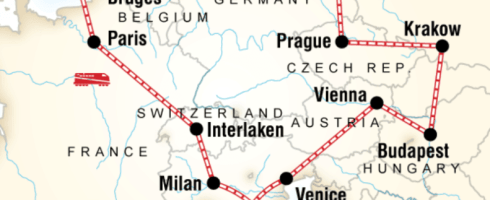
Budapest is at the Southernmost tip and Amsterdam is at the Northern end. Since Train Travel is the most efficient way between these cities you must start your trip from Amsterdam or Budapest.
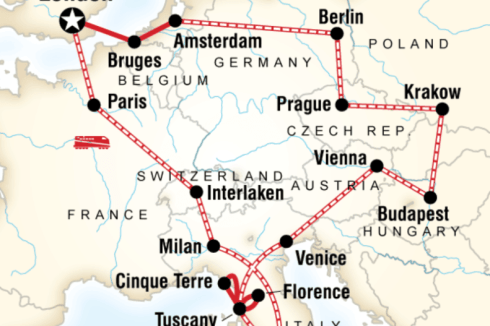
If you start your trip with Amsterdam you may just be able to catch the last few days of the Tulip season which normally lasts thru April – Mid May. Our route was Vienna – Prague – Budapest – Amsterdam. This was not ideal because Vienna is located between Prague & Budapest and the train time is ~ 3 Hrs from Vienna to both these places. Our Vienna – Prague train journey was 3 hrs. but the Prague – Budapest journey was nearly 6 hrs. And Budapest to Amsterdam was a flight. This is a learning so please optimize your travel.

Prague – Vienna – Budapest forms a nice East Europe Trip; do we really need to include Amsterdam in this itinerary?

Amsterdam is closer to London & Paris and is part of the W Europe tour. Most Indians start their Europe Holidays with London / Paris / Switzerland / Italy / Amsterdam……. So why did we include Amsterdam? I was fascinated by the city when I visited a few years back and wanted the family to see it. Also, at the time of booking in Jan 2019, Jet Airways had a direct Bangalore – Amsterdam flight and that was a big plus since all other flights was with a stopover in Dubai. If you want to stick to an E Europe itinerary I would suggest you skip Amsterdam and add Krakow or Bratislava to your plan. Both these are accessible over a short train ride from Prague.

How much time should we spend in each of these places?

The place with the most to see is Vienna. Budget a minimum of 4 full days here. You need 2 full days for Vienna and there are a few day trips to Salzburg, Hallstat and Obertraun that you could cover from here. We had 4 nights at Vienna but since we landed at 9 PM and left for Prague by the 9 AM train we effectively had only 3 full days. On hindsight we should have had a day more. Prague you can cover comfortably in 2 ½ days and Budapest in 2 days. So, budget 3 nights in each place. Amsterdam budget a minimum of 3 nights and if you do Krakow instead of Amsterdam you need 2 nights.

How to choose the right Hotels, expensive are hotels in these cities? Where did we stay.

Stay in a Hotel that is centrally located. You need clean rooms, breakfast and Wi-Fi. A centrally located Hotel or B&B is the best option. Most expensive to Least would be Amsterdam – Vienna – Prague – Budapest. Cost in Budapest is comparable to India. For a family of 4 booking two hotel rooms can be expensive. We did all our reservations from Booking.com – we booked family rooms that could comfortably accommodate 4 in the heart of the city. These were clean, efficient B&B – don’t expect room service and porters to carry your luggage. Almost all days we left in the morning at 8 AM after breakfast and were back at 9 PM after dinner. When you reserve thru booking.com you don’t need to pay, you pay at the hotel and can cancel till 1 week before with no liability.

Vienna – Pension Blackman. Small family owned property with 15 – 20 rooms in a Central locality of Vienna. It’s a 20 min drive from the airport. And a 25 min walk to the Opera House – Central point of Vienna. The Railway station is a few kilometers away. The tram station a few minutes away. The room and bathroom were small but well designed with just about enough space for 4 (1 Double, 2 Single) and lots of storage space for suitcases and closets. Room cost was 11K/ Night. Added advantage – Tulsi a lovely Indian restaurant is a 10 min walk and Angelo an authentic Italian restaurant is right across. The front office is open till 9 PM so if you are reaching after 9 PM send them a mail and they will tell you how to collect the keys from a password protected Lockbox and access the room. We reached at 10.30 PM and were a little worried – but it worked beautifully. (http://www.hotelbleckmann.at/en/)

Prague – AXA Hotel. An excellent hotel located in the heart of Prague. We had a suite with two rooms – very spacious rooms and bathroom. Breakfast was a lavish spread. A few kilometers from the main station. Rooms were economical – 357 Euros for 3 nights or ~ 9K INR / Night. (http://www.axa-hotel.cz/en/)
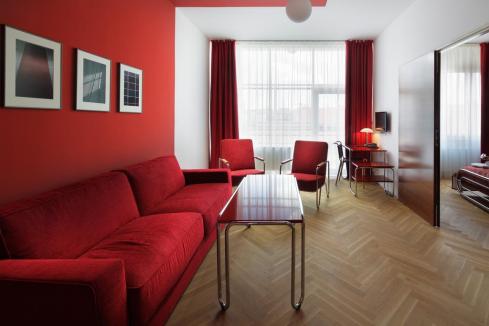
Budapest Bed & Breakfast – This was an apartment with 3 rooms in a heritage building in PEST near the University. Very close to the National Museum and Jewish Synagogue and 100 meters from the arterial road. It’s a 5 min drive from the Nyugati Station. Again, a great location. We had a large room for 4. Newly renovated, facilities. Budapest Bed & Breakfast is run by 2 friends and between them they operate two facilities with a total of 8 rooms. Cost / night was 8 K.

Amsterdam – Prins Hendrik. This hotel is on a 450-year-old heritage property right opposite Amsterdam central. Dam Square is a 5 min walk. You can’t find a more central place than this in Amsterdam. Our room was very spacious and accommodated 4 very comdortably. The view from the room is excellent overlooking the river and Central station. Cost was 22 K / Night. (http://prins-hendrik.hoteleamsterdam.net/en/)

All the hotel rates included Continental Breakfast. Nothing is hot cooked – so you can get boiled eggs but no omlettes. Vegetarians can manage easily with Cereal, Bread, Bakery Products, Fruits, Juices, Milk etc. (If your kids need Boost carry a pack with you). Rates also include free unlimited multiple access to Wi Fi. Internet speeds are fast here.

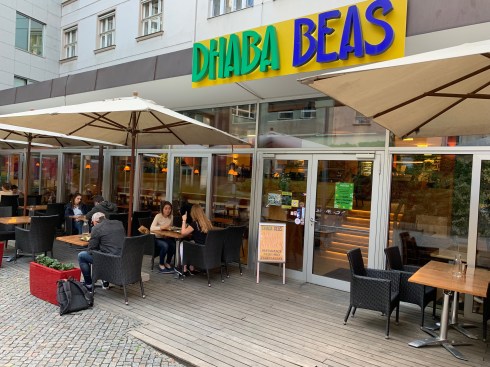
Although not planned all the 4 hotels ended up being close to Indian restaurants which was a bonus. At Vienna we had Tulsi – a 10 min walk from our hotel. At Prague we were surprised to find Beas Dhaba a Sattvik Veg Buffet run by localities 2 min walk from the AXA Hotel. And at Budapest Curry House was our neighbor. Their sister property Rajkot Place located 15 min walk from our accommodation was an outstanding place. And at Amsterdam, Gandhi was 200 m from our accommodation.

How far were these properties from the Station / Airport?

We took a cab at all locations. With a lot of Luggage and being new to a city we did not want to experiment with local transport. At Vienna the cab from the airport cost us 25 Euros and a drop to the Station was 12 Euro. At Prague & Budapest it was about 10 Euros from the station to the hotel. Cabs are available in plenty at Vienna and can be booked with Uber. Schiphol at Amsterdam is 25 Km from the city and the Cab fare here is 50 – 60 Euros

Is the currency Euro everywhere?

In Amsterdam & Vienna it is Euro but in Prague & Budapest it is different. Florint in Hungary and Koruna in Czech Republic. 1 USD = 293 Florint and 1 USD = 23.2 Czech Koruna.

How about food – can Vegetarians manage?

We are vegetarians and managed very easily. Almost every second restaurant is Italian serving Pizza & Pasta. A meal for 4 in an Italian restaurant will cost you about 30 Euros. There is no dearth of Indians Restaurants – takes more time and is more expensive – a meal for 4 can be Euro 60. (Both rates without drinks). We had decided to minimise eating in Indian restaurants and ended up visiting only once in 2 days. Here is a link to the best Indian restaurants in Budapest – https://expat-press.com/indian-restaurant-guide-budapest/
High-speed data SIM is a must have

These are DIY Countries. You need to hunt out everything on your own. Locals are indifferent and not very helpful. Ensure that you have a good data Plan on your phone. You get High Speed Wi Fi everywhere – Hotel, station, airport , restaurants, bus, train, museums…. The only place where Wi Fi is missing is on the road. To use Google Maps, Uber and hunt for places while on the road you need a good data Plan.

How do you go about sight-seeing in these cities?

The best way is to buy a Pass. All the cities have Travel passes with different benefits. These provide you free access to almost all the attractions. They also include free access to the Hop On – Hop Off bus / Boat. Some passes include access to the Local Transport. While others also include day trips to surrounding areas.

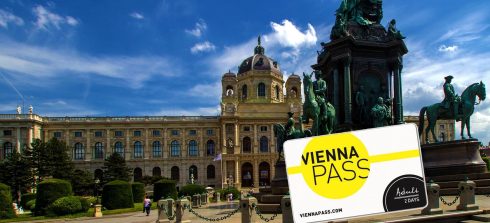
The Vienna Pass is the best of the lot. It gives you free access to almost all the attractions and access to the Hop on – Hop Off Bus. Day Trips to Salzburg and other nearby locations booked thru the same company entitles you to a discount. You can book this online and collect the pass from their office near Opera House (It’s in the subway opposite to the Opera House) We got a 2-day Vienna Pass and also booked the Salzburg trip through them. (2-day Pass Cost for Adults – 95 Euros, Children – 47.5 Euro. If you book online in advance you get a 10% discount). https://www.viennapass.com
I suggest that you don’t buy the Prague & Budapest pass. You can cover Prague on foot easily. Walk past the heritage Old Town and cross the Charles Bridge to the Castle on the other side. There is no need for Hop on Hop off bus at Prague. You can book your outstation trip from the hotel. We did a day trip to UNESCO Heritage Town of Kutna Hora.

At Budapest just book the Hop on Hop off Bus for 2 days. You can do that after landing at Budapest. You will find signages all over the place. Even the Hop on – Hop Off Bus has two companies; City sightseeing seems to be the the more popular one and operates in multiple countries. (Please note that in Vienna & Amsterdam the day pass will include the Hop on Hop Off Bus)

At Amsterdam you must book the day pass. Like Vienna it’s an excellent pass that gives you access to all the major sights and also includes the Hop on Hop off bus and Boat.
While the Vienna pass has no competition at Amsterdam you can choose between Amsterdam Pass or the I Amsterdam City Card. Check out the pros and cons of both. (https://freetoursbyfoot.com/amsterdam-city-passes/).

We had Amsterdam Pass – it’s a relatively new company and the frequency of the bus was less compared to the other company.

Important – Even with a day pass you need to get physical tickets for the attractions, but in most places, there is a VIP Q for pass holders. They scan the pass and issue tickets – no cost is charged.

Be prepared to walk 10 – 15 Km / day. So, get good walking shoes and with so much walking small kids may slow you down, so it’s best to plan this Holiday when your children are 10 +

Using Trams/ Cycles/ Scooters etc 

There is no dearth of local transport options. All these 4 cities had Tram Lines, Buses, Metros, Cycles, Scooters and many more options to move around the city. We saw them everywhere.  All of them are App based. If you are spending a longer time you must explore these options to travel around the city. It can minimise your walking.

What are the main sites in these cities

Vienna is all about Palaces, Museums & Churches. Don’t miss a live Opera show at the Hofburg Palace or the Opera house. Tickets at 45 – 50 Euro / person are expensive – but it’s worth the experience. Do a day trip to Salzburg its 7 AM – 8 PM. It’s a beautiful town where the movie Sound of Music was shot. Hallstat and Obertraun are other beautiful locations for day trips.
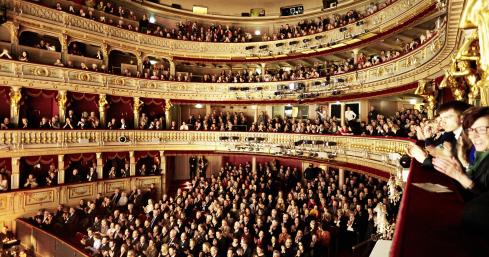
There are two Palaces – the Schonbrunn palace and the Hofburn palace complexes. Both are massive. Vienna also has the world’s oldest Zoo – very well maintained. The Heritage Tram ride will give a nice overview of the city in 30 Minutes. All of these are covered by the Vienna Pass. Hero Square is a nice central square in the middle of the summer palace complex.

Prague old town is a beautiful place dotted with ancient churches and quaint stores. Prague is famous for Crystals and Garnet. You cross the historic Charles Bridge to reach the Prague Castle. One of the largest castle complexes in Europe. The Jewish Town is also a nice area to walk by. All of this can be comfortably covered in 1 ½ days leaving you with a day for an out-station trip. We went to the UNESCO heritage town of Kutna Hora. Also taste the unique dish at Prague called Trdelnik – Its like a barrel shaped sweet donut with chocolate coating inside.
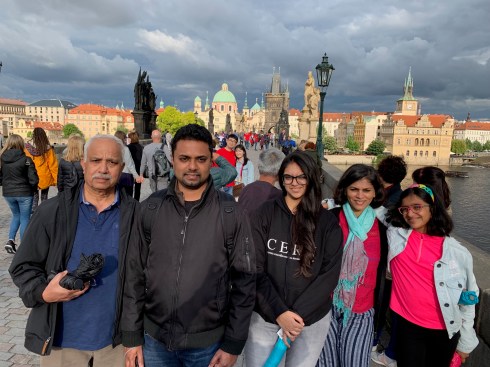
Budapest is two cities – Buda & Pest. Most of the places to see are in PEST. Buda is across the river and houses the castle. Buda is green and less commercial but has almost no veg restaurants. The Museum, Jewish Synagogue (The largest in Europe), the Giant Wheel, Michelangelo Museum, a beautiful basilica are other places to visit. Budapest also has a Hero Square right next to the Michelangelo museum. And do spend a few hours at the Thermal Baths – Budapest is famous for them. By the time you reach Budapest there would be some fatigue of seeing too many castles and churches.

And Finally, Amsterdam. The pass which includes the Hop on Hop Off is the best way to explore the city. It includes the Bus and Boat and covers all the attractions. The RIKS Museum and Van Gogh Museum are world famous and a must visit. But in the same locality is another new museum called the Moco Museum – do visit this also. The Maritime Museum is outstanding – so budget a few hrs for this. Close to this is the Dapper street market and a Science Museum for Children. Take the free ferry from behind the station and visit “I am Holland” and Adam Towers. The 45 Min “I am Holland” show is a 5D show that gives you a nice coverage on the history and sights of Netherlands. Outstation Tour Buses also start from here. We took a ½ day Trip (9 AM – 2.30) to Volendam & Zanse Schans. The tour takes you to the beautiful countryside and some rustic idyllic villages.
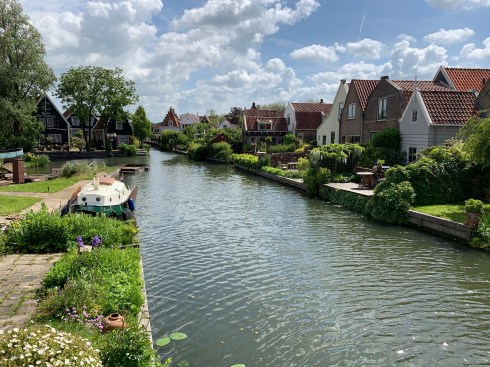
We visited the Windmills, A cheese Factory, and some rustic Fishing Villages. Normally priced at 60 Euros this was part of the 2-day pass. (But you need to go online book the tour a day in advance). Do visit Rembrandt’s house and right next to it is Gassan Diamonds. Close to the central station is the area called DAM which is the largest central square of Amsterdam. The place is full of shops and the bye lanes sell Marijuana Cakes – the smell is all over the area and can give you a headache. Amsterdam’s famous Red-light area is also a short walk from here.

Budapest & Amsterdam also have large Zoo’s but if you have seen one in Vienna then you can skip these.

Card Vs Currency

Credit cards are widely accepted in Vienna and Amsterdam. Most places in Budapest & Prague prefer Cash in local currency. If you are withdrawing cash from your debit card lookout for Bank ATM’s

How to Book Train Tickets and how expensive are they?

Trains are efficient and fast in Europe. They travel at 125 km / hr and the 350 Km distance from Vienna to Prague can be covered in 3 – 3 ½ hrs. The cost for Vienna Prague Ticket was 30 Euros on a Private train called Rail Jet. Our Prague – Budapest Train journey which was almost 6 Hrs also cost us 30 Euros. This was operated by the Czech Railways. Booking tickets in advance helps get great deals. We booked 4 months in advance.

You may be confused with many options when you try booking tickets. Remember you don’t need Euro Rail. All the Trains that connect cities in different countries in Europe come under the umbrella of Euro city Trains. They include both private and Govt Trains.

And once you enter the 1st Port after showing your Visa you can travel thru the entire Schengen region like domestic travel, there is no immigration or Passport / Visa checks when you travel by Train or Flight from one city to another.

Children fares are half, students also get discounted rates. Take a printout of your tickets as the Ticket Checkers scan them onboard.

We booked our Vienna – Prague Tickets from a Portal called tickets.oebb.at. And the Prague to Budapest Tickets from https://czech-transport.com/.

Trains come to the platform 10 – 15 Min before departure time and even the platform number is indicated only 30 minutes before boarding. Some trains are free seating. You can carry your big suitcases on train comfortably.

The main station at Vienna is Wien HBF and at Prague it is Prague HLN. The Budapest main terminal for outstation trains is Nyugati. If you take a train to Amsterdam its Amsterdam central.

We did not take night trains as hotel check in time is after 12 noon so reaching at 6 AM in the morning would have been futile. We were also not sure if it was safe to take a night train.

How reliable are Cabs

The cabs at Vienna were very reliable and accepted credit cards. Uber also works in Vienna. But at Prague and Budapest the cab drivers at the station tried to con us by charging double the rates. At Budapest our Hotel was 2 km from the station and the cabbie wanted 30 Euros. We had to call the hotel and the kind owner booked a taxi which dropped us at the hotel for 7 Euro’s. Even at Amsterdam the driver took us for a ride. He charged us 75 Euros for a 20 Km ride to the city – which we later found should not have been more than 50 Euro’s. (In Amsterdam – if you stay at the hotel we stayed take the Train to Amsterdam central). Cars are big and the boot can comfortably accommodate 3 large suitcases and 1 strolley. This is cool since the London cabs can’t accommodate so many luggage. You will be driven around in Merc’s and BMW’s. At Amsterdam we had a brand-new Tesla pick us up.

Tipping

Tipping is expected even if the service is bad. At places in Vienna and Prague where the food and service was not great the waiter insisted on Tip’s – 10% is the norm

Few more useful points

  • Carry your folding umbrellas as it may start raining suddenly. Light drizzle like in London.
  • Carry water bottles – tap water is safe. At the restaurant water bottles are more expensive than Beer and most restaurants don’t serve tap water – so it helps if you carry your own water
  • Carry salty snacks – most food you get here is sweet
  • Keep coins – most restrooms and lockers are coin operated

Europe was devastated during the second world war. Its wonderful to see how they have rebuilt their cities back in the last 70 years. Life here is organised and simple and appears stress free at least for the tourist. These are safe places and you can drink tap water. The air is fresh and there is no pollution. There is so much to see, lot of history and culture and you could easily spend a week in Vienna and still not cover all the sights. East Europe is affordable and if planned well in advance you can have a great holiday at a reasonable budget. (We made most of our bookings in Jan for a trip in May)

We just completed our trip today (May 29th – 2019) so the information is fresh in my mind. If you need any additional information please feel free to drop me a mail at vak_1969@yahoo.com.


The Challenge of making 8% + Returns in an increasingly volatile and unpredictable market

25 Apr

Aditya Birla Sun Life Focused Equity Fund a 3 Star Rated fund, a leading fund in its category  has given a 4.76% return in the last 1 year (2018 – 19). In the same period Nifty reported a 14.93% gain and Sensex reported a 17.3% gain. Aditya Birla fund did relatively well because in the same period Equity Mid Cap reported (-) 3 % and Equity Small Cap  (-) 11.5%. (https://www.livemint.com/market/stock-market-news/sensex-ends-fy19-with-the-biggest-gain-in-4-fiscal-years-1553879533118.html)

This is not a 12 Month trend but a 24 Month phenomena. If you started investing in March 2017 and your Investment Advisor assured you of an Alpha (A gain over the Index Returns) – well you are in trouble. In this period the Sensex moved from 29,000 – 39,000 a whopping 30% + but the best of MF’s you have invested in may have given you returns of less than 10%.

In effect in the last 24 Months you would have made better returns if you had stayed invested with your neighbourhood Bank FD Or with a good Liquid Fund – some of which have given annualised returns of 8%+

You wonder how this is possible when the Country is supposedly growing at 7% GDP. A 15% annual Index Gain and a 7% GDP growth indicates an economy that is burning hot. But the reality seems to be different. IT Companies are reporting 3 – 4% growth and holding on to their stock prices with buybacks, Airline are melting, Real Estate is sluggish for the last 7 years, and Telecom companies have merged and reported losses and Job losses. Banking Industry is reeling in NPA’s the Pharma industry has lost its sparkle and the booming Automobile industry has started showing low to negative growth. The liquidity crisis is severe and the rate of loans on the street is very different from what the RBI rates are. And Swiggy, Ola & Uber seem to be the only people hiring. Yes inflation is low – but one wonders if this inflation or deflation driven by low consumer spending.

If every large industry that constitutes the economy is limping, there is a job challenge and liquidity is stretched –  one wonders how the economy and the stock market is booming. 

Which answers the 1st Point on why the Index is gaining but the MF’s you invested in are lagging. A handful of stocks have done extremely well. Reliance, HDFC Bank, TCS, Havell, Bandhan Bank …. you can pick the stocks with your fingers. But sadly most investors picked the wrong stocks and are seeing their portfolios steeply negative. Ask your friends who invested in Stocks and PMS schemes and they will tell you how they have burnt their fingers in the last 24 months. So if the fundamentals are not strong you have to question what is driving the index higher and higher over the last few months – is it really the Modi factor or is it Black Money coming in thru the P Note route to fund the 10B USD Grand Indian elections?

So where do you go from here.

Your investment manager will tell you about India being a great 10 year story and how the stock market has given 15% + returns over the last 25 years. Big bull Rakesh Jhunjhunwala will talk about India being in the midst of the greatest bull run ever. All this is true and works well if you don’t want your money back for the next 10 – 15 years. But if you have invested in the stock market hoping to pay for your daughters education in the US a few years away or for buying a house 2 years down the line and are expecting to skim away 15 – 20% of the profits from your MF every year – then beware you may be in for a rude shock.

Let’s look at the Nifty P/E

A P/E below 14 indicates – Extremely Oversold and above 22 Extremely Overbought.This link will give you an indication of how the Nifty P/E has fared over the years. (https://nifty-pe-ratio.com). We are today at a historically high P/E of 29 – and that is cause for concern

Remember 2008 when the Lehman Brother Crisis hit the globe. 2008 was an incredible year for the Indian markets, after scaling the 21,000 peak in January 2008, the markets were at 8,000 in Oct 2008. The Sensex P/E in Jan 2008 was also 28. See the correlation – all that goes up has to come down. It’s been a great 10 + years since 2008 as liquidity has flown thru global markets like a river in flood.

Losing faith in the system

Track the best of analyst reports over the last two years and you will see the extremely poor quality of research in India. Let’s take the example of South India Bank – 2 years back the stock was at Rs 18. leading Analysts talked about the Bank being on a fast track growth and the target price was given as Rs 45 over 12 – 18 months. Some even spoke of a 100+ price. In the midst of the euphoria the stock did go up steeply and touched 34 and then it collapsed to Rs 12.5 and is now settling down at 16 – 17 Rupees. You will see this trend again and again for numerous stocks and it leaves you with a feeling – are these stocks being manipulated and is the common investor being taken for a ride.

There is no skin in the teeth.

ILFS was rated AAA by Care, ICRA, Crisil in March 2018. A few months later the company went bankrupt. A Bluechip like ICICI bank is under scanner for nepotism. ZEE, DHFL and many more are reporting inability to pay back loans. Banks gave away Billions in loans that were defaulted. And Kotak is defaulting on its FMP – just to recollect the word FMP means Fixed Maturity Plan. When a Bank like Kotak delays your FMP you better get worried. All this makes you question the role of the Board of Directors, Auditors, Management and the Regulator.

Your Financial investment partner also has no skin in the teeth. Irrespective of you making or losing money they continue to make their commissions on your holdings. You can’t blame them – they run a company that is measured on quarterly growth and if they start getting pessimistic then that’s the end of their company. Given the state of confusion they  may pitch for complex products like A Structured Product where the returns are linked to the Index over 2 – 3 year. Some may even make handsome returns on it. But if you delve deep into the product you will realise that a small part of them are invested in Futures & Options while a large chunk is lent to Small & Medium Business at very high rates. That Debt can be very risky. Also remember the basic rule – Never invest in a product which you don’t understand. 

Well now that I have got you worried let’s come back to the basic question – How do I make 8% steady returns over the next 2 years? We are now in a situation where we should be worried about Return of your Capital Vs Returns on your Capital. 

There are no easy answers – but these pointers may help you make your right decision

  • Nifty P/E at a historic high of 29 is a Red Flag – it’s time to Go slow on market investments.
  • Unless you are a whiz kid – stay away from investing in individual stocks. The Daily TIPS and Research Reports cause more harm than help.
  • Debt Funds thanks to rate reductions have given good yields over the last 1 year. Given the severe liquidity crisis one can expect a few more rate cuts that will ensure Debt Funds yields of  7 – 9%.
  • A Good Bank FD gives you 7% and is not Tax friendly – but it does give you a lot of peace of mind
  • If the market crashes and you have liquidity – invest 25% of your portfolio in Index Funds – like they say you can never beat the Index.


Thank You Jet Airways

17 Apr

In a few hrs from now Jet Airways will fly its last flight (April 17th – 10.30 PM). The era of a great airline which set high standards for the Indian aviation industry will finally come to an end. Hopefully a temporary one.

I have fond memories of Jet Airways. it has been my favourite airline for almost 25 years. My corporate career from 1992 and the growth of Jet mirrored each other. In the last 25 years I would have taken over 2500 flights in India and Abroad. During these flights I was treated well, got decent food, was upgraded many a time and almost always got my priority aisle seat near the emergency exit or the first row.

I recollect in the mid 90’s when even a cost conscious company like Wipro made an exception allowing employees to fly Jet even if it was not the cheapest fare – because the service was excellent and the Chairman and Corporate head of HR enjoyed travelling Jet.

Jet Privilege – The award winning frequent flyer program was excellent. The best in the country – and we have enjoyed many a free holiday thanks to the thousands of miles we accumulated. In the initial years it was easy to upgrade and almost all my Bangalore – Delhi flights I used my Vouchers or Upgrade points to fly in luxury. If you were a Jet Platinum customer your baggage would be on the belt as you walked out with almost no wait time. When I started flying to London every quarter – I skipped the direct BA flight from Bangalore and went all the way to Mumbai or Delhi to take the Jet Flight to London. It was worth it. The Business Class on Jet international was better than most International flights and I was often rewarded with an upgrade to 1st Class and many a time rubbed shoulders with Politicians and Fortune 100 CEO’s. For many years my Brown & Cream night suit was thanks to Jet Airways.

From Day 1 Jet differentiated itself with the food it served. It was piping hot and fresh. The Food in Business Class was outstanding – selection, taste and aesthetics were 10/10. I remember a presentation made by an International Strategy Consultant on Branding in 1998  – when he explained the concept of Brand Differentiators. He explained that all planes were Boeing or Airbus make but then some airlines were Air India, some were Singapore Airlines and finally some were Jet Airways. The differentiation was in service. In the early days Jet made India proud with its service.

The golden era was till 2005 and then the IPO happened. I have observed that most companies start tumbling down after their IPO as the greed for quarterly profits accelerates. After that the airline slowly started going down hill.

This accelerated with the disastrous acquisition of Sahara. The loyalists like us still stuck along with fond memories of the past. By 2012 – 2013 things started getting bad. The seats were jammed and there was hardly and leg space, food quality dropped the Rotis were half cooked and the Air Hostesses looked overworked and tired. The AC would start only after you boarded the flight. Getting an upgrade even with vouchers was a challenge.

As Brand Indigo grew and the fare wars escalated Jet started struggling even more. Rather than hold fort as a full service airline and charge a premium Jet fell into the trap of retaining market share at any cost. It was a losing battle and slowly Jet lost its No 1 position to Indigo.

With Etihad stake there was some hope and service levels did go up before Jet started its final descent a year back. Loyalist that I am – inspite of all the challenges I booked my Bangalore Amsterdam flight for my May holiday on Jet – KLM Codeshare in January. A few weeks back I realised that the last nails were being banged in the coffin and managed to cancel with a steep penalty and booked myself on Emirates. But I have no regrets – I see the cancellation penalty as a small fraction of the Upgrades and excellent service I have been provided over the years. A small cost to pay for the great times I have had over the years.
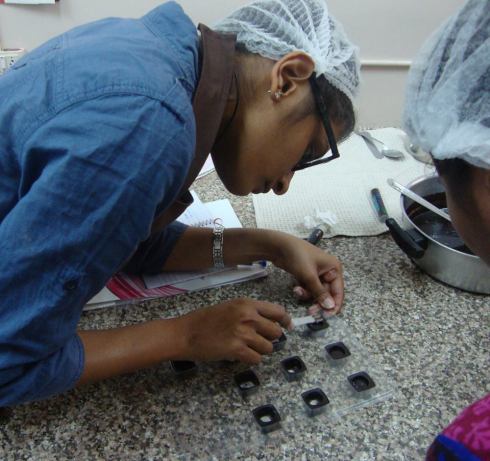
Thank You Jet Airways and all the staff for a wonderful 25 years. As you make your last flight people of my generation will sigh and empathise with you. I sincerely hope you revive and get back to your golden days again.


Experience Punjabiyat – The essence of Punjab in 4 Days

11 Apr

When you think of Punjab you immediately conjure an image of big brave fun loving people. Colourful dresses, Bhangra, Paneer, Butter Chicken, Patiala Peg and the Brave Sikh soldier are instantaneous connections. The food bowl of India nestled between the fertile valleys of the 5 rivers has been the first line of defence against the country’s invaders.Punjab is unique and ever since my 1st visit to Amritsar 4 years back I have been wanting to take the family to experience the essence of Panjibayat.

We had 4 days to experience the charm of Punjab. We spent two days in Amritsar and 2 days at a rustic and sylvan farm stay called Punjabiyat – about 90 km north of Amritsar. If you want to experience the charm of this wonderful state – I urge you to follow this program.

Indigo has a direct flight from Bangalore that reaches Amritsar at 1.30 PM and you are in your room comfortably by 3 PM. Amritsar, historically known as Ramdaspur derives its name from the Amrit Sarovar which was built by Guru Ram Das. It’s a small city that is now expanding rapidly. Located on the border of Pakistan, Lahore is considered its twin city. Amritsar is famous for 4 Things all of which and more you can cover comfortably in 2 days

  • The Golden Temple
  • Attari Wagah Border
  • Jalianwala Bagh (Memorial centenary in 2019 – April 13th)
  • The best Kulcha’s in the country

The Golden Temple is India’s most well managed and clean temple. It caters to large crowds especially on the weekends and festival days. Its serene, calm and beautiful inspite of the crowds. Plan a visit in the morning and in the night when it is lit up and don’t forgot to offer your services and eat a meal at the Langar. It’s a miracle how they serve so many people.

The area around the temple has been done up like a walking heritage corridor – The cobbled pathways are broad, clean, well maintained with shops selling food, trinkets, and clothes on both sides. There are many hotels also walking distance from the temple. The locals recommend a place called Saragarhi Niwas (www.sgpcsarai.com) – Room rent Rs 1100/- a day. email sgpcsarai@gmail.com, Phone – 0183 – 2550060 which is located less than 100 m from the Golden Temple in the heritage corridor.

Jalianwala Bagh is  located right next to the Golden temple. Sadly the current state of maintenance does not do justice to the history it narrates.

The Attari Wagah border is 30 Km from Amritsar, a 45-minute drive. Every evening there is a flag retreat ceremony that is jointly coordinated by the BSF and Pakistan Rangers at around 530 PM (Time varies by season). This half an hour show attended by nearly 10,000 people can be an adrenaline boost to your nationalistic spirit. It’s a must watch for every patriot and its FREE. To get front row tickets you need a VIP pass from someone in the BSF / Army which we were lucky to get. Even without  a pass you can get a decent viewing spot from the gallery that is built like a stadium.

And you can wrap up your Amritsar stay by shopping for Ladies Suits, Masala, Papad, Vadiyan, Sweets, Bangles…. Almost all the shops can stitch your dresses in 24 hrs and have them delivered at your hotel. In the two days you spend here you will also have time to visit the ancient Durgani temple (Under renovation) and the Mehramgarh Fort. Most people also spend an evening at Sada Pind – which is like a the Choki Dani of Jaipur creating a rural feel.

Do all that but keep time to visit the food joints of Amritsar. The Kulchas & Parathas here are the best in the Country. A few places you must visit are Bhai Kulwant Singh Kulchian Dhaba for breakfast and  and Kesar Da Dhaba for Lunch or Dinner. Kulcha Land is another highly rated joint. The street Jalebi and Gulab Jamun is also very tasty. Paneer here is soft and succulent. And don’t miss the Lassi. Food is fresh, delicious and economical. But its rich and servings are large. All these shops are in the bye lanes of old Amritsar and are accessible by walk or e Rickshaws only. We were told that the Amritsari Fish and Butter Chicken is equally popular but being vegetarians, we did not taste them. (Note Bharwan da Dhaba although recommended by some was disappointing. Brothers Dhaba is another place you can visit for Breakfast. Breakfast joints open only by 8 AM)

From Amritsar we headed to Punjabiyat – a Rustic Rural Resort which is in Gurdaspur Dist north of Amritsar. A great place to experience the essence of real Punjab. It’s a short 90 min drive from Amritsar (excellent Roads) and is located in the midst of a vast expanse of agricultural fields. We visited on April 10 and the fields were laden with the Golden produce of wheat – ready for harvest after Baisakhi in a week’s time. The weather was pleasant even in April. This is fertile land close to the Beas river and they grow Wheat, Rice, Sarson and Sugarcane. If you come in Dec you can see the Sarson in full bloom- and that will indeed be a pretty sight. It does get cold in Dec but that adds to the charm of the holiday.

Panjabiyat is Rustic Luxury. Its small, exclusive and efficient. There are 4 well-appointed cottages. Each Cottage has a large room, a very large airy bathroom, a nice sunny balcony facing the fields and a terrace that is accessible. The ceiling height is about 15 feet and the rooms are bright and happy. The furniture is all you need and more – solid wood. Room is large and can easily accommodate 3 adults – or 2 Adults + 2 Children. The walls, the furniture, the look and feel are rustic, warm and welcoming.


The hospitality & service is excellent and food is custom made. We loved the food – it was fresh, hot and delicious with lots of variety. It is a small property with a common hall and a portico where they serve meals and you can get together with your friends for a drink, play carom or listen to music. They also have a small Library tower where they can set up a romantic breakfast. This is a great place for you to come with 2 – 3 family friends. Ideally book the whole place for 2 days and enjoy the solitude, the food, the ambience and the warmth of the place.

Do take time to step out and visit the neighbourhood and some historic Gurudwara’s all of which are accessible by walk along the fields or by a tractor ride. A walk thru the fields can bring memories of William Wordsworths “A Solitary Reaper’.

Kids may be fascinated with the milking of cows – but what really excited us was seeing how jaggery was made out of Sugar Cane. A family of 4 in very humble surrounding were working hard to crush the juice and process it across boiling vats to make fresh tasty Jaggery. Freshly made Jaggery tastes like Mysore Pak – it is warm and delicious. We also visited a rice mill and saw mountains of sparkling rice being separated from the chafe by automated machinery.

To enjoy Panjabiyat you must love nature and solitude. It’s perfect for a 2-day break. Don’t expect too many thrills and action. There is no TV and the 3G signal is weak. Which is good because you get family time. Go for long walks. Take a ride in a tractor.

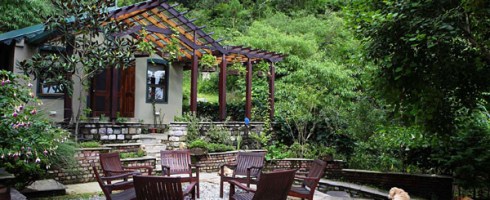
 

Punjabiyat is a great place to Detox. Be with nature. Smell the earth. Listen to the birds. Use the time to read and meditate. Or just sit quietly by the Beas river and ponder and reflect on life and thank the good Lord for all his blessings and Grace. Come alone, come as a couple or just use this time to connect with family and friends. Punjabiyat is definitely an offbeat property worth visiting.

For more details Visit https://www.itmenaanlodges.com/punjabiyat/

Taxi : For the entire trip you can contact Mr Pandey. He is an ex BSF Commando and if you book your trip with him he can even help you with passes for the Attari Wagah border program. He can be reached at +91 9463521098. Even though we had passes from my Army friend he helped us in getting better seats using his BSF clout.