Archive | Daily Life RSS feed for this section

A Few Good People at Mapletree – An Organic Farm

21 Nov

You are what you eat. If you eat healthy you stay fit. But what happens if the vegetables and fruits you buy from the market are packed with deadly chemicals – many of them banned. A study by the Food Safety & Standards authority of India under the Agricultural Ministry discovered that the veggies in the market were concentrated with chemicals a thousand times more than the permissible limit.

If you chop veggies at home you will realise that you no longer need to check the Ladies Finger for the small black worm – because they don’t exist. Pesticides have helped the farmer prevent wastage and improve his productivity. Yields are better, crop grows faster, and there is better hope for making some money after all the middlemen have had their share. But they come with a cost – a steep cost to your health and the farmers health. 

The solution to this is Organic Farms – a phenomena that has started recently. The educated Indian is concerned and A Few Good People are investing their time and money to educate farmers and grow food that is healthy and nutritious.

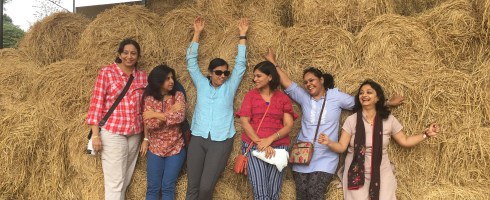
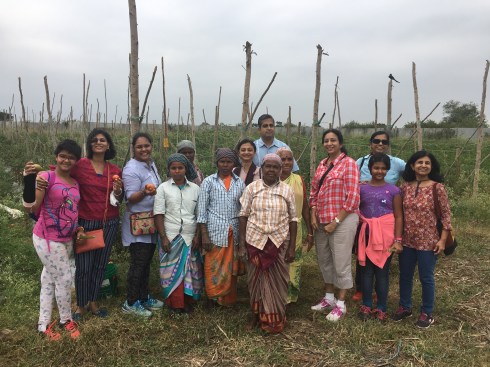
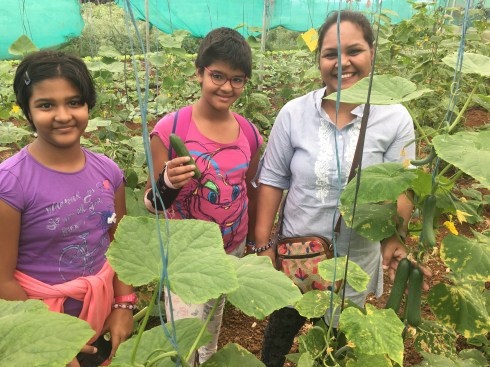
Farming is hard work – which is what we discovered when we made a day trip to Mapletree farms at Thalli, a scenic village in Hosur, Tamil Nadu located about 50 Km from Bangalore. Mapletree farm is a joint effort by Ex Infosys Founder Shibulal,  Ex OnMobile Founder and CEO Mouli Raman and Ex Founder of Hillview Organics, California and Organic Farming Teacher  Shankar Venkataraman.

We visited the farm and were impressed with the passion and dedication of Shankar who runs the show. A BITS Pilani Graduate who was working in Texas Instruments and later relocated to US, Shankar has found his purpose in life. He lives in the farm and visits his family in US once in 3 months. Over the last 3 years he has helped build the farm engine with a deep sense of love and compassion for the team. Having set the foundation the business is now scaling rapidly.


Shankar explained to us the challenges of farming in India. Rapid exodus of next generation from farming is a concern and unless a farmer makes a steady income of Rs 25,000 a month the future is doomed. Farming needs to be seen as a sustainable, profitable business that is respected by the community. A Farmer needs to learn to respect Mother Earth and ensure that she sustains us for the future. Educating the local farmer of the negatives of short term benefits from the usage of chemicals is an important part of his mission. Mapletree is not just an Organic farm but also a place where the youth and the Local farmers can learn the best practises for producing healthy food.

He explains that excessive use of pesticides and chemicals has made almost 25% of farm land in China non cultivatable. We see the same trend in Punjab and Haryana where excessive usage of Urea has made the fields devoid of nutrition. At Mapletree the only fertiliser used is Cow-dung. There is a reasonable gap between two cycles of crops and leguminous plants that make the soil rich in nitrogen are planted during the gaps. This helps the soil to gain its nutrition. Yes the lack of pesticides does result in crops getting wasted and there is a 30% loss of produce. Level of handholding is higher – all of this adds to higher costs. The Veggies from an Organic farm are more expensive than what you get in the shop next-door. But this is the price you have to pay for healthy food. Mapletree is one of the few Organic Farms where most of the produce comes straight from the farm (Almost 60%), while other Organic Brands are just traders procuring material from farmers. Shankar is working towards increasing this ratio in the coming years.

The farm also has a 100 + cows, many are non milch cows but are still useful for the manure. They sell  milk, butter & paneer.  This 45 Acre farm is rustic, calm and serene – its not a manicured pedicured farm that you may see in pictures, but its a happy place with a lot of positive energy.

Mapletree Farm serves over 200 Apartments and Villa communities in Bangalore. Over 4000 households get their weekly supply of vegetables and fruits straight from the farm to their houses. Demand is soaring – there is no marketing but the good news is spreading word of mouth as more and more customers join the healthy food bandwagon. From a humble beginning this 45 Acre farm now notches revenue of 45 Lacs a month. Employing over 100 people who work hard almost 12 hrs a day.

A great beginning to help you eat a healthy meal. If you want to join the ” eat Healthy – Stay Fit” movement reach out to Mapletree. The information below will help you to get started.

Information from Mapletree

Call or email the founder & Lead Farmer (whatsApp preferred) : 91136 88239 shankarv.dsl@gmail.com

Call customer support to register and buy (whatsApp preferred): 97909 48235 — Vikram is our head of customer support and he will help you.

Email Mapletree with questions and request: shankarv.dsl@gmail.com , support@mapletreefarm.freshdesk.com

We deliver 6 days a week in different parts of Bangalore: We deliver 2 days per week to specific locations and you can receive 2 deliveries at your doorstep per week from us if you request us.

Visit the farms — 60 acres plus: https://www.google.co.in/maps/place/Mapletree+Farm/@12.589529,77.7048044,14z/data=!4m5!3m4!1s0x0:0x959f7a5ceada5ac9!8m2!3d12.6105005!4d77.7001351

What makes people born in Nov special

17 Nov

In his bestselling book “Outliers” Malcolm Gladwell came out with a convincing theory of why people born in 1954 – 55 ruled the Tech world. Bill Gates, Steve Jobs, Bill Joy, Scott McNealy, Eric Schmidt, James Goslings and many more famous astrophysicists and scientists were born in that period.

What you hear as a child sticks to your mind and I recollect my mother being disappointed that none of her children were born in November. She had the view that those born in November had an edge and would become famous. Maybe this was driven by her loyalty to the Nehru  family (Both Jawaharlal & Indira Gandhi are Nov born).

Having seen many a famous personalities Birthday celebrations popping up in news and social media over the last few weeks I decided to do some research. And yes – there does some seem to be some strong connect between being born in Nov and being famous.

Here is a list I was able to collate in 15 minutes and its real impressive. I think my mothers intuition was right. What I can infer from this dipstick is a large number of Film Stars and Politicians are born in Nov while there are few Corporate Czars and world beating sports personalities.

A lot of film stars and media personalities – Bruce Lee, Demi Moore, Sharukh Khan, Meg Ryan, Kamlahasan, Juhi Chawla, Irrfan Khan, Sushmita Sen, Aishwariya Rai, Tabu, Whoopi Goldberg, Larry King, Zeenat Aman and Bryan Adams are all Nov born. So are Nobel Price winners like C.V.Raman, Marie Curie, Amartya Sen and Winston Churchill. And rulers & politicians like Jawaharlal Nehru, Abul Kalam Azad, Indira Gandhi, L.K.Advani, Mulayam Singh Yadav, Aurangazeb, Rani Lakshmibai, Tipu Sultan, Arjun Singh , Kamal Nath, Condolessa Rice and Imran Khan.The list also includes the legendary corporate leader Jack Welsh who in his undisputed role as head of GE was both a sultan and a politician. A few players Virat Kohli, Billie Jean King, V.V.S.Laxman. Famous writers like Dale Carnegie, R.L.Stevenson, Jonathan Swift and Mark Twain. Spiritual leaders Sri M & Sathya Sai Baba.


Those born in the month of November either fall under the zodiac sign of Scorpio or are born on the Scorpio-Sagittarius cusp. As per Linda Godman those under the influence of Scorpio are easily approachable and are blessed with a sharp mind. These individuals are known for their forward thinking and are always full of unique and extraordinary ideas. These people are also known for their strong sense of clairvoyance and can at times be secretive in nature. Though not known for being talkative, they are extremely affable and make a lot of friends. Often they may appear as withdrawn and solitary, but they always keep a keen eye on the happening in their surrounding and are hardly apathetic. However, on the other side they can often be extremely manipulative, obsessive and revengeful. They are very loving and caring to their partners and exhibit a great deal of passion in their relationships, but one of their negative traits is that they can be a little jealous at times.

A famous Numerologist reports that if you were born in November, the number 11, which is a higher vibration of 2, will be of great importance to you. You are psychic, empathic, and positive. However, sometimes you get overwhelmed by your own sensitivity and develop stress related health and psychological problems, such as chronic fatigue and depression. You often set an example for others and make a great teacher.

A popular joke doing the rounds on Nov 14th is that its exactly 9 months after Valentines Day. I wonder if that has any impact on the greatness of the Nov born?


Beware – The Khoya in Milk sweets during Diwali may be adulterated

5 Nov

Diwali is about letting go of the restraint and splurging on sweets. Yes the danger of excessive sugar is well known but there are bigger dangers lurking in the the lovely sweet box you just got as a gift from a leading sweet brand in the city.

Last year, a survey done by SPECS (Society of Pollution and Environmental Conservation Scientists) found that 90% of sweets and snacks in multiple cities of India were adulterated.

The demand for these products rises astronomically during the festive season, but of course, the production of milk cannot go up suddenly as the number of cattle remains the same. So when supply is X and Demand is 10X what do you do?  You Adulterate.

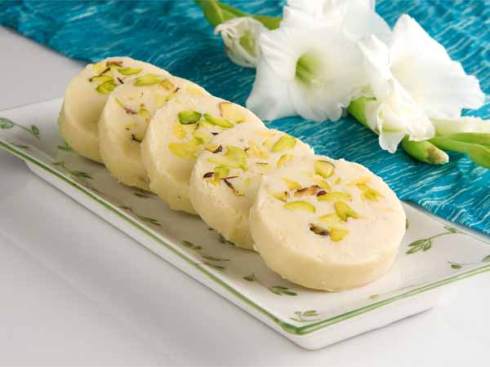
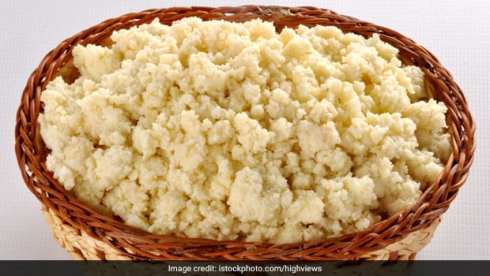
The first thing you MUST avoid is – sweets made of KHOYA. Khoya is made with milk thickened by cooking it over low heat for hours. It’s commonly used for making a wide variety of Indian sweets or mithai. However, nowadays, when the demand of khoya is on the rise, some vendors, in order to meet these demands, may indulge in adulterating the dairy product by using harmful chemicals.

Mawa or khoya used in Diwali sweets may be adulterated with a number of foreign ingredients like fine flour, starch, suji or semolina or even blotting paper. While these three are the relatively tame adulterants, there are some things added to mawa which are potentially harmful when consumed, including urea, palm oil or detergent! Some dairies also add foreign fat in mawa and milk to make these products taste ‘richer’. When people consume sweets made from these adulterated dairy products, their health may be affected.

The adulteration goes beyond milk sweets. Your  favourite besan laddoos are commonly adulterated with kesari daalno this ain’t some high-grade protein, it’s animal feed unfit for human consumption.

Rasgullas can be made with all kinds of spurious synthetic and paint milk. And the shimmering vark is often replaced with aluminium foil.

So whats the solution. The best solution is to eat home made sweets. Yes thats a lot of toil – fortunately my wife is one of the few who still follows the tradition and toils for hours every day for a week before Diwali. But thats rare – people are more interested in getting ready for their card parties than making sweets at home.

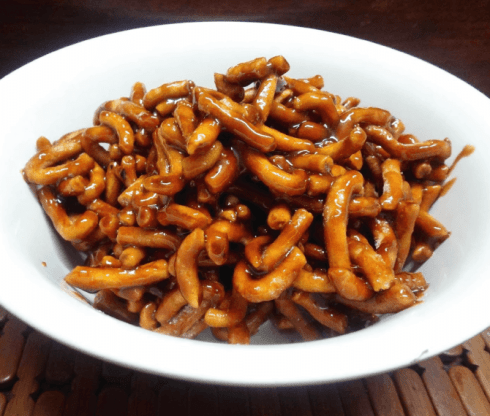
The second best solution could be to stick to sweets made of jaggery or “Gur” – but thats rare. You walk into a shop and you will hardly find any “Gur” sweets. Traditional South Indian shops may have Manoharam, Appam, Adirasam and Boli – but they are becoming rarer by the day.

There are a few simple tests that you can do at home to check the quality of your milk. If the milk at home is adulterated this season be sure that the sweets in your neighbourhood Mithai Shop are.

Test 1- Water : This one’s pretty simple. You don’t have to wait for Diwali to test the milk quality. Take a few drops of milk and place them on a slanting, smooth, polished surface. Pure milk will glide down slowly leaving a trail behind while adulterated milk will slip pretty fast leaving a clean slate.

Test 2: Urea- The most common adulterant. Take a teaspoon or two of milk in a cup and add a teaspoon of soya powder or toor dal powder. Shake it till it mixes uniformly. After a couple of minutes, dip a litmus paper. Moment of truth. If the paper turns from red to blue, it indicates the presence of urea in milk. Discard.

Test 3: Detergent – Water down milk and shake it vigorously. If it lathers, there’s detergent. Puke! Preserve the sample and wash the leftover milk down the drain and complain to the local FDA.

Enjoy your Diwali – but think twice before eating that tasty looking Milk Sweet this season.


Science behind Superstitions

21 Oct

Do superstitions have a basis; what is the reason that they have been practised for centuries?

These are questions that came to my mind after the recent Sabarimala incident. A little homework reveals that there is always some logic or scientific bias behind the actions and superstitions of the past. Yes, some of them may not be valid in today’s context and can very well be junked. So read on and decide which are the superstitions you can jettison out of the window.

1. Spilling Salt brings bad luck 

As children we were always reprimanded for spilling salt – it was supposed to bring bad luck. Salt was a precious commodity for our ancestors. It was used not just for cooking but also to preserve food. The word “salary” owes its origin to the Latin word “salarium” and has the root sal which is there in “salt.” In ancient Rome, it specifically meant the amount of money allotted to a Roman soldier to buy salt, which was an expensive but essential commodity

Prior to industrialisation, it was very expensive and labor-intensive to harvest the mass quantities of salt necessary for food preservation and seasoning. This made salt an extremely valuable commodity. Entire economies were based on salt production and trade.

This was the reason for being extra careful with salt probably leading to the superstition that spilling salt brings bad luck. The superstition would have ensured that people would have been extra careful while handling salt.  

2. Breaking a Mirror Brings 7 Years of Bad Luck

This was probably a belief from the past that a mirror is a projection of one’s appearance and one’s soul. Breaking a mirror reflected the soul breaking into pieces. The damaged soul is thus not able to protect its owner from bad luck. It could also mean that damaged soul seeks revenge against the one responsible for its injuries. The means of revenge varies, but often includes the loss of a close friend or the death of someone in the household.

But the truth here is similar to the case of Salt. Pure economics. A major component of mirror is glass. Because glass is a poor reflector, it must be coated in order to make a mirror. The most appropriate materials for making metallic coatings are silver, gold, and chrome. All 3 are expensive materials. During the Renaissance period in Europe, mirrors were made by coating glass with an amalgam of  tin and mercury. In the sixteenth century, Venice became the centre of manufacture for such mirrors. A factory for manufacturing mirrors called Saint-Gobain was established in France, but mirrors were still expensive luxuries and only the very rich owned it. So if you owned one you were very carful and did not want to break it.

Breaking it in the evening after sunset was even more inauspicious – simple not only was it the loss of an expensive item but now you had the added challenge of cleaning the place in the dark to ensure that the family members are not cut by the broken shreds on the ground.

3. Black Cats Crossing Your Path is Bad Luck

This one should help my learned IIT IIM friend. Even on a highway speeding along he comes to a screeching halt when he spots a black cat crossing by. Most Indians have this superstition deeply engrained in them. But its time to shed this superstition after reading the reason behind it.

In olden days people used to travel by carts that were pulled by domesticated animals like horses and cows When passing through forests at night, the animals used to get scared and act chaotic when they sensed wild cats such as leopards, cheetahs, and tigers crossing their path. The travellers warned others not to proceed when a cat passes their path. And wait for some time before the danger passed. The wait also helped the animals to relax and get them under control before proceeding.
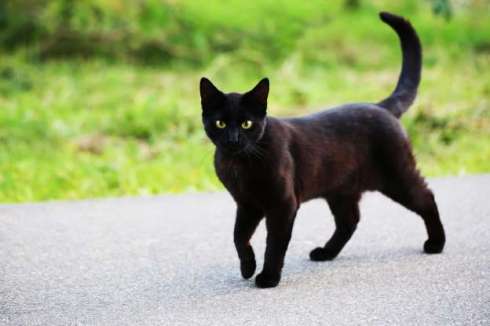
Today, this is of no significance and we are afraid of black cats for no reason. Groucho Marx once said “If a black cat crosses your path, it signifies that the animal is going somewhere.”

4. Avoid a Hair Cut on Tuesday

Most barber shops are closed on Tuesday and it is considered inauspicious to take have a haircut on that day. The reason behind this is simple. In olden days the villagers after a long hard week of work used to take Monday as the off day. Sunday was probably reserved for visiting the temple, friends , family etc. So Monday was the day when they visited their local barber for a haircut and shave. The Barber overloaded on Monday also needed a rest – and he probably did not get any customers on Tuesday. That tradition seems to have continued over the years. So if you find a barber salon open on Tuesday – don’t worry its perfectly safe to go and get a haircut.

5. Sweeping the house, Cutting Nails and Shaving After Sunset

The superstition is that by doing this you will lose all your wealth as Goddess Lakshmi will leave your house. Nobody dared to take a risk and lose their hard earned wealth and the superstition stayed.

But the reason is simple and logical. Electricity is a 100 year old invention and there are villages that have got electrified recently. In the dusk after the sunsets if you sweep the house in the dark there are chances that some valuables may also get swept away. As far as cutting nails and shaving – chances are in the dark you may cut yourself.

6. Hanging Lemon and 7 Green Chillies In shops and Business Places

You can see this all over India – a lemon along with chillies, seven to be precise, hanging from the doors of shops, houses or from the bumpers of cars? These days it has turned into a superstition that it keeps the god of misfortune, Alakshmi, away from the shops.
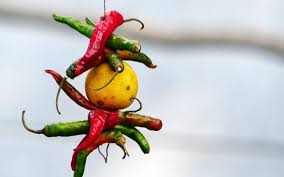
 

As weird as it seems, there is a logical explanation behind this one too. The cotton thread that passes through the lemon and the chillies absorbs the acids, vitamin C and the other nutrients present in it. Then, by slow vaporization, it is released into the air. The odour is also said to keep pest and insects away, making it a natural pesticide. This is said to have significant health benefits and our ancestors made it an essential part of ceremonies to increase its use.

To simplify life, some people have used a metallic version of the lemon with chillies – but sadly that doesn’t work.

7. Most people avoid Unlucky 13

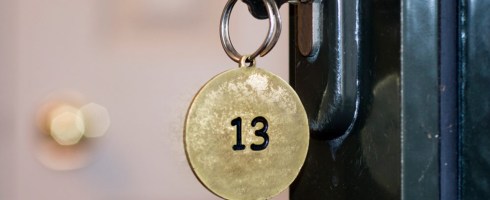
The number 13 is considered an unlucky number by many people. People avoid travelling on 13th or checking into hotel rooms on the 13th floor or room no 13. I have seen 5 Star hotels that have 12th floor and then the 14th floor totally skipping unlucky 13. It is also considered unlucky to have thirteen guests at a table. Friday the 13th has been considered the unluckiest day of the month.
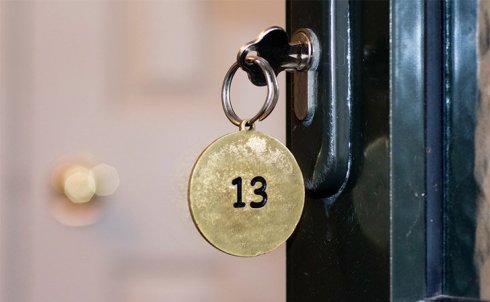
A possible reason driving this behaviour could be from the time of Jesus. At Christ’s last supper, there were thirteen people around the table, Christ and the twelve apostles. Some believe this unlucky because one of those thirteen, Judas Iscariot, was the betrayer of Jesus Christ. Another major reason for Friday the 13 to be considered unlucky was that on Friday 13 October 1307, King Philip IV of France ordered the arrest of the Knights Templar, and most of the knights were tortured and killed.

8. Lizard Falling On Human Is Bad Luck

It does feel creepy to have a lizard fall on top of you – after all they are cold blooded creatures. But there are lizards that could emit poisonous juices resulting in skin problems. It may not be bad luck but it could lead to bad health.

9. Fallen Hair inside house causes fights

The myth is that if you throw fallen hair inside the house instead of binning it, soon you will see a fight within your family. Well, who would like to pick up a quarrel at home?

But the real reason behind this superstition is if you leave the fallen hair inside the house it may end up falling inside the food when the wind blows. And that will definitely cause a quarrel when a hungry husband finds hair in his food.

10. Twitching of the eye is a Good or Bad Omen

This is a bit like a sixth sense, and it differs from community to community. Eye twitching or the sudden involuntary movement or spasms in the eyelids is a common condition.  There is an established explanation for these constant or intermittent involuntary muscle twitches, including various medical reasons behind them – these twitches are nature’s way of warning a person about some impending problem or indicative of some good news on the way.

11. Walking under a ladder is unlucky

There are a couple of theories about this superstitious belief. Many Christians believe in the Trinity, that God is made up of three parts, – the Holy Father, the Holy Son, and the Holy Ghost (or Holy Spirit). A ladder leaning up against a building was seen as a triangle of these three. To walk through this triangle was seen as breaking the Trinity and hence considered as bad luck. Another origin of the superstition was a bit less specific, and had to do with the similarities between a ladder leaning against a wall and a gallows.

However the fact is that, it is simply unsafe to walk under the ladder and you may get hurt or might hurt someone around by knocking the ladder down. A ladder is an unstable equipment and a person on top may fall or drop something on you. So its good to stay away from a ladder.

12. Taking a bath after attending a funeral is a must

When a person dies, the body starts to decompose. This is basic biology. And when you attend a funeral, you are exposed to the germs, bacteria and the chemicals released by the body and present in the air due to decomposition. It makes a lot of sense to come back take a bath and then have your meal.

13. Stop by at a temple before starting a long tour

In olden days people travelled by foot or bullock / horse carts. Journeys were long, mostly in groups like caravans. So if you forgot something coming back was not an option. A temple in your village was a good place to sit by quietly for a few minutes and recollect if you had everything for your travel before proceeding on the long journey. It was probably for the same reason that you were advised by the elders to  eat curd & sugar before heading out. The Curd kept your body cool and the digestive system efficient while the Sugar gave you the energy for the long walk.

14. Don’t go near a Peepal tree in the night

If you believed your grandmother, Peepal is one tree the ghosts like to hover around and if you sleep around a Peepal tree at night, the ghosts will kill you. Every school kid knows that trees emit CO2 at night so its best to avoid visiting a large tree like a Peepal Tree at night. But do walk by a Peepal tree during day.

You will find a Peepal tree in most temple complexes and Villages. Peepal is considered to emit disproportionate amount of Oxygen during the day along with Neem and Tulsi. It purifies the surroundings where it is planted, and kills bacteria. So worshipping it means you would be near its vicinity, and inhale healthy air.The leaf, bark and roots of this tree are of significance in Ayurveda. Its leaves help cure asthma, fever and cold. The milk derived from its leaves cures eye pain.  This tree can cure as much as 50 disorders, including diarrhoea, epilepsy and gastric troubles. That’s why it’s a practise for devotees (especially women) to walk around a Peepal Tree.

15. Why people say “God Bless You” after a sneeze 

Considered a polite response to a sneeze, the phrase “God bless you” is attributed to Pope Gregory the Great, who said it to people who sneezed during a bubonic plague. Aside from the idea of protecting against the spread of disease, “blessing” someone after they sneezed originated from the erroneous beliefs that the soul escapes the body during a sneeze and the heart momentarily stops as well. Therefore, saying “God bless you” was a way of welcoming the person back to life.

16. Crossing fingers is a good luck sign 

Crossing your fingers for good luck (or, secretly, to get you out of keeping a promise) is common around the world — but its origins are unclear. It seems to be common in Christian countries, with the belief that it’s related to the sign of the cross. Other theories include it being an old Pagan or Norse gesture, or possibly a good luck superstition created by archers during the “Hundred Year War” between England and France (archers used their two main fingers to draw back their bow)

17. Knock on wood to avoid disappointments

The origin of this very common superstition is believed to date back to the Pagan era. It was believed that the deities lived in trees. Touching a wooden surface would acknowledge them and ensure that you get their protection during misfortunate events. It was also believed to be a thankful gesture to the deities for bringing good luck.

The Greeks used to worship the oak tree as it was considered sacred to Zeus. When Pagan beliefs were incorporated into Christian beliefs, this superstition found its way to Christianity, and knocking on wood became to be associated with the Cross.

A Jewish version of this particular superstition takes one back to the 15th-century Spanish Inquisition. During this time, the Jews used to hide in synagogues (wooden prayer buildings). They designed a specific knock code to let people in. This saved the lives of many people, and subsequently knocking on wood came to symbolize good luck. By the 1900s, the British and the Americans had also adopted this ritual.

18. Its lucky to have a bird poop on you 

This superstition comes from an interesting leap in logical thinking that’s related to the reason that four-leaf clovers are considered lucky. Essentially, the belief says that the odds of a bird pooping on you or of finding a four-leaf clove, are so low that if it happens, you’d be likely to beat the odds in other fortunate ways, too. Funnily enough, this superstition can be found in cultures all over the world, so historians have a hard time pin pointing where exactly it started.

19. Being the 3rd person to light a cigarette from a match is unlucky 

The historical origins of this superstition are very clearly set in World War I. It was a conventional wisdom among soldiers in the trenches that if you kept a match lit long enough for three people to light their cigarette from it, the enemy would spot the flame and deduce your location. Soldiers brought the belief back with them, but there’s evidence to suggest that after the war, match companies rather cynically helped popularise the superstition to sell more matches

In conclusion I want to add that our forefathers were not stupid. From splattering cow dung on the walls to bursting crackers most of their actions were driven by some logical reasoning. Cow Dung on the floor and walls prevents insects from entering the huts and the noise of crackers and smokes helps eradicate insects after a long rainy season.

So while some superstitions can be thrown out of the door (Like the Black cat one) many have some scientific basis. 
 

Navratri 999 : 9 Dishes, 9 Colours, 9 Ragas for the 9 days

7 Oct

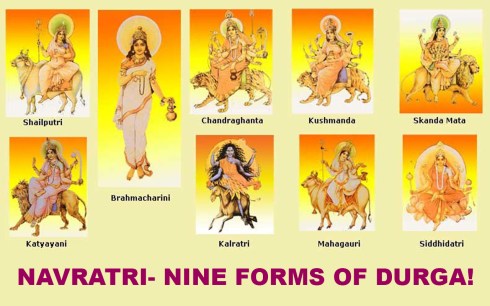
Did you know that the 9 days of Navratri are associated with 9 different colours?  I am sharing not just the colours of the day but also the Flowers, Food and Raga that are considered auspicious for each of the 9 days.

A Few Good Things wishes you a very happy Navratri & Durga Puja.  

Day 1: Shailaputri

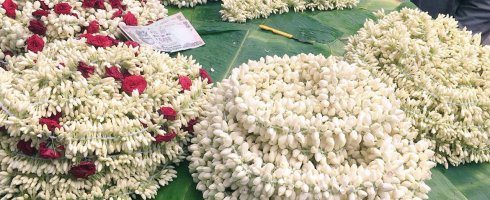
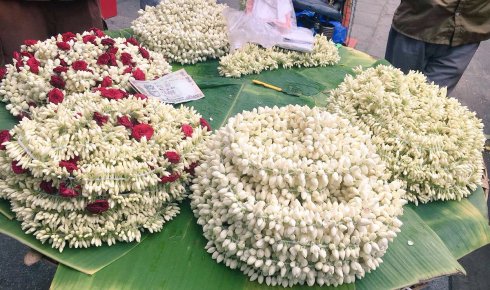
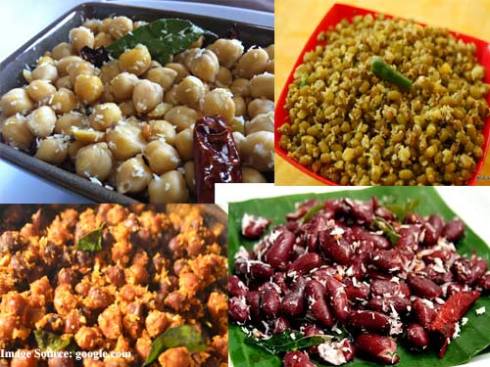
Known as Pratipada, this day is associated with Shailaputri (literally “Daughter of Mountain”), an incarnation of Parvati. It is in this form that the Goddess is worshiped as the consort of Shiva. She is depicted as riding the bull – Nandi, with a trishula in her right hand and lotus in her left. Shailaputri is considered to be the direct incarnation of Mahakali. The color of the day is red, which depicts action and vigor. It is believed that Goddess slayed the demons Madhu and Kaithabha on this day. Jasmine and Vilvam are primarily used to perform the puja. Ven Pongal and Karamani Sundal are considered the perfect offerings for this day. Singing devotional numbers in Thodi raga will please the Goddess

Day 2: Brahmcharini

On Dwitiya, Goddess Brahmcharini, another incarnation of Parvati, is worshiped. In this form, Parvati became Sati, her unmarried self. Brahmcharini is worshiped for emancipation or moksha and endowment of peace and prosperity. Depicted as walking bare feet and holding a japamala and kamandalu in her hands, she symbolizes bliss and calm. The color of the day is Royal Blue which depicts calmness-cum-energy. In South India  the Goddess is worshiped as Kowmari or Rajarajeswari. Jasmine and Tulsi are used for worship on the second day. Puliyodarai, Puttu and mangoes are usually offered as naivedyam. Raga Kalyani has a special significance today.

Day 3: Chandraghanta

Tritiya commemorates the worship of Chandraghanta – the name derived from the fact that after marrying Shiva, Parvati adorned her forehead with half-chandra (Lit moon). She is the embodiment of beauty and is also symbolic of bravery, and hence, the color of the day is yellow. In South India Goddess is worshiped as Varali Ambigai or Vaaraahi on this day. It’s considered auspicious to draw “Kolam” either in rice flour (rose or lotus designs are recommended) or using flowers. Shenbakam, Champangi and Marikozhunthu are ideal for performing the puja. Sakkarai Pongal and Ellu Podi are offered as naivedyam. Songs in Kaambhodhi raga can be sung today

Day 4: Kushmunda

Goddess Kushmunda is worshiped on Chaturthi. Believed to be the creative power of universe, Kushmunda is associated to the endowment of vegetation on earth and hence, the color of the day is Green. She is depicted as having eight arms and sits on a Tiger. In S India Goddess is worshiped in the form of a Lakshmi. “Padi kolam” in rice flour or rangoli in the shape of steps  is drawn in the houses. The idol of the Goddess is adorned with wild turmeric (Kasthuri Manjal). It’s believed that the fragrance of Jaathi Malli and Rose please the Goddess. Offer either Kadhamba Sadam, Curd Rice, Green Peas and Groundnut Sundal or Lemon Rice as naivedyam. Sing songs in Bhairavi raga in praise of the Goddess.

Day 5: Skandmata

Skandamata, the goddess worshiped on Panchami, is the mother of Skanda (or Kartikeya). The color grey is symbolic of the transforming strength of a mother when her child is confronted with danger. She is depicted riding a ferocious lion, having four arms, and holding her baby.

In S India Goddess is worshiped in the form of Vaishnavi. You can decorate her in the form of Mohini as well.

Pavazha Malii, Paarijaatham and Mullai are considered among the most auspicious ones for the puja today. Offer Ven Pongal,  Payasam and Payir Sundal today.In praise of the Goddess, sing songs, especially the Panchamaavaranai Keerthanai, in raga Panthuvarali.

Day 6: Katyayani

Born to a sage, Katya, she is an incarnation of Durga and is shown to exhibit courage which is symbolized by the color Orange / Red. Known as the warrior goddess, she is considered one of the most violent forms of Goddess Parvati. In this avatar, the Devi rides a lion and has four hands.

In S India Goddess is worshiped in the form of Indraani. Flowers for the puja should be in red — Hibiscus and Kumkum flower are among the most preferred. You can also use Parijatham for the puja.

Offer Coconut Rice or Ellu Sadam today. Neeelambari raga is considered auspicious today.

Day 7: Kalratri

Considered the most ferocious form of Goddess Durga, Kalaratri is revered on Saptmi. It is believed that Parvati removed her fair skin to kill the demons Sumbh and Nisumbh. The color of the day is white. Her skin turns black.

In S India it is  believed that Goddess appears as Annapoorni today. Use Thazhampoo, Thumbai and Jasmine to perform the puja. While Lemon Rice is ideal, you can also offer Vellai Sadam, Kalkandu Sadam or Sarkkarai Pongal today. Chickpeas Sundal can also be considered for naivedyam. The raga for the day is Bilahari.

Day 8: Mahagauri

Mahagauri symbolizes intelligence and peace. The color associated to this day is Pink which depicts optimism.

On this day, the Goddess is worshiped in the form of Narasimhi or Durga in S India. After slaying the demon, Rakthabeeja, she appears as karuna moorthy.

The flowers for puja today include Rose, Sambangi and Magizham. Offer Paal Saadam or Paayasaannam and Appam as naivedyam. It’s considered auspicious to sing songs in Punnagavarali today.

Day 9: Sidhidatri. Color associated for this day is also Pink or any bright colour

On this day, Goddess Durga attained all the Siddhis and also defeated the demons. In TN & Kerala this day is observed as Saraswati Puja. People break their fasts on this day

On this day performing puja using Lotus and Marikozhundu is considered auspicious. You can offer Ellu Sadam, Konda Kadalai Sundal  as naivedyam. It’s considered auspicious to sing songs in Raga Vasantha today.

Vijaya Dasami

Today, Goddess takes the form of Devi Vijaya. While jasmine and rose can be used for the special puja, Sweet Pongal and other sweets can be offered as naivedyam

The other approach to colours 

The second approach believes that the sequence changes every year. How to determine this is based on a simple rule

  • The first Monday, Tuesday, Wednesday, Thursday, Friday, Saturday and Sunday will be having White, Red, Royal blue, Yellow, Green, Grey and Orange. in whichever order they come. 7 days hence 7 colors.
  • The first repeating week day that is in second cycle of week the colors followed are Pink and purple and/or sky blue alternatively. + 2 remaining days +2 colors
  • If you apply this logic for 2018 – the colors are as below

________________________________________________

Day 1 – 10 October 2018 – Royal Blue

First day of Navratri. Goddess Durga is worshiped as Shailaputri on this day and she is dressed in Royal Blue color.

Day 2 – 11 October 2018 –Yellow

Second day of Navratri. Goddess Durga is worshiped as Brahmacharini on this day and she is dressed in Yellow color.

Day 3 – 12 October 2018 – Green

Third day of Navratri. Goddess Durga is worshiped as Chandraghanta on this day and she is dressed in Green color.

Day 4 – 13 October 2018 – Gray

Fourth day of Navratri. Goddess Durga is worshiped as Kushmanda on this day and she is dressed in Gray color.

Day 5 – 14 October 2018 – Orange

Fifth day of Navratri. Goddess Durga is worshiped as Skandamata on this day and she is dressed in Orange color.

Day 6 – 15 October 2018 – White

Sixth day of Navratri. Goddess Durga is worshiped as Katyayini on this day and she is dressed in White color.

Day 7 – 16 October 2018 – Red

Seventh day of Navratri. Goddess Durga is worshiped as Kalaratri on this day and she is dressed in Red color.

Day 8 – 17 October 2018 – Sky Blue

Eighth day of Navratri. Goddess Durga is worshiped as Mahagauri on this day and she is dressed in Sky Blue color.

Day 9 – 18 October 2018 – Pink

Ninth and last day of Navratri. Goddess Durga is worshiped as Siddhidatri on this day and she is dressed in Pink color.

____________________________________________________


My Soul has a Hat – Mario de Andrade (San Paolo 1893-1945)

26 Sep

A beautiful poem by Mario de Andrade (San Paolo 1893-1945) Poet, novelist, essayist and musicologist. One of the founders of Brazilian modernism. Shared by my friend – a Poet herself.

MY SOUL HAS A HAT

I counted my years 

& realized that I have

Less time to live by, 

Than I have lived so far.

I feel like a child who won a pack of candies: at first he ate them with pleasure 

But when he realized that there was little left, he began to taste them intensely.

I have no time for endless meetings

where the statutes, rules, procedures & internal regulations are discussed, 

knowing that nothing will be done.

I no longer have the patience 

To stand absurd people who,

despite their chronological age, 

have not grown up.

My time is too short: 

I want the essence, 

my spirit is in a hurry. 

I do not have much candy

In the package anymore.

I want to live next to humans, 

very realistic people who know

How to laugh at their mistakes,

Who are not inflated by their own triumphs 

& who take responsibility for their actions.

In this way, human dignity is defended 

and we live in truth and honesty.

It is the essentials that make life useful.

I want to surround myself with people

who know how to touch the hearts of those whom hard strokes of life

have learned to grow with sweet touches of the soul.

Yes, I’m in a hurry.

I’m in a hurry to live with the intensity that only maturity can give.

I do not intend to waste any of the remaining desserts.

I am sure they will be exquisite, 

much more than those eaten so far.

My goal is to reach the end satisfied 

and at peace with my loved ones and my conscience.

We have two lives

& the second begins when you realize you only have one.

————————————-

From Technology Outsourcing to Social Entrepreneurship – The journey of Dr Sridhar Mitta

24 Jul

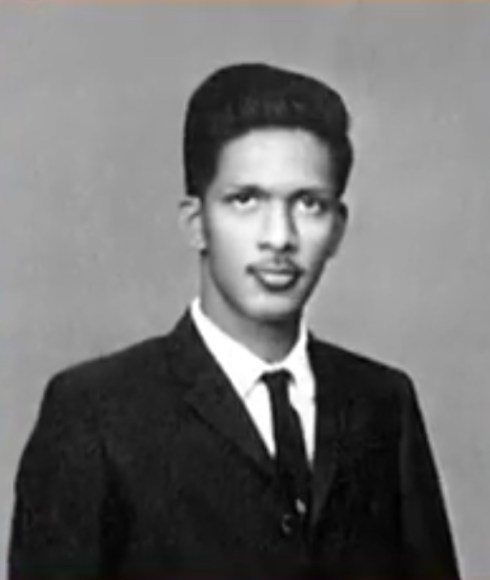
As part of A Few Good People – This blog features Dr Sridhar Mitta, a pioneering visionary who not only established Wipro as a global leader in Technology Outsourcing but also built the foundation for the industry. Dr Mitta has influenced the lives of thousands and on this Guru Purnima I would like to pay my respects to this wonderful man.  

In 1980 when a young 30 year old walked into Wipro’s nascent Information Technology Division as a founding employee he achieved two things. He helped catapult Wipro into a Global Technology giant and set the ball rolling to position India as a Global Outsourcing hub.

 Dr Sridhar Mitta, Bangalore in 1980, with a population of ~ 2M was a quaint little town deserving the sobriquet of a pensioners paradise and a hub of  Research Institutes. The Janata government had shown the door to IBM, The PC was yet to be discovered, Infosys did not exist and the Indian Rupee was trading at 1 USD = Rs 7.86.

This was also the time when a young Azim Premji (AHP) at the helm of Wipro was hungry to expand. Whether it was vision or chance one would never know – but AHP who always had the knack for identifying great talent hired Ashok Narasimhan (A smart savvy financial controller from Telco) and Dr Mitta. Between them they were tasked to build the IT / Technology business at Wipro. 

Dr Mitta armed with a MTech from IIT Kharagpur and a PhD in Control Systems from Oklahoma State University (He was inducted into the Hall of Fame in 2009) was the right choice for Wipro. He was a visionary but hands on. A wonderful team player he was crystal clear on the road ahead as he went about it step by step with determination and passion.

I recollect my first interaction with him in 1992. At our induction  program he  predicted that in the coming years the PC would be like a telephone, just a black box – and the whole attention would be on Software and Services. How right he was.

Over the next 20 years the successful trio of AHP, Ashok Soota and Dr Mitta built Wipro into a global giant. (Mr Ashok Soota took over as the President of Wipro Infotech from Ashok Narasimhan in 1984)

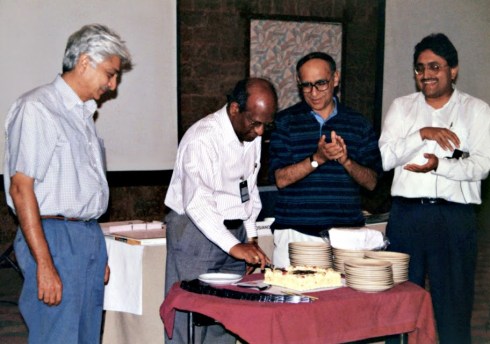
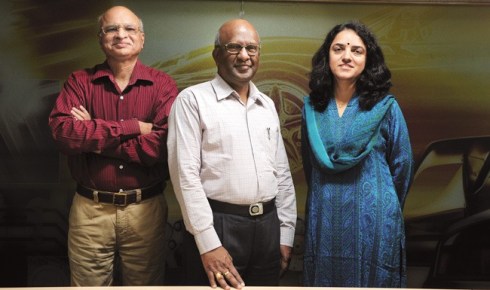
 Dr Sridhar MittaSridhar Mitta celebrates his birthday with Mr Premji, Ashok Soota & Sudip Banerjee

The first phase between 1980 and 1990 was the “Make in India” journey. Intel was coming out with blazing fast microprocessors and Wipro started building multi-user Minicomputers the S86, S286, S386, Landmark 486, Pentium based Synergy series etc. some of them based on the Unix operating system

Designing a Multi Processing Computer in the 80’s was not easy. Remember there was no Internet and Google. The R&D team under Dr Mitta built deep expertise in Chip design, Board design, Operating System, Compilers, Interoperability, Testing and all the zillion things that go into making a reliable high end system.

Dr Mitta recalls that in those days Wipro was the 1st choice for any IIT Graduate because of the quality of work and company ethics. People, Process & Technology were the bedrock for the R&D team and that was Wipro’s positioning for many years. Quality work always gets noticed and global tech companies like Intel started exploring partnerships with Wipro’s R&D team.  This would prove to be the foundation for the next wave of innovation. 

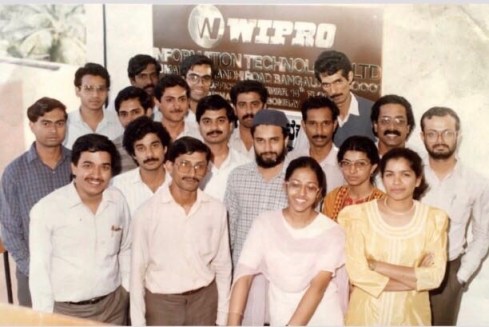
 R&D teamThe young engineers from Global R&D. Most have grown to be Tech entrepreneurs,CTO's and CEO's of leading companies

By the early 90’s it was evident that the India was liberalising. HCL had tied up with HP, Compaq had an alliance with Microland. All the large players were beginning  to make an entry. They had global scale and size and it would be unviable to try and compete with them in manufacturing given the small size of the Indian market.

The visionary in Dr Mitta saw an opportunity amidst this threat. He started contacting his friends  in the US who were working in large Tech companies like Intel, Sun, Tandem and NCR. The bold pitch was to ask for projects that could be done by his team of highly qualified engineers from India. He was crystal clear that there would be no body shopping (The model that software exporters had adopted initially).

The going was not easy as foreign travel needed RBI permission and there were strict controls on the amount of Forex you could carry. He recollects – “We survived on less than $50 a day living with friends and at times eating one meal a day. It was tough. But we were fired with a mission.” Infrastructure, power and network bandwidth were the other challenges that the team had to surmount.

Doing work remotely needed a strong process. Wipro led the industry in embarking for ISO and later CMM certification. This gave a high degree of comfort to clients on the process maturity of the company. Thus was born Tech Outsourcing from India. A wave that has transformed the lives of millions and positioned India globally.

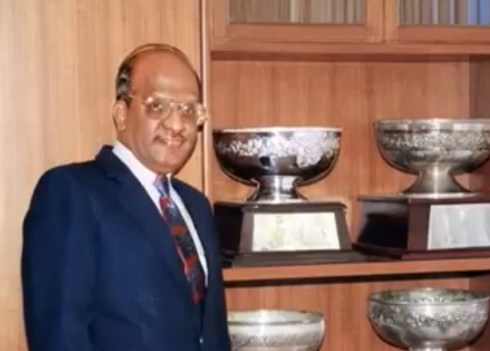
Dr Mitta      Dr Mitta with the numerous awards won by Wipro Global R&D

After that there was no looking back as Wipro’s R&D transformed to Global R&D executing high end work for tech giants in US, Europe & Japan.This was when Dr Mitta decided to explore his entrepreneurial calling. After a 20 year stint at Wipro starting as employee No 1 he had now become the President of Wipro Global R&D. But deep down the technologist in him was itching for doing more innovative work that would impact society.

He spent a decade in EnThink and E4E two innovative startups. EnThink was an Intellectual Property design and licensing start-up located in silicon valley. At E4E  he helped develop the concept of EAP – Entrepreneurship Acceleration Program working closely with TIE (A Global organisation fostering entrepreneurship). By now he had seen the challenges of the rapidly growing IT Industry in Indian cities. It was time to connect the dots and bring his 40 years of experience in creating something new and innovative. This led to the creation of NextWealth.

While conceptualising NextWealth he met the legendary Dr C.K.Prahlad who spent a lot of time with Dr Mitta and finally concurred that his basis for NextWealth was foolproof. Dr Mitta still remembers his advice ” Think beyond Best Practice, invent the NextPractice – The next big business model“.  The founders wanted the company to be named NextPractice but since that domain was not available they settled for NextWealth.

Dr Mitta           Dr Mitta with Anand Talwai & Mythily Ramesh

NextWealth was Co – Founded with leaders from Wipro and the team of Dr Mitta, Anand Talwai, S.R.Gopalan and Mythily Ramesh steering it ahead.

NextWealth was created to add social value through entrepreneurship. The company has a unique business model that solves many of the challenges of the day.

  1. The Vision of the company is to provide 10,000 jobs in smaller towns. They call it The Distributed Delivery model.
  2. Each job generates 5 ancillary jobs and kick starts the local economy. NextWealth promotes not just employment but overall economic development in smaller towns.  “40 Years back Bay Area outsourced work to India 5000 miles away so why can’t Indian companies outsource work 500 miles away in their own backyard? Questions Dr Mitta.
  3. A lot of good talent is available in smaller towns at very affordable prices. This kills two birds with one stone – Lower costs and almost nil attrition.

The company identifies business opportunities and partners with entrepreneurs in smaller towns. The local entrepreneur runs the centre with  inputs from the experienced leadership team at NextWealth. The company has now partnered with competent entrepreneurs in smaller towns like Salem, Chittoor, Mysore, Hubli and Bhilai and has established its business model with many customers.

Over the last few years NextWealth has delivered with some very demanding Global & Indian customers in eCommerce, Finance, IT & Retail. Their core expertise is on deriving insights from Digital Data that can be monetized by blending people and automation. The focus areas are

  • Customer Interaction
  • Assisted Digitisation &
  • Business Process Management

It is a Win Win formulae for Customers, Employees and the Entrepreneur. A mid sized company that can scale rapidly and deliver quality output at very affordable rates. Quality of staff is good and with the right training and mentoring the staff excelled. And it was no surprise that more than 50% of the staff are women.

NextWealth

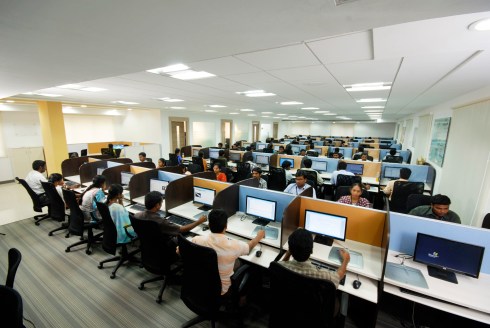
I visited their largest centre near Salem. It was buzzing with energy. The process & security standards were foolproof. NextWealth supports over 40 customers in a variety of high end digital services. (Judgemental, Cognitive, Analytics, Lead management and Lead conversion customer support) and is meeting metrics ever day and every week

Backed with the vision and operational depth of Dr Mitta and his leadership team NextWealth is now ready to take on large complex projects. The proof of concept phase is over. NextWealth is now ready to accelerate this proven model. It is truly delivering its promise “Human Touch to Digital processes”. 

For additional information please contact 


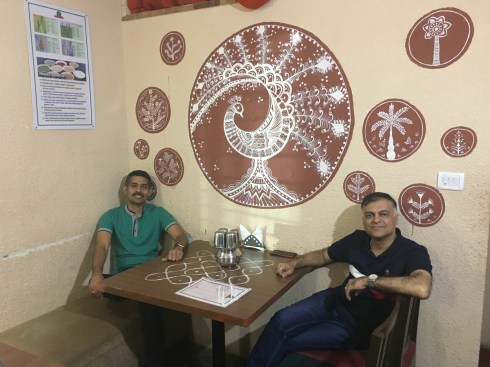
Graama Bhojanam – Fresh, Healthy, Tasty Millet restaurant at Jaynagar

17 Jul

An experienced Iyer couple from Chennai (Who left his job after 30 years at HLL), a young entrepreneur just back after completing his degree in Hotel Management from Switzerland and his friend from the legendary Savera hospitality group, and a Ranji cricketer  – When these four people with diverse expertise get together something unique is born. And that was Prem’s Graama Bhojanam.

The restaurant at Jaynagar Bangalore leveraged on the expertise of Mr Krishnamurthy who started Prem’s Graama Bhojanam with his own cooking at a small place in the bye lanes of Adyar Chennai.

Their goal is to promote healthy food with healthy ingredients. All the  dishes here are made of millets and Red/Brown Rice.  It definitely is more environmental friendly as growing millets requires 70% lesser water than rice.

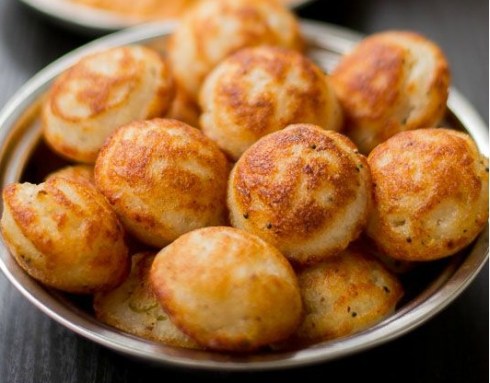
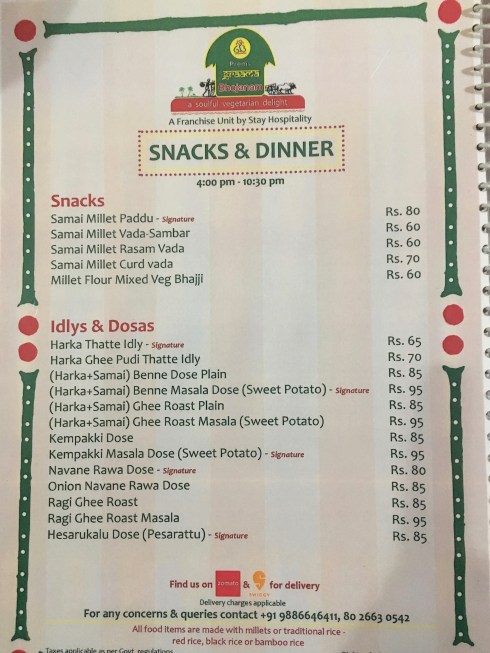
The first thing you must order here is their “Paddus” (“Kuzhi Paniyaram”) – They are delicious and healthy – made of  “Samai” Little millets. Crispy outside and soft inside – you can gobble 3 – 4 of them easily. So ensure that you order more than 1 plate if you are in a group. At just Rs 80/- a plate you need not worry about the bill.

Paddus

Thats the beauty of this place – all the varieties of Idlis, Dosa’s, Vada’s and Bajjis  are made of millets and they taste better. Of course they are healthier. They are also priced very reasonably.

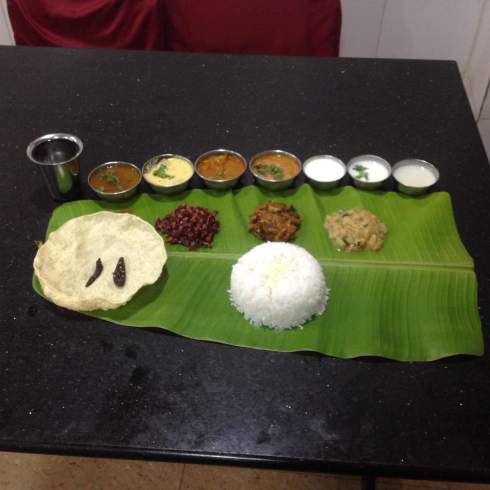
The signature dish is their Lunch and Dinner Thali that includes 4 Main Dishes – Sambar rice, Curd Rice, Rasam Rice and Rice of the day – Lemon / Puliyogare etc  but all these “rice” items are made of millets. Then there is a Curry, Chutney, Sweet of the day,  (Made with Jaggery), Buttermilk and Roti – all of this unlimited for Rs 195/-. Even the RO water is laced with Camphor, Tulsi, Clove and Cardamom. Food is cooked in a healthy way – all their products are sourced directly from Organic farms and there is no use of Vanaspati, Sugar, Maida and artificial colours.

A lot of focus has gone on the menu and the accompaniments – and thats what is important. If you get the food and pricing right people will come – ambience is secondary. And they seem to be on track serving over 100 lunches every day and 200+ lunches on the weekend.

Menu

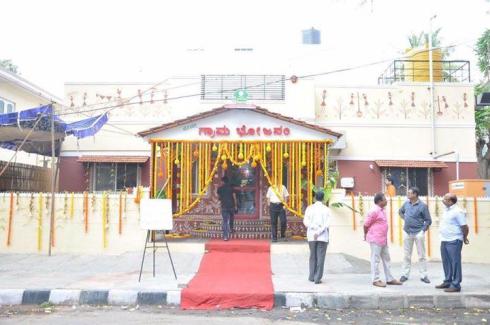
The ambience is basic, functional and clean with an eye on costs.  Prem’s Graama Bhojanam is expanding with a fine dining restaurant that opens in Chennai (Annanagar) on the 23rd of July and its a matter of time before they expand their footprint in Bangalore. They seem to be setting the trend with a handful of other restaurants in promoting Millet based food.

Prem's Graama Bhojanam

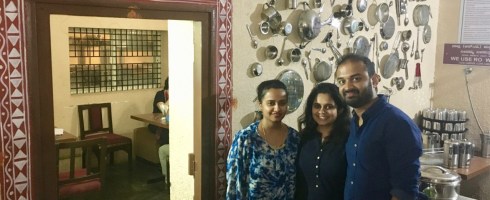
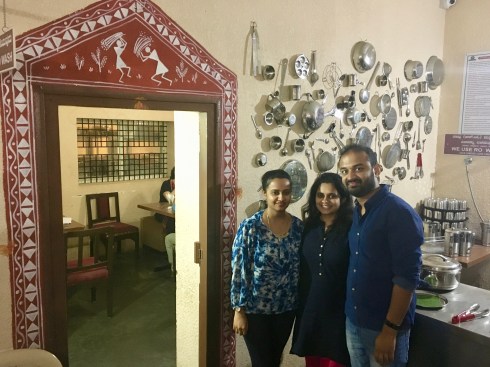
Do visit them – Sr Citizens especially will love this food. Prem’s Graama Bhojanam is a house in Jaynagar converted to a restaurant. Its run by Yuvajith and Smita, Avinash & Tina and their friend from the Savera group Tarun Reddy. (Yuvajith is passionate about Coffee and has opened a signature coffee brewing centre – The Brewing Bean at Eco Space Bangalore)

Graama Bhojanam

  • Address : 234, 32 A Cross 2nd Main Road, 7th Block, Jayanagar, Bangalore
  • Timings : 12 Noon – 10.30 PM

Graama Bhojanam

________________________________

Please follow my Facebook page for regular updates on A Few Good Things 

https://facebook.com/afewgoodthingsvak1969/

Navaratnas : 9 Must Visit Restaurants in Bangalore

15 Jul

Bangalore is home to thousands of restaurants. Its tough selecting the best and most unique amongst them. The criteria I have used is based on Longevity, Consistency and Uniqueness. These are the Nine Jewels – the 9 Must visit restaurants in Bangalore.

  • The first 5 are legendary  – they are part of Bangalore’s history. Many have been around for more than 50 years. They are located in Old Bangalore – Malleswaram, Basavangudi & Lalbagh. All of them serve authentic Karnataka taste S Indian food . Most of them are Tiffin joints serving traditional Karnataka tasting food. (Yes the taste of Sambar and Chutney changes across the 4 South Indian states). These places are always crowded, service is fast & effecient and they are very affordable. BMW’s and Mercs line up outside these shops and don’t be surprised if you bump into Rajnikanth, Puneet Rajkumar or the Padukone family.
  • The Next 3 are unique new ones run by passionate entrepreneurs. They serve healthy food – Vegan, Millet based food in a lovely ambience. They are also located in traditional Kannadiga localities of JP Nagar, Jaynagar and Sadashivnagar.
  • The lone North Indian Restaurant – In a city packed with Italian, Chinese and Continental restaurants its difficult to find a good authentic North India restaurant. It was a close call between two restaurants and I finally chose the newer one because of its brightness and positive energy.

The First 5 : Traditional and legendary, They are timeless. 

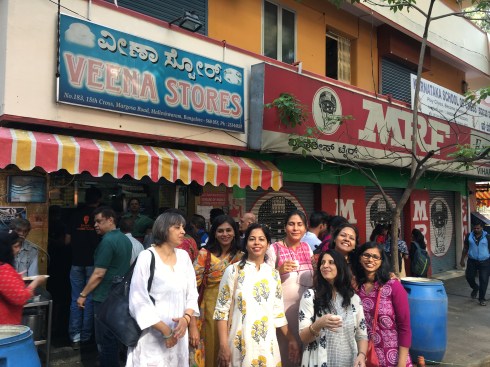
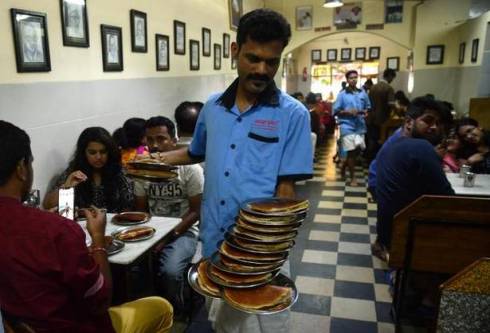
No 1 – Veena Stores at Malleswaram – Light as air Idlis and yummy “Savige”

A small standing joint spread across 150 sft it dates back to 1977 . It all started when  Suryanarayana Hegde moved to Bangalore from Sirsi as a 10-year-old after the death of his parents. After working as a cook for 10 year in a doctors house he started his own restaurant on Sampige Road. That closed due to labour problems. He then started Veena Stores with mainly condiments and a limited menu of coffee, tea, badam milk and Idlis.His son Pradeep a diploma in electrical engineering joined the business in 1987. Pradeep now runs the restaurant with his wife.

Veena Stores serves a limited menu – Fluffy soft Idlis, Vada, Khara Bath, Kesari, Pongal, Lemon Rice, Puliyogare, Coffee all of this served fresh and piping hot. The Savige (Vermicelli)  is the best. The Mint Chutney they serve is a hit. (The restaurant does not serve Sambar). Very reasonable priced all dishes are in the 20 – 30Rs range. Sumptuous breakfast for 2 will be less than Rs 150/-. Good to know Kannada while ordering and please go with a driver as parking is a challenge.

  • Address : 187, 15th Cross, Margosa Road, Malleshwaram, Bangalore
  • Timings : 6.30 AM – 12 Noon , 3.30 PM – 9 PM

Veena Stores at Malleswaram

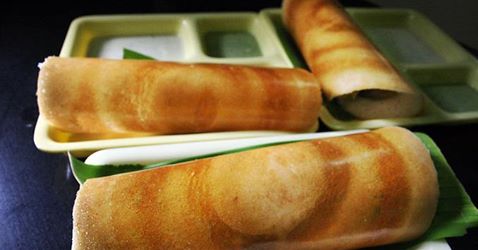
No 2 – CTR (Shiv Sagar) at Malleswaram – Best Place for Dosa

This hotel was started by Y.V. Subramanyam and brothers  in the 1920s. They hailed from a village in Kolar, whose residents are Ashtagrama Iyers of Tamil origin. Subramanyam sold his hotel the mid-1950s. It still has a vintage wall clock and rosewood furniture with Italian marble table tops. It is said the brothers passed on tips about preparations to the new owners along with advice to take care of workers by not overburdening them. It was established as Shree Sagar in 1950 and after changing hands a few more times it was bought by the current owner in 1992 and renamed Central Tiffin Room (CTR)

This is the best place in Bangalore for Dosas. And they come in many varieties Benne Masala Dosa, Butter Masala Dosa and Crispy Masala Dosa. They have seating inGround & 1st floor. It has the ambience of a Coffee House. Apart from the Dosas CTR is also known for its Idly Vada, Poori-Saagu, Kharabath and Kesaribath, Mangalore Bajji and Filter Coffee. It has won awards including the Times Food Guide “Best Benne Masala Dosa in Bangalore” and Burrp.com’s “Best Benne Masala in Bangalore. Very reasonable prices – A sumptuous breakfast for 2 will be about Rs 200/-

  • Address : 7th Cross, Margosa Road, Malleshwaram, Bangalore ( Opp to Malleswaram Grounds)
  • Timings : 7.30 AM – 12.30 , 4 PM – 9 PM

Best Dosa

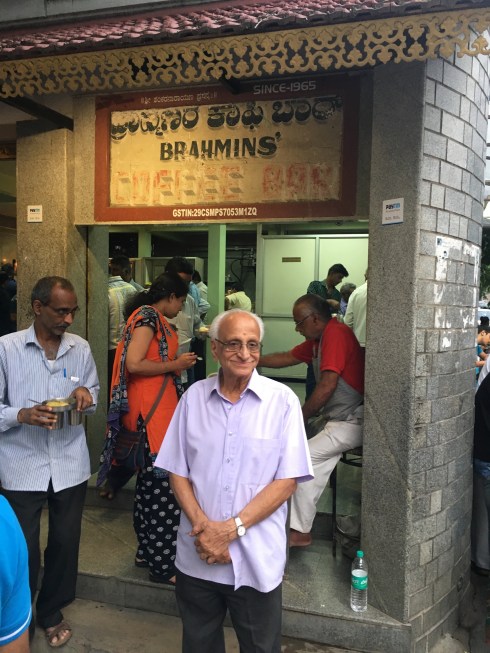
No 3 – Brahmins Coffee Bar commonly known as Brahmins Cafe – Basavangudi  : Consistent quality and awesome Chutney

Brahmin’s was set up by Narasimha Rao, in the 1960s. Jan 27th 1965 to be precise. They initially started by serving traditional Filter Coffee and sourcing snacks from outside. Soon they started making limited variety of high quality S Indian tiffin. They have stuck to this winning formulae over the years. The speciality here is their Chutney. KN Saraswathi (the founder’s wife) who is in her 80s is still believed to supervise the preparation of the restaurant’s chutney every single day. It’s one of the many things that have remained constant at the restaurant. And there is a person serving serving unlimited chutney from buckets. The menu hasn’t changed in over four decades – Idli, Vade, Kara Bath and the sweet Kesri Bath. Each one of these items is truly delicious and incredibly consistent. (The restaurant does not serve Sambar)

  • Address : Ranga Rao Road, Near Shankar Math, Shankarpuram, Near Basavanagudi, Bangalore
  • Timings : 6 AM – 12 Noon , 3 PM – 7 PM

Brahmins Coffee Bar

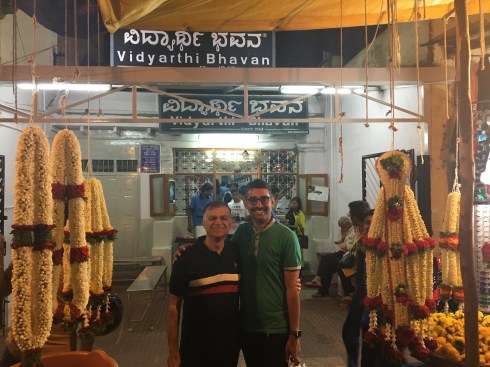
No 4 – Vidyarthi Bhawan – Gandhi Bazar, Basavangudi  : Truly legendary  – a tradition since 1943

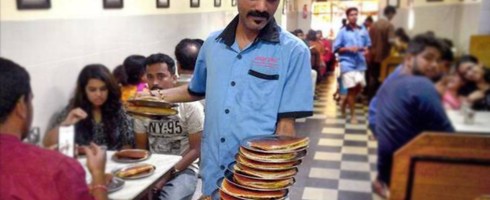
Located on the main road you enter the restaurant walking by a street full of fragrant flowers. “Vidyarthi Bhavan was primarily started for students, as the name suggests, but its popularity increased, and today we have celebrities from all fields who brainstorm over our dosas and coffee,” says Arun Kumar Adiga, who runs Vidyarthi Bhavan. On weekends there are over 3000 walk ins as people wait patiently for the seats to be freed up.

Vidyarthi Bhavan Basavangudi

The wait is worth it – The dosas are rich and soaked in butter. To this day, six dishes on Vidyarthi Bhavan’s menu — benne (butter) masala dose (along with saagu-masale), puri-saagu, idli sambar, uppittu, chow-chow bath and rave vade have celebrity status! And its been consistent over the years.

Garland shops near Vidyarthi Bhavan

  • Address : 32, Gandhi Bazaar, Near Gandhi Bazaar Circle, Basavanagudi, Bangalore
  • Timings : 6.30 AM – 12 Noon , 2.30 PM – 8 PM

No 5 – Mavalli Tiffin Room (MTR) – Needs no introduction 

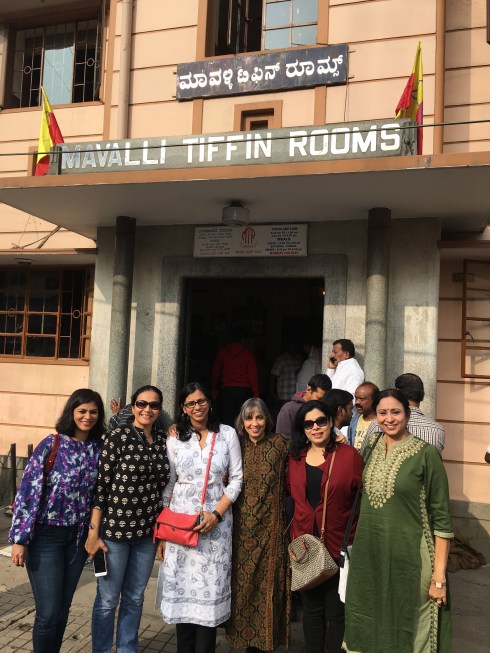
MTR needs no introduction. Lalbagh, Cubbon Park, Vidhan Soudha and MTR are the 4 pillars that define Bangalore. There are many MTR restaurants in town and abroad but I am referring to the iconic 1st branch near Lalbagh. The others are no match to the original one. Started in 1924 the restaurant is spread across 2 floors and has a lot of seating. There are even rooms that can be reserved for families.

The food served at the MTR is all veg, Karnataka Brahmin fare and owes its origin to the Udupi Cuisine of coastal Karnataka. The decor is old age. For many years, the customers entered the restaurant through the kitchen so that they would be able to satisfy themselves about the restaurant’s cleanliness before they ate there.

During  WW 2, MTR found it difficult to make Idlis, since rice was in short supply. They experimented with Semolina instead of rice and thus invented the very popular breakfast item of Rava Idli. The Tiffin here is wonderful and over the weekends its customary for Bangaloreans to go for a walk in Lalbagh and then Q up for breakfast at MTR. However if you are visiting for the 1st time visit them for Lunch. Its an elaborate multiple course meal with unlimited servings and you will struggle to complete it. Important to note that they are Closed on Mondays. Paid 3rd party Car parking is available diagonally opposite.

  • Address : # 14, Lalbagh Road , Bangalore
  • Ph: 080 – 22220022 (Reservations are taken for lunch & dinner only)
  • Timings : 6:30 am – 11:00 am & 12:30 pm – 9:00 pm

Mavalli Tiffin Room Bangalore

The Next 3 : Unique, Healthy Food run by passionate entrepreneurs. 

These are not as well known as the earlier 5. They are a new age of restaurants promoting healthy food. They have a lovely ambience, tasty food and are reasonably priced. After the rich fare with dosas soaked in butter in the above 5 restaurants  – the light and healthy food here will be a refreshing change.

No 6 – JustBE, A Vegan Restaurant that offers a lot more

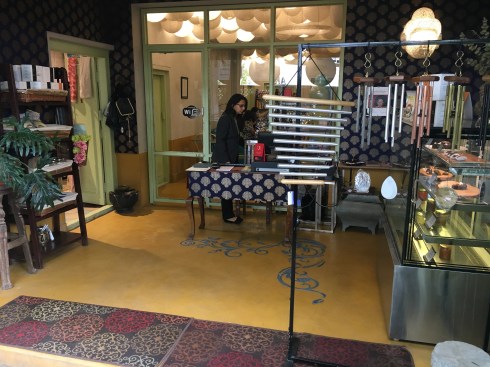
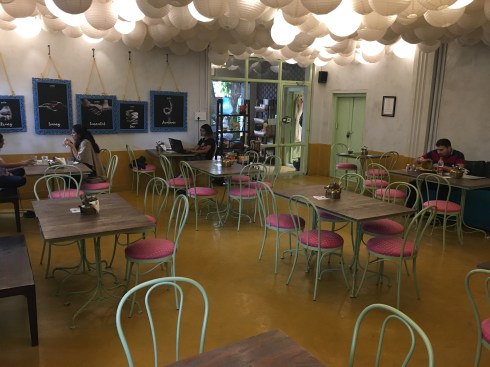
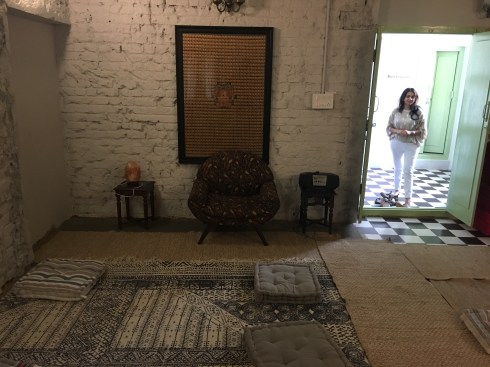
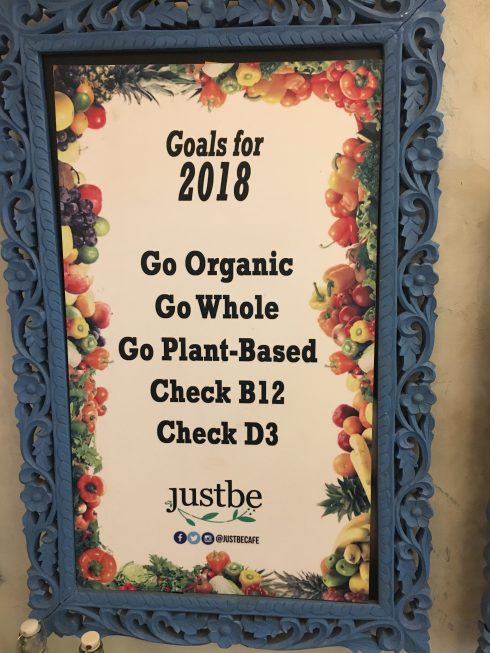
A classy Vegan Restaurant at Sadashivnagar it serves Vegan food without Oil, Dairy products, Refined Products like Maida, Sugar etc. Serves a variety of tasty and healthy  continental dishes from Nachos, Sandwiches, Sizzlers to Pizzas and Asian Bowls. The idea is to appeal to the younger generation. The ambience is calm and serene. the place also has a Meditation Room and the only Svara (Sound Healing) room outside of Auroville. Servings are large and a meal for two costs about Rs 1000.

JustBE, A Vegan Restaurant

Read more about JustBe : https://vak1969.wordpress.com/2018/07/12/justbe-cafe-eat-meditate-satiate-in-a-holistic-zone/ 

  • Address : 383/31, 13th Cross, Sadashiv Nagar, Bangalore
  • Timings : 11 AM – 11 PM

No 7 – Vaathsalya’s Millet Cafe, A Millet Only Restaurant 

Located at JP Nagar this place serves a wide variety of dishes – from Cutlets to Thali and everything cooked here is mad with Millets or Red Rice. Jyoti the owner is passionate about furthering the cause of Millets and after years of seeing the benefit in her family has started this restaurant to espouse the cause. the signature dish is their Thali. The store also sells handicraft , ladies handloom clothes, and organic products. A calm and quiet place on weekdays – it can get busy on weekends.

Vaathsalya's Millet Cafe

No 8 – Prem’s Graama Bhojanam, A Millet Only Restaurant 

This is another Millet only food restaurant that serves a wide variety of dishes that look and taste like regular S Indian dishes made with rice. All of this served in a rustic village ambience. The Dosas, Vadas, Paddu’s are all made of Millets. They also have Rotis of all the main millets served with curry. Thali options are available at lunch. The water that is served tastes like the “Teertham” you get in a temple – mixed with Camphor, Tulsi, Clove & Cardamom. The Matka Kulfi was also very tasty. At the end of the meal they give you a concoction “Kashayam” to improve your digestion. Its a very affordable place. Between four of us we ordered 2 plates of Paddu’s (Kuzhi Paniyaram), 2 Dosas , all the 4 Varieties of Millet Roti’s with Sabji and Kulfi and the bill was only Rs 884/-.

Prem's Graama Bhojanam Bangalore

No 9 – Urban Tamasha – Bright and Positive 

After so many S Indian fares I had to include one North Indian restaurant. In the new Bangalore areas of Indiranagar , Koramangla and Sarjapur you will struggle to find a good North Indian restaurant. All you see is Pubs , Italian, Chinese, Continental , Sandwich cafes, Coffe Bars etc. I have always felt that Tandoor in MG Road was the best bet for North Indian food. Good variety, authentic N Indian, consistent quality and great service. But I recently found a place that had all this with 2 additional advantages – A bright ambience full of positive energy and a wider variety of dishes.

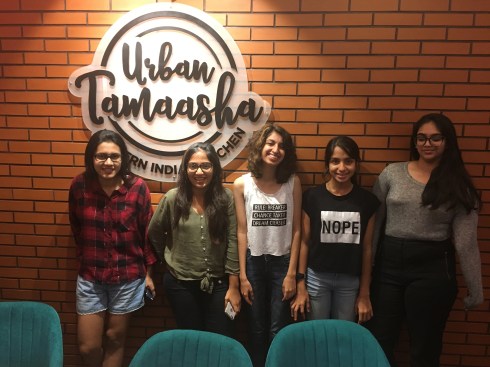
This place is Urban Tamasha a newly opened restaurant at Indranagar.  The North India food and starters were great – they also have Pasta, Noodles and Pizza options – which works out very well when you go with the younger generation. Non veg dishes available. Lunch has a buffet option. No Alcohol is served.

Urban Tamasha Bangalore

  • Address : 2011,1st Floor, HAL 2nd Stage,100 Feet Road, Indiranagar
  • Timing : 12Noon to 1 AM

………..and one more thing

At the end of every presentation the legendary Steve Jobs used to have a slide titled “One more thing” – having worked in Apple I will take that learning from him and add one more restaurant to this list.

Sree Krishna Kafe Koramangla 

This is where I have been going Traditional restaurants of bangafor breakfast once a week for many years. And it would not be fair not to include it. Located in Koramangla next to Anand Sweets its the only restaurant that serves authentic Tamil Nadu style food. Idlis, Upma, Pongal, Dosas for breakfast and evening tiffin and plantain leaf lunch. The Sambar here is distinctively different from the other restaurants listed above. Its like a mess – always crowded with regulars.

Sree Krishna Kafe Koramangla

  • Address : 5th Main, Near Anand Sweets, Koramangala 5th Block, Bangalore
  • Timing : 7:30AM to 10:30AM, 12Noon to 3:15PM, 5:30PM to 10:30PM

PS : For the best thin Crust Pizzas visit Toscano or Little Italy – Both have multiple branches in the city 

________________________________

Please follow my Facebook page for regular updates on A Few Good Things 

https://facebook.com/afewgoodthingsvak1969/


JustBe Cafe – Eat, Meditate & Satiate in a holistic zone

12 Jul

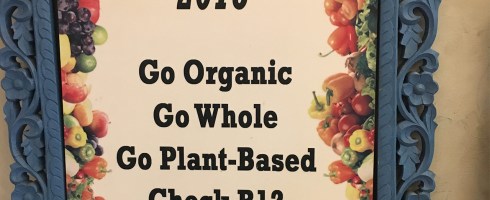
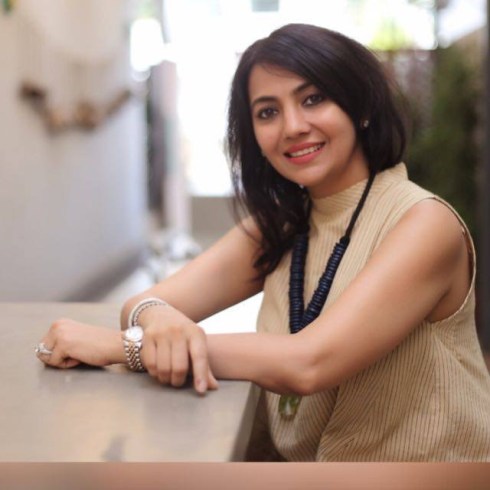
If you are invited for a treat to a place where the food is cooked Oil free, Dairy free, Sugar free, Color free – chances are that 99 of 100 people would make a polite excuse and wriggle out. I guess I was the odd one out when by chance I discovered JustBe. Its not just a restaurant but a lot more – with many unique zones that includes the one and only Sound Healing Therapy room outside of Auroville. Do plan a visit to JustBe at Sadashivnagar, but before that read on about this place and the passion of Nidhi  who conceptualised and developed this place.

JustBe is a classy boutique restaurant – Its unique and it serves amazing fresh food. Tasty, nutritious and aesthetically very appealing.

The Spinach Quesadilla, Crunchy Nachos, Hotpress Batata Sandwich, Asian Curry, Garden Pizza, Pink Lemonade, a variety of smoothies and many more interesting dishes will keep your taste buds captivated. The servings are large – and thats the 1st philosophy at the restaurant – Eat sufficient quantities of one item and don’t mix and match too many dishes in your meal. 

JustBe is not just a unique restaurant it is a holistic Zone of peace and tranquility. A zone of positive energy where you can Eat, Meditate and be Satiated to the full. You can let go of the stress and JustBe in touch with your inner self.

Every Sunday 9 AM a group Vipassana session is conducted for old students. You can use the facility to come and meditate whenever you are in the mood for some Soulitude. 

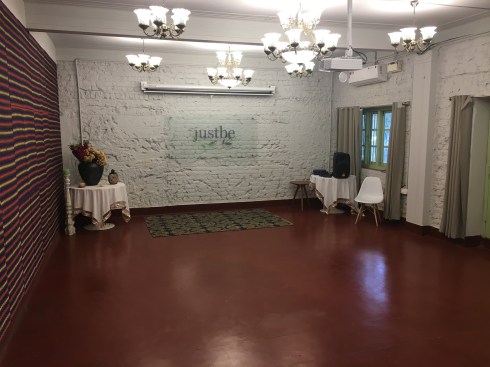
They also have a library and a Yoga Hall where Yoga, Tai Chi, Qui Gong and many other classes are regularly held here.

What I feel in love with was Svaram – the Sound healing room. The only such facility outside of Auriville Pondicherry. Its a unique experience and its just getting started. Here is a brief Video about Svaram and the therapy room. 

JustBe also hosts a Sunday farmers market that sells a wide variety of fresh organic produce and a shop that sells handcrafted clothes, Jewellery and more.

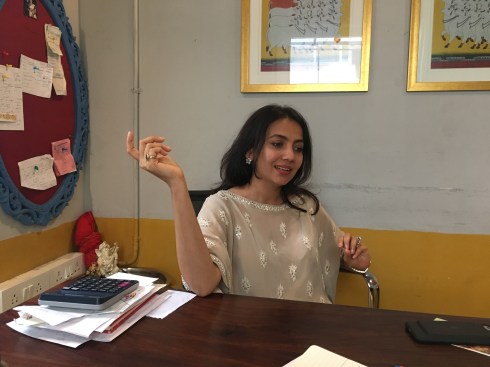
It requires a passionate, creative person with an eye for detail to run a place like this – And that person is Nidhi. A housewife tending to her family and teenaged children her life transformed after attending a 21 day retreat at Swaswara (An Eco Retreat near Goa) organised by Sharan in 2016. (This organisation was started by Dr Nandita Shah in 2005 to prevent and reverse lifestyle diseases by identifying the cause of the disease and using food as a medicine – https://sharan-india.org/about-us/)

While attending the program Nidhi was ailing from high Cholesterol, Skin Allergy and Migraines. She had heard from friends how this 21 day program not only transformed you but also taught you the techniques to lead a healthy life.

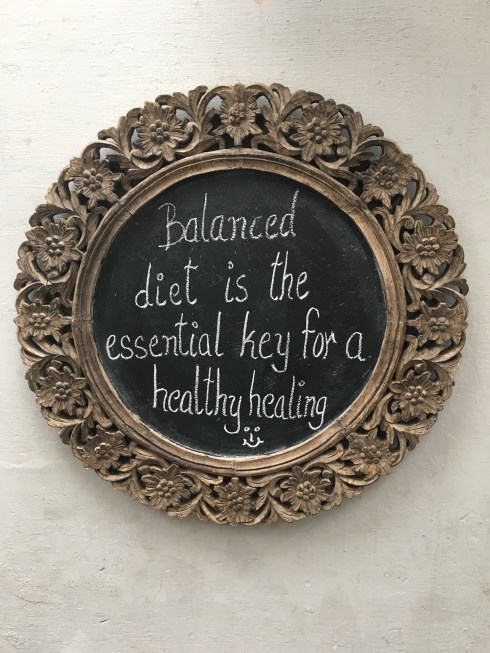
JustBe was born thanks to the learnings from this 21 day program. Nidhi’s eyes light up as she talks about this program and how it has changed her life. The only medicine we were served during this program was FOOD – she says. Food is the core element of our being and the right food, cooked correctly can solve all your health problems. The body needs proteins , minerals, calcium etc – the body gets stressed when it has to hunt for this amongst fried, unhealthy food. Yes they are tasty and addictive – but not healthy.

During the 21 day session they were served a wide variety of global cuisines – but the one common theme across all of them was Vegan Food cooked with no oil, no diary products, no preservatives. Add to this no refined food was used – so No maida and sugar. Inspite of this the food was tasty and delicious. And they were taught how to cook with these principles. 

Over 21 days Nidhi was convinced that this was the solution for a healthy body and mind. Her Jain traditions further helped her to imbibe the concepts deep within her  and she practised it with heart and soul at home. The transformation at home was also magical – and health bloomed at home.
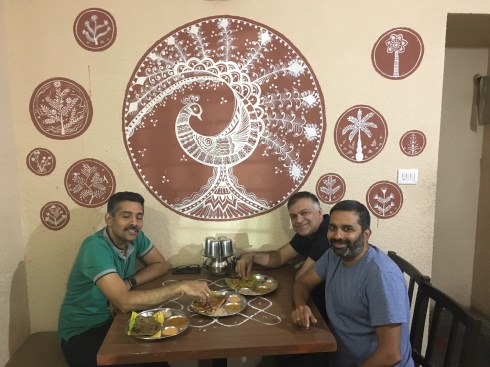
This then took her to the next step of wanting to share the benefits of this learning with a wider audience through JustBe. And she practises what she has learnt to the minutest detail. No food is cooked in Aluminium dishes, No microwave is used and no Bone China Crockery is used in her kitchen. She was lucky in finding the right cook – a trained Chef Prem Darshan who after years of serving in high end restaurants and hotels in India and abroad joined her and is now running the kitchen with the same zeal and enthusiasm. They jointly developed the menu keeping in the mind the younger generation and hence most of dishes were continental.

I tried having a debate with Nidhi on the positives of milk and honey trying to understand why they were eliminated. I have grown up knowing that a glass of hot milk in the morning and a spoon of pure honey is as good as nectar. Nidhi demolished this notion by explaining that nature has given us enough food. The human baby needs milk for a few years just like other mammals and then graduates to other food. Any food taken from animals is developing cruelty towards animals and the ethos associated with that food is negative.

I failed in the debate  – I was up against a woman who has many a certificate in NLP, TA , Counselling etc – and was no match for her strong conviction and rationale argument.

By now we had spent over an hour chatting and it was time for my evening cup of tea – but felt a little conscious asking for masala tea after this educative session. Sensing my predicament Nidhi got me a Smoothie – made of Spinach, Mint, Banana and Pineapple. It tasted divine. Thats the beauty at JustBe – I would never have drunk a smoothie of these ingredients at home.

And as I drove back I kept wondering – can I really make a shift to a diet that is devoid of Milk, Sugar and Oil. That would mean no Coffee, Tea, Chocolates, Sweets…. all of which I love. I am not sure. Maybe I should ask my wife to attend the 21 day program at Sharan.

This is a unique restaurant in Bangalore and probably India. Its a must visit so the next time you happen to be in Sadashivnagar do visit JustBe

JustBe

  • 383/31, 13th Cross, Sadashiv Nagar, Bangalore
  • Open from 11 AM – 10 PM
  • Meal for 2 Approximately Rs 1000/-
  • Valet parking available
  • https://www.zomato.com/justbecafe

______________________________________

Please follow my Facebook page for regular updates on A Few Good Things 

https://facebook.com/afewgoodthingsvak1969/