Archive | Spirituality RSS feed for this section

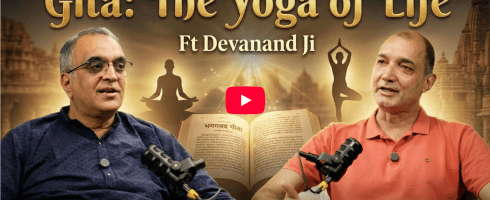
Gita : The Yoga of Life

1 Dec

In this episode of Back to Basics, Devanand Ji explains the synergy between Yoga and Gita. A certified Yoga Teacher from Bihar School of Yoga, Devanand Ji exemplifies a life guided by the Gita’s teachings. He touches on important practical points on how to apply the profound teachings in your day to day life. Please watch and benefit from his insightful perspectives.

If you want to start your journey with the Gita – get a copy of Oh Man! Read the Gita – A simple easy to read book by Sri Krishna.

Launch of Back To Basics – Podcast

25 Nov

This Blog started in 2010 and has had a great history with many million views and a loyal follower base. Over time viewers are reading less and seem to prefer watching Videos.

Along with the Blog I am happy to launch a Podcast Series called – Back To Basics.

Here we look at issues in our daily life with a sharp lens. We interact with Passionate, Committed, Truthful individuals from diverse backgrounds. We learn from them the secret of navigating life’s volatility – and how they have knowingly or un knowingly implemented the teachings of the Gita

In the 1st episode, we discuss with Dr. Sanjay Kaul, a leading periodontist, the fundamentals of oral health, emphasising the significance of gum care. The 30-minute conversation touches on the evolution of eating habits, traditional remedies, and interesting facts.

We have other interesting topics planned for the next set of Podcasts. These topics include Gita & Yoga, Old Age – Blessing or Curse, Building Wealth over the next 25 Years .. etc. The plan is to have one episode every fortnight.

Kindly Subscribe to the channel and shared your feedback on the 1st Podcast

Gita Day – Dec 1

19 Nov

Gita Day is around the corner.

Gita Day (Gita Jayanti) is on Monday, December 1, 2025. This day marks the occasion when Lord Krishna revealed the profound knowledge of the Bhagavad Gita to Arjuna. This happened on the battlefield. This auspicious day is celebrated on the 11th day of the waxing moon in the Hindu month of Margashirsha. It is also known as Mokshada Ekadashi.

This is an opportunity to get started with the Gita. Oh Man ! Read the Gita is a simplified version of the Gita to help people get started.

A Discussion and Q&A on the Book is planned for 22nd Dec. The focus is on the application of the teachings of the Gita in daily life. This applies across all age groups.

Please join the discussion. Questions from the audience are encouraged.

22nd Nov 4 to 5 pm IST

Google meet link
https://meet.google.com/yuc-atvy-czj

Oh Man! Read the Gita – Book Launch

13 Oct

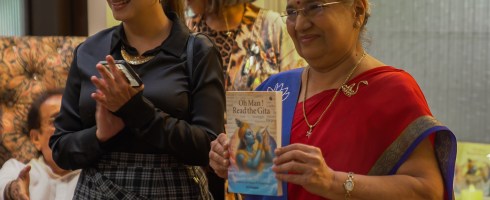
Launched on Janmashtami, Oh Man! Read the Gita has been doing well.

The Website https://ohmanreadthegita.com was launched

Talk to Vidya – an Upcoming Podcast reviewed the book – https://youtu.be/zbonkwTu28M?si=to0P3IeY7W6SrcIY

Dr Hansaji Yogendra unveiled Oh Man! Read the Gita on 16th Sep. Hansaji is a globally acclaimed Spiritual Yoga Guru and director of the renowned Yoga Institute at Santa Cruz, Mumbai. It is the oldest organised yoga Center in the world.

Hansaji loved the title and simplicity of the book Oh Man! Read The Gita. She praised the compilers. They performed a great service. They brought the message of the Gita in a simple to read manner. In her 30-minute talk, she highlighted the core aspects of the Gita. She enthralled the audience with her fluency, clarity, and powerful oratory. Her key message was that the Gita is a guide for daily life. It offers powerful teachings for everyone.

Readers are loving the book and have shared positive feedback on Amazon. Here are some sample feedback

Loved the book.. to explain the key teachings of Bhagavad Gita in such simple style/language, is not easy. The author has managed to do that. Highly recommended!

This book is not just a summary- it is an illuminating guide that captures the essence of the original text.

Every chapter is distilled to its key message allowing the readers to grasp profound knowledge without being overwhelmed by detail. Clear and accessible to modern readers.

Great book on the Gita, provides an understanding of the text in a very simple and profound manner. The book covers all 18 chapters of the Gita and provides further essays that discuss various important topics. A very comprehensive text on all chapters and especially important today as the Gita provides us with key learning’s we can incorporate in our day to day life. Highly recommended to anyone who wants to learn about the Gita.

Nicely compiled in an easier to read format and in simple language. This would be an excellent gift that parents can give to their children. They will appreciate it in years to come

Get your copy. It’s also a great idea to gift this book during Diwali to near and dear ones. Enough of Kaju Katli & Dry Fruits. Try something different. Book is available in Amazon worldwide – Physical & eBook.

Explore Key Sites of Ramkrishna & Vivekananda

9 Oct

Born as Gadadhar Chattopadhyay in the quiet village of Kamarpukur, he would be revered as Thakur Ramkrishna or Ramkrishna Paramahamsa. His simple words and humorous stories conveyed a depth that resonated even with the most skeptical minds.

This Blog will help you plan a trip. It covers the important places linked to Ramkrishna Paramahamsa, Sarada Ma, and Swami Vivekananda. With Kolkata as your base you can cover these places in a few days. Most people visit Dakshineswar, Belur Math & Kalighat – but there is lots more.

Kamarpukur & Joyrambati Birth Place

Kolkata – Kamarpukur is 100 Km. Drive time is around 3 – 4 hours. Joyrambati is a short 7 Km drive from Kamarpukur.

Kamarpukur is the birth place of Ramkrishna and Joyrambati of Sarada Ma. Both these centres are now managed by the Ramkrishna Math. They have beautifully preserved the birth place, ancestral home, family deities and associated spaces. The food they serve is a feast. But it is first come first served basis – limited coupons. Accommodation in the Ashram is difficult to get and gets sold out months in advance. The villages have basic hotels. I would recommend you plan to reach by 4 PM. Attend the evening Aarti in one of the places. The next day morning visit the other location and collect your Prasad coupon. Have a good Darshan, and leave after the Prasad lunch.

Dakshineswar

This is where Ramkrishna spent most of his life as a priest. It is located in North Kolkata, 12 Km from Central Kolkata. Traveling by car during the day takes 60 – 90 minutes. I have always visited the temple at 6 AM in the morning when it opens. Crowds are less at that time. The drive time then is less than 30 minutes. Again there are no good hotels in the temple vicinity. Cell phones and shoes are not allowed inside the temple complex. Leave them in the car or at a kiosk near the temple entrance. Don’t miss the small bedroom where Ramkrishna spent most of his time. It is a highly energized space. It’s now not accessible to the public, but you can see from outside through glass windows. Visit the temple and the 12 Jyotirlingas. Walk along the bank of the Hooghly river. Soak in the energy of this divine place. Budget 60 – 90 minutes.

Shyampukur Bati (8 Km from Central Kolkata)

This is the house where Ramkrishna stayed for 70 days in 1885 before moving to Cossipore. He was ailing and Ma Sarada with all his disciples stayed in this house. This house was acquired and renovated by the Ramkrishna Math in 2010. The house is located in the heart of N Kolkata midst narrow bye lanes. You will need to ask around to find the place.

Kashipur Udyanbati (Cossipore) ( 3.5 Km from Shyampukur Bati – roughly midway between Daksineshwar and Shyampukur Bati)

Sri Ramakrishna spent the last days of his mortal life here. His disciples rented a large house with a garden a short distance away from Shyampukur Bati. Between Dec 11 – 1885 and Aug 16 – 1886 he stayed here. This place was quiet, had a beautiful garden and was more spacious.

It is here that on January 1 – 1886 (Kalpataru day) He revealed Himself to be an Avatara. This is a large well maintained, serene garden house. Unlike Belur Math and Dakshineswar which see large crowds this place is relatively empty on normal days.

Kalighat (S Kolkata)

Ramakrishna visited the Kalighat temple – an important Shakti Peeth. He had a spiritual experience where he saw the Mother Goddess Kali as a virgin girl playing by the pond. Later at the temple he saw the Goddess dressed in the same dress. he also encountered a priest who kicked him – but out of compassion chose to protect him and asked his nephew also not to narrate the incident.

Reliance foundation has undertaken a significant renovation of the temple in 2024. It is crowded and there are many middlemen who will try to make a quick buck. Best time to visit towards the end of the day before closing.

Belur Math

Located on the other side of the Ganges exactly opposite to Dakshineswar, this is the HQ of the Ramkrishna Mission. It also houses the Samadhi Mandir of Ramkrishna, Sarada Ma, Swami Vivekananda and others. A beautiful museum in the complex highlights the life of Ramkrishna and is a must visit. A well maintained, well laid out complex you can easily spend a few hours at Belur Math. For the Bhog Prasad, first collect a lunch coupon. Do this at the designated office before lunch. Lunch typically starts around 11:30 AM. The coupon itself is free. Visitors are welcome to donate any amount they wish at the office when they collect it. The meal is a delicious offering served to many devotees in a community setting

To finish your circuit there are 2 more places that you must visit and these are linked with Swami Vivekananda.

Birthplace of Swami Vivekananda

105 Vivekananda Road / 3 Gourmohan Mukherjee Street in Kolkata is the historic ancestral home of Swami Vivekananda. It is now a museum and cultural center. This center is operated by the Ramakrishna Mission. This site served as the birthplace of Swami Vivekananda (born Narendranath Datta) on January 12, 1863, and his life and teachings are celebrated and preserved within this location

1st Monastery of the Ramkrishna order – Baranagar

After the Samadhi of Ramakrishna in 1886, his young disciples were led by Swami Vivekananda. They assembled for the first time in a dilapidated house in Baranagar, North Kolkata. Their purpose was to form their monastic brotherhood. This was the first Ramakrishna Math. The disciples had cared for their ailing Master at a garden house in Cossipore during his final months. They came together to lead a life of renunciation. They did this as a unified monastic order. It was here that they formally took their monastic vows in January 1887.

If time permits, visit Balaram Mandir. An ashram named ‘Balaram Mandir’ began in 1922. It was established in the house of Sri Balaram Basu. He was a chief disciple of Sri Ramakrishna. The place has been sanctified by numerous visits of Sri Ramakrishna, his disciples, and Holy Mother Sri Sarada Devi. It was here that Swami Vivekananda inaugurated the Ramakrishna Mission Association on May 1, 1897.

You can also visit Kathamrita Bhawan. This is the house of Mahendra Nath Gupta, also known as M, who chronicled the Gospel of Sri Ramkrishna. Additionally, explore Baghbazar Maayer Badi. This center is also known as Mother’s House. It served as the residence of the Holy Mother Sri Sarada Devi whenever she visited Kolkata.

Travel TIP

Try to travel during week days. Summers in this part of the country can be hot and humid – Dec to Feb is a good time. Avoid Birth days, Kalpataru day, Samadhi days. (Jan 1 , Jan 12 , Feb 18, July 4, July 21, Aug 16, Dec 22)

Sri Suktam

21 Sep

A Powerful Hymn to Chant and Invoke the Grace of Lakshmi

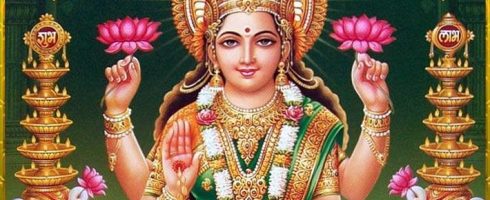
In the context of the Sri Suktam, Agni is invoked as the intermediary. He is called the “Jaataveda” (knower of all births). Agni is the fire god through whom offerings are made to the divine. These offerings specifically aim to bring Lakshmi, the goddess of wealth and prosperity, into the home. Although the ultimate goal of the Sri Suktam is to invoke Lakshmi, several verses, particularly the first, are prayers directed to Agni to ensure the ritualistic fire-sacrifice is effective and reaches the gods, thereby facilitating the manifestation of prosperity

Links below offer details on Sri Suktam and its significance. The 1st link (PDF) scroll down towards the end for the details on Sri Suktam. the 3rd link is the audio link for chanting.

Important point to note while chanting – In two shlokas there is mention of Alakshmi. Make sure that you pronounce this correctly because the intent is to remove Alakshmi from your life.

Alakshmi is the Hindu goddess of misfortune, poverty, and strife, and the elder sister of Goddess Lakshmi. Also known as Jyeshtha (“the elder”), she symbolizes all that is the opposite of Lakshmi. She resides where there is filth, crime, and poverty. Alakshmi emerged during the Samudra Manthan before Lakshmi and is depicted as naked, unkempt, and riding a donkey.

Oh Man! Read the Gita

12 Aug

In Chapter 18 Sri Krishna states that the Wisdom of the Gita is reserved only for those who are destined. If you are reading this Blog maybe your time has come.

Eons ago, Krishna guided Arjuna through his greatest crisis. Today, his wisdom can guide you and those you care about. This version of the Gita is simple and relatable. It is accessible to everyone, from students to professionals, to anyone seeking happiness and purpose. When you get a copy, you’re not just helping yourself, you’re also supporting a philanthropic cause. Kindle & Paperback version are available on Amazon India, In other countries the Kindle Version is available.

Why this book

A dipstick with college batchmates, friends, and relatives claimed that almost no one had read the Holy Gita. This was worrying. The Gita is an ancient treasure, filled with wisdom—an excellent guide to peace and happiness. This compilation is an effort to get the message of the Gita to a larger audience.

There are so many books on the Gita what is unique about Oh! Man Read the Gita 

In the 70s, computers were complex devices with proprietary software. Things changed when Apple and Microsoft launched the PC and later the smartphone. Products that were easy to use made computing accessible to every home. There are many commentaries on the Gita. They are either voluminous texts or brief conceptual writings. The composition seems intimidating to a layman. Most publications are targeted to a sectorial audience. This book is an effort to fill that gap. It has taken the best explanation from multiple sources, simplified it, and stitched them together like a string of pearls. We hope this book will help in spreading the message.

Why is the Authors name Sri Krishna

The Gita is from Sri Krishna – He is the author. All content, copyright, and trademark belongs to Sri Krishna and Sage Veda Vyasa. We are compilers. We have taken this knowledge from the best of sources. We tried to stitch it up together in an easy-to-read format. The content from this book can be used by one and all freely to spread this knowledge far and wide. The profits from the sale of this book will be used for a philanthropic cause.

This book is a joint project between Suresh G. Bharwani the founder of Jetking and me. We seek your support to read the book and spread the message.

Om Tat Sat

Fascinating Number Nine 

24 Jun

There are 18 chapters (1 + 8 = 9) in the entire Mahabharata as well as in the Bhagavad Gita. The battle of Kurukshetra lasted 18 days. There are 18 Puranas and 108 Upanishads. What makes number 9 so fascinating ?

The universe begins with zero and ends with 9. After 9, the numbers just repeat themselves in two digits. So, 9 is seen as a complete number. This is evident. Any number multiplied with 9 and reduced to a single digit always becomes 9. (For example, 9 times 3 is 27. If you add 2+7, it will give you 9. Try this with any number).

In Pythagorean numerology the number 9 symbolises the end of one cycle and the beginning of another.

The number 108 (1+8 = 9; 12 times 9 is 108) is considered very holy in Hinduism and Buddhism. It is also regarded as sacred across a range of religions and cultures. 108 times is used in many spiritual chants in different religions to mark the completion of prayer.

The human body has 9 openings. These include two eyes, two ears, two nostrils, the mouth, and the openings for excretion and procreation. Even the shape of the womb is in the form of 9. Perhaps it is no surprise that it takes 9 months for a human being to give birth to a child.

In Vedic culture, the number 9 finds a place of spiritual significance. There are 9 planets in Vedic astrology that are said to govern an individual’s life based on his/her actions (karma). These 9 planets are: Mars, Venus, Jupiter, Mercury, Saturn, Sun, Moon, Rahu (Northern lunar node), Ketu (Southern lunar node). 

There are 9 gems or Navaratnas associated with these planets. Pearl is for Moon. Ruby is for Sun. Blue Sapphire is for Saturn. Yellow Sapphire is for Jupiter. Red coral is for Mars. Emerald is for Mercury. Diamond is for Venus. Gomed or Hessonite is for Rahu. Cat’s eye or Chrysoberyl is for Ketu.

We celebrate 9 days of Navaratri to mark the victory of Goddess Shakti over evil. 

There are 9 emotions (bhavas or rasas) in Indian classical dance known as the ‘Navarasas’: Shringara (love and beauty), Hasya (laughter), Karuna (compassion), Raudra (anger), Veera (courage), Bhayanaka (fear), Bibhatsya (disgust), Adbutha (surprise), and Shantha (tranquility)

There are 9 forms of devotion to God or our Supreme Self (Paramatma). These include Shravan (hearing), Kirtan (praying), and Smaran (remembering). Others are Padasevan (resorting to feet), Archan (worship), and Namaskar (bowing). Additional forms are Dasya (service), Sakhyam (friendship), and Atma-Nivedana (surrender of the self).

The nine Muses in Greek mythology have distinct domains. Calliope is the Muse of epic poetry. Clio represents history, and Erato is for erotic poetry. Euterpe is known for lyric poetry. Melpomene is associated with tragedy. Polyhymnia is linked to song, while Terpsichore inspires dance. Thalia is the muse of comedy, and Urania governs astronomy.

El Castillo, the Mayan step-pyramid in Chichen Itza, consists of nine steps. It is said that this was done to represent the nine levels of Xibalba.

In Christianity the number 9 also represents the fruits of God’s Holy Spirit. These fruits are faithfulness, gentleness, goodness, joy, kindness, long suffering, love, peace and self-control (Galatians 5:22 – 23).

The famous Ayyappa Temple in Sabarimala, Kerala has 18 steps as the last finale to the shrine ( 1 + 8 = 9)

  • Speed of light = 186282 miles/sec = 1 + 8 + 6 + 2 + 8 + 2 = 27 = 2 + 7 = 9
  • Diameter of the Sun = 864000 miles = 8 + 6 + 4 + 0 + 0 + 0= 18 = 1 + 8 = 9
  • Diameter of the Moon = 2160 miles = 2 + 1 + 6 + 0 = 9
  • Diameter of the Earth = 7920 miles = 7 + 9 + 2 + 0 = 18 = 1 + 8 = 9
  • Second in a hour = 3600 = 3 + 6 =9
  • Second in a day = 86400 = 8 + 6 + 4 =18 = 1 + 8 =9
  • Second in a month = 2592000 = 2 + 5 + 9 + 2 = 18 = 1 + 8 = 9
  • Second in a year = 31104000 = 3 + 1 + 1 + 0 + 4 = 9
  • Even the universe vibrates at a frequency of 432 Hz = 4 + 3 + 2 = 9.
  • There are 27 Nakshatras or stars 2 + 7 = 9

The importance of the number 108 can be seen repetitively in astronomy and astrology : 1 + 8 = 9

  • In Vedic astrology there are 12 solar houses and 9 lunar houses, 9 x 12 = 108
  • The diameter of the sun is about 108 times that of the diameter of Earth.
  • The average distance between the Earth and the Sun is 108 times the sun’s diameter.
  • The average distance from the Earth to the Moon is 238,800 miles, about 108 times the moons diameter. This makes the moon appear the same size as the sun during eclipses.

Nine is so popular that there are many Idioms also based on this number

  • “to go the whole nine yards-“
  • “A cat-o’-nine-tails suggests perfect punishment and atonement.” 
  • “A cat has nine lives”
  • “to be on cloud nine”
  • “A stitch in time saves nine”

In numerology Mars is the ruling deity of number 9. Attributes associated with this number include being warlike, egoistic, short tempered, and violent. The number is hard outside but soft inside. It is also dominating, aggressive, strong, and rough. Additionally, it is associated with fighting, alienating, and strong leadership.

Its partner Number 8 is equally fascinating.

Lord Krishna’s birth is celebrated on the eighth day (Ashtami) of the dark fortnight. This period is known as (Krishna Paksha) in Shravana Masa. His consort Radha’s birth is celebrated in Barsana and the entire Braj region also on an Ashtami. Radha Ashtami comes fifteen days after Krishna Janmashtami.

Ashtami is the highest point of celebration during the Durga Puja Festival. It is believed that on this day Goddess Durga killed Mahishasura. 

The number eight is a Fibonacci number. The sixth number in the Fibonacci sequence is eight. It is the only number in this sequence, other than the number one, that is a perfect cube (2³).The amount of clouds in the sky is calculated in oktas, ranging from zero oktas to eight oktas. On a day with zero oktas, the sky is completely clear of clouds. A day with six oktas would be mostly cloudy.

Saturn is the reigning deity of number 8

Number 8 is the symbol of Infinity. It has perfect symmetry. It is both spiritual and materialistic. It is a number that comes blessed with positive energy, the power of transitions, and the possibility of infinite abundance.

Only 3 numbers – 0, 3 & 8 have lines of symmetry.

  • 0 has 2 lines of symmetry 1 horizontal and 1 vertical.
  • 3 has one horizontal line of symmetry if we draw the top and bottom both equal size.
  • 8 has two symmetry lines, vertical and horizontal.

Overcoming the fear of Death

24 Jun

The Evolved Soul

One of the most important teaching from the Gita is to overcome the fear of death. While death is inevitable, rare is the person who is ready to go. Insecurity and Fear are the two diseases for which there is no medical cure. 

In Chapter 2, the Lord starts his teachings. He tries to explain that the soul is immortal. 

Death from a worldly point of view – Death is natural to all beings. There is no use in sorrowing for this unavoidable occurrence. Life comes from the Unknown. It remains for a short time in the field of the known. Then it goes back to the Unknown again. 

We all know that it is impossible to take your wealth, youth, relationships with you. All we can carry is our Positive Karma. Those who have lived a dharmic life and accumulated good karma will definitely get upgraded in their next life. They have done their duty without attachment to the results. This reality has to sink in. Imbibing the teachings of the Gita helps us to overcome our limitations. 

Why we fear Death? 

  • Fear of the unknown 
  • Fear of the punishments we get for our wrong deeds 
  • Fear of losing near and dear ones – How will they manage without me?
  • Unfinished business – pending list of desires

Death comes suddenly, it doesn’t inform you. However well organised you are, it will take you by surprise. One can only focus on the causes that make us afraid of death. These are beautifully enumerated in the Gita. 

  • I am not the body 
  • I am a spark of the divine which is immortal 
  • The Sukshma Sharira carries with it to the next life a well-documented karmic balance 

An enlightened soul doesn’t worry about death. He has worked his whole life to understand “Who am I”. He is ready – the name of the Lord is always on his lips. 

Shlokas 15 – 18 from the Ishavasya Upanishad explain the above points well. These verses are chanted when a person is dying and during the funeral rites. 

Hiranmayeena patrena satyasyaapihitam mukham

Tattwam pushann apaavrinu satya dharmaya drishtaye

The Sun God is considered the best visible manifestation of the Absolute – the son of Prajapati. According to astrology, the Sun is conjoined with the Atman, and the Moon with the Mind. The period of the sun moving towards the north, the Uttarayan is considered auspicious. Many believe that even a sinner dying during this period attains to heavenly regions. 

O! Sun, we have to realise the Truth hidden in you. With our eyes, we cannot have the true vision of you. All we see is only a brilliant light. We are unable to see the Reality hidden within this great light. Remove this golden disc so that we can see the truth hidden behind. May I see it in all glory.  

pushann ekarshe yama surya prajapatya vyuha rashmin samuha tejah

yat te rupam kalyanatamam tatt te pashyami yo saav asau purushah so ham asmi

Gather your rays, let me behold you because the brilliance is too much for my physical eye. Then show me your true radiant form. 

Vayur anilam amritham athedam bhasmantam shariram

Aum krito smara kritam smara krito smara kritam smara 

Now comes the prayer to the mind. O mind, recollect all the karmas you have done in this life-time. Remember each one. Reflect on how you have lived this life. Only the fruits of your karmas will accompany you. Nothing else of this manifested world will follow you. May the life enter into immortal breath. The mind is reminded that his life, the soul is entering into the Immortal Breath. 

Bhasmantam shariram – The person is reminded again and again that his body is becoming ashes. You are not the body. But you are going to the other sphere mingling with the Vital Breath.

And then a message to the intelligence – Remember what we are telling you, Go with this understanding. Remember that your body is becoming ashes and you are free.

Go – Merge with the immortal breath. 

The End

Making the world a better place on Yoga Day

20 Jun

International Yoga Day, celebrated annually on June 21st, aligns with the summer solstice, symbolizing harmony and balance. 

Large gatherings will celebrate Yoga Day from New Delhi to Timbuktu. There will be Yoga competitions, and many will take pride in doing complex Asana’s and 108 Surya Namaskars. Asana is not a competition, it’s not about twisting your body and experiencing pain. The term ” sthira sukham asana” means a posture in which you can sit for long in “sukha” without fidgeting , without pain, comfortably.

First let’s bow down to the great Sage Patanjali who gave us the science of Yoga. His shrine in Chidambaram may be remembered by a few and will probably not see any grand celebration or reverence. 

The Yogasutras explain 8 well-documented steps to progress on the path to Kaivalya or Nirvikalpa Samadhi. This is a state where you are one with the Eternal Truth or Brahman. Yoga is a science. It helps you to establish “Chitta Vritti Nirodha”. This means to control or quieten the fluctuations/waves of the mind.

The world appears to be on the brink of a 3rd world war and chaos. This is a perfect opportunity to revisit the essence of Yoga. The great saint Patanjali explains this in the Yoga Sutras. It’s a refresher on the rules of being a good human being. It guides us in embarking on the journey to happiness and peace. Let’s reflect on the first two steps – The Yamas & Niyamas.  

These are the Rules & Observances that help you change your lifestyle, attitude and belief system. This is the starting point for everlasting peace and happiness that is elusive in the world. 

The Yamas and Niyamas are not just a set of rules. They are a framework for cultivating ethical and mindful living. This applies both on and off the yoga mat. They are the first two limbs of the eightfold path of yoga. These limbs are essential for personal and spiritual growth. 

Yamas (Restraints)

  • Ahimsa (Non-violence): Extending compassion and kindness to all beings, including oneself. 
  • Satya (Truthfulness): Being honest and truthful in thought, word, and deed. 
  • Asteya (Non-stealing): Avoiding taking what is not freely given, both physically and mentally. 
  • Brahmacharya (Continence/Moderation): Practicing moderation and self-control, particularly in regards to energy and desires. 
  • Aparigraha (Non-possessiveness/Non-greed): Releasing attachment to material possessions and desires. 

Niyamas (Observances)

  • Saucha (Purity/Cleanliness): Maintaining physical and mental cleanliness, promoting a healthy and balanced state. 
  • Santosha (Contentment): Finding satisfaction and happiness in one’s current circumstances. 
  • Tapas (Self-discipline/Austerity): Cultivating inner strength and resilience through self-discipline and effort. 
  • Swadhyaya (Self-study): Engaging in self-reflection and study of spiritual texts. 
  • Ishvarapranidhana (Surrender to a Higher Power): Cultivating faith and surrendering to a higher power or a larger purpose. 

Do your Duty perfectly – the world will be a better

In the Gita Lord Krishna gives a simple recipe to make the world an ideal place. If everyone does his job sincerely and truthfully without greed and expectations the world will be a better place. 

This concept was explained beautifully by my 1st Yoga teacher. Any job you take up, do it to perfection. It could be as simple as chopping vegetables or folding clothes. The act of concentrating on doing even a small job perfectly is meditation. 

Like Yama’s and Niyamas there are rules in society. If everyone follows the road rules there will be no accidents. If every politician and public worker follows his oath of office, we will live in an ideal corrupt free society. If every teacher is diligent and sincere the students will be role model citizens.  

We can all make a difference on Yoga Day. Let’s try and follow at least one of the Yama & Niyamas. Be Truthful. This one small act done by millions can make a great positive impact in the world. 

For more detailed information on this topic visit the Blog below.