Archive | Travel RSS feed for this section

Mystical Chidambaram

2 Jan

Mystical Chidambaram

Only for the chosen few

From Kedarnath to Rameshwaram crowds in Indian temples are large.  At Tirupathi at times you have to wait 24+ hrs to get a glimpse of divinity. Chidambaram is one of the few temples with spiritual and religious connections from time immemorial. Yet, the abode of Nataraja is always inviting. To the few chosen few. This Blog will highlight some unique aspects of the Chidambaram temple and help you plan your visit.  

Five temples were built in S India. They symbolize the 5 fundamental elements (Pancha Bhootha) Space, Air, Fire, Water & Earth. They stand for not just the physical world but the energetic qualities in all life. Visiting these temples is said to influence and purify the element it signifies. These temples are dedicated to Lord Shiva. 

  • Space – Chidambaram
  • Air – Sri Kalahasti (Near Tirupathi) 
  • Fire – Arunachaleshwarar (Thiruvanamalai) 
  • Water – Jambukeshawarar (Tiruchi)
  • Earth – Ekambareshwarar (Kancheepuram) 

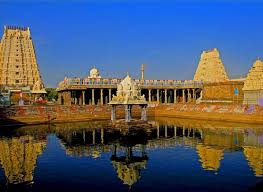
About Chidambaram Thillai Nataraja temple

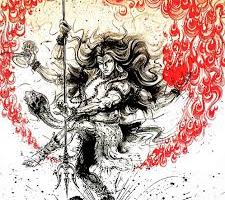
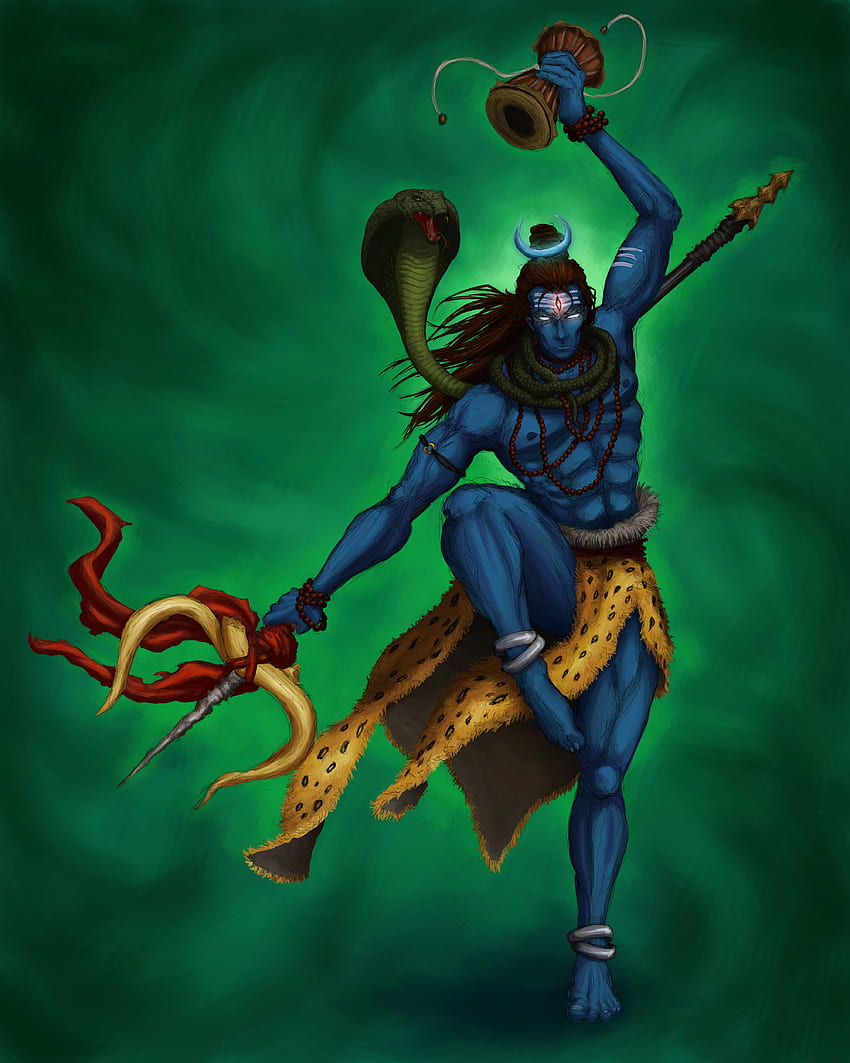
The Nataraja Temple Chidambaram is also referred to as Thillai Nataraja Temple. This name is on account of the forest of “Thillai” trees that existed here in the past. Chidambaram literally meaning “clothed in thought” or “atmosphere of wisdom”.The main deity of the temple is Nataraja, who dances the Ananda Tandava (Dance of Bliss). Tandava is a type of dance. It can be understood as a pattern of energy flow. Lord Shiva undertakes it for a specific purpose. The Agamas refer to 7 Tandavas – Kali Tandava, Gauri Tandava, Samhara Tandava, Tripura Tandava and Urduva Tandava. The Sandya Tandava is a calm and relaxed dance. It occurs in-between creations. The Ananda Tandava synthesizes all the Tandavas. 

Ananda Tandava 

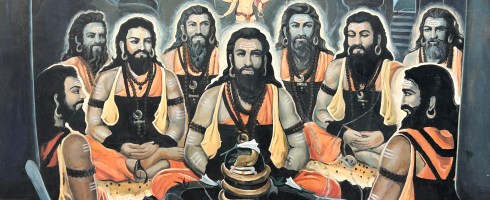
The Ananda Tandava is said to have first occurred in Darukavanam. Sages Patanjali & Vyagrapadar came to know of this dance and were keen to witness. They performed severe penance at the shrine of Adi Moolanathar. Lord Shiva granted their wish. He performed the Ananda Tandava at the place where the Nataraja idol is presently installed. This act was to bless Sage Patanjali & Vyagrapadar. Besides the main Nataraja statue, the temple also has a Shiva Lingam in Crystal stone (Sphatika) and in Ruby. Daily Abhishekam’s are done to these Lingams. The current Nataraja Bronze statue dates back to the Chola period. 

Adi Moolanathar 

Most visit the Chidambaram temple for Nataraja. But the “Moolavar” main deity of the temple is “Adi Moolanathar”. Much before Lord Shiva appeared here in the form of Nataraja he has been here as a Swayambu Lingam. The origin and date of this Lingam is unknown. It is believed that this Lingam is the energy source for most Lingams in the land. Hence, the name Moolanathar (Lord of the source). As it has been here from the beginning (Adi) of time it is known as Adi Moolanathar. 

Chidambaram Rahasyam 

An empty chamber in the sanctum of the Chidambaram temple is to the right of Nataraja. It stands for Space. This formless aspect of the creator is presented as “Chidambaram Rahasyam” (Secret of Chidambaram). Formless space is the most fundamental of all elements. It forms the basis of the four other elements of the Pancha Bhootha. This space is veiled by a curtain. It is lifted after the puja at certain times. Devotees throng to get a glimpse. Lamps are waved for a very brief period. You can see an empty chamber with hanging golden Vilva leaves. Inside the chamber is embedded a powerful “chakra” that serves as the energy base for the temple. Lord Shiva & Parvathi are said to live here in their formless state.

Pancha Sabha Temples 

In Tamil Nadu, there are 5 temples where Lord Shiva expressed his five functions in the universe in the form of dance. These temples are referred to as the “Pancha Sabhai “ temples or the five dancing halls. They are 

  • Chidambaram (Pon Sabha – Golden Hall) 
  • Tiru Alangadu (Rathna Sabha – Ruby Hall) 
  • Madurai (Velli Sabha – Silver Hall) 
  • Tirunelveli (Tamira Sabha – Copper Hall) 
  • Courtrallam (Chitra Sabha – Hal of Murals) 

Chidambaram is one of the 5 Pancha Sabhai temples. It also has 5 Sabhas – Chit Sabha, Kanaka Sabha, Deva Sabha, Nritya Sabha & Raja Sabha. 

  • Chit Sabha houses the idol of Lord Nataraja.
  • Kanaka Sabha is used for performing daily rituals.
  • Nrithya Sabha is where the Lord Shiva is said to have danced with Goddess Kali.
  • Raja Sabha or the 1000-pillared hall which symbolizes the yogic chakra of the pillared lotus or Sahasra 
  • Deva Sabha houses the Pancha moorthis and a revered collection of historic bronze sculptures and modern-era frescoes. 

The Chit Sabha or Chitrambalam

This is the Sanctum Sanctorum housing Lord Nataraja, his consort Sivakama Sundari and the Chidambaram Rahasyam. 

  • There are 9 Kalashas (Pots) on the roof representing the nine Shakti’s.
  • The door leading to the Chit Sabha symbolizes illusion 
  • The 96 Tattvas of creation are in the shape of 96 windows 
  • The 4 golden pillars in the middle represent the 4 Vedas
  • The 28 wooden pillars around them represent the 28 Siva Agamas 
  • The 64 Kalas (Arts) are represented as 64 beams
  • The 21600 gold leaves shaped like Vilva leaves on the roof represent the average number of breaths a human being takes in a day 
  • These are secured by 72000 nails that represent the energy channels or ‘nadis’ in the human body
  • The Panchakshara (Na Ma Si Va Ya) mantra has 5 syllables. There are also 5 steps leading to the shrine.  

A Divya Desam inside the Chidambaram temple 

Lord Govindraja’s shrine in Chidambaram is 40th in the list of 108 Divya Desam’s. King Nandivarman Pallava II (717 – 782 AD) built the famous Vaikunta Perumal temple in Kancheepuram. He is also said to have consecrated the Govindaraja shrine here. Initially, the Deekshitar worshiped the shrine as a subordinate to Nataraja. In the 10th century there was a dispute between the Vaishnavites & the Deekshitar’s about authority of the shrine. In the 1st half of the 12th century, it is said that Kulatunga Chola II removed the idol. He then dumped it in the sea. It was recovered and taken to lower Tirupathi where it was consecrated and enshrined by Ramanuja. It seems that there was no Vishnu shrine in Chidambaram between 12th & 15th century. Later Achuta Raya who ascended the throne after Krishnadeva Raya reconsecrated the idol in its original place.  

Modern Temple History 

The earliest mention of the “dancing god of Chidambaram” as Shiva is in texts by Appar & Sambandar. (Shaiva Siddhanta saints).These texts are from the 6th and early 7th centuries. Viduvelvidugu Perumthachan is considered the chief architect. Parantaka Chola is said to have started the construction of the temple.

The current structures and plans in the Chidambaram temple complex mostly date back to the 12th and 13th centuries. This includes the mandapas and their pillar carvings, the various shrines, the sacred water pool, and the gopuram. These are attributed to the late Chola and early Pandya kings. After the Pandyas the Vijayanagar kings also contributed to the development & upkeep of the temple. Post the Vijayanagar kings the Cheras & Nayakas of Madurai provided extensive grants and made improvements to the temple. 

The history of Chola kings and their association with Chidambaram runs deep. Raja Raja – 1, the most famous Chola king was an ardent devotee of Nataraja like his predecessors & successors. Chidambaram was the second capital of the Cholas and most kings had their coronations here. 

The records left by the court historians of the Delhi Sultanate state that Malik Kafur raided Chidambaram, Srirangam & Madurai. He also attacked other Tamil towns and destroyed the temples. The Nataraja temple was one of the sources of the gold and jewels booty he brought back to Delhi.

The Deekshitar’s

The Chidambaram Deekshitar’s are said to have migrated from Mount Kailash with Lord Shiva. They were 3000 of them initially, now they are about 500 families. In the Chidambaram Mahatmya, Lord Shiva explains to Nandi. He states that the Deekshitar’s fully understand the sanctity and greatness of Nataraja. They are also well versed in the scriptures. Till date the Deekshitar’s conduct the worship as laid down by Patanjali based on the Vaidika Puja tradition. 

This is the only temple in Tamil Nadu that is not managed by the Government. The 500 Deekshitar families manage full control. This is probably why you will not see tickets for special darshan. Security does not frisk you. Priests do not hound you for money. The energy and sanctity of the temple has been maintained very well by the Deekshitar’s. This adds to the uniqueness of the temple

If you need a detailed tour of the temple, you need to connect with a Deekshitar. For access to the Sanctum Sanctorum platform, you should also reach out to a Deekshitar. 

Temple Daily Rituals & Festivals 

There are 6 worship services every day.

  • Kala Sandhi – between 6 & 7 AM 
  • Second Kalam – 10.30 AM (Abhishekam to Sphatika Lingam & Ruby image of Nataraja) 
  • Uchi Kalam – 12 Noon (Abhishekam to Sphatika Lingam) 
  • Saya Rakshai – 6 PM, Most elaborate. During this time, 16 offerings are made to the Sphatika Lingam as part of the Shodasa Upachara. The grand finale of this Kalam is the parting of the curtain three times to reveal the Chidambaram Rahasyam
  • Evening Second Kalam – 7 PM , The doors and the windows of the Chit Sabha are completed closed during the puja for the Chidambaram Rahasyam
  • Artha Jamam – 9 PM, The Artha Jamam puja is performed with special fervour. All the divine beings are said to witness it. Lord Shiva retiring in the night chamber is symbolic of the Universe returning to the seed form. The 1st puja is symbolic of beginning of creation.

The temple opens at 6 AM. Devotees escort Lord Shiva’s bejeweled silver padukas from the night chamber (Palli Arai) to the Sanctum Sanctorum in a palanquin. This is a beautiful event accompanied by cymbals, chimes, trumpets, and drums. In the Chit Sabha, the padukas are placed close to Lord Nataraja in the Chidambaram Rahasyam chamber.

After the Deeparadhana at 10 PM, the priests ceremoniously take Lord Nataraja’s holy Padukas from the Chitt Sabha. They carry them in a palanquin to the night chamber. After the rituals and the Aarti, the Lords Padukas are placed on a swing in the Palli Arai next to Devi. They are then rocked slowly. Then the doors are shut

Six Abhishekam’s are performed for the Sphatika Lingam every day. The Abhishekam for Lord Nataraja & Sivakami is conducted 6 times every year. This is called Maha Abhishekam. 

The 6 Main festivals 

The two annual grand Brahmotsav festivals are 10 day festivals and are celebrated in 

  • Marghazi (Dec 15 – Jan 15) concluding on the full moon day of Arudra.
  • The second of these grand festivals occurs in the month of Aani (May – June). It concludes with Aani Tirumanjanam on the 10th day of the Uthiram Nakshatra.

These are grand festivals attracting large number of devotees. Special functions are arranged on each day. On the 9th day, the Lord is taken in a procession on a chariot around the temple streets. . This is an experience to behold once in a lifetime. 

Other than the Brahmotsavams a grand dance festival called Natyanjali is also celebrated at Chidambaram every year. 

Maha Abhishekam (the great holy bathing) of the deities, Lord Nataraja and Goddess Sivakamasundari, is conducted six times a year. These occur on certain specified dates. 

  1. Tiruvonam star day, month of Chithirai, at the Kanaka Sabha. 
  2. Utara star day, month of Ani, at the Thousand Pillared Mantapa, as part of the Ani Tirumanjanam festival. 
  3. The Purvapaksha chaturdasi day in the month of Avani at the Kanaka Sabha. 
  4. The Purvapaksha chaturdasi day in the month of Purattasi at the Kanaka Sabha. 
  5. Arudra (Tiruvadirai) star day, month of Margazi, at the Thousand-Pillared Mantapa, as part of the Arudra Darshanam festival. 
  6. The Purvapaksha chaturdasi day in the month of Masi at the Kanaka Sabha. 

Temple Architecture 

You need to spend a few days to visit and explore this massive, grand temple. Allow yourself to absorb the energy at different times of the day. Don’t rush through in a few hours. 

The temple had a pre-Chola existence. Its architecture is a combination of Chola and Pandya styles. The Sanctum Sanctorum closely resembles Kerala style structures. Indeed, the royal charters mention the rebuilding of the Sanctum using architects from Kerala. Nevertheless, the golden roof is a striking example of Vesara  architecture with its apsidal shape. (Vesara is a hybrid form of Indian temple architecture that combines Southern Indian site layouts with shape details characteristic of the Nagara style of North India)

  1. Spread across 40 Acres, the temple is designed in 5 concentric courtyards, 4 of which are accessible to public. The Chitt Sabha (hall of consciousness) is considered the oldest.
  2. The Sivakami Sundari temple, the Raja Sabha, 100 Pillared hall – are attributed to the 12thcentury Cholas. 
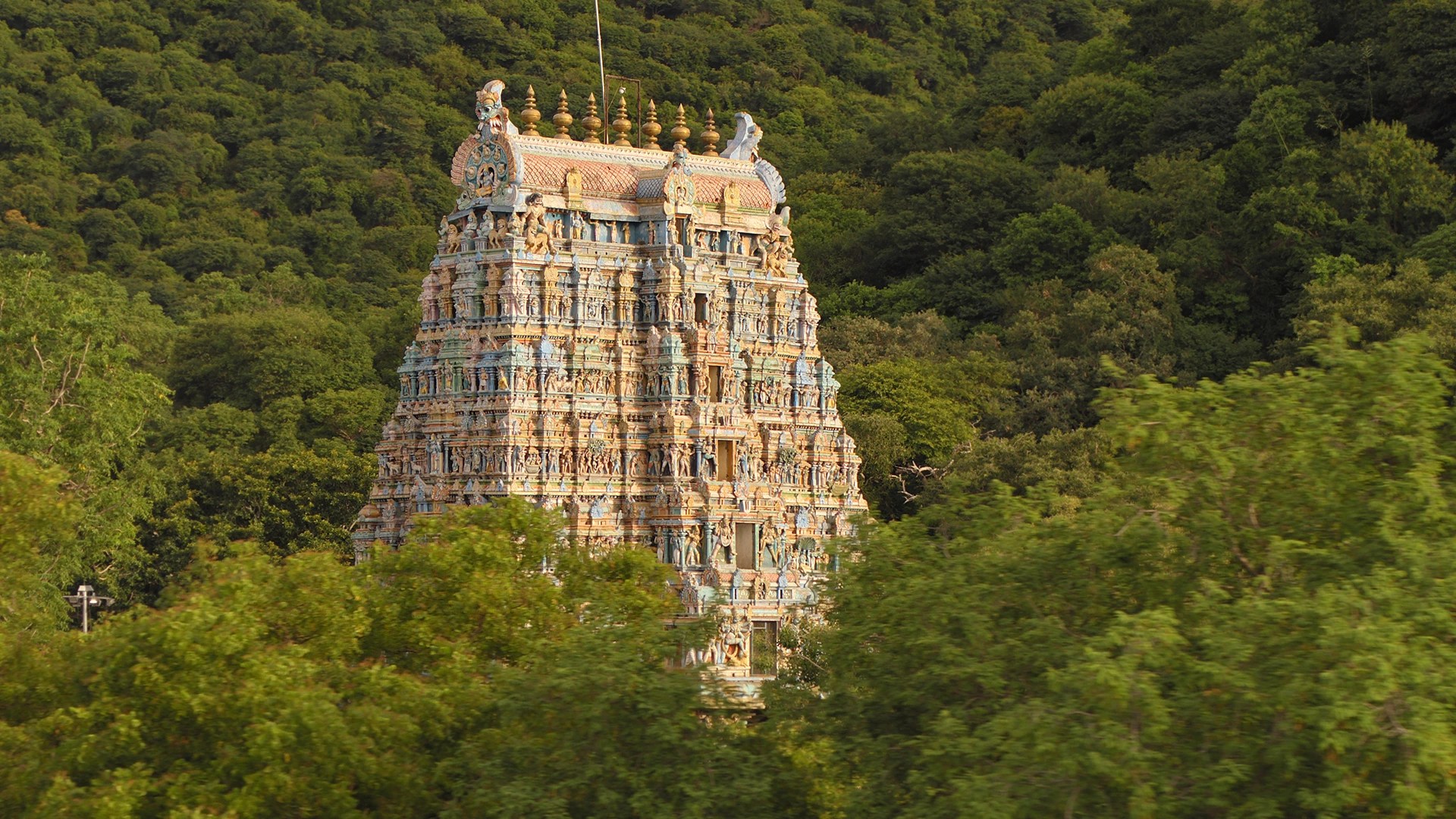
  3. The 4 Gopurams in the outer parikramas are gigantic masterpieces with seven tiers. In the towers on either side of the gateway there are representation of the 108 poses of Bharat Natyam. 
  4. There are many shrines with the complex, the second largest after Nataraja being that of his consort Sivakami Sundari. She is the mother of the universe – Parashakti. She offers darshan as a six foot tall beautiful mother providing bliss to her devotees. There are many more shrines for Subramanya, Ganesha, Nandi, Kali, and Mahishasuramardini. There is also a Surya shrine with chariot wheels. 
  5. Close to the Devi temple is a shrine with Adi Shankara’s statue and a large Sri Chakra Yantra. Locals believe that the Sri Chakra was installed by Rishi Suka Brahma. Normally the Sri Chakra is inside the Sanctum Sanctorum – this is a unique case where it is outside. 
  6. As you finish the circuit you cross the grand Shiva Ganga Teertha. 

Thillai Kali 

Dedicated to Kali this temple is located ½ km from the Chidambaram Nataraja temple. Goddess Parvathi took the form of Kali to vanquish some demons. Even after destroying the demons her ferocity continued unabated. Lord Shiva engaged in a dance contest. The thrilling meeting ended with Shiva winning. He performed the Urduva Tandava (Shiva lifting his leg 90% upwards). This was a pose Devi was unable to execute. Kali was subdued and she retreated to live in the outside boundary. 

Where to stay at Chidambaram 

Option – 1 : Hotel Akshaya. They have large rooms including Suites and car parking. An excellent A2B is on the Ground floor serves great food. It’s a 5 min walk from the East Entrance. This has limited car parking.

Option – 2 : Arudra Residency. On the East entrance path, 100 m from the temple main entrance. Smaller hotel with small rooms. 

Option – 3 : Lakshmi Vilas Heritage. It is a heritage village with 16 rooms. This village is about 15 Km south of Chidambaram. It is a large property with lots of greenery. There is a nice pond and a 150-year-old temple in its compound. This property serves Non Veg food

Best place for food is A2B (Adayar Anand Bhavan) – excellent variety, very neat and clean. The next best option is Sri Krishna Vilas. Smaller place on the main road. Gets very crowded. Food is good – some guests I have referred felt that the cleanliness was not upto par.

Additional Points 

  • If you stay at Arudra Residency, Parking is on the main road – East Car Street. You enter the temple from the East Gate. Akshaya hotel has a few limited parking slots. During Brahmotsav festival no parking is allowed on the main road to allow passage for the chariot procession.
  • Dress code is traditional , If you go up the Sanctum podium you need to wear dhoti & sari, men remove the shirt
  • No checks for phone – but no photography & Video of temple 
  • Drive from Bangalore is 6 – 6 ½ hrs depending on the day and time of departure 
  • In and around Chidambaram are many ancient temples. Tanjore & Kumbakonam are close by. The famous Vaitheeswaran temple is an hr away. 
  • Pondicherry is a few hrs from Chidambaram 
  • Best time to visit is Jan – Feb. Summers are very hot and Sep – Mid Dec is the rainy season.
  • Thiruvanamalai can be covered on the way back – its 3 hrs from Chidambaram. 

Reference 

Mystical Chidambaram – Universal Publishing

https://recentscientific.com/sites/default/files/10717-A-2018.pdf

http://www.chidambaramnataraja.org/about_temple.html

https://en.wikipedia.org/wiki/Nataraja_Temple,_Chidambaram#Rituals
Pandya Nadu in Tamil Nadu

18 Dec

Pandya’s – A great empire spanning ~ 2500 years 

Indian history has been unfair to the South. The great empires of Cholas, Pallavas, Pandyas, Cheras & Chalukyas are more of a footnote in a Delhi dominated narration. Tamil is one of the worlds oldest languages. Shaiva Siddhanta considers Tamil & Sanskrit the two eyes of Lord Shiva.  Tamil history and culture is as ancient as Sage Agastya. This is the land of great saints like Thirumoolar, Sambandar, Appar, Sundarar, Manikkavacakar, Bhoganathar & Sadashiv Brahmendra. It is also the land of great musicians Thyagaraja, Muthuswamy Deekshitar, and Shyama Shastri. Bharatanatyam, the oldest Indian classical dance form originated in the Tanjore district of Tamil Nadu and is regarded as the mother of many other classical dance forms of India. 

The Pandya dynasty also referred to as the Pandyas of Madurai, was an ancient Tamil dynasty, and among the four great kingdoms of Tamilakam, the other three being the Pallavas, Cholas & the Cheras.

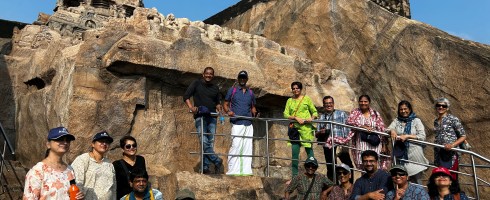
This Blog is based on a 3 day trip called the Pearls of Pandya’s organised by Heritage Inspired. A unique company which presents history, art & culture of the ancient empires of S India in a very innovative manner. Supported by highly competent people they provide in-depth knowledge across very well organised trips. Do check them out and plan your next travel with them. (www.heritageinspired.in)

Pandyas – a brief introduction 

  • The Pandyas are the oldest among the Tamil kingdoms with a long history spanning over 2500 years. They belong to the Lunar race (Chandra Vamsha) and their symbol is the double fish.
  • Their era can be broken into these divisions 
    • Sangam Pandyas – 300 BC to 300 CE – Korkai Port
    • Early Pandyas – 600 to 1000 CE – Madurai 
    • Later Pandyas – 1100 to 1200 CE – Subdued under the Cholas – Madurai 
    • Later Pandyas – 1200 to 1400 CE – Madurai 
    • Tenkasi Pandyas – 1500 – 1700 CE – Tenkasi

Pandyas were famous for three things – Literature, Trade & Water Management. 

Sangam the great cultural events of poetry and music were orchestrated under their era. A repository of over 2000 poems in Tamil. composed by 470+ poets have been preserved. The poetry of the Sangam era is largely about love (akam) and war (puram). The Sangam literature also includes Buddhist and Jain epics.

Trade – They had extensive trade in India & across the world – strategically placed along the key trade routes both land & sea – they did business with the ancient Romans, Greeks, Arabs, Chinese, Africans, Egyptians & SE Asians. The trade of horses was very common during this period. Other goods traded included spices, pearls, precious stones, elephants and birds. The busiest port town under the Pandyas was Kayalpattinam (now in Thoothukudi district)

Religion  – It is believed that initially the Pandyas followed Jainism but later adopted Shaivism. Medieval Pandyas and later Pandyas repaired many temples and endowed them with gold and land. Patronage was also extended to Vedic practices. The impartiality of rulers towards both Shaivism and Vaishnavism is also made known in the invocatory portions of the Pandya inscriptions

Administration 

  • Kings and local chiefs created Brahmin settlements called Mangalam or Chaturvedi Mangalam with irrigation facilities. These settlements were given royal names and names of the deities
  • The prime minister was called Uttaramantri. The royal secretariat was known as Eluttu Mandapam. The titles of military commanders were Palli Velan, Parantakan Pallivelan, Maran Adittan and Tennavan Tamizhavel

Madurai was their capital – around 1311 under Malik Kafur  the Delhi Sultanate usurped Madurai for 50 years. This was a dark period where wealth was plundered and temples were looted and ransacked. Post this Vijayanagar rule was imposed. After 1328 the Pandyas never regain Madurai and are pushed down south to rule from a few places around the Thamirabarani river and are called the Tenkasi Pandyas. At their zenith in 1270 AD the Pandyas ruled over all of TN , a part of S Karnataka, parts of S & Coastal Andhra and parts of Sri Lanka. 

Pandya empire in 1270 AD

The Pandya’s were not prolific temple builders like the Cholas, Hoysalas & Pallavas. 

The Pandyas entered their golden age under Maravarman I and Sundara Pandya (13th century). The latter used the vast treasure he got out of his wars to beautify the Nataraja temple in Chidambaram and the Vishnu temple in Srirangam. For gold plating the roofs of these two temples he was given the title of “pon veindha perumal”. He acknowledged the contributors of other dynasties to Tamil Nadu by building a gate at the Sri Ranganathaswami Temple at Srirangam in which he engraved the names of all the four great empires of Tamil Nadu namely the Cholas, Pallavas, Pandyas and the Cheras. He also built the East tower of the Meenkashi temple. He gold plated and placed the gold gilded Kalasam atop the gopuram of the Vimana of Tirumala. In 1263 CE, he renovated the Gopuram of Koneswaran temple and his son Veera Pandyan implanted the Pandyan victory flag and insignia of a “Double Fish” emblem at Konamalai. 

What we covered in our 3 day trip 

Day – 1 

  • Madurai Meenakshi Temple 
  • Kalaingar Centenary Jallikattu Arena, Alanganallur Vadivasal
  • Muniyandi temple in Alanganallur– the Gaurdian deity of the locals. Here we were entertained to folk dance by the locals. 
  • Kallalagar Temple – one of the 108 Divya Desams

Day – 2

  • Kazhugumalai – Unfinished Shiva temple -Vettuvan Kovil, a beautiful Monolithic temple that dates to 850 AD. Jain Monk caves & Bass relief.
  • Tirumalapuram Cave Temple – Shiva 
  • Kashi Vishwanath temple – Tenkasi 
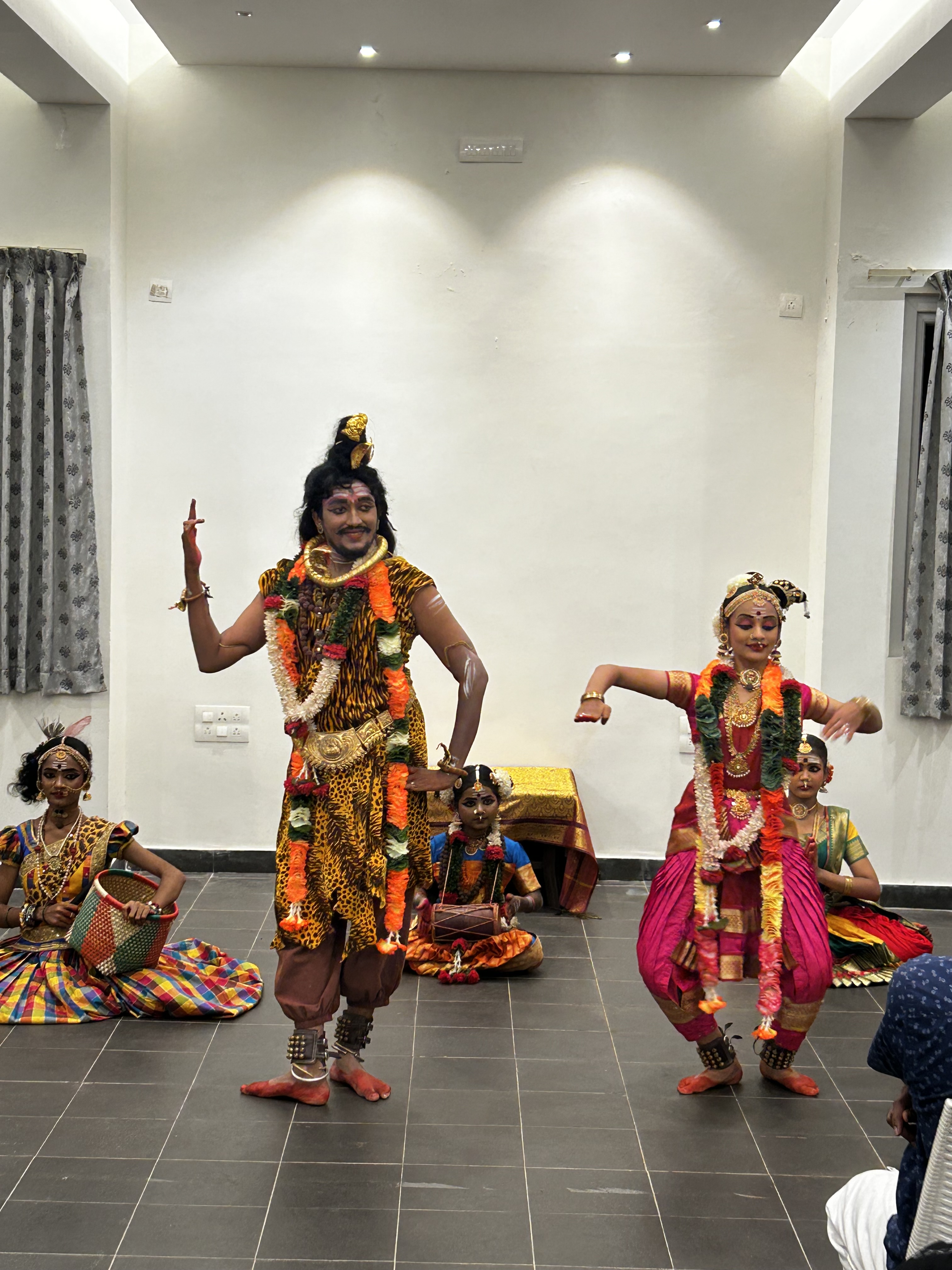
  • Cultural program – Kutralam Kuravanji
  • We were staying at a resort overlooking the Agastya Hills , 1 km from Kutralam falls – however heavy rains from the previous few days restricted our visit to the falls

Day – 3

  • Kulashekara Perumal Kovil in Mannarkovil – a beautiful Vishnu temple with Ashtanga Vimana
  • An ancient Shiva temple in Tirupudaimaradur where we walked up the narrow steps of the Gopuram and were amazed with wall painting dating back to 1500 AD 
  • Adichanallur an archaeological site – famous for a number of very important archaeological finds. Korkai, the capital of the early Pandyan kingdom, is located about 15 km from Adichanallur. 

What makes this trip by Heritage Inspired (HI) unique 

  • An avid traveller and Tamilian – I had not heard of many of these places. It was great discovering them and getting educated. 
  • HI had special access to many places and we visited areas which are normally out of bounds 
  • Not only was the trip planned and executed to perfection – there was detailed commentary and insights on the places we visited. The professional inputs from Professor Kannan, Parvathi Madam & Senthil were excellent. 
  • We stayed in nice resorts, food was excellent , from the time the trip started till we got dropped off we did not have to spend a single rupee. 
  • The cultural programs / folk dances were the icing on the cake and we thoroughly enjoyed it
  • The rates for this trip were very reasonable – if you had to do a trip like this solo it would have cost 3X. 
  • Excellent group of people

Geographically the 5 terrains of land, kurinji (hill terrain), mullai (forest land), marutham(flat open land), neithal (coastal land) and palai (arid land) broadly are the natural divisions (thinai) of land on earth with probably a few subdivisions. Pandya country was endowed with all 5.

During these 3 days we travelled ~ 325 KM and covered most of these territories. Mid Dec after the rains the land was green and fertile. Roads were excellent. Population looked sparse. Local people in general looked happy and contented. The water management system established 1000+ years ago by the Pandya, Chola kings are the foundation on which current day farming still happens. In the absence of perennial rivers the ancient systems still serve the population effectively. 

Details to plan you trip with Heritage Inspired

__________________________

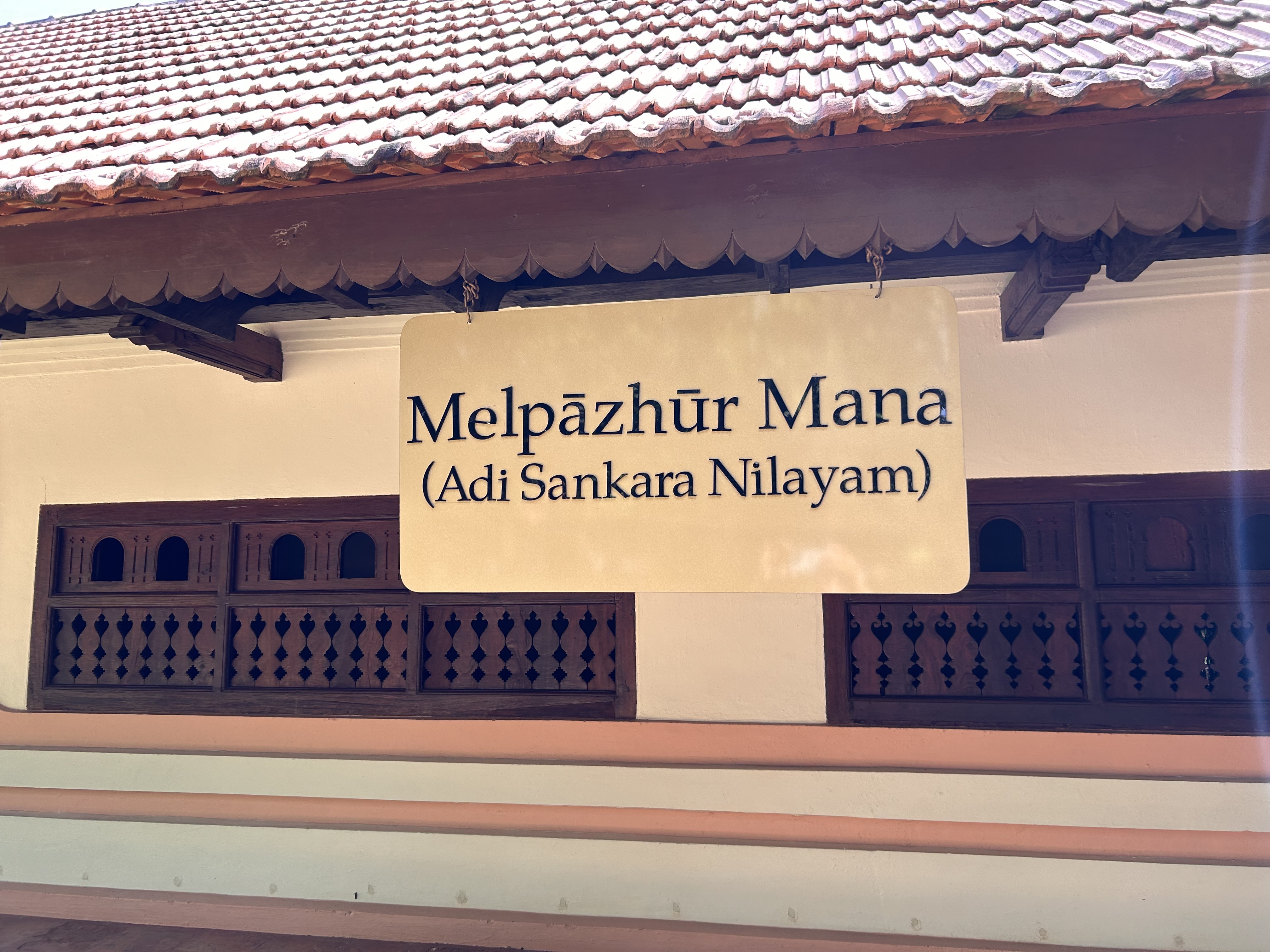
Adi Sankara Nilayam – The “Mana” where He was born

7 Feb

Kerala “God’s own country”, the land created by Parasurama – home to ancient revered temples, the land where Goddess Bhagavathi is worshipped in every village – is also the hallowed land where the great vedantin Adi Shankara was born.

While most assume his birth place was Kalady, his mother Aryamba’s family home (Mana) was Veliyanad. Children are born in the maternal home – especially in those days. There is strong evidence that Adi Shankara was born and spent many of his early years in Melpazhur Mana his ancestral maternal home. Kaladi was his paternal home next to the Periyar river where he went for his gurukul studies, this is also the place where the crocodile is said to have caught his leg.

Both the places where in bad shape with no support / attention from the Government. Kaladi is now maintained by the Sringeri Mutt, while Swami Chinmayananda has established a wonderful ashram at Adi Shankara’s maternal home. Renamed Adi Shankara Nilayam the abode of Chinmaya International Foundation (CIF) they have carefully restored the ancient Mana and the family temples. An energised oasis of greenery and tranquility the ashram at Veliyanad is a place worth visiting for spiritual aspirants. Not only is it treasured as the birth place and maternal home of Adi Shankara – but is also a centre for Sanskrit and Indic research.

Where is it located – how to reach

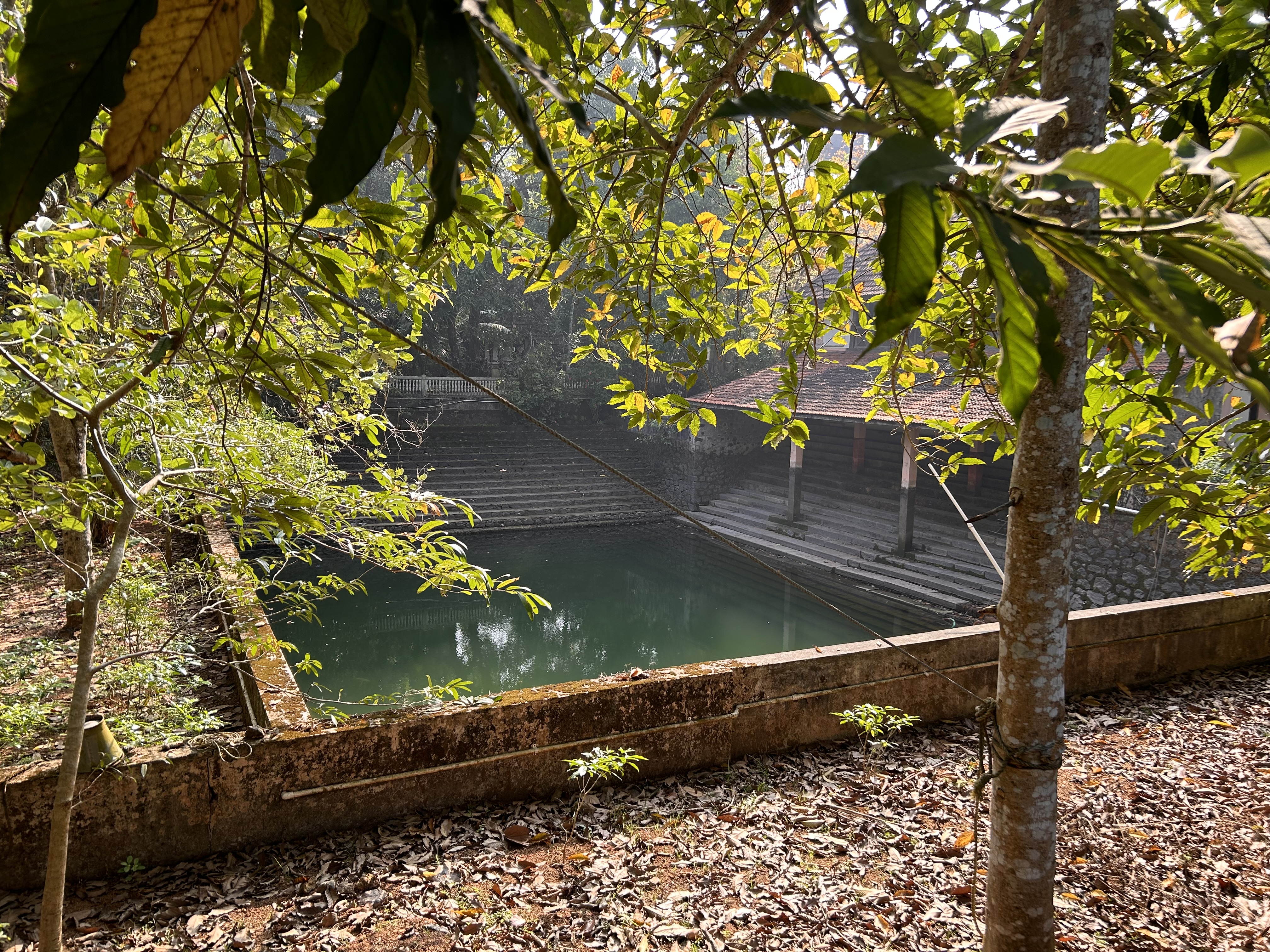
About 30 km from Ernakulam, the closest station is Piravam Road. A 20 min auto ride from here takes you to CIF . Kaladi is ~ 50 km from here. There are convenient overnight trains from Bangalore. Located in a small hamlet, Veliyanad, in Ernakulam District, Kerala, India, CIF stands in a 11 acre plot of land amidst luxuriant sun-blessed greenery, temple shrines and lotus ponds. It offers an ambience of peace and solitude for study, research and contemplation to aspirants from all over the world.

How do I book a room

Send a mail to anil.pillai@chinfo.org stating your interest and why you want to visit. AC rooms are 1500 / person inclusive of breakfast / lunch / dinner / tea.

What is CIF 

Chinmaya International Foundation (CIF), the Academia of Sanskrit Research and Indic Studies, is the research wing of the Chinmaya Mission Worldwide. It is a centre of excellence for the study, research and dissemination of knowledge in the areas of Indian philosophy, culture, art and science.

Established in the year 1989, CIF is housed in Adi Sankara Nilayam, the hallowed maternal birth home of the great saint, savant and philosopher Sri Adi Sankara.

What is the Melpazhur Mana / Adi Shankara Nilayam 

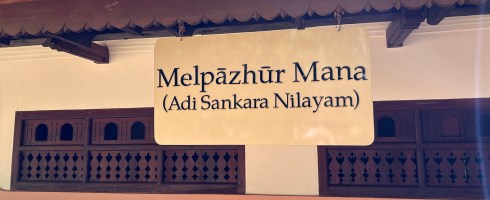
‘Melpazhur Mana’ is a Nambutiri Illom or Mana (home of a Kerala Brahmin). This sacred dwelling is the ancestral, maternal home and birthplace of Adi Sankara. Local tradition has it that Adi Sankara’s vidyarambha and upanayana ceremonies were performed at Melpazhur Mana. Today, this place of pilgrimage is named ‘Adi Sankara Nilayam’.

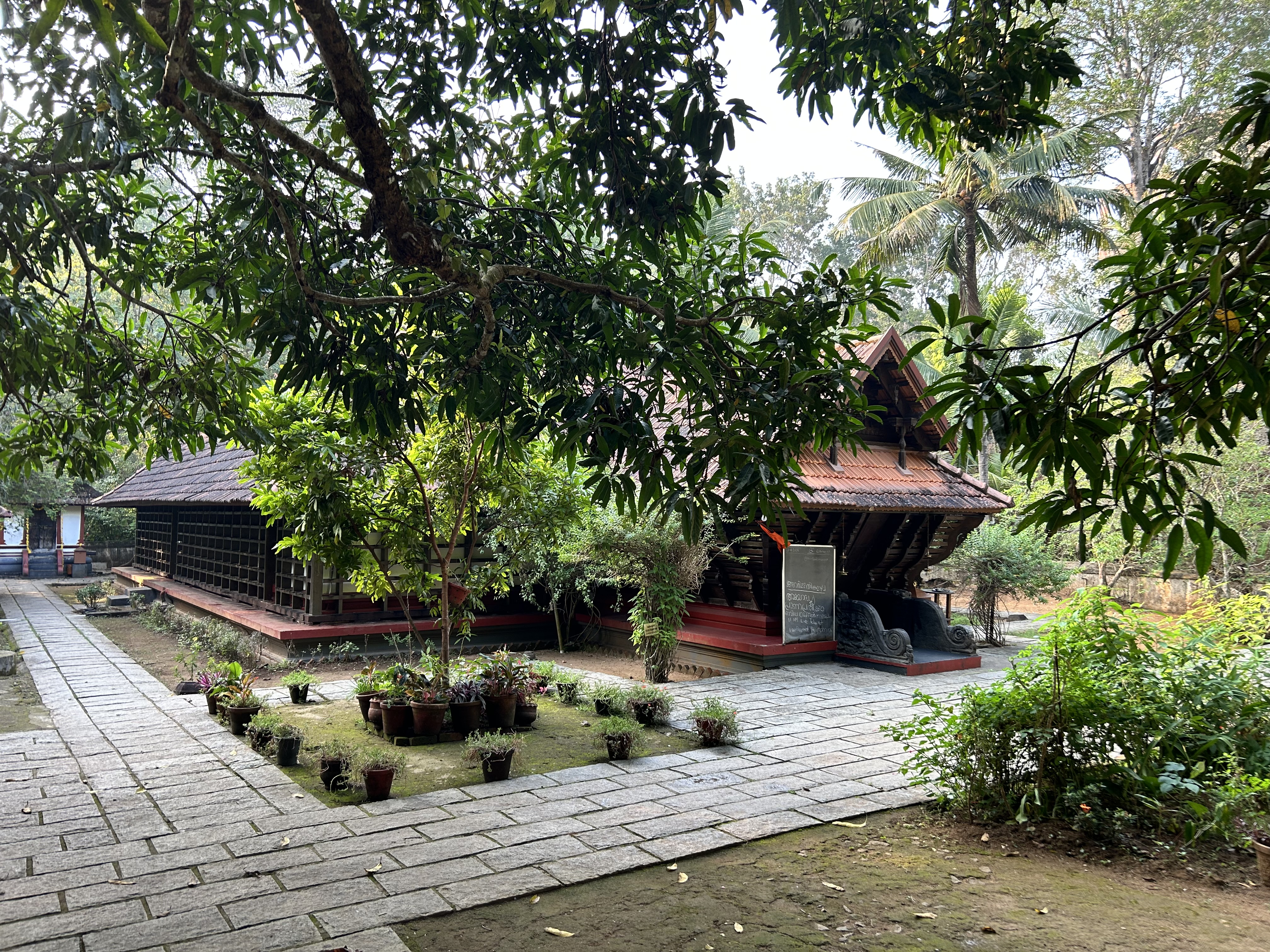
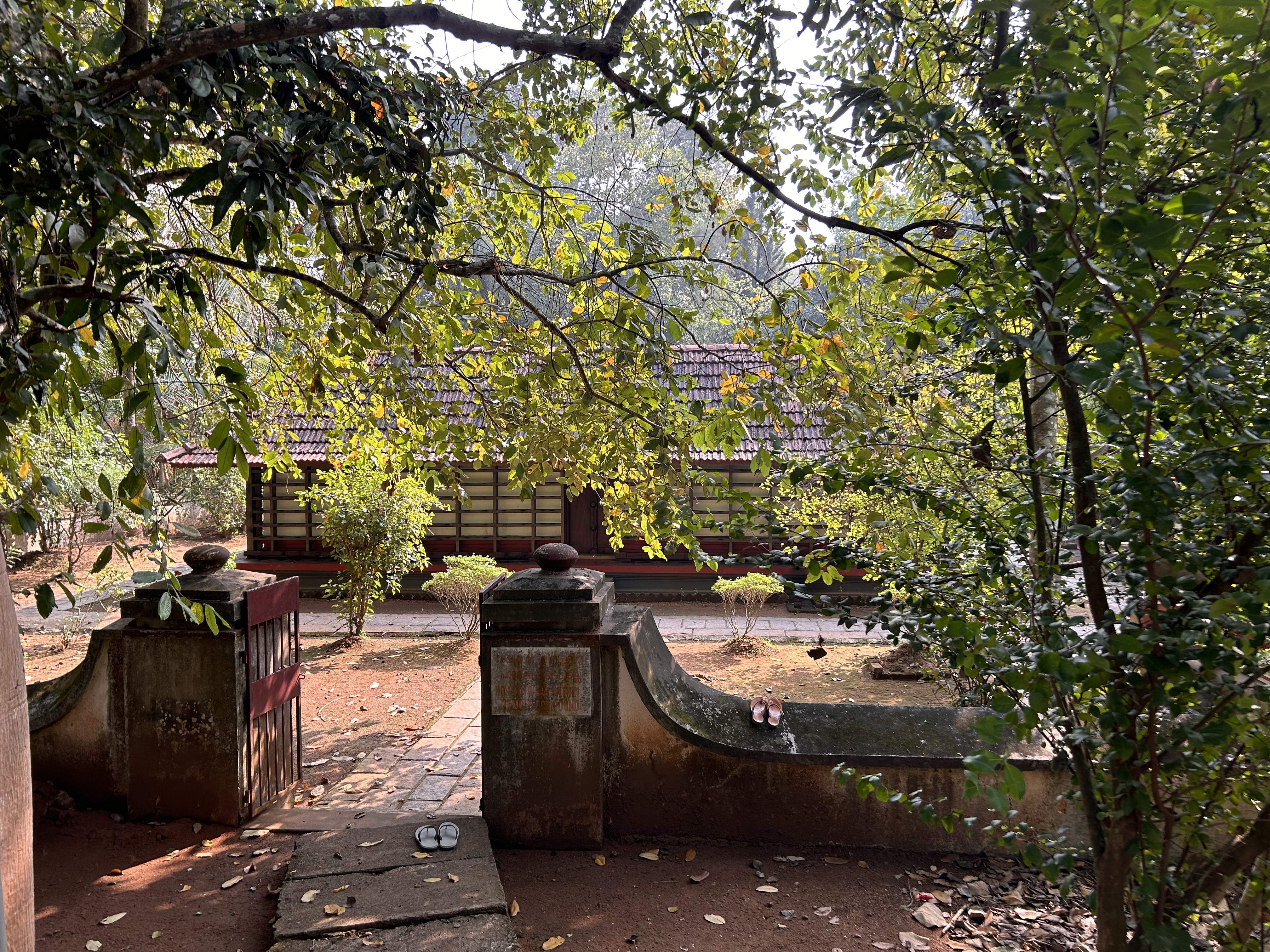
Set in Kerala’s lush, green country, amidst temple shrines and lotus and lily ponds, Melpazhur Mana offers a spiritual ambience that attracts aspirants who come in search of peace and solitude from the world over. Within the Mana stands the awe-inspiring quiet grandeur of the nalukettu (a building which has a four-winged architectural design) on an extensive compound of 11 acres.

This age-old Nambutiri house highlights Kerala’s sacred and graceful traditions of yore. Its structural strength and design exquisitely blend utility and art, wood and granite, work and worship. The Mana — now a four-winged structure (nalukettu) — was originally an eight-winged structure (ettukettu). The outer four wings were dismantled. The now downsized Mana still exudes the spiritual glory and affluence of old, in its serene character and architectural design.

The northern wing hosts the room ‘Thevarappura’, wherein the daily agnihotra, havans (fire rituals) and other forms of ritualistic worship were conducted. The western wing has an underground cellar ‘Nilavara’, as well as specially designed rooms where the household could store grains, temple ornaments and utensils. The southern extension features the ‘thekkini’, where large family gatherings feasted on special occasions. And finally, in the eastern section, close to the traditional kitchen and well, is the sacred room where Adi Sankara was born.

The walls of the Mana are adorned with Kerala Murals that depict his life events.
In order to enhance the feeling in seekers and help them reach into their own divinity, an idol of Adi Sankara vigraha, was installed in 2015. Meditating in this room is most fulfilling and effortless. Truly, Sri Sankara is felt here in the light of the ever-lit akhanda jyoti and the regular chants and prayers that fill this room. An Arti is conducted every morning at 8 AM.

Temples in the Mana

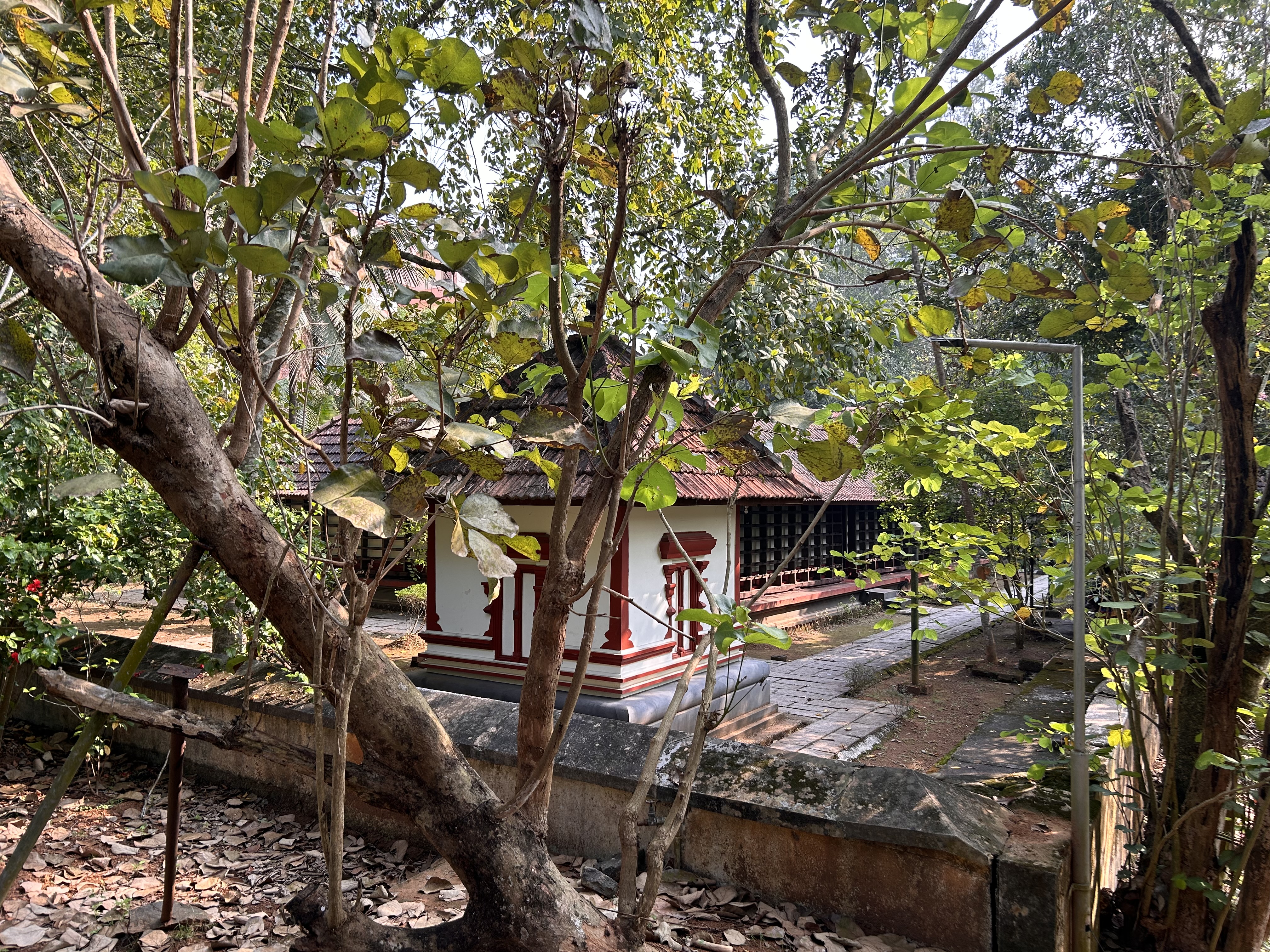
Melpazhur Mana houses ancient temples from an era gone by, temples ostensibly worshipped by Sri Sankara and his mother. We have on these premises the ancient shrines of Ayyappa, Rama, Krishna, Ganesha, Vettakkoruvan (Kirata Siva, the family deity of Melpazhur Mana), and Goddesses Nagayakshi and Bhagavati. The pond adjacent to the temple compound adds immense beauty to the serene surroundings and artistic structures.

The Ayyappa temple is supposed to be a Swayambu. Temple shrine opens at 5.30 AM – if you visit at 5.45 AM you can see the Abhishekam. Evening the temples open at 5.30 PM – Aarti is around 6.30 PM (please double check on timings once you reach). The temple

https://www.chinfo.org/templesInAdiSankaraMilayam/

Other places to see in Adi Sankara Nilayam 

They have a well stocked library and there are research scholars working on ancient palm leaf manuscripts decoding them and restoring them. The book shop is also a must visit with an excellent collection of books. There is a small hall where they conduct talks / workshops.

The lunch room serves excellent sattvic food. Breakfast is at 8 AM, Lunch at 1 and dinner at 8 PM. Before each meal the residents chant Chapter 15 of the Bhagavad Gita – so wait before you start eating.

How much time should I plan here 

We spent a day – reached at 8.30 AM just in time for breakfast and left at 9.30 AM the next day. This was perfect to have a relaxed trip through the campus.

CIF conducts many programs on Indic / Sanskrit topics. These are multi day events if you decide to enroll and attend. Visit their website for more details.

How is the weather

Nov to Jan is the best time to travel – rest of the year can get hot.

What else can I visit 

Kerala is studded with ancient temples. It is indeed a contradiction that this great land of the Gods is now under the Communists.

Kaladi is near the Cochin Airport. That is also worth a visit.

If temples are your interest there are many options. Chootinakara Bhagavathi temple is only 15 km away

You can also drive to Trichur / Guruvayur and visit the the temples there, Trichur is a 100 km 2 1/2 hr drive from CIF

Kodangallur Bhagavathi temple is not far from Trichur – 1 hrs drive. The Koodalmanikyam temple in Irinjalakuda is the only temple dedicated to Bharata. This is close to Kodongollur.


Learn to Chant Rudram Perfectly in 90 Hrs

5 Aug

Introduction to Rudram 

Among the various Vedic Hymns Sri Rudram occupies a prime place. Lord Rudra, to whom these prayers are addressed is not a sectarian deity, but the Supreme Being who is omnipresent and manifests Himself in myriad forms. Hence this prayer is also called Satarudriyam – Rudra in hundreds of forms. Rudram reveals the great Panchakshari, the five lettered mantra “Nama Shivaya”. Chanting of Rudram daily is said to confer all blessings – material & spiritual. Sri Rudram is also considered to be an Upanishad.
Namakam – The first chapter (Anuvaka) is a set of prayers to the Lord to give up anger roused against those who transgress divine commandments. The 2nd to the 9th chapters contain the prostrations to His omnipotence and indwelling in all beings. The 10thchapter celebrates the munificence of the Lord and prays for prosperity and warding off all evil. In the last – 11th Anuvaka we get the thanksgiving to the lords attendants – The Ganas.

Chamakam is a prayer associated with doing homa at the end of the yagna. These Anuvakas are thus called Vasordhaara. It has the leading statement repeated “Yagnena Kalpantaam” – May everything in this world be offered to God as worship. Chamakam is a compendium of prayers praying for the fulfilment of desires in man. After pacifying the Lord with Namakam when he is in a happier mood you chant Chamakam – which lists 347 benedictions to be bestowed on the chanter.

There is a time honoured tradition that Rudram (Namakam & Chamakam) should be chanted daily with Purusha Suktam. One becomes sinless by chanting them. Sri Rudram occurs in the Karma Kanda of the Yajur Veda

Resources to learn 

I referred 4 resources that helped me learn in less than 45 hrs. (Approximately 2 hrs / Anuvaka – 22 Anuvakams across Namakam & Chamakam). The remaining 45 Hrs is to practise again and again and perfect the chanting. You may take lesser time as I have included the script in English with tips for perfect chanting.

GRD Iyers Gurucool has multiple YouTube Videos where all the Anuvakams are taught in traditional Vedic style. Ramesh Natarajan (Guruji) chants to perfection and his students repeat after him. This is the best way to learn.

_____________________________________________

Unfortunately GRD Iyers have made their YouTube links Private. You can write to them at grdiyersgurucool@gmail.com. This is the reply you will get

We wish to share our updated YouTube policy : ONLY GuruCool members will have access to ALL private learning videos If you wish to join GRD Iyers GuruCool, please download Telegram app and click on link below to join Aspirants forum ‼️ Then please follow ALL steps in the pinned message in Aspirants Forum‼️ There is a 6-month advance contribution required for members. Details are in the pinned message https://t.me/+dA1b8eZknx0zMzUx

________________________________________________

I have enclosed the text in English below for accurate chanting . This will help those who don’t know Sanskrit. After you have learnt the Anuvakam from GRD Iyer’s refer to the YouTube chanting videos by Suresh Ghanapathi or Challikere Brothers to perfect the pronunciation, rhythm and swaras while chanting fast. Initially run the video at 0.75 speed and then at regular speed.

I referred the book Sri Rudram & Purushasuktam by Swami Amritananda for meaning and Sanskrit Script (Ramkrishna Math Mylapore Publications)

Reference Videos 

GRDIYERS Gurucool – Chanting Rules 

GRDIYERS Gurucool – Rudram Chanting Practise 

GRDIYERS Anuvakam 1 – Rudram Namakama

GRDIYERS Anuvakam 2 – Rudram Namakam 

GRDIYERS Anuvakam 3 – Rudram Namakam 

GRDIYERS Anuvakam 4 – Rudram Namakam 

GRDIYERS Anuvakam 5 – Rudram Namakam 

GRDIYERS Anuvakam 6 – Rudram Namakam 

GRDIYERS Anuvakam 7,8,9 – Rudram Namakam 

GRDIYERS Anuvakam 10,11 Part 1 – Rudram Namakam 

GRDIYERS Anuvakam 11 Part 2 – Rudram Namakam 

GRDIYERS Anuvakam 1,2 – Chamakam 

GRDIYERS Anuvakam 3,4 Part 1 – Chamakam 

GRDIYERS Anuvakam 4th – 7th – Chamakam 

GRDIYERS Anuvakam 8,9 – Chamakam 

GRDIYERS Anuvakam 10 – Chamakam 

GRDIYERS Anuvakam 10 – 11, Part 2 – Chamakam 

GRDIYERS Chamakam Practise

K Suresh Ghanapati – Sri Rudram (Namakam) Chanting 

K Suresh Ghanapati – Chamakam Chanting 

Rudram Chanting by Challikere Brothers  

Chamakam meaning of all the 347 benedictions 

Sri Rudram & Purushasuktam by Swami Amritananda for meaning and Sanskrit Script (Ramkrishna Math Mylapore Publications)

Useful tips to Chanting 

The beauty of Rudram is when you chant it perfectly. Focus on correct pronunciation, space gap, where to stress, where to move fast, where to slow down etc . I have tried to provide help in my scripts with simple tips to assist the chanter. If you chant correctly one word flows to the other and the energy you generate is immense. It is indeed very satisfying and you will be addicted to chanting this beautiful & powerful mantra everyday. Do learn the meaning – it is profound and beautiful. If you need a PDF Document that highlights the areas to stress, where to pause etc please send me a mail.

Om
Sri Gurubhyo Namaha
Hari Hi Om

Ganapati Prarthna from Yajur Veda

Gananaam Tva Ganapathi Gum
Havamahe Kavim Kavinaam
Upamashravas Tamam
Jyeshtarajam Brahmanaam
Brahmanaspata Aa Nah Shrunvan
Nutibhih Seedha Sadhanam
Om Sri Maha Ganapatiye Namaha
(Om Sri Maha Ganadapitaye Namaha)

1st Anuvaka

We pray to Rudra for His grace. He continues to be angry even after killing Tripurasura. He is angry with the transgression of moral codes. He has two forms – one terrific, the other benign. The devotee is scared of his terrifying form. Hence the prayer to please & propitiate Him invoking His benign form.

Om Namo Bhagavate Rudraaya

Namaste Rudra Manyava Utota Ishave Namahaa
Namaste Astu Dhanvane Bahubhyaa Mutate Namahaa

Yaata Ishush Shivatamaa Shivam Babhuvate Dhanuhuu
Shivaasa RavYaaya TavaTayaanoo Rudra Mridayaa

Ya Te Rudra Shiva TanuuraGhoraa Paapa Kaashini
Taya NasTanuva Santamayaa GirishanTabhiChakaShihii

YaaMishun Girishanta Haste Bibhar Syastavee
Shivaan, Giritra Taan, Kuru MahiGum Si Purushan Jagatah

Shivena Vachasaa, Tva GiriSaccha Vadaamasi
Yatha Nas Sarva MijjaGadaYakshmaGum Sumanaa Asatha

AdhyaVochaDadhiVaktaa Prathamo Daivyo Bhishaka
AhiiGrishcha Sarvaa..Nnn, Jambhayan, Tsavarvaa..Cha Yaatu Dhaanyahaa

Aso YasTaamro , ArunaUta Babhrus Sumangalahaa
Ye Che MaaGum Rudraa, Abhito DikshuShritaas Sahasra So Vai Sa Gum Heda Emahe

AsavYo Vasarpati Nilagrivo Vilohitahaa
Utainan Gopaa AdrashanAdrashan UdaHaaryahaa
Utainam Vishwa Bhutani SaDrishto Mridayaati Nahaa

Namo Astu Neelagrivaya Sahasraakshaaya Meedhusheee..h
Atho Ye Asyaa SatvAaNohan TebhyoKaran Namahaa

Pramuncha DhanvaNastvaaMubhayoRartni YorjyaaMm…
Yaaschate Hasta Ishava ParaaTaa Bhagavo Vapaa

Avatatya DhanusTvaGum Sahasraaksha ShateShudhe
Nisheerya Shalyaanaam Mukha Shivonas Sumanaa Bhavaa

Vijyan Dhanu Kapardino Vishalyoo BanaavaGumUtaa
Aneshan Nasyeshava AaabhuRasya Nishan Gathihii

Ya Te Hetur Midhushtama Haste Babhuuvate Dhanuhuu
TayaasMaaNnn.., Vishwa Tastvama Yakshmaya Yaa Pari Bhuja

Namaste AstvaayudhaYaanaTataaya Drishnaveee..h
Ubhaabhya Mutate Namo Bahubhyaan Tava Dhanvanee

PariTe Dhanvano HetiRasmaan Vrinaktu Vishwatahaa
AthoYa IshudishtaVaare , AsmaNnn Nidhe HiTam

Namaste , Astu Bhagavann Vishwesharaaya Maha Devaaya Triyambakaya Tripurantakaya Trikaagni Kalaaya Kalaagni Rudraaya Neelakanthaaya Mrityunjayaaya Sarveshwaraaya Sada Shivaya Sriman Maha Devaaya Namahaa

2nd Anuvaka

From the 2nd to 9th Anuvaka Lord Shiva is praised in the different forms He takes as a sport for the working of the world.

Namo Hiranyabhaave Senaanye Dishancha Pataye Namo Namo
Vrikshebhyo Harikeshebya Pashunaam Pataye Namo Namas
Saspinjaraya YathVishimathe Pathinaam Pataye Namo Namo
Babhlushaaya VivyaDhinneNaNaam Pataye Namo Namo
Harikeshaayo PaviiTine Pushtanaam Pataye Namo Namo
Bhavasya Hethyay Jagathaam Pataye Namo Namo
Rudraayaa Tathavine Kshetranaam Pataye Namo Namas
SuutaYahanTyayaaVananaam Pataye Namo Namo
Rohitaya SthPataye Vrikshanaam Pataye Namo Namo
Mantrine Vanijaya Kakshanaam Pataye Namo Namo
Bhuvanthaye VaariVaskritha Yaushadhinaam Pataye Namo Nama
UcchairGhoshayaa Kandayate Pattinaam Pataye Namo Nama
KritsnaVeetaya Dhaavate Satvanaam Pataye Namahaaa

3rd Anuvaka

Namah Sahamaanaya NivyaDhinna Aavyadhineenaam Pataye Namo Nama
Kakubhaaya NishangineEeee.. Sthenanaam Pataye Namo Namo
Nishangina Ishudhimathe Taskaranaam Pataye Namo Namo
VanCchate PariVanCchate, Sthayuunaam Pataye Namo Namo
Nicheravee ParicharayaAaranyaNaam Pataye Namo Namas
Srikavibhyo Jigha Gum Sabdhyo Mushnataam Pataye Namo Namo
Simadbhyo NaktanCharadBhya PrakrintaaNaam Pataye Namo Nama
Ushnisheene Giricharaaya Kulunchanaam Pataye Namo Nama
IshuMadbhyo Dhanvaa VibhYascha Vo Namo Nama
AatanVaaNebhya PratidadhaaNebhYasCha Vo Namo Nama
AayaChadadhbhyo Visarjad BhyasCha Vo Namo Namoo….
SyadBhyo Vidhyad BhyasCha Vo Namo Namah
AasiNebhyash Shayaa NebhyashChaVo Namo Namas
SvaPadBhyo Jaagrad BhyasCha Vo Namo Namas
StishTadBhyo Dhaavad BhyascCha Vo Namo Namas
Sabhaabhyas Sabhapati BhyasCha Vo Namo Namoo..
Ashvebhyo Shvapati BhyasCha Vo Namahaa..

4th Anuvaka

Namah AaavyaaDhinii.. Bhyo VividhyanThi BhyasCha Vo Namo Nama
Uganaa Bhyastra Gum Hathe BhyasCha Vo Namo Namo
Gritseybhyo GritSaPati Bhyasha Vo Namo Namo
Vratee…Bhyo VraataPati BhyasCha Vo Namo Namo
Ganebhyo Ganapati BhyasCha Vo Namo Namo
Virupeebhyo Vishwaroope BhyasCha Vo Namo Namo
MahadBhyaahak Shullake BhyasCha Vo Namo Namo
Rathibhyo Rathee BhyasCha Vo Namo Namo
Ratheee…Bhyo RathaPathi BhyasCha Vo Namo Namas
See…Naa…Bhya Senani Bhyascha Vo Namo Namaha
Shatrubhyas SangraHi TriBhyasCha Vo Namo Namas
Takshabhyo Rathakaare BhyasCha Vo Namo Nama
KulaLeebhya KarmaReee… BhyasCha Vo Namo Nama
PunjishTee…Bhyo Nishade BhyasCha Vo Namo Nama
IshukridBhyo Dhanva Krid BhyasCha Vo Namo Namo
Mriga YubBhyas ShvaniBhyasCha Vo Namo Nama
Shvabhyas Shvapati BhyasCha Vo Namahaaa..

5th Anuvaka

Namo Bhavaaya Ch Rudrayaa Ch
Nama Sharvaaya Ch Pashupatayee Ch
Namo Nilagrivaaya Ch Shithikanthaaya Ch
Nama Kapardine Ch Vyupta Keshaaya Ch
Nama SahasrSaakshaya Ch Shata Dhanvanee Ch
Namo Girishaaya Ch ShipiVishtaaya Ch
Namo Meedhustamaaya CheeshuMathe Ch
Namooo… HrasVaaya Ch Vamanaaya Ch
Namo Brihate Ch Varsheey Se Ch
Namo Vriddh Vaaya Ch SamVriddhVane Ch
Namo, AgriYaay Ch Prathamaaya Ch
Nama Aashave Cha Jiraaya Ch
Nama SheegriYaaya Ch SheebhYaaya Ch
Nama UurmYaaya Cha VasvannYaaya Ch
Nama SrothasYaaya Ch Dveep Yaaya Chaa….

6th Anuvaka

Namooo….. Jyeshtaaya Ch Kanishtaaya Ch
Nama Puurvajaaya Cha Parajaaya Ch
Namo Madhyamaaya Cha Pagalbhaaya Ch
Namo JaghanYaaya Ch BuddhiYaaya Ch
Nama SobhYaaya Ch PrathisarYaaya Ch
Namo YaamYaaya Ch KshemYaaya Ch
Nama UrvarYaaya Ch KhalYaaya Ch
Nama ShlokYaaya Cha VasaanYaaya Ch
Namo VanYaaya Ch KakshYaaya Ch
Nama Shravaaya Ch Prathishravaaya Ch
Nama Aashushenaaya Ch Aashu Rathaaya Ch
Nama Shuraaya Cha VabhiNnnDate Ch
Namo Varminne Ch VaruThinne Ch
Namo Bilminne Ch Kavachi Ne Ch
Nama Shrutaaya Ch Shruta Senaaya Chaa…

7th Anuvaka

Namo DhundhubYaaya Cha HananYaaya Ch
Namo Drishnavee Ch PramRushaaya Ch
Namo Dhutaaya Ch PrahiTaaya Ch
Namo Nishanginee Cheshudhimathe Ch
Nama SteeshNeshaave Cha Yuddhine Ch
Nama Swayudhaaya Ch SudhanVane Ch
Nama ShrutYaaya Ch PathYaaya Ch
Nama KaatYaaya Ch NeepYaaya Ch
Nama SuudhYaaya Ch SarasYaaya Ch
Namo NaadYaaya Ch VaishanTaaya Ch
Nama KuupYaaya Cha VatYaaya Ch
Namo VarshYaaya Cha Varsh Yaaya Ch
Namo MedhYaaya Ch VidyutYaaya Ch
Nama EeghriYaaya Cha Tap Yaaya Ch
Namo VaatYaaya Ch ReshmiYaaya Ch
Namo VaastavYaaya Ch VaastuPaaya Chaaa…

8th Anuvaka

Nama Somaaya Ch Rudraaya Ch
Nama Sthaamraaya Cha Runaaya Ch
Nama Shangaaya Ch Pashupataye Ch
Nama Ugraaya Ch Bhimaaya Ch
Namo, AgreVadhaaya Ch DureeVadhaaya Ch
Namo Hantre ChahaNeeyase Ch
Namo Vrikshebhyo Harikeshebhyo
Nama Sthaaraya Nama Shambhave Ch MayoBhave Ch
Nama Shankarayaa Ch Mayaskaraaya Ch
Nama Shivaaya Ch Shiva Taraaya Ch
Nama SthethYaaya Ch KoolYaaya Ch
Nama PaarYaaya Cha VaarYaaya Ch
Nama PratharaNaaya Cho Taranaaya Ch
Nama AataarYaaya Cha LaadhYaaya Ch
Nama Shushp Yaaya Ch FeinYaaya Ch
Nama SikatYaaya Ch PravaahYaaya Chaaa….

9th Anuvaka

Nama IranYaaya Ch PrapathYaaya Ch
Nama KiGum Shilaaya Ch Shayanaaya Ch
Nama Kapardinee Ch Pulastaye Ch
Namo GhoshtYaaya Ch GrihYaaya Ch
Nama SthalpYaaya Ch GehYaaya Ch
Nama KaathYaaya Ch Gah VareshThaaya Ch
Namooo… HridayYaaya Ch NiveshYaaya Ch
Nama PaaGumSavYaaya Ch RajasYaaya Ch
Nama ShushKyaaya Ch HaritYaaya Ch
Namo LopYaaya CholapYaaya Ch
Nama UurvYaaya Ch SuurmYaaya Ch
Nama ParNyaaya Ch ParnaShadhYaaya Ch
Namo Pagura Manaaya ChabhiGhrate Ch
Nama Aakhidate Ch Prakkhidate Ch
Namo Vakkiri Keybhyo Devaana Gum Hridaye Bhyo
Namo Viksheena Keybhyo Namo VicchinVat Keybhyo
Nama Aanirhat(H)eybhyo Nama Aamivat Kebhyahaa….

10th Anuvaka

This Anuvaka consists of 12 Mantras. In this prayer Rudra is requested not to do certain things but grant certain other things.

Draape, AndhaSaspate Daridra Nilalohitaa
Eshaam, Purushaana Meshaam, Pashunaam Maa Bheir Maaro Mo, Eshaan Kinchanaa Mamattt….
Ya Te Rudra Shiva Tanu Shiva Vishwaaha Bheshaji..
Shiva Rudrasya Bheshaji Taya No Mrida Jivaseee… h
ImaGum Rudraaya Tavasee Kapardineeh KshayaDveeraya Prabahara Mahe Mattimm…
YathaNas KshamaSadDwipade Chatushpade Vishwam Pushtam Graame, Asmin Namaa Turan
Mrida No Rudro Tano MayasKridhi KshayaDveeraya Namasaa Vidhematee…
Yacchan Chayoos Ch Manuraaya JehPitaa TadaShyaama Tava Rudra Praneetoo..
Maano Mahaan Ta Muta Maano, Arbhakam Maana Ukshanta Muta Maana Ukshitam
Maano Vadhi Pitaram Moota Maataram Priyaa MaanaStanuvo Rudra Ri Rishahaa
Maanastoke Tanaye Maana Aayushi Maano GoshMaano Ashveshu Ri Rishahaa….
Veeran, Maano Rudra Bhaamitho Vadheer Havishmanto Namasaa Vidhemathe
AaraaThe Googhna Uta Puurushagne KshayaDveeraya Sumna Masme Te, Astu
Raksha Ch No, Adhi Ch Deva Bruh, Yatha Ch Na Sharma Yaccha Dvibaraa…aa…ha
Stuhi Shrutan GarTasaday Yuvaanam Mrigan Bheema MupaHatnu Mugram
Mridaa Jaritre Rudra Sthuvaano, Anyante AsmaNnn Nivapantu Senaa..aa..haa..

Parino Rudrasya Hetir Vrinaktu Pari Tweshasya Durmatiraghayoo…ho
AvahSthiraa MaghavadBhyast Anushva MeedhVasStokaaya TanaYaaya Mridayaa….
Midhusthama Shivatama Shivona Sumanaa Bhavaa..
Parame Vriksha Aayudhan Nidhaaya Krittim Vasaana Aachara Pinaakam Vibhra Daagahii…
Vikirida Violhita Namaste, Astu BhagavaHaa
Yaaste Sahasra Gum HetaYoonya MasmaNnn Nivapantu Taa… ha
Sahasraani Sahasradhaa Bahuvoos Tava Hetayahaa
Taasa Meshanoo Bhagava Paraa Cheena Mukhaa Kridhi

11th Anuvaka

Sahasraani Sahasrasho Ye Rudraa, Adi BhumYaa..aam
Tesha Gum Sahasra Yojaneva Dhanvaani Tanmasii
Asmin MahaTyarNavee..eeN(An)Tarikshe Bhavaa, Adhii..
Nilagriva Shithikanthaa..aa Sharvaa, Adaha Kshama Charaaha
Nilagriva Shithikantha DivaGum Rudraa, Upashritaaha
Ye Vriksheshu Saspinjaraa Nilagriva Vilohitaa..ha
Ye Bhutaana Madhipatayoo Vishikhaasa Kapardinahaa
Ye, Anneshu Vividhyanti Paatreshu Pibato Janaanee…
Ye Pathaam Pathirakshaya Aila Bridaa YavYudhahaa
YeEtaa Vantascha BhuuyaaGum SaschaDisho Rudraa VitaSthiree..
Tesha Gum Sahasra Yojaneva Dhanvaani Tanmasii
Namo Rudrebhyo Ye Prithivyaam Yee..Antarikshe Ye Divi Ye Shamann NamVaato VarshaMisha Vasteebhyo Dasha Pracheer Dasha Dakshina, Dasha Praticheer Dasho DeCheir Dashoor Dvaastabehyo Namaste No Mridayantu TeYam Dvishmo YasChhanoo Dveshti Tamvo Dadhaami

Triyambakai Yaja Mahe Sugandham Pushti Vardhanam
Urva Ruka Miva Bandhanaan
Mrityoor Mukshiya MaAmritaat

Yo Rudro, Agnau Yo, Apsu Ya Ooshadeeshu Yo Rudro Vishwaa Bhuvana Vivesha Tasmai Rudraaya Namoo, Astu
Tamashtuhi Yah Svishuh Sudhanvaa Yo Vishwasya Kshayaati Bheshajasyaa…
Yakshwaa..aa Mahe Souu.. Manasaaya Rudran Namooo…oo Bhirdeva Masuuram Duvasya
Ayam Me Hasto Bhagaava, Nayam Me Bhagaavat(T)arahaa
Ayam Mee…ee, Vishwa Bhe..ee Shajoyam ShivaBheem Arshanahaa
Ye Te Sahasra Mayutam Paasha Mrityo Martyaaya Hantavee..
Taan, Yagnyasya MaayaYaaSarvaa Nava Yajaamahe
Mrityave Swaaha Mrityavee Swaahaa…aa
Om Namo Bhagavate Rudraaya Vishnave Mrityur Me Pahi
Prananaam Granthirasi Rudro Maa Vishaantakahaa
TeenaanNeeNaa… Pya Yashwaa
Namo Rudraaya Vishnave Mrityur Me Pahi
Om Shanti Shanti Shanti Hi , Hari Hi Om

Chamakam
Om Sri Gurubhyo Namaha
Hari Hi Om

Anuvaka – 1

Agnaa Vishnu Sajosha Semaa Vardhantu Vaangirahaa.. ,
Dhum Neir Vaaje Bhiraagatham ,
Vaajas Chame Prasavas Chame Prayatis Chame Prasithis Chame Dheetis Chame Kratush Chame Swaras Chame Slokash Chamee, Shraavas Chame Shrutis Chame Jyotish Chame Suvas Chamee, Praanas Chame Paanas Chamee, Vyaanas Chame Sush Chame Chittan Chama Aadhithan Chame Vaak Chame Manas Chame Chakshush Chamee, Shrotran Chame Dakshash Chame Balan Chama Ojas Chame Sahas Chama Aayush Chame Jaraa Chama Aatmaa Chame Tanuus Chame Sharma Chame Varma Cha Meingaane Chame Sthaani Chame Paruugum Shi Chame Shareerani Chameee….

Anuvaka – 2

JayShThyan Chama Aadhi Pathyan Chame
Manyush Chame Bhaamas Chame MasChameemBhash Chame
Jema Chame Mahima Chame Varima Chame, Prathima Chame
Varshma Chame, DraDhuyaa Chame Vriddhan Chame
Vriddhish Chame Satyan Chame, Shraddha Chame Jagacchh Chame
Dhanan Chame Vashash Chame, Twishish Chamee, Kreeda Chame Modash Chame Jaatan Chame Janishya Mannan Chame Suuktan Chame Sukratan Chame Vittan Chame Vedhyan Chame Bhutan Chame BhavishyaCchh Chame Sugan Chame Supathan Chama Riddhan Chama Riddhish Chame Kliptan Chame Kliptish Chame Matish Chame Sumatish Chameee…

Anuvaka – 3

Shan Chame Mayash Chamee, Priyan Chame Nukaamas Chame Kaamash Chame Saumanasas Chame Bhadran Chamee,
Shreeyas Chame Vasyash Chame Yasash Chame Bhagas Chame, Dravinan Chame Yantaa Chame Dharta Chamee, Kshemas Chame Dhritish Chame Vishvann Chame Mahas Chame SaMmVichh Chame Gnyaatran Chame Suush Chame Prasuush Chamee Seeran Chame Layash Chama Ritan Chame(A)Mritan Chame Yakshman Chamee Naa MayaCch Chame Jeevatush Chame DheergaaYutVaNn Chame Na Mitran Chame Bhayan Chame Sugan Chame Shayanan Chame Suusha Chame Sudinan Chamee….

Anuvaka – 4

Uurk Chame Suunrita Chame Payas Chame Rasas Chamee, Dhritan Chame Madhu Chame SagDhish Chame Sapeetish Chamee, Krishish Chamee, Vrishtish Chame Jaitran Chama AudhBhidhyan Chamee Rayish Chame Raayash Chame Pushtan Chame Pushtish Chame VibhuChame , PrabhuChame Bahu Chame Bhuuyash Chame Puurnan Chame Purnataran Chame Kshitish Chame KuuyaVaash Chamee(A)Nann Chamee Shucch Chame Vreeha Yash Chamee YavaAash Chame MaashaAash Chame TilaAash Chame Muddaash Chame KhalvaAash Chame GodhumaAash Chame MasuraAash Chame PriyangaVash Chame NaVash Chamee.. Shyaama KaAash Chame NeevaaraAash Chame

Anuvaka – 5

Asmaa Chame Mrittika Chame Girayash Chame Parvataas Chame Sikataas Chame Vanaspatayas Chame Hiranyan Chame Yas Chame Sesshan Chame, Trapush Chame Shyaman Chame Lohan Chame Nish Chama Aapas Chame Veerudhas Chame Ooshadhayash Chame Krishta Pachyan Chame Krishta Pachyan Chame, Graamyaas Chame Pashava Aarayash Ch Yagnena Kalpanthaam Vittan Chame Vittish Chame Bhuutan Chame Bhuutis Chame Vasu Chame Vasathis Chame Karma Chame Shaktis Chame Thas Chama Emas Chama Itish Chame Gatish Chameee…

Anuvaka – 6

Agnis Chama Indras Chame Somas Chama Indras Chame
Savita Chama Indras Chame Saraswati Chama Indras Chame
Puusha Chama Indras Chame Varunas Chama Indras Chame
Mitras Chama Indras Chame Dhaata Chama Indras Chame
Vishnush Chama Indras Chame Shvinou Chama Indras Chame
Marutas Chama Indras Chame Vishwe Chame Devaa, Indras Chame
Prithvi Chama Indras ChameeN(An)Tariskshan Chama Indras Chame
Dhaush Chama Indras Chame Dishash Chama Indras Chame
Muurdha Chama Indras Chame, Prajapatish Chama Indras Chamee..

Anuvaka – 7

Agum Sus Chame Rasmish Chame DaaABhyash Chame Dhipatis Chama Upaa Gum Sus Chamee(N)Taryaan Mas Chama AindraVaaya Vas Chame Maitra Varunas Chama Aashvinas Chame Prathiprasthaanas Chame Shukras Chame Manthi Chama Aagrayanas Chame Vaishwa Devas Chame, Druvas Chame Vaishwaa Naras Chama Rutu Grahaas Chame TigraHyaas Chama  Aindraagnas Chame Vaishwa Devas Chame  Marutva Theeyaa.. Aash Chame Mahendras Chama Aadityas Chame Saavitras Chame SaarasVatas Chame Paushnash Chame PaatniVatash Chame Haariyojanas Chame ee..

Anuvaka – 8

Idhmash Chame Barhish Chame Vedish Chame Dhrishniyaas Chame Sruchas Chamee Chamasaas Chame Graavanas Chamee, SwaraVash Chama Uparavaas Chame Ghishavane Chame Dronakalasas Chame VayavvYaane Chame Puuta Bhricch Chama AadhaVaneeyas Chama AagniiDhan Chame Havir Dhaanan Chame Grihaas Chame Sadas Chame PuroodaShaas Chame Pachataash Chame Vabhrutas Chame Swagaa Kaarash Chameee….

Anuvaka – 9

Agnis Chame Dharmas Chameer, Kas Chame Suuryas Chame, Praanas Chamee(A)Shvame Dhash Chame Prithvi Chame Ditish Chame Ditish Chame Dhaush Chame Shakkvari Rangulayoo Dishash Chame Yagnena Kalpantaam Mrikcha Me Saama Chame, Sthomash Chame Yajush Chame Deekshaa Chamee Tapash Chama Rutush Chamee, Vratan Chamee Ho RatraYoo…oor Vrishtyaa Brihad Rathan Tharee Chamee Yagnena Kalpeetam

Anuvaka – 10

GarbhaAas Chame Vatsaash Chame TrayaVish Chame TrayaVee Chame DityaVaat Chame DithYauhi Chame PanchaaVish Chame Panchaavi Chame, Trivatsas Chame, Trivatsaa Chame TuryaVaat Chame TurYauhi Chame PashtaVaach Chame Pashtauhi Chama Ukshaa Chame Vashaa Chama Rishabhas Chame VehaCchh Chame Nadvaan Chame Dhenus Chama Aayur Yagnena Kalpataam, Praano Yagnena Kalpataam Apaano Yagnena Kalpataam Vyaano Yagnena Kalpataan Chakshur KalpathaaGis Shrotrai Yagnena Kalpataam Mano Yagnena Kalpataam Vaag Yagnena Kalpataam Aatmaa Yagnena Kalpataain, Yagnoo Yagnena Kalpataam

Anuvaka – 11

The 11th Anuvaka is beautiful and unique. It consists of numbers. Anuvakas 1 to 10, the devotee prays for almost everything needed for human happiness. In the 11th Anuvaka, the devotee prays for the desired things not specifically but in terms of numbers, first in terms of odd numbers from 1 to 33 and later in multiples of 4 from 4 to 48.

Ekaa Chame Tisrash Chame Pancha Chame Sapta Chame Nava Chama Ekaadasha Chamee, Trayodasha Chame Pancha Dasha Chame Sapta Dasha Chame Nava Dasha Chama EkaViGum Shatish Chamee , Trayo ViGum Shatish Chame Pancha ViGum Shatish Chame Sapta ViGum Shatish Chame Nava ViGum Shatish Chama Eka TriGum Shacchh Chame Trayas TriGum Shacchh Chame ChataSrash Chamee Shtau Chamee Dvadasha Chame Shodasha Chamee Vi Gum Shatish Chame
Chatur ViGum Shatish Chame(Me)Shta ViGum Shatish Chame Dwaatri Gum Shacchh Chame Kshatri Gum Shacchh Chame
Chatvaari Gum Shacchh Chame Chatush Chatvaari Gum Shacch Chame Vaajas Ch PrasaVashChaa Pijas Ch Kratush Ch Suvash Ch Muurdha ChavYashni Yash ChaantYaayanas ChaantYascha Bhau Vanascha BuvaNasChaa(A)dhipatis Ch

Shanti Mantra

Idaa DevaHuur Manur YagnaNeir Brihaspati Rukthaa Madaani Sa Gum Shishad Vishwe Devaa, Suukta Vaacha Prithvi Maatar Maa Mahi Gum Sher, Madhu Manishye Madhu Janishye Madhu Vakshyaami Madhu Vadisyaami Madhumateem, Devebhyo Vaachamudyaasa Gum Shushro Sheenyaa..am Manushyee..ee Bhyastam Ma Devaa Avantu ShobhaaYay Pitaronu Madantuu

Om Shanti Shanti Shantihi

Anuvaka 11 – Significance of numbers

ODD NUMBERS

1 = Nature or Prakriti
3 = The three gunas, namely sattwa, rajas and tamas
5 = The five mahabhutas, or the five basic elements, that is, prithvi, ap, tejas, vayu and akasha, (earth, water, energy or agni or fire, wind and space).
7 = The five sensory organs and the mind and intellect
9 = The nine openings in the human body, called the navadwaras.
11 = The ten pranas and the Sushumna nadi
13 = Thirteen Devas
15 = The nadis or nerve centres in the human body
17 = The limbs of the human body
19 = Medicinal herbs
21 = Important vulnerable parts of the body
23 = Devas controlling serious diseases
25 = Apsaras in heaven
27 = Gandharvas
29 = Vidyut Devas
31 = Worlds
33 = Devas

MULTIPLES OF FOUR
4 = The four ideals of human life, namely dharma, artha, kama and moksha,
(righteous way of life, wealth, desire, and salvation)
8 = The four Vedas and the four upavedas
12 = Six vedangas and six shastras.
16 = Knowledge to be obtained from God
20 = The Mahabhutas
24 = The number of letters in the Gayatri mantra.
28 = The number of letters in the Ushnik mantra.
32 = The number of letters in the Anushtup mantra.
36 = The number of letters in the Brihati mantra.
40 = The number of letters in the Pankti mantra.
44 = The number of letters in the Trushtup mantra
48 = The number of letters in the Jagati mantra

Navnath Temple from Shirdi – Trip Planner

20 Jul

Who are the Nath Yogis ?

The Yogis who belong to the Nath Sampradaya, and perform special yogic practices are called the Nath Yogis. Nath or Natha is a Sanskrit word which means “Lord, Master or Protector”.

Nath Sampradaya was supposed to have been founded by Adi Nath, who is none other than Lord Shiva himself. The knowledge of Hatha or Raja Yoga was then passed on to Matsyendranath, Gorakshanath and so on in a succession of a Guru – Shishya (disciple) manner. In this way the knowledge and its essence was preserved in its pure form. Some members of the Nath Sampraday believe Rishi Dattatreya, an incarnation of the Hindu trinity Brahma, Vishnu and Shiva was its first teacher. A notable aspect of Nath tradition practice has been its refinements and use of Yoga, particularly Hatha Yoga.

To know more about Nath Sampradaya click the link below.

More about Nath Sampradaya

Nav Nath 

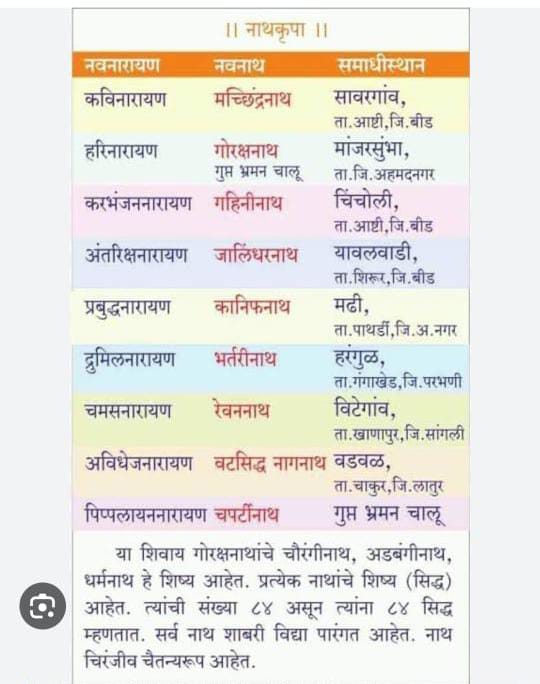
Navnath are the nine saints on whom the Nath Sampradaya, the lineage of the nine gurus, is based.

  • Machindranath or Matsyendranath
  • Gorakshanath or Gorakhnath
  • Jalindranath
  • Kanifnath or Kanhoba
  • Gahininath or Gehininath
  • Bhartrinath or Bhartarinath or Raja Bhartari or Bhartṛhari
  • Revananath or Revan Siddh or Kada Siddha or Ravalanath
  • Charpatinath or Charpatakshnath
  • Naganath or Nageshnath

Navnath Temple in Maharashtra 

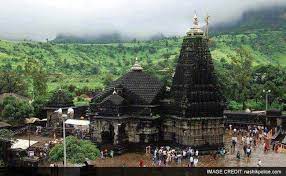
Navnath’s are highly revered in Maharashtra and they have a large following. There are 9 Temples / Samadhis of these saints which are very popular among the locals. Very limited knowledge is available in the public domain about these temples and this Blog should help those interested in visiting these divine places.

If you want to visit these temples contact Sai Aditya Travels Shirdi (Arvind) and ask for driver Rahul or Sachin + 91 99705 75677, +91 96232 60379

Trip Plan 

With Shirdi as base we started at 7.30 AM and headed out on the Ahmednagar Manmad highway. After ~ 35Km we stopped for breakfast at Samadhan Hotel.

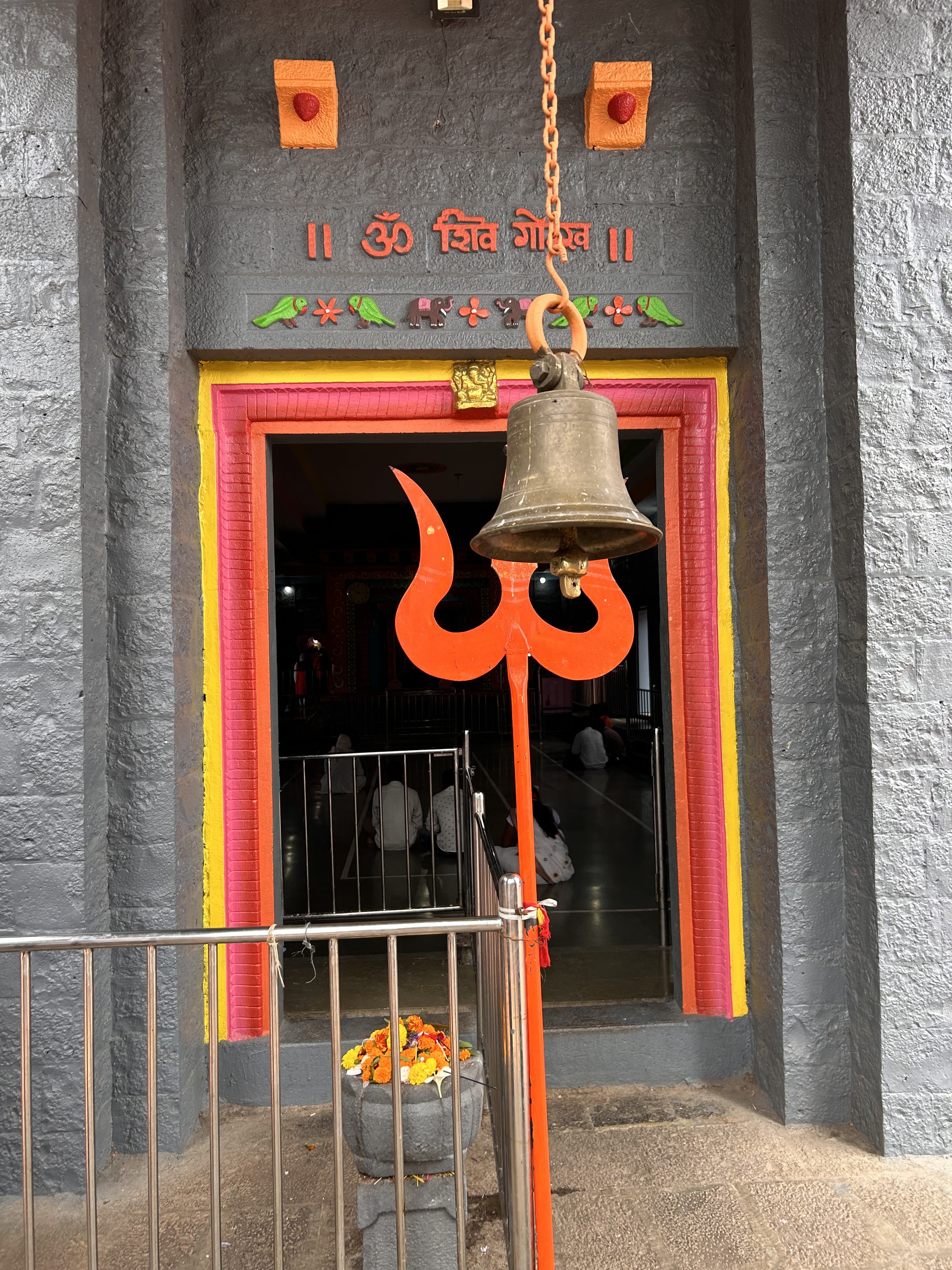
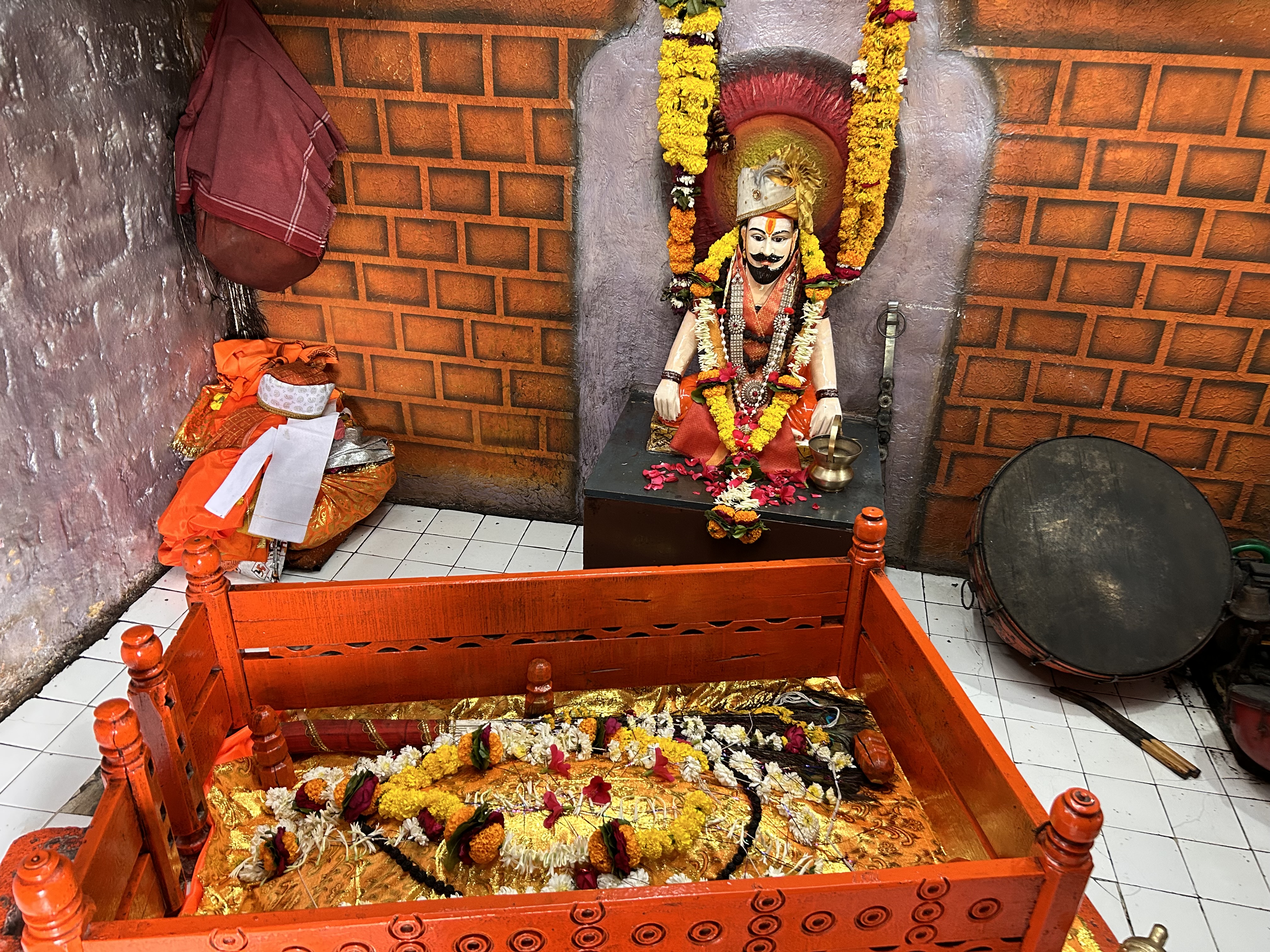
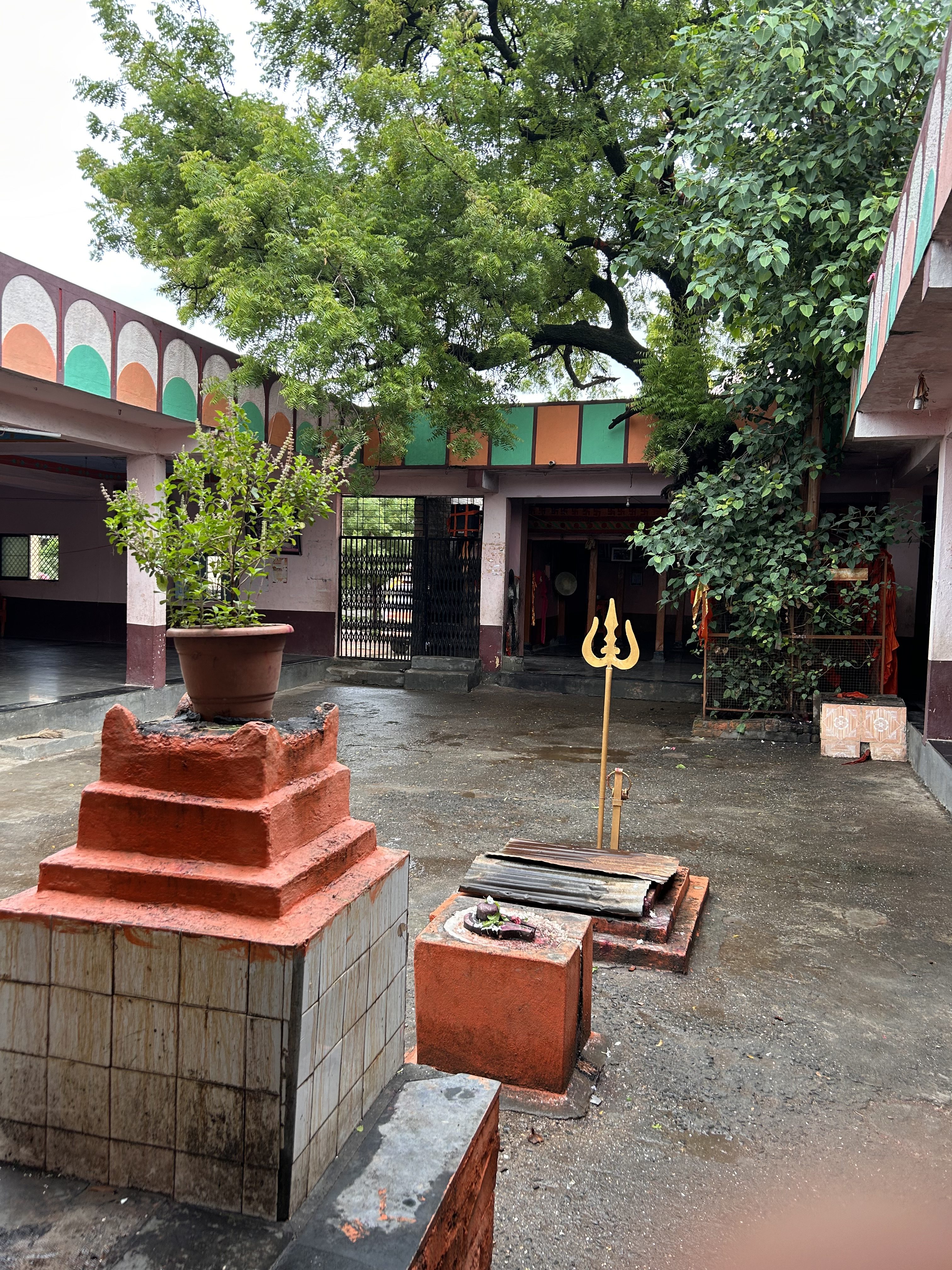
By 9.15 AM we reached Gorakhnath Temple at Maanjar Sumba Dongargan, Ahmednagar District. The temple is on the top of a small hill – 1000 Feet and you climb a few steps. As you drive up the hill towards the steps the view is scenic. Green hills and lovely views. You will cross a Goshala with many well fed local breed cows grazing on the natural herbs. The temple is very well maintained – and one of the first things you see is a large Dhuni. This is something you will find in all the Nath Temples. All of them were located atop a hill / surrounded by greenery.

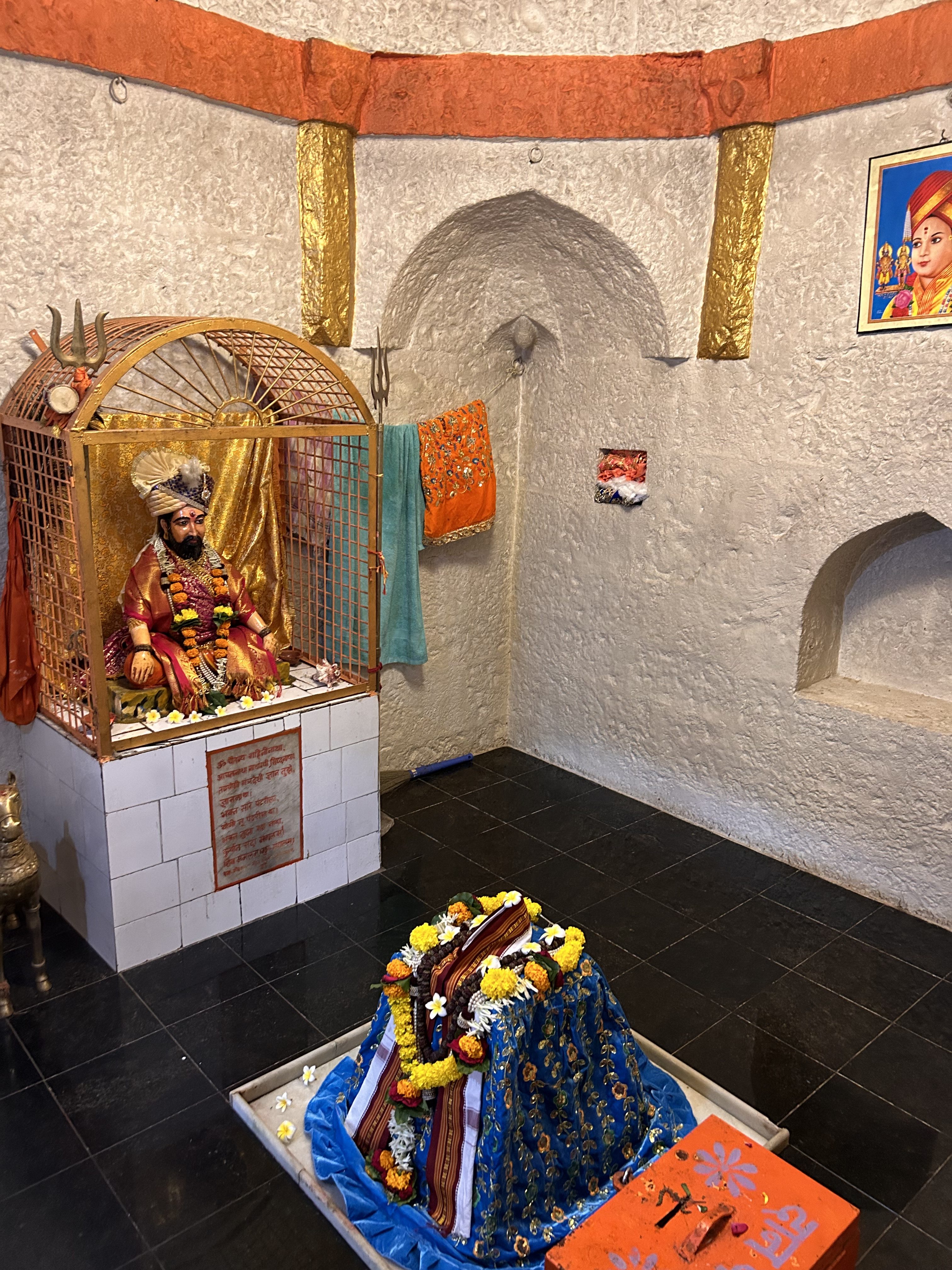
A short 15 min drive from here we reach the Samadhi shrine of Minnath. He was one of Matsyendranath’s two sons. Unfortunately this place is now called Miravali Baba Dargah.

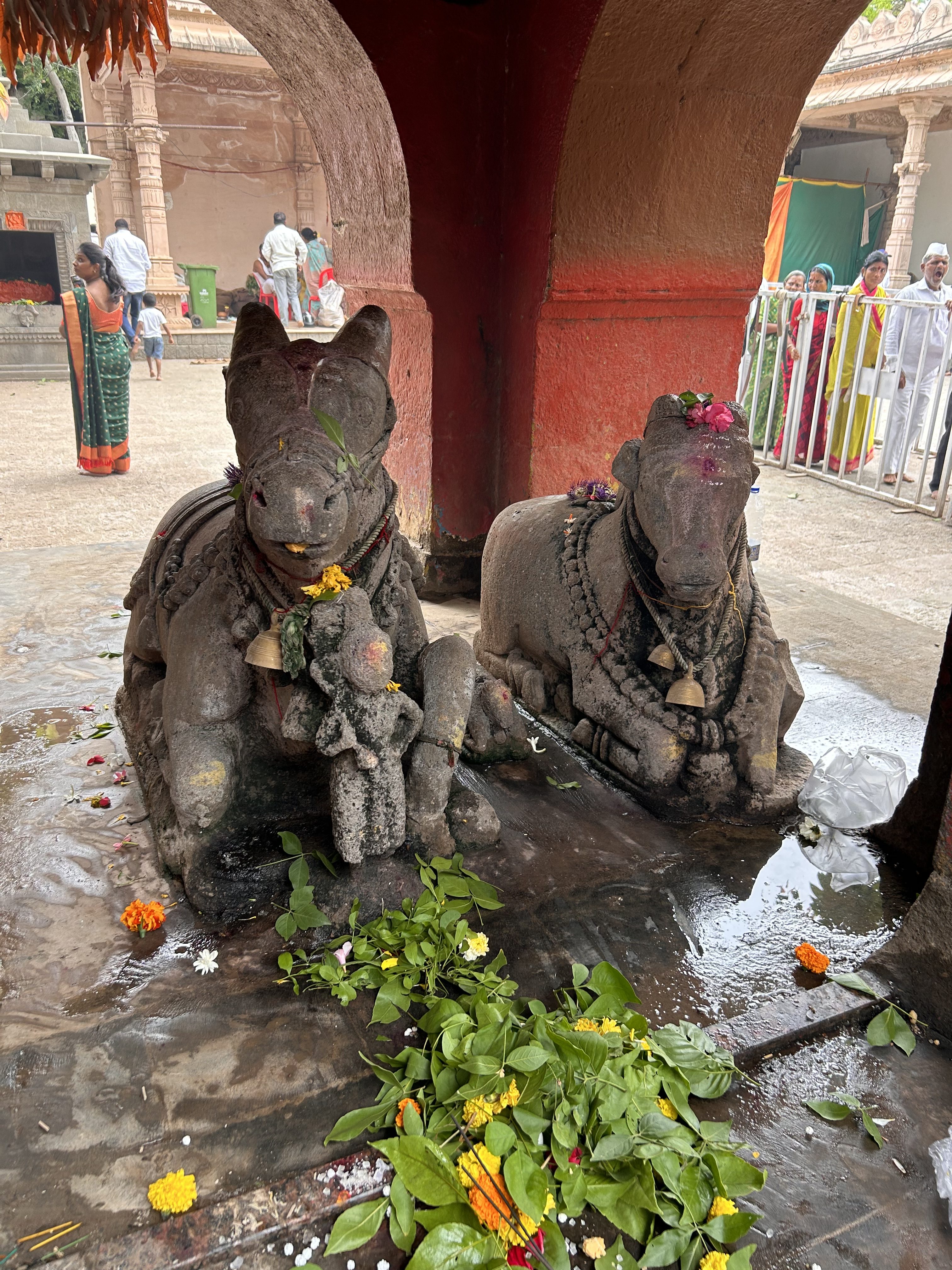
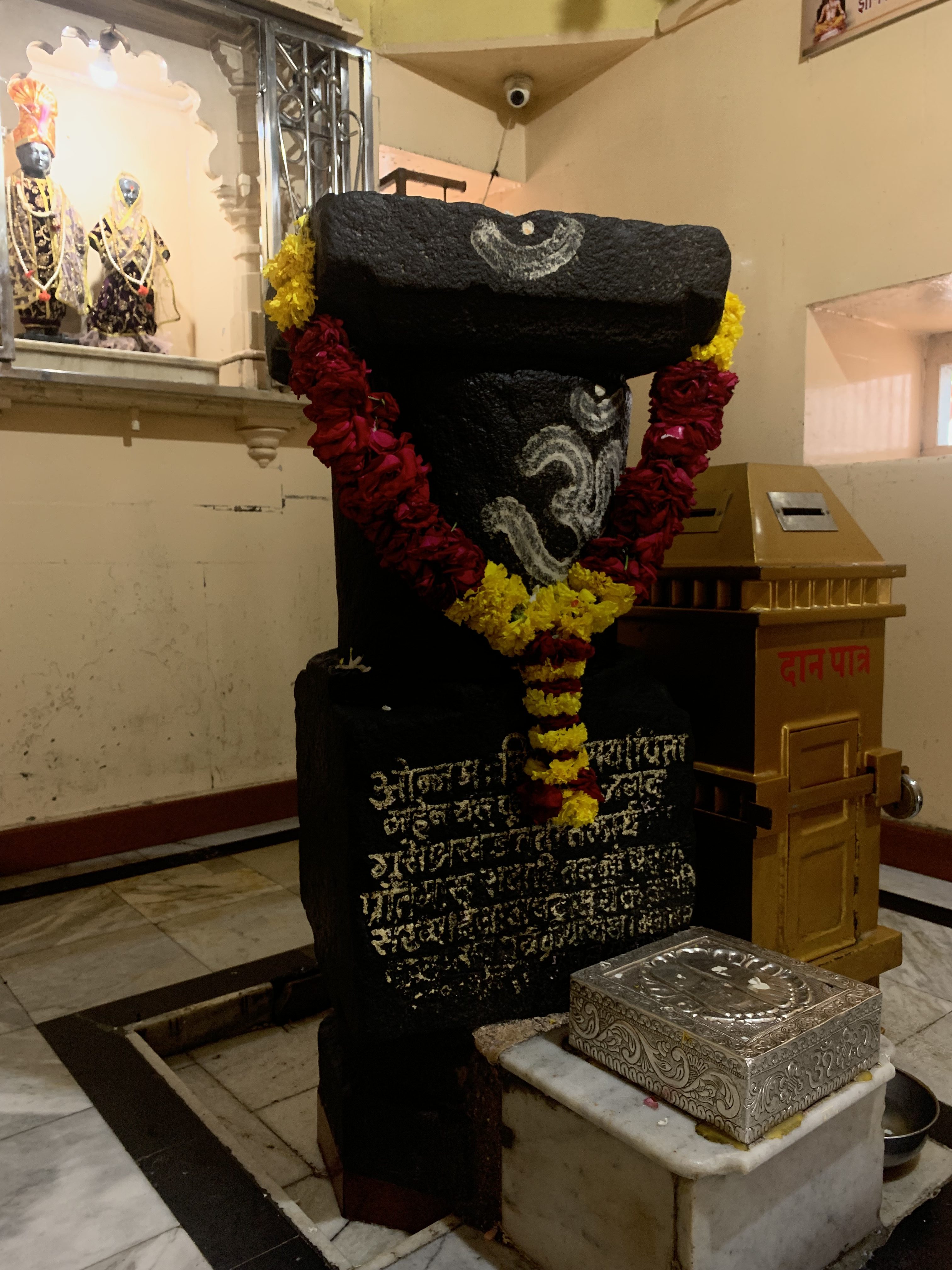
Our 3rd stop was at the beautiful and energised Vriddheswar temple at Ghatshiras. Located in a valley surrounded by thick forests and hills. It is a 1 hr drive from the Minnath Samadhi (50 Km). This temple is very special for the Nath sampraday and is considered the sadhna sthal of the Nath’s. It is believed that Lord Shiva came here disguised as an old man to attend the Yagna being conducted by Matsyendranath & Gorakhnath. The Shiva Linga is not the typical shape – it is large and amorphous and looks eroded because of the effect of water. Locals claim that this Shiv Linga is growing every year. Another unique aspect of the temple – it has 2 Nandi’s.

A short 20 min drive (on a normal day) will take you to the Samadhi temple of Matsyendranath at Mayamba. The last few kms are mud roads. We were visiting on a Monday that happened to be Amavasya – so there were huge crowds. When planning your trip avoid visiting on Amavasya. This is again a large temple and further expansion is under process. Again very scenic location on top of a hill.

7 Km from Mayamba a 15 – 20 min drive is the Samadhi temple of Kanifnath. It’s again on top of a hill. The car goes a long way – but the final ascent is a few hundred steps. There are two Q’s – ensure you are in the Q that goes right next to the Samadhi , the second Q is for distant viewing. As you walk out you will see signs for a small cave where Kanifnath meditated. Do visit this place. From the Kanifnath temple you can get a good view of the Matsyendranath temple further up.

Our last stop for the day was the Mohota Devi temple at Pathardi. A large well maintained temple up a hill. Timing was good it was evening and breezy.

As you drive out of the temple you can spot a few lodges including one managed by the temple trust. You can choose to stay here (rooms are basic). We explored trying to find a better place and settled at Hotel Prashant in the outskirts of Pathardi. Its a new hotel and the rooms were decent with AC & Hot water – at 1500 Rs / night it was perfect.

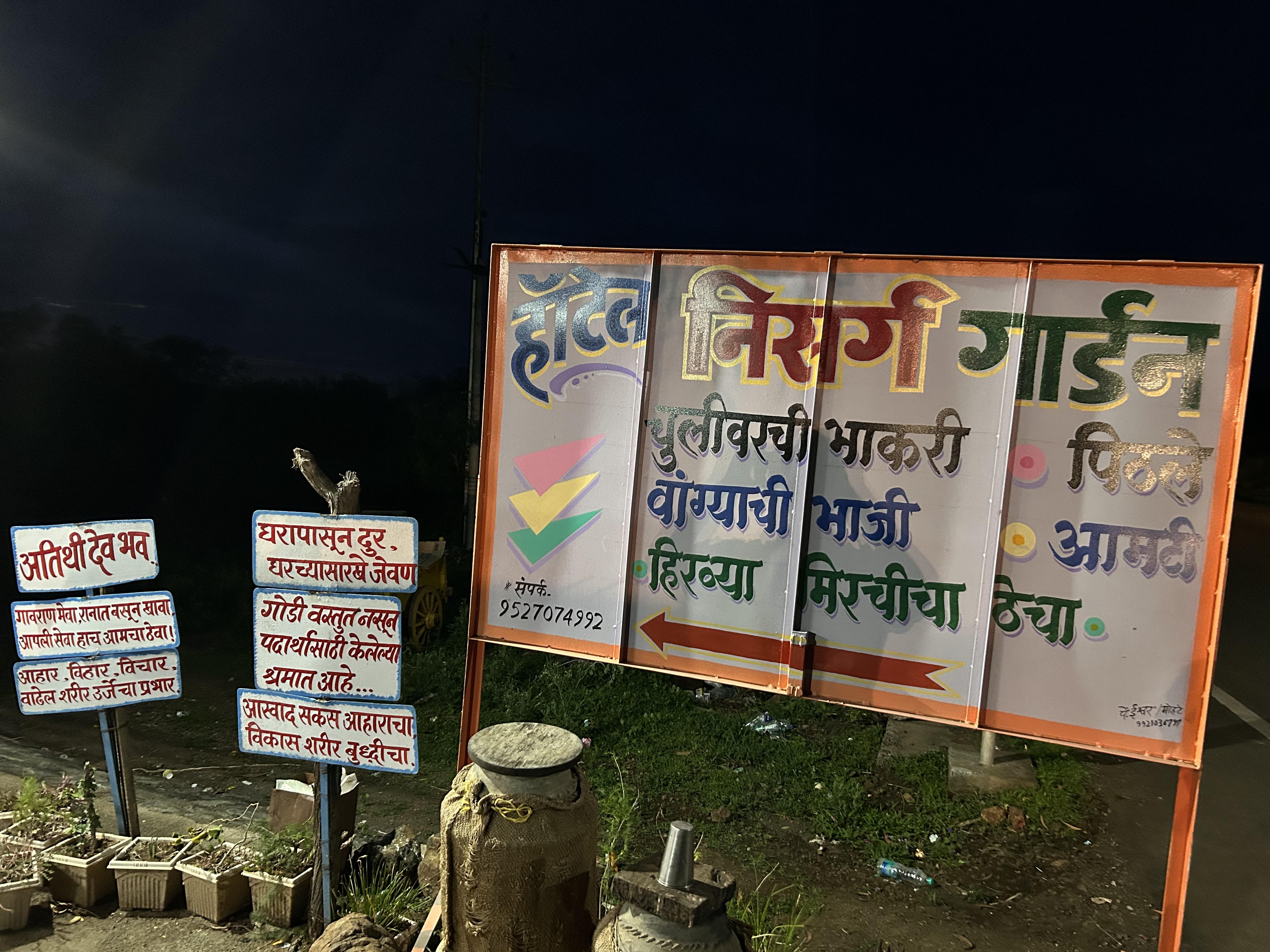
We had dinner at one of the small family run restaurants on the way back from the Mohota Temple. Homely local food – Bajra Ki Bhakri, Baingan Sabji, Kadi, Petla, Aloo Vadi, Papad & Mirchi Ka thecha. Food was freshly prepared on a chula and served fresh and hot. All the ingredients from the owners farm.

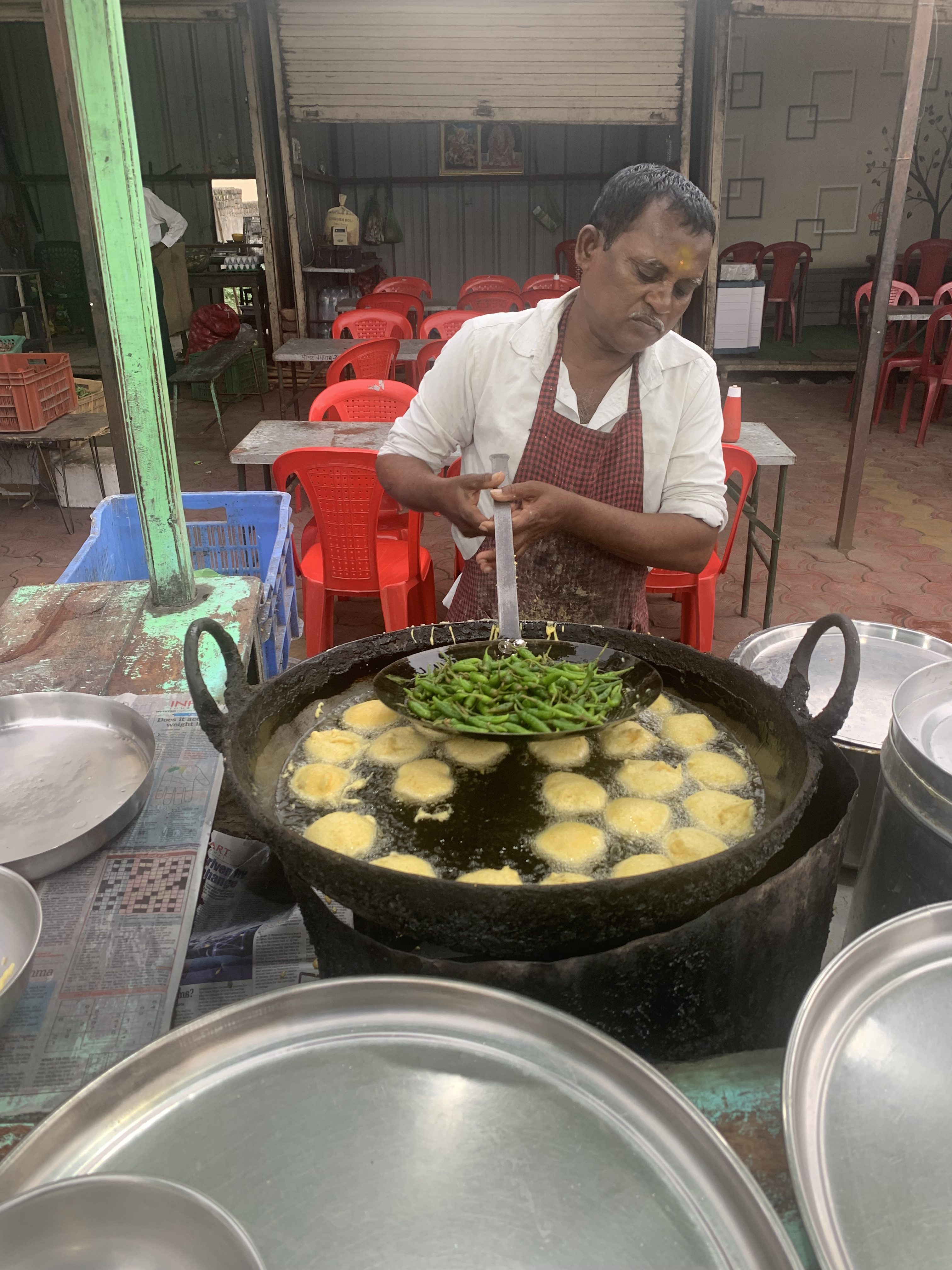
Day 2 we start at 7 AM on the Amalner Beed road. We are headed to Chincholi – 60 Km, 1 1/2 Hrs to visit the Samadhi temple of Gahni Nath. Enroute we stop for a breakfast of Vada Pav & Chai . The drive is scenic – after a few rains everything is lush green. Full of black soil we see fields of Cotton, Sugarcane, Pomegranate, Mosambi and Lime orchards. The last few kilometres are breathtakingly scenic with hills and valleys as long as the eyes can see. Of all the places I liked this the best. This Samadhi  is managed by a Kumbhar family. They had to take permission from the Nizam – after 21 years of waiting they finally got approval once Ambedkar became the home minister. Many of the Samadhi Sthals are contentious and claimed to be those of Islamic Pir’s. Some are even under litigation.

The energy in all the places we had visited was beautiful but this place was divine. The solitude added to the charm. Close to this samadhi site is a larger temple which is the Paduka Temple of Gahni Nath. Many tourists get confused as the Paduka Temple is also called Samadhi Mandir. Gahni Nath was the guru of Nivrutti Maharaj the elder brother of sant Jnyaneshwar.

Our next stop was a 30 min scenic drive to Yavalvadi. We drove up a hillock. Again a wonderful place – perfect for solitude and meditation. This houses the meditation cave of Jalendranath. Barring the priest who manages the temple there was nobody here and it was a nice experience sitting in the meditation cave.

The Samadhi temple of Jalendranath is close by – a 10 min drive.

The next stop was a long 125 Km drive and the last 25 km of the roads were atrocious. We were driving through Beed, one of the poorest tribal regions of Maharashtra. This journey took us well over 4 hrs to the samadhi temple of Bhartari Nath. The temple is a little unkept but the Samadhi cave was highly energised.

We are now 350 Kms from Shirdi and its 4 PM – the drive back is a 5 hr drive. The Amavasya crowds of day 1 and the bad roads on day 2 have taken away 4 – 5 precious hours. We have covered 6 Navnath temples + a lot more. We had planned to cover  Vatsidh Nagnath which was not far from Parli Vaijnath. We are forced to head back and plan the remaining temples another trip. The road back is good and the last 75 Km we are on the Samriddhi super highway. We make it back to Shirdi by 8.45 PM. We have covered 890 Km in 2 days and accomplished a lot. Travelling solo helps in saving time.

Few Travel Tips 

  • You are travelling in Central Maharashtra – Ahmednagar / Beed / bordering Latur district. Summers can be exceedingly hot and dry. I was lucky – in mid July it was pleasant and green. This place receives scanty rainfall.
  • Airtel network is not reliable – this is Jio territory.
  • You cannot do this trip with Google Maps and any driver from Mumbai / Pune. You need a local driver who knows to locate these places. Better still someone who has done this – hence my first point ask for Rahul or Sachin when you make the booking with Arvind at Sai travels.
  • Simple fresh food is available enroute – no fancy restaurants, bathrooms will be Indian style on the highway. Breakfast is normally Poha / Vada Pav / Chai.
  • Holy book of the Nath Sampraday is Navanath Bhaktisar – unfortunately it is in Marathi (maybe Hindi Translation). If anyone can find an English translation please share it with me. There are many more great Hindu texts written by the Nath Rishis that include Gorakṣaśataka, Goraksha Samhita, Goraksha Gita etc.
  • Matsyendranath is revered not just by Hindus but even by Buddhists. In the Tibetan tradition, Matsyendranath is identified with Luipa, one referred to as the first of Buddhist Siddhacharyas. In Nepal, he is a form of Buddhist Avalokiteshvara.
  • Matsyendranath & Gorakhnath are included in the list of 18 Tamil Siddhars
  • The birth of all the Navnath’s have interesting stories. You should google and read on them. Some commentators claim that Lord Krishna talks about the Navnath coming to earth to help people in their journey during Kaliyug.
  • Avoid travelling on Amavasya – these are beautiful places best enjoyed in solitude.
  • My driver was an excellent driver and a wonderful guide cum partner – he went the extra mile to locate these places.


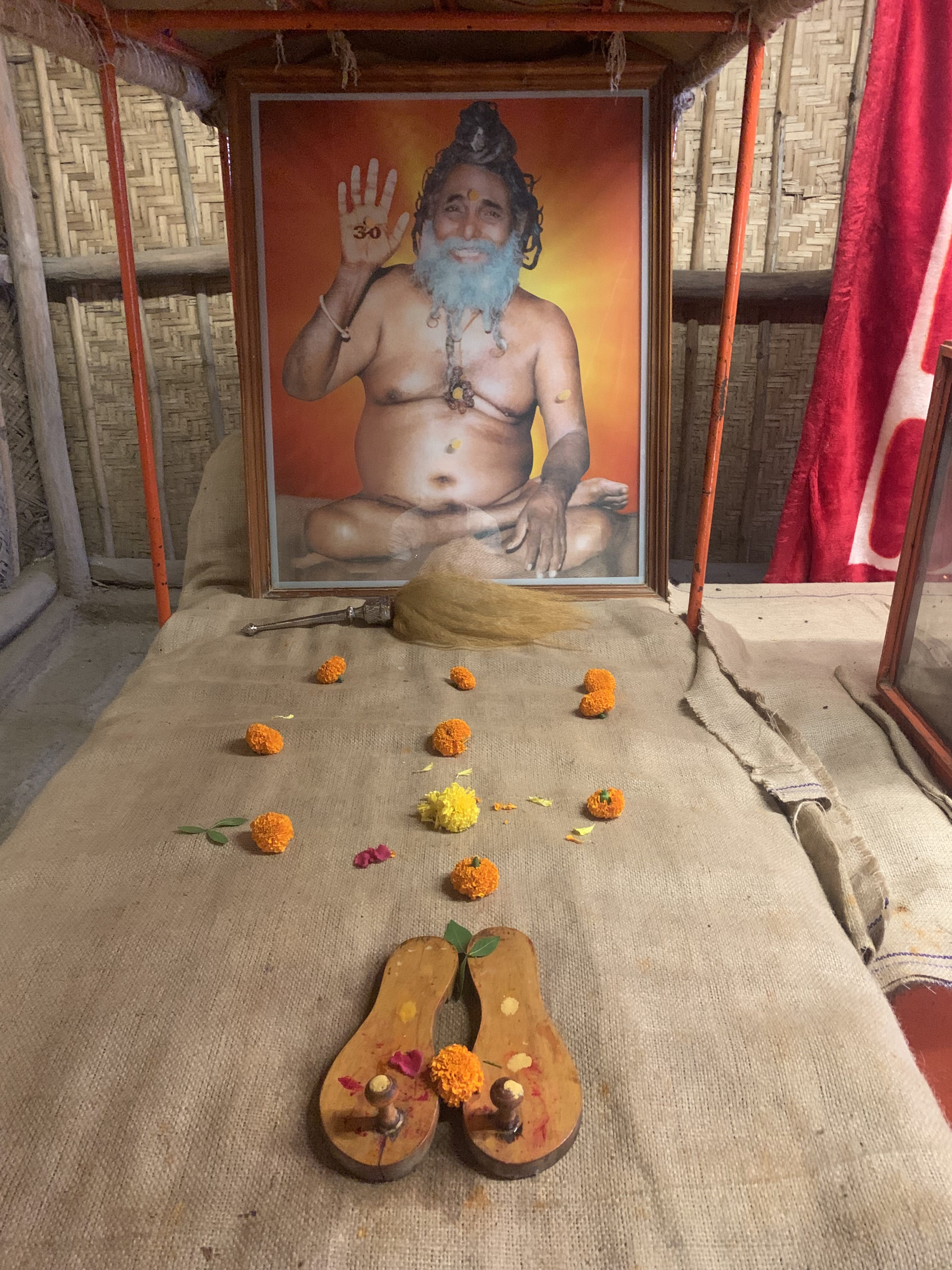
About Matsyendranath 

Navnath Sampraday

Is it the best of both worlds ? Indians settled in the US

20 Apr

After a lovely 2 month trip to the US its not just the jet lag that takes time to wear off – but also the US effect. Since my first visit to US in 1998 the discussion with friends and relatives always comes down to the Pros & Cons of US Vs India. It is true that there is a mad rush for the US Green card and an increasing number of students are heading to US Colleges spending a fortune. So why the debate – isn’t it a clear winner ? Lets look at some perspectives and views that came up while meeting friends and relatives.

Confident – Independent – Busy : That summarises the people I met and observed in the US. From school the education system grooms you to be independent. A building friend had moved to US 6 years back when her twins were in class 4. When they met the principal at school he assured them that the goal in Class 4 was to make the kids independent. And I could see the transformation in posture, communication, clarity of thought. Not just that –  the kids cook their own meals, pack their own food to school, and are clear on where they want to go for college.

Skilled and Productive : The era of a generalist is gone. Everyone is trained to be a specialist and is good at what they do. This is what makes the person confident. People pursue a career they enjoy and stick to what they do. Almost everyone I met had been working at the same place for 20 + years.

The sword is always hanging : That is how my school friend described life in the US. You can never be in a zone of complacency. Life is always like running on the treadmill. This ensures you dont get rusty and musty. Layoffs are common and come unexpectedly. Its part of life. Many of my friends who had spend 15 years in the US followed by 15 years in India were happy to get back to the US in their 50’s. The quality of professional life is much better.

Dual Engine family : Life in the US -There can be no passengers. The whole family pulls the train. This is the land of DIY. The systems and processes are good but there is no help. From fixing the furniture to cooking, washing, cleaning, driving, plumbing, shovelling the snow from your driveway – Unlike India there are no servants at your command. It may sound scary to the average Indian – but its not hard work. US is not dusty and crowded like India so the house barely gets dirty. Life doesn’t rotate around food and most people cook once or twice a week – frozen food is the norm not the exception. The system works – everything is organised, that takes away the stress from day to day life.

Everything is available : The Indian stores in US are now mainstream. You can get everything you want – from vegetables, grocery, instant dosa dough…. you dont miss anything even in the remote corners of small town USA. If you dont have the time to visit an Indian store – Amazon delivers in 24 hrs a Prestige cooker or Masala Chai. Many US retail stores have started stocking Indian/Asian food.

Clean, organised, predictable : The best part of the US is the finishing touch – no cutting corners. The leftover food is packed in such nice containers you dont feel like throwing it away. The retail experience is wonderful, driving and parking cars is a pleasure. Driving 45 Miles in 45 minutes is almost always achievable. UBER is clean and wow. There is choice –  from milk to orange juice to potatoes – you have a diverse variety for every palette.

The system works : Commitments are met and cheating is rare. You get a refund with no questions asked. We moved into a new apartment that was 25+ years old – it looked spanking new, everything worked perfectly. No calls to electrician or plumber. The Broadband gear was ordered online and arrived in 24 hrs and it was a 15 min job to get it connected and working. (In Bangalore its a 1/2 day job to get Broadband set up in our apartment with a Airtel rep and the building electrician struggling to figure out the cabling)

But its lonely … 

Life is busy and you rarely get to meet people. In a beautiful apartment complex of 150+ houses you rarely get to see people. The kid below our house comes out at 4 PM every day with his ball – but he is alone. My morning walk  for nearly 2 months I hardly saw people on the streets. The good thing is its also quiet and serene. The whole place is like an Ashram.

And its expensive … 

The only thing I missed in my morning walk was a cup of chai and the Vada from the local Darshini. That is something you will not get. Coffee is 6 dollars and if you add a muffin + tips you are knocking at 15 dollars. The simplest of meals / person – Burger / Pizza / Chipotle Bowl … will be in the 15 dollar range. Fine dining in a mid range restaurant with starters and drinks can be 75 – 100 Dollars for two.

But not everything is expensive – a high end car in the US is cheaper than its equivalent in India and so is petrol. The system rewards you to plan – an Amtrak ticket to New York ( 110 miles) can vary between 21 USD – 150 USD depending on when you book it.

Most importantly the Zing is missing 

You have everything but the energy is missing – at least in the 50 year olds. There is a sense of ” been there done that” – but the journey is not over as one needs to keep working till 65 to cover medical insurance. The blog below summarises the different stages of life in the US – and 50 + is not the happiest of phases. But then having lived all your adult life and with kids settled there you are not ready to come back.

 “Is Settling In USA Worth It For Indians?”

Parents & Old age homes 

In your old age you are on your own. Nobody has the time / resources to look after their parents like we do in India. Many Indians get their parents a green card and for many years they shuttle back and forth before finally settling down at “nana nani”in Coimbatore.  The annual pilgrimage to India continues to meet your parents – at least for the first generation.

Where does India score …. 

Is India shining a reality – a relative felt that India was making too much noise and not much had changed for the better in the last 25 years. Yes the roads are a mess and we still dont know to make footpaths and manage our garbage. Water / electricity / safety are all concerns but there are a few +ves

Digital economy – we are way ahead globally. Banking transactions on the App, Covid certificates online … very few countries can match India when it comes to the progress we have made on the Digital arena.

Healthcare – Costs are affordable and the facilities are good in the urban centres with the bigger hospitals. US medical costs can make you bankrupt – if your company doesn’t cover your insurance you may end up paying 500 – 750 dollars / month for insurance cover.

Affordable – At the higher end (Luxury cars / Villas) costs in India are comparable or more expensive than the US – but day to day expenses are a lot cheaper. Food, hotels , flight, clothes all cost a fraction of what they cost in USA.

So is there a winner …. 

Well if you open the gates to the US a very large segment of India will rush in, I am not sure if the same can be said the other way round. Independent people, competent with skills, ready to learn and adapt …. these people will love the US way of life. Younger generation, professionals will definitely choose US over India. For the rest its a matter of choice …. or destiny


Explore Jyotirlinga’s of MP + Maheshwar, Mandu

25 Oct

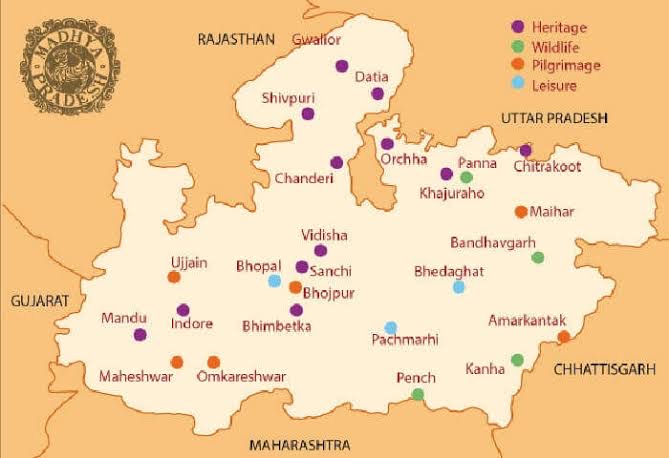
Thanks to direct flights from Bangalore most destinations across India are now an easy 2 – 3 day trip. The 2 Jyotirlinga’s of MP were on my list for some time and when I got started it was easy to plan and execute. MP is beautiful and waiting to be explored – with direct 90 min flights to Indore & Bhopal it is easy to access. MP is a large state and there is lots to see – what we accomplished in 3 nights was Ujjain / Omkareshwar / Maheshwar / Mandu & Indore

Indigo 7.30 AM flight reaches Indore at 9 AM. Indore to Ujjain is 60 Km and the drive is 75 min including a breakfast stop for Poha / Jalebi / Kachori  (This is the breakfast you will get all across MP)

Ujjain is an ancient city on the banks of the Shipra river. Since 600 BC it was the political centre of central India and the capital of the Avanti kingdom. Ujjain is called the Greenwich of India – this is where the zero meridian and Tropic of Cancer intersect. Before Greenwich (in 1854) Ujjain was considered as the central meridian for time in India. Even today when a Hindu horoscope is drawn up the time is always referenced to Ujjain time. Time is KAAL and Ujjain is home to Mahakaal – the ancient Jyotirlinga. Ujjain is also where the Kumbh Mela is held every 12 years.

You can cover all that there is to see in Ujjain easily in 1/2 a day – we were lucky with no crowds – Oct 10th was a Monday and the 1st day of the holy Karthik month, thankfully Prime Minister Modi was to inaugurate the development work around the Jyotirlinga on 11th so the crowds had stayed away.

What to see in Ujjain 

Harsiddhi Mata Temple a Shaktipeeth where Devi’s elbow is supposed to have fallen. the normal practise is to visit the Devi temple before proceeding to the Mahakaleshwar temple

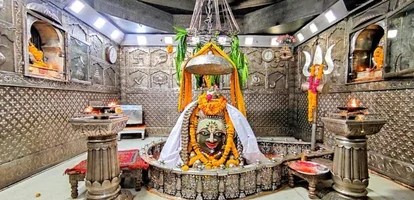
The ancient Mahakaleshwar Jyotirlinga temple is a 5 min walk from the Shatipeeth. A friendly priest took us in bypassing the sparse crowds. You can carry your phone and there are no dress restrictions. Compared to the other 9 Jyotirlinga’s I have visited – the Lingam at Mahakaal is large. The temple complex is small – there is a shrine for Omkareshwar and on the 3rd floor a shrine for the snake god – that is open only on Nag Panchami. There is also a shrine dedicated to Navagrahas with 9 Lingams.

Mahakaal is famous for the early morning Bhasm Arti at 4 AM , and you need to book tickets months in advance. Its a sight to see at least once in your lifetime, and I intend to come back. With the new development works being inaugurated – I guess a trip to Mahakaal could be longer in future.

Ujjain was the capital of the great king Vikramaditya and Kalidasa wrote his grand epic Meghaduta here. As you exit the temple you will see a park and statue dedicated to King Vikramaditya and his Navaratnas.

There are hundreds of temple in the ancient city of Ujjain but these are the must visit places

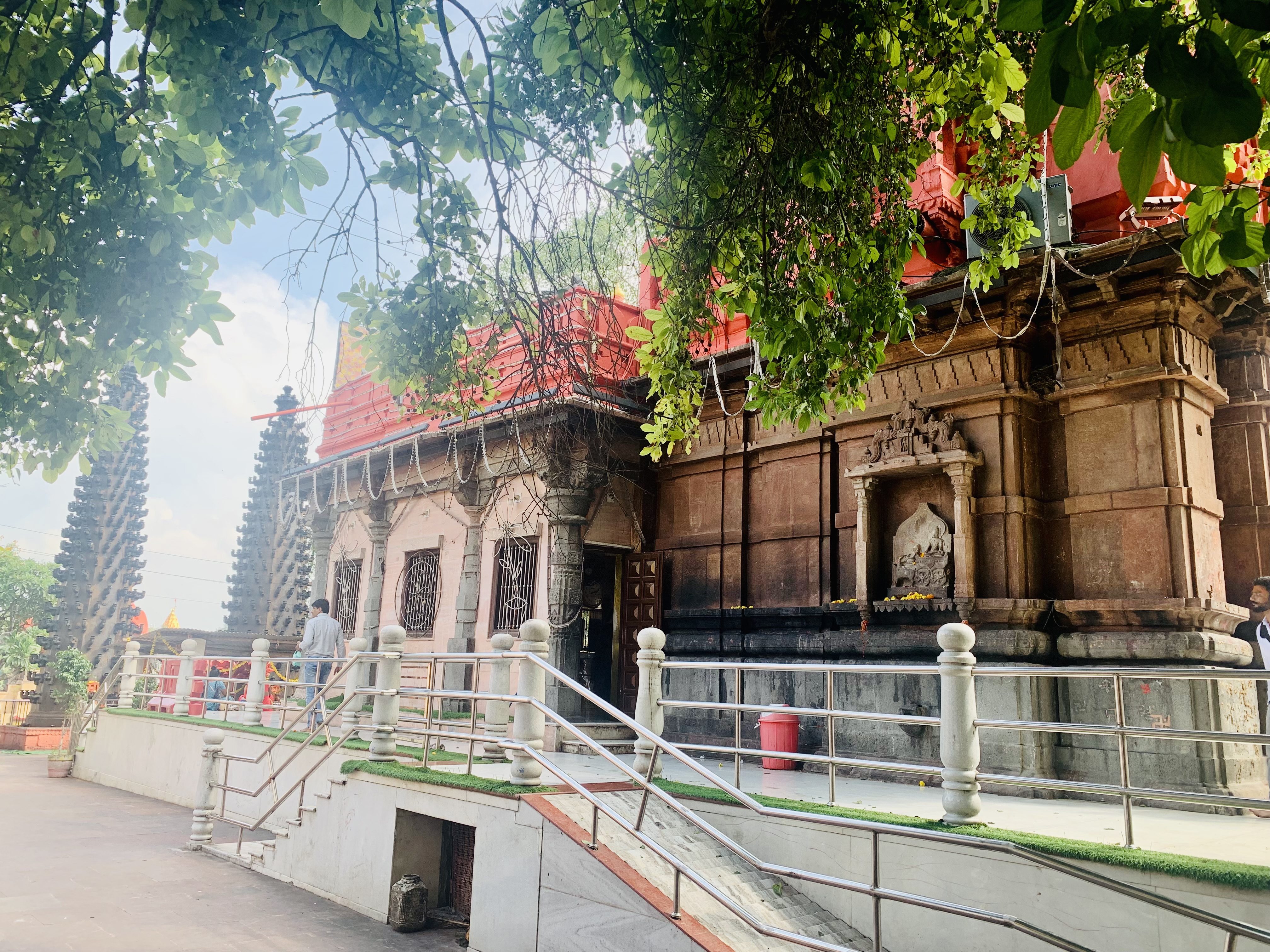
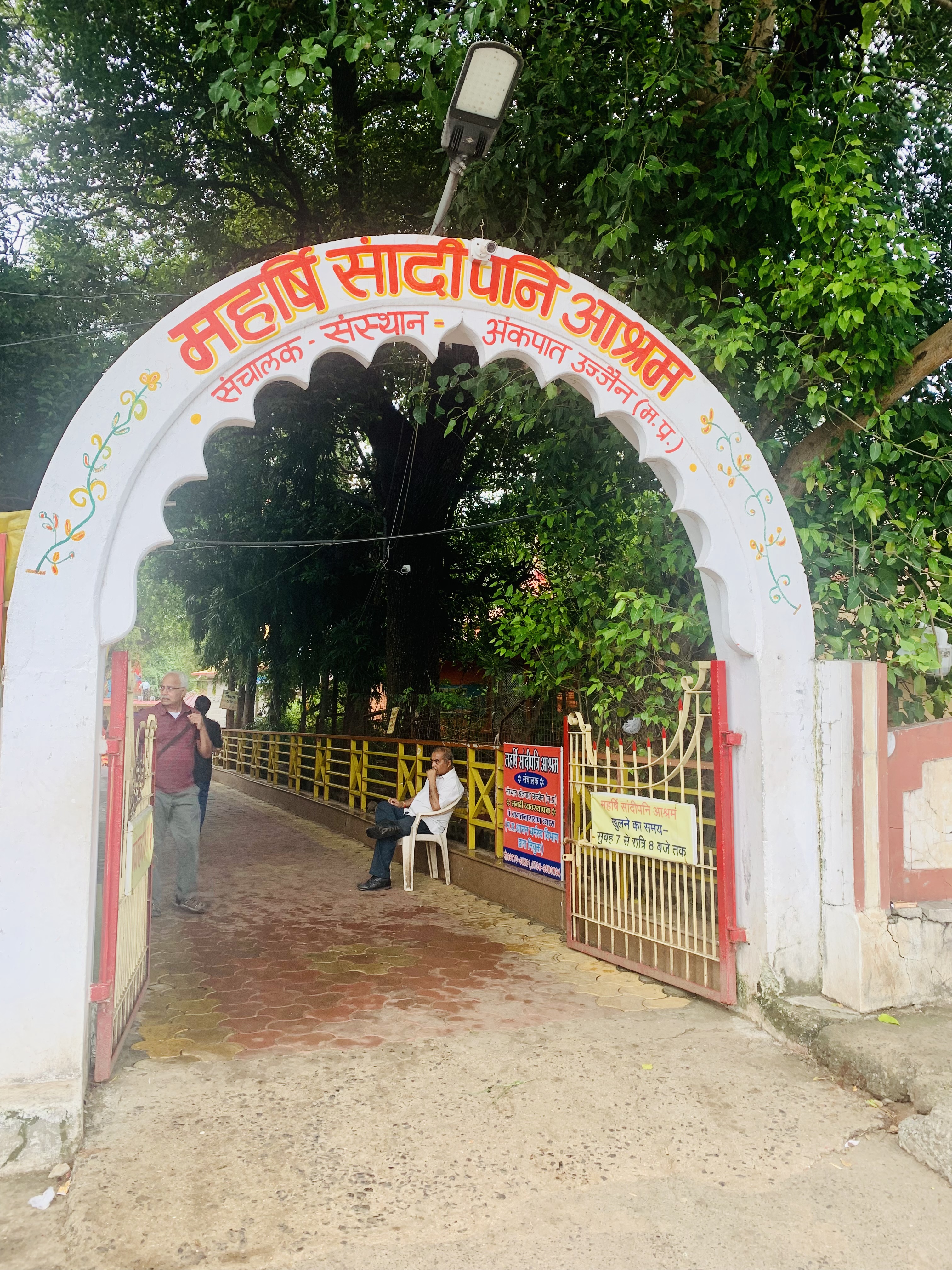
  1. Sandipani Ashram where Lord Krishna, Balram & Sudama studied. It is a beautiful place with high energy vibes. It also has some ancient temples.
  2. Ancient Kalbhairav temple – where you can offer liquor as Prasad.
  3. Ram Ghat is of immense religious significance to Hindus as it is one of the four locations where the Kumbh Mela takes place every 12 years. It is believed that Lord Vishnu dribbled some drops of Amrit at Ram Ghat.
  4. Mangalnath temple considered the birth place of Mars.

Ujjain also has a Jantar Mantar. This was the city where Varāhamihira (c. 505 – c. 587) an ancient Indian astrologer, astronomer, and polymath lived. Aryabhata, Brahmagupta, Bhaskara I & II, Vateshwara, all are said to have worked at Ujjain.

Most people dont stay at Ujjain – they consider it a Jinx. We stayed at a nice place called Sri Ganga hotel. Its a very famous sweet shop of Ujjain and they have rooms on the higher floors. Rooms are very spacious and clean. Ujjain is a clean city with broad roads and green parks. We had the evening free to roam around the city and visit the market area called Freeganj. 

Day 2 we leave for Omkareshwar at 7.30 AM 

Indore is centrally located between Ujjain & Omkareshwar. The drive to Omkareshwar from Ujjain took us about 4 hrs. Most of it is through villages but the last section is through beautiful hilly landscapes.

Omkareshwar is an island on the banks of the Narmada – the tradition is to visit Omkareshwar & Mamleshwar to complete the Jyotirlinga trip. Omkareshwar is also being developed – a 120 feet statue dedicated to Adi Shankara and an international Advaita Vedanta Sansthan is coming up here.

Omkareshwar is where the young Adi Shankara in search of his Guru met Govinda Bhagvatpada. The cave where Shankara lived is right below the Sanctum Sanctorum of the Omkareshwar Temple and there are steps that lead up to the temple and down to the ghats. Not many people know of this cave – and it was quiet and empty. Visiting this cave was the highlight of this trip.

Many people do a Parikrama around Omkareshwar – that takes about 3 – 4 hrs. The boat ride Parikrama was closed because the Narmada was in full spate after heavy rains.

A friendly priest showed us all the places (Pandit Bhagwat Mishra – 99265 55753) We were able to cover all the sites in Omkareshwar / Mamleshwar between 11.30 – 1.30 and headed out to Maheshwar the capital of Rani Ahilyabai Holkar. 

The small town of Maheshwar is located 70 Km from Omkareshwar and we reached by 2.45. Good roads. we stayed at the MPT Narmada Resort at Maheshwar which is located on the banks of the river Narmada. Its a nice property – book the new suite with river facing rooms. The restaurant also serves good fresh food.

Maheshwar was the capital of Rani Ahilyaba Holkar. It’s a small clean town – like a small European fort village. Take a guide to visit the fort. We used the services of Ashwin – 8602877830. A part of the fort has been converted to an heritage hotel.

Budget about 1 1/2 hrs to see the fort and as you walk back to your resort do stop over in one of the factory outlets for the world famous Maheshwari sarees, lightweight – silk / cotton mix in prices range from Rs 2500 – 7500.

We spent the night at MPT Narmada and enjoyed a nice walk by the river the next day morning. The Narmada is wide, beautiful and serene – it’s a rejuvenating experience walking in the ghats here – almost alone.

Post breakfast we left at 9.30 AM to Mandu. 

Day 3 we reach Mandu 

Maheshwar to Mandu is only 46 Kms. Its a beautiful scenic drive. Mandu is on a hilltop and was the capital of the Paramaras in 10th & 11th century before it was taken over by the Delhi Sultanate and then the Afghans, Khiljis & finally the Mughals. The structure is spread over multiple locations so budget two sessions of 2 hrs each to cover all the sights at a relaxed pace. One of the tombs here is was the inspiration for the Taj. Mandu is also famous for the love story of rani Roopmati & Sultan Baz Bahadur

We stayed at MPT Maheshwar – a very nice resort (Note that there are two MPT Resorts in Mandu – ensure that you book the MPT Malwa Resort)

You will need a guide to explore Mandu (Mohammad – 7748072889)

Day 4 we head back to Indore 

Mandu – Indore ~ 100 Km , 2 hrs. After breakfast we left Mandu at 9.30 AM and reached Indore at 11.30. You should book your return flight to Bangalore by the 5 PM Indigo.

Had lunch with my college friend who helped me plan this trip at lovely restaurant called Mitti cafe. https://www.mitti.cafe. Loved the ambience and the food.

Indore is famous for Namkeens – so dont forget to visit Om Namkeens and stock up. There are a few temples and places to visit in Indore if you are interested.

In summary MP is a clean, affordable, easy to access state with lots to see. Excellent food – almost everything is Veg. Good simple people. We have just covered one part of MP – there is lots more as the map on the top of the blog indicates. So it will take a few more trip to discover all the sights of MP. One of the local hotel staff tole me that Nirmala Travels from Bangalore has taken a lead in promoting group trips to MP and most tourists come from Bangalore.

Network is good and 3G worked everywhere – economy is still cash based and UPI payments are not accepted everywhere.

My friend helped organise the cab from Indore Airport and the driver was with us all though the 3 night – 4 days – 580 Km trip – he can be contacted at 9893962781 – Mangilal. 

Thanks to my college mates Rahul & Rashmikant who helped me plan this trip. So 11 Jyotirlinga’s done that leaves the Baidyanath Temple at Deoghar – and it’s good to note that the airport at Deoghar has opened recently.


3 Jyotirlinga of Maharashtra with Shirdi as base

8 Aug

This is an easy to execute trip planner to cover the 3 Jyotirlinga temples in Maharashtra with Shirdi as the base. My trip started from Bangalore. I was travelling in 1st week of Aug – midst of monsoon during the auspicious month of Shravan and was very lucky to get excellent Darshan with no rains in the 3 days of travel. Also my Sarthi (Rahul) was a valuable asset – driver cum guide, without him I could not have accomplished so much

  1. Plan your travel on weekdays – weekends can be very crowded
  2. Avoid visiting the Jyotirlinga’s on Monday – gets very crowded
  3. Avoid visiting Shirdi on Thursday – It is the busiest day

Rather than hopping across multiple hotels in different cities, I made Shirdi my base.

  • 12627 Karnataka express leaves Bangalore at 7.20 PM and reaches Kopargaon  (KPG)  at 1.45 PM. 1st AC is very convenient. Fare is ~ 3000 Rs.
  • I had booked a cab for the entire trip. The drive from Kopargaon to Shirdi is 15 Km – less than 30 min.
  • The Bhagyalaxmi hotel which is a 2 min walk from the Shirdi temple was my base for the next 3 nights. It is a very comfortable hotel priced ~ 2200 / night.

Day – 1 : I had booked an evening Dhoop Aarti at 7 PM. the Aarti is from 7 – 7.30 PM – entry is from Gate 1 at 6 PM. Leave phones in your room. Only wallets are allowed inside. There are 4 Aartis every day starting with the Kakad Aarti early morning , followed by one at noon , the evening Dhoop Aarti and the last one at 9.30 PM. All Aartis need to be booked online on the Saibaba Sansthan Trust Website. This link provides full detail to plan your Shirdi temple visit. Shirdi Temple Details 

Imp Point – As you exit the Samadhi Mandir look for the small Dattatreya Temple – most people miss this. Also at Sri Chawadi as you come out do not  miss the granite slab on which Sainath used to sit.

Day -2 : I started for Nasik at 6.30 AM and was able to complete all the sights and was back by 6.30 PM. Shirdi to Nasik is about 110 Km – 3 Hr drive. Roads were not great

    • You can stop at Gondeshwar temple in Sinnar – its 26 Km ahead of Nasik. Its one of the oldest temples of Maharastra – the cluster of temples is called Shiva Panchayatan. Built in the Hemadpanthi style of architecture by Hemadri Pandit a minister of the Yadav dynasty. This temple dates back to 12th century.
    • Trimbakeshwar is about 28 Km from Nasik – I was lucky that there were no rains and the crowd was sparse – had an excellent darshan in less than 1 hr. Phones are allowed inside – photography is not. The temple has a unique Jyotirlinga that is embedded inside the Yoni and unlike most Lingas here there are 3 dedicated to the Trinity – hence the name Trimbakeshwar. Locals claim that the Godavari flows below the Shiva Linga and then emerges in the Kushvart Teertha / Pond near the temple. The history of this ancient temple is associated with sage Gautama and how his prayers to resurrect a cow he killed led to Lord Shiva bringing Ganga here in the form of Godavari
    • Trimbakeshwar temple is surrounded by the Bhramagiri hills. This is the source of the Godavari – a 3 Hr trek (Down 2 hrs) can take you up the hill to the source. There are steps well laid out.
    • Just opposite the Trimbakeshwar temple is the Gorakhnath Ashram – a nice place to spend 15 minutes.
    • Saint Nivruttinath Samadhi is also in Trimbakeshwar – he was the elder brother and Guru of Sant Jnaneshwar.
    • Locals claim that the birth place of Lord Hanuman is also in Trimbakeshwar.
    • Overall on a good day you can budget 3 hrs for Trimbakeshwar if you are not doing the trek.
    • On the way to Panchavati we stopped at another ancient Shiva temple on the banks of the Godavari – The Someshwara temple and then headed for lunch at Shagun. 
    • At Panchavati the driver drops you in front of Kala Ram temple and then an Auto takes you for a spin around the 10 most important spots associated with Ramayana. This was the place where Sita was abducted by Ravana and Lakshmana chopped off the nose of Shupankaha (Thats the origin of the name Nasik). This section can be covered in less than 1 hr – the most interesting part was Sita’s Gufa.
    • There are a few more areas around Nasik like the Pandavleni Caves, Saptashrungi temple etc – which are 30 – 40 km away and you need more than a day to visit these places. Igatpuri the HQ of Goenka Ji’s Vipassna Centre is also 30 Km away.
    • On the way back to Shirdi we made two more stops – The Samadhi of Upasini Maharaj (a disciple of Sainath) at Sakori . And the Kalpa Vriksha Tree in Rahata – where Baba used to spend time to meet friends. The tree is unique and rare – dont miss it. Both these places are 10 Km from Shirdi and set in a rural environment.
  • Last stop for the day was Popat Vada Pav centre – a roadside eatery that serves the best Vada Pav in town.
    • All of the above was achieved in 12 hrs from 6.30 AM – 6.30 PM
    • Some rest, a quick shower and I headed out for a late evening darshan at Shirdi temple. It was a Thursday and thats the day when you can see the Palki that travels from Dwarka Mai to Samadhi Mandir.

Day – 3 : We head to Aurangabad.

  • Roads are not good and it takes us over 3 hrs to reach Aurangabad.  We started the day at 7.30 AM and were back at 6.30 PM.
  • 1st Stop was just outside Shirdi at Sant Janardhan Swami Maharaj Samadhi. The samadhi site also has a beautiful and ancient Shiva temple.

  • After a nice breakfast of Misal Pav and Poha we reached the Grishneshwar Jyotirlinga by 10.30 AM. This is the 12th Jyotirlinga and one of the smallest. Like in Kerala men have to remove their shirts and enter the temple bare bodied. You are allowed inside the Sanctum Sanctorum and can touch the Jyotirlinga

  • Right next to the Jyotirlinga is a Teertha / Pond that is not well maintained. The famous Ellora Caves is right next to the Temple and is definitely worth a visit – it is a UNESCO world heritage site. Ajanta Caves is 110 Km from here and that is a full day trip. Aurangabad also has Aurangzeb’s tomb.
  • From Aurangabad we headed to the village of Nevasa – 80 Km from Aurangabad. This is where the great Saint Jnaneshwar wrote the Jnaneshwari the Marathi Translation of the Gita. Its a beautiful temple very serene and calm – no crowd.

  • On the way to Nevasa do stop by at the ancient Siddheswar temple at Toka and the Rameshwaram Temple at Kai Gaon Toka. There is also a beautiful Dattatreya temple in an Ashram / Samadhi at Devgarh (Guru Dev Dutt / Kisan Giri Baba)

  • Aurangabad – Nevasa – Shirdi is like a triangle, we were back at Shirdi by 6.30 PM – and on the way we stopped for some delicious street food Pav Bhaji at Sai Prerna (It is right next next to the Vada Pav Stall)

Day – 4 : We head to Bhimashankar.

  • There are two routes – one Via Shani Shingnapur – Ahmednagar highway and the other by the Nasik Pune Road. We took the Nasik Pune highway and zipped by at 100 + km. Its a 4 1/2  hr drive to cover the 250 + km from Pune to Bhimashankar that included a stop for authentic Marathi breakfast at Rajkamal Kolhapuri Misal. This route is very scenic

  • The last section of the drive to Bhimashankar is thru the verdant W Ghats. There are no Hair pin bends – but the entire stretch is full of water bodies, misty hills – I was travelling in Aug the middle of Monsoon and it was beautiful. Very lucky that it was not raining.

  • Given its proximity to Pune & Mumbai – Bhimashankar can be very crowded on weekends. This was the only mistake in my travel planning – I reached Bhimashankar on Saturday morning at 10.30 and was faced with huge crowds and a potential wait time of 3 hrs. Our Innova was stopped a few kms ahead and we had to take the bus to the main shrine. By the grace of Lord Shiva I got lucky and a local lad helped me with an excellent darshan in 10 min. Here also you are allowed to enter the Sanctum Sanctorum and touch the Shiva Lingam.
  • The drive from Bhimashankar to Pune is 125 Km – once you reach the city outskirts you slow down. It took us nearly 4 hrs to reach Pune. A quick stop at my friends place where he treated me to some lovely local homemade snacks and then I headed out to the Airport for my 7 PM flight.

Other Points to plan your travel 

  • Arvind the proprietor of Sai Aditya Tours & travels helped me plan the trip. Making Shirdi the base was a great tip. My driver Rahul was amazing. If you book with Arvind insist on Rahul to be your driver. Arvind Ji – 99705 75677.
  • When in Maharashtra eat local food. Dont try Idli / Dosa here – feast on Vada Pav, Misal Pav, Poha etc

  • Network was excellent almost all through the trip – barring a few hrs from Bhimashankar to Pune.
  • Thanks to my driver Rahul a few more future trip ideas opened up in Maharashtra
    • Nav Nath temple tour – can be done in 1 day from Shirdi.
    • Most Marathis claim that there are 5 Jyotirlinga’s in Maharastra – the other two being Nagnath in Aundh & Parli Baijnath. These are farther off from the 3 that I covered.
    • The train to Kopargaon from Bangalore stops at Sholapur in the morning at 6.30 AM – this is the base for the Samadhi and Ashram of the great Saint Akallkot Maharaj – Swami Samarth
    • Kolhapur Lakshmi temple is also a must visit – its about 220 Km from Pune.
    • The Vittala temple at Pandharpur and the Dattatreya Temple in Gangapur can be covered together


Sacred Grove – A bit of the Himalayas near Bangalore

21 Jul

Tucked away amidst lush green paddy fields and surrounded by hillocks in what looks like no mans land is this beautiful place called Sacred Grove. Managed by The Satsang Foundation, it is powered by the vision of Sri M.

What is Sacred Grove 

It is neither an Ashram nor a Resort. It is a centre for Exploring Consciousness. 

Spread across 17 acres of pristine greenery this is an oasis of peace & tranquility. What you get here is solitude, fresh air, long walks along grassy pathways, the opportunity to pet a baby calf in the Goshala, research a subject in a well stocked library or enjoy the services of a professional wellness centre.

There are over 200 varieties of rare plants, herbs and trees with exotic flowers and medicinal properties that attract many a rare bird and butterfly. So when you get up in the morning and sit down for your meditation be prepared to be disturbed by a variety of tweets.

Where is Sacred Grove located 

About 150 Km from Bangalore – Its a 3 hr drive from Koramangla if you leave at 7 AM. Located  in a village called Pedda Kondamari, in Chowdapalli – Chittoor District. Take the Tirupathi NH upto Mulbagal and then a left towards Punganur. On the way dont miss the special Mulbagal Dosa at VVR Anand Bhavan. (Located on the other side of the road a km before you take your left turn)

Madanapalli is 1 Hr away but while coming from Bangalore if you drive Via Madanapalli the drive time will be almost 5 Hrs.

Which is the best time to visit 

Summers can be hot – but the rest of the year its beautifully. Especially during & after the rains. Given the greenery all around there is a pleasant breeze all day through and evenings are very pleasant. The night sky is brilliant.

What about the accommodation (Sadhak Nivas)

You need to book in advance. There are 5 operational cottages that can accommodate 20 people. The rooms are very well designed and spacious. They are simple but classy. From the curtains to the mats there is an eye for detail in every single thing. All the cottages have a sit out in the front & rear.  They are named after the plants that grow in front of them – Rudraksha, Kanuga, Parijata etc. Rooms are well equipped and all you need to carry are your toiletries & soap.

So what do I do at Sacred Grove 

I keep myself busy from 5 AM to 10 PM.

You can start the day with meditation / Yoga / Chanting – find a nice green corner or sit in the portico near the library or by the Madan Gopal shrine. Enjoy the rising sun. Then have a cup of tea and go for a long walk – take your slippers off and enjoy the dew laden moist grass on your feet. Visit the Goshala and say Hi to the 14 Traditional Gir cows that came all the way from Melkote. Morning 7 AM is when they get milked listening to some lovely instrumental music. (Dont forget to get them some Gud & Bananas)

After breakfast you can spend time at the well stocked library. Post lunch – take a nap or get back to the library. In the evening you could go watch a talk by Sri M at the library, explore the campus, just sit by the water conservation pond or the old well and do nothing. You could visit one of the shrines and do some chanting or meditation.  Volunteer for some work in the kitchen or garden. Dinner starts by 7.30.

And dont forget to book a session at ArogyaM the ayurvedic wellness centre that offers traditional therapies.

If you are friendly with the library in-charge Anand, he may take you for a trek up one of the hillocks close by. Budget 2 – 3 hrs for that. Treks are normally done in the morning.

There is no TV at Sacred Grove – but the 4G network is good. There is also Wi Fi at the Library. But this is a place where you should stay away from your gadgets.

What about the food 

Food is simple, fresh, healthy, vegetarian fare served at the well equipped Kitchen – Santrupti. Some items are home grown – Millets, groundnuts , few veggies etc. Milk comes from the Goshala. Menu is mostly S Indian. There is no concept of room service or customised food. You get 3 nutritious meals a day – and if you want to snack or have a sweet tooth carry some stuff with you. There are no shops close by. You have a kettle in your room so you can make your morning tea.

Is there a fixed routine

Nope – this is not an Ashram. Yes there are fixed timings for meals at the dining room – but other than that you decide how you want to spend your time.

If you happen to join a retreat or a wellness centre program then there will be a routine to be followed.

About the Wellness Centre (ArogyaM) 

The wellness centre is run by a professional company. There are doctors, therapists and well equipped treatment rooms. They have 9 rooms for stay & 4 treatment rooms.  It is a self sufficient centre and is centred around the Dhanvanthri shrine. The centre regularly organises multi day wellness camps targeted at specific areas of health.

The well stocked Library 

The Library has over 1200 books covering diverse topics. From Sufi literature to Nath Sampraday, Ramkrishna to Ramana, Lakshman Joo to Aurobindo, Yoga, Tantrashastra, Vedas & Vedanta…. – its a paradise for a spiritual seeker. The Library also has a well equipped AV system.

Is it safe – so far away in the midst of nowhere

It is perfectly safe – Yes Nagraj and many of his disciples live here but they have not troubled anyone. This is their house – we are the guest. Be careful while walking at night and keep the doors and window nets closed at all times. I haven’t seen monkeys but the locals say that they exist.

The closest shop is 5 Km away. Carry your medicines / torch / snacks / umbrella / floppy hat / a trekking stick if you plan to go trekking. Dont carry plastic bottles – the place is clean and pure lets not mess it up.

A few more points 

Dont plan a rushed day trip. Enjoy this place by spending at least a few days. I try to come for 3 nights every month. This place is best enjoyed in solitude so come alone. This is NOT a family get away – most kids will get bored. If you have food allergies and need customised food or you cannot survive without your 6 AM Filter Coffee then you may find it a little difficult here. Rooms are great for two people with two single beds.

Background 

Sacred Grove is managed by The Satsang Foundation. The centre was launched on 4th June 2018 with a ground breaking ceremony by Sri M.

Later the Goshala was launched followed by the consecration of the Madana Gopal Shrine on 26th Aug 2021.

The Library, Wellness Centre, Dining Hall & Sadhak Nivas were inaugurated by Sri M on 3rd July, 2022.

Sri M with the team that came up with this divine place in a short span of 4 years. Building & maintaining a place so far away from a commercial hub is not easy – so full credit to the team for having done an outstanding job.

Sacred Grove is already attracting great reviews with repeat visitors. Give it a few more years as the trees grow and the energy of the place blooms – the paradise will get better.

How do I book a cottage at Sacred Grove 

Drop a mail to book a room at sacredgrove.sadhaknivas@gmail.com. The place is open to all.

You can also sponsor a cottage and get 50 days of free stay/ year for 15 years.


Bangalore to Srisailam – Jyotirlinga & Shakti Peeth

25 Jun

Popular as Kailash of the South among the 12 Jyotirlingas in India; Srisailam Mallikarjuna Jyotirlinga temple is located atop Shri Saila Mountain, on the banks of River Krishna. The temple of Mallikarjuna consists of deities of Shiva and Bhramaramba or Parvati and is listed as one among the 52 shakti peeths of Sati. Mallikarjuna Jyotirlinga is one of the greatest Shaivite shrines of the country. The sanctum enshrines Lord Mallikarjuna in the form of a linga protected by a three-hooded cobra. This ancient temple built in the Dravidian style with lofty towers and sprawling courtyards is one of the finest specimens of Vijayanagara architecture. Though the exact origins of the temple are not available, the Satavahanas of the 2nd century AD have referred to it. The Kakatiyas and the Vijayanagara kings have made several endowments here. Adi Shankara is said to have visited this shrine and composed his immortal Sivananda Lahiri here. Lord Dattatreya and many revered saints like Akka Mahadevi are associated with the Srisailam temple.

Reaching Srisailam 

At a distance of 87 Km from Markapur, 160 km from Nandyal, 181 km from Kurnool, 229 km from Hyderabad, 263 km from Vijayawada and 527 km from Bangalore – it looks close but is difficult to access. Drive time from Bangalore is 14 hrs, Going Via Hyderabad – Overnight Train then a 6 hr drive is equally challenging. There are trains from Bangalore to Markapur (Closest station to Srisailam)  but the timing is not convenient and Markapur doesn’t have good accommodation. The train journey is almost 12 hrs. After much deliberation we decided to take a train to Kurnool. 12786 Kachegowda Express departs SBC at 620 PM and reaches Kurnool at 1 AM. We stayed at Triguna Clarks – a 1 Km auto ride from Kurnool station, next morning after breakfast we were ready to leave for Srisailam by car.

From Kurnool you have two routes. The highway is longer by 100 Km – suggest you take the shorter route thru the forest – more scenic, roads are in good condition. There is a significant ghat section but the hairpin bends are not challenging. The distance of 180 Km can be covered in 4 1/2 hrs. There are no major restaurants / stop by on either of the routes so finding ladies restroom will be challenge. We stopped at a place called Andhra Ruchi at Dornala for lunch – it was a spicy veg buffet and the rest rooms were decent.

Stay at Srisailam 

Best place to stay is the APTDC hotel Haritha – which is right next to the temple – 5 min walk. Rooms are AC – clean and breakfast is part of the package. You need to book rooms in advance online through the APTDC portal.

Book Hotel at Srisailam – Haritha 

The best time to visit Srisailam is from September to March while the peak season is September to December & February to May. Usually it takes 1-2 days to visit major places in Srisailam.

Visiting the temple 

Temple Timings: 5 AM to 3:30 PM & 6 PM to 10 PM

The belief is you start your trip with a visit to the Sakshi Ganapathi temple. That’s how the Gods acknowledge your visit to Srisailam and credit your share of blessings. Its a small temple easily accessible with no major crowd. Close to this is the Hatakeshwara temple which also has some legends associated with it . We covered both these temple before 4.30 PM.

Srisailam is probably the first Shiva temple which felt like a Vishnu temple – with separate Q’s for 150 / 350 / 500 Rs tickets. We could not spot a free Darshan Q – even though the temple looked empty. The Tirupathi effect is clearly visible. When we reached the temple at 3.30 PM we were told that the ticket counter opens only at 5 PM. The counters finally opened at 5.15 PM and we got our 500 Rs ticket – only to be told that this ticket entry is at 9 PM and entitles you to a special Darshan where you can touch the Shiva Linga and offer your prayers. (For the 9 PM visit you need to wear Dhoti/Saree). We finally got a Rs 150 ticket and walked in. It was June 2nd – fortunately it had rained heavily a few hrs back and the weather was cool and pleasant. We reached the Sanctum Sanctorum in less than 15 minutes and had an excellent Darshan.

The temple courtyard is beautiful, well maintained with many small shrines and a Goshala. But the main attraction where you must spend time is the Triphala Vriksha.

Triphala Vriksha 

Triphala Tree is the Sthala Vriksha – the main tree of this temple. It is not a single tree, there are three trees all wound around each other to form one tree, hence it is called Triphala. This is the co-existence of three sacred trees belonging to Ficus species. They are Ashwatha (Raavi), Oudumbara(Medi) and Plaksha (Juvvi).   It is believed that Lord  Dattatreya  performed penance under this tree. Devotees chant Shri Gurucharitra parayana as “EKAAHA” (completion of the book in one day from morning to evening) under this tree to fulfill their wishes. It is believed that the great Rishi Agastya resides in hidden form below this tree

The courtyard is so beautiful and serene you dont feel like leaving the place. After a relaxed and spiritually charged 1 hr we walked up a few steps to reach the shrine of Devi Bhramaramba. A wonderful darshan and we were able to spend some time in the vicinity of the sanctum.

Dinner was in a small tent like shack on the way back to the hotel where you get fresh Idli’s and Dosas. The main Srisailam town is a few kms away – and that is where you have the cluster of hotels and eating joints.

A Few More points 

Adi Shankara is said to have written the Sivananda Lahari, a composition of hymns in praise of Lord Shiva at Srisailam. For this you need to visit Phaladhara – Panchadhara, the location of the twin waterfalls, where Adi Sankara is believed to have meditated during his stay in Srisailam. To reach the spot, one has to climb down at least 200 steps, the climb down and up is not very tough but beware of monkeys.

Shikaram is the highest point of Srisailam range from where you can get a view of the temple and the Nallamala Hills. If you ever manage to view the Shikaram of the temple from the distance, Moksham will be yours, so goes the belief ! This is also the place from where you can get a jeep drive to the Ishta Kameshwari shrine that is located deep inside the forest. Tickets are issued at 7 AM and people Q up from 6 AM.

The great Lingayat saint Akka Mahadevi mediated at Srisailam. She was madly in divine love with Mallikarjuna. A visit to the Akka Mahadevi caves is a must. It’s a 1/2 day journey – a ropeway to Patal Ganga and then a boat ride to the Cave and a small trek takes you to the cave.

The cave is full of bats and pitch dark. Its a 100 m walk and the last 30 feet you need to sit and move. Limited tickets are issued every day – you need to buy the ropeway ticket at 7 AM and then list your name for the boat ride to the caves. Once you reach Patal Ganga the boat ticket counter issues you the ticket. Boat ride starts at 9.30 AM and is about 1 hr each way. You will be back by 1.30 – 2 for lunch at Srisailam.

After the visit to Akka Mahadevi caves we were back in Srisailam by 2 PM. A quick lunch and then we headed back to Srisailam with an intent to cover the Jogulamba Devi temple near Kurnool. This is also a Shakti Peeth. However the evening traffic was dense around Kurnool and our driver messed up the route. So this we have to leave for a later date. Our train 12785 from Kurnool was at 10.30 PM and we were back in Bangalore at 6.25 AM.

  • Trip Summary  : 1 Night by Train, 1 night at Kurnool, 1 night at Srisailam
  • Kurnool Cab Contact – + 91 91779 84272 (Ask for a driver who knows a little Hindi – our driver knew only Telugu)

Additional Information 

List of Jyotirlingas

  • Somnath – Gir Somnath In Gujarat
  • Nageshwar – Daarukavanam In Gujarat
  • Bhimashankar – Pune In Maharashtra
  • Trimbakeshwar – Nashik In Maharashtra
  • Grishneshwar – Aurangabad In Maharashtra
  • Vaidyanath – Deoghar In Jharkhand
  • Mahakaleshwar – Ujjain In Madhya Pradesh
  • Omkareshwar – Khandwa In Madhya Pradesh
  • Kashi Vishwanath – Varanasi In Uttar Pradesh
  • Kedarnath – Kedarnath In Uttarakhand
  • Rameshwaram – Rameswaram Island In Tamil Nadu
  • Mallikarjuna – Srisailam In Andhra Pradesh

SRISAILAM – Lord Sri Bhramarambha Mallikharjuna Swami Temple

Ishtakameshwari 

https://highwayonlyway.com/2015/01/08/on-adi-sankaras-trail-i-srisailam-where-sivanandalahari-overflowed/