Essence of the Upanishads & An Overview of Hindu Scriptures

25 Oct

Most Hindus would have heard of the Vedas and the Bhagavad Gita, but few would have read or deciphered them. Hinduism has a long list of scriptures evolved over thousands of years. A few Enlightened souls or Vedic students may know the entire list of our Scriptures. The vast majority of Hindus would not. This is an attempt to change this.

 Every Hindu should be proud of the span and depth of knowledge in our ancient scriptures. 

You don’t need to know Sanskrit or even need to read and interpret them in English as there are scholarly commentaries by knowledgeable enlightened souls  that summarise the learnings for us.

This Blog is a Layman’s Guide on 3 Topics that every Hindu, young and old, should be aware of

  • The Essence of the Upanishads or Vedanta
  • An Overview of the different holy books, teachings & philosophies that constitute Hinduism and its Scriptures in all its rich glory
  • An introduction to some of the established paths and practises in Hinduism that a seeker can explore

Shruti & Smriti 

All Hindu Scriptures can be classified under two headings – Shruti & Smriti. Shruti  means “that which is heard.  It includes the four Vedas and its four  embedded texts—the Samhitas, the Brahmanas, the Aranyakas and the early Upanishads. There are no authors associated with them. This knowledge was transmitted verbally across generations for thousands of years. It is still maintained in its pristine glory and is finally now documented.

Smriti (that which is remembered) are a body of Hindu texts usually attributed to an author. They were traditionally written down but are constantly revised. This includes law books like Manu’s Code – Manusmriti, The Epics, The Puranas, The Yogashatras etc.   
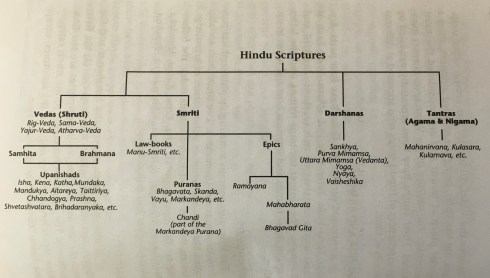
What comprises the Vedas?

There are 4 Vedas – Rig Veda, Yajur Veda, Sama Veda and Atharva Veda. Each Veda consists of 4 sections

  • Samhita
  • Brahmanas
  • Aranyakas
  • Upanishads

The Samhita’s are hymns in praise of nature & Gods. The famous Gayatri Mantra in the Rig Veda is part of the Samhita. The Brahmanas explain the ways and means to perform rituals and sacrifices. For example, the first chapter of the Chandogya Brahmana, one of the oldest Brahmanas, includes eight suktas (hymns) for the ceremony of marriage and rituals at the birth of a child.

The Aranyakas consist of knowledge that was imparted in the forest to students in Ashrams or to people who had completed their responsibilities and left for the forest in the last phase of their lives. The solitude of nature is very conducive to understanding the subtle truths.

And finally the Upanishads, which is considered the essence of the Vedas. They are also referred to as the Jnana Kanda or the wisdom section of the Vedas. Since it is the last part of the Vedas it is also called as Vedanta. The word Veda means learning – so Vedanta can also mean the end of all learning – one who has read, understood and internalised the Vedanta has reached his goal of the ultimate Truth. That’s why its also called as Para Vidya.

What does the word “Upanishad” mean

The word Upanishad comprises of 3 syllables UPA – NI – SHAD.

Upa means close. It could mean being close to the teacher or moving closer to the Truth by paying attention to dissolve obstacles. Shad means to sit down. The Mind is settling down and becoming receptive, you are ready to listen. The great saint & scholar Shankara interpreted Shad as ” To shake yourself awake from the sleep of ignorance”. Ni means accepting the Teacher at a higher level. There is voluntary humility. The student is ready to sit down and understand.

In totality, the word Upanishad refers to the student and teacher sitting down together with the intent of moving closer to the Supreme Truth. This is done with complete humility, setting aside all the obstacles.

Are the Upanishads meant for Intellectuals only?

They are crystal clear gems of the Vedas. They are direct. The teachings of the Upanishads follows the approach of eliminating falsehood so what remains is the TRUTH.

Since its impossible to define GOD, the Upanishads follow the approach of “Neti Neti“. This is a Sanskrit expression which means “not this, not this”, or “neither this, nor that”. It constitutes an analytical meditation helping a person to understand the nature of Brahman by first understanding what is not Brahman.

The Brahman is neither this nor that. GOD has no form, no shape, no colour, its not male, not female…. etc. Some feel that reading the Upanishad makes you an atheist as the Upanishads are great in denial. They do have different interpretations, but an enlightened master can explain it in very simple terms.

Sri M talks on the Upanishads are simple, clear and illuminating. Here is a brief 14 min talk by Sri M on “An introduction to the Vedas & Upanishads”

How many Upanishads are there?

There are over a 100 Upanishads of which 11 are principal Upanishads on which most of the great Acharyas have commented. There is a lot of similarity between the Aranyakas and the Upanishads and some people treat them under the same banner. The Brihadaranyaka is considered to be the biggest Upanishad.  The title Brihadaranyaka Upanishad literally means “great wilderness or forest Upaniṣhad“. It is credited to ancient sage Yajnavalkya and is part of the Yajur Veda.

Who has authored the Vedas? 

The Vedas come under the classification of Shruti. In most cases there is no known author. Krishna Dvaipayana Vyasya collected and compiled Vedic Truths in one place and recorded them in the Vedas. In recognition for this work he is called Ved Vyasya and his birthday is celebrated as Guru Purnima.

There are Four Mahavakyas or great sentences in the Vedas. Three of them speak of the divinity of the soul and the fourth speaks of the nature of GOD. They are

  • Aham Brahma Asmi – I am Brahman
  • Tat Tvam Asi – You are That (Brahman)
  • Ayam Atma Brahma – This individual Self is Brahman
  • Prajnanam Brahma – Supreme Knowledge is Brahman

The Upanishads try to explain the Ultimate Subtle Truth – the Brahman, Infinite or Indescribable as experienced by the Rishis in their deep state of meditation. GOD is equally present everywhere and a drop of the Ultimate Truth is enough to get you addicted. Once you taste that nectar, you are ready to forego everything.

How many schools of Hindu Religious Philosophy exist?

Six different systems of philosophy called Darshanas were developed by Hindu sages over different periods of time. Their foundation is in the Vedas.

  • The Sankhya school founded by Kapila
  • The Purva Mimansa school founded by Jaimini
  • The Uttara Mimansa or Vedanta school founded by Vyasa ( Not to be confused with the Upanishads)
  • The Yoga school founded by Patanjali
  • The Nyaya school founded by Gotama
  • The Vaisheshika school founded by Kanada

Authors of these philosophical systems wrote the original treatise using very concise aphorisms called Sutras in Sanskrit. Sutras are known for being brief and easy to memorise. However, due to their cryptic nature, they needed explanatory notes or commentary which were written later by other scholars.

Sage Vyasa’s treatise, which forms the basis of the Uttara Mimansa system, is known as the Brahmasutra. Several commentaries have been written on this book by Shankara, Ramanujacharya and Madhavacharya.

What is Advaita Vedanta (Non Duality) ?

The term Advaita refers to its idea that the soul (True Self, Atman) is the same as the highest metaphysical reality (Brahman). The followers of this school seek spiritual liberation through acquiring  knowledge of one’s true identity as Atman, and the identity of Atman and Brahman.

Advaita Vedanta traces its roots in the oldest Upanishads. It gives “a unifying interpretation of the whole body of Upanishads”, the Brahma Sutras, and the Bhagavad Gita.

Advaita Vedanta is the oldest extant sub-school of Vedanta, which is one of the six Hindu philosophies or Darshanas. Although its roots trace back to the 1st millennium BCE, the most prominent exponent of the Advaita Vedanta is considered to be the 8th century scholar Adi Shankara.

Advaita Vedanta emphasises Jivanmukti, the idea that moksha (freedom, liberation) is achievable in this life in contrast to other Indian philosophies that emphasise videhamukti, or moksha after death.

What are the Puranas ?

The deeper truths of the Hindu scriptures are at times difficult to understand without a teacher. To present the teachings in an easy-to-understand manner for the common man, the sages created a special type of literature called the Puranas. In the Puranas the scriptural teachings are presented through stories and parables.

There are 18 Puranas available today, the most popular amongst which are Bhagavata Puranas, Skanda Purana, Vayu Puranas, Padma Purana, Markandeya Purana and Agni Purana. The Chandi or Devi Mahatmyam is part of the Markandeya Puranas.

The Two Great EPICS – Ramayana & Mahabharata 

The two great Epics were composed by Sage Valmiki and Vyasa respectively. Also called as Itihasa these epics contain many scriptural teachings with the story of various clans and dynasties. The depth of moral and spiritual teachings in them has elevated them to the level of a scripture. The Bhagavad Gita, perhaps the most popular scripture of Hinduism, is part of the Mahabharata.

The Bhagavad Gita contains most of the essential teachings of the Upanishad’s, giving it a status very close to that of the Upanishad’s

What is Tantra?

In parallel with the Vedic discipline, Hinduism has another set of disciplines called the Tantra’s. Here, God is looked upon as both Male & Female called Shiva & Shakti respectively. Shakti is the creative power of Shiva. In modern terms, Shiva can be compared to Potential Energy and Shakti to Kinetic Energy. When Shiva becomes active, he is called Shakti. This Shakti has created the world. The relationship between Shiva & Shakti is like the relationship between fire and its burning power. They are always inseparable and ONE. Shakti however has many names – one of them is Parvati.

In Tantra they say that “Para Shakti” is the life giving energy that creates life in the womb and then settles down coiled in the Muladhara as the dormant Kundalini energy.

The scriptural texts of the Tantras are usually in the form of dialogues between Shiva & Parvati. The dialogues where Shiva is the speaker giving spiritual learnings to Parvati are called the Agama texts. Where Parvati plays the role of the teacher and Shiva is the listener the texts are called Nigama. Of the original 28 Shaiva Agamas, only 20 are available now.

The Tantra literature is vast. Among the 64 prominent texts are the Mahanirvana, Kulasara, Prapanchasara, Kularnava, Rudra Yamala, Vishnu Yamala, Brahma Yamala and Tantraraja. 

The Pancharatra Samhita’s

They are the scriptures of certain Vaishnavite sects. The number of scriptural texts pertaining to these Samhita’s is 250. Of them Brihad – Brahma, Ishvara and Jnanamritsara Samhita’s are particularly noteworthy.

What are the two Spiritual Paths in Hinduism ?

Hinduism offers two major spiritual paths or sets of religious duties. One for the householder, and the other for the monks. The established path of the householder is called “Pravritti Marga” or the path of permitted sensual desires. The path for the monks is “Nivritti Marga”  or the path of renunciation of sensual desires.

What are the The Four Yogas or Paths to Salvation?

In addition to “Pravritti Marga” and  “Nivritti Marga”, hinduism speaks of many methods or paths to reach God. These are 4 paths that an individual can choose based on his emotional build up.

  • Bhakti Yoga – The path of devotion, suitable for Emotional people
  • Jnana Yoga – The path of rational enquiry, ideal for rational thinkers
  • Raja Yoga – The path of mental concentration, best suited for a meditative person
  • Karma Yoga – The path of right action. Best suited for a householder or a person naturally inclined towards activity

The word Yoga means yoke – the connecting link between the spiritual aspirant and God. Yoga also means a method or technique to establish mental communion with God.

What are Siddhis or Supernatural powers ?

During the course of practising Raja Yoga, an adept seeker gains mastery of his mind. In the process he acquires eight extraordinary powers called Ashtasiddhi

  1. Anima – To grow as small as a molecule and penetrate solid objects
  2. Laghima – Extreme lightness of the body or the ability to levitate
  3. Vyapti – The ability to expand
  4. Prakamya – The acquisition of irresistible will
  5. Mahima – The ability to make the body extremely large
  6. Ishitva – Aquiring God like powers
  7. Vashitva – The power to bring everything under ones control
  8. Kamavasayita – The ability to obtain whatever one desires

Other powers may also develop in the journey of a serious seeker – the ability to fly (Khechari Vidya), the conquest of death (Mrityunjaya Vidya), the ability to acquire Hidden Treasures (Patala Siddha), the ability to enter another person’s body (Kaya Siddha), knowledge of the past, present & future (Trikala Jnana), the power to die at will (Iccha Mrityu), the power to make oneself invisible (Antardhana), going beyond hunger and thirst (Kshutpipasa Nivritti) and the power to understand all animal languages (Sarvabhutaruta Jnana)

These powers are like milestones on the path to spiritual progress but can be obstacles to reaching the ultimate goal. Students are thus advised not to use any of these powers or Siddha’s. 

What is Kundalini & The 7 Chakras ? 

The path of Raja Yoga also explains the process to activate the dormant Kundalini energy that lies coiled up in the base of the spine at the Mooladhara Chakra.  Raja Yoga helps one to awaken the Kundalini power through meditation and other spiritual practices.
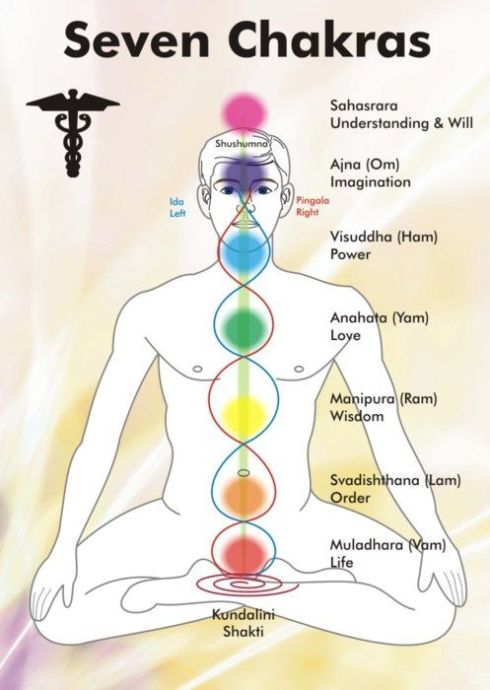
The vital energy energy or nerve current of a person works in his body by passing thru two channels called the Ida (Left Channel) and Pingala (Right Channel). There is a 3rd channel between the two called the Sushumna which normally remains closed. To raise the Kundalini, one needs to cleanse the Sushumna channel, and allow the energy to rise through this central passage piercing the Chakras on the way up. The Chakras are subtle energy or nerve centres along the spine.

Although Raja Yoga literally means the “King of all Yogas” it has its own hazards. In the words of Swami Vivekananda, a past master of Raja Yoga, there must be perfect chastity in thought, word and deed. Without it, the practise of Raja Yoga is dangerous and may lead to Insanity.

The practise of Kundalini needs to be done under the guidance of a master. The human body is not prepared for the surge of energy that is associated with the rise of the Kundalini.

What are Gunas ?

The concept of Gunas plays a very important role in Hinduism. According to the Sankhya school of philosophy the world has two parts – Spirit & Matter. The Matter part of the world has its source in Prakriti or Mother Nature.

Prakriti is composed of three extremely subtle and intangible substances called Sattva, Rajas & Tamas. If Prakriti is a rope these 3 substances are the strands that make the rope. A Strand or a String is called Guna in Sanskrit. That is why these substances are called Sattva Guna, Rajo Guna  and Tamo Guna. 

Prior to the creation of the world the 3 Gunas were in a perfect state of equilibrium. When they start mingling and overlapping the state of harmony is lost and creation starts. There is no entity in the world or in heaven which can be free from the 3 Gunas born from Prakriti. The Gunas are finer and subtler than anything we know of in this world. Their existence cannot be perceived because of their subtlety. However, each Guna has its own distinctive quality or characteristics.

Sattva Guna is light & buoyant. It is the nature of pleasure and joy. The luminosity of light, the ability of the mind, the sense to know things, the reflecting power of the mirror and the transparency of glass and crystals are all due to the presence of Sattva Guna in them.

Rajo Guna causes activity, movement and restlessness. Avarice, hankering, anger, ego, vanity, wish to dominate others are all characteristics of Rajo Guna. It is the cause of all types of painful experiences.

The characteristics of Tamo Guna are inertia, passivity, sluggishness, heaviness and negativity. It resists activity or movement. It makes the mind sluggish incapable of knowing things clearly.

Sattvo Guna gives spiritual liberation. Rajo Guna causes bondage through attachment to action and Tamo Guna causes confused thinking. The Gunas share one common characteristic. They are always in conflict with each other. Each one trying to subdue the other and become predominant. At the same time they cooperate with each other. The world exists because of the cooperation of the Gunas. To attain spiritual liberation one has to go beyond the three Gunas. In the Bhagavad Gita, Lord Krishna tells Arjuna “Go beyond the three Gunas” go beyond matter and manifest your divine spirit. 

The ultimate goal in Hinduism is to attain Moksha by embracing The Ultimate Truth or Brahman or GOD. There are many paths to get there, all of which requires  effort and sustained commitment. A simple way to get started is by following 3 things in your daily life 

  • Always be Truthful 
  • Be Compassionate and help others 
  • Minimise your EGO & Desire 

______________________________________________________

I am just a compiler of information. The information for this blog has been sourced from the following references.

  • The Essentials of Hinduism by Swami Bhaskarananda
  • Wisdom of the Rishis by Sri M
  • Talk by Sri M on Introduction to the Vedas & the Upanishads, Other Talks by Sri M on the Upanishads.



Science behind Superstitions

21 Oct

Do superstitions have a basis; what is the reason that they have been practised for centuries?

These are questions that came to my mind after the recent Sabarimala incident. A little homework reveals that there is always some logic or scientific bias behind the actions and superstitions of the past. Yes, some of them may not be valid in today’s context and can very well be junked. So read on and decide which are the superstitions you can jettison out of the window.

1. Spilling Salt brings bad luck 

As children we were always reprimanded for spilling salt – it was supposed to bring bad luck. Salt was a precious commodity for our ancestors. It was used not just for cooking but also to preserve food. The word “salary” owes its origin to the Latin word “salarium” and has the root sal which is there in “salt.” In ancient Rome, it specifically meant the amount of money allotted to a Roman soldier to buy salt, which was an expensive but essential commodity

Prior to industrialisation, it was very expensive and labor-intensive to harvest the mass quantities of salt necessary for food preservation and seasoning. This made salt an extremely valuable commodity. Entire economies were based on salt production and trade.

This was the reason for being extra careful with salt probably leading to the superstition that spilling salt brings bad luck. The superstition would have ensured that people would have been extra careful while handling salt.  

2. Breaking a Mirror Brings 7 Years of Bad Luck

This was probably a belief from the past that a mirror is a projection of one’s appearance and one’s soul. Breaking a mirror reflected the soul breaking into pieces. The damaged soul is thus not able to protect its owner from bad luck. It could also mean that damaged soul seeks revenge against the one responsible for its injuries. The means of revenge varies, but often includes the loss of a close friend or the death of someone in the household.

But the truth here is similar to the case of Salt. Pure economics. A major component of mirror is glass. Because glass is a poor reflector, it must be coated in order to make a mirror. The most appropriate materials for making metallic coatings are silver, gold, and chrome. All 3 are expensive materials. During the Renaissance period in Europe, mirrors were made by coating glass with an amalgam of  tin and mercury. In the sixteenth century, Venice became the centre of manufacture for such mirrors. A factory for manufacturing mirrors called Saint-Gobain was established in France, but mirrors were still expensive luxuries and only the very rich owned it. So if you owned one you were very carful and did not want to break it.

Breaking it in the evening after sunset was even more inauspicious – simple not only was it the loss of an expensive item but now you had the added challenge of cleaning the place in the dark to ensure that the family members are not cut by the broken shreds on the ground.

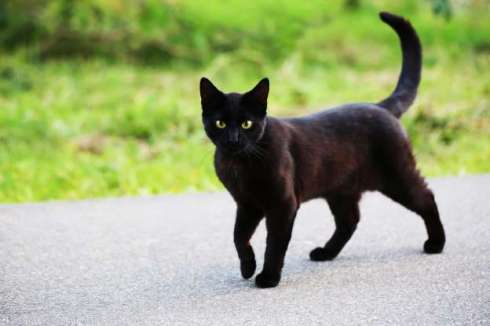
3. Black Cats Crossing Your Path is Bad Luck

This one should help my learned IIT IIM friend. Even on a highway speeding along he comes to a screeching halt when he spots a black cat crossing by. Most Indians have this superstition deeply engrained in them. But its time to shed this superstition after reading the reason behind it.

In olden days people used to travel by carts that were pulled by domesticated animals like horses and cows When passing through forests at night, the animals used to get scared and act chaotic when they sensed wild cats such as leopards, cheetahs, and tigers crossing their path. The travellers warned others not to proceed when a cat passes their path. And wait for some time before the danger passed. The wait also helped the animals to relax and get them under control before proceeding.

Today, this is of no significance and we are afraid of black cats for no reason. Groucho Marx once said “If a black cat crosses your path, it signifies that the animal is going somewhere.”

4. Avoid a Hair Cut on Tuesday

Most barber shops are closed on Tuesday and it is considered inauspicious to take have a haircut on that day. The reason behind this is simple. In olden days the villagers after a long hard week of work used to take Monday as the off day. Sunday was probably reserved for visiting the temple, friends , family etc. So Monday was the day when they visited their local barber for a haircut and shave. The Barber overloaded on Monday also needed a rest – and he probably did not get any customers on Tuesday. That tradition seems to have continued over the years. So if you find a barber salon open on Tuesday – don’t worry its perfectly safe to go and get a haircut.

5. Sweeping the house, Cutting Nails and Shaving After Sunset

The superstition is that by doing this you will lose all your wealth as Goddess Lakshmi will leave your house. Nobody dared to take a risk and lose their hard earned wealth and the superstition stayed.

But the reason is simple and logical. Electricity is a 100 year old invention and there are villages that have got electrified recently. In the dusk after the sunsets if you sweep the house in the dark there are chances that some valuables may also get swept away. As far as cutting nails and shaving – chances are in the dark you may cut yourself.

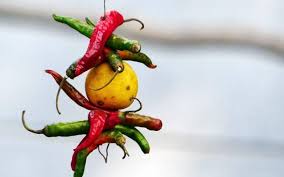
6. Hanging Lemon and 7 Green Chillies In shops and Business Places

You can see this all over India – a lemon along with chillies, seven to be precise, hanging from the doors of shops, houses or from the bumpers of cars? These days it has turned into a superstition that it keeps the god of misfortune, Alakshmi, away from the shops.


As weird as it seems, there is a logical explanation behind this one too. The cotton thread that passes through the lemon and the chillies absorbs the acids, vitamin C and the other nutrients present in it. Then, by slow vaporization, it is released into the air. The odour is also said to keep pest and insects away, making it a natural pesticide. This is said to have significant health benefits and our ancestors made it an essential part of ceremonies to increase its use.

To simplify life, some people have used a metallic version of the lemon with chillies – but sadly that doesn’t work.

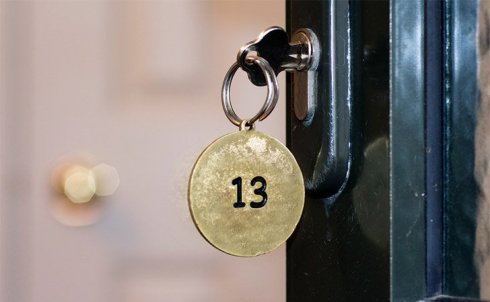
7. Most people avoid Unlucky 13

The number 13 is considered an unlucky number by many people. People avoid travelling on 13th or checking into hotel rooms on the 13th floor or room no 13. I have seen 5 Star hotels that have 12th floor and then the 14th floor totally skipping unlucky 13. It is also considered unlucky to have thirteen guests at a table. Friday the 13th has been considered the unluckiest day of the month.

A possible reason driving this behaviour could be from the time of Jesus. At Christ’s last supper, there were thirteen people around the table, Christ and the twelve apostles. Some believe this unlucky because one of those thirteen, Judas Iscariot, was the betrayer of Jesus Christ. Another major reason for Friday the 13 to be considered unlucky was that on Friday 13 October 1307, King Philip IV of France ordered the arrest of the Knights Templar, and most of the knights were tortured and killed.

8. Lizard Falling On Human Is Bad Luck

It does feel creepy to have a lizard fall on top of you – after all they are cold blooded creatures. But there are lizards that could emit poisonous juices resulting in skin problems. It may not be bad luck but it could lead to bad health.

9. Fallen Hair inside house causes fights

The myth is that if you throw fallen hair inside the house instead of binning it, soon you will see a fight within your family. Well, who would like to pick up a quarrel at home?

But the real reason behind this superstition is if you leave the fallen hair inside the house it may end up falling inside the food when the wind blows. And that will definitely cause a quarrel when a hungry husband finds hair in his food.

10. Twitching of the eye is a Good or Bad Omen

This is a bit like a sixth sense, and it differs from community to community. Eye twitching or the sudden involuntary movement or spasms in the eyelids is a common condition.  There is an established explanation for these constant or intermittent involuntary muscle twitches, including various medical reasons behind them – these twitches are nature’s way of warning a person about some impending problem or indicative of some good news on the way.

11. Walking under a ladder is unlucky

There are a couple of theories about this superstitious belief. Many Christians believe in the Trinity, that God is made up of three parts, – the Holy Father, the Holy Son, and the Holy Ghost (or Holy Spirit). A ladder leaning up against a building was seen as a triangle of these three. To walk through this triangle was seen as breaking the Trinity and hence considered as bad luck. Another origin of the superstition was a bit less specific, and had to do with the similarities between a ladder leaning against a wall and a gallows.

However the fact is that, it is simply unsafe to walk under the ladder and you may get hurt or might hurt someone around by knocking the ladder down. A ladder is an unstable equipment and a person on top may fall or drop something on you. So its good to stay away from a ladder.

12. Taking a bath after attending a funeral is a must

When a person dies, the body starts to decompose. This is basic biology. And when you attend a funeral, you are exposed to the germs, bacteria and the chemicals released by the body and present in the air due to decomposition. It makes a lot of sense to come back take a bath and then have your meal.

13. Stop by at a temple before starting a long tour

In olden days people travelled by foot or bullock / horse carts. Journeys were long, mostly in groups like caravans. So if you forgot something coming back was not an option. A temple in your village was a good place to sit by quietly for a few minutes and recollect if you had everything for your travel before proceeding on the long journey. It was probably for the same reason that you were advised by the elders to  eat curd & sugar before heading out. The Curd kept your body cool and the digestive system efficient while the Sugar gave you the energy for the long walk.

14. Don’t go near a Peepal tree in the night

If you believed your grandmother, Peepal is one tree the ghosts like to hover around and if you sleep around a Peepal tree at night, the ghosts will kill you. Every school kid knows that trees emit CO2 at night so its best to avoid visiting a large tree like a Peepal Tree at night. But do walk by a Peepal tree during day.

You will find a Peepal tree in most temple complexes and Villages. Peepal is considered to emit disproportionate amount of Oxygen during the day along with Neem and Tulsi. It purifies the surroundings where it is planted, and kills bacteria. So worshipping it means you would be near its vicinity, and inhale healthy air.The leaf, bark and roots of this tree are of significance in Ayurveda. Its leaves help cure asthma, fever and cold. The milk derived from its leaves cures eye pain.  This tree can cure as much as 50 disorders, including diarrhoea, epilepsy and gastric troubles. That’s why it’s a practise for devotees (especially women) to walk around a Peepal Tree.

15. Why people say “God Bless You” after a sneeze 

Considered a polite response to a sneeze, the phrase “God bless you” is attributed to Pope Gregory the Great, who said it to people who sneezed during a bubonic plague. Aside from the idea of protecting against the spread of disease, “blessing” someone after they sneezed originated from the erroneous beliefs that the soul escapes the body during a sneeze and the heart momentarily stops as well. Therefore, saying “God bless you” was a way of welcoming the person back to life.

16. Crossing fingers is a good luck sign 

Crossing your fingers for good luck (or, secretly, to get you out of keeping a promise) is common around the world — but its origins are unclear. It seems to be common in Christian countries, with the belief that it’s related to the sign of the cross. Other theories include it being an old Pagan or Norse gesture, or possibly a good luck superstition created by archers during the “Hundred Year War” between England and France (archers used their two main fingers to draw back their bow)

17. Knock on wood to avoid disappointments

The origin of this very common superstition is believed to date back to the Pagan era. It was believed that the deities lived in trees. Touching a wooden surface would acknowledge them and ensure that you get their protection during misfortunate events. It was also believed to be a thankful gesture to the deities for bringing good luck.

The Greeks used to worship the oak tree as it was considered sacred to Zeus. When Pagan beliefs were incorporated into Christian beliefs, this superstition found its way to Christianity, and knocking on wood became to be associated with the Cross.

A Jewish version of this particular superstition takes one back to the 15th-century Spanish Inquisition. During this time, the Jews used to hide in synagogues (wooden prayer buildings). They designed a specific knock code to let people in. This saved the lives of many people, and subsequently knocking on wood came to symbolize good luck. By the 1900s, the British and the Americans had also adopted this ritual.

18. Its lucky to have a bird poop on you 

This superstition comes from an interesting leap in logical thinking that’s related to the reason that four-leaf clovers are considered lucky. Essentially, the belief says that the odds of a bird pooping on you or of finding a four-leaf clove, are so low that if it happens, you’d be likely to beat the odds in other fortunate ways, too. Funnily enough, this superstition can be found in cultures all over the world, so historians have a hard time pin pointing where exactly it started.

19. Being the 3rd person to light a cigarette from a match is unlucky 

The historical origins of this superstition are very clearly set in World War I. It was a conventional wisdom among soldiers in the trenches that if you kept a match lit long enough for three people to light their cigarette from it, the enemy would spot the flame and deduce your location. Soldiers brought the belief back with them, but there’s evidence to suggest that after the war, match companies rather cynically helped popularise the superstition to sell more matches

In conclusion I want to add that our forefathers were not stupid. From splattering cow dung on the walls to bursting crackers most of their actions were driven by some logical reasoning. Cow Dung on the floor and walls prevents insects from entering the huts and the noise of crackers and smokes helps eradicate insects after a long rainy season.

So while some superstitions can be thrown out of the door (Like the Black cat one) many have some scientific basis. 


Why Me # Ravana

16 Oct

Every story has two sides to it. The version of the winner that projects him to be the greatest and everything else as evil.

From Alexander to Churchill history has always been written by the victor. Nehru  went on to add “History is always written by the victors and conquerors, or at any rate the victors version is given prominence and holds the field“. And Napoleon stated “History is a set of lies agreed upon“.

With this context lets step back and look at the story of Ramayana and question if it is fair to vilify an erudite scholar, a valiant soldier and a great king like Ravana…. just because he was a vanquished Asura.

From the current #me too debate to ancient history women have always been at the receiving end of mans lust. Every king & emperor filled his harem with women, and none of them walked in on their own free will. Men in power whether politicians or corporate leaders and spiritual masters (Baba Asaram, Nityanand ….) have been in the news for treating women as mere objects.

Thousands of years back when the rules of the world were probably very different and norms of society were just being created was Ravana’s action of carrying away Sita the greatest crime of mankind.

Yes Rama vanquished Ravana – and since then poor Ravana has been the symbol of a perfect villain. But was Ravana indeed a villain as he is portrayed? Is there a second perspective to this. Were the Asuras really demons and the “Bad people” – or was this a creation of the victor.

The word Asura has a close resemblance to “Ahura” which comes from the Persian Language and means great warriors. Ravana, Bahubali were all Asura kings who were known for being great administrators and valiant warriors. Across the border in Sri Lanka the stories of Ravana  are very different from what you hear in India.

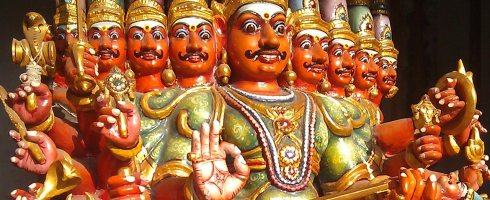
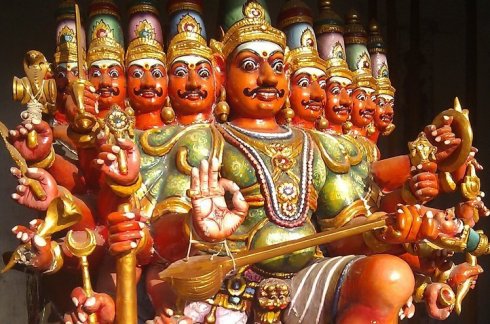
Sri Lankan lore has it that Sri Lanka under the scholarly Ravana saw great advancements in science and medicine. The Pushpaka Vimana or the aeroplane which he flew is held as an example of great scientific achievements made during his regime. Ravana also holds a high position as a physician and there exists, to this day, seven books on Ayurveda in his name. He is also believed to have authored Ravana Sanhita, an anthology of Hindu astrology and his description as a ten-headed person, Daśamukha or Daśagrīva, is believed to be a reference to his vast knowledge and intelligence.

In many depictions of Ravan, he can be seen carrying a veena. It is believed that he had a keen interest in music and was a highly accomplished veena player.

Ravana’s empire spread over Balidweepa (today’s Bali), Malayadweep (Malaysia), Angadweepa, Varahdweepa, Shankhadweepa, Yavadweepa, Andhralaya and Kushadweepa.  

He was a great practitioner of statecraft. When Ravana was dying on the battlefield Rama instructed his brother Lakshmana to go to Ravana and learn the art of statecraft and diplomacy from the dying king

Ravana was not only a stupendous fighter, but also an expert of the Vedas and an expert in Astrology. It is said that when his son Meghanada was to be born from his wife Mandodari’s womb, Ravana “instructed” all the planets and the Sun to be in their proper position for the auspicious “lagna” so that his son would become immortal. But Saturn suddenly changed its position. Noticing this, a furious Ravana attacked Saturn with his mace and broke off one of its legs, maiming him for life.

Ravana was one of the greatest devotees of Lord Shiva, and composed the Shiva Tandava Stotram.

There are references which state that Ravana got this name later in life, and that too from Shiva. Ravana wanted Shiva to relocate from Kailash to Lanka, and to make this possible, he tried to lift the mountain. But Shiva, being who he is, put down his foot onto the mountain, thus crushing Ravana’s finger with his one toe. Ravana let out a huge roar of pain, but at the same time, he was so enamoured by Shiva’s power, he composed and sang the Shiva Tandav Stotram. It is believed that Ravana plucked out nerves from his own hand to provide accompanying music. Shiva, thus impressed, named him Ravana (the one who roars loud).

The essence of Indian mythology is obviously beyond the simple good vs evil story line. If you care to dig deep, there’s an interesting story at every step.
Ravana played his role as a villain, but it was that of a much-needed villain, that brought balance to the equation. No wonder there are many people in the world, who still worship him.


Navratri 999 : 9 Dishes, 9 Colours, 9 Ragas for the 9 days

7 Oct

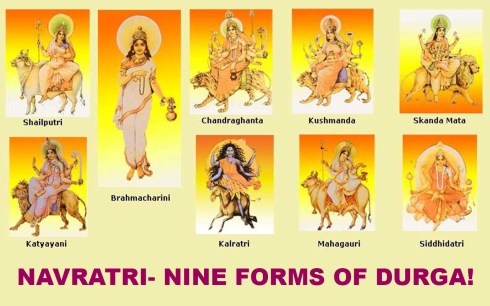
Did you know that the 9 days of Navratri are associated with 9 different colours?  I am sharing not just the colours of the day but also the Flowers, Food and Raga that are considered auspicious for each of the 9 days.

A Few Good Things wishes you a very happy Navratri & Durga Puja.  

Day 1: Shailaputri

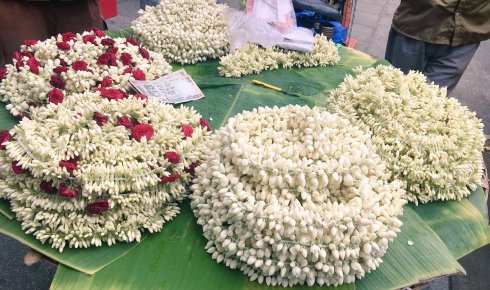
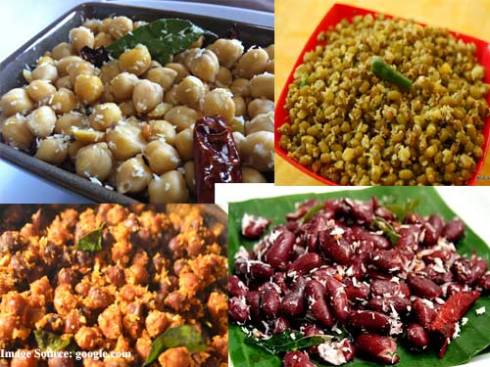
Known as Pratipada, this day is associated with Shailaputri (literally “Daughter of Mountain”), an incarnation of Parvati. It is in this form that the Goddess is worshiped as the consort of Shiva. She is depicted as riding the bull – Nandi, with a trishula in her right hand and lotus in her left. Shailaputri is considered to be the direct incarnation of Mahakali. The color of the day is red, which depicts action and vigor. It is believed that Goddess slayed the demons Madhu and Kaithabha on this day. Jasmine and Vilvam are primarily used to perform the puja. Ven Pongal and Karamani Sundal are considered the perfect offerings for this day. Singing devotional numbers in Thodi raga will please the Goddess

Day 2: Brahmcharini

On Dwitiya, Goddess Brahmcharini, another incarnation of Parvati, is worshiped. In this form, Parvati became Sati, her unmarried self. Brahmcharini is worshiped for emancipation or moksha and endowment of peace and prosperity. Depicted as walking bare feet and holding a japamala and kamandalu in her hands, she symbolizes bliss and calm. The color of the day is Royal Blue which depicts calmness-cum-energy. In South India  the Goddess is worshiped as Kowmari or Rajarajeswari. Jasmine and Tulsi are used for worship on the second day. Puliyodarai, Puttu and mangoes are usually offered as naivedyam. Raga Kalyani has a special significance today.

Day 3: Chandraghanta

Tritiya commemorates the worship of Chandraghanta – the name derived from the fact that after marrying Shiva, Parvati adorned her forehead with half-chandra (Lit moon). She is the embodiment of beauty and is also symbolic of bravery, and hence, the color of the day is yellow. In South India Goddess is worshiped as Varali Ambigai or Vaaraahi on this day. It’s considered auspicious to draw “Kolam” either in rice flour (rose or lotus designs are recommended) or using flowers. Shenbakam, Champangi and Marikozhunthu are ideal for performing the puja. Sakkarai Pongal and Ellu Podi are offered as naivedyam. Songs in Kaambhodhi raga can be sung today

Day 4: Kushmunda

Goddess Kushmunda is worshiped on Chaturthi. Believed to be the creative power of universe, Kushmunda is associated to the endowment of vegetation on earth and hence, the color of the day is Green. She is depicted as having eight arms and sits on a Tiger. In S India Goddess is worshiped in the form of a Lakshmi. “Padi kolam” in rice flour or rangoli in the shape of steps  is drawn in the houses. The idol of the Goddess is adorned with wild turmeric (Kasthuri Manjal). It’s believed that the fragrance of Jaathi Malli and Rose please the Goddess. Offer either Kadhamba Sadam, Curd Rice, Green Peas and Groundnut Sundal or Lemon Rice as naivedyam. Sing songs in Bhairavi raga in praise of the Goddess.

Day 5: Skandmata

Skandamata, the goddess worshiped on Panchami, is the mother of Skanda (or Kartikeya). The color grey is symbolic of the transforming strength of a mother when her child is confronted with danger. She is depicted riding a ferocious lion, having four arms, and holding her baby.

In S India Goddess is worshiped in the form of Vaishnavi. You can decorate her in the form of Mohini as well.

Pavazha Malii, Paarijaatham and Mullai are considered among the most auspicious ones for the puja today. Offer Ven Pongal,  Payasam and Payir Sundal today.In praise of the Goddess, sing songs, especially the Panchamaavaranai Keerthanai, in raga Panthuvarali.

Day 6: Katyayani

Born to a sage, Katya, she is an incarnation of Durga and is shown to exhibit courage which is symbolized by the color Orange / Red. Known as the warrior goddess, she is considered one of the most violent forms of Goddess Parvati. In this avatar, the Devi rides a lion and has four hands.

In S India Goddess is worshiped in the form of Indraani. Flowers for the puja should be in red — Hibiscus and Kumkum flower are among the most preferred. You can also use Parijatham for the puja.

Offer Coconut Rice or Ellu Sadam today. Neeelambari raga is considered auspicious today.

Day 7: Kalratri

Considered the most ferocious form of Goddess Durga, Kalaratri is revered on Saptmi. It is believed that Parvati removed her fair skin to kill the demons Sumbh and Nisumbh. The color of the day is white. Her skin turns black.

In S India it is  believed that Goddess appears as Annapoorni today. Use Thazhampoo, Thumbai and Jasmine to perform the puja. While Lemon Rice is ideal, you can also offer Vellai Sadam, Kalkandu Sadam or Sarkkarai Pongal today. Chickpeas Sundal can also be considered for naivedyam. The raga for the day is Bilahari.

Day 8: Mahagauri

Mahagauri symbolizes intelligence and peace. The color associated to this day is Pink which depicts optimism.

On this day, the Goddess is worshiped in the form of Narasimhi or Durga in S India. After slaying the demon, Rakthabeeja, she appears as karuna moorthy.

The flowers for puja today include Rose, Sambangi and Magizham. Offer Paal Saadam or Paayasaannam and Appam as naivedyam. It’s considered auspicious to sing songs in Punnagavarali today.

Day 9: Sidhidatri. Color associated for this day is also Pink or any bright colour

On this day, Goddess Durga attained all the Siddhis and also defeated the demons. In TN & Kerala this day is observed as Saraswati Puja. People break their fasts on this day

On this day performing puja using Lotus and Marikozhundu is considered auspicious. You can offer Ellu Sadam, Konda Kadalai Sundal  as naivedyam. It’s considered auspicious to sing songs in Raga Vasantha today.

Vijaya Dasami

Today, Goddess takes the form of Devi Vijaya. While jasmine and rose can be used for the special puja, Sweet Pongal and other sweets can be offered as naivedyam

The other approach to colours 

The second approach believes that the sequence changes every year. How to determine this is based on a simple rule

  • The first Monday, Tuesday, Wednesday, Thursday, Friday, Saturday and Sunday will be having White, Red, Royal blue, Yellow, Green, Grey and Orange. in whichever order they come. 7 days hence 7 colors.
  • The first repeating week day that is in second cycle of week the colors followed are Pink and purple and/or sky blue alternatively. + 2 remaining days +2 colors
  • If you apply this logic for 2018 – the colors are as below

________________________________________________

Day 1 – 10 October 2018 – Royal Blue

First day of Navratri. Goddess Durga is worshiped as Shailaputri on this day and she is dressed in Royal Blue color.

Day 2 – 11 October 2018 –Yellow

Second day of Navratri. Goddess Durga is worshiped as Brahmacharini on this day and she is dressed in Yellow color.

Day 3 – 12 October 2018 – Green

Third day of Navratri. Goddess Durga is worshiped as Chandraghanta on this day and she is dressed in Green color.

Day 4 – 13 October 2018 – Gray

Fourth day of Navratri. Goddess Durga is worshiped as Kushmanda on this day and she is dressed in Gray color.

Day 5 – 14 October 2018 – Orange

Fifth day of Navratri. Goddess Durga is worshiped as Skandamata on this day and she is dressed in Orange color.

Day 6 – 15 October 2018 – White

Sixth day of Navratri. Goddess Durga is worshiped as Katyayini on this day and she is dressed in White color.

Day 7 – 16 October 2018 – Red

Seventh day of Navratri. Goddess Durga is worshiped as Kalaratri on this day and she is dressed in Red color.

Day 8 – 17 October 2018 – Sky Blue

Eighth day of Navratri. Goddess Durga is worshiped as Mahagauri on this day and she is dressed in Sky Blue color.

Day 9 – 18 October 2018 – Pink

Ninth and last day of Navratri. Goddess Durga is worshiped as Siddhidatri on this day and she is dressed in Pink color.

____________________________________________________


My Soul has a Hat – Mario de Andrade (San Paolo 1893-1945)

26 Sep

A beautiful poem by Mario de Andrade (San Paolo 1893-1945) Poet, novelist, essayist and musicologist. One of the founders of Brazilian modernism. Shared by my friend – a Poet herself.

MY SOUL HAS A HAT

I counted my years 

& realized that I have

Less time to live by, 

Than I have lived so far.

I feel like a child who won a pack of candies: at first he ate them with pleasure 

But when he realized that there was little left, he began to taste them intensely.

I have no time for endless meetings

where the statutes, rules, procedures & internal regulations are discussed, 

knowing that nothing will be done.

I no longer have the patience 

To stand absurd people who,

despite their chronological age, 

have not grown up.

My time is too short: 

I want the essence, 

my spirit is in a hurry. 

I do not have much candy

In the package anymore.

I want to live next to humans, 

very realistic people who know

How to laugh at their mistakes,

Who are not inflated by their own triumphs 

& who take responsibility for their actions.

In this way, human dignity is defended 

and we live in truth and honesty.

It is the essentials that make life useful.

I want to surround myself with people

who know how to touch the hearts of those whom hard strokes of life

have learned to grow with sweet touches of the soul.

Yes, I’m in a hurry.

I’m in a hurry to live with the intensity that only maturity can give.

I do not intend to waste any of the remaining desserts.

I am sure they will be exquisite, 

much more than those eaten so far.

My goal is to reach the end satisfied 

and at peace with my loved ones and my conscience.

We have two lives

& the second begins when you realize you only have one.

————————————-

50th anniversary of 1969 – The greatest year of the century

8 Sep

If you were to choose the most eventful year ever – which would it be? Malcolm Gladwell in his 2008 bestseller  “Outliers: The Story of Success” talks about the impact that people born in 1955 have made. Yes Steve Jobs, Bill Gates, Whoopi Gooldberg and many more born in 1955 transformed the world. I dug in and after some research came up with a clear winner by a mile. A year that transformed the world in multiple areas – Technology, Politics, Music, Civil Rights…. and that year would be 1969. ( Well, some of the transformation started in 1968 and accelerated through 1969)

First the facts that we all know of.

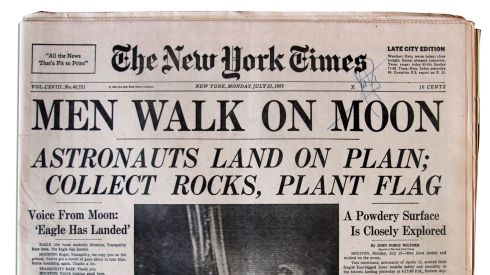
History was made and one small step for man became a huge leap for mankind. Neil A. Armstrong, Command Module pilot Michael Collins, and Lunar Module pilot Edwin “Buzz” E. Aldrin landed in the Sea of Tranquility, on The Moon on July 20, 1969. Remember this was a time when the largest computers had computing power lesser than your smartphone of today.

March 2nd, 1969 was also when the Anglo-French supersonic airliner Concorde made its maiden flight. During the test flight, Concorde’s speed never rose above 300mph and its altitude reached a lowly maximum of 10,000 feet. During commercial journeys it would reach speeds of up to 1,350mph – more than twice as fast as conventional aircraft – and fly as high as 60,000 feet. This was also the year when Boeing 747 made its 1st passenger flight.

A lot more happened on the technology side

  • The 1st ATM was installed in New York
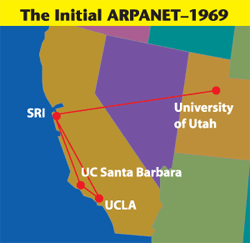
  • ARPANET (later to become a little thing called the Internet) was commissioned by DoD for research into networking. First set up with 4 nodes – Stanford, UCLA, UCSB, and Univ of Utah. First attempt at sending packets was from UCLA to Stanford on October 29. The first 2 characters were successfully transferred, but the third keystroke crashed the system. (hmmmm…maybe Bill Gates was involved! – he was already 14 by then)
  • UNIX then called as UNICS was invented at Bell Labs led by Thompson & Ritchie working on a PDP7. Dec 28th, 1969 was also the year when Linus Torvalds was born – he would go on to become the creator and principal developer of the Linux Kernel.
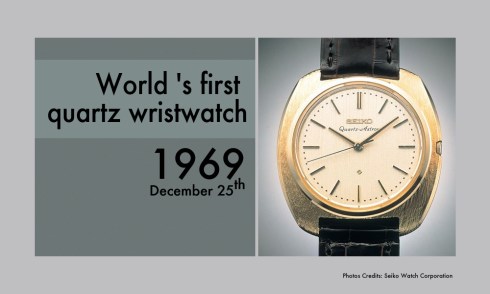
  • Seiko rolled out the worlds 1st Quartz watch
  • May 1st 1969 AMD – Advanced Micro Devices was founded by Jerry Sanders and seven others from Fairchild Semiconductor. (Less than a year back on July 18th 1968 – Intel was started by the legendary Andy Grove)
  • It was in 1969 that David Paul Gregg patented the optical or laser disc, although he came up with the idea in 1958.
  • Doctors at Methodist Hospital in Houston, Texas, made medical history on April 22, 1969, when they performed the first human eye transplant on 54-year-old John Madden. Because the donor eye had not been preserved enough to keep it viable, the procedure failed to restore Madden’s sight. The procedure itself, however, went down in history as a medical miracle.

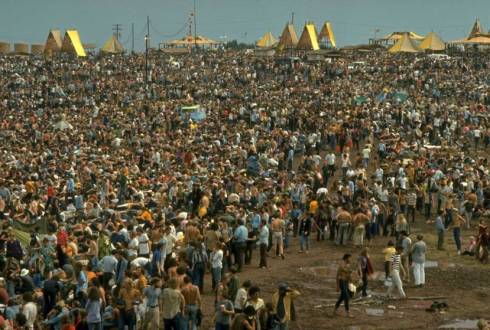
A lot of changes were happening on the people front. Revolution and change was in the air. The Hippie’s movement – a countercultural movement that rejected  mainstream American life had engulfed the youth. The movement originated on college campuses in the United States, although it spread to other countries, including Canada and Britain. This was the era of Pop, Rock & Roll, Jazz & the Blues. Blend the Hippes lifestyle with music and you have the greatest music festival of the century – The Woodstock. 

  • The famous Woodstock music festival took place in upstate New York between August 15–18, 1969, which attracted an audience of more than 400,000. The festival featured legends like Jimi Hendrix, the Who, the Grateful Dead, Janis Joplin and Sly and the Family Stone. The event would help define an era.
  • Apart from being one of the only Indian musicians to perform at Woodstock, renowned Sitar player Ravi Shankar did not share his contemporaries’ excitement about the festival. He once said it was a terrifying experience, where the large crowds lounging in the mud reminded him of water buffaloes in India.
  • Also that summer, the Beatles, then arguably still the western world’s most popular band, released one of their final albums: Abbey Road. And the Beatles performed their last concert in 1969. This was also the year when John Lennon & Yoko Ono were married on March 20th.
  • 1969 is also quoted in the Hotel California song. It is assumed to refer to  the year when the Satanic bible was released.
  • June 1969 is famous for the Stonewall Riots. (Also referred to as the Stonewall uprising or the Stonewall rebellion) were a series of spontaneous, violent demonstrations by members of the gay (LGBT) community against a police raid that took place in the early morning hours of June 28, 1969, at the Stonewall Inn in the Greenwich Village neighborhood of Manhattan, New York City. They are widely considered to constitute the most important event leading to the gay liberation movement and the modern fight for LGBT rights in the United States

  • The US Civil Rights movement led by Martin Luther King was in its final phase. King had been assassinated in late 1968 but had laid the foundation for change.
  • The Vietnam war had peaked, more than 34,000 American soldiers died in the strife. President Richard M. Nixon assumed responsibility for the Vietnam War as he swore the oath of office on January 20, 1969. He knew that ending this war honorably was essential to his success in the presidency. He kept his promise and the US withdrew from Vietnam in 1973. Ho Chi Minh the communist leader of North Vietnam died on 2nd Sep 1969. 
  • 1969 was also the year when almost all of the world’s nations come together to sign the Nuclear Non-Proliferation Treaty
  • Two of the worlds largest retailers opened stores in 1969 – The 1st GAP store opened and Walmart was incorporated as Walmart Stores Inc.
  • In late 1968 McDonald launched the Big Mac – A meal disguised as a sandwich – and it became extremely popular in 1969.
  •  The football legend Pele scored his 1000th international goal on Nov 19th, 1969
  • The Godfather by Mario Puzo was published in 1969
  • Sesame Street debuts on television and the last episode of the original “Star Trek” airs on NBC. During the episode, titled “Turnabout Intruder,” one of Captain Kirk’s former lovers steals his body.

India in 1969 

  • A lot happened in India also in 1969 which has had its impact till date. India’s grand old party The Congress split into two factions led by Indira Gandhi and Morarji Desai.
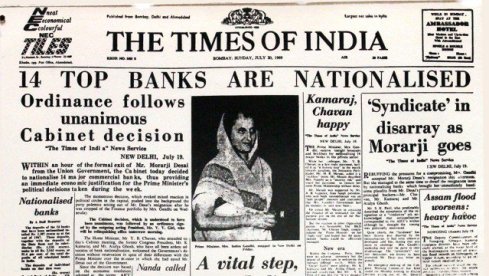
  • Indira Gandhi made the bold move of nationalising 14 banks that controlled 70% of the country’s deposits

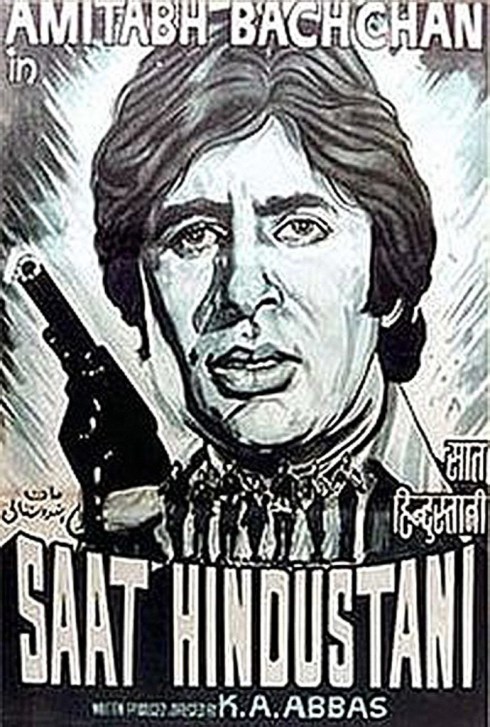
  • The actor we all love Amitabh Bachchan made his debut in 1969 with Saat Hindustani 

  • 1969 was also the turnaround year for superstar Rajesh Khanna. In 1968, Khanna didn’t have a single film. In fact, the vacuum had stretched into the tenth month of 1969, prompting his doting but disturbed father to ask him to rethink his career plans. “To pursue a career that keeps rejecting you persistently is foolishness,” he told him. “In life, one should learn to read the writing on the wall early. Maybe a career in films is not for you. Give it serious thought.”Fortunately for Khanna, a ‘small’ unassuming film saved him from further ignominy. Ittefaq — directed by a man with a Midas touch, Yash Chopra, on a shoe-string budget and shot in 28 days without frills — turned the tide. The film, a thriller, had no songs, no dance, no big stars. It might have had a better initial draw than any other Khanna-starrer based on the reputation of the B.R. Chopra banner, but the movie’s popularity really owed to Khanna — who was about to rewrite the rules of stardom. Ittefaq was followed by Aradhana, another stop-gap venture produced and directed by a stalwart, Shakti Samanta. Released in November 1969, it took off on a whirlwind run
  • It was in 1969 that Goenkaji started teaching Vipassana Meditation in India – making true the prophecy that Buddha has made 2500 years back.
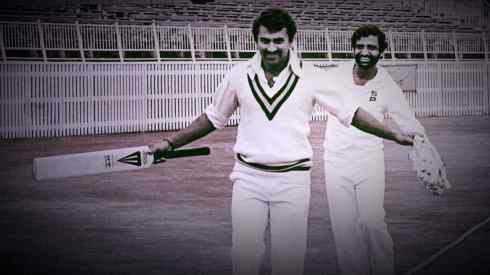
  • Two of India’s greatest cricketers launched themselves in 1969. Gundappa Vishwanath made his test cricket debut Vs Australia at Kanpur in 1969 and scored a century. And Sunil Manohar Gavaskar was selected to play in the 1968 – 69 Ranji season.

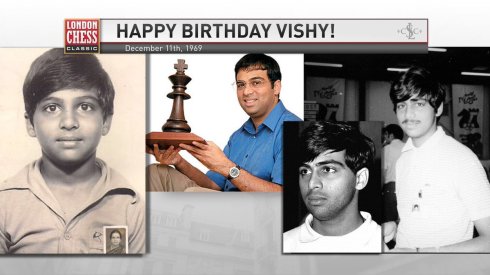
  • And on Dec 11th , 1969 India’s greatest Chess player V.Anand was born.

  • 1969 was also the year when many great talents were born. Jennifer Lopez, Steffi Graf , Jennifer Aniston, Catherine Zeta Jones, Mathew Perry (Chandler of Friends), Michael Schumacher, Sheryl Sandberg , Ajay Devgun, Javagal Srinath, Mandakini and Arnab Goswami.

If all of this doesn’t make 1969 the greatest year ever – what will ? No wonder its the topic of a book titled “1969 The year everything changed – By Rob Kirkpatrick”


Kailash Mansarovar Travel Tips

15 Aug

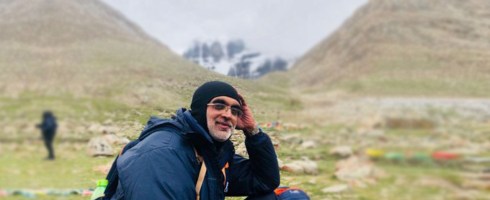
A trip to Kailash needs planning. A long and challenging 14 day trip –  enclosed are notes from my trip in Aug 2018 , that will help you be more organised.

Kailash Mansarovar,

By the Grace of God and the blessings of the Masters the trip worked out magically. Here is a  summary before I delve into the details

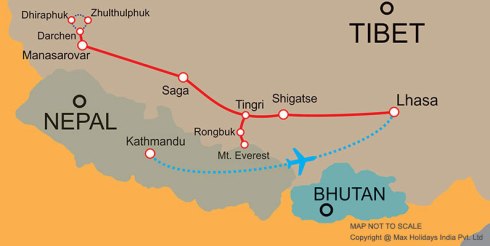
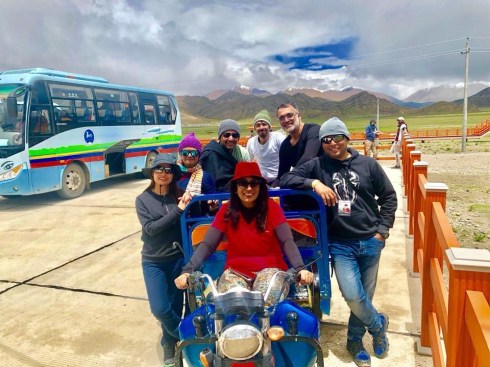
  • We travelled via Lhasa (Bangalore – Kathmandu – Lhasa by flight) and then 1500 km bus drive @ 500 km / day from Lhasa to Mansarovar.
  • Lhasa is at 12,500 feet and Mansarovar – Kailash at 16500/17000 feet. For a perspective Simla is 7000 feet, Badrinath – 10,500 feet, Kedarnath – 11,500 feet and Leh is 12,000 feet.
  • Our journey was across a fortnight spanning 14 different hotel rooms. Wake up at 5 AM, Pack your bags by 5.30 AM, Morning Yoga / Kriya, Breakfast – then start the journey at 8.30 AM driving almost 10 hrs every day. Reach the hotel by 7.30 PM – Dinner – Bath – Sleep. It was a blur as the 14 days whizzed by.
  • Temperatures  ranged from – 5 to 10 degrees, cold and wet, and at times the high altitude sun searing down on you. The challenge of altitude sickness, lack of appetite, tiredness – all of this overcome with one singleminded purpose – the goal to visit and experience  Kailash Mansarovar.
  • The route from Lhasa – people tend to fall sick more frequently as you directly ascend to 12500 feet and acclimatisation is an issue, the route from Kathmandu the ascent is gradual and the body adjusts.

map

The journey in Phases 

Phase – 1 : Planning 

Most trips the planning and booking happens months in advance. Get fit, do your tests, get your Visa in time – get mentally ready for an experience of a lifetime.

Phase – 2 : Arrival at Kathmandu  (Day – 1) 

Our assembly point was at Kathmandu. I reached a day early to visit the city and the famous Pashupathinath Temple. Kathmandu looks like a bombed city – dusty, potholed roads, congested, chaotic. We stayed at The Yak & Yeti in central Kathmandu a nice 5 star property. We completed our debrief, collected our kits (A Duffel bag, back pack, sling bag and a Down jacket on returnable basis), converted currency to Yuan. We were strictly informed to remove all books / T Shirts that had any connotation of “Free Tibet” and travel as Yatris and not activists. One wrong message can put the whole group in jeopardy. Next morning  headed to the airport for the flight to Lhasa with our coordinators.

Phase – 3 : Acclimatisation at Lhasa (Day – 2/3)

The flight from Kathmandu to Lhasa is less than 90 minutes. Clearing immigration was a hassle – the Chinese are not very friendly and it took us over an hour to complete the process. Lhasa at 12500 feet is a modern city, well maintained with the hallmark Chinese infrastructure of broad roads and nice footpaths. We stayed at the Lhasa Mansarovar hotel – a nice spacious property with good facilities. Breakfast was the regular hotel buffet but lunch and dinner were Indian meals cooked specially for us. That was one of the highlights of the trip – we had fresh piping hot Indian food all through the trip.  Mansarovar hotel

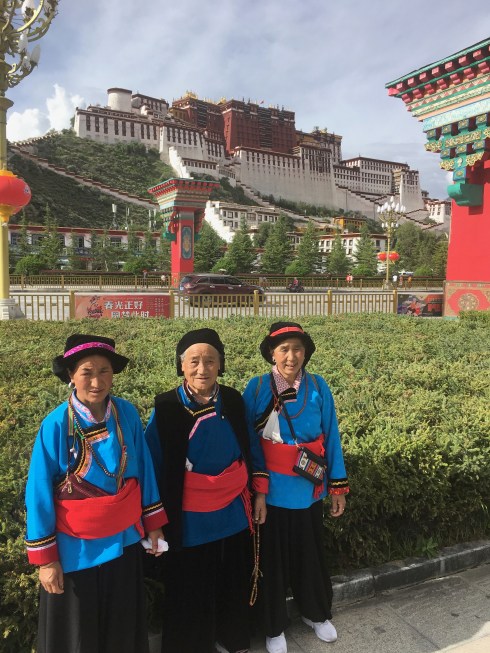
The weather in Lhasa was bright and sunny and we had time to visit the ancient Jokhan Temple, The Potala Palace and The Summer Palace. Tibetans are happy friendly people, and they always oblige to take photos. But they seem to be a minority amidst the Chinese population.

The city was disciplined, organised and clean. We spent more time at Lhasa on our return leg and had dinner at a beautiful place, so more about it then.

Phase – 4 : Bus Trip from Lhasa to Mansarovar (Day – 4/5/6)

From Lhasa our journey shifted to buses for the next 9 days. Lhasa to Mansarovar is almost 1500 Km and we covered ~ 500 Km / day. Our first stop was at Shigatse, the 2nd largest town of Tibet at 12,500 feet. And this was the shortest drive of the trip for 6 hrs. From Shigatse we drove to Saga and reached a altitude of over 16,000 feet. This was a long day with over 10 hrs of driving. And then from Saga to Mansarovar.

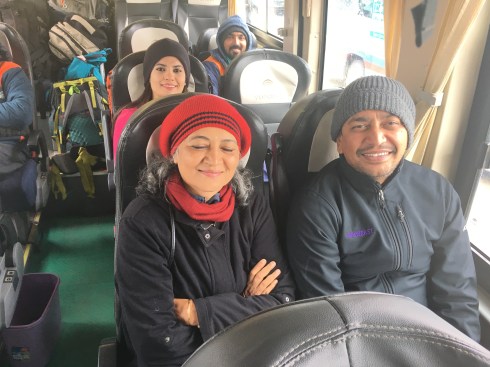
Family trip

As we travelled from Lhasa the quality of the hotels started deteriorating. However, till Saga we had rooms with hot water and bathrooms.

We were lucky to get Indian food all through. Even lunch was packed. Breakfast was Khichdi, Upma, Cereal, Fruits, Milk, Tea, Coffee and lunch was Rice, Dal, Sabji, Rajma, Canned Sweets, Bhujia, Apple etc.

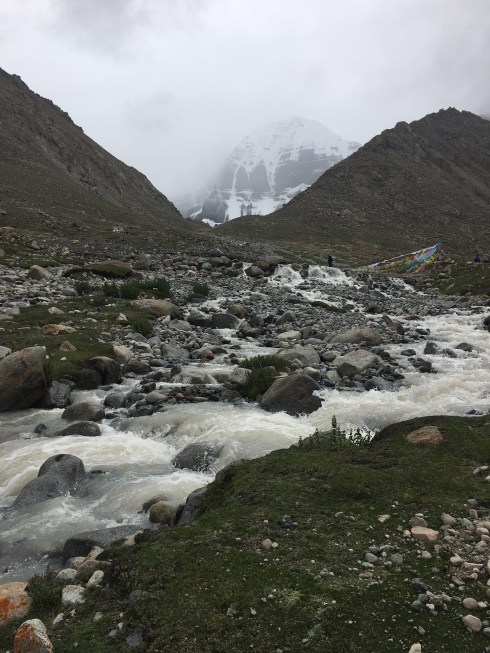
The landscape changes after Lhasa. Tibet is the worlds highest plateau. It’s a cold desert. All you see is undulating plains of grasslands with Yaks and Sheep and hardy nomads. There are no trees.
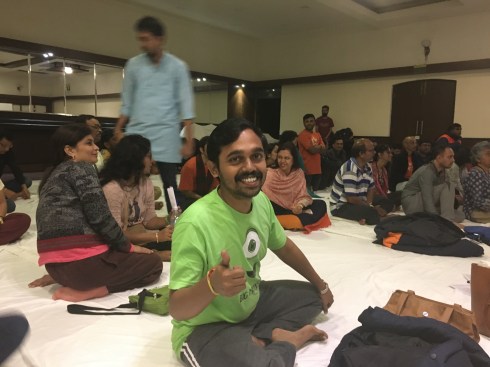
After reaching Shigaste (12500 feet), I fell sick. A combination of AMS and GERD hit me. I lost my appetite and felt feverish and weak. I rarely fall sick and was a little underprepared with my medicine kit. The YAK Butter, Milk Powder and Puri with Rajma for lunch must have caused the problem in this high altitude zone. Luckily we had doctors travelling with us in the bus and stationed at the hotels. They were checking everyone twice a day and thanks to their support I recovered in a few days.

(Doc in Green T Shirt was a fellow Yatri who was doing Gods own service by treating and helping us. I owe it to him for getting back in shape)Kailash Mansarovar,

On this trip it is best to avoid greasy food. I had carried a lot of “Groundnut Chikki” which I gave away. Figs, dates, biscuits, ginger balls, chocolates, energy bars etc are good to have. The family of Yatris helped me out with medicines and useful supplies all through. It’s amazing how people who you have never never met before come together as a family to help you in your time of need.

If you suffer from GERD or acidity, stick to a light diet. We got bananas and apples every day – so you can stock up on that. Falling sick has nothing to do with age. Our group of 75 had people from 26 – 66 and many of the people in their mid 50’s were the fittest of the lot.

Kathmandu

Diamox to prevent altitude sickness is a must have twice a day. It is recommended to start it 5 days before you leave for Kathmandu. With Diamox you drink a lot of water so that means frequent restroom breaks. Which is a challenge. There are no decent loos on the highway so your breaks are always in the open.  Diamox kept me waking up every hr at night all through the trip adding to the tiredness. At these altitudes its difficult to get a restful 5 hr sleep at night. And I am a super sensitive light sleeper.

Phase – 5 : We reach Mansarovar on Day 6

After 3 days of long drives we finally reached Mansarovar. We stayed at a camp right across the lake. Our camp was a Pucca brick structure room with no attached bath. For the next 4 days we would have to manage with no bathrooms, which was a challenge. The toilets were sink pits inside small tents and with no air circulation, it can be smelly. You have the option of using open air starry sky toilets also – which was a better option. At 4 AM, pitch dark, no power, armed with a torch on your head like a coal miner, wet wipes, toilet paper roll, a rain coat, layers of warm clothing you hunt for a nice starry corner. (Suggestion if you are using the tent loos carry some Camphor with you – the smell of Camphor minimises the stink)

Mansarovar lake

Mansarovar is a large lake. It is mystical and has a close linkage with Kailash. We could see the South Face of Kailash from our camp. Many have seen lights and divine bodies taking a dip at the lake during the Brahma Muhurtam  – we also woke up at 2.30 AM and spent some time but were not lucky to witness any celestial beings.

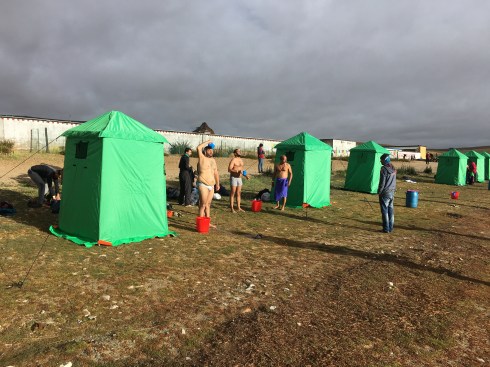
The next morning we did our meditation and prayers by the lake. It is a serene experience and as you sit quietly you can’t but help choke and feel the tears running down your eyes.travel tipsMany brave souls took a bath in the chill cold water. The authorities don’t allow you to take a dip – so the sherpas get water in drums.

Phase – 6 : The final Trek to Kailash – day 7 /8

After breakfast we had a short 1 hr ride to Yam Dwar and started our trek. Many people do the full 72 Km Parikrama that takes 3 days. We did a total of 32 Km (16 Km up and down). Starting from Yam Dwar and walking along the Western face till we reached the Northern face of Kailas where we camped for 2 nights.  We had views of the Southern Face, Western Face and the Northern face.

travel tips

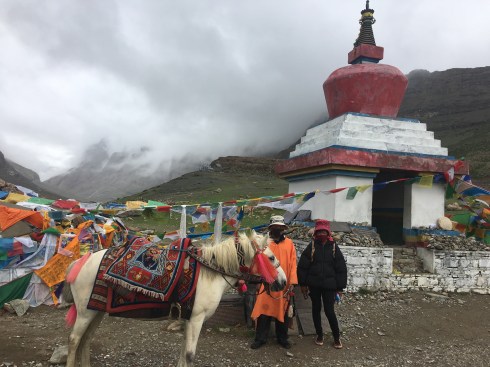
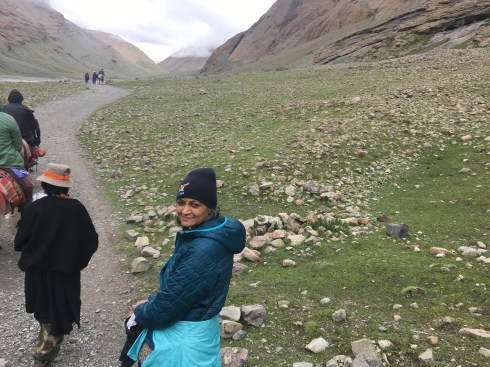
You have an option of taking a pony. Most people walk. Its a easy trek. Broad path, scenic views, fresh air. You can do it comfortably in 4 – 6 hrs.  Good to have a porter as at this altitude even a few 100 grams can tire you out – so keep your backpack very light. The porters cost 850 Yuan for the round trip and the Pony costs 2200 Yuan. There are a few stopover points for tea and snacks to catch you breath and warm your hands.
travel tips

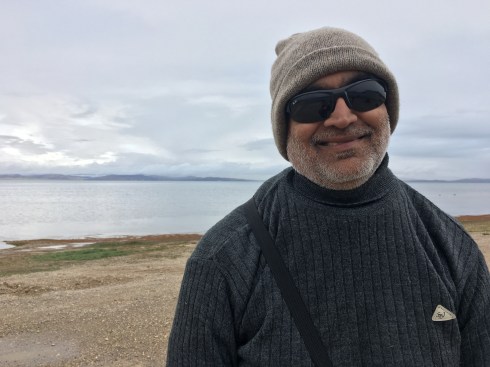
The horses are young, wild and very sensitive. We were in a group of 4 horses and the Yatri on the 1st horse opened his umbrella, which got his horse troubled. In the neighing and confusion, my pony suddenly started running and knocked me down. For a few minutes I was in a state of shock, wondering if I had broken bones. Fortunately by the grace of God all was well, the thick jacket had saved me and all I had was a few bruises.
In this panic moment I saw the horse man remove my RADO watch – but was in no state to stop him. With little oxygen, your memory loss is high and I forgot the incident. After the fall, I refused to sit on the pony and trekked the remaining way to Kailash and back. It was only late in the evening after I reached Kailash that I realised that my watch was missing. By sheer luck the organisers managed to get it back. Miracles do happen in Kailash.

Kailash Mansarovar,

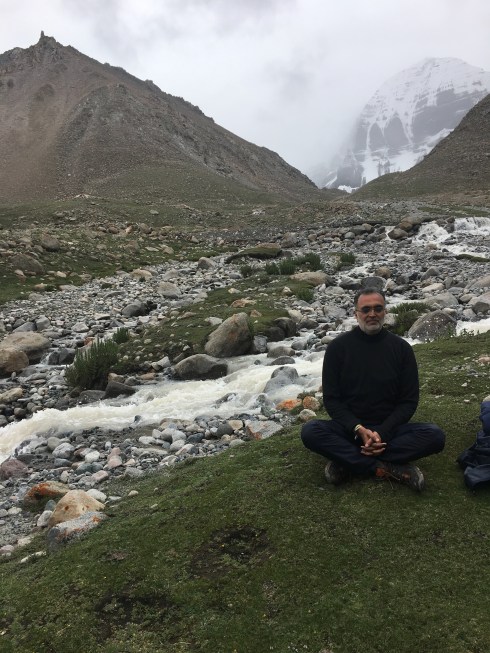
Kailash is the source of enormous energy. The mountain looks different from others in its vicinity. Its majestic and towering. It draws sadhaks from across religions – Hindus, Jains, Buddhists, Tibetans. Many come and spend years drawing energy and knowledge. The 1st Jain Tirthankara Rishaba spent over 7 years, Milarepa the buddhist monk spent many years. Sages, wise men, monks, students are all drawn to the power of Kailash. Some say it was made by extra terrestrials, others say it is the centre of the universe, and the global HQ of energy and power which the puny human mind cannot comprehend. Many holy rivers originate from here. You go to Kailash to dissolve. Not to ask, but to merge and take back a spark of that energy with you. You are lucky if you can connect and get that spark embedded in you.

After you reach Kailash you sit quietly trying to absorb this infinite power. You thank the Gods and the divine masters for a safe journey. And you can sense a catharsis within you as the tears swell up and flow silently. We spent 2 nights at Kailash – I wish we could have spent more. I did get a view of the full mountain, but it was cloudy most of the time. We did not have blue skies and at night could not see the stars. Old timers say that later part of Aug the weather gets clearer.

Our stay at Kailash was also in pucca camps similar to Mansarovar. The toilets were better as they were not tents. they were better designed with open roofs. It snowed at night making it very cold. The rooms were comfortable and the piping hot food was a treat. People started reaching Kailash by 4.30 PM and the last set by 7.30 PM. The sun sets only by 9 PM. Tibet is set to Beijing time so its 2 hrs 30 min ahead of India.

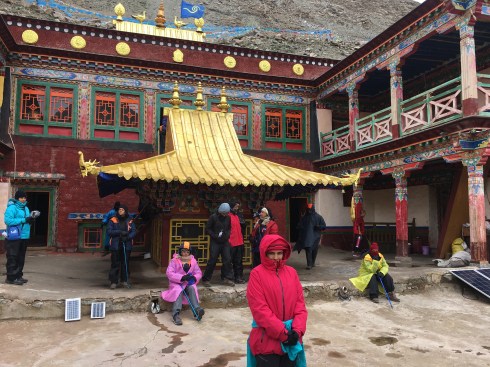
Next morning after breakfast we did our group meditation in front of Kailash and visited the Milarepa Monastery close by. The brave Sherpas went close to the mountain glaciers and collected “Kailash Teertha” for us. Fresh with minerals and the energy of Lord Shiva – one drop is all you need to energise yourself.

Kailash Mansarovar,

Phase – 7 : The Trek Back – Day 9

You dont feel like coming back from Kailash but after 2 nights we had to head back. The return walk is easier. This section is not steep and we touched a max of 17,000 feet. There are however parts of the 72 km Parikrama that are steep and a tough trek with altitude touching 18,000 feet. Many buddhist devotees do the entire Parikrama by prostrating. That takes nearly 45 days to complete. Yak land

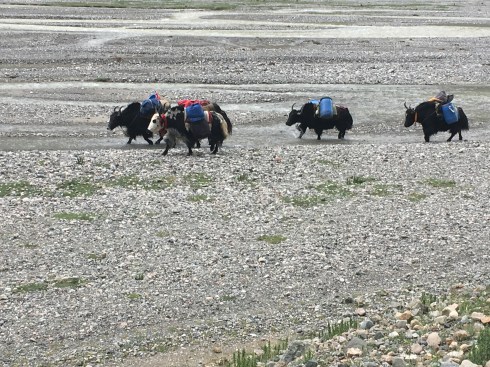
Our luggage came by Yak’s. This is Yak land – they are strong wild beasts and the local population survives on everything YAK. From Meat, Wool, Milk, Leather – life in Tibet is tough and would not be possible without the Yaks.

Tibetans are tough people and with all the challenges they are a smiling lot. They may be Buddhists but their religion is steeped in tradition and rites and has a lot of Tantric aspects of Hinduism. They say that when the invaders came the Tantric knowledge of Hinduism was smuggled to Kashmir, Tibet, Nepal & Assam as it was safest here in the remote Himalayas. Somehow from here it managed to find its way to Kerala also.

Kailash Mansarovar,

After 4 days of no bath we finally reached Darchen – to a nice hotel with a bathroom and hot water. What luxuries. A nice warm bath, lovely hot food, contentment, a sense of accomplishment and happiness gave way to a relaxed nights sleep.

Phase – 8 : Back to Lhasa

Over the next 3 days we drove back the long 1500 Km back to Lhasa Via Saga & Shigatse. Most of the drive was along the Brahmaputra that was in spate and we had a few long stop overs were the bridges were broken or landslides had blocked the roads. Small incidents nothing serious. We were lucky.

After reaching Lhasa we  ventured out for dinner to a lovely places called The Tibetan Family Kitchen. Nobody knows a word of english in Lhasa – locating the place was a challenge. After a few misses I was lucky to find a young English speaking couple who escorted me to the restaurant. There are good helpful people everywhere.

Tibetan

The service and food at the restaurant was outstanding. We ordered almost every veg dish (Their speciality was Yak Meat) and enjoyed the meal. The group of 75 was split across 4 buses – we were in Bus 4 and over the last 12 days had built a good camaraderie with the group. Far far away in Lhasa, it was fun dining with a few good people.  The lady who runs the restaurant was the perfect host. She booked us cabs and got us back safely to our hotel. Kailash Mansarovar,

Phase – 9 : Back to Kathmandu

On the 13th of Aug we headed back to Kathmandu. And the jinx of 13th played up for a bit. Our flight almost landed at Kathmandu and then had to turn back to Lhasa as the weather was bad. A short stopover for refuelling and we were headed back to Kathmandu reaching in time for a late lunch at 2.30. the 2 1/2 hr time lag was a blessing.

Phase – 9 : Back to Bangalore

Aug 14th we headed back to Bangalore. We had left on July 30th. It was day 16. We had covered a lot and had accumulated memories for a lifetime. We had survived on an adrenalin rush till now and as I sunk into the  Jet Airways seats, I was overcome by exhaustion. It’s going to take a few days to recover. Something tells me that this is not the last trip – I will head back again to Kailash again in the near future. And as I sign off a special thanks to the organisers who did a good job . A big thanks to the volunteers, sherpas, cooks, all the support staff who make this trip possible and the friendly helpful fellow yatris who were like family forging new bonds.

Kailash Mansarovar,

Other Tips 

  • Travel light. Dont pack too many woollens – reuse. Ensure 3 sets of Thermals, Undergarments change every day, Socks for every 2 days. Dress in layers.
  • Carry healthy food – Dates/Figs/Biscuits/Chocolates/Energy Bars/Gur/ Something salty – helps to munch something in the long bus rides.
  • Talk less – walk slow – avoid chit chat gossip
  • Carry 2 – 3 pairs of Gloves, Caps, Mufflers – they tend to get misplaced. A good raincoat is a must. Wear ziplocks over your your socks so that they dont get wet as you trek.
  • Pack all your clothes in Ziplocks / Plastic covers. Use number locks for duffel bags.
  • Carry a flask for hot water and a regular water bottle.
  • A head torch can be very useful
  • Medicines I ended up having – Dymox, Domistal, Omniprosol, Allegra, Azithrol, Dexam, B Complex.
  • There is network connectivity available in almost all the places including Kailash & Mansarovar. Battery pack is needed only at Kailash & Mansarovar.
  • Hotels in China have Wi Fi – but FB/ WhatsApp / Google are banned – activate Airtel Roaming pack before you travel.
  • How much does this cost? Ex Kathmandu 2.85 Lacs. Flight to Kathmandu, 1 extra night stay, Porter, Misc etc add 30 K – so thats a total of 3.15 Lacs for the trip/person.

A few more Views from the trip

 Mythily with the bus drivers friend 
Kailash Mansarovar,

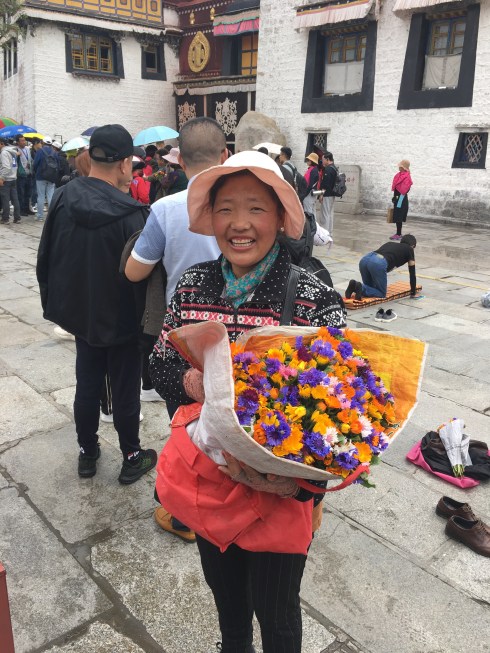
A Tibetian lady selling flowers at the Jokhan temple Kailash Mansarovar,

Meghna & Vikramjit Travel tips

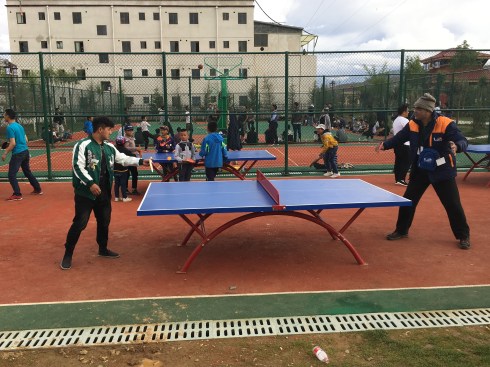
Playing TT at the park at Shigatse Playing TT at the park at Shigatse

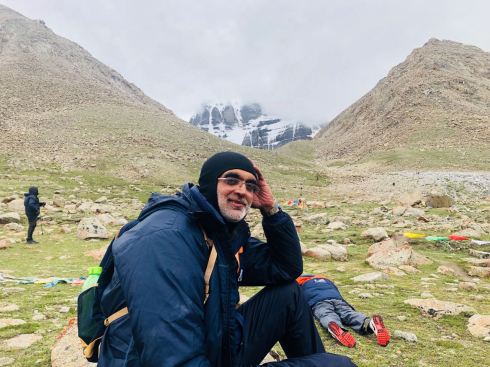
Afternoon view of KailashKailash Mansarovar

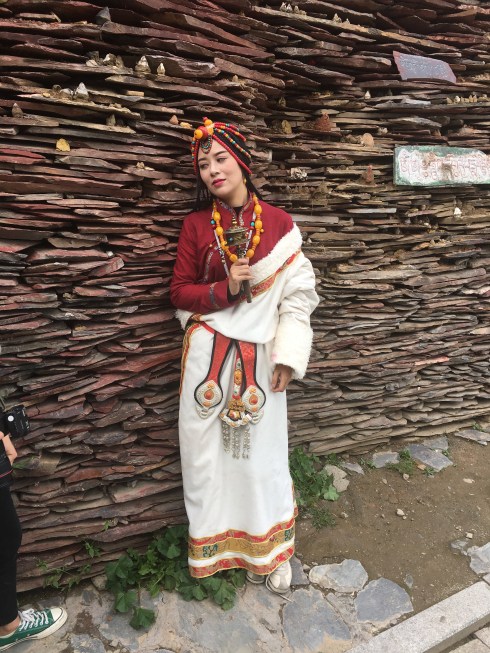
A performer / model near the Potala Palace Kailash Mansarovar

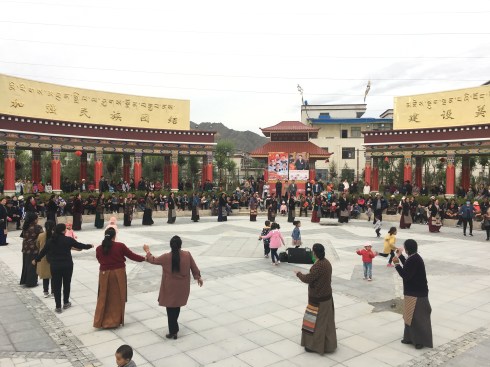
Community dance at Park at ShigatseCommunity dance at Park at Shigatse

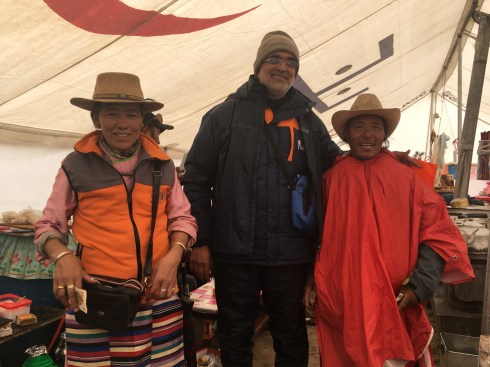
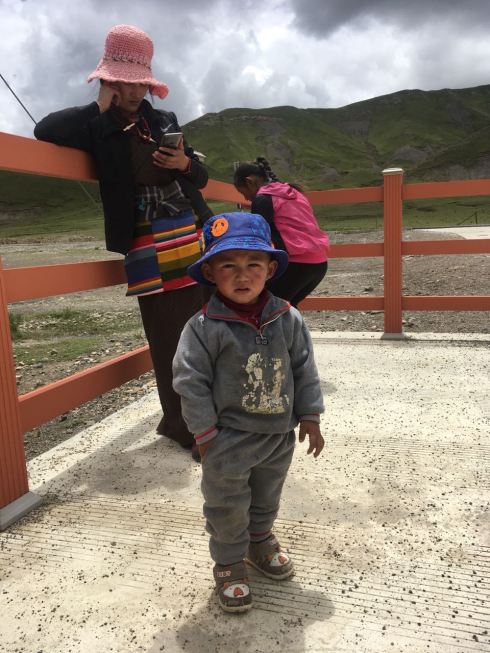
Locals we met Enroute
Kailash Mansarovar

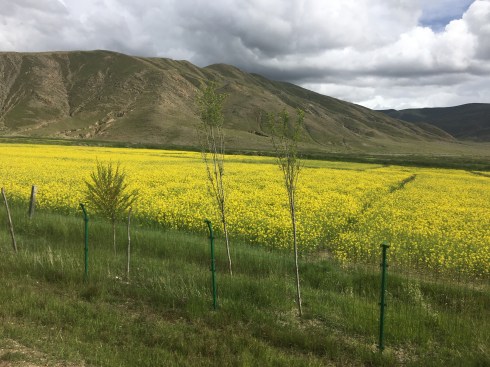
Mustard fields on the road to Saga Kailash Mansarovar


Day Trip 19 – Rangasthala, An ancient Vishnu temple at Chikkaballapur near Bangalore

25 Jul

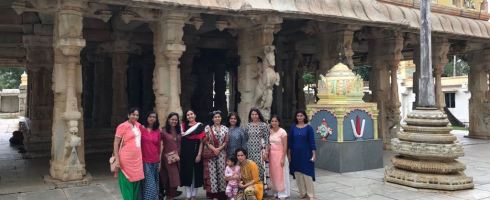
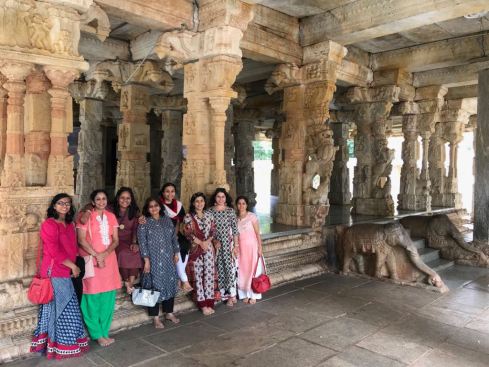
An ancient Vishnu temple that was built by the Cholas and later developed by the Vijayanagara empire, Rangasthala in Tippanahalli village, Chikkaballapur around 70 Km from Bangalore is a well kept secret. (Locals claim that the temple is over a 1000 years old and the main shrine was installed by the Sapta Rishis in the Treta Yuga)

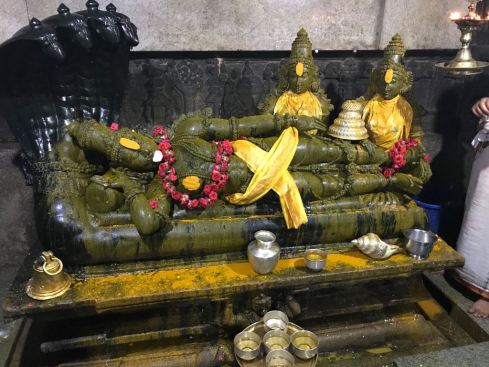
Surrounded by misty hills and green fields lies this beautiful temple of lord Vishnu. The idol of Ranganatha is 4.5 feet in length with Bhoo Devi and Neela Devi at His feet. Lord is in Yoga Nidra and his Shesha (Lord Vishnus Snake) is spreading his hood like an umbrella. The idol is beautifully sculpted out of Black Saligrama stone and it is believed that the sanctum sanctorum was installed by the Sapta Rishis. Locals state that if devotees visit this temple after  Adi Ranga in Srirangapatna, Madhya Ranga in Shimsha and Anta Ranga in Srirangam, they achieve liberation or moksha. Hence the Lord is known as Moksha Ranganatha.

We were lucky to witness the elaborate “Abhishekam” of the Lord in Milk, Curd, Sandal etc with the divine chanting of mantras. A rare sight and the priests had no objections to photography and video. And guess what – we were the only people in the temple seated right next to the sanctum sanctorum.

On the wall there are sculptures of Saptarishis, Brahma, Rambha, Urvashi etc. It feels like the Lord is in Vaikunta and he is surrounded by all the gods who are prostrating in front of him.

The temple is serene and peaceful and its a joy to sit quietly and soak in the energy and vibrations exuding from its premises. On a weekday its empty.

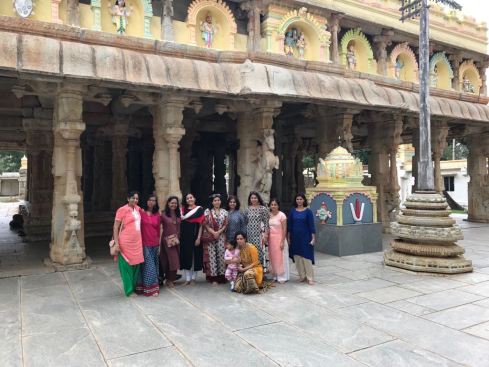
The architecture of the temple is very “Chola” with the intricately sculptured pillars that support the temple. It is very well maintained and clean.

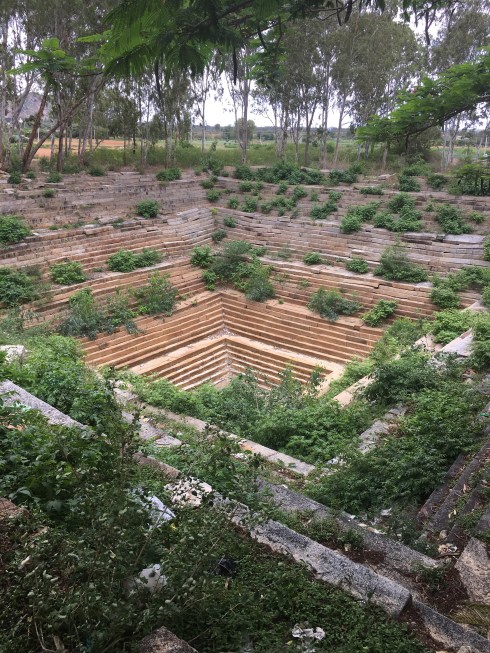
Adjacent to the temple is a large step well. That is currently not operational. But one can visualise how beautiful it would have been when it was brimming with water.

We left temple at 11.15 AM and reached our lunch place at Race Course Road –  South Ruchis Square exactly at 1 PM.  This is a newly opened pure veg restaurant that serves Breakfast, Lunch and Dinner. I would call this Bangalore’s nicest fine dining S Indian restaurant. Nice interiors, good service and most importantly the food was sumptuous. You have a choice of a regular S Indian Thali or Millet Thali. Lots and lots of varieties in the Thali. And guess what, its priced at a very affordable Rs 180/-. This was the second great find of the day.

Other useful points

  • Drive Time from Koramangla Via Devanahalli Airport ~ 2 Hrs. Breakfast stop – Udupi Swaada. Nice place with clean bathrooms. Lots of restaurants on this stretch. We left Koramangla at 7.30 AM and reached our breakfast halt (10 Km after the airport) at 8.45 AM and after a leisurely tasty breakfast were at the temple at 9.45 AM. The last 15 Km are thru the town of Chikkaballapur, roads are good – last 1 Km is mud road. Google maps gets you to the temple correctly.
  • Budget 60 – 90 Minutes at the temple.
  • On the way back if you have time you can stop at the Devanahalli fort where Tipu Sultan was born. You can see it as your drive on the highway. Inside the fort there is another Vishnu temple. We had a 3.30 PM return deadline so could not cover this.
  • A Shirdi Sai Baba temple on the main road between Chickballapur and Devanahalli is also worth visiting
  • Back home at Koramangla 2.15 PM.

A beautiful documentary on this temple by Hackberry that I found on YouTube


Please follow my Facebook page for regular updates on A Few Good Things 

https://facebook.com/afewgoodthingsvak1969/

For other fascinating day trips in and around Bangalore visit below

https://atomic-temporary-14030268.wpcomstaging.com/2018/07/11/explore-bangalore-21-curated-day-trips/


From Technology Outsourcing to Social Entrepreneurship – The journey of Dr Sridhar Mitta

24 Jul

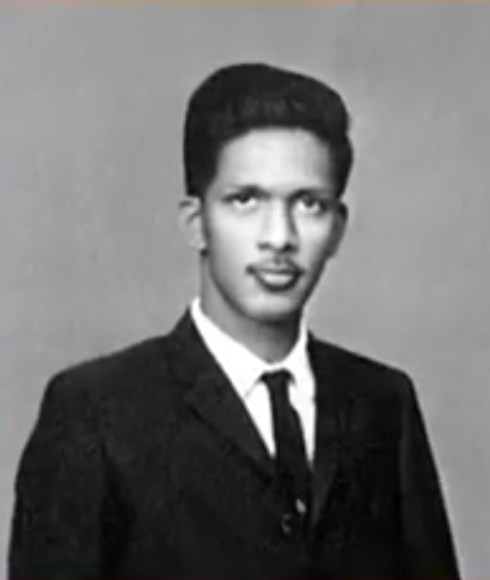
As part of A Few Good People – This blog features Dr Sridhar Mitta, a pioneering visionary who not only established Wipro as a global leader in Technology Outsourcing but also built the foundation for the industry. Dr Mitta has influenced the lives of thousands and on this Guru Purnima I would like to pay my respects to this wonderful man.  

In 1980 when a young 30 year old walked into Wipro’s nascent Information Technology Division as a founding employee he achieved two things. He helped catapult Wipro into a Global Technology giant and set the ball rolling to position India as a Global Outsourcing hub.

 Dr Sridhar Mitta, Bangalore in 1980, with a population of ~ 2M was a quaint little town deserving the sobriquet of a pensioners paradise and a hub of  Research Institutes. The Janata government had shown the door to IBM, The PC was yet to be discovered, Infosys did not exist and the Indian Rupee was trading at 1 USD = Rs 7.86.

This was also the time when a young Azim Premji (AHP) at the helm of Wipro was hungry to expand. Whether it was vision or chance one would never know – but AHP who always had the knack for identifying great talent hired Ashok Narasimhan (A smart savvy financial controller from Telco) and Dr Mitta. Between them they were tasked to build the IT / Technology business at Wipro. 

Dr Mitta armed with a MTech from IIT Kharagpur and a PhD in Control Systems from Oklahoma State University (He was inducted into the Hall of Fame in 2009) was the right choice for Wipro. He was a visionary but hands on. A wonderful team player he was crystal clear on the road ahead as he went about it step by step with determination and passion.

I recollect my first interaction with him in 1992. At our induction  program he  predicted that in the coming years the PC would be like a telephone, just a black box – and the whole attention would be on Software and Services. How right he was.

Over the next 20 years the successful trio of AHP, Ashok Soota and Dr Mitta built Wipro into a global giant. (Mr Ashok Soota took over as the President of Wipro Infotech from Ashok Narasimhan in 1984)

 Dr Sridhar MittaSridhar Mitta celebrates his birthday with Mr Premji, Ashok Soota & Sudip Banerjee

The first phase between 1980 and 1990 was the “Make in India” journey. Intel was coming out with blazing fast microprocessors and Wipro started building multi-user Minicomputers the S86, S286, S386, Landmark 486, Pentium based Synergy series etc. some of them based on the Unix operating system

Designing a Multi Processing Computer in the 80’s was not easy. Remember there was no Internet and Google. The R&D team under Dr Mitta built deep expertise in Chip design, Board design, Operating System, Compilers, Interoperability, Testing and all the zillion things that go into making a reliable high end system.

Dr Mitta recalls that in those days Wipro was the 1st choice for any IIT Graduate because of the quality of work and company ethics. People, Process & Technology were the bedrock for the R&D team and that was Wipro’s positioning for many years. Quality work always gets noticed and global tech companies like Intel started exploring partnerships with Wipro’s R&D team.  This would prove to be the foundation for the next wave of innovation. 

 R&D teamThe young engineers from Global R&D. Most have grown to be Tech entrepreneurs,CTO's and CEO's of leading companies

By the early 90’s it was evident that the India was liberalising. HCL had tied up with HP, Compaq had an alliance with Microland. All the large players were beginning  to make an entry. They had global scale and size and it would be unviable to try and compete with them in manufacturing given the small size of the Indian market.

The visionary in Dr Mitta saw an opportunity amidst this threat. He started contacting his friends  in the US who were working in large Tech companies like Intel, Sun, Tandem and NCR. The bold pitch was to ask for projects that could be done by his team of highly qualified engineers from India. He was crystal clear that there would be no body shopping (The model that software exporters had adopted initially).

The going was not easy as foreign travel needed RBI permission and there were strict controls on the amount of Forex you could carry. He recollects – “We survived on less than $50 a day living with friends and at times eating one meal a day. It was tough. But we were fired with a mission.” Infrastructure, power and network bandwidth were the other challenges that the team had to surmount.

Doing work remotely needed a strong process. Wipro led the industry in embarking for ISO and later CMM certification. This gave a high degree of comfort to clients on the process maturity of the company. Thus was born Tech Outsourcing from India. A wave that has transformed the lives of millions and positioned India globally.

Dr Mitta      Dr Mitta with the numerous awards won by Wipro Global R&D

After that there was no looking back as Wipro’s R&D transformed to Global R&D executing high end work for tech giants in US, Europe & Japan.This was when Dr Mitta decided to explore his entrepreneurial calling. After a 20 year stint at Wipro starting as employee No 1 he had now become the President of Wipro Global R&D. But deep down the technologist in him was itching for doing more innovative work that would impact society.

He spent a decade in EnThink and E4E two innovative startups. EnThink was an Intellectual Property design and licensing start-up located in silicon valley. At E4E  he helped develop the concept of EAP – Entrepreneurship Acceleration Program working closely with TIE (A Global organisation fostering entrepreneurship). By now he had seen the challenges of the rapidly growing IT Industry in Indian cities. It was time to connect the dots and bring his 40 years of experience in creating something new and innovative. This led to the creation of NextWealth.

While conceptualising NextWealth he met the legendary Dr C.K.Prahlad who spent a lot of time with Dr Mitta and finally concurred that his basis for NextWealth was foolproof. Dr Mitta still remembers his advice ” Think beyond Best Practice, invent the NextPractice – The next big business model“.  The founders wanted the company to be named NextPractice but since that domain was not available they settled for NextWealth.

Dr Mitta           Dr Mitta with Anand Talwai & Mythily Ramesh

NextWealth was Co – Founded with leaders from Wipro and the team of Dr Mitta, Anand Talwai, S.R.Gopalan and Mythily Ramesh steering it ahead.

NextWealth was created to add social value through entrepreneurship. The company has a unique business model that solves many of the challenges of the day.

  1. The Vision of the company is to provide 10,000 jobs in smaller towns. They call it The Distributed Delivery model.
  2. Each job generates 5 ancillary jobs and kick starts the local economy. NextWealth promotes not just employment but overall economic development in smaller towns.  “40 Years back Bay Area outsourced work to India 5000 miles away so why can’t Indian companies outsource work 500 miles away in their own backyard? Questions Dr Mitta.
  3. A lot of good talent is available in smaller towns at very affordable prices. This kills two birds with one stone – Lower costs and almost nil attrition.

The company identifies business opportunities and partners with entrepreneurs in smaller towns. The local entrepreneur runs the centre with  inputs from the experienced leadership team at NextWealth. The company has now partnered with competent entrepreneurs in smaller towns like Salem, Chittoor, Mysore, Hubli and Bhilai and has established its business model with many customers.

Over the last few years NextWealth has delivered with some very demanding Global & Indian customers in eCommerce, Finance, IT & Retail. Their core expertise is on deriving insights from Digital Data that can be monetized by blending people and automation. The focus areas are

  • Customer Interaction
  • Assisted Digitisation &
  • Business Process Management

It is a Win Win formulae for Customers, Employees and the Entrepreneur. A mid sized company that can scale rapidly and deliver quality output at very affordable rates. Quality of staff is good and with the right training and mentoring the staff excelled. And it was no surprise that more than 50% of the staff are women.

NextWealth

I visited their largest centre near Salem. It was buzzing with energy. The process & security standards were foolproof. NextWealth supports over 40 customers in a variety of high end digital services. (Judgemental, Cognitive, Analytics, Lead management and Lead conversion customer support) and is meeting metrics ever day and every week

Backed with the vision and operational depth of Dr Mitta and his leadership team NextWealth is now ready to take on large complex projects. The proof of concept phase is over. NextWealth is now ready to accelerate this proven model. It is truly delivering its promise “Human Touch to Digital processes”. 

For additional information please contact 


Graama Bhojanam – Fresh, Healthy, Tasty Millet restaurant at Jaynagar

17 Jul

An experienced Iyer couple from Chennai (Who left his job after 30 years at HLL), a young entrepreneur just back after completing his degree in Hotel Management from Switzerland and his friend from the legendary Savera hospitality group, and a Ranji cricketer  – When these four people with diverse expertise get together something unique is born. And that was Prem’s Graama Bhojanam.

The restaurant at Jaynagar Bangalore leveraged on the expertise of Mr Krishnamurthy who started Prem’s Graama Bhojanam with his own cooking at a small place in the bye lanes of Adyar Chennai.

Their goal is to promote healthy food with healthy ingredients. All the  dishes here are made of millets and Red/Brown Rice.  It definitely is more environmental friendly as growing millets requires 70% lesser water than rice.

The first thing you must order here is their “Paddus” (“Kuzhi Paniyaram”) – They are delicious and healthy – made of  “Samai” Little millets. Crispy outside and soft inside – you can gobble 3 – 4 of them easily. So ensure that you order more than 1 plate if you are in a group. At just Rs 80/- a plate you need not worry about the bill.

Paddus

Thats the beauty of this place – all the varieties of Idlis, Dosa’s, Vada’s and Bajjis  are made of millets and they taste better. Of course they are healthier. They are also priced very reasonably.

The signature dish is their Lunch and Dinner Thali that includes 4 Main Dishes – Sambar rice, Curd Rice, Rasam Rice and Rice of the day – Lemon / Puliyogare etc  but all these “rice” items are made of millets. Then there is a Curry, Chutney, Sweet of the day,  (Made with Jaggery), Buttermilk and Roti – all of this unlimited for Rs 195/-. Even the RO water is laced with Camphor, Tulsi, Clove and Cardamom. Food is cooked in a healthy way – all their products are sourced directly from Organic farms and there is no use of Vanaspati, Sugar, Maida and artificial colours.

A lot of focus has gone on the menu and the accompaniments – and thats what is important. If you get the food and pricing right people will come – ambience is secondary. And they seem to be on track serving over 100 lunches every day and 200+ lunches on the weekend.

Menu

The ambience is basic, functional and clean with an eye on costs.  Prem’s Graama Bhojanam is expanding with a fine dining restaurant that opens in Chennai (Annanagar) on the 23rd of July and its a matter of time before they expand their footprint in Bangalore. They seem to be setting the trend with a handful of other restaurants in promoting Millet based food.

Prem's Graama Bhojanam

Do visit them – Sr Citizens especially will love this food. Prem’s Graama Bhojanam is a house in Jaynagar converted to a restaurant. Its run by Yuvajith and Smita, Avinash & Tina and their friend from the Savera group Tarun Reddy. (Yuvajith is passionate about Coffee and has opened a signature coffee brewing centre – The Brewing Bean at Eco Space Bangalore)

Graama Bhojanam

  • Address : 234, 32 A Cross 2nd Main Road, 7th Block, Jayanagar, Bangalore
  • Timings : 12 Noon – 10.30 PM

Graama Bhojanam

________________________________

Please follow my Facebook page for regular updates on A Few Good Things 

https://facebook.com/afewgoodthingsvak1969/