Archive by Author

Thank You Jet Airways

17 Apr

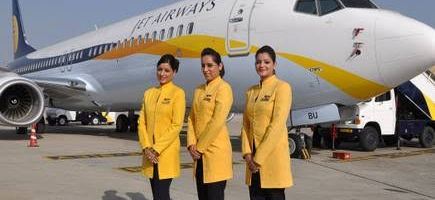
In a few hrs from now Jet Airways will fly its last flight (April 17th – 10.30 PM). The era of a great airline which set high standards for the Indian aviation industry will finally come to an end. Hopefully a temporary one.

I have fond memories of Jet Airways. it has been my favourite airline for almost 25 years. My corporate career from 1992 and the growth of Jet mirrored each other. In the last 25 years I would have taken over 2500 flights in India and Abroad. During these flights I was treated well, got decent food, was upgraded many a time and almost always got my priority aisle seat near the emergency exit or the first row.

I recollect in the mid 90’s when even a cost conscious company like Wipro made an exception allowing employees to fly Jet even if it was not the cheapest fare – because the service was excellent and the Chairman and Corporate head of HR enjoyed travelling Jet.

Jet Privilege – The award winning frequent flyer program was excellent. The best in the country – and we have enjoyed many a free holiday thanks to the thousands of miles we accumulated. In the initial years it was easy to upgrade and almost all my Bangalore – Delhi flights I used my Vouchers or Upgrade points to fly in luxury. If you were a Jet Platinum customer your baggage would be on the belt as you walked out with almost no wait time. When I started flying to London every quarter – I skipped the direct BA flight from Bangalore and went all the way to Mumbai or Delhi to take the Jet Flight to London. It was worth it. The Business Class on Jet international was better than most International flights and I was often rewarded with an upgrade to 1st Class and many a time rubbed shoulders with Politicians and Fortune 100 CEO’s. For many years my Brown & Cream night suit was thanks to Jet Airways.
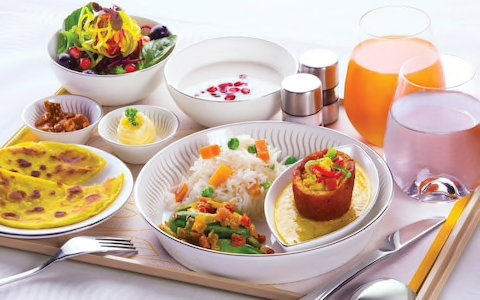
From Day 1 Jet differentiated itself with the food it served. It was piping hot and fresh. The Food in Business Class was outstanding – selection, taste and aesthetics were 10/10. I remember a presentation made by an International Strategy Consultant on Branding in 1998  – when he explained the concept of Brand Differentiators. He explained that all planes were Boeing or Airbus make but then some airlines were Air India, some were Singapore Airlines and finally some were Jet Airways. The differentiation was in service. In the early days Jet made India proud with its service.

The golden era was till 2005 and then the IPO happened. I have observed that most companies start tumbling down after their IPO as the greed for quarterly profits accelerates. After that the airline slowly started going down hill.

This accelerated with the disastrous acquisition of Sahara. The loyalists like us still stuck along with fond memories of the past. By 2012 – 2013 things started getting bad. The seats were jammed and there was hardly and leg space, food quality dropped the Rotis were half cooked and the Air Hostesses looked overworked and tired. The AC would start only after you boarded the flight. Getting an upgrade even with vouchers was a challenge.

As Brand Indigo grew and the fare wars escalated Jet started struggling even more. Rather than hold fort as a full service airline and charge a premium Jet fell into the trap of retaining market share at any cost. It was a losing battle and slowly Jet lost its No 1 position to Indigo.

With Etihad stake there was some hope and service levels did go up before Jet started its final descent a year back. Loyalist that I am – inspite of all the challenges I booked my Bangalore Amsterdam flight for my May holiday on Jet – KLM Codeshare in January. A few weeks back I realised that the last nails were being banged in the coffin and managed to cancel with a steep penalty and booked myself on Emirates. But I have no regrets – I see the cancellation penalty as a small fraction of the Upgrades and excellent service I have been provided over the years. A small cost to pay for the great times I have had over the years.

Thank You Jet Airways and all the staff for a wonderful 25 years. As you make your last flight people of my generation will sigh and empathise with you. I sincerely hope you revive and get back to your golden days again.


Experience Punjabiyat – The essence of Punjab in 4 Days

11 Apr

When you think of Punjab you immediately conjure an image of big brave fun loving people. Colourful dresses, Bhangra, Paneer, Butter Chicken, Patiala Peg and the Brave Sikh soldier are instantaneous connections. The food bowl of India nestled between the fertile valleys of the 5 rivers has been the first line of defence against the country’s invaders.Punjab is unique and ever since my 1st visit to Amritsar 4 years back I have been wanting to take the family to experience the essence of Panjibayat.

We had 4 days to experience the charm of Punjab. We spent two days in Amritsar and 2 days at a rustic and sylvan farm stay called Punjabiyat – about 90 km north of Amritsar. If you want to experience the charm of this wonderful state – I urge you to follow this program.

Indigo has a direct flight from Bangalore that reaches Amritsar at 1.30 PM and you are in your room comfortably by 3 PM. Amritsar, historically known as Ramdaspur derives its name from the Amrit Sarovar which was built by Guru Ram Das. It’s a small city that is now expanding rapidly. Located on the border of Pakistan, Lahore is considered its twin city. Amritsar is famous for 4 Things all of which and more you can cover comfortably in 2 days

  • The Golden Temple
  • Attari Wagah Border
  • Jalianwala Bagh (Memorial centenary in 2019 – April 13th)
  • The best Kulcha’s in the country

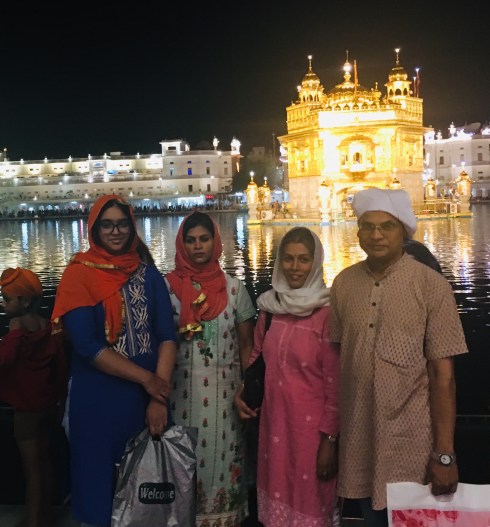
The Golden Temple is India’s most well managed and clean temple. It caters to large crowds especially on the weekends and festival days. Its serene, calm and beautiful inspite of the crowds. Plan a visit in the morning and in the night when it is lit up and don’t forgot to offer your services and eat a meal at the Langar. It’s a miracle how they serve so many people.

The area around the temple has been done up like a walking heritage corridor – The cobbled pathways are broad, clean, well maintained with shops selling food, trinkets, and clothes on both sides. There are many hotels also walking distance from the temple. The locals recommend a place called Saragarhi Niwas (www.sgpcsarai.com) – Room rent Rs 1100/- a day. email sgpcsarai@gmail.com, Phone – 0183 – 2550060 which is located less than 100 m from the Golden Temple in the heritage corridor.

Jalianwala Bagh is  located right next to the Golden temple. Sadly the current state of maintenance does not do justice to the history it narrates.

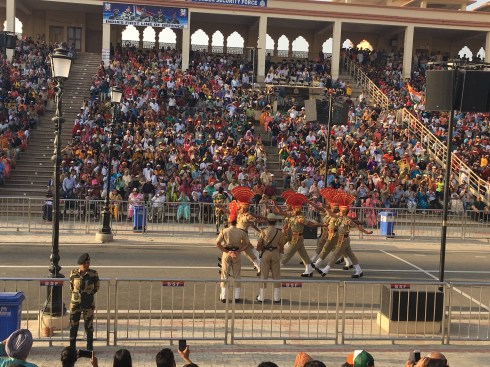
The Attari Wagah border is 30 Km from Amritsar, a 45-minute drive. Every evening there is a flag retreat ceremony that is jointly coordinated by the BSF and Pakistan Rangers at around 530 PM (Time varies by season). This half an hour show attended by nearly 10,000 people can be an adrenaline boost to your nationalistic spirit. It’s a must watch for every patriot and its FREE. To get front row tickets you need a VIP pass from someone in the BSF / Army which we were lucky to get. Even without  a pass you can get a decent viewing spot from the gallery that is built like a stadium.

And you can wrap up your Amritsar stay by shopping for Ladies Suits, Masala, Papad, Vadiyan, Sweets, Bangles…. Almost all the shops can stitch your dresses in 24 hrs and have them delivered at your hotel. In the two days you spend here you will also have time to visit the ancient Durgani temple (Under renovation) and the Mehramgarh Fort. Most people also spend an evening at Sada Pind – which is like a the Choki Dani of Jaipur creating a rural feel.

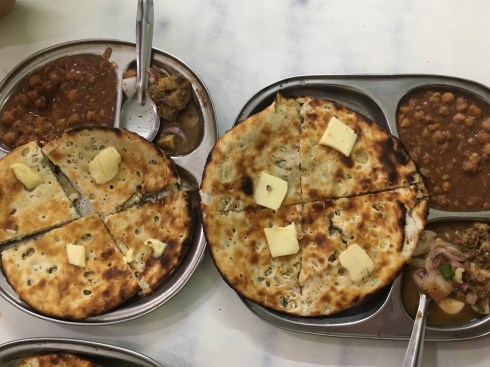
Do all that but keep time to visit the food joints of Amritsar. The Kulchas & Parathas here are the best in the Country. A few places you must visit are Bhai Kulwant Singh Kulchian Dhaba for breakfast and  and Kesar Da Dhaba for Lunch or Dinner. Kulcha Land is another highly rated joint. The street Jalebi and Gulab Jamun is also very tasty. Paneer here is soft and succulent. And don’t miss the Lassi. Food is fresh, delicious and economical. But its rich and servings are large. All these shops are in the bye lanes of old Amritsar and are accessible by walk or e Rickshaws only. We were told that the Amritsari Fish and Butter Chicken is equally popular but being vegetarians, we did not taste them. (Note Bharwan da Dhaba although recommended by some was disappointing. Brothers Dhaba is another place you can visit for Breakfast. Breakfast joints open only by 8 AM)

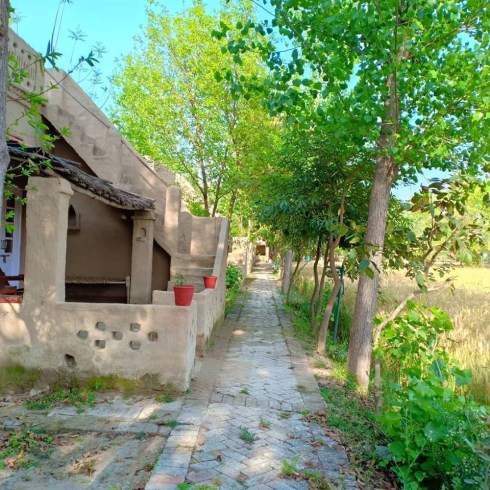
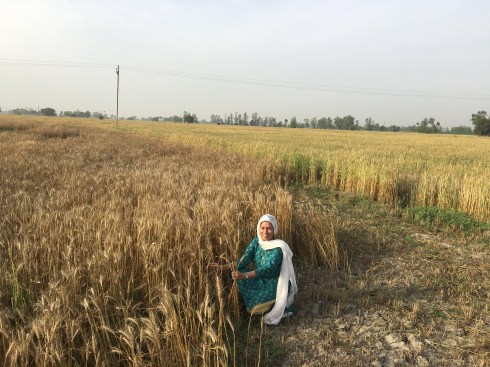
From Amritsar we headed to Punjabiyat – a Rustic Rural Resort which is in Gurdaspur Dist north of Amritsar. A great place to experience the essence of real Punjab. It’s a short 90 min drive from Amritsar (excellent Roads) and is located in the midst of a vast expanse of agricultural fields. We visited on April 10 and the fields were laden with the Golden produce of wheat – ready for harvest after Baisakhi in a week’s time. The weather was pleasant even in April. This is fertile land close to the Beas river and they grow Wheat, Rice, Sarson and Sugarcane. If you come in Dec you can see the Sarson in full bloom- and that will indeed be a pretty sight. It does get cold in Dec but that adds to the charm of the holiday.

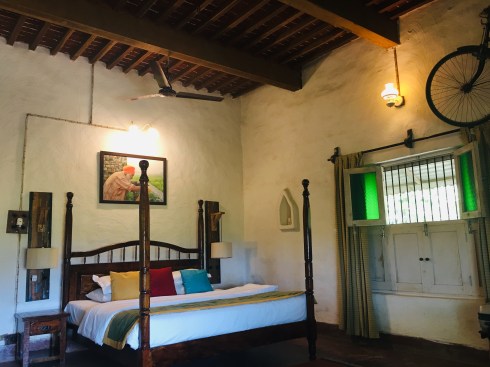
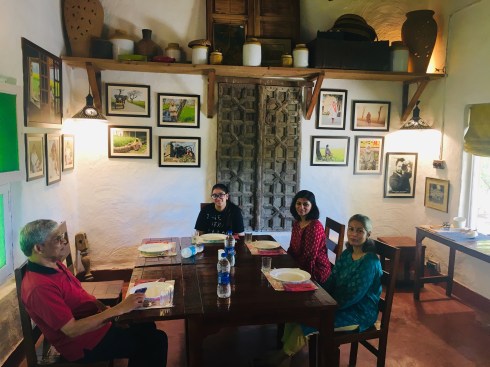
Panjabiyat is Rustic Luxury. Its small, exclusive and efficient. There are 4 well-appointed cottages. Each Cottage has a large room, a very large airy bathroom, a nice sunny balcony facing the fields and a terrace that is accessible. The ceiling height is about 15 feet and the rooms are bright and happy. The furniture is all you need and more – solid wood. Room is large and can easily accommodate 3 adults – or 2 Adults + 2 Children. The walls, the furniture, the look and feel are rustic, warm and welcoming.


The hospitality & service is excellent and food is custom made. We loved the food – it was fresh, hot and delicious with lots of variety. It is a small property with a common hall and a portico where they serve meals and you can get together with your friends for a drink, play carom or listen to music. They also have a small Library tower where they can set up a romantic breakfast. This is a great place for you to come with 2 – 3 family friends. Ideally book the whole place for 2 days and enjoy the solitude, the food, the ambience and the warmth of the place.

Do take time to step out and visit the neighbourhood and some historic Gurudwara’s all of which are accessible by walk along the fields or by a tractor ride. A walk thru the fields can bring memories of William Wordsworths “A Solitary Reaper’.

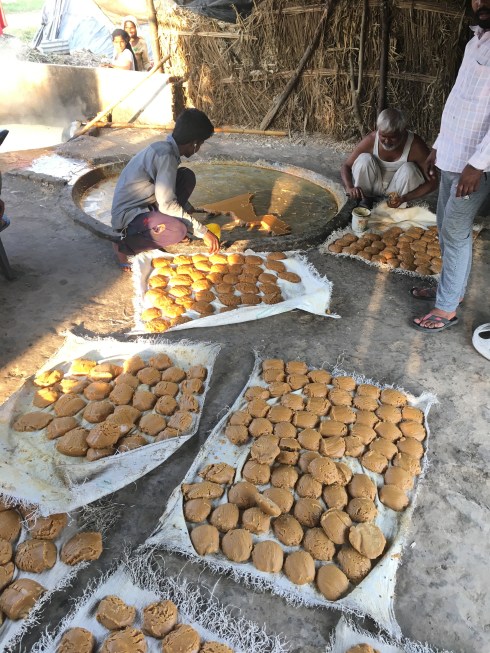
Kids may be fascinated with the milking of cows – but what really excited us was seeing how jaggery was made out of Sugar Cane. A family of 4 in very humble surrounding were working hard to crush the juice and process it across boiling vats to make fresh tasty Jaggery. Freshly made Jaggery tastes like Mysore Pak – it is warm and delicious. We also visited a rice mill and saw mountains of sparkling rice being separated from the chafe by automated machinery.

To enjoy Panjabiyat you must love nature and solitude. It’s perfect for a 2-day break. Don’t expect too many thrills and action. There is no TV and the 3G signal is weak. Which is good because you get family time. Go for long walks. Take a ride in a tractor.
 

Punjabiyat is a great place to Detox. Be with nature. Smell the earth. Listen to the birds. Use the time to read and meditate. Or just sit quietly by the Beas river and ponder and reflect on life and thank the good Lord for all his blessings and Grace. Come alone, come as a couple or just use this time to connect with family and friends. Punjabiyat is definitely an offbeat property worth visiting.

For more details Visit https://www.itmenaanlodges.com/punjabiyat/

Taxi : For the entire trip you can contact Mr Pandey. He is an ex BSF Commando and if you book your trip with him he can even help you with passes for the Attari Wagah border program. He can be reached at +91 9463521098. Even though we had passes from my Army friend he helped us in getting better seats using his BSF clout.


Annadanam – The best form of Charity

3 Mar

Annadanam Samam Danam Trilokeshu Na Vidhathe
Annadanam is supreme and incomparable to any charity

“So this is our life, let’s find ourselves. Let’s be kind to others, be good to people, do as much seva as possible to all living beings because there’s nothing better than seva. And, unless you do seva, your mind cannot be purified and unless your mind is purified, the Song of the Lord cannot be heard inside, which is the real meaning of Shabad, the Song of the Lord. And, it is ‘anahat’, it is heard from inside.” – Sri. M. 

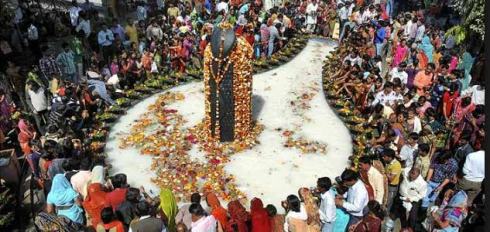
Tomorrow being Shivratri its a good time to reflect on this. As the devout stand in long Q’s to propitiate Lord Shiva the Milk they pour with affection on the Shiv Lingam may be put to better use. In ways that the Ascetic Lord Shiva may better approve. Indians lead the world in making charitable donations to temples and hosting ostentatious weddings / birthdays and other celebrations but when it comes to charity we have a long way to go.
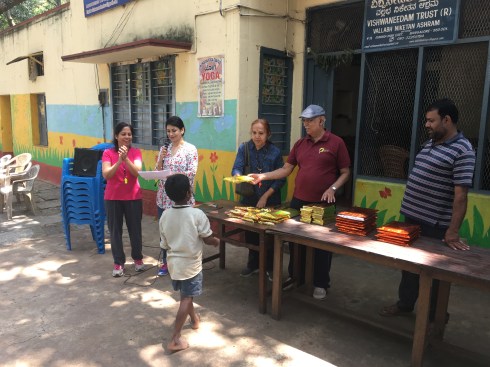
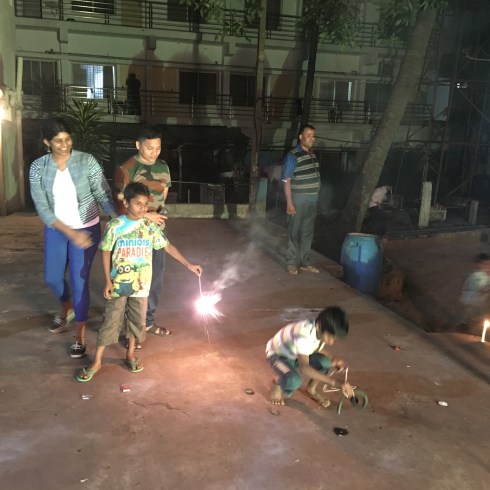
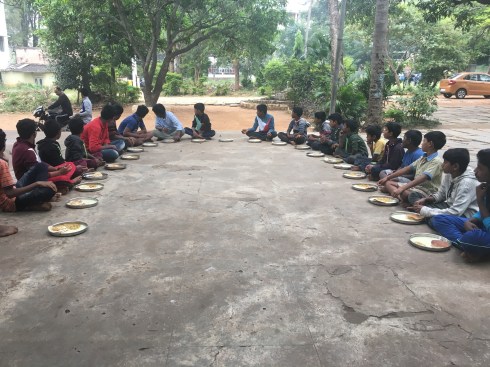
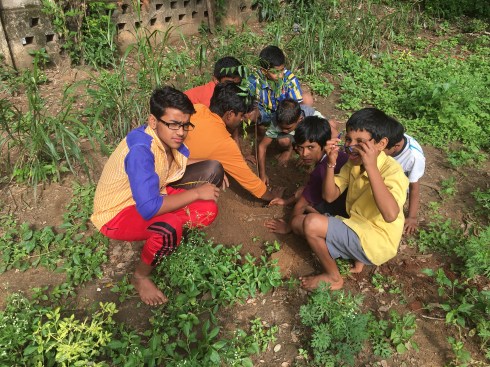
I want to share my last 1 years experience as a volunteer of The Satsang Foundation interacting with the kids at Vallabh Niketan. This is one of the 6 Ashrams that was set up by Achary Vinobha Bhave in 1965 and named after his Disciple Vallabh Swami.The Home has transformed over the years from a Library, research & training centre, a Social help stop and a base for social transformation.

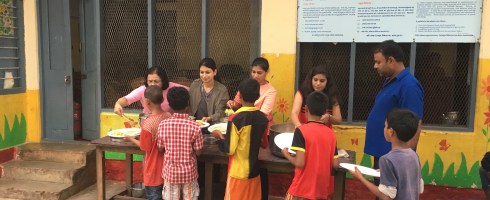
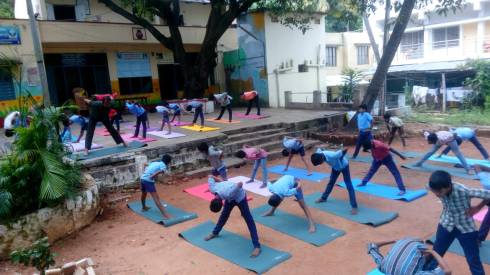
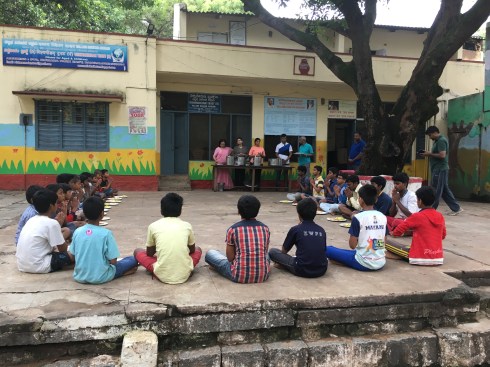
A green oasis located in the heart of Bangalore city next to Chitrakala Parishad and Gandhi Bhawan this is home to 35 Orphans  and 15 Old destititutes. The first time we visited the place they shared their meal with us – and I struggled to eat the bland bowl of sambar & curd rice with no vegetables. We realised that’s the meal the kids eat almost every day. Thats when we started sponsoring breakfast after our Sunday Yoga sessions once in 2 weeks and Lunch / Dinner on special occasions. A small act – but it is something that the kids and Sr citizens look forward to eagerly.

A lot of people are keen to contribute to Charity but are not sure if it will reach the end recipient in totality. Notwithstanding the good work done by few organisations there are many charitable organisations where the overheads are steep and people collecting money receive commissions. This was my perception for many years as I was hunting to be associated with an organisation where I could contribute. And thats when the association with The Satsang Foundation and Vallabh Niketan happened.

At Vallabh Niketan neither is federal aid solicited, nor foreign or Corporate aid accepted. Only individual and institutional helps alongwith participation as per Vinobaji’s wish of ‘Kanchan Mukti’ & ‘Shaasan Mukti’.

You can contribute directly. There are 3 ways of doing it.

#1 You sponsor a meal and pay the restaurant directly. Keep the Volunteers of The Satsang Foundation informed. Breakfast for all inmates (35 kids, 15 Sr. Citizens and 5 Staff) can be sponsored for Rs 1600/- and Lunch or Dinner for a slightly higher rate . You are welcome to talk to the restaurant and customise your food offerings.  Normal breakfast offerings include Set Dosa with Chutney & Sagu Rs 30/Plate, Thatte Idli with Chutney & Sagu Rs 30/Plate, Small Idli Bowl dipped in Sambar with Chutney Rs 35/Plate.

  • Nandishwar Tiffany Centre, Between Vinayaka Circle & Vyalikaval police Station.
  • Owner : Ravi Pojjary, +91 9591528945
  • A/C No : 0417101049326, Canara Bank, Vyalikaval, IFSC – CNRB0000417

It is not mandatory that you have to use the above vendor, if you know other caterers / restaurants who can supply clean hygienic food in a timely manner at the venue that is also an option. Vallabh Niketan is located at 19, Kumara Park East, Sheshadripuram, Bengaluru, Karnataka 560001 (After Chitra Kala Parishad take a right turn and 100 m down the road you will find Vallabh Niketan on your right)

Coordination Contacts : (Please text or WhatsApp)

  • Satsang Foundation Volunteers : Sumati Mohan  +91 9844307580, Nirmala Jayram +91 99010 58868, Manjunath  +91 97416 22766
  • Vallabh Niketan : Hasan : +91 9945566331

#2 You contribute directly to the Trust that manages Vallabh Niketan. The Vishwaneedham Trust was set up in 1963. Contributions will go towards Electricity, Water, Building Upkeep, Medicines, Day to day requirements at the Home. (Please note that currently monthly provisions for food and milk for children is sponsored by the Volunteers of The Satsang Foundation Bangalore). Purely voluntary donations are accepted in the name of Vishwaneedam Trust and a receipt issued.

The Vishwaneedham trust banks with Canara Bank, KP West Branch Bangalore 560020, India: SB a/c #0422101003660, IFSC Code #cnrb0000422
Ashram is also certified under sec 12A of the Income Tax Department, Government of India, vide No.ACCTS/718/10A/Vol/B II/V-195: & Our PAN No is Vishwaneedam Trust AABTV5514H

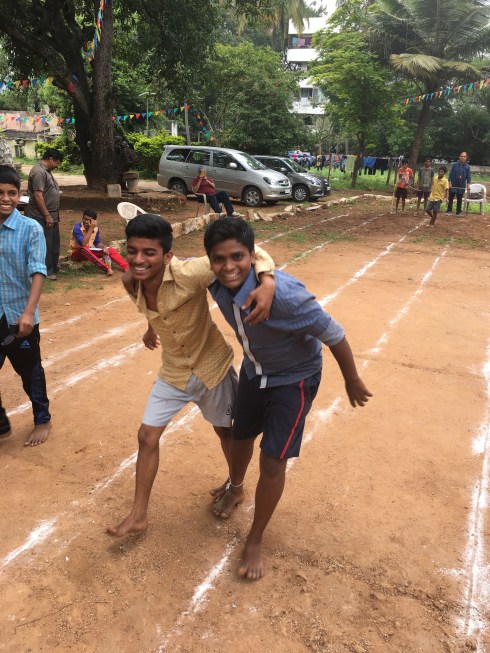
#3 You contribute with your services. Come and Teach Yoga, English, Arts & crafts, take the Kids out for a movie or a picnic. Conduct a Sports day, spend Diwali or any other festival with them. Help in gardening and growing fruits and vegetables. Help them with Clothes, Bedsheets, Shoes, Medicines… For all this coordinate directly with Hasan the Home In- Charge at : +91 99455 66331 or Sumati Mohan  +91 98443 07580

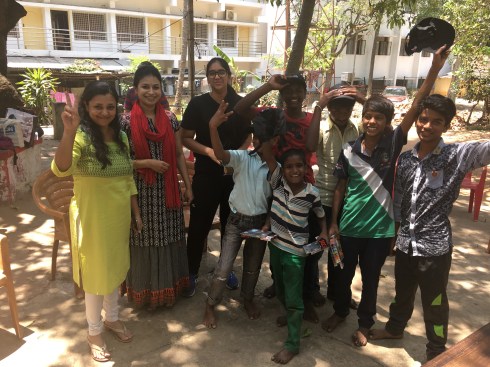
Make an effort and experience joy. Here is an opportunity to bring a smile to a Childs life in your own small way. Helps you get your children grounded as they see the advantages they have in life. It’s a great opportunity to be thankful for all that you have.

Just think – If you celebrate at home a birthday party with 15 friends and relatives you will spend 15 – 20 K on the function. That money can provide breakfast to this Home for 15 days. Thats feeding 900 Mouths. Thats 900 deprived people being satisfied with a tasty meal. And thats earning you a lot of positive Karma.

So make a start this Shivratri – and help a few needy soul’s.


A few more glimpses of the activities at Vallabh Niketan


Horlicks – Energiser or a Sleeping Aid ?

22 Feb

Comforting, warming, fortifying since 1906,” is written on the promotional mug Horlicks launched in the UK last year. In Britain, the malted milk drink has long been linked to bedtime, a soothing aid to sleep.

The story in India is very different – with a brand line “Taller, stronger, sharper” Horlicks has been positioned as a drink for boys and girls to grow faster and stay energised at all times. It’s a breakfast drink that gives you the strength for the long day ahead.

Yet the drink’s main ingredients are exactly the same: wheat, malted barley and milk. 

How is that possible? So is Horlicks a drink revered by generations of Indian’s just a marketing gimmick ? In the world of brand marketing – Perception is Reality and years of marketing propaganda have built the perception that Horlicks is ideal for the growth and development of a smarter, stronger child. But the story doesn’t end here.

The history of Horlicks is even more fascinating. Horlicks was invented by two British-born men, William Horlick (1846-1936) and his brother James (1844-1921) from Gloucestershire, England. James was a chemist, working for a company that made dried baby food. William, the younger brother, had emigrated to America in 1869 and James decided to join him in Chicago in 1873. That same year, they started their own company (J&W Horlicks) to make a malted milk drink. They called their product ‘Diastoid‘ and their advertising slogan read: ‘Horlick’s Infant and Invalids Food‘.

Later it was used as a war drink during WW 1. Horlick’s became important for British soldiers on the front in World War One. Horlick’s was a dried product and, formed into tablets, it could be included easily in a soldier’s pack. Horlick’s was known to have nutritive and calming powers. The “delicious and sustaining” tablets provided important nutrients, making their consumption, “an every-day incident on the front.”

Over the years most of Horlicks sales came from India and SE Asia where it was positioned as a nutritional drink for children. The 140 year old brand saw sales growth dropping to single digit numbers in the recent years. 

The brand was finally acquired by HUL in 2018. Unilever Plc, will merge GlaxoSmithkline Consumer Healthcare with itself in an allstock deal that will give the country’s largest pure-play consumer goods company access to Horlicks, Boost and Maltova malted drinks brands as well as distribution rights for a five-year period over over-the-counter and oral care brands such as Sensodyne, Eno and Crocin.

Boost, Viva and Maltova brands will be owned by Hindustan Unilever. However, the Horlicks brand, which is currently owned by GSK Plc, is being acquired by parent Unilever and HUL will pay royalty for its use in India.


Origin of the word POTLUCK

24 Jan

We were first exposed to the concept of “Potluck” in the late 90’s when we lived in the US for a few years. It was common practise for Indian’s in US to get together over the weekend at one persons house. Cooking load was shared and everyone brought a dish. So we had variety and vanity, pride and competitiveness ensured good quality food. It’s a simple concept that works well.

A few days back as we headed out for a Potluck lunch at a friends place I started wondering how the concept originated and a little bit of research got me started on this Blog.

Did you know that the first reference to the term ” potluck” was during Shakespeare’s time. In the year 1592 Thomas Nashe included this term in his stage drama “Summer’s Last Will and Testament“. According to Robert Palmatier in “Food: A Dictionary of Literal and Nonliteral Terms.” The original text in which the word is used states, “Because you are my countrymen and so forth; and a good fellow, is a good fellow, though he have never a penny in his purse. We had but even pot-luck, a little to moisten our lips, and no more.”

The definition of potluck implies accepting an unplanned offering. For example, the original meaning of potluck was a  a meal with no planned menu. It was a meal that had food available that was the “luck of the draw.” In a sentence, an unexpected guest might have to accept potluck instead of a planned meal that was cooked with the idea of feeding him.


A second version considers the origin of potluck from the traditional practice (not that it’s entirely unknown among us moderns) of never throwing anything away. Meal leftovers would be put into a pot and kept warm, and could be used to feed people on short notice. This practice was especially prevalent in taverns and inns in medieval times, so that when you showed up for a meal, you took the “luck of the pot.” A related term found its way into French usage, as an impromptu meal at home is often referred to as pot au feu, literally “pot on the fire.”

Some attribute the origin of Potluck to  potlatch – A gift-giving feast practiced by the indigenous people of Pacific Northwest Coast of Canada & US. A potlatch was held on the occasion of births, deaths, adoptions, weddings, and other major events.Only rich people could host a potlatch. Tribal slaves were not allowed to attend a potlatch as a host or a guest. In some instances, it was possible to have multiple hosts at one potlatch ceremony.

In modern usage a potluck supper is typically referred to as a food gathering where everyone brings a random dish.There are a few basic guidelines regarding the potluck, whether you love them or hate them. Cook a meal – don’t try to save time by buying food en-route to the potluck party. It spoils the fun – and if everyone did that one might as well have ordered food. If you hate to cook get a bottle of wine or some nice dessert.

Closely associated with this is another word  “potboiler.” A potboiler is a specimen of hack literature, generally produced quickly using recycled situations and characters to bring in some cash and keep the author’s pot boiling. Like the potluck, a potboiler is a bit of a mishmash, not without its tasty aspects, but hardly something you’d mistake for gourmet.

The Origin of Jai Hind – Remembering Netaji

22 Jan

Netaji would have been 122 years old today (Jan 23rd, 2019). While suave marketing over many years credits India’s freedom to Ahimsa – the truth may be very different.

In an interview given to BBC in February 1955, B.R.Ambedkar explained the reason for the exit of the British in 1947. Netaji Subhash Chandra Bose and his INA had caused enough damage to the British. Clement Attlee then Prime Minister of Britain agreed Netaji was the hardest challenge for them. Several intelligence and defence experts reiterated the same.

But this is not a political write up on Netaji and many more like him who worked tirelessly for India’s freedom but are relegated to the footnote of history.

This Blog is about the origin of the energising salutation “Jai Hind” and how a member in Netaji’s INA helped coin it.

Netaji Subhash Chandra Bose was in Germany in 1941. he was trying to recruit Indian soldiers captured by Nazi Germany into his Azad Hind Fauj. A nationalist to the core who wanted a United India, Netaji observed that even in the German POW camp Indian soldiers grouped together in their own ethnic , religious groups. The Indian army then ( and now) was formed on the basis of ethnic lines – The Rajputs, Sikhs, Madras regiment, Baluch’s etc. When they met they greeted themselves in their own salutation – “Namaste or Sat Sri Akal, Ram Ram Ji or Salaam Alaikum”. This worried Netaji and he realised that the first step was to replace the religious greetings with a common salutation that was acceptable to all and would be the foundation to uniting and integrating the INA.

But what troubled him was that the soldiers of the Indian Army had historically been organised into regiments based on ethnic and religious lines – the Rajputs, the Baluchis, the Sikhs, and so on. And even here, in the prisoner-of-war camps, they tended to cluster into their own little ethnic and religious groups.

This job was accomplished by his trusted aide – Abid Hasan.

The Birth of Jai Hind 

Born to an anti-colonialist family in  Hyderabad, Abid Hasan was brought-up in India and later went to Germany to train as an engineer. It was while he was a student  during World War II that he met Netaji  in 1941 who motivated him to drop out of engineering college to became his aide.

Tasked with the job of creating a unifying salutation his first version was “Jai Hindustan ki” when he overheard two Rajput soldiers greet each other with “Jai Ramji ki”. This was later modified to the shorter, more rousing “Jai Hind”. Did the Nazi salutation of Hell Hitler have anything to do with this – One can only surmise.

Netaji was delighted with Hasan’s idea, which worked so well that “Jai Hind” soon went beyond its original brief to become a rallying cry of the Indian National Army. Later, of course, it would be adopted as the national slogan when, at the time of Independence, Jawaharlal Nehru raised it at the Red Fort.

It is ironic now, in the time of the Bharat Mata ki Jai controversy, to think that Jai Hind was a slogan created specifically to help unite the people of India, rather than divide them.

So what became of Abid Hasan?

When Netaji travelled from from Germany to Japan by submarine in 1943, he took Hasan along with him. The journey took 4 months. Beginning in the Baltic Sea in a German submarine, transferring off the coast of Madagascar into a Japanese submarine, and then sailing across the Indian Ocean to land in Sumatra. (This voyage that is interestingly portrayed in Shyam Benegal’s The Forgotten Hero, with Rajit Kapur playing the part of Hasan). From Sumatra the two of them were then flown in a Japanese Air Force plane to Tokyo.

Netaji Subhas Chandra Bose with his aide Abid Husain on their famous voyage from Germany to Japan in 1943. Photo courtesy: Anvar Alikhan

Hasan (by then Major Hasan) fought in the historic Battle of Imphal in 1944 – which Netaji believed would be the INA’s great breakthrough into the plains of India at the head of General Mutaguchi’s 15th Japanese Division, culminating in his dream of “Chalo Dilli!” But, unfortunately, everything went wrong. The four-month-long Battle of Imphal (along with the Battle of Kohima nearby) has been voted the greatest battle fought in the history of the British Army. But what that meant for the Indian National Army was that instead of leading to an advance upon Delhi, the battle ended with the long, dejected retreat back to Rangoon, which Hasan orchestrated.

he was imprisioned by the British and grilled for the whereabouts of Netaji. he revealed nothing. After independence Abid Hasan was released following the end of the INA Trials in 1946 and joined the Indian National Congress briefly. Post partition, Hasan chose to settle in Hyderabad and joined the IFS. Over a long diplomatic career, Hasan served as the Ambassador  to a number of countries including Egypt & Denmark before retiring in 1969 and settling back in Hyderabad. Abid Hasan Saffrani died in 1984.


Source : This Blog is based on information source from multiple websites prominent amongst which is a write up on Scroll by the Anwar Ali Khan Grand Nephew of Abid Hasan & Wikipedia


Travel Tips – Rameshwaram in 48 Hrs

15 Jan

From Kailash to Rameshwaram, India is dotted with energised Shiva temples. The 12 Jyotir Lingas, The 5 Pancha Bhoota’s and many more like the Temples at Tungnath, Jageshwar, Lingaraja Temple Bhubaneshwar, Brihadeshwara at Tanjore – the list is long. Some of the oldest temples in India are Shiva temples and the Himalayas are dotted with Shiva & Devi temples. I have had the privilege of visiting most of these lovely temples. I added to this by visiting Rameshwaram in Jan 2019. 

Where is Rameshwaram located – How to get there?

Located on the Tamil Nadu coast in the district of Ramanathapuram it is just 18 Km from Sri Lanka. It’s not the Souther tip of India (Mainland S Tip of India is Tuticorin, while Indira Point in Andaman is the S Tip of the country). Rameshwaram is technically an Island and the Pamban Bridge connects it to the mainland. There are Trains from Chennai to Rameshwaram and the closest airport is Madurai (172Km – 3 hrs drive). The road from Madurai to Rameshwaram is in good shape. From Bangalore its a 10+ hr drive via Madurai. There are overnight trains to Madurai and from there taking a cab is the best option.

What is the significance of Rameshwaram?

As the name indicates Rameshwaram was the point in India from where Lord Rama and the Vanar Sena built the bridge to Lanka to battle with Ravana and free Sita. The sea here is shallow and its just 18 Km from Dhanushkodi to Sri Lanka. Dhanushkodi is a beautiful 20 Km drive from Rameshwaram town.

After winning the war the victorious army came back and Lord Rama is said to have built a temple for Lord Shiva atoning for the sins of having killed Ravana – A Brahmin. As the sanctum was consecrated by Lord Rama this is a very holy place for Hindu’s and both Vaishnavites, Shaivites and Indians from all over visit this Jyotirlinga. We found that 50% of the pilgrims  were Marwari’s from Rajasthan.

Given the proximity to Sri Lanka, Dhanushkodi was in news during the LTTE strife and thousands of Sri Lankan refugees landed on the shores of India over here. Most of them are settled in and around Rameshwaram. This is probably the reason that we found the taste of food and the flavour of sambar lacking here in comparison to Chidambaram, Tiruchi, Tanjore and other Temple towns of S India.

How Big is the temple and how much time dos it take to cover the complex? 

It’s a massive temple but large parts of it are closed. The temple in its current state was built by the Pandian kings whole ruled over Madurai and its architecture has similarities with the Madurai Meenakshi Temple. The temple is famous for its long corridors which are neat and well maintained. I found it bright and colourful and would have preferred if the original granite look was preserved.

The temple is open from 4.30 AM – 1 in the afternoon  and in the evening from 3.30 – 8.30 PM. We were lucky not to have massive crowds and got an excellent Darshan in less than 15 minutes all the 5 times we visited.

You enter from the Eastern Gate. Cell Phones are not allowed, there are lockers outside. The first deity as you enter is not Ganesha but Hanuman as he was chartered to get the Lingam for the temple. As you enter you will see a ticket counter – buy the Rs 50 Ticket for the Main temple and a Rs 10 ticket for the Devi temple. This gives you excellent access to the Sanctum Sanctorum.

There are two Main Shiva Lingams next to each other. While the main one is said to be installed by Sita the one next to it was brought by Hanuman. Most people miss the adjacent one. That place is empty, needs no ticket and is equally energised. As you complete the circumblation you will see a small temple with the Jyotirlinga – A white Shiva Linga.  The Devi temple is close to the main sanctum sanctorum – on the right. The Rs 10 ticket allows you to sit in the steps right in front of the Sanctum.

As you start walking out (You exit also from the East gate) ask for the Nataraja temple. Inside this is the Jeeva Samadhi of the great saint Patanjali. A nice place to stop and meditate for a few minutes.

On a good day you can cover all of this very comfortably in 60 minutes.

How do you offer special Pooja? 

There is an early morning 4.30 AM Abhishekam done to the Sphatik Lingam in the main Sanctum Sanctorum. This draws a lot of crowd and can be accessed by paying the 50Rs special ticket.

Other special Puja’s are tricky. There are boards that mention many offerings and Pujas that can be done. But before you get a ticket you need to get an OK from the priest in the main temple that he is ready to conduct the same. We wanted to get a Rudra Abhishekam down for Rs 1500/-. The priests  were hesitant – looks like they are on fixed monthly salary and there are too few of them, but they finally agreed. After getting the tickets you have to go to a counter and get the offerings (and flowers etc from outside) and then a few priests sit with you and chant the Rudram in an area adjacent to the main temple (In the hall where the Shiva Lingam brought by Hanuman is installed). Post this you get to sit in the main Sanctum Sanctorum for a few minutes and witness the Abhishekam. Its optional but the priest expects Tips for his service.

How to access the Holy Tirtha’s in the Temple? 

There are 64 Holy Tirtha’s or Tanks / wells in Rameshwaram. Of these 22 are within the Temple and accessible from the North Gate at a nominal entry fee. As you walk by these Tirtha’s they pour water on you – this is supposed to cleanse you and redeem you. You have the option of taking some water in your hand and sprinkling it on your head. The 1st Tirtha (Agni Tirtha) is in the shallow waters of the Bay of Bengal in front of the temple

What else is there to see in Rameshwaram? 

After the main temple visit you can cover all that is there to see in 3 hrs. A few Km from the temple on a hillock is a place called “Ramar Padam” – where you pay respects to footsteps of Lord Rama. Close to this place is a Pancha Mukha Hanuman statue which is housed within a small Ashram. The Jeeva Samadhi of the saint who started the ashram is also located here. In the Ashram you can see the floating stones with which the Vanar Sena built the bridge to Lanka.

Dhanushkodi is a 20 Km drive

Dhanushkodi is a 20 Km beautiful drive with the sea on both sides of the road. On the way to Dhanushkodi or on the way back stop by at two temples.

The Kothandaramaswamy Temple  is located at a distance of 13 kilometres  from Rameswaram. The temple is the only historical structure to survive the 1964 cyclone that washed away Dhanushkodi. The temple has the deities of Rama, Lakshmana, Sita, Hanuman and Vibhishana. Probably the only temple with a statue of Vibhishana.

Jada Theertham – It is said that Lord Rama  and Lakshmana washed their hair (Jada) in this pond, after killing the demon king Ravana and before worshiping Shivalinga in Rameshwaram. Most people give a miss to the place. Take care to park your car a little far – as the area is sandy and our car got stuck.

While all this is Mythology there is also the Abdul Kalam memorial that you will pass on the main road as you enter Rameshwaram.

What is the best time to Travel?

Best time to travel is Nov & Feb. Dec to Jan 14th gets a little crowded due to holidays and Sabarimala season. Summers are extremely hot. This is cyclone prone area so avoid both the monsoons.

Where to stay?

There are numerous lodges and small hotels all around the temple. There is also a Hyatt Place. We stayed at a nice property called Jiwan residence – https://jiwanresidency.com. Located on the beach a 10 min walk from the E Gate of the main temple. No dearth of S Indian restaurants and you will find many Gujarati / Marwari Bhojanalayas. Unlimited meals are Rs 80/- . We hunted out this place called Murugan Mess inside a byelane close to the N Gate (Not accessible by Car) and enjoyed the fresh home made meal. 

Sri Sankar Marvadi Bhojanalaya located on South car street was also a good find.

On the way back to Madurai are there any interesting things to see? 

A small deviation but worth exploring place is Thirupullani. Adi Jaganatha Perumal temple in Thirupullani  is considered to be one of the 108 Divya Desams dedicated to Vishnu. Here Rama is seen in a reclining posture and is referred to as Dharbasayanar Ramar. Lots of stories associated with this temple which you can read here https://lakshmisharath.com/sea-sky-tirupullani-near-rameshwaram/

While at Madurai you must definitely visit the Madurai Meenakshi Temple. Here look for the Sundarandar Jeeva Samadhi near the Durga shrine in the Shiva Temple complex. Its a small caged structure and no-one knows about it. he was one of the 18 Siddhar’s.

But take some time to visit the Ramana Mandiram. This was the house where Ramana Maharishi lived as a child. This is where he had the realisation that he is not the body and overcame the fear of death.

Address : 21, 11, Chokkapa Naicken St, Valaiyal Kadai, Madurai Main, Madurai, Tamil Nadu 625001. Timings are from 10 – 1 and 5 to 7.30 PM


Why is Makar Sankranti always on Jan 14th / 15th

13 Jan

Sankranti means transmigration of the Sun from one Rashi (Constellation of the Zodiac) to the next. Hence, there are 12 Sankrantis in a year. Of these the Makar Sankranti is considered the most auspicious. This is one of the few Hindu festivals that is aligned with the solar cycle. Here are some interesting information on Makar Sankranthi.

Why is Makar Sankranthi always on a fixed day unlike other Indian festivals?

From Makar Sankranti  the Sun begins its northward journey and enters the Makar Rashi (the Capricorn constellation) from the Tropic of Capricorn. It is like the movement of Sun from Dakshinayana (south) to Uttarayana (north) hemisphere. As the position of the constellation is fixed, the sun passes through it on almost the same day each year in its celestial orbit.

Makar Sankranti marks the end of an inauspicious month in the Hindu calendar, and heralds a change in season. It is celebrated in the north as Lohri, in Assam as Bhogali Bihu and in the south as Pongal. In Gujarat and N India as the first rays of the warm Sun emerge people come out to bask in its warmth and fly kites.

Is Makar Sankranthi & Uttarayana the same?

While the exact day on which the winter or summer solstice occurs remains steady (within one day error), there is a slight change in the way the Earth’s rotation axis is aligned to the Sun. Hence, over a period of a few hundred years, this drift means that even though the sun begins its Uttarayan on December 21, it is not in the Makara Rashi as it was about 1,500 years ago. So, 1,500 years ago, during the time of Aryabhata, the Uttarayan and Makar Sankranti coincided. Now Makar Sankranti comes on January 14, but Uttarayan happens on Dec 21st.  This also means that 1000 from years now Makar Sankranthi may well be celebrated in Feb.

Since the Rig Veda Hindu’s have looked upon the Sun God as the source of life on Earth and hence Makar Sankranthi is a special harvest festival across the country where gratitude is shown to the Sun god by offerings and prayers.

What offerings and prayers are offered to Sun god on this Day? 

Farmers offer produce from their fresh harvest. Sweet & salt Pongal are made and Milk boils over to identify booming prosperity. The term ‘pongal‘ in Tamil means “to boil”, and this festival is celebrated as a thanksgiving ceremony for the year’s harvest. Sugar Cane & Turmeric which is also harvested at this time is offered. Its good to chant the Gayatri Mantra on this day. In T Nadu Pongal is as important a festival as Diwali.


Mythological Stories associated with Makar Sankranti 

1. As per the Puranas on this day the Sun God visits the house of his son Shani (Saturn), who is the God of Makar Rashi (Capricorn). The father & son duo do not ordinarily get along well, but inspite of their differences, the Sun God makes it a point to meet his son on this day and stays in his house for a month.

2. From Uttarayana starts the ‘day’ of Devatas, while dakshinayana is said to be the ‘night’ of devatas, so most of the auspicious things are done during this time.

3. It was on this day when God Vishnu ended the ever increasing terrorism of the Asuras by finishing them off and burying their heads under the Mandar Parvat. So this occasion also represents the end of negativity and beginning of an era of righteous living. It is said that Lord Vishnu dropped drops of Amrita (the drink of immortality) at four places, while transporting it in a Kumbha (pot). These four places are identified as the present-day sites of the Kumbh Mela. The 1st official 1st Shahi Snan for this year Kumbh Mela will start on Makar Sankranti.  

4. The great saviour of his ancestors, Maharaj Bhagirath, did great Tapasya to bring Gangaji down on the earth for the redemption of 60,000 sons of Maharaj Sagar, who were burnt to ashes at the Kapil Muni Ashram (Near the present day Ganga Sagar – Near Kolkata). It was on this day that Bhagirath finally did his prayers ( Tarpan) with the Ganges water for his unfortunate ancestors and thereby liberated them from the curse. After visiting the Patala for the redemption of the curse of Bhagirath’s ancestors Gangaji finally merged in the Sagar. Even today a very big Ganga Sagar Mela is organized every year on this day at the confluence of River Ganges and the Bay of Bengal. Lakhs take dip in the water and do tarpan for their ancestors.

5. This day is also associated with Bhishma Pitama –  The great grandsire of Mahabharata fame. Bhishma declared his intent to leave his mortal body on this day. He had the boon of Ichha-Mrityu from his father, so he kept lying on the bed of arrows till this day and then left his mortal coil on Makar Sankranti day


Wishing you all a very Happy Pongal

Offbeat Locations – Meghamalai (Near Madurai)

10 Jan

If you have frequently visited Ooty, Kodai, Chickamagalur & Coorg and are looking out for some offbeat new location for the upcoming long weekend – then checkout Meghamalai (Cloud Mountain). This has been on my bucket list for a few years and after visiting the sister property at Talayar (Near Munnar) we finally made it here last week. (Jan – 2019)

Where is Meghamalai Located 

Its a beautiful location nestled in the Western Ghats between Kerala & TN. the Meghamalai wildlife sanctuary is a continuous forest stretch that merges with the Periyar Tiger Reserve. At altitudes between 4500 – 5500 feet it is one of the few untouched natural landscapes in S India.

How do we reach Meghamalai

We took a night train to Madurai, reaching at 7.30 AM . From here it is a 150 Km 3 1/2 hr drive to Meghamalai. The roads are excellent ( Except for the last 5 Km which can both be an adventure or a disaster). The 1st 100 Km are at sea level thru fertile plains studded with windmills. After Chinnamannur, the last 50 Km is an ascent – but the drive is smooth and fast even up the winding roads. The drive from Bangalore would be over 9 Hrs. The estate manager sends a 4 wheel drive jeep for the last 5 Kms stretch.

What is the name of the property in Meghamalai 

There is only 1 Property here. The Briar Tea Estate company has 4500 acres of Tea Estate and in the midst of this picturesque valley are 3 Tea Bungalows – Cloud Mountain, Manalar & Sand River. These bungalows are from the 1940 – 50’s era. Cloud Mountain is a 3 Bedroom Bungalow  and the others are 2 Bedroom Bungalows. The rooms are large and spacious and they come with a dining room , front room, a large sunny garden and excellent views.

Room rates start from Rs 5000/- night for a couple and includes breakfast. Lunch and Dinner are home cooked tasty meals and are charged at a very reasonable rate of Rs 200/- person. Each property has a designated caretaker. Over the last few trips I have been holidaying at Vintage Bungalows and I am really enjoying the space and ambience of these places compared to a hotel. There is 24 by 7 hot water, a TV , and Tea and sconces can be ordered any time. The challenge to some may be that there is only BSNL Network available and the Wi Fi spot is near Cloud Mountain.

How do you spend time here 

This is a place to enjoy Soulitude and to relax and chill. I like such places. We did a small trek to a View point and they have a wildlife naturalist who can take you on 3 hr treks. We also drove down to a pristine clear waterfall. The Tea Estate is surrounded by forests and wild animals are sighted very frequently as they come down to drink water from the Dam Lakes. (There are 5 Dams in the area generating Hydro electricity). Elephants, Leopards, Bears, Wild Boar, Wild Dogs, Langurs and Bisons are prevalent in the area.

The water in the lake is fresh and pure rain water and the lakes are full from July – Feb. They dry up in summer and with the rains in May – June start filling up again.

This is a great place to go on long walks, read a book , enjoy home cooked food, sleep in the afternoon and gaze at the star studded sky at night. Kerala is only 20 Km away (As the crow flies) and from a View Point you can see the Makara Jyoti at Sabarimala.

They do prepare Non veg dishes but most of the food cooked is S Indian Rice / Roti / Sambar / Rasam / Curry.. ). If your kids are looking for Pizza and Pasta they may be disappointed. If you are in a group you can request for a camp fire / barbecue to be set up. The staff had an excellent attitude and were on their toes, service was wonderful.

Which is the best time to travel to Meghamalai

October – January is probably the best time. By Feb the water in the lakes would have started drying up. Without the lakes full of water you are losing 50% of the charm. This is the time when they are busy. They are also very busy in May because of the school holidays. In January the weather was pleasant – all you needed was a fleece and a wooden cap in the morning.

Contact Details for the property 

Details area available at the following URL : http://teabungalows.com/meghamalai/

Video of the Property and nearby areas


Have we changed for Better or for Worse in the last 50 years

8 Jan

A LOT has changed in the last 50 years. Technology has improved our lives as we have got access to more resources and wealth. Today we have more options – there is abundant choice in a Global village. Conveniences, luxury and information is at our fingertips.

But the question I ask is how have we evolved as Humans?

Are we sensitive to Mother Earth or will we go down in history as the generation that plundered her resources. Are we more greedy, selfish and egoistic when compared to our parents? Are we better Humans?

These are some of the questions I look to answer when I reflect on life over the last 50 years. 

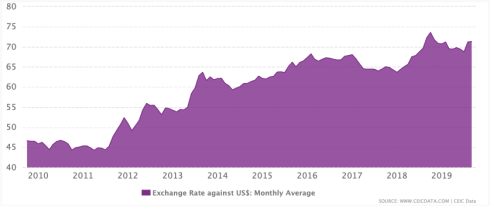
Let’s start with how the material world has changed. For starters in 1969 Gold was only Rs 158.50 / 10 Grams and Rs 7.5 could get you 1 USD. Not that it helped very much because only the elite earned a monthly salary of Rs 1000 or more. 1 Paisa, 5 Paisa and 4 Annas were frequently used denominations and could actually get you stuff. A teenagers pocket money was probably 25 Paisa. School fees in a Tier 1 Convent school was Rs 10/ month and a loaf of bread was less than 50 Paisa. You could build a house for less than 1 Lac. Yes things were a lot cheaper and Inflation over the years has had its affect.

A big change has been how we communicate. Today, getting a letter in the mail is charming, if somewhat antiquated. However, just 50 years ago, it was one of the most effective ways of communicating with people who didn’t live close by—especially if you wanted to avoid those sky-high long distance charges. We then moved to email (Remember the 1998 movie You’ve Got Mail starring Meg Ryan & Tom Hanks), and now we open our mailbox to find thousands of mails waiting to be read every day – 90% of which are spam. People find it easier to send you Best Wishes and greetings over group What’s App and very few send you a 1:1 or call.

Back then children enjoyed themselves, climbing trees, stealing mangoes, building sand castles, getting dirty, playing barefoot. It was Ok to get hurt – You rarely rushed to a doctor unless it was an emergency. You twisted your ankle you used Iodex and limped for a month till you healed, one out of 30 kids in class had braces. The neighbourhood doc just a MBBS felt your pulse, peered into your eyes and throat, patted your stomach, used a stethoscope and gave you medicines from his shelf that cured you in a few days.

Today things are different. Kids are happy with their iPads and Video Games. You rush to the doctor when your child sneezes and the friendly orthopaedic next door diagnoses all bone hurts as an ” hairline fracture” and promptly gets you into a sling. 90% of the kids aged between 12 – 14 have braces. Doctors rarely check your pulse and the mildest of colds needs multiple tests to diagnose.

Our cities are flooded with hospitals and a lot of people above 50 need a bye-pass, knee replacement, dialysis or chemotherapy. We are not a healthy lot.

In the 60’s and 70’s if you wanted to find out what was happening in the world, you’d have to wait for the morning paper to Or the 9 PM News on  All India Radio. Now all we have to do is go to our preferred news site—or even Twitter—and we can find out what’s going on in real time, 24 hours a day. The world of TV did not exist and the Radio was your only wireless connection to the external world. I guess our imagination was better because when the commentator narrated how Gavaskar blocked Michael Holding you had to visualise the swinging delivery and Gavaskar’s straight bat.

Flying was a rare luxurious experience, with comfortable seats, decent food, and ample room to spread out—even in coach. Today, unless you’re flying first class, your seat is tiny, the plane is cramped, and you’re lucky if you can even get a glass of water. Train travel was fun. I remember my Dad used to make friends with everyone in the coach during our Durgapur – Chennai annual trip and invariably he would trace some long lost relative. Today we don’t acknowledge the guy seated next to us on a Bangalore – Delhi flight.

You hailed a cab down and many a time had to wait for long till a free one passed by. Today you do it with your App.The world of Fashion has changed. A Formal suit with a tie and a well groomed look is no longer fashionable. The Punk look is in.

You met people with no prior intimation and holidays were mostly to relatives or grandparents. Watching a movie was the only entertainment and the Festivals were the only time you got new dresses. The neighbourhood Club was your Go To Place. You probably ate 1 Chocolate and 1 Ice Cream a year. Hand me down clothes to younger siblings were common. Nothing was wasted. You drank water from the tap and rarely fell sick eating street food. Eating out was a rare privilege. There was no credit card or PayTm – everything was cash.

Today Indian holidays are looked down upon and everyone is hunting for exotic experiential holidays. Your refrigerator is stocked with ice creams, chocolates, cheese and the kids prefer Pasta and Pizza to Roti Sabji and curd rice.

People then spent their entire careers in one organisation – unlike today where you start losing value if you stick on for long. Just like jobs, marriages lasted long – divorce was almost unheard of. Parents taught their children good values – Not to Steal, Not to Lie. Be a good Human Being. Leaders and politicians were role models and were admired for their integrity and truthfulness. A Hero was idolised and a Villain looked down upon.

Todays generation is brought up by telling them “Do what it takes to succeed”. Wicked Smart is OK – break the rules but don’t get caught. It’s OK to dribble so long as you don’t slip and fall. And many of our Corporate & Global leaders have succeeded with these values. The Villian is the new Hero.

It was OK to punish children and scold them if their grades were not up to the mark. Today you scream at the teacher or change the school if your children don’t do well

You communicated a lot. You had real friends, people met you or spoke to you on your birthday – they did not text you on a Whats App Group message or send you greetings over FB. When you threw a party you cooked food at home. When you were sick you still cooked or your friendly neighbour dropped by with food, there was no Swiggy. It was hard work but it was fun.

There was no Washing Machine / Laundry / Cook…. everything was done at home. You were lucky to have a maid who could mop the floors and do the dishes for a princely sum of Rs 10/- Month. Things definitely have got a lot better for the housewife and women at large. Load shedding was common and you sat in the garden with your family hunting for Sputnik in the skies. Dad came back from work by 5 PM and spent time at home – there were no con-calls till late night and business travel was almost non existent. The family was a close knit unit that communicated and engaged more.

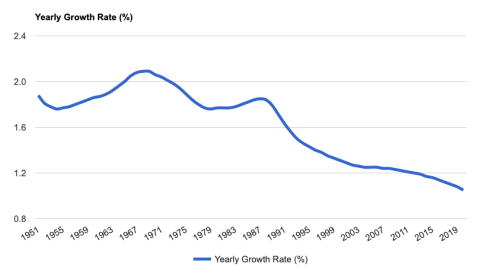
There were lesser people. The world population in 1969 was 3.6B and India had a population of 500M. Thats almost lesser than half of what it is today. And in the last 50 years this booming population has wrecked the world. Our rivers, lakes and seas are polluted, the glaciers are melting, the world is getting warmer, Forests are shrinking, garbage is piling up, flora and fauna are getting extinct at an accelerated pace. Our cities are collapsing.

Humans have been around for 2 mn years but between 1970 and 2014 in just 44 years Earth lost nearly 60% of its mammals, birds, fishes, reptiles and amphibians – almost all die to human activity. This rate is comparable to the mass extinction. (Published in WWF report of 2018) *

Sad but true – Our generation over the last 50 years has caused more damage to Mother Earth than anyone else.

But there are positives too

Cigarette smoking population has decreased. In the US just 15.5 percent of the population smokes cigarettes and that number continues to decline with every passing year. In the 60s, 42 percent of the population smoked regularly—and worse yet, many places, including restaurants and airplanes, allowed them to do so indoors.

Communication is instantaneous so news of Birth, Death, Stock Market crash, Natural calamities … reaches you in seconds.

Medical facilities have improved even if Hospitals & Big Pharma take you for a ride. Average life expectancy has almost doubled across the globe and diseases like Small Pox have been eradicated.

Today you have options to choose from. Cars, Phones , TV’s, Soaps, Holidays, schools, colleges  – there is abundant choice in a Global village.

There is more choice but lesser peace. There is more greed and lesser contentment. There is more aggression and less subtlety. There is more ME and less US. 

Yes the world has a lot more conveniences at your finger tips – but what about the people.

As I reflect, I wonder if our fathers and earlier generation were people with better values. More grounded, more humble, more hands On. More adjustable, more compassionate, more HUMAN.

Was that because life was a struggle for them? Did we get things too easily and our children are getting it easier. I sometimes wonder where we are headed as this trend accelerates.

Please do share your view on this topic. 

* https://www.cntraveller.in/story/45-years-killed-60-earths-wildlife/