Bangalore has grown from a city of a few million in 2000. It has become a sprawling metropolis of approximately 14 million in the last 25 years. The city’s per capita income is 3X the national average. The ideal weather, cosmopolitan population, and IT boom have contributed to an unprecedented real estate explosion.
Over 2,600 real estate projects across Karnataka – mainly in Bangalore have missed their scheduled completion deadlines. A recent report indicated that many of these projects are now facing indefinite delays. This Blog examines the issue. It also analyses how things have changed for the worse in the last 25 years despite RERA.
10X Appreciationin 25 years – 25 years back, you could have booked a nice 2000 Sft flat. The flat would be from a Tier 1 developer in Indiranagar or Koramangla. It would cost about 30 Lacs (~ 1500 Rs / Sft). Today the rates are Rs 15000 /Sft + and the location is not so prime. We are slowly inching towards the Mumbai / Gurgaon rates of 20 – 25,000 /sft.
Carpet / Super Built Up – The flat you booked in 2000 had a spacious carpet area of 75 – 80%. It included 3 balconies, and a 10 – 11 feet high ceiling. If you book a flat today, the carpet area is less than 60%. This means your usable space in the flat is reduced by 300 sft. You will most probably get only 1 balcony, and the ceiling height has shrunk to 9 feet. By reducing the ceiling height the developer just added one floor for every ten floor he constructs.
More flats in a 3 acre plot – In 2000 a 3 acre plot with 3 towers would have 7 – 8 floors. It would accommodate 100 – 125 flats. You had a lot more of undivided share of land allotted to you. Today a 3 acre plot will accommodate 350 – 500 flats and each tower will be 25 – 30 floors. So it’s a lot more congested, the common amenities, pool, gym etc are a lot more stretched. And wait. You should read the contract for your flat carefully today. You may find there is no mention of undivided share of land.
Car Park – When we booked a flat in 2001 the second car park was 1 Lac. Today it’s very difficult to get a second car park. If you do manage to get one, it is priced 5 – 7.5 L. You may say that’s only a 5X appreciation. However, most people have 2 cars now. It’s a necessity today, unlike in the past when 1 car was the norm.
Amenities & Facilities
Not much has changed in terms of your apartment in the last 25 years. Apartments built in the US in the 1970’s came with inbuilt microwave, refrigerator, carpets, kitchen shelves and wardrobes. They had a common washing machine room. There was also a disposable chute for waste. None of this exists in any apartment complex you will book in 2025. You will have the standard amenities. These include a pool, gym, and generator. Maybe the only new addition is a gas bank. There is metering for generator and water usage. Green sustainable designs are limited and solar / rain water harvesting are rare to find. The construction quality may have deteriorated – red bricks have been replaced with solid /hollow blocks.
Timely possession
Then developers were accessible, you could walk in to their office and meet the owner of the company. They were apologetic and sympathetic. Yes there were delays but it was minimal 3 – 6 months or maximum 1 year. Things have changed now – you will be lucky to get possession of your flat after 7 – 8 years even if the commitment while booking is 3 – 4 years.
Let’s dig a little deeper into this. We need to understand why this is happening. This is what RERA was supposed to fix. So, what went wrong?
How developers delay possession
Step – 1 : You book the flat
You liked the ad, visited the site, found the rates reasonably and decided to book your chosen flat. You pay 10% on booking and another 10% within a month on signing the contract. So 20% paid – nothing has happened in the barren site.
Step – 2 : Milestone based payments
If there are 5 towers in your complex the construction will start for 3 and move rapidly. Your payment is linked to floor completion and with latest technology a floor can be built in 2 weeks. In less than 18 months, the building rises rapidly from the basement to the 12th floor. It happens in the blink of an eye. And you have paid almost 75% of the amount due.
But the overall building is not even 30% complete. The remaining two towers are at foundation level. They are waiting for the equipment and workers from Tower 1 – 3 to be reallocated. The structure completion is only 50% of the work. Electricity, plumbing, interiors, tiling, doors, and windows are more time-consuming activities.
After 3 – 4 years, you realize that you have paid 75% of the money. The chances of you getting possession in time seem to be shrinking.
Step – 3 : The phase 2 whammy
This is when the Phase – 2 news hits you. The contract includes a line stating that the developer can build additional floors. This is an option as part of Phase – 2. You ignored it. While buying, the sales guy convinced you that phase 2 approval was a foregone conclusion. He assured you it would be obtained halfway through the project. He added that overall timelines would not be impacted. Phase 2 is the juicy part. Rates have shot up, and the approvers want their share of the pie.
Step – 4 : RERA Extension
As the battle for Phase – 2 approval continues in the background the developer quietly applies for a RERA extension. Now the buyer can’t fall back on the RERA timeline. He has paid 75 – 80% of the cost, with a RERA extension his delivery is delayed. If he files a complaint with RERA he may get a compensation for Phase – 1 delay. (Which most don’t since they find the process intimidating and they don’t want to antagonize the developer)
Can you get a refund or sell your property
If you look around Bangalore you will find many apartment complexes from big name developers pending handover after 10 years. Yes, the rates have increased. However, your money is stuck. The house you wanted to move into is still a mirage. The paper profit shrinks when you add your rent and mortgage interest you have been paying over the years. The biggest beneficiary is the builder who has got low cost finances upfront.
So can you sell and ask the developer to pay you back market rates? NO. The developer will ask you to find a buyer. You must pay the full amount due. Then, the developer facilitates a tripartite transfer agreement. This happens after collecting his transfer charges, which are as high as 3 – 5% and add the broker charges.
So what’s the solution
There is no easy solution. If you want a ready to move in property, the rates are steep. You don’t get the floor, location, or flat number you prefer. You have to compromise with the leftover units.
Developers are mega corporations
The top Developers are large publicly listed corporations. They have projects pan India. Some have even expanded to Dubai. Projects are not 100 – 200 flats complex but are so massive that they look like mini cities. The quarterly revenue & profit dictates their project management. They have ample resources and it’s very difficult for a common man to stand up against them.
Why is RERA disappointing
The expectation that RERA would lead to prompt completion of quality projects has been misleading. The onus is on the individual to seek redressal. CREDAI, RERA, Developer Lobby, and Government authorities form a complex web. The buyer feels helpless. The media is silent – they get full page ads from the developers.
So what do you do? – All you can do is pray and hope your dream flat is handed to you – eventually. The Supreme Court intervened and solved for the subvention scheme – which was another loophole to trap buyers with interest free loans during construction. But court intervention is rare.
Frustrated you finally move in to your complex which is awaiting approvals and Occupancy certificate. The wait has been too long and you decide enough is enough. Finally, the dust settles. In a year or two, the complex becomes a nice community. If you are lucky.
Artificial Intelligence (AI) is the new buzz word. I wonder if there can be Artificial Wisdom (AW) ? Why do we call it an ‘intelligent algorithm’ rather than a wise one? Think about the difference between a wise old man and an intelligent student. Ponder the distinction between the wisdom of the Rishis and the intelligence of a scientist. Why is it normal to prefix as above – can they be interchanged? Reflect on these before reading this blog.
Intelligence, Knowledge & Wisdom are closely linked terms and sound synonymous. But there are subtle differences.Intelligence is a gift you are born with, you can develop it further. Knowledge is the outcome of your intelligence & hard work. Wisdom is how you apply this knowledge. Do you invent an atom bombor do you eradicate diseases. Do you build a company that makes unhealthy, unethical products or do you engage in the pursuit of divine bliss.
This Blog will try to open up perspectives to get you interested in this topic.
Scientifically the neurons in our brain and the inter connections they form is what contributes to our intelligence. Every human is born with approximately 86 billion neurons in their brain. At birth, these neurons are unconnected and disparate. The human brain at this stage is like a blank slate upon which scribbling begins.
As the infant enters the human society, connections, termed as synapses begin to form between these neurons. It peaks by the age of two when there are approximately 100 trillion synapses. After this neural pruning begins. The second stage of synapses formation starts just before puberty begins. It continues throughout the teenage years, with simultaneous pruning. By the age of 25, neural changes in the brain get stabilized with changes occurring at a glacial pace. By adulthood, a human brain retains only 50% of its synapses. These synapses were formed by the age of two.
So how come we become wiser with age? In his best-selling book “ The Brain– The story of you,” the author David Eagleman says: “You become who you are not because of what grows in your brain, you change because of what is removed.” This dynamic aspect of neural circuitry is termed ‘neural plasticity’ as synapses keeps on forming and pruning throughout life.
Wise Grandmother
In this context this example is apt. I narrate this since we would normally associate these terms with great scientists or successful entrepreneurs with high IQ & Mensa ratings.
My 80 year old grandmother was visiting us. The vessel of a steel lid was stuck and none of us were able to open it. Pulling, pushing, inserting sharp object at the edge – nothing worked. Then the grand old suggested – ‘just keep it on the gas burner and it will pop open’. And that’s exactly what happened – the hot air inside pushed the lid up in a jiffy. Here was a lady who had studied till Class 5. She had more practical knowledge and wisdom than highly educated people.
The Source of these attributes
What is the source of our intellect, knowledge, power of discrimination? Where does it reside? Is it just the brain or is there more to it.
It is fascinating on how our ancient scriptures have talked in detail on this topic. A starting point is the Pancha Koshas.
The Concept of the Pancha Koshas
The Taittiriya Upanishads (From the Yajur Veda) explains that the human Soul is enveloped by five Kosha’s (Layers or sheaths).
Anandmaya Kosha : State of eternal freedom / Bliss body
Manomaya Kosha is the layer of mind which comprises thoughts, emotions, feelings and passions. It is the connection point between the lower and upper two sheaths. Our mind is restless. It is difficult to control thoughts. The Manomaya kosha can be either useful or detrimental, depending on how we train the mind.
The Vijnanamaya Kosha is also called the awareness or wisdom sheath. This kosha is considered the seat of intuition, awareness, and wisdom. It comprises mind, intellect, and ego with the five organs of perception and is responsible for all the judgmental actions. It is often described as the “mind beyond the mind“.
Antahkarana (अन्तःकरण)
This Sanskrit term translates to “inner instrument” or “inner organ.” It has four components. It operates within the framework of the Vijnanamaya Kosha.
Manas (मनस्): The mind, responsible for receiving and processing information from the senses.
Buddhi (बुद्धि): The intellect, responsible for understanding, reasoning, and making decisions.
Chitta (चित्त): Consciousness, the storehouse of memories, impressions, and subconscious thoughts.
Ahamkara (अहंकार): The ego, the sense of “I-ness” or self-identification.
Analogy from the Katha Upanishad
How these various elements work in synergy is explained beautifully in the Katha Upanishad.
The Self of man is compared to the Lord seated in a chariot. The body is likened to the chariot. The intellect serves as the charioteer. The mind acts as the reins. The senses function as the horses. The sense objects are the road along which the chariot is driven. The unbridled horse can drive the chariot on a perilous journey.
By channelizing buddhi or intellect, in the right direction, one can control the mind. It helps in preventing the senses from going astray and invigorates the wisdom-body. Having intellect is an asset – but diverting it in the right direction is what makes a difference. That is Wisdom.
As we control our senses with practice, we go deeper into our layers of consciousness. From the world of words to the world of thoughts, then beyond thoughts to wisdom in the Self. This is the ultimate purpose of life.
Intelligence Vs Wisdom
There is a difference between intelligence and wisdom. The world has many intelligent people who may lack wisdom. If wise men ruled the world would it be a better place ? Intelligence is pursuit of knowledge, it tires the seeker. Wisdom is pursuit of truth, it inspires the seeker.
Our current education system strives to leverage our intelligence. It aims to make us knowledgeable. However, the traditional Vedic Gurukul system emphasized developing self-awareness and wisdom.
Wisdom is described in the Bible as the skill of living life as God intended. It is not just the ability to “think well.” It is the capacity to “thoughtfully act” in a way that is good and godly.
When knowledge builds pride and a sense of superiority it is detrimental – it is Ahankara.
In Conclusion
In a world immersed in intellectual arrogance many struggle to say “I don’t Know”. Many claim to “Know it all”. I will conclude the Blog with a beautiful quote from the Ishavasya Upanishads.
Andham Tamah Pravishanti Ye Avidyam Upasate
Tato Bhuya Iva Te Tamo Ya U Vidyayam Rataah
Those who worship ignorance enter into darkness and those who worship knowledge enter into greater darkness.
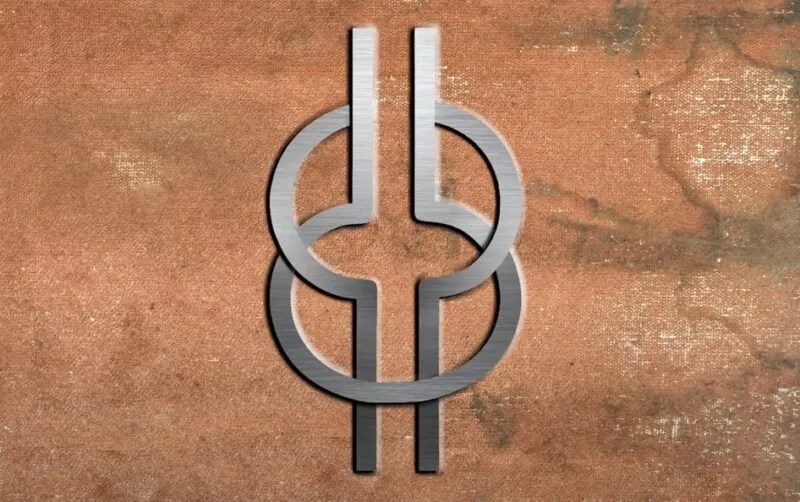
There are many symbols to represent Wisdom. Common ones are Goddess Saraswathi, An Owl etc. In Western Africa, the Nyansapo, or Wisdom Knot, is a sacred symbol representing intelligence, wisdom, and the complexities of life. It reminds us that knowledge and learning are intertwined with the experiences we gather through life.
I would like to end the Blog with some interesting Quotes that compares Intelligence & Wisdom
Intelligence leads you. Wisdom guides you.
An intelligent man thinks he knows everything. A wise man knows that there is still something to learn.
An intelligent man always tries to prove his point. A wise man knows there really is no point.
An intelligent man understands what is being said. A wise man understands what is left unsaid.
An intelligent man sees everything as relative. A wise man sees everything a related.
This BLOG appeared in the April 2025 edition of Yogavidya, The monthly magazine of Bharat Yogavidya Kendra
The term Tantra has earned a bad reputation and is often looked upon with a negative connotation. This Blog will help correct the misinterpretation. It will help a layman understand the science of Tantra.
Setting the context
The human body is a mystery & a miracle. Only a divine source could have created this complex being. Artificial Intelligence can never come close.
A few questions begs for answers. How do we have child prodigies? What powered the rare intellect of Einstein & Ramanuja? How do Rishis travel in their subtle bodies? How were enlightened souls like Ramkrishna, Shirdi Sai, Neem Karoli Baba capable of reading your mind? They performed what most thought were miracles. Why is it that most humans have a limited audio frequency hearing ability? Do we have senses and perceptions which are hidden or not activated?
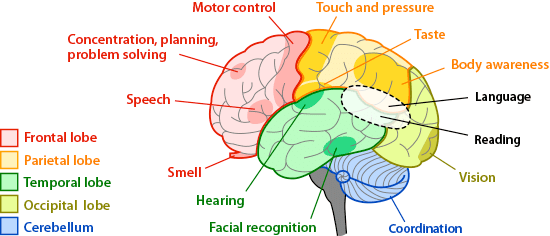
Swami Satyananda Saraswati founded the Bihar School of Yoga. He believes that most humans use only a tenth of their brain faculty. The vast majority of our brain especially the frontal part is inactive.
Modern science divides the dormant part of the brain into ten parts, Kundalini Yoga divides it into six. A genius is one who has awakened a few of the dormant portions of the brain. As divine energy awakens in the human body, it begins to flow upwards. It explodes in the crown of the head, the Sahasra. The dormant or inactive areas of the brain start blossoming like flowers. Man then becomes a demi God. The science of Tantra can help you achieve this.
Divinity is present in our body
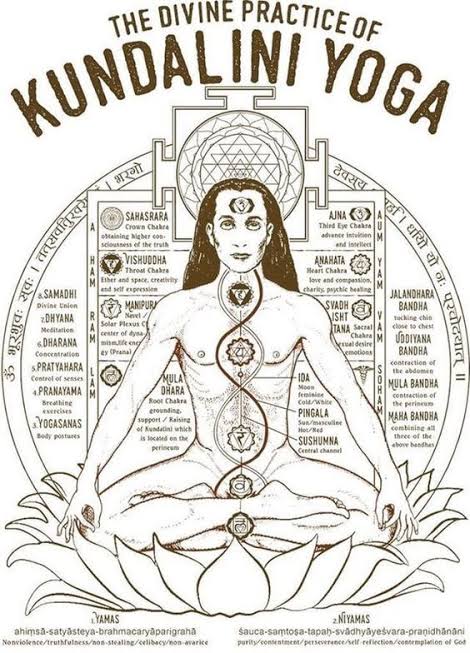
The human body is a sublime edifice that houses the spark of the divine power – Para Shakti. After creating life in the womb, She descends into a small cavity at the base of the spine. She is in a dormant state there. Tantra is a science that helps you to awaken this dormant energy. It enables you to channel the energy upwards thru the Sushumna (A psychic channel within the spine) to the Sahasra. There, She merges with Lord Shiva. This is the ultimate goal of every yogi. This should be the purpose of life of every human being.
What is Tantra
Sanskrit literature can be classified under six orthodox heads and four secular heads.
The Agamas are theological treatise and practical manuals of divine worship. The Agamas include Tantras, Mantras & Yantras. The Agamas are divided into three sections – Vaishnavism, Shaivism & Saktaism.Sakta Agama or Tantras glorify God as the divine Mother of the world. There are 77 Agamas and the texts are usually in the form of a dialogue between Shiva & Parvati.
Tantra is a combination of Yantra & Mantra. Yantra is a diagram (machine or symbol), Mantra is the sound that activates the energy in the Yantra. Tantra explains in great detail the knowledge about Tattva (Ultimate Truth or Brahman) and Mantra (Mystic Syllables).
Kundalini & Tantra Yoga
Kundalini Yoga is the great discovery of the Tantric tradition. It identified a dynamic potential force in the human body called the Kundalini. This dormant potential force is resting at the base of the spine. In men at the perineum, in women at the root of the uterus in the cervix. This center is called the Mooladhara. When you direct Prana into the seat of the Kundalini it awakens.
Tantra Sadhana lays emphasis on the activation of the latent power in the six Chakras. It starts from the Mooladhara and extends all the way to the Sahasra at the crown of the head.
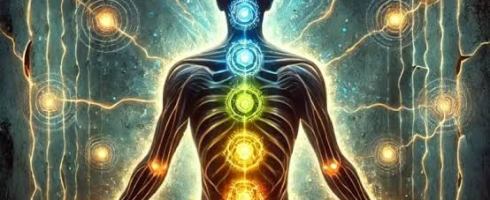
Chakras are vortices or whirlpools of psychic energy. There are many Chakras in the human body. For the practice of Tantra & Kundalini yoga, six Chakras are under focus.
These six Chakras are connected to the higher unilluminated centers of the brain. The Sahasra at the crown of the brain is also the location of the pituitary gland. It controls each and every gland and system in the human body. The Agna Chakra is aligned with the centre of the eyebrows. It is also aligned with the midline of the brain along the spinal cord. This alignment is the location of the Pineal Gland. This is the centre for intuition and clairvoyance. Tantra & Yoga maintain the Agna Chakra is the command centre of life in the human body. Similiarly other Chakras control elements like digestion, speech, creative skills etc.
Whatever happens in spiritual life is related to awakening of the Kundalini. Samadhi, Kaivalya, Nirvana, Moksha are all the outcome of igniting the spark and awakening Para Shakti.
Meaning of the word Kundalini
Kundal means coiled. Kundalini means that which is coiled. Kunda is also a ceremonial pit. The divine energy is identified as a sleeping serpent coiled 3 ½ times in the Mooladhara. Serpent power symbolises the unconsciousness in man. The 3 coils are said to represent the three matras of Om – Past, Present, Future. Or the three Gunas, or the 3 states of consciousness – or all of these. The ½ coil represents the state of transcendence. In this state, there is neither waking, sleeping nor dreaming. It is also referred to as Turiya.
Why Awaken the Kundalini energy through Tantra
This is one of the paths to accelerate your spiritual evolution. Once divine Shakti awakens man is no longer a gross physical body. Every cell is charged with high voltage Prana. As the energy ascends, it pierces and activates the hidden switches in the Chakras. This activation opens up an explosion of energy in the unilluminated parts of the brain. This awakens physical, mental and spiritual development.
To awaken the Kundalini, the practise of Yoga is required. Additionally, the entire social structure and way of life has to be reorganized. It is like opening the gates of the temple within your body. You reach the core, the divine energy – Para Shakti or Kula Kundalini. To achieve this the body & mind need to be pure. A light Sattvic diet that takes the strain off the liver is helpful.
In the journey a practitioner will start seeing transformation. The body is charged & rejuvenated. There are changes in voice, smell, hormonal & secretions. Aging slows down. You eat less, sleep less.
How can I learn Tantra
Tantra is rare and secret doctrine – it’s called Gupt Vidya. It can’t be learnt from books. It is a long arduous journey and can only be achieved with the help of an accomplished teacher. If not done correctly it can have a serious impact. The energy when activated is so explosive that one needs to be prepared to get it.
The Kundalini energy can be awakened by a combination of the following means
Birth – Evolved soul based on earlier life karma’s
Mantra Sadhana
Tapasya
Herbs (Aushadhi)
Raja Yoga
Pranayama
Kriya Yoga
Tantric Initiation
Shaktipath
Bhuta Shuddhi is an important Tantric rite. It means purification of the five elements that compose the body.
Yoga Nidra evolved from a Tantric practice called Anga Nyasa. Anga means main limbs or organs of the body. These include the toes, knees, hips, the back, chest, shoulder blades, and head. Nyasa means to place. In Tantra, when you sit for puja, you focus the mind on various organs of the body. You also recite the respective mantras.
The two paths of Tantra
The left handed path called Vamachara or Kaula Tantra focuses on a set of structured practices and rituals. They perform their worships using the Pancha Makharas. These include meat, fish, intoxicants, mudras (certain gestures), and sexual contact. They believe that man is still an animal (Pashu) and cannot give up everything. He has to enjoy and move forward. The concept of Bhoga and Yoga illustrate the balance between enjoying worldly pleasures and seeking spiritual liberation. Bhoga represents the enjoyment or experience of life, while Yoga signifies the union with the divine. Together, Bhoga and Yoga provide a holistic approach to life, blending material and spiritual fulfilment
The right-handed Tantrics perform these rituals only symbolically. They are called Samaya Margis. Adi Shankaracharya followed this path.
In Conclusion
Tantric knowledge was strongly prevalent in Kashmir, East India (Bengal, Assam) & Kerala. During foreign invasion the ancient texts were hidden in the Himalayas. A lot of Buddhist & Tibetan practice also involve Tantric rites.
It is interesting to note that if you draw a triangle with Kerala, Kashmir & Assam as the three vertices you will cover almost all of Bharat. Which in a way reflects that this sacred land is always protected by Para Shakti.
Lord Hanuman is considered as the incarnation of Lord Shiva. He is known for his formidable strength. Lord Hanuman also known as Anjani Putra, Vayu Putra, Kesari Putra etc is revered for his wisdom and communication skills. Since childhood we have worshiped Hanuman as our family deity. During dark & challenging times prayers to Him have always been a source of courage. For the past 20 years, I have been visiting the Panchamukha Hanuman temple in Koramangla every Saturday. His grace has always been with the family. This Blog will try and throw light on this manifestation of divine energy.
Who is Ahiravana (Also known as Mahiravana)
When Ravana’s son (Indrajit) was killed by Lakshmana, he sought revenge. He summoned Ahiravana from Patala. Ravana convinced him to capture Rama and Lakshmana. He wanted them to be sacrificed to the goddess Mahamaya. Ravana promised Ahiravana great power in return
Despite Vibhishana & Hanuman’s efforts, Ahiravana, employing various disguises and illusions and abducted Rama and Lakshmana. In one instance, he disguised himself as Vibhishana, tricking Hanuman into allowing him entry. Once inside, Ahiravana successfully kidnapped Rama and Lakshmana and transported them to his kingdom in Patala. Upon discovering their disappearance, Hanuman vowed to rescue them and sought guidance from Vibhishana.
Overcoming Makardhwaja – the gatekeeper of Patala
As Hanuman was returning after setting Lanka ablaze, a drop of his sweat fell in the ocean. It landed into the mouth of a massive crocodile. The inhabitants of Patal Lok captured the crocodile. They discovered a remarkable being named Makardhwaja upon dissecting the creature’s stomach. Recognizing Makardhwaja’s exceptional intelligence and strength, Ahiravan, the ruler of Patal Lok, appointed him as the guardian of his palace.
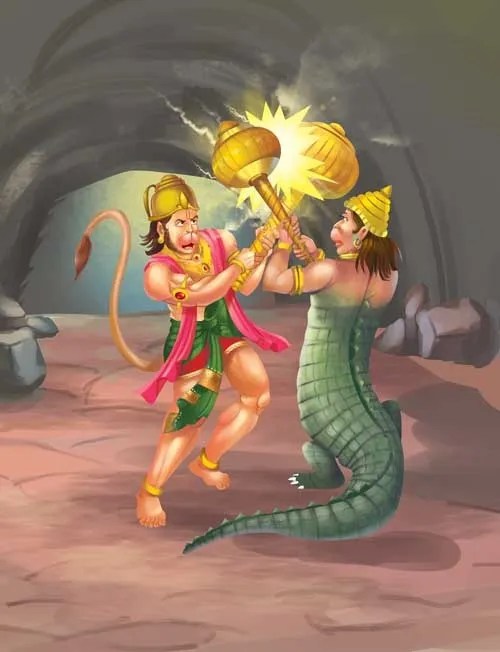
When Hanuman endeavored to enter Ahiravan’s palace, Makardhwaja intercepted him. Hanuman was intrigued and asked for an introduction. Makardhwaja declared himself the valiant guardian of Patal Lok. He also claimed to be the proud son of Hanuman. Astonished, Hanuman initially doubted Makardhwaja’s claim, for he had devoted himself to celibacy throughout his life. Then, Hanuman delved into meditation, seeking enlightenment about Makardhwaja’s origins, and uncovered the truth.
Makardhwaja revealed to Hanuman that he was prepared to confront even his father. He wanted to honor his allegiance to his mentor, Ahiravan. To uphold his master’s wishes, Makardhwaja challenged Hanuman to a duel before granting him access to the palace. Impressed by Makardhwaja’s unwavering loyalty and dedication, Hanuman bestowed his blessings upon him. The two engaged in a formidable battle, culminating in Hanuman emerging victorious
Fight with Ahiravana
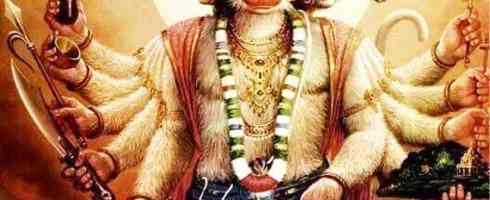
Vibhishana had informed Hanuman about Ahiravana’s strength source. It came from five lamps in Patal Lok. These lamps were facing five directions. To end his magical powers, all the five lit lamps needed to be extinguished in one breath. To achieve this seemingly impossible task Hanuman takes up the Panchamukhi form and blows out the lamps in one breath. The five faces of Panchamukhi Hanuman represent an eagle – Garuda facing the west. A boar Varaha faces the north. A horse Hyagriva faces the sky. A lion Narasimha faces the south. The fifth is the original Hanuman himself facing the east.
Panchamukhi Hanuman has ten arms holding different weapons. In the fierce battle with Ahiravana, Hanuman was victorious. He managed to free Rama & Lakshmana from his clutches in Patala.
Significance of the 5 Faces
Kapimukha – Hanuman’s original face facing the east removes blemishes of all past deeds and confers purity of mind . West facing Garudamukha drives away evil spells, black magic influence and negative spirits. It flushes away poisonous effects from the human body. North facing Varahamukha wards off the negative affects of planetary influence – especially Rahu. South facing Narasimhamukha dispels fear and ensures victory over opposition. Sky facing Hayagriva confers knowledge , victory and saves one from being childless.
Panchamukhi Hanuman near Mantralaya
Raghavendra Swami was engrossed in intense meditation for 12 years in a cave near Mantralaya. He had the vision of Panchamukha Hanuman who blessed him. Since then Panchamukha Hanuman has been his Upasana deity. The temple I visit in Koramangla is managed by Raghavendra Swami followers. The main deity is that of Panchamukha Hanuman along with shrines for Raghavendra Swami & Lord Ganesha.
This is the cave where Raghavendra Swami meditated. The Priest explained that the shrine is Swayambu – self emanated.
Panchamukhi Hanuman is popularly worshiped at a temple in Kumbakonam, Tamil Nadu as well.
Most people struggle to sincerely say three simple words – Thank You, Please & Sorry.
The tone and body language show your sincerity and even babies can make out when you are being superficial. These words are powerful tools when you are sincere and the intent is real. They help you to connect better. You can build stronger relationships.
The Sanskrit word for gratitude is Kritajna (कृतज्ञा). It’s a beautiful word. It is formed from krita (कृत) meaning “cultivated.” The root jna (ज्ञा) refers to a state of consciousness. Kritajna thus means a state which is consciously created or chosen. It is the result of being fully here, the realization and acknowledgment of a particular moment in time. This is what brings the sincerity and depth in the emotion.
Expressing gratitude is a simple way to encourage positivism. The science of TA (Transaction Analysis) highlights the power of Positive Strokes. Gratitude is a step in that direction.
Gratitude is the ability to see value in others. When we get gratitude from someone, we feel seen, valued, and appreciated. It brings us joy and connection. We all seek gratitude and appreciate the feeling it inspires, but often we fail to express it.
So what holds us back from expressing our gratitude ?
The biggest reason is self-absorption. It’s a reflection of times where the “I” dominates. We often fail to express our gratitude for others because we can’t clearly see it. We can’t seem to get ourselves out of the way. And we struggle to compliment and acknowledge a job well done. Even on social media criticism is spontaneous and elaborate – compliments are rare and brief.
How to get started – Set an intention (Sankalpa)
Creating an intention of gratitude before and after your practice makes your practice powerful. It then acts as a guiding force after your yoga session.
An effective Sankalpa is short, positive and captures your wish or goal for yourself and benefiting others. Your Sankalpa or intention can change every day or be the same for a few days – it’s your choice. Here are a few examples of gratitude statements
I am thankful for the abundance in my life.
I am thankful for the joy and happiness I feel with each breath.
I am thankful for the wonderful people in my life
I am thankful to Mother Earth & the Universe for the bounty it has showered on me and my family
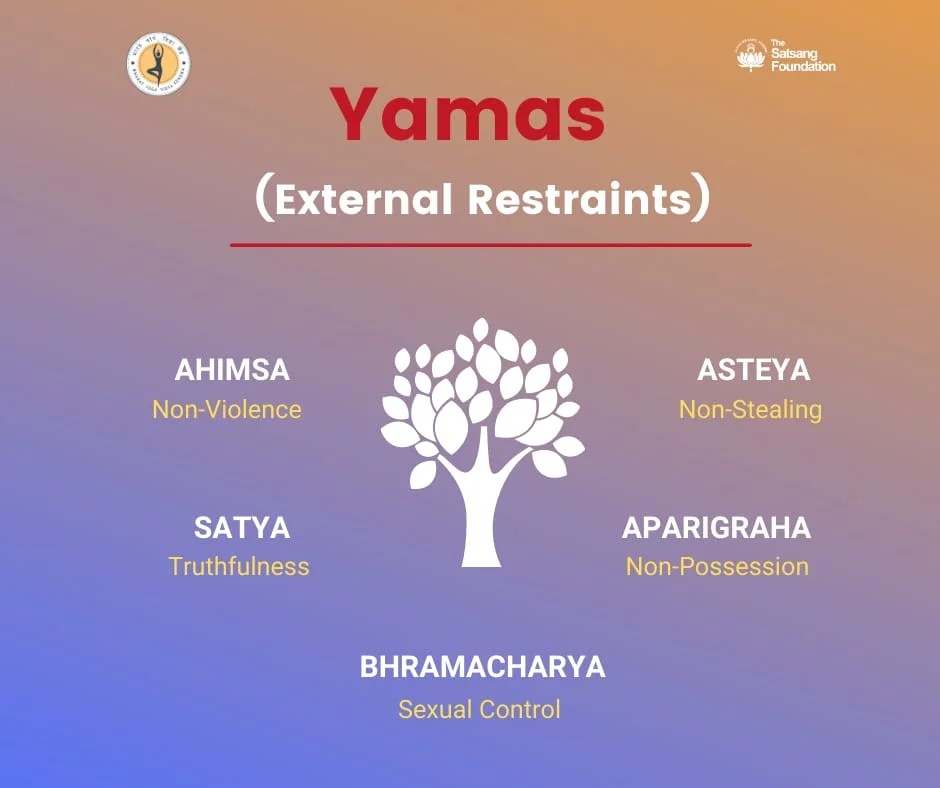
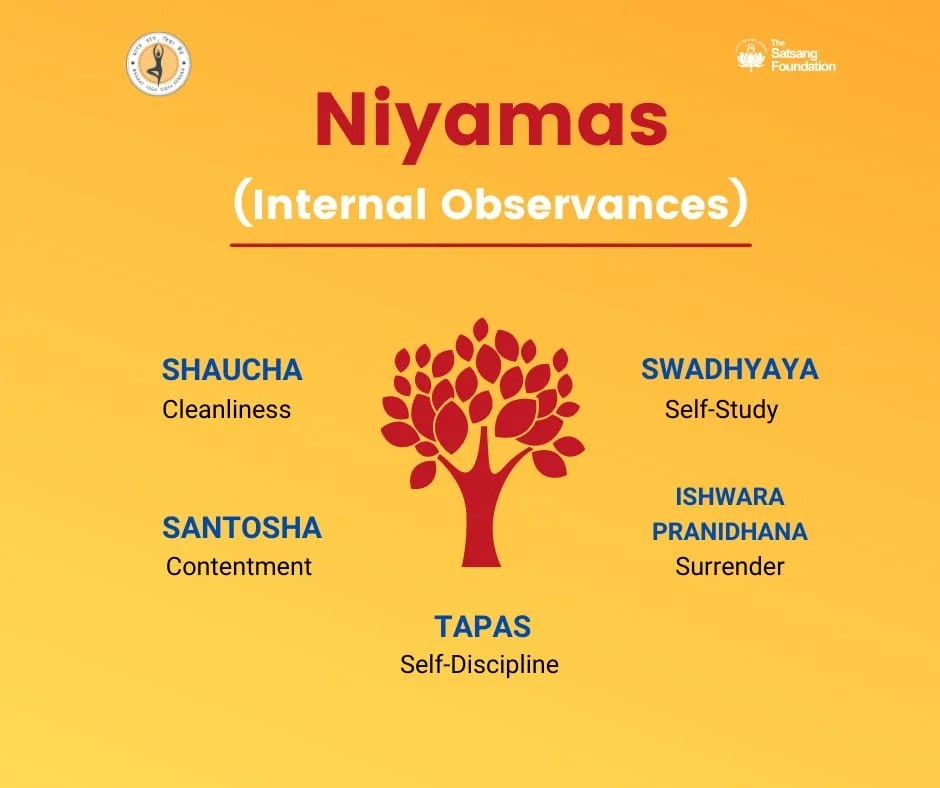
In Yoga the practice of Niyamas helps one develop gratitude. Santosha (Contentment) is a key step towards cultivating gratitude. Observing Ishvara Pranidhana (surrendering to God) is the most impactful step in developing gratitude.
Lokah Samastah Sukhino Bhavantu
May all beings everywhere be happy and free. May the thoughts, words, and actions of my own life contribute in some way to that happiness. Let them also contribute to that freedom for all.
This ancient Shanti Mantra is a prayer we can practice daily. It reminds us that our relationships with all beings and things should be mutually beneficial. We must do this if we ourselves want happiness. It also helps with liberation from suffering. No true or lasting happiness can come from causing unhappiness to others. No true or lasting freedom can come from depriving others of their freedom. If we say we want every being to be happy and free, we must question everything we do. We need to examine our actions. We must reflect on how we live. We need to consider how we eat, what we buy, how we speak, and even how we think.
One of the greatest powers we wield is the words we use. Using the words Thank You, Please, and Sorry helps to build relationships of trust and understanding. Using the power of these words helps people feel valued, respected, and convey that they matter to you. This produces a reciprocal response. It builds mutual relationships. Both people are stronger because they can communicate in a more meaningful way.
This Blog was published in the Oct 2024 edition of Yogavidya , the monthly newsletter for Bharat Yogavidya Kendra.
Almost every Hindu child has heard the fascinating story of Lord Rama from their parents or grandparents. In 1987, Ramanand Sagar’s Ramayana was aired on Doordarshan. It became the most watched show in the world. City roads were empty. It felt like there was a curfew.
Set in the Treta Yuga the Ramayana is still relevant to all of us in our daily lives. Lord Rama is referred to as “Maryada Purushottam” which reflects his virtues of dignity & exemplary conduct. And Sita Ma is revered for her loyalty, devotion and sacrifice to her husband. She is considered the epitome of womanhood and is regarded as the ideal wife and mother.
In this Blog, I would like to focus beyond Rama & Sita on three key leanings from the Ramayana.
Hanuman’s Devotion (Bhakti) and Humility
Known for his unwavering devotion, boundless strength, and selfless service, Hanuman symbolizes the epitome of loyalty and devotion. Son of Vayu and a manifestation of Lord Shiva, Hanuman is considered to be immortal. The Hanuman Chalisa describes how Lord Hanuman possesses Ashta Siddhi. He can also bestow Ashta Siddhi to his devotees. All he wanted was to be eternally at the feet of his Lord and worship them. All his strength he attributed to the Lord. Just praying to him makes the impossible possible.
Asadhya Sadhaka Swamin Asadhyam Tawa Kim Vada Rama Doota Krupa Sindho Mat Karyam Sadhya Prabho
Lakshmana was a devoted brother. Nonetheless, when it comes to Bhakti & Humility, Hanuman Ji is the role model for humanity.
There are many paths in the Spiritual journey but the path of Bhakti and total surrender has always worked miracles.
This is what Lord Krishna also tells in Chapter – 12 (Bhakti Yoga) of the Bhagavad Gita
The Lord said: Those who fix their minds on Me and always engage in My devotion with steadfast faith. I consider them to be the best yogis.
Life is all about making the right Choice
Ravana was the grandson of the great sage Pulastaya. He was a respected scholar & an excellent ruler. An ardent Shiva Bhakt he was a Veena maestro. He has written books on astrology & medicine. He was loved by his subjects. Sadly all his greatness melted away because of the one wrong decision he made – to abduct Sita. His Ego stood in the way –
he was not ready to apologize and correct his wrong inspite of sane advice from many including his brother.
We see this in the Mahabharata also, how the great Karna suffered because of making the wrong choice.
Following the path of Adharma can wipe out the greatest of beings – Like it did to Ravana. This is the crucial learning for us.
The Value of Commitments
The third value that we can learn from the Ramayana is very important in the current age. The importance of honoring a commitment.
King Dasharatha honored a promise he had made to his queen many years back in the battlefield. It wreaked havoc on him and the kingdom, but the King honored his commitment. Lord Rama was an obedient son. He did not question his father. He fulfilled his commitment of 14 years in exile. Sita fulfilled her vows and marital commitment by being with Rama at his side during the exile.
It is very easy for a person in power to brush away a commitment of the past. But in the early ages the value system was so noble that commitments were etched in stone.
Being truthful and honoring your commitments is the mark of a good human being. It sets you apart, it makes you feel good from within.
Being Truthful and pursuing Dharma is the first step to peace, happiness and spiritual progress.
This Blog appeared in the Feb 2025 edition of Yogavidya , the monthly magazine of Bharat Yogavidya Kendra
From Kedarnath to Rameshwaram crowds in Indian temples are large. At Tirupathi at times you have to wait 24+ hrs to get a glimpse of divinity. Chidambaram is one of the few temples with spiritual and religious connections from time immemorial. Yet, the abode of Nataraja is always inviting. To the few chosen few. This Blog will highlight some unique aspects of the Chidambaram temple and help you plan your visit.
Five temples were built in S India. They symbolize the 5 fundamental elements (Pancha Bhootha) Space, Air, Fire, Water & Earth. They stand for not just the physical world but the energetic qualities in all life. Visiting these temples is said to influence and purify the element it signifies. These temples are dedicated to Lord Shiva.
Space – Chidambaram
Air – Sri Kalahasti (Near Tirupathi)
Fire – Arunachaleshwarar (Thiruvanamalai)
Water – Jambukeshawarar (Tiruchi)
Earth – Ekambareshwarar (Kancheepuram)
About Chidambaram Thillai Nataraja temple
The Nataraja Temple Chidambaram is also referred to as Thillai Nataraja Temple. This name is on account of the forest of “Thillai” trees that existed here in the past. Chidambaram literally meaning “clothed in thought” or “atmosphere of wisdom”.The main deity of the temple is Nataraja, who dances the Ananda Tandava (Dance of Bliss). Tandava is a type of dance. It can be understood as a pattern of energy flow. Lord Shiva undertakes it for a specific purpose. The Agamas refer to 7 Tandavas – Kali Tandava, Gauri Tandava, Samhara Tandava, Tripura Tandava and Urduva Tandava. The Sandya Tandava is a calm and relaxed dance. It occurs in-between creations. The Ananda Tandava synthesizes all the Tandavas.
Ananda Tandava
The Ananda Tandava is said to have first occurred in Darukavanam. Sages Patanjali & Vyagrapadar came to know of this dance and were keen to witness. They performed severe penance at the shrine of Adi Moolanathar. Lord Shiva granted their wish. He performed the Ananda Tandava at the place where the Nataraja idol is presently installed. This act was to bless Sage Patanjali & Vyagrapadar. Besides the main Nataraja statue, the temple also has a Shiva Lingam in Crystal stone (Sphatika) and in Ruby. Daily Abhishekam’s are done to these Lingams. The current Nataraja Bronze statue dates back to the Chola period.
Adi Moolanathar
Most visit the Chidambaram temple for Nataraja. But the “Moolavar” main deity of the temple is “Adi Moolanathar”. Much before Lord Shiva appeared here in the form of Nataraja he has been here as a Swayambu Lingam. The origin and date of this Lingam is unknown. It is believed that this Lingam is the energy source for most Lingams in the land. Hence, the name Moolanathar (Lord of the source). As it has been here from the beginning (Adi) of time it is known as Adi Moolanathar.
Chidambaram Rahasyam
An empty chamber in the sanctum of the Chidambaram temple is to the right of Nataraja. It stands for Space. This formless aspect of the creator is presented as “Chidambaram Rahasyam” (Secret of Chidambaram). Formless space is the most fundamental of all elements. It forms the basis of the four other elements of the Pancha Bhootha. This space is veiled by a curtain. It is lifted after the puja at certain times. Devotees throng to get a glimpse. Lamps are waved for a very brief period. You can see an empty chamber with hanging golden Vilva leaves. Inside the chamber is embedded a powerful “chakra” that serves as the energy base for the temple. Lord Shiva & Parvathi are said to live here in their formless state.
Pancha Sabha Temples
In Tamil Nadu, there are 5 temples where Lord Shiva expressed his five functions in the universe in the form of dance. These temples are referred to as the “Pancha Sabhai “ temples or the five dancing halls. They are
Chidambaram (Pon Sabha – Golden Hall)
Tiru Alangadu (Rathna Sabha – Ruby Hall)
Madurai (Velli Sabha – Silver Hall)
Tirunelveli (Tamira Sabha – Copper Hall)
Courtrallam (Chitra Sabha – Hal of Murals)
Chidambaram is one of the 5 Pancha Sabhai temples. It also has 5 Sabhas – Chit Sabha, Kanaka Sabha, Deva Sabha, Nritya Sabha & Raja Sabha.
Chit Sabha houses the idol of Lord Nataraja.
Kanaka Sabha is used for performing daily rituals.
Nrithya Sabha is where the Lord Shiva is said to have danced with Goddess Kali.
Raja Sabha or the 1000-pillared hall which symbolizes the yogic chakra of the pillared lotus or Sahasra
Deva Sabha houses the Pancha moorthis and a revered collection of historic bronze sculptures and modern-era frescoes.
The Chit Sabha or Chitrambalam
This is the Sanctum Sanctorum housing Lord Nataraja, his consort Sivakama Sundari and the Chidambaram Rahasyam.
There are 9 Kalashas (Pots) on the roof representing the nine Shakti’s.
The door leading to the Chit Sabha symbolizes illusion
The 96 Tattvas of creation are in the shape of 96 windows
The 4 golden pillars in the middle represent the 4 Vedas
The 28 wooden pillars around them represent the 28 Siva Agamas
The 64 Kalas (Arts) are represented as 64 beams
The 21600 gold leaves shaped like Vilva leaves on the roof represent the average number of breaths a human being takes in a day
These are secured by 72000 nails that represent the energy channels or ‘nadis’ in the human body
The Panchakshara (Na Ma Si Va Ya) mantra has 5 syllables. There are also 5 steps leading to the shrine.
A Divya Desam inside the Chidambaram temple
Lord Govindraja’s shrine in Chidambaram is 40th in the list of 108 Divya Desam’s. King Nandivarman Pallava II (717 – 782 AD) built the famous Vaikunta Perumal temple in Kancheepuram. He is also said to have consecrated the Govindaraja shrine here. Initially, the Deekshitar worshiped the shrine as a subordinate to Nataraja. In the 10th century there was a dispute between the Vaishnavites & the Deekshitar’s about authority of the shrine. In the 1st half of the 12th century, it is said that Kulatunga Chola II removed the idol. He then dumped it in the sea. It was recovered and taken to lower Tirupathi where it was consecrated and enshrined by Ramanuja. It seems that there was no Vishnu shrine in Chidambaram between 12th & 15th century. Later Achuta Raya who ascended the throne after Krishnadeva Raya reconsecrated the idol in its original place.
Modern Temple History
The earliest mention of the “dancing god of Chidambaram” as Shiva is in texts by Appar & Sambandar. (Shaiva Siddhanta saints).These texts are from the 6th and early 7th centuries. Viduvelvidugu Perumthachan is considered the chief architect. Parantaka Chola is said to have started the construction of the temple.
The current structures and plans in the Chidambaram temple complex mostly date back to the 12th and 13th centuries. This includes the mandapas and their pillar carvings, the various shrines, the sacred water pool, and the gopuram. These are attributed to the late Chola and early Pandya kings. After the Pandyas the Vijayanagar kings also contributed to the development & upkeep of the temple. Post the Vijayanagar kings the Cheras & Nayakas of Madurai provided extensive grants and made improvements to the temple.
The history of Chola kings and their association with Chidambaram runs deep. Raja Raja – 1, the most famous Chola king was an ardent devotee of Nataraja like his predecessors & successors. Chidambaram was the second capital of the Cholas and most kings had their coronations here.
The records left by the court historians of the Delhi Sultanate state that Malik Kafur raided Chidambaram, Srirangam & Madurai. He also attacked other Tamil towns and destroyed the temples. The Nataraja temple was one of the sources of the gold and jewels booty he brought back to Delhi.
The Deekshitar’s
The Chidambaram Deekshitar’s are said to have migrated from Mount Kailash with Lord Shiva. They were 3000 of them initially, now they are about 500 families. In the Chidambaram Mahatmya, Lord Shiva explains to Nandi. He states that the Deekshitar’s fully understand the sanctity and greatness of Nataraja. They are also well versed in the scriptures. Till date the Deekshitar’s conduct the worship as laid down by Patanjali based on the Vaidika Puja tradition.
This is the only temple in Tamil Nadu that is not managed by the Government. The 500 Deekshitar families manage full control. This is probably why you will not see tickets for special darshan. Security does not frisk you. Priests do not hound you for money. The energy and sanctity of the temple has been maintained very well by the Deekshitar’s. This adds to the uniqueness of the temple.
If you need a detailed tour of the temple, you need to connect with a Deekshitar. For access to the Sanctum Sanctorum platform, you should also reach out to a Deekshitar.
Temple Daily Rituals & Festivals
There are 6 worship services every day.
Kala Sandhi – between 6 & 7 AM
Second Kalam – 10.30 AM (Abhishekam to Sphatika Lingam & Ruby image of Nataraja)
Uchi Kalam – 12 Noon (Abhishekam to Sphatika Lingam)
Saya Rakshai – 6 PM, Most elaborate. During this time, 16 offerings are made to the Sphatika Lingam as part of the Shodasa Upachara. The grand finale of this Kalam is the parting of the curtain three times to reveal the Chidambaram Rahasyam
Evening Second Kalam – 7 PM , The doors and the windows of the Chit Sabha are completed closed during the puja for the Chidambaram Rahasyam
Artha Jamam – 9 PM, The Artha Jamam puja is performed with special fervour. All the divine beings are said to witness it. Lord Shiva retiring in the night chamber is symbolic of the Universe returning to the seed form. The 1st puja is symbolic of beginning of creation.
The temple opens at 6 AM. Devotees escort Lord Shiva’s bejeweled silver padukas from the night chamber (Palli Arai) to the Sanctum Sanctorum in a palanquin. This is a beautiful event accompanied by cymbals, chimes, trumpets, and drums. In the Chit Sabha, the padukas are placed close to Lord Nataraja in the Chidambaram Rahasyam chamber.
After the Deeparadhana at 10 PM, the priests ceremoniously take Lord Nataraja’s holy Padukas from the Chitt Sabha. They carry them in a palanquin to the night chamber. After the rituals and the Aarti, the Lords Padukas are placed on a swing in the Palli Arai next to Devi. They are then rocked slowly. Then the doors are shut
Six Abhishekam’s are performed for the Sphatika Lingam every day. The Abhishekam for Lord Nataraja & Sivakami is conducted 6 times every year. This is called Maha Abhishekam.
The 6 Main festivals
The two annual grand Brahmotsav festivals are 10 day festivals and are celebrated in
Marghazi (Dec 15 – Jan 15) concluding on the full moon day of Arudra.
The second of these grand festivals occurs in the month of Aani (May – June). It concludes with Aani Tirumanjanam on the 10th day of the Uthiram Nakshatra.
These are grand festivals attracting large number of devotees. Special functions are arranged on each day. On the 9th day, the Lord is taken in a procession on a chariot around the temple streets. . This is an experience to behold once in a lifetime.
Other than the Brahmotsavams a grand dance festival called Natyanjali is also celebrated at Chidambaram every year.
Maha Abhishekam (the great holy bathing) of the deities, Lord Nataraja and Goddess Sivakamasundari, is conducted six times a year. These occur on certain specified dates.
Tiruvonam star day, month of Chithirai, at the Kanaka Sabha.
Utara star day, month of Ani, at the Thousand Pillared Mantapa, as part of the Ani Tirumanjanam festival.
The Purvapaksha chaturdasi day in the month of Avani at the Kanaka Sabha.
The Purvapaksha chaturdasi day in the month of Purattasi at the Kanaka Sabha.
Arudra (Tiruvadirai) star day, month of Margazi, at the Thousand-Pillared Mantapa, as part of the Arudra Darshanam festival.
The Purvapaksha chaturdasi day in the month of Masi at the Kanaka Sabha.
Temple Architecture
You need to spend a few days to visit and explore this massive, grand temple. Allow yourself to absorb the energy at different times of the day. Don’t rush through in a few hours.
The temple had a pre-Chola existence. Its architecture is a combination of Chola and Pandya styles. The Sanctum Sanctorum closely resembles Kerala style structures. Indeed, the royal charters mention the rebuilding of the Sanctum using architects from Kerala. Nevertheless, the golden roof is a striking example of Vesara architecture with its apsidal shape. (Vesara is a hybrid form of Indian temple architecture that combines Southern Indian site layouts with shape details characteristic of the Nagara style of North India)
Spread across 40 Acres, the temple is designed in 5 concentric courtyards, 4 of which are accessible to public. The Chitt Sabha (hall of consciousness) is considered the oldest.
The Sivakami Sundari temple, the Raja Sabha, 100 Pillared hall – are attributed to the 12thcentury Cholas.
The 4 Gopurams in the outer parikramas are gigantic masterpieces with seven tiers. In the towers on either side of the gateway there are representation of the 108 poses of Bharat Natyam.
There are many shrines with the complex, the second largest after Nataraja being that of his consort Sivakami Sundari. She is the mother of the universe – Parashakti. She offers darshan as a six foot tall beautiful mother providing bliss to her devotees. There are many more shrines for Subramanya, Ganesha, Nandi, Kali, and Mahishasuramardini. There is also a Surya shrine with chariot wheels.
Close to the Devi temple is a shrine with Adi Shankara’s statue and a large Sri Chakra Yantra. Locals believe that the Sri Chakra was installed by Rishi Suka Brahma. Normally the Sri Chakra is inside the Sanctum Sanctorum – this is a unique case where it is outside.
As you finish the circuit you cross the grand Shiva Ganga Teertha.
Thillai Kali
Dedicated to Kali this temple is located ½ km from the Chidambaram Nataraja temple. Goddess Parvathi took the form of Kali to vanquish some demons. Even after destroying the demons her ferocity continued unabated. Lord Shiva engaged in a dance contest. The thrilling meeting ended with Shiva winning. He performed the Urduva Tandava (Shiva lifting his leg 90% upwards). This was a pose Devi was unable to execute. Kali was subdued and she retreated to live in the outside boundary.
Where to stay at Chidambaram
Option – 1 : Hotel Akshaya. They have large rooms including Suites and car parking. An excellent A2B is on the Ground floor serves great food. It’s a 5 min walk from the East Entrance. This has limited car parking.
Option – 2 : Arudra Residency. On the East entrance path, 100 m from the temple main entrance. Smaller hotel with small rooms.
Option – 3 : Lakshmi Vilas Heritage. It is a heritage village with 16 rooms. This village is about 15 Km south of Chidambaram. It is a large property with lots of greenery. There is a nice pond and a 150-year-old temple in its compound. This property serves Non Veg food.
Best place for food is A2B (Adayar Anand Bhavan) – excellent variety, very neat and clean. The next best option is Sri Krishna Vilas. Smaller place on the main road. Gets very crowded. Food is good – some guests I have referred felt that the cleanliness was not upto par.
Additional Points
If you stay at Arudra Residency, Parking is on the main road – East Car Street. You enter the temple from the East Gate. Akshaya hotel has a few limited parking slots. During Brahmotsav festival no parking is allowed on the main road to allow passage for the chariot procession.
Dress code is traditional , If you go up the Sanctum podium you need to wear dhoti & sari, men remove the shirt
No checks for phone – but no photography & Video of temple
Drive from Bangalore is 6 – 6 ½ hrs depending on the day and time of departure
In and around Chidambaram are many ancient temples. Tanjore & Kumbakonam are close by. The famous Vaitheeswaran temple is an hr away.
Pondicherry is a few hrs from Chidambaram
Best time to visit is Jan – Feb. Summers are very hot and Sep – Mid Dec is the rainy season.
Thiruvanamalai can be covered on the way back – its 3 hrs from Chidambaram.
Indian history has been unfair to the South. The great empires of Cholas, Pallavas, Pandyas, Cheras & Chalukyas are more of a footnote in a Delhi dominated narration. Tamil is one of the worlds oldest languages. Shaiva Siddhanta considers Tamil & Sanskrit the two eyes of Lord Shiva. Tamil history and culture is as ancient as Sage Agastya. This is the land of great saints like Thirumoolar, Sambandar, Appar, Sundarar, Manikkavacakar, Bhoganathar & Sadashiv Brahmendra. It is also the land of great musicians Thyagaraja, Muthuswamy Deekshitar, and Shyama Shastri. Bharatanatyam, the oldest Indian classical dance form originated in the Tanjore district of Tamil Nadu and is regarded as the mother of many other classical dance forms of India.
The Pandya dynasty also referred to as the Pandyas of Madurai, was an ancient Tamil dynasty, and among the four great kingdoms of Tamilakam, the other three being the Pallavas, Cholas & the Cheras.
This Blog is based on a 3 day trip called the Pearls of Pandya’s organised by Heritage Inspired. A unique company which presents history, art & culture of the ancient empires of S India in a very innovative manner. Supported by highly competent people they provide in-depth knowledge across very well organised trips. Do check them out and plan your next travel with them. (www.heritageinspired.in)
Pandyas – a brief introduction
The Pandyas are the oldest among the Tamil kingdoms with a long history spanning over 2500 years. They belong to the Lunar race (Chandra Vamsha) and their symbol is the double fish.
Their era can be broken into these divisions
Sangam Pandyas – 300 BC to 300 CE – Korkai Port
Early Pandyas – 600 to 1000 CE – Madurai
Later Pandyas – 1100 to 1200 CE – Subdued under the Cholas – Madurai
Later Pandyas – 1200 to 1400 CE – Madurai
Tenkasi Pandyas – 1500 – 1700 CE – Tenkasi
Pandyas were famous for three things – Literature, Trade & Water Management.
Sangam the great cultural events of poetry and music were orchestrated under their era. A repository of over 2000 poems in Tamil. composed by 470+ poets have been preserved. The poetry of the Sangam era is largely about love (akam) and war (puram). The Sangam literature also includes Buddhist and Jain epics.
Trade – They had extensive trade in India & across the world – strategically placed along the key trade routes both land & sea – they did business with the ancient Romans, Greeks, Arabs, Chinese, Africans, Egyptians & SE Asians. The trade of horses was very common during this period. Other goods traded included spices, pearls, precious stones, elephants and birds. The busiest port town under the Pandyas was Kayalpattinam (now in Thoothukudi district)
Religion – It is believed that initially the Pandyas followed Jainism but later adopted Shaivism. Medieval Pandyas and later Pandyas repaired many temples and endowed them with gold and land. Patronage was also extended to Vedic practices. The impartiality of rulers towards both Shaivism and Vaishnavism is also made known in the invocatory portions of the Pandya inscriptions
Administration
Kings and local chiefs created Brahmin settlements called Mangalam or Chaturvedi Mangalam with irrigation facilities. These settlements were given royal names and names of the deities
The prime minister was called Uttaramantri. The royal secretariat was known as Eluttu Mandapam. The titles of military commanders were Palli Velan, Parantakan Pallivelan, Maran Adittan and Tennavan Tamizhavel
Madurai was their capital – around 1311 under Malik Kafur the Delhi Sultanate usurped Madurai for 50 years. This was a dark period where wealth was plundered and temples were looted and ransacked. Post this Vijayanagar rule was imposed. After 1328 the Pandyas never regain Madurai and are pushed down south to rule from a few places around the Thamirabarani river and are called the Tenkasi Pandyas. At their zenith in 1270 AD the Pandyas ruled over all of TN , a part of S Karnataka, parts of S & Coastal Andhra and parts of Sri Lanka.
Pandya empire in 1270 AD
The Pandya’s were not prolific temple builders like the Cholas, Hoysalas & Pallavas.
The Pandyas entered their golden age under Maravarman I and Sundara Pandya (13th century). The latter used the vast treasure he got out of his wars to beautify the Nataraja temple in Chidambaramand the Vishnu temple in Srirangam. For gold plating the roofs of these two temples he was given the title of “pon veindha perumal”. He acknowledged the contributors of other dynasties to Tamil Nadu by building a gate at the Sri Ranganathaswami Temple at Srirangam in which he engraved the names of all the four great empires of Tamil Nadu namely the Cholas, Pallavas, Pandyas and the Cheras. He also built the East tower of the Meenkashi temple. He gold plated and placed the gold gilded Kalasam atop the gopuram of the Vimana of Tirumala. In 1263 CE, he renovated the Gopuram of Koneswaran temple and his son Veera Pandyan implanted the Pandyan victory flag and insignia of a “Double Fish” emblem at Konamalai.
Muniyandi temple in Alanganallur– the Gaurdian deity of the locals. Here we were entertained to folk dance by the locals.
Kallalagar Temple – one of the 108 Divya Desams
Day – 2
Kazhugumalai – Unfinished Shiva temple -Vettuvan Kovil, a beautiful Monolithic temple that dates to 850 AD. Jain Monk caves & Bass relief.
Tirumalapuram Cave Temple – Shiva
Kashi Vishwanath temple – Tenkasi
Cultural program – Kutralam Kuravanji
We were staying at a resort overlooking the Agastya Hills , 1 km from Kutralam falls – however heavy rains from the previous few days restricted our visit to the falls
Day – 3
Kulashekara Perumal Kovil in Mannarkovil – a beautiful Vishnu temple with Ashtanga Vimana
An ancient Shiva temple in Tirupudaimaradur where we walked up the narrow steps of the Gopuram and were amazed with wall painting dating back to 1500 AD
Adichanallur an archaeological site – famous for a number of very important archaeological finds. Korkai, the capital of the early Pandyan kingdom, is located about 15 km from Adichanallur.
What makes this trip by Heritage Inspired (HI) unique
An avid traveller and Tamilian – I had not heard of many of these places. It was great discovering them and getting educated.
HI had special access to many places and we visited areas which are normally out of bounds
Not only was the trip planned and executed to perfection – there was detailed commentary and insights on the places we visited. The professional inputs from Professor Kannan, Parvathi Madam & Senthil were excellent.
We stayed in nice resorts, food was excellent , from the time the trip started till we got dropped off we did not have to spend a single rupee.
The cultural programs / folk dances were the icing on the cake and we thoroughly enjoyed it
The rates for this trip were very reasonable – if you had to do a trip like this solo it would have cost 3X.
Excellent group of people
Geographically the 5 terrains of land, kurinji (hill terrain), mullai (forest land), marutham(flat open land), neithal (coastal land) and palai (arid land) broadly are the natural divisions (thinai) of land on earth with probably a few subdivisions. Pandya country was endowed with all 5.
During these 3 days we travelled ~ 325 KM and covered most of these territories. Mid Dec after the rains the land was green and fertile. Roads were excellent. Population looked sparse. Local people in general looked happy and contented. The water management system established 1000+ years ago by the Pandya, Chola kings are the foundation on which current day farming still happens. In the absence of perennial rivers the ancient systems still serve the population effectively.
An opportune time for Sadhana & Spiritual progress
When faith meets astrology, something miraculous happens every 12 years. This occurs along the banks of holy rivers or at their confluence (Sangam) in four auspicious places. The Kumbh– An opportune time for a Sadhak to accelerate their spiritual journey.
Kumbh is derived from the word Kumbhak, which means a sacred container filled with the elixir of immortality. As the Devas & Asuras churned the ocean, several divine objects and beings emerged. Finally, the divine pot (Kumbh) filled with Amrita. The possession of this pot became a matter of conflict, as whoever consumed the nectar would gain immortality.
The divine bird Garuda took the pot and flew away. He did this to prevent the Amrita from falling into the hands of the Asuras. In pursuit, the Asuras and Devas fought fiercely in the sky. During this pursuit, the chase lasted twelve divine days (equivalent to twelve human years). A few drops of Amrita fell on four places on Earth – Prayagraj, Haridwar, Nasik, and Ujjain. These locations are where the Kumbh is traditionally celebrated.
Kumbh & Astrology – A great time for Sadhana
The Kumbh’s occurrence is deeply connected with astrology. The event is based on the positions of the planets, particularly Jupiter, the Sun, and the Moon. Kumbh happens when Jupiter enters a specific zodiac sign. The Sun and Moon must also be in particular positions. This alignment creates a unique astrological configuration.
The alignment of Jupiter in Aquarius and the Sun in Aries is not a random occurrence. It’s a cosmic dance that has been observed and revered for thousands of years. This configuration creates a powerful spiritual energy that is believed to cleanse the mind, body, and soul. This alignment holds more than traditional significance. It signifies a convergence of cosmic forces impacting every aspect of life on Earth. Furthermore, the Moon governs the mind and emotions. Its phase during Kumbh plays a crucial role in enhancing the spiritual experience. A full moon during the event amplifies the effects of the rituals, making the experience even more profound.
Hindus believe that doing Sadhana and bathing in the sacred rivers during the Kumbh will cleanse them of their sins. This practice will help them achieve Moksha.
Why is the Kumbh held every 12 years
Jupiter takes approximately 12 years to finish its orbit around the Sun. Correspondingly, the Kumbh is celebrated every 12 years, aligning with Jupiter’s orbit. This cycle is a cornerstone in determining the timing of the festival at each of the four sacred sites.
The Four Sacred Sites
Prayagraj (Allahabad): Situated at the confluence of three rivers. These rivers are the Ganges, Yamuna, and Sarasvati. The Kumbh here is celebrated when Jupiter is in Taurus or Vrishabha. Additionally, the Sun and Moon are in Capricorn or Makara.
Haridwar: Located along the Ganga. The Kumbh occurs here when Jupiter is in Aquarius or Kumbha. The Sun and Moon are in Aries and Sagittarius, respectively.
Nasik: The festival takes place on the banks of the Godavari River. It is celebrated when Jupiter is in Leo or Simha. The Sun and Moon are in Cancer at that time.
Ujjain: The city is situated on the Shipra River. The Kumbh here takes place when Jupiter is in Leo. The Sun and Moon are in Aries during this event.
Variations of the Kumbh : The regular Kumbh is held every 12 years. There are variations like the Ardh (Half) Kumbh. It is celebrated every six years at Haridwar and Prayagraj. The Maha (Great) Kumbh occurs after 12 Purna Kumbh, amounting to 144 years. It is particularly celebrated in Prayagraj.
Kumbh – held every three years, rotating between Prayagraj, Haridwar, Nasik, and Ujjain.
Ardh Kumbh – takes place every six years at Haridwar and Prayagraj. It’s known as the “Half Kumbh” because it occurs halfway between the 12-year cycle of the normal Kumbh.
Purna Kumbh – is celebrated every twelve years at four locations. These locations are aligned with the zodiacal positions that dictate the Kumbh schedule.
Maha Kumbh – is celebrated at Prayagraj every 144 years, which is after 12 ‘Purna Kumbh’.
Sadhana during Kumbh
While millions flock to take a dip in the hold waters during these auspicious dates a true Sadhak will immerse himself in deep Sadhana called Kalpavas
This ritual begins on Ekadashi of the full moon in the Paush month. It continues up to ‘Maghi Ekadashi’. This period is one big task. It is during this time span a Sadhak has to strictly follow 21 rules through mind, speech, and action.
The 21 good practices during Kalpavas are akin to Yama – Niyamas of Yoga
Always speak the truth
Follow Nonviolence
Understand the bad actions of others and always reason before concluding
Feel the same way for all living beings
Have no sexual relationships; your devotion should be towards the environment and Lord
Let nothing come your way. Reject all indulgence in the materialistic world
Rise before sunrise. Start your day as nature does.
Take bath 3 times a day.
Observance of ‘Trikal Sandhya’
Pay tribute to your ancestors by performing ‘Pind Daan’
Donate whatever pleases your pocket
Enunciate the name of God always at the back of your mind. Don’t think of anything else but God
Associate with a true divine being. Listen to their righteous mind and follow their sayings at Satsangs
Shetra Sanyas ( non-violation of reserved space),
Say no to criticism. Let it go.
Offer services to ascetics and saints, you will earn extra brownie points for that
Japa- Meditative repetition of the name of the divine and, this time out loud
Sankirtan- Give in your all to the prayers of the divine
Eat only once a day
Sleep on the ground closer to Mother Earth
Keep distance from envy and anger
Kumbh is not a mela – it is a rare opportunity to strengthen your practice and accelerate your journey
This article appeared in the November edition of Bharat Yogavidya Kendra newsletter.
You should maximize the output from your trip to the Himalayas. Make sure it is safe and comfortable. This Blog is based on our 1 week trip between Sep 28 – Oct 5, 2024. It has useful points to help you plan your trip
How to get there
Delhi & Dehradun are your two getaway points. Most cities have direct flights to Dehradun. After a few days with friends at Delhi we left on Sep 28th at 7 AM. The road is good. We covered Rishikesh – Delhi in 4 ½ hrs on the return, starting at 6 AM. The onward journey took us longer. This will improve when the Delhi – Dehradun expressway is completed next year.
TIP – When in Delhi do visit Diggin – a nice restaurant in Panchsheel Marg at Santushti shopping complex. Most long time Delhi residents are not aware of this place.
Where did we stop for the 1st night
We departed Delhi at 7AM. After breakfast at a Dhaba enroute, we reached our first stop – Vashishta & Arundhati caves at 2.30. The Vashist Gufa is closed between 1 – 3, but the Arundhati cave is open all times. Lunch was at a small restaurant after Srinagar around 4 PM.
We reached the Dandi Kanthi hotel by 7 PM. It is a small new hotel located between Srinagar & Rudraprayagon the banks of the Alaknanda. This hotel is 200m from the Dhari Devi temple. The temple is considered the custodian deity of the 4 Dham’s. It is highly revered in Uttarakhand. (This is not the J&K Srinagar – Uttarakhand also has a town called Srinagar)
Day 2 we reach Badrinath in the afternoon
We start the day with a visit to the Dhari Devi temple. The temple opens at 6 AM and there was no crowd. Back in our hotel by 7 – we had a light breakfast and head out to Badrinath. We had lunch on the outskirts of Badrinath and reached our room by 2.30 in the afternoon.
How is the road
Between 2010 – my first trip and now things have not changed much. 80% of the road is good. Yet, the mountains are fragile. Landslides can occur, and these need to be cleared. Lanes can get narrow – one way. Vehicles breakdown. Rail track construction is ongoing till Karnaprayag – close to Joshimath, adding to the traffic woes. So budget for delays en route – you can at best travel 25 Km / hr
Food & Restroom
There are no good cafes / restaurants after you leave Rishikesh. Small village shops that serve decent fresh N Indian food. Clean rest rooms are a big challenge. Food here is mainly Paratha / Roti / Rice / Dal / Aloo / Rajma / Chole / Paneer. Food tip – Eat light, avoid oily food.
Is there an alternate mode of transport
There are helicopter tours. A friend covered Kedarnath & Badrinath from Dehradun in 6 hrs @ 1 L/ person. That’s only the temple visit. There are also one way or return Helicopter rides. If you are not on a pilgrimage and want to explore the area, it is best to drive. The slow ascent also helps in acclimatization.
Our 3 nights at Badrinath
Badrinath is at 10,100 feet. Our plan was to visit the temple multiple times and explore all the areas in and around Badrinath. We had a good driver and a guide .
TIP – always plan an extra night. You could get stuck in traffic enroute or there may be heavy rains, weather in the hills is unpredictable. So budget for some backup time.
Temple Visits
Day – 1 : Evening we visited the temple. We did not have a ticket, but we got VIP entry to the Chandi Aarti. This was thanks to the local DM contact my friend had.
Day – 2 : We had tickets for the Swaran Aarti in the evening at 6.30 PM
Day – 3 : We had tickets for the early morning 4.30 AM Abhishekam pooja.
We also experienced the regular Mukh Darshan from a distance. This happened a few times later in the evening when the crowd was less.
The temple is ancient & small. You can enter the temple and get close to the Sanctum Sanctorum only if you have booked tickets in advance. The regular Darshan is from a distance and that gives you less than 30 seconds of Darshan time.
Strongly recommend that you book a tickets for every day you are there. You must book the early morning 4.30 AM Abhishekam pooja ticket. This Pooja lasts for over 2 hours. It includes Abhishekam, Aarti, Chanting of Mantras, and narration of the history of Badri Narayan. The Aarti tickets for Rs 500 allow you 15 Min inside the main temple complex.
The temple area can become very congested, even with a ticket. Only 30 – 40 people can sit. The rest have to crowd along the sides. The Q entry is not well managed and there is a lot of pushing and shoving.
Maha Abhishekam is 4700, Abhishekam is 4500 – it’s the same pooja, but they allow those with the 4700 tickets first entry
If you have booked Swaran Aarti, make sure to stand in the queue during the earlier Chand Aarti. You can also line up during Kapoor Aarti. That’s the only way you can try to be upfront when your scheduled Aarti starts.
Hot Springs or Tapt Kund
We visited the hot springs and took bath multiple times. The water is almost boiling hot. Its clean – since nobody can enter the Kund. Carry towels & a mug from the hotel to take a bath. Around 7 PM in the evening the crowd at the Kund is light to empty.
Other Things to see in & around Badrinath
Charan Paduka – a revered place. Lord Vishnu is said to have first set foot on earth here. It is a short trek on the way to Neelkanth Parvat. It’s a beautiful and easy trek. A glacier stream from Neelkanth flows down the route adding to the charm. On both sides are the Nar & Narayan mountains. If you leave at 8 AM you can be back by 1.30 for lunch after a slow relaxed trek to Charan Paduka & beyond.
Mana is a small village close to the Tibet border. It’s a 10 min drive from Badrinath. Mana is home to a few interesting sites
Vyas Gufa & Ganesh Gufa are sites where most of our ancient scriptures were written.
Keshav Prayag is the point where the Saraswathi meets the Alaknanda and then goes underground. Saraswathi has a short 500 m forceful run that is a sight to watch before it merges with the Alaknanda. You can trek down a short steep section to the Prayag.
Vasudhra Falls is a 4 Km (one way) beautiful trek from Mana. This takes you to the point from where the Pandavas started their ascent to the heavens.
Valley of Flowers / Hemkund Sahib are 2 – 3 day’s trekking trips around Badrinath. Auli – is a beautiful hill station 2 hrs from Badrinath.
Where to stay in Badrinath
The area is beautiful. One can only visualize how it would have been 100 years back. Now it’s a concrete commercial jungle – lot of developmental work in progress. There are many accommodation options, most are basic. I would recommend Hotel Snow Crest – This is the best in town. We stayed at Hotel Yoga which was next to this hotel. It’s a 15 – 20 min walk to the temple from here. Badrinath Devlok – run by GMVN( Garhwal Mandal Vikas Nigam) is also a good choice.
What to Eat / Where to eat
Lot of restaurants offering a variety of food items. Avoid Idlis – they are tempting but the ones here are hard as a rock. The sambar is also disappointing. Dosa is better – its fresh. Most of our meals were at Sardeswari Restaurant – Near Devlok Chowk. Their service was excellent. One meal was special. They kindly cooked the Bhindi we provided. We got tired of the usual items on the menu. Carry cash – many please dont accept Pay.
We head to Tungnath
After 3 nights at Badrinath we head to Tungnath – one of the Panch Kedar temples in Chopta. We left Badrinath at 8.15 AM and reached our hotel, Regenta Resort Madhunganga at 4 PM. Chopta is beautiful – dense forests and nice views. There are many camps here called Swiss & Alpine camps. Trekkers use these camps. Sadly, they look like refugee camps and spoil the landscape.
Regenta Resort Madhunganga
This is an excellent 4 star property located at Ukhimath. It is strategically positioned on the Kedarnath – Badrinath route. The property offers easy access to many destinations.
Omkareshwar – 2 Km
Kedarnath – 45 Km by road + 16 Km trek
Madhmaheshwar – 20 Km by road + 16 Km Trek
Tungnath – 29 Km by road + 4 Km Trek
Kalimath – 20 Km by road
Triyuginarayan – 53 Km by Road
Anusuya Devi / Atri Rishi Ashram also comes on the way from Badrinath – Chopta. This involves a 4 km trek.
We stayed here for one night. Our purpose was to visit Tungnath, which is one of the Panch Kedar. It is the highest Shiva temple at 12800 feet. This is a great hub to spend a week and cover a lot of places.
Tungnath Trek
This attracts a lot of traffic and the parking area is a mess. The trek route Is like walking on a crowded city road. Most of the stretch is paved – there are some sections that are steep but its an easy trek.
Most trekkers are attracted to Chandrashila – the peak that is ½ Km beyond Tungnath. This stretch is very steep and there are no cemented paths.
Our 3 night stay at Badrinath had acclimatized us well to the high altitude. As a result, the trek to Tungnath was a breeze. We completed it in 2 hours. There is well laid out track for 80% of the journey. You have the choice of taking a horse ride.
Unfortunately there are no restrooms on the trek route.
I was told that the views are spectacular – they were good, but I have seen better.
On the way back from Tungnath, stop at Bunker House. This was the first place we discovered in a week that had Burgers, Pizza, and French Fries. The restaurant has a nice interior.
Best time to travel
The 4 Dhams are closed from 1st Nov – April end. That gives you access for only 6 months. July / Aug / Sep – heavy rains and prone to landslide. May / June are the busiest months because of summer / school vacation. Oct seems to be the best bet – not too cold + rains are over. If you can time your travel around Vijay Dashami or Diwali – you find the least crowds.
Insist on an Innova
Travel safe in an Innova with a good experienced driver. Even if you start from Delhi, insist on using a UK number plate vehicle. It should be pre-registered for the 4 Dham Yatra. A good vehicles & driver takes away a lot of stress. Travel light – don’t overload your Innova with 7 people. We were 2 in an Innova + Driver and guide.
All travelers need to register their trip for the 4 Dhams. This is checked at the entry point of Badrinath. All these steps help you save time on your travel.
Who did our Booking
Our trip was executed by Om Prakash Ji of Rishikesh Day Trips.- 7078203030. He did a good job and was very responsive. We had planned the trip a few months ahead. We did not have hill rides > 6 hrs on any day. We ensured that we were in the room by 6 PM. Our driver was excellent, high energy and always punctual. Insist on a good driver like Mohit Rana (91937 42876). Contact guide Hukum Chinwan at 9690464301 or 75794 81621. Being in touch with your trip planner and setting clear expectations helps in good execution.
Last but not the least PRAY
We planned this trips months ahead. We were lucky to have excellent weather – blue skies, pleasant weather. We did not get stuck in any landslides. Good driver & guide, nice hotels, friendly restaurants – All this is Divine Grace. So pray for a good trip and enjoy the beauty of Dev Bhoomi Uttarakhand.
And one more thing …..
On the way back, stop at Chauhan Bengali sweet shop in Srinagar, Pauri. It is located on the main Badrinath road. Pick up a few Uttarakhand delicacies to carry home. I suggest trying the Bal Mithai without the sugar balls on the top. Also, try the Singori (सिङ्गौड़ी) which is a delicacy from Uttarakhand made with Khoya. It is wrapped in a maalu leaf. It is akin to Kalakhand.
______________________________________________
A few days catch up with old friends in Apple was a good start to the trip
On our way to Charan Paduka
A few kids at Charan Paduka took us further up to Maheshwarnath Babaji cave
At Diggin Delhi
View of the crowded Badrinath Dham on the way to Charan Paduka
Recent Comments