Since the time of the Sapta Rishis India has been a blessed land. A land of ancient Rishis in search of the ultimate Truth. While Patanjali, Buddha, Mahavira, Shankara, Nanak… may be known to the world there are many more. Some are well known – but every village and town has a story to tell. The list of Rishis, Siddhars, Nayanars, Alwars, Avadhootas, Holy Men & Women who attained enlightenment following their chosen paths is long. While starting the blog I thought this was an easy 1 day job. Down the line I realised the job is colossal and I may not have done justice. But this is a start, I have been searching for consolidated information like this and none exists. I thus seek inputs and feedback to keep expanding the BLOG.
The scope of this BLOG is to document the great enlightened souls of India in the recent past, specifically after 1850.
Why 1850? The last 150 years seemed like the recent past. Also the period from 1850 – 1950 was momentous in the history of mankind. This was the era of the Industrial revolution when many great discoveries & inventions happened. 2 world wars were fought, Spanish Flu and Bengal Famine massacred millions. This was also the time of the brutal dominance of the white man – either as traders/invaders or because of slavery. As the world was going through unprecedented upheavals this era witnessed the evolution of some of the greatest beings of the country who merged with Divinity and brought peace and solace to the tired masses.
In shortlisting the great souls who have merged with the divine Brahman I have followed the directive of Swami Vivekananda. “Of one hundred persons who take up the spiritual life, eighty turn out to be charlatans, fifteen insane, and only five, maybe, get a glimpse of the real truth. Therefore beware.”
The truly enlightened being is not a brand marketeer or a magician. He/she is not a person who builds a cult based on his/her image. They do not follow a 5 Star lifestyle. They do not sell Spirituality. They are simple and genuine. They never claim to be the Chosen One. They are humble. Almost always they come from a lineage of Gurus and their teachings are in line with the absolute truth of the Scriptures.
This is the criteria I have used in compiling this list. Some are born great, some started early, some started late, many left a householders life – but almost all achieved their goal through sincere sadhana and intense devotion over many years.
You can spend a lifetime learning & being mesmerised with their teachings and life events. What I am sharing below is a mere glimpse of their greatness. But at the beginning I would first like to pay my respect to these great souls who have impacted the lives of millions and continue to be a guiding light to mankind.
Gurur Brahma
Gurur Vishnu
Gurur Devo Maheshwarah
Gurur Saakshat Para – Brahma
Tasmai Shri Guruve Namah
Sriguru Babaji
Babaji has resided for hundreds of years in the remote Himalayan regions near Badrinath. He has been seen in person by only a small number of disciples and others. Some say that he is over 2000 years old but looks like a young 25 year old.
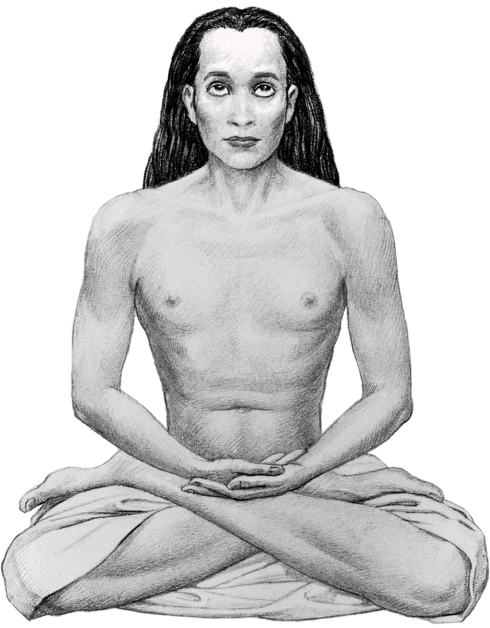
In 1861 Babaji revived the yogic science of Kriya Yoga after centuries of its guarding by masters. He initiated the great saint Lahiri Mahasya to spread the message of Kriya Yoga to mankind.
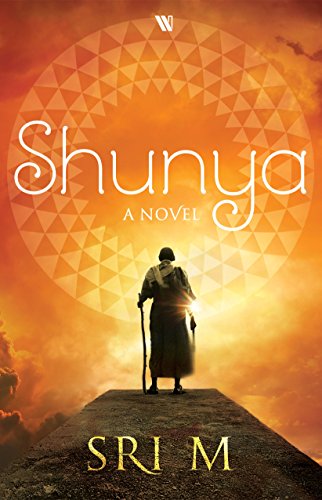
In his autobiography Apprenticed to a Himalayan master, A Yogi’s Autobiography, Sri M narrates his meeting with Babaji. Sir has given a description of Babaji as golden complexioned, bare-bodied, except for a shining white loin cloth that barely reached the knees, and flowing brown hair that fell to his shoulders. He mentioned that a lovely scent emanated from Babaji and he looked divine. In the second last chapter of his book, he mentions that Babaji himself was Lord Shiva. He describes seeing Babaji changing his form to Lord Shiva again and again. He also mentions that Shirdi Sai Baba, Jesus, Guru Nanak and many others were disciples of Sriguru Babaji.
Parmahansa Yogananda (Disciple of Yukteshwar Giri, who in turn was a disciple of Lahiri Mahasya) has written about Babaji in his book Autobiography of a Yogi. Yogananda calls him Mahaavatar Babaji.
Babaji’s disciples belong to the Nath Parampara.
Ramakrishna Paramahamsa, Sainath of Shirdi & Ramana Maharishi
They were like the Trinity. Incarnations of God. Divinity poured out of them and they touched the lives of millions … and continue to do so. Blessed are the people who have met them.
Sri Ramakrishna Paramahamsa : 18th Feb 1836 – 16th Aug 1886
Ramakrishna “Gadadhar” Chattopadhyay, was considered as an avatar by many. Sri Ramakrishna experienced spiritual ecstasies from a young age, and was influenced by several religious traditions, including devotion toward the Goddess Kali, Tantra (Shakta), Vaishnava (Bhakti) and Advaita Vedanta. As a priest at the Dakshineswar Kali Temple, his mystical temperament and ecstasies gradually gained him widespread acknowledgement.
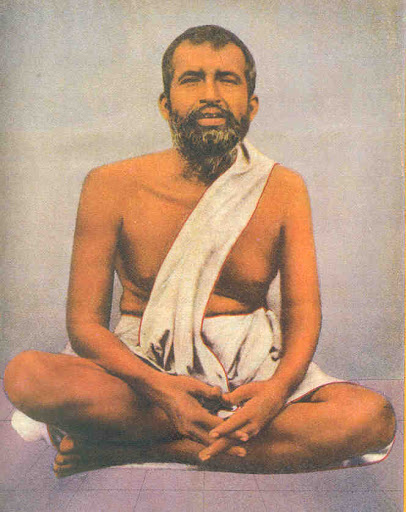
His chief disciple Swami Vivekananda founded the Ramakrishna Math, which provides spiritual training for monastics and householder devotees and the Ramakrishna Mission to provide charity, social work and education. Most of his disciples and many common people who came in touch with him were the chosen ones to taste the fruit of enlightenment.
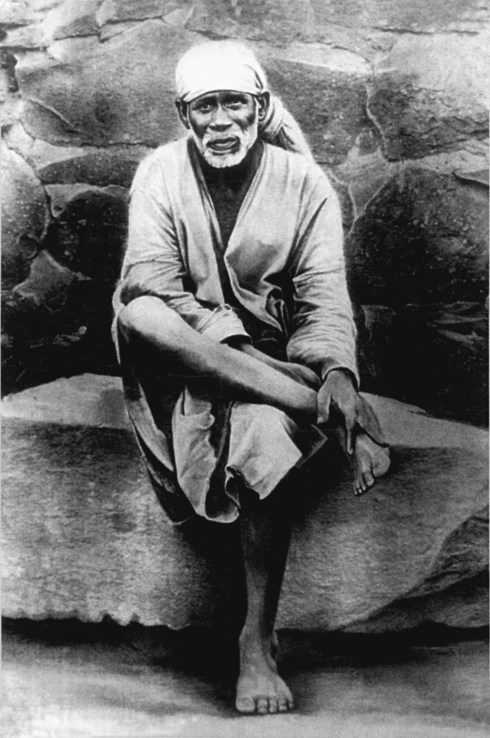
Sainath of Shirdi : 1838 – 15 Oct 1918
Shirdi Sai Baba is regarded by his devotees as a saint and a fakir. He is revered by both his Hindu and Muslim devotees. His teachings concentrate on a moral code of love, forgiveness, helping others, charity, contentment, inner peace and devotion to the God and guru.

His teachings combined elements of Hinduism and Islam. He took samadhi in Shirdi. One of his well-known epigrams, Allah Malik (God is King) and Sabka Malik Ek (Everyone’s Master is One), is associated with both Hinduism and Islam. He is also known to have said Look to me, and I shall look to you and Allah tera bhala karega.
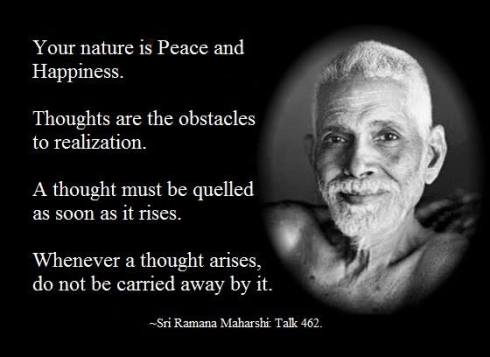
Ramana Maharishi : 30th Dec 1879 – 14th Apr 1950
In 1896, at the age of 16, he had a “death-experience” where he became aware of a “force” which he recognized as his true “self” . He travelled to the holy mountain Arunachala, in Thiruvannamalai, where he took on the role of a Sanyasi (though not formally initiated), and remained for the rest of his life.
Ramana is associated with self realisation. “Who am I?” is the title given to a set of questions and answers bearing on Self-enquiry. As recollected and recorded by Sri Sivaprakasam Pillai, there were fourteen questions with answers to them given by Bhagavan. His devotees regarded him as an Avatar. Ramana approved a number of paths and practices, but recommended self enquiry as the principal means to remove ignorance and abide in Self-awareness, together with Bhakti (devotion) or surrender to the Self.
Akkalkot Maharaj : Mahasamadhi 1878
Swami Samarth, also known as Akkalkot Maharaj was a spiritual master of the Dattatreya sect. He is a widely known in Maharashtra, Karnataka & AP. His parentage and date of birth like many saints remains obscure.
Swami Samarth traveled all across the Indian subcontinent and eventually set his abode at Akkalkot, a village in Maharashtra where he resided for 22 years.
Swami Samarth is widely considered to be the fourth incarnation of Dattatreya.
Trailanga Swami : 1607 – 1887
Trailanga Swami is a legendary figure with stories told of his yogic powers and longevity. According to some accounts, he lived to be 280 years old. He was a big man weighing almost 150 Kgs and was sky clad. He is regarded by devotees as an incarnation of Shiva. Sri Ramakrishna referred to him as “The walking Shiva of Varanasi”.
Born in Andhra to Devout Shiva Bhakts, he gave up his wealth and family after the death of his father at the age of 40. Under his mothers guidance he carried out Kali Sadhana for 20 years at a nearby Kali temple in a cemetery. After 20 years of spiritual practice, he was initiated into Sanyasa by his Guru Bhagirathananda Saraswati, in 1679. He led a life of severe austerities and visited holi shrines across the country, before finally settling in Varanasi in 1737. A member of the Dashanami order, he became known as Trailanga Swami after he settled in Varanasi.
He was often found roaming the streets or the ghats, naked and “carefree as a child”. He was reportedly seen swimming or floating on the river Ganges for hours. On many occasions, he was seen to drink deadly poisons with no ill effect. He talked very little and at times not at all.
After seeing Trailanga, Ramakrishna said, “I saw that the universal Lord Himself was using his body as a vehicle for manifestation. He was in an exalted state of knowledge. There was no body-consciousness in him. Sand there became so hot in the sun that no one could set foot on it. But he lay comfortably on it.” Ramakrishna also stated that Trailanga was a real paramahamsa and that “all Benares was illuminated by his stay there.”
Lahiri Mahasya : 30 Sep 1828 – 26 Sep 1895
Lahiri Mahasya, was a householder and a disciple of Sriguru Babaji. In 1861, he was chosen to revive the ancient yogic science of Kriya Yoga.
He was unusual among Indian holy people in that he was a householder working as a government accountant. He lived with his family in Varanasi. He became the guru of many advanced Kriya disciples, one of who was Sri Yukteshwar Giri.
Trailanga Swami, had praised Lahiri Mahasaya in the following words, “Lahiri Mahasaya is like a divine kitten, remaining wherever the Cosmic Mother has placed him. While dutifully playing the part of a worldly man, he has received that perfect Self-realization which I have sought by renouncing everything – even my loincloth!”
Mouna Guru Swamigal : Mahasamadhi Apr 22, 1899
One of the greatest Saints who lived in the 18th century is Sri Mouna Guru Swamigal in Kumbakonam. The word Mouna means absolute silence.
Mahaperiyava of Kanchi has talked a lot about this Saint in Deivathin Kural Voice of God book (Volume 3). When He describes the state of perfect bliss or Nirvana, He quotes 3 examples – Sri Sadasiva Brahmendra, Sri Mouna Guru Swamigal and Sri Ramana Maharishi. While the other two are reasonably well known, Sri Mouna Guru Swamigal was not known except in close circles. The state in which these Saints lived bordered between Nirvikalpa Samadhi and Sahaja samadhi.
The following is an incomplete translation of Paramacharya’s words in Tamil on Mouna Swamigal
“Mouna Guru Swamigal used to stay for hours in Samadhi. The body was still and his eyes would be closed or open but never blink. Even if someone where to take his fingers close to his eye, it would not blink. Food was forced by His disciples down His mouth. Sometimes it went in and sometimes it just stayed there. Ants would swarm His mouth for the food and they also used to bite him. His skin turned red but the saint would never budge from His samadhi state. Some devotees applied sugar on His tongue but there was not even saliva getting formed , indicating his complete withdrawal from all his senses.”
Swami Vivekananda has visited this Saint on three consecutive days when he came to Kumbakonam.
Mouna Guru Swami shed His mortal coil on 22-Apr-1899. Even today His Mahasamadhi attracts numerous devotees. Located near the Kumbeshwara Temple in Kumbakonam.
Swami Vivekananda : 12th Jan 1863 – 4th July 1902
The most accomplished of Ramkrishna’s disciples, Swami Vivekananda was born Narendranath Datta in an aristocratic family.
In late 1881 or early 1882, he went to Dakshineswar with two friends and met Ramakrishna.This meeting proved to be a turning point in his life. Although he did not initially accept Ramakrishna as his teacher and rebelled against his ideas, he was attracted by his personality and began to frequently visit him. The intense interaction with him was for just a few years. One day the Gurus foot touched Vivekananda and opened him up to the bliss of divinity. This experience has been explained well by David Godman. https://www.davidgodman.org/the-feet-of-the-guru/2/
Question: Sri Ramakrishna touched Vivekananda and the latter realised bliss. Is it possible?
Bhagavan: Sri Ramakrishna did not touch all for that purpose. He did not create Atma. He did not create realisation. Vivekananda was ripe. He was anxious to realise. He must have completed the preliminary course in his past births. Such is possible for ripe persons only. The key to success is clearly maturity.

Swami Vivekananda was a key figure in the introduction of the Indian philosophies of Vedanta and Yoga to the Western world. He was a major force in the revival of Hinduism in India, and contributed to the concept of Indian nationalism as a tool of fight against the British empire in colonial India. Vivekananda founded the Ramakrishna Math and the Ramakrishna Mission. He popularised the shloka ‘Arise, awake, and stop not till the goal is reached’. He introduced Hinduism at the Parliament of the World’s Religions in Chicago in 1893.
Known as both Jnana Yogi & Karma Yogi – he worked tirelessly. His death came suddenly at the prime age of 39. Swami Vivekananda is regarded as a patriotic saint, and his birthday is celebrated as National Youth Day.
Seshadri Swamigal : Jan 22nd 1870 – Jan 4th 1929
As a child he had spontaneous trances. At age four Seshadri received his nickname, ‘Golden Hand’. He earned this name because of an incident at an idol shop where he touched a Bronze Idol of Lord Krishna requesting his mother to buy, resulting in all 1000 idols being sold in 24 hrs. (The trader gave him the idol free mesmerised by the god like look of the child). At the age of 19, he met Sri Balaji Swamigal, a wandering saint from North India, who gave him Sanyas and instructed him in the Mahavakyas. He traveled across Tamil Nadu and settled down at Tiruvannamalai.
He lived here for 40 years as an ascetic with total disregard for either name or form. Seshadri Swamigal and Ramana Maharshi were contemporaries. He arrived at Arunachala six years before Ramana. Seshadri took care of Ramana Maharshi and served the young swami who seemed quite unaware of his body and surroundings. He cleansed Ramana’s blood-oozing wounds and revealed Ramana as a saint to the world.
Sri Seshadri Swamigal had deep devotion to God, especially in the form of the Goddess Kamakshi, Lord Ram and Arunachala. He was a great worshipper of Shakti. In the practice of concentration he sat steeped in samadhi, oblivious of his body.
The Seshadri Swamigal Ashram which houses his samadhi, is located in Tiruvannamalai, very close to Ramana Ashram.
Yukteshwar Giri : 10th May 1855 – 9th March 1936
Sri Yukteshwar Giri was the disciple of Lahari Mahasya and the guru of Paramahamsa Yogananda. Sri Yukteswar was a Kriya yogi, a Vedic astrologer, a scholar of the Bhagavad Gita and the Upanishads, an educator, and an author. He had two ashrams, one in Serampore and another in Puri.
In 1894, while attending the Kumbha Mela in Allahabad, he met Sriguru Babaji, who asked him to write a book comparing Hindu scriptures and the Christian bible. Sri Yukteswar completed the requested book in 1894, naming it Kaivalya Darsanam, or The Holy Science.
He had only a few long-term disciples, but in 1910, the young Mukunda Lal Ghosh would become Sri Yukteswar’s most well known disciple, eventually spreading the teachings of Kriya Yoga to the west as Paramahamsa Yogananda
Swami Rama Tirtha : 22 Oct 1873 – 17 Oct 1906
Rama Tirtha was born in a Punjabi Brahmin family. His mother died when he was a few days old and he was raised by his elder brother . After receiving a master’s degree in mathematics he became professor of mathematics at Forman Christian College, Lahore.
A chance meeting with Swami Vivekananda in 1897 in Lahore, inspired him to take up Sanyas. Having become well known for his speeches on Krishna and Advaita Vedanta he became a swami in 1899 on the day of Deepawali, leaving his wife, his children and his professorial chair. He neither touched any money nor carried any luggage with him. In spite of it he went round the world. He travelled to Japan and then to USA in 1902, where he spent two years lecturing on Hinduism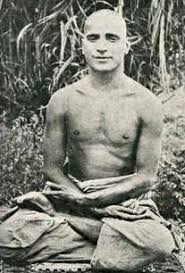 , other religions and his philosophy of “practical vedanta”. He frequently spoke against caste system and the need for education for women and the poor.
Arguing that India needed educated young people, not missionaries, he began an organisation to aid Indian students in American universities and helped to establish a number of scholarships for them.
On his return to India in 1904 he completely withdrew from public life in 1906 and moved to the foothills of the Himalaya where he prepared to write a book giving a systematic presentation of practical vedanta. It was never finished. He died on 17 October 1906. Many believe he did not die but gave up his body to the river Ganges
Pamban Swamigal : 1850 – 1929
Pamban Swamigal was a passionate devotee of lord Muruga and had a personal connect with him. He believed in one God that is Siva the Para Brahman and Subramanya is part of Siva and comes from Siva. His Sanskrit teacher named him as as Pamban Swamigal because Swami lived at Pamban Island near Rameshwaram. He was a Sanyasi who followed the Shuddha Advaita in the Vaideha way of Saiva Siddhanta in the Dasa Marga.
At the age of thirteen, the young Appavu had a vision and and felt like writing poems on Lord Muruga – which he wrote immediately on a palm leaf. He wrote one poem each day before his lunch for 100 days. There are numerous incidents of his personal connect with Lord Muruga.
In 1891 he wrote Shanmuga Kavacham, a powerful hymn of 30 verses composed for the benefit of Lord Murugan’s devotees to protect them from illness of body and mind. In his lifetime Pamban Swami wrote 6,666 poems. He always liked to do silent rather than audible prayers.
In 1895 Lord Muruga asked him to proceed to Madras. he spent the rest of his life in Madras. His Jeeva Samadhi is located at Thiruvanmiyur, Chennai.
Upasni Maharaj : 15 May 1870 – 24 Dec 1941
He was born in a family of Sanskrit scholars at Satna, Maharashtra. He lived in Sakori ( 5Km from Shirdi) and is said to have received realisation from Sai Baba of Shirdi.
After a career as an Ayurvedic doctor and three marriages where all three wives died, he began to hear a singing voice that he could not explain. This troubling sound, along with various other problems, led him on a difficult quest that finally culminated in him meeting Sai Baba of Shirdi who is said to have given him realisation at the age of 42.
The principal teaching of Upasni Maharaj was that there are three rules that if observed sincerely lead to a life worth living:
- Not to trouble anybody in the least.
- To suffer for and be useful to others.
- To remain contented in a state of Be as it may.
Upasni Maharaj was the principal teacher of Meher Baba. Meher Baba first met Upasni Maharaj in 1915 when Upasni was staying in Shirdi with Sai Baba.
Sri Aurobindo : 15th Aug 1872 – 5th Dec 1950
Aurobindo Ghose completed his Indian Civil Service in England. On his return to India he was working with the Maharaja of Baroda. He became involved in the nationalistic movement. He was arrested. During his stay in the jail, he had mystical and spiritual experiences, after which he moved to Pondicherry, leaving politics for spiritual work.
At Pondicherry, Sri Aurobindo developed a spiritual practice called Integral Yoga. The central theme of his vision was the evolution of human life into a divine life. He believed in a spiritual realisation that not only liberated but transformed human nature, enabling a divine life on earth. In 1926, with the help of his spiritual collaborator, Mirra Alfassa, he founded the Sri Aurobindo Ashram.

At the centre of Aurobindo’s metaphysical system is the supermind, an intermediary power between the unmanifested Brahman and the manifested world. Aurobindo claims that the supermind is not completely alien to us and can be realised within ourselves. He does not portray supermind as an original invention of his own but believes it can be found in the Vedas and that the Vedic Gods represent powers of the supermind.
Parmahamsa Yogananda: Jan 5th, 1893 – March 7th, 1952
Paramahamsa Yogananda (born Mukunda Lal Ghosh) is best known for his bestselling book – Autobiography of a Yogi, published in 1946 to critical and commercial acclaim. The book has sold over four million copies and has been listed as one of the “100 best spiritual books of the 20th Century”
A chief disciple of Sri Yukteswar Giri, he was sent to the West to spread the teachings of Kriya Yoga and prove the unity between Eastern and Western religions. His other goal was to establish a balance between Western material growth and Indian spirituality. Yogananda was the first major Indian teacher to settle in America, and the first prominent Indian to be hosted in the White House. He spent his last 30 years in USA.
Bhagwan Nityananda : Nov/Dec, 1897 – 8 Aug 1961
To his devotees he was an avadhuta, one who is absorbed in the transcendental state. Even in childhood, Bhagwan Nityananda seemed to be in an unusually advanced spiritual state, which gave rise to the belief that he was born enlightened. He was eventually given the name Nityananda, which means, “always in bliss”.
Before the age of twenty, Nityananda became a wandering yogi, spending time on yogic studies and practices in the Himalayas and other places. By 1920, he was back in southern India. He started building an ashram near Kanhangad. In 1936, he went to the Shiva temple in the village of Ganeshpuri near Mumbai and settled down there. 
Nityananda did not have a guru.In one of his talks, his student Swami Muktananda said Nityananda’s Guru was an unknown Siddha purusha from Kerala.
Bhagwan Nityananda gave relatively little by way of verbal teachings. Most of the time he was silent. Some believe that Nityananda had the power to transmit spiritual energy to people through non-verbal means.
He could also be extremely fiery and intimidating in his behaviour, even to the point of throwing rocks on occasion. This was his way of deterring people who were not serious in their spiritual aspirations, or who came to him with ulterior motives. His Samadhi is at Ganeshpuri near Mumbai. The ashram at Kanhangad which are famous for the caves where he meditated are also worth a visit.
Sivananda Saraswati (Swami Sivananda) : 8 Sep 1887 – 14 July 1963
Swami Sivananda was born in Tamil Nadu. He studied medicine and served as a physician for several years before taking up monasticism. He lived most of his life in Rishikesh.
In Rishikesh, he met Swami Vishwananda Saraswati, a yogi belonging to the Sringeri Matha – a monastery established by Adi Shankaracharya in the 18th century. He knew he had found his guru; he was sure Swami Vishwananda could lead him towards the path of self-realisation. Swami Vishwananda too recognised a pure heart and a divine soul. The doctor’s initiation into sannyasa followed shortly after and he was named Swami Sivananda Saraswati.
Swami Sivananda never spoke directly about his enlightenment experience, but one would assume that at some time during this period spent in Swarg Ashram (1924-1934) he had a direct experience of the divine which transformed the ardent seeker into the spiritual giant he would become
He established Sivananda Ashram, on the bank of the Ganges at Rishikesh. Many of his Disciples spread the word of Vedanta and went on to grow new organisations. Prominent amongst them are Chinmayananda Saraswati, founder of the Chinmaya Mission & Satyananda Saraswati, founder of Bihar School of Yoga
Swami Ramdas : 10 April 1884 – 25 July 1963
Ramdas was born as Vittal Rao in Kanhangad (North Kerala). He lived a family life and worked in a spinning mill. Facing challenges in life Ramdas began to chant “Ram”. Soon afterward, his father instructed him to repeat the Ram Mantra: “Sri Ram jai Ram jai jai Ram“. Ramdas then added “Om” to each repetition: “Om Sri Ram Jai Ram Jai Jai Ram,” and he found the benefit at least threefold.
He became detached from the material world and embarked on a pilgrimage, thereby taking on the name Ramdas, and living on charity. His mantra practice also gradually became a round-the-clock practice.
In 1922 he met Ramana Maharishi. As a result of this, he went into his first retreat, living for 21 days in solitude in a cave. Upon leaving this cave he began claiming that, “All was Ram, nothing but Ram”
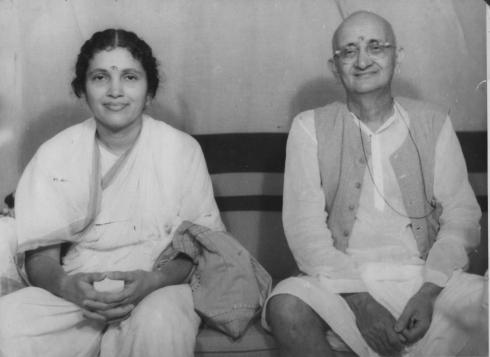
After continuing to live as an itinerant for many years, his devotees established Anandashram for him inKanhangad in 1931. A list of Ramdas’ well-known disciples includes Mataji Krishnabai, Swami Satchidananda, Swami Muktananda and Yogi Ramsuratkumar.
Meher Baba : 25 Feb 1894 – 31 Jan 1969
He was born in Poona to a Zoroastrian family. He was a multi-instrumentalist and poet. Fluent in several languages,
Upasni Maharaj helped him to integrate his mystical experiences with normal consciousness, thus enabling him to function in the world without diminishing his experience of realisation. In 1921, at the age of 27, after living for seven years with Upasni, he began to attract a following of his own. His early followers gave him the name Meher Baba (Compassionate Father).Baba and his followers moved to an area a few miles outside Ahmednagar that he named Meherabad (Garden of Blessing). This Ashram would become the center for his work.
From July 1925 onwards, Meher Baba initiated a life-long period of self-imposed silence, which would last forty-four years, until the end of his life. He travelled extensively to the West and established centres in US & Australia.
Neem Karoli Baba : 1900 – 11 Sep 1973
Born around 1900 in UP in a Brahmin family. Married at 11 he left home to become a wandering sadhu, but came back and led a family life till he was 58. As he was travelling ticketless he was thrown off the train at the village of Neeb Karori after which the train would mysteriously not move. When passengers suggested that they allow the Sadhu to board he agreed on two conditions – one a Station would be built at the village and secondly that train conductors treat Sadhu’s better. Immediately after he boarded the train it started. Baba lived in the village of Neeb Karori for a while and was given his name by locals.
He wandered extensively throughout Northern India and was known by different names. During his life two ashrams were built, first at Vrindavan and later at Kainchi, where he spent the summer months. The Kainchi Dham where he stayed in the last decade of his life, was built in 1964 with a Hanuman temple. He was a lifelong adept of bhakti yoga, and encouraged seva to others as the highest form of unconditional devotion to God.
Among the most well known of Neem Karoli Baba’s disciples were spiritual teacher Ram Dass (the author of Be Here Now), teacher/performer Bhagavan Das, Lama Surya Das and the musicians Jai Uttal and Krishna Das. Steve Jobs traveled to India in April 1974 to study Hinduism and Indian spirituality. He planned also to meet Neem Karoli Baba but arrived to find the guru had died the previous September. Hollywood actress Julia Roberts was also influenced by Neem Karoli Baba.
His Samadhi is at Vrindavan.
Prabhupada : 1 Sep 1896 – 14 Nov 1977
He was the founder-preceptor of the International Society for Krishna Consciousness[(ISKCON), commonly known as the “Hare Krishna Movement”. Within the society he is commonly referred to as (Srila) Prabhupāda.
Born in Calcutta, he was married with children and owned a small pharma business.In 1922, he met his spiritual master, Bhaktisiddhanta Sarasvati Thakura who requested him to spread the message of Chaitanya Mahaprabhu in English. In 1933 he was formally initiated.
In 1959 he took a vow of renunciation and started writing commentaries on Vaishnava scriptures. In his later years, as a travelling Vaishnava monk, he became an influential communicator of Gaudiya Vaishnava theology to India and specifically to the West through his leadership of ISKCON, founded in 1966. (He was 70 years old when he founded ISKCON)
Nisargadatta Maharaj : Apr 1897 – Sep 1981
Nisargadatta Maharaj, belonged to the lineage of teachers from Lingayat Shaivism. The publication in 1973 of I Am That, an English translation of his talks in Marathi brought him worldwide recognition and followers, especially from North America and Europe.
Born in a poor labourers family he did odd jobs and was married with 3 children. In 1933 he was introduced to his Guru Siddharameswar Maharaj. His guru told him, “You are not what you take yourself to be…”. Siddharameswar gave Nisargadatta instructions for self-enquiry which he followed verbatim.
Nisargadatta was critical of a merely intellectual approach to non dual Truth.He had a strong devotional zeal towards his own guru, and suggested the path of devotion – Bhakti yoga. Nisargadatta also emphasised love of Guru and God, and the practice of mantra repetition and singing bhajans, devotional songs.
Anandamayi Ma : Apr 30 1896 – 27 Aug 1982
Anandamayi was born Nirmala Sundari Devi to an orthodox Vaishnavite Brahmin family in present day Bangladesh. On the full moon night of August 1922, at midnight, twenty-six-year-old Nirmala enacted her own spiritual initiation. She explained that the ceremony and its rites were being revealed to her spontaneously. She accomplished the complex rites and is said to have stated “As the Guru I revealed the mantra; as the disciple. I accepted it and started to recite it.”
She was a contemporary of the well known Hindu saints like Sri Aurobindo, Ramana Maharshi, Swami Ramdas, and Paramahamsa Yogananda. Anandamayi Ma was described by Sivananda Saraswati as “the most perfect flower the Indian soil has produced.” Paramahamsa Yogananda translates the Sanskrit epithet Anandamayi as “Joy-permeated” in English. This name was given to her by her devotees in the 1920s to describe her perpetual state of divine joy. Her samadhi is at the Kankhal Ashram in Haridwar.

Jiddu Krishnamurthy : 11 May 1895 – 17 Feb 1986
He was handpicked by the Theosophical Society as a young boy in 1909 to become a world teacher. The likely “vehicle for the Lord Maitreya” in Theosophical doctrine to guide the evolution of humankind. He was groomed and nurtured at the Theosophical Society. During this time Krishnamurti had developed a strong bond with Annie Besant and came to view her as a surrogate mother.
At Ojai, California in 1922 Krishnamurti went through an intense ‘life-changing’ experience. This has been variously characterised as a spiritual awakening, a psychological transformation, and a physical reconditioning. This condition recurred, at frequent intervals and with varying intensity, until his death.
He was a prolific writer and brilliant orator who travelled across the globe. He felt that to attain self realisation you did not need a Guru. He did not believe in rituals. He was well connected and had a personal relationship with PM Indira Gandhi. The Krishnamurti foundation started the Rishi Valley school at Madanapalli – Its one of the most popular residential schools for all round development of children.
Chinmayananda Saraswati: 8 May 1916 – 3 Aug 1993
Swami Chinmayananda founded the Chinmaya Mission to spread the knowledge of Advaita Vedanta, Bhagavad Gita, Upanishads and other Hindu Scriptures. He also helped found the Vishwa Hindu Parishad in 1964.
After completing his studies in Literature, Law & Journalism he was involved in the freedom struggle and then started his career as a journalist. In the summer of 1936, he visited Ramana Maharishi. By Chinmayananda’s personal accounts, when Ramana Maharshi looked at him, he experienced a thrill of spiritual enlightenment which, at the time, he promptly rationalised away as being mere “hypnotism”.
As a journalist he travelled to Sivananda’s ashram in Rishikesh for the purpose of writing an exposé of the sadhus. He later said, “I went not to gain knowledge, but to find out how the swamis were keeping up the bluff among the masses. There, at the age of 31, he went from being a sceptic to an enthusiast, finally becoming a renunciate monk. On 25th February 1949, the holy day of Mahashivratri, Balan was initiated into sannyasa by Sivananda, who gave him the name Swami Chinmayananda, or “bliss of pure Consciousness.” With Sivananda’s blessing, Chinmayananda sought out one of the greatest Vedantic masters of his time, Tapovan Maharaj of Uttarkashi, and devoted the next few years of his life to an intensive study of Vedanta under his tutelage. As his disciple, from 1949, Chinmayananda led an extremely austere lifestyle and underwent a rigorous study of the scriptures.
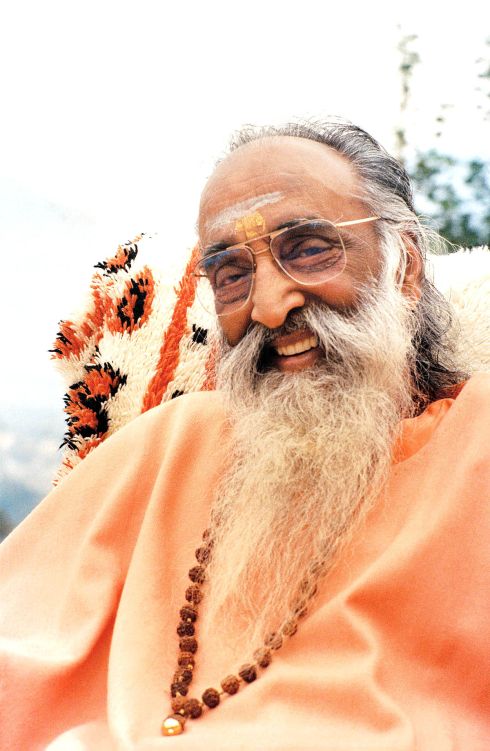
Chinmayananda decided to bring the teachings of Vedanta to the masses. He travelled tirelessly across the world in setting up the Chinmaya Mission which has now over 300 centres. He was a brilliant orator and captivated one and all. His Samadhi is located at Sidhbari, in Himachal Pradesh
Shri Chandrasekharendra Saraswati Swamigal : 20 May 1894 – 8 Jan 1994
The Sage of Kanchi or Mahaperiyava (meaning, “A venerable sage”) was the 68th Jagadguru of the Kanchi Kamakoti Peetham. Regarded as one of the greatest Spiritual souls of the century.

HH Dalai Lama met Kanchi Mahaperiyava in 1990. He described him as “The only Monk of the century!”
HH Dalai Lama in his own words about Mahaperiyava
“I sought an audience with the Shankaracharya and met him at Kanchi. I saw and heard undiluted truth ringing in the voice of His Holiness – a voice of great wisdom, conviction, constantly smiling and in peace within himself. The first thing that stuck me on arrival was his extreme simplicity, austerity and true renunciation. For a moment I almost felt ashamed that I too call myself a monk – a Buddhist monk. The Shankaracharya created that reflection in my mind and I felt, “Here is a holy person and we can work together for the betterment of mankind’. I thoroughly enjoyed the spiritual experience”.
H.W.L.Poonja (Papaji) : 13 Oct 1910 – 6 Sep 1997
He was born in W Punjab to a family of Saraswat Brahmins. His mother was the sister of Swami Rama Tirtha. At the age of six he experienced an unusual state of consciousness. He was persuaded by his mother that he could regain this experience by devotion to Lord Krishna, and so he gave himself over to this and began to have visions of Krishna.
Leading a normal life he was married and joined the British Army. Secretly his love for Krishna and his visions continued. He became obsessed with a longing to have the experience of seeing Krishna all the time. Finally in 1944 when he was 31 he was directed to Ramana Maharishi by a wandering sage.
Ramana pointed him in the direction of his own self. “I cannot show you God or enable you to see God because God is not an object that can be seen. God is the subject. He is the seer. Don’t concern yourself with objects that can be seen. Find out who the seer is.”
Then he looked at me intently. I could feel that my whole body and mind were being washed with waves of purity. They were being purified by his silent gaze. I could feel him looking intently into my Heart. Under that spellbinding gaze I felt every atom of my body being purified. It was as if a new body were being created for me. A process of transformation was going on—the old body was dying, atom by atom, and a new body was being created in its place. Then, suddenly, I understood. I knew that this man who had spoken to me was, in reality, what I already was, what I had always been. There was a sudden impact of recognition as I became aware of the Self. Poonja recognised this as the same state he experienced when he was eight years old, but this time it was permanent.
Satyananda Saraswati : 25 Dec 1923 – 5 Dec 2009
Satyananda Saraswati was a student of Sivananda Saraswati. He founded the Bihar School of Yoga in 1964.
He was born in Almora in a family of zamindars. In his youth he studied Sanskrit, the Vedas and the Upanishads. He began to have spiritual experiences at the age of six, when his awareness spontaneously left the body and he saw himself lying motionless on the floor. Many saints and sadhus blessed him and reassured his parents that he had a very developed awareness.
When he was 18, he left his home to seek a spiritual master. In 1943 at the age of twenty, he met his guru Sivananda Saraswati and went to live at Sivananda’s ashram in Rishikesh. Swami Sivananda initiated him into the Dashnam Order of Sannyasa on 12 September 1947 on the banks of the Ganges and gave him the name of Swami Satyananda Saraswati. He stayed with Sivananda for a further nine years but received little formal instruction from him.
In 1956, he based himself at Munger (Bihar) and wandered as a mendicant travelling through India, Afghanistan, Nepal, Burma and Ceylon for the next seven years
In 1964, he founded the Bihar School of Yoga (BSY) at Munger, with the intention that it would act as a centre of training for future teachers of yoga as well as offer courses on yoga.
In 1988 Satyananda handed over the active work of his ashram and organisation to his spiritual successor, and left Munger for Rikhiapeeth. There he lived as a paramahamsa sanyasin and performed intense Vedic Sadhana’s. On 5th Dec, 2009 at midnight he entered into Mahasamadhi
S.N.Goenka : 29 Jan1924 – 29 Sep 2013
Although Indian by descent, Mr. Goenka was born and raised in Myanmar (Burma). While living there, he had the good fortune to come into contact with Sayagyi U Ba Khin and to learn the technique of Vipassana from him. After receiving training from his teacher for 14 years, Mr. Goenka settled in India and began teaching Vipassana in 1969. The courses offered by Mr. Goenka soon attracted thousands of people from every part of society. In addition, many people from countries around the world came to join courses in Vipassana meditation.

The technique taught by S.N. Goenka goes back two and a half millennia to the Buddha. For this reason, his teaching has had a profound appeal to people of all backgrounds, of every religion and no religion, and from every part of the world.
Satya Narayan Goenka breathed his last in September 2013, at the age of 89. He has left behind an imperishable legacy. The technique of Vipassana, now available more widely than ever before to people around the world.
Lakshmana Swamy : Dec 25, 1925
Sri Lakshmana Swamy is a direct disciple of Sri Ramana Maharishi. After several years of intense meditation Sri Lakshmana Swamy realised his self on Vijayadashami in 1949 in the presence and by the grace of Sri Ramana Maharishi.
Sri Lakshmana Swamy was born on December 25th 1925 in Gudur, Andhra Pradesh. He was not particularly religious as a child. However, an event in his 17th year changed this attitude. Lakshmana Swamy was sleeping in his family home, when he suddenly felt that some evil force was pressing down on him. Involuntarily and spontaneously he started doing nama japa of Rama. This repetition of Rama’s name successfully warded of the evil force, and proved the efficacy of such repetition to Lakshmana Swamy. Lakshmana Swamy did not mention this event to anyone around him since he believed that none of them would be able to give a satisfactory explanation. From that day on Lakshmana Swamy started waking up early in the morning to do pranayama (learnt from reading Swami Vivekananda’s work on Raja Yoga) and nama japa of Rama. Dispassion started taking root in him.
Lakshmana Swamy by chance saw a small booklet titled, “Sri Ramana Maharishi” on sale in the railway bookstore. Upon reading that booklet, Lakshmana Swamy became convinced that Sri Ramana Maharishi was the Guru he was searching for. On his second trip to Tiruvannamalai in 1949 Lakshmana Swamy finally became permanently established in the Self in the presence and by the grace of Ramana Maharishi.
Much later in Sri Lakshmana’s life came Sarada, whom Sri Lakshmana adopted as his daughter. Sarada, out of her immense devotion towards Sri Lakshmana realised her self on December the 18th, 1978. She came to be known as Mathru Sri Sarada, or Saradamma (Sarada Mother) to her devotees.
Lakshmana is almost 84, and Saradamma is almost 50. They have lived very private lives, and have never taught publicly, or made themselves available to the public except on special occasions. They only teach select students and have no interest in being part of the Guru circuit. They allow people to meditate, with permission, at the gate of their small ashram in Tiruvanamalai, and may occasionally give Darshan there. The only scheduled Darshan they give is twice a year, on Swamy Lakshmana’s birthday, December 25, and on Deepam, which I believe is a festival that occurs in October/November.
There’s an excellent little book about them by David Godman, who is a devotee of Lakshmana Swami, called No Mind, I Am The Self, which gives biographical information on both of them, and exerts from their teachings. Unfortunately, there’s very little information available about them otherwise, and no other publications with their teachings in it.
HH Dalai Lama : July 6th 1935 –
His Holiness the 14th Dalai Lama, Tenzin Gyatso, describes himself as a simple Buddhist monk. He is the spiritual leader of Tibet. He was born on 6 July 1935, to a farming family, in a small hamlet located in northeastern Tibet. At the age of two, the child, then named Lhamo Dhondup, was recognized as the reincarnation of the previous 13th Dalai Lama.
The Dalai Lamas are believed to be manifestations of Avalokiteshvara, the Bodhisattva of Compassion and the patron saint of Tibet.
This is what he has to say about himself “Even in my daily life, I can say that I spend 80% of my time on spiritual activities and 20% on Tibet as a whole. The spiritual or religious life is something I know and have great interest in. I have some kind of confidence in it, and thus I want to study it more.”
People who have met him talk about his blazing energy and clarity of thought
Sri M : Nov 6 1948 –
The perfect example of a Guru and an evolved saint who has touched the eternal truth. Simple, down to earth, humble and an encyclopedia of knowledge he is a bundle of energy and source of motivation to his devotees. Sri M is my Guru. When I first met him, I was seated in the last row of a packed hall. As he walked to the stage I sensed a charge of electricity and felt choked with tears. The feeling repeated itself later when we went to offer our Pranam’s to him.
Sri M or Mumtaz Ali Khan was born into an affluent and liberal Muslim family in Trivandrum. As a 9 year old he had a meeting with his Guru Sri Maheshwarnath Babaji. This was a turning point in Sri M’s life. Sri M says of this meeting: “After the incident, although outwardly I looked like any other boy of that age, my personality had undergone a profound change. A secret life went on within, side by side with the ordinary activities of day to day existence. The inner journey had begun and the first sign of this was that I began to meditate without even knowing the word meditation. Following this awakening, he made contact with a series of South Indian saints, including Bhagavan Nityananda of Ganeshpuri, Yogi Gopala Saami, Kaladi Mastan, Swami Abhedananda, Chempazhanti Swami, Swami Tapasyananda and Mai Ma.
Sri M left his home at the age of nineteen to find his master in Himalayas. After getting exhausted by the endless search, he finally met Sri Maheshwarnath Babaji—the same person he had met when he was nine—at the Vyasa Cave, beyond Badrinath. He lived with his master for three and a half years and learnt many things. He got initiated into the Nath tradition and got awakening of his Kundalini fire. He, along with his master took arduous journey in the Himalayas. His desire to meet the Grand Master – Sriguru Babaji was also fulfilled.
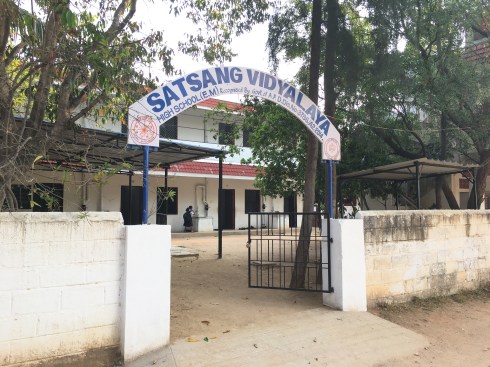
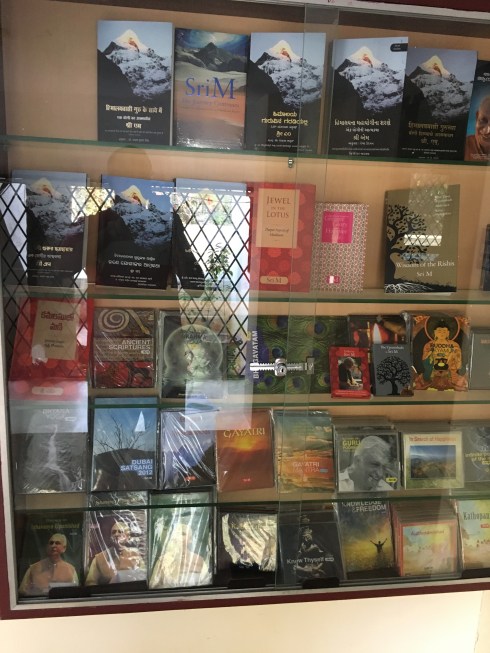
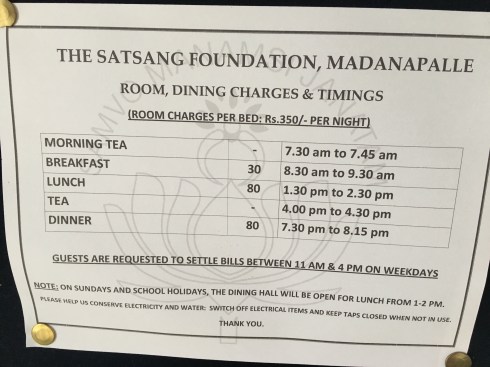
Sri M came back to the plains on the instructions of his Master and now heads the Satsang Foundation. He travels across the globe and delivers talks on Yoga, Upanishads, Gita and Practical Tips on how to lead a happy life. He also initiates devotees to Kriya Yoga. Sri M is married and has two children. Based in Madanapalli, Andhra Pradesh (three hours drive from Bangalore), he leads a simple life – teaching and guiding the Satsang Foundation and Manav Ekta Mission. Appreciative of music, he leads the satsangs often with his mellifluous voice. He also writes and paints in his leisure time.
Om Swami : Nov 30 1979 –
Born in Punjab he showed a deep inclination towards spirituality from an early age, Swami studied a range of Vedic and astrological texts, eventually becoming a professional astrologer during his teen years. Quitting his job as a part-time editor for a weekly business newspaper, he left for Australia to pursue education and later acquired Australian citizenship.
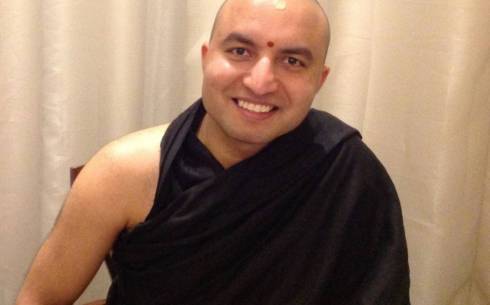
On 15 March 2010, Swami renounced his material wealth and left for his spiritual journey quietly. He was initiated by a Naga saint in a little village some eighty kilometers away from Varanasi. After spending four and a half months there, Swami left for the Himalayas where he spent the next thirteen months in intense meditation in complete isolation and solitude.
Acharya Prashant : 1978 –
One could call him a spiritual teacher rooted in Advait Vedanta. Or one could call him a most contemporary representative of all the spiritual traditions of the world. Equally, one could call him breathtakingly original and beyond any tradition.
But the most appropriate way to know him would be through his work. His work is founded on compassion and expresses itself as demolition. In classical sense he is a most orthodox spiritual teacher, in the contemporary sense he is a veganism promoter, an environmental activist, a science activist, a campaigner against superstition, and a champion of essential human freedom
Nochur Venkataraman
Sri Ramanacharanatirtha Nochur Venkataraman is an Acharya of Vedānta sampradāya. At a very young age, this sagely teacher started expounding on the age-old Vedic wisdom of the Upanishads, Gita, Bhagavatam and other texts on Vedānta. His discourses and writings are aflame with the power of Atmajñāna and the fragrance of bhakti that one gets an intimation of one’s spiritual essence instantaneously. Coming in the lineage of Bhagavan Sri Ramana Maharshi, Nochur Acharya’s talks and writings on Maharshi’s teachings are a great guiding force for Self-enquiry.
He resides in the holy Arunachala (Tiruvannamalai). He was born in Nochur in Palakkad (Kerala). Brought up in an orthodox Vedic tradition, he had profound exposure to vedanta jnana at the tender age of fourteen itself. His talks and writings on jnana and bhakti have already made him a legend.
Maheshwarnath Babaji : Timeless – Mahasamadhi sometime in the 60’s

Most people would not have heard about him. There is no photo of him. A direct disciple of Sriguru Babaji he was the Guru of Sri M. Whatever we know of him is based on what Sri M has shared in his book, talks and videos.
Maheshwarnath Babaji is a highly evolved Yogi. The kind rarely seen in day to day life. However there are Himalayan Masters like him in a state of bliss who are connected with other evolved beings. Maheswarnath Babaji is a symbol of all the great saints who we do not know about , but are playing a crucial role in the Universe.
In Conclusion …..
Like I mentioned earlier this list is evolving. As I read about great Saints, their Gurus, disciples and their contemporaries – the list of the awakened Guru’s continues to grow like the leaves of the tree. The Masters exist – we need to be sincere in our search to find them.
Some may feel that Osho, Sai Baba of Puttaparthi, Sri Sri and Sadhguru must be part of this compilation. Well they were not missed – they are too well known & famous to be forgotten. They did not make the list based on the criteria I have listed earlier. My apologies to their devotees for hurting their sentiments.
Additions based on inputs from readers
Gajanan Maharaj : Birth not documented – Mahasamadhi 8th Sep 1910
Gajanan Maharaj from Shegaon was an Indian Guru of Dattatreya tradition. He is regarded as an incarnation of Lord Dattatreya. It is not known when he was born but his first known appearance in Shegaon, perhaps as a youngster in his 20s, dates to February 1878. On 8th September 1910, Shri Gajanan Maharaj concluded his incarnated life by laying his alive body for Sajeevan Samadhi and the date is marked as Samadhi-din by his disciples.
There are lot of similarities between Shree Swami Samarth and Shree Gajanan Maharaj. Thus many people also believe that Shree Gajanan is none other than Shree Swami Samarth.
Brahma Chaitanya : Feb 19 1845 – Dec 22 1913
Brahmachaitanya or Gondavalekar Maharaj was born in Gondvale a village in Satara District. He was a devotee of Lord Rama and signed his name as ‘Brahmachaitanya Ramdasi’.
At the age of 9 he left home in spiritual pursuits. After knowing of his whereabouts, his father tracked him down and brought him back home from Kolhapur. He entered into his first marriage at the age of eleven. Soon at the age of twelve, he again left home in search of a spiritual guru. He traveled across India and is believed to have visited numerous contemporary saints and spiritual masters such as Swami Samarth of Akkalkot, Manik Prabhu, Trailanga Swami and Ramakrishna Paramahamsa. He later arrived at Yeealhgaon, a village near Nanded and became a disciple of Tukamai. After a while, he was initiated by Tukamai and given the name ‘Brahmachaitanya’. He reportedly attained enlightenment at the age of sixteen.
Bhausaheb Maharaj : 1843 – 1914
He was the founder of the Inchegeri Sampradaya, to which the well-known guru Nisargadatta Maharaj belongs.
He was looked upon as the reincarnation of Sant Tukaram. He met his guru Sri Nimbargi at the age of fourteen. Bhausaheb Maharaj’s teachings, and those of his student Gurudev Ranade, have been called Pipilika Marg – “the Ant’s way” of meditation.
Chandrashekar Bharti – III : 1892 – 1954
Chandrashekar Bharati was the Jagadguru of the Sringeri Sharada Peetham during 1912–1954. He was one of the most significant spiritual figures in Hinduism during the 20th century. He was known to be a Jivanmukta.
Tapovan Maharaj : 1889–1957
Swami Tapovan Maharaj was a reclusive yogi and contemporary of Swami Sivananda. Swami Chinmayananda undertook Vedic teachings from him after his initial tutelage with Swami Sivananda.
His disciple Swami Sundaranand lived with Swami Tapovan in the then inaccessible area of Gangotri, at the source of the Ganges. Since 1948, he has lived by the Ganges in Gangotri, at 10,400 feet, in a modest hut which his master Swami Tapovan Maharaj later bequeathed to him on his death in 1957. He has witnessed up close the gradual shrinking of the Gangotri Glacier .He has taken more than 100,000 photos, over a 50-year period, of the shrinking Gangotri glacier in the Indian Himalayas. Nicknamed “the Sadhu Who Clicks” because of his photography, he is also a noted mountain climber, having scaled over 25 Himalayan peaks, and climbing twice with Sir Edmund Hillary and Tenzing Norgay.
Swami Muktananda : 16 May 1908 – 2 Oct 1982
Muktananda was the founder of Siddha Yoga. He was a disciple and the successor of Bhagavan Nityananda of Ganeshpuri. He wrote a number of books on the subjects of Kundalini Shakti, Vedanta, and Kashmir Shaivism, including a spiritual autobiography entitled The Play of Consciousness. In 1956, Bhagawan Nityananda acknowledged the culmination of Muktananda’s spiritual journey, and gave him a small piece of land at Ganeshpuri, instructing Muktananda to create an ashram there. The same year he started teaching his “Siddha Yoga” path
Shiva Bala Yogi : 24 January 1935 – March 28 1994
Shri Shivabalayogi attained self-realization through twelve years of arduous tapas, meditating for an average of twenty hours a day.
When devotees inquired about His spiritual philosophy, Swamiji referred them to the “Yoga Vasistha. “Read the Yoga Vasistha,” he would say, “Swamiji’s philosophy is fully expounded in that scripture”
Shri Shivabalayogi’s approach is consistent with the Vedanta tradition, and the Yoga Vasistha is considered to be a principal exposition of the advaita vedanta philosophy (of non-dualism).
Swamiji taught that the purpose of life is to attain Self-realization, by performing sadhana (spiritual practice) and overcoming the illusions and imaginations of the mind. He also taught that meditation can be used to relieve tension and live a peaceful and stress-free life in the world
Once he was asked, “What is Swamiji’s teaching?” He simply replied, “Dhyana. Vibhuti. Bhajan. Bhava samadhi.” (Meditation. Blessed ash. Spiritual music. Divine ecstasy.)
Tags: Enlightened souls in last 100 years, Gurus of India, Spiritual giants from India







 A Few Good Things
Recent Comments